The Worst Time Of Day To Water Roses In Michigan If You Want To Avoid Black Spot
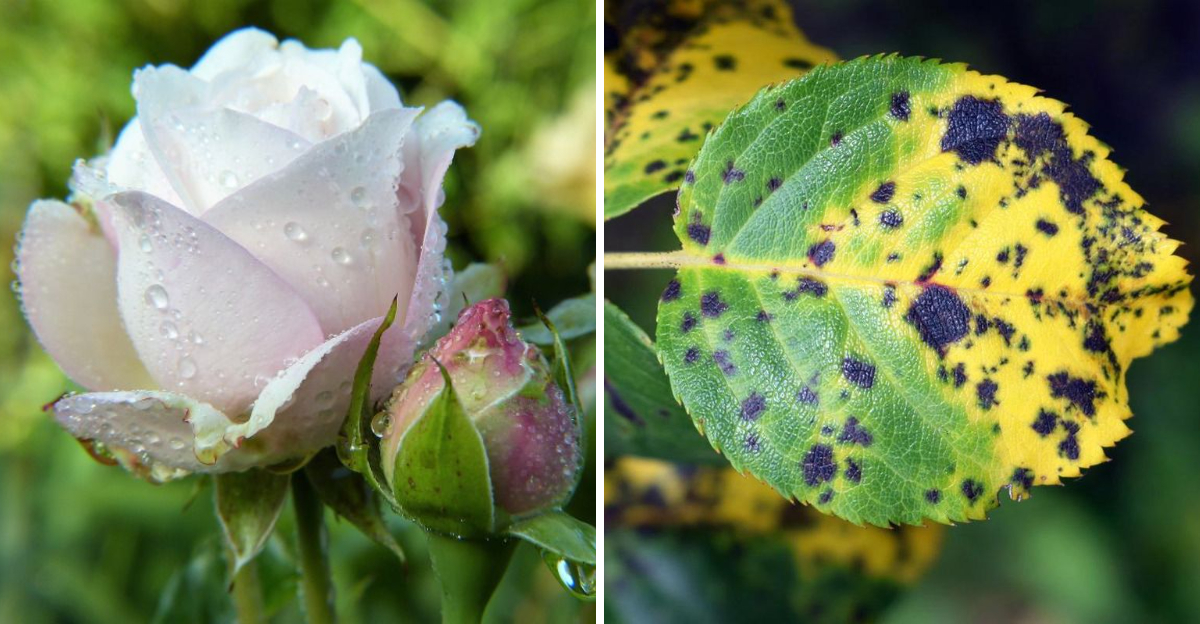
Roses are worth every bit of effort they ask for, and they do ask for some effort. Black spot is the disease that tests that commitment most, showing up on leaves as dark circular spots that spread through a planting faster than seems fair for something so small.
The frustrating part is that watering habits play a direct role in how much black spot a garden deals with each season, and most people are watering at exactly the wrong time without realizing it.
Wet foliage after sunset stays damp for hours in Michigan’s warm summer air, and black spot takes full advantage of every minute.
Adjusting when and how water hits the leaves is one of the most practical changes a rose grower can make, and it costs nothing to try.
1. Watering Roses In The Evening Is The Biggest Mistake
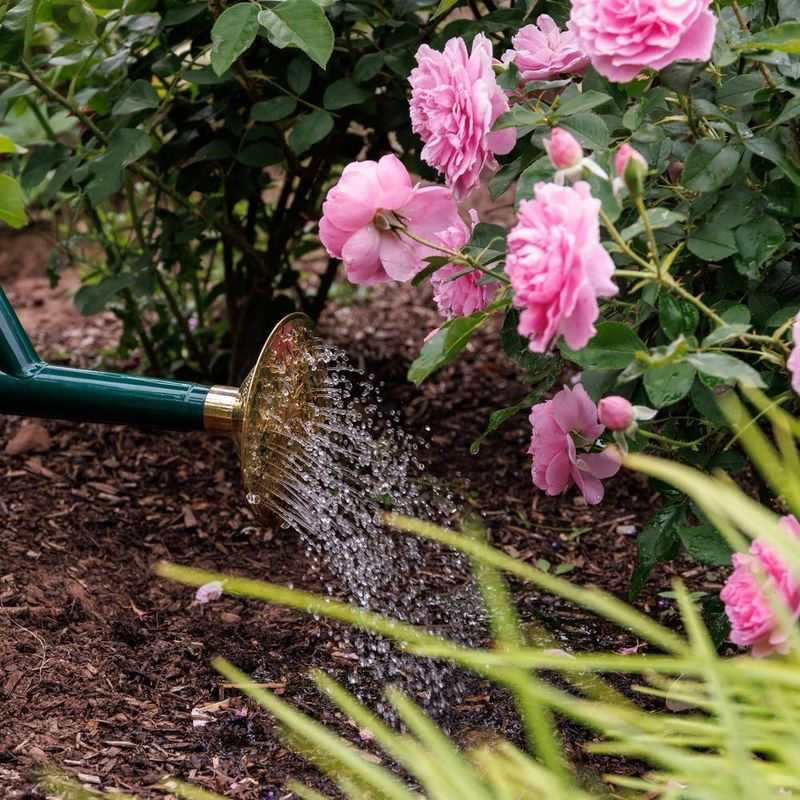
Damp rose leaves after sunset are a setup for trouble, especially during a Michigan summer when nights stay warm and humid for weeks at a time.
Many gardeners water in the evening because it feels convenient after a long workday, but that timing creates conditions where moisture lingers on foliage far longer than it would during daylight hours.
When leaves stay wet through the night, the black spot fungus has more than enough time to establish itself.
Evening watering is particularly risky when an overhead sprinkler or a handheld hose is used to soak the whole plant from the top down.
Foliage wetted at 7 or 8 in the evening in a Michigan backyard may not dry until mid-morning the next day, especially when air movement is low and temperatures stay above 60 degrees overnight.
That kind of extended leaf wetness is exactly what black spot needs to spread from leaf to leaf.
Gardeners who switch away from evening watering often notice fewer spotted leaves within a single growing season.
It does not mean evening watering causes black spot every single time, but the risk goes up considerably when wet foliage and warm nights combine.
Choosing a different time of day to water is one of the simplest adjustments a rose grower can make to reduce disease pressure without spending money on sprays or treatments.
Small changes in routine can lead to noticeably cleaner, healthier-looking rose plants through the summer months.
2. Night Watering Keeps Leaves Wet
Running a sprinkler or soaking rose foliage after dark might seem harmless, but the hours between sunset and sunrise create a slow-drying environment that makes plant disease far easier to spread.
During Michigan summers, nighttime air is often still and humid, meaning there is very little air movement to help wet leaves dry off.
Moisture that collects on rose foliage at 9 in the evening can easily stay there until 10 or 11 the following morning.
Black spot, which is caused by the fungus Diplocarpon rosae, tends to develop more readily when leaves remain wet for six hours or more at a stretch.
Nighttime watering, especially when it wets the upper and lower surfaces of leaves, can create that exact window of opportunity.
Your Michigan Garden Changes Every Week. Your Plan Should Too.
Gardening in Michigan changes quickly throughout the season. Every Friday you’ll receive a simple weekly plan showing exactly what to plant, prune, fertilize, harvest, and protect so you never miss the right timing.
In a typical Michigan summer, when July and August nights are warm and damp, those conditions are already present before any watering even begins.
Homeowners who run automated sprinkler systems set to late-night schedules may not even realize their roses are staying wet until they start noticing the telltale dark spots and yellowing leaves that signal a black spot problem.
Adjusting a timer to shift watering to early morning is a low-effort fix that can meaningfully reduce how long foliage stays wet.
Keeping leaves as dry as possible during the overnight hours is one of the more effective habits gardeners can build into their rose-care routine without adding much extra time or cost to the process.
3. Wet Leaves Invite Black Spot

Black-spotted foliage is one of the most discouraging sights a rose grower can find in their garden, and it often traces back to how and when the plants were watered over the previous few weeks.
Black spot spreads through spores that need free moisture on leaf surfaces to germinate and infect new tissue.
Once those spores land on a wet leaf and conditions stay favorable, infection can begin within hours.
In Michigan, the combination of warm temperatures, moderate to high humidity, and frequent summer rain already creates a challenging environment for rose growers trying to manage this disease.
Adding unnecessary leaf wetness through evening or overhead watering on top of those natural conditions raises the risk even further.
Leaves that are already damp from afternoon humidity and then get soaked again at dusk have very little chance to dry before morning.
Spotting the early signs of black spot, which include small dark circles on upper leaf surfaces and yellowing around those spots, gives gardeners a chance to adjust their watering habits before the problem spreads further through the plant.
Infected leaves tend to drop early, which weakens the rose over time and reduces its ability to bloom well.
Reducing how often and how long leaves stay wet is not a cure, but it is a meaningful step toward slowing how quickly black spot moves through a rose bed.
Keeping foliage dry as often as possible remains one of the most reliable cultural strategies available to Michigan home gardeners.
4. Morning Watering Helps Roses Dry

Early morning is widely considered the best time to water roses, and the reasoning is straightforward. When you water in the morning, foliage that gets accidentally wet has the entire day ahead of it to dry off.
Sunlight, rising temperatures, and increasing air movement all work together to pull moisture off leaf surfaces much faster than anything that happens during the overnight hours in a Michigan summer.
Watering somewhere between 6 and 10 in the morning gives roses a good drink before the heat of the day sets in while also leaving plenty of drying time if any water lands on leaves.
Morning watering also supports healthy root uptake because soil moisture is available when the plant most needs it as temperatures climb through the afternoon.
Many gardeners find that shifting to a morning routine makes a noticeable difference in how clean their rose foliage looks by midsummer.
Morning watering does not guarantee that black spot will stay away entirely, especially in a wet Michigan summer when rainfall adds its own leaf wetness regardless of what a gardener does.
However, it removes one significant layer of risk by avoiding the long overnight wet periods that favor fungal development.
Pairing morning watering with a soil-level method like a soaker hose or drip line makes the timing even more effective, because keeping water off the leaves from the start is better than relying on drying time alone.
Small shifts in the morning routine can add up to healthier roses over the course of a full growing season.
5. Water The Soil, Not The Leaves
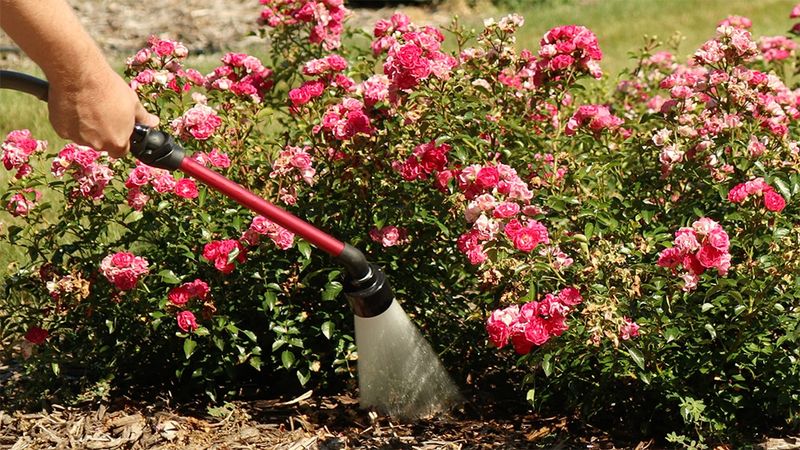
One of the most practical changes a Michigan rose grower can make has nothing to do with timing and everything to do with aim.
Directing water toward the soil at the base of the plant rather than spraying it over the entire bush keeps foliage dry from the start.
When leaves never get wet in the first place, there is no window for black spot spores to germinate on their surfaces, regardless of what time of day the watering happens.
Overhead sprinklers are convenient and common in residential yards, but they are not well suited for rose beds where disease management matters.
A standard oscillating sprinkler wets everything it reaches, including leaves, stems, and flowers, and it does so consistently every time it runs.
Switching to a soaker hose or a hand-held wand aimed low at the soil gives gardeners much more control over where the water actually goes.
Soil-level watering also tends to be more efficient because water goes directly to the root zone where the plant can use it, rather than being lost to evaporation off leaf surfaces or wasted on pathways and mulch.
In a Michigan summer when water restrictions can become a concern during dry spells, that kind of efficiency matters.
Mulching around the base of rose plants helps retain soil moisture between waterings, which means the plants need to be watered less frequently overall.
Combining soil-level watering with a layer of organic mulch is a simple, low-cost approach that supports both plant health and water conservation in a home rose bed.
6. Humidity Makes Timing Matter More
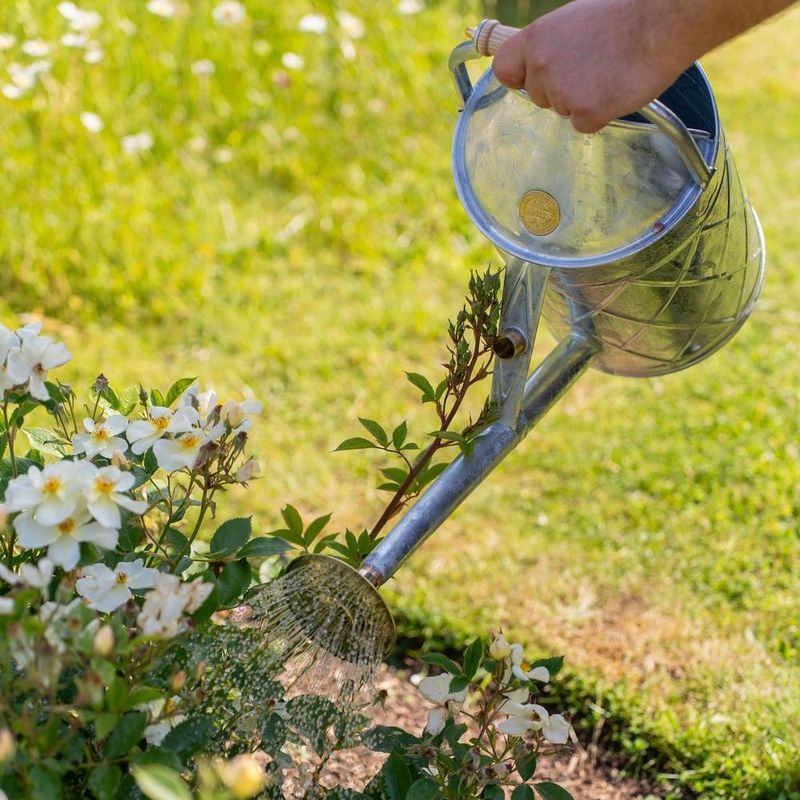
Humid July evenings in Michigan are the kind of nights where everything feels a little damp, even without rain.
The air holds moisture close to the ground, foliage stays slightly tacky to the touch, and conditions that favor fungal diseases linger well past midnight.
For rose growers, that kind of humidity is already applying pressure on plant health before a single drop of irrigation water is added.
Black spot thrives in warm, moist conditions, and Michigan summers deliver both reliably. When outdoor humidity is already high, the threshold for how much additional leaf wetness is needed to trigger infection gets lower.
A rose bush that might handle a light splash of water on its leaves on a breezy, low-humidity afternoon in May could be much more vulnerable during a stagnant, muggy evening in late July when the same moisture has nowhere to go.
Understanding that Michigan’s climate creates a baseline of humidity-related risk helps explain why watering timing feels more urgent here than it might in drier parts of the country.
Gardeners in the Southwest or Great Plains may have more flexibility with evening watering simply because the air dries foliage faster.
In Michigan, that margin shrinks considerably from June through August.
Paying closer attention to the forecast, especially on nights when humidity is expected to stay above 80 percent, can help gardeners make smarter watering decisions.
Skipping a day after a stretch of cloudy, humid weather has already kept foliage damp for extended periods is often the right call.
7. Drip Irrigation Is The Safer Choice
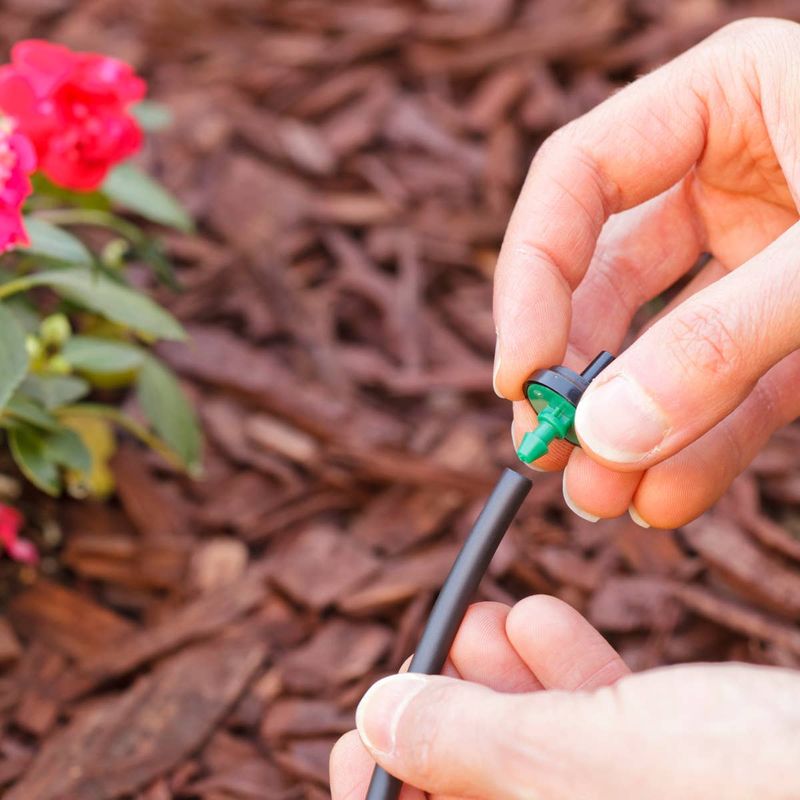
Soaker hoses and drip lines have become increasingly popular among Michigan rose growers who want a reliable, low-maintenance way to water without adding unnecessary disease pressure.
Drip irrigation delivers water slowly and directly to the root zone, keeping the entire above-ground portion of the plant dry.
That single feature makes it one of the most compatible irrigation methods for roses grown in humid, black-spot-prone environments.
A basic drip system can be set up in a home rose bed without much equipment or expense. Emitter lines or soaker hoses are laid along the soil surface near the base of each plant, connected to a standard garden hose or an outdoor spigot with a simple timer.
When the system runs, water seeps into the soil quietly and efficiently without any misting, spraying, or overhead coverage that might wet the foliage.
Even if the timer runs in the morning, which is still the preferred time, the method reduces risk significantly compared to sprinklers.
Drip irrigation also encourages deeper root growth over time because water is delivered slowly enough for it to move down into the soil rather than sitting on the surface or running off.
Roses with deeper root systems tend to handle Michigan’s dry summer spells more comfortably.
Combining drip irrigation with morning timing and a layer of organic mulch around the base of each plant gives rose growers a solid, practical approach to reducing black spot pressure without relying heavily on fungicide applications.
It is a setup that rewards a small upfront investment with noticeably healthier plants through the growing season.