Native Ohio Plants For Shady Spots Under Evergreens
Planting under evergreens is one of those gardening challenges that has humbled even the most experienced Ohio gardeners. It looks simple enough from the outside: just put something under the tree.
And then you try it, and the plant struggles, and you try again, and that one struggles too, and eventually you start to wonder if anything can actually grow under a spruce without quietly giving up within a season.
The conditions under tightly branched evergreens are genuinely tough.
Dense shade, dry soil, needle litter, and root competition all working against you at once. But here’s the encouraging part: several Ohio native plants are actually well-suited to exactly these conditions.
They have been doing it in woodland understories for a long time. You just have to know which ones to reach for and give them a little time to settle in.
1. Pennsylvania Sedge Softens Dry Shade
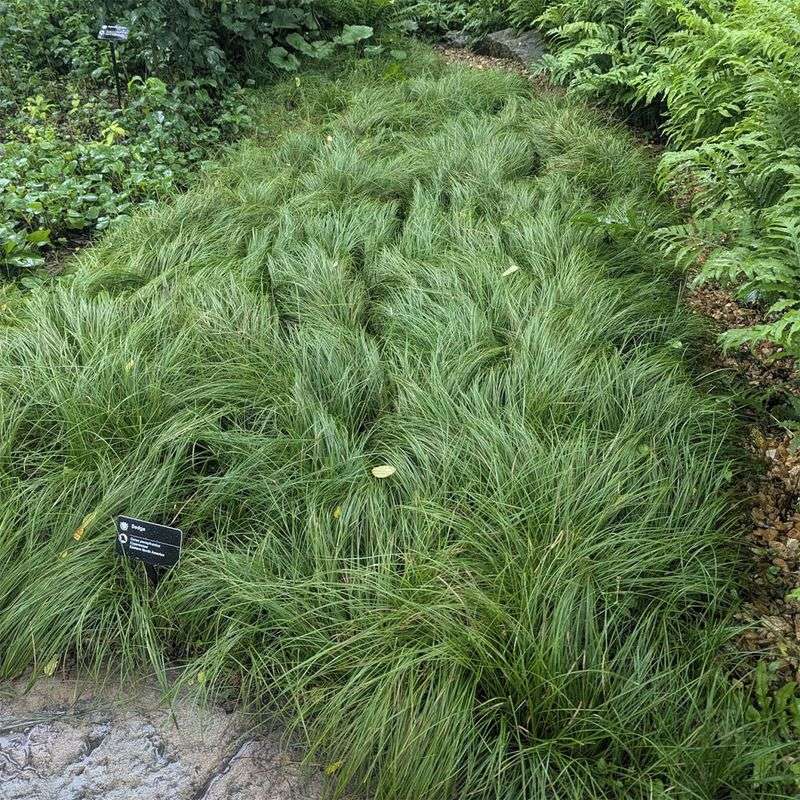
Bare ground under a mature spruce or pine is one of the most common frustrations Ohio homeowners face. Pennsylvania sedge is one of the few native plants that actually fits those conditions without requiring constant attention.
Its fine, arching blades stay low to the ground and create a soft, meadow-like texture that looks natural beneath evergreen branches.
This sedge tolerates dry shade better than most groundcovers, making it a practical choice for spots where rainfall rarely reaches the soil. It spreads slowly by short rhizomes, gradually filling in gaps without becoming invasive.
In Ohio gardens, it works especially well along the drip line of large evergreens, where light is slightly better and soil is a bit less compacted.
Pennsylvania sedge stays semi-evergreen in Ohio, holding its color through mild winters and greening up quickly in spring.
It does not require fertilizing or frequent watering once established, though new plantings benefit from regular moisture during the first growing season.
Spacing plants about eight to twelve inches apart encourages quicker coverage. Mow or trim lightly in late winter before new growth begins to keep the planting looking tidy and fresh heading into the warmer months.
2. Christmas Fern Handles Evergreen Cover
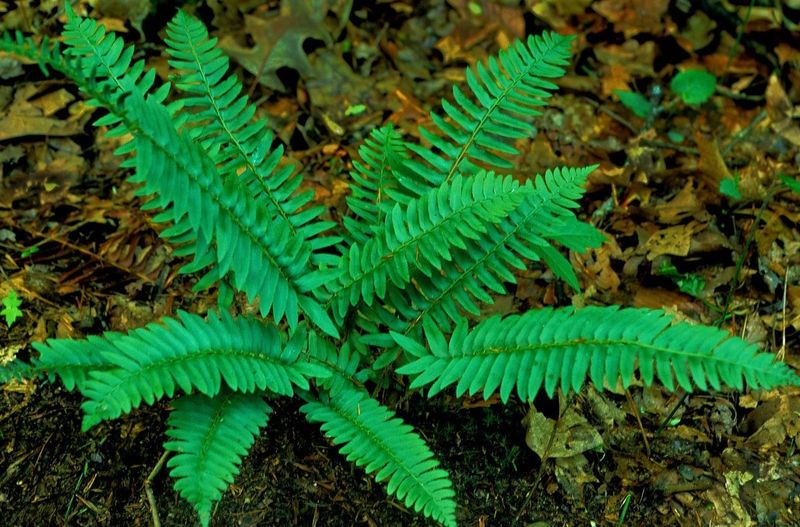
Walk through almost any Ohio woodland and you will likely spot Christmas fern tucked beneath oaks, hemlocks, and other large trees where the light barely filters through.
That adaptability is exactly what makes it such a reliable choice for planting under established evergreens in residential landscapes.
The deep green fronds stay attractive well into winter, giving the garden structure even after most other plants have faded.
Unlike many ferns, Christmas fern tolerates drier soil conditions reasonably well once it has had time to settle in. The roots establish slowly, so consistent watering during the first season is important.
After that, it generally manages with whatever moisture the site provides, though very dry summers may stress younger plants.
In Ohio gardens, Christmas fern works well along the shaded north or east sides of homes where evergreens cast dense shade. It pairs naturally with sedges and wild ginger, creating a layered woodland look that feels cohesive rather than random.
Your Ohio Garden Changes Every Week. Your Plan Should Too.
Gardening in Ohio changes quickly throughout the season. Every Friday you’ll receive a simple weekly plan showing exactly what to plant, prune, fertilize, harvest, and protect so you never miss the right timing.
Plants typically grow in clumps reaching one to two feet tall and wide, so spacing them about eighteen inches apart gives each one room to spread. Avoid planting in spots with standing water, as consistently wet soil can cause root problems over time.
3. Wild Ginger Spreads In Rich Shade
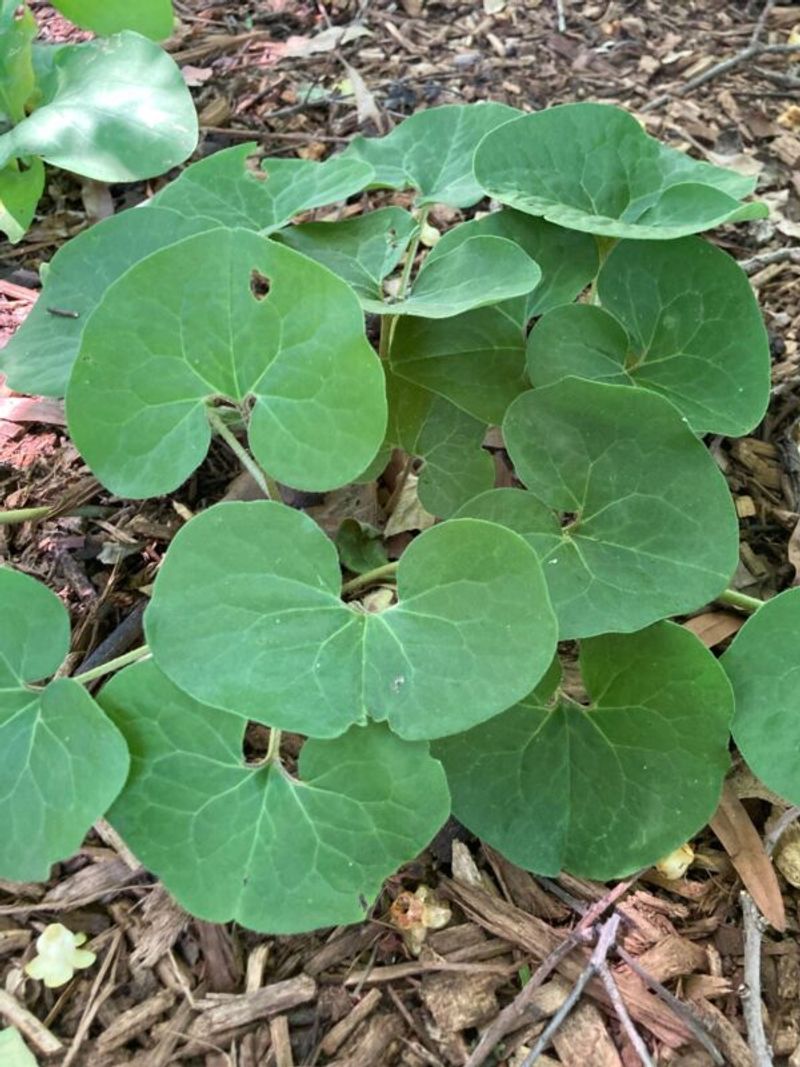
Few groundcovers match the lush, carpet-like look that wild ginger creates in a shaded garden bed.
The large, heart-shaped leaves overlap as the plant spreads, covering bare soil with a rich, dark green layer that suppresses weeds and holds moisture in the ground below.
In Ohio, it grows naturally along woodland slopes and stream banks where organic matter is plentiful and the canopy stays dense.
Under evergreens, wild ginger does best where some leaf litter or organic matter has accumulated, giving its shallow roots something to work with.
Amending the soil with compost before planting helps considerably in spots where needle drop has made the ground more acidic and low in nutrients.
Once established, it spreads at a steady pace through rhizomes without becoming a problem for neighboring plants.
Wild ginger is not the fastest spreader, so patience is part of working with it. Planting divisions about six to eight inches apart speeds up coverage noticeably.
It tolerates moderate to deep shade, making it one of the more flexible options for spots directly under evergreen canopies where light is limited.
The small, brownish-red flowers appear in spring beneath the foliage, hidden from view but interesting to discover when you lift a leaf and look closely.
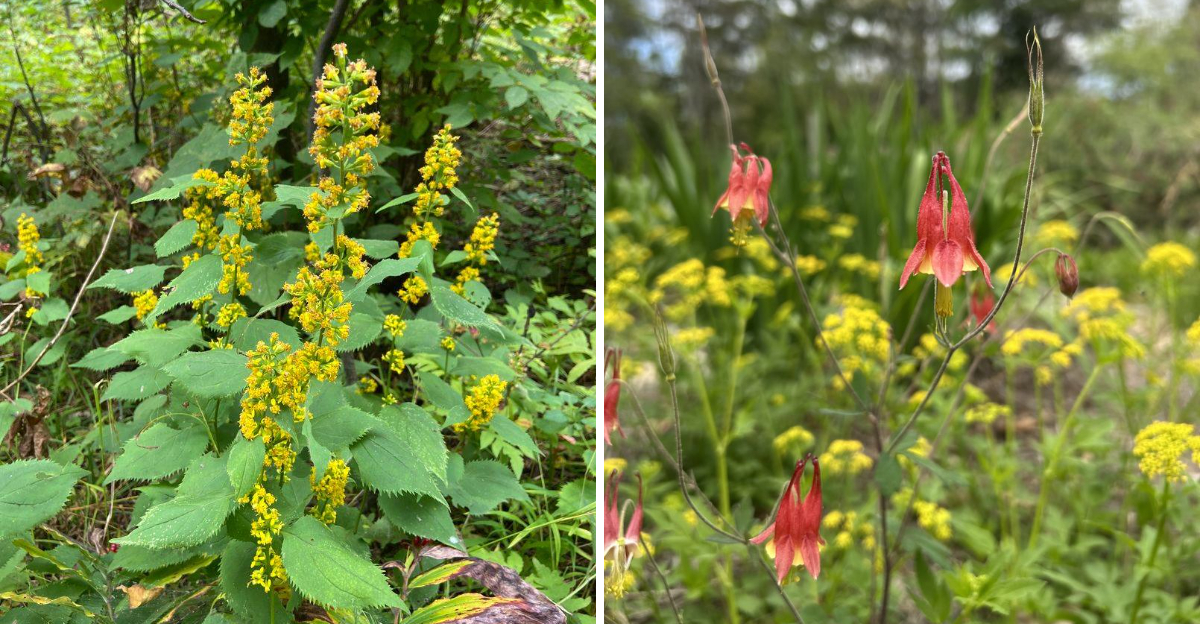
4. Zigzag Goldenrod Brightens Woodland Edges
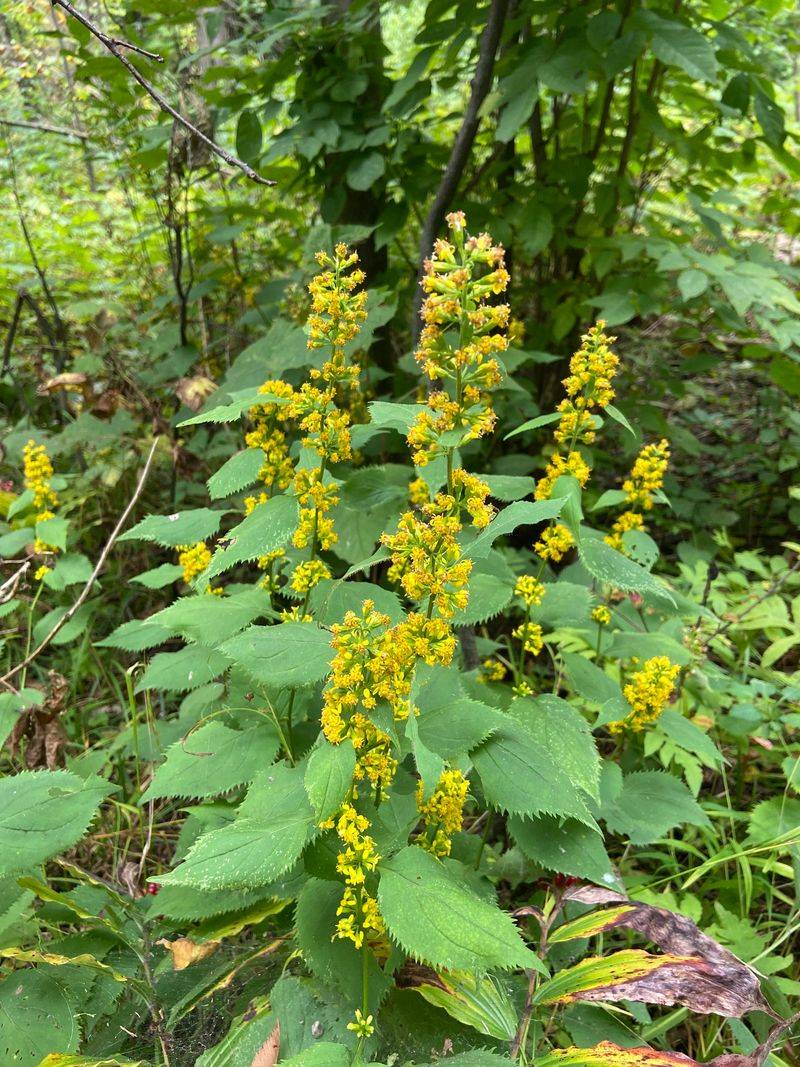
Most goldenrods are known for thriving in full sun, but zigzag goldenrod breaks that pattern in a way Ohio gardeners with shaded evergreen beds will appreciate.
Its common name comes from the noticeable zigzag pattern of its stem, which makes it easy to identify even before it blooms.
The bright yellow flower clusters appear in late summer and early fall, bringing welcome color to spots that can feel dull by the end of the season.
Zigzag goldenrod grows naturally in Ohio woodlands and forest edges, where it handles filtered light and drier conditions better than most flowering natives.
Under evergreens, it works best along the outer edges of the planting where some light still reaches the ground, rather than directly beneath the densest part of the canopy.
Very heavy shade will reduce flowering noticeably.
Plants grow roughly two to three feet tall and spread gradually by rhizomes, forming loose colonies over time.
Goldenrods like this one support native bees and other pollinators during late-season blooms, which adds ecological value to the garden beyond its visual appeal.
In residential Ohio landscapes, it fits naturally at the transition between a shaded evergreen bed and a sunnier border, softening that edge with late-season texture and color.
5. White Wood Aster Blooms In Shade
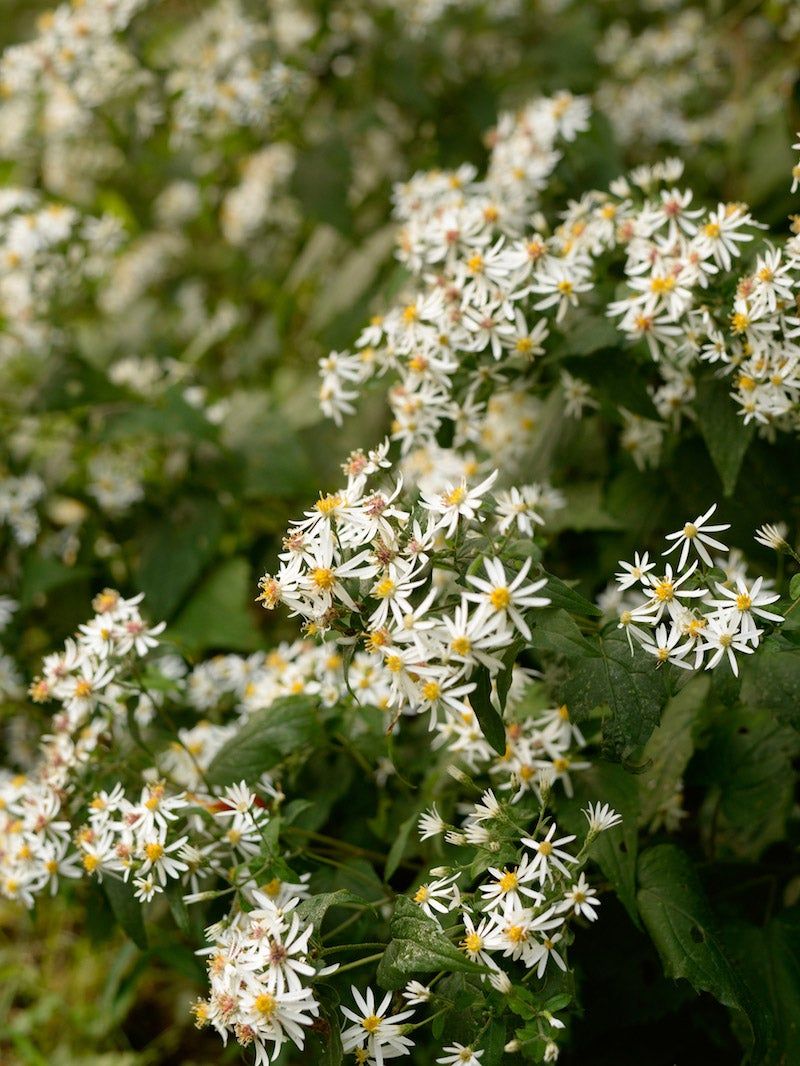
Late-season color under evergreens is hard to come by, which is one reason white wood aster earns its place in Ohio shade gardens.
The small, white daisy-like flowers open in late summer through fall, creating a soft, airy display at a time when most shade plants have stopped blooming.
The contrast between the white petals and dark foliage looks especially striking against a backdrop of evergreen branches.
White wood aster grows naturally in Ohio woodlands and shaded slopes, where it handles dry to moderately moist soil and filtered light without much fuss. Under dense evergreens, it tends to perform better along the edges where a bit more light filters in.
Very deep shade will limit flowering, though the foliage remains attractive even in lower light conditions.
Plants grow roughly one to two and a half feet tall and spread by rhizomes, gradually forming loose colonies that fill in open ground.
The foliage has a slightly heart-shaped base and a coarse texture that contrasts nicely with finer-leaved groundcovers like Pennsylvania sedge.
In Ohio residential gardens, white wood aster fits well in foundation beds, path edges, and mixed native plantings beneath mature evergreens. Pollinators, including native bees, visit the flowers regularly during the fall bloom period.
6. Wild Columbine Fits Filtered Light
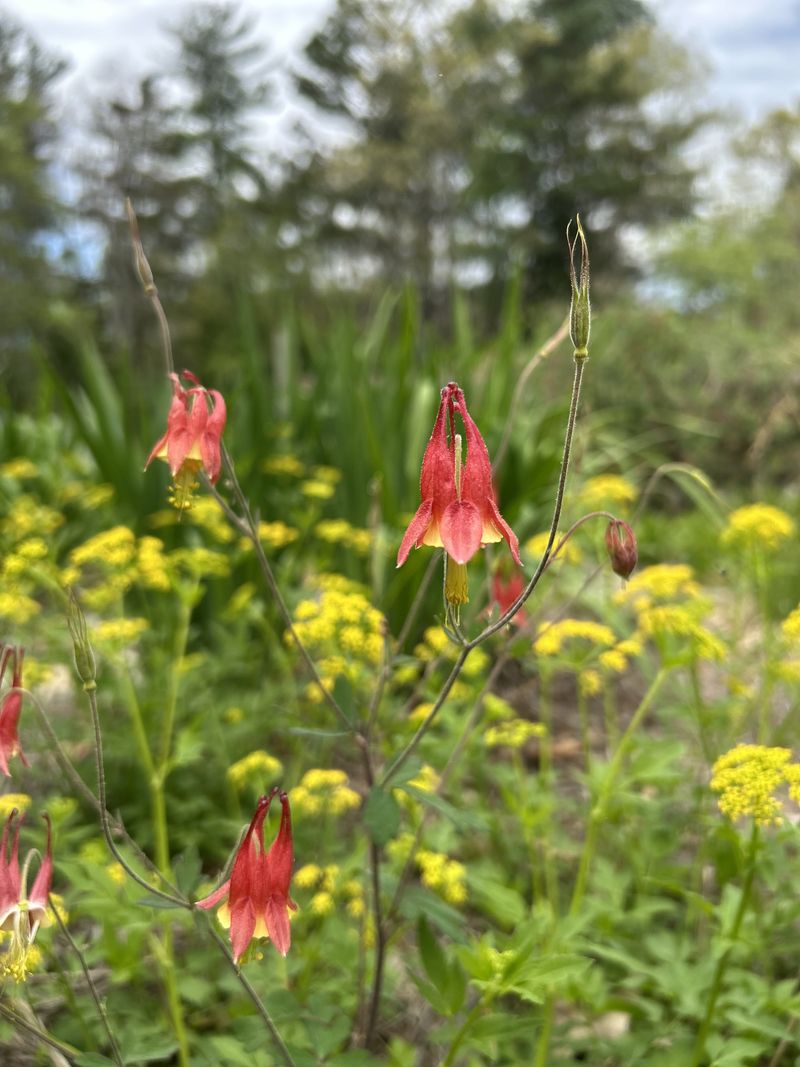
Filtered light at the edge of an evergreen planting is exactly where wild columbine tends to perform best. The red and yellow nodding flowers appear in spring, often as early as April in Ohio, bringing color to a spot that has been bare and quiet all winter.
Ruby-throated hummingbirds are drawn to those flowers almost immediately after they open, which makes wild columbine a rewarding plant to watch from a nearby window or porch.
Wild columbine grows naturally on rocky slopes, open woodlands, and shaded ledges throughout Ohio, where it tolerates lean, dry soil and varying light levels.
Under evergreens, it does best where the canopy is not completely solid, allowing some dappled light to reach the ground for at least part of the day.
Deep, consistent shade will reduce blooming and may cause plants to stretch and become leggy.
Plants grow roughly one to two feet tall and tend to self-seed lightly, filling in nearby gaps over several seasons without becoming a nuisance. The ferny, blue-green foliage stays attractive after blooming, adding texture through summer.
In Ohio residential gardens, wild columbine fits naturally at the outer edge of a shaded evergreen bed, near a path, or at the base of a tree where filtered morning light reaches the ground for a few hours each day.
7. Alumroot Adds Low Native Foliage
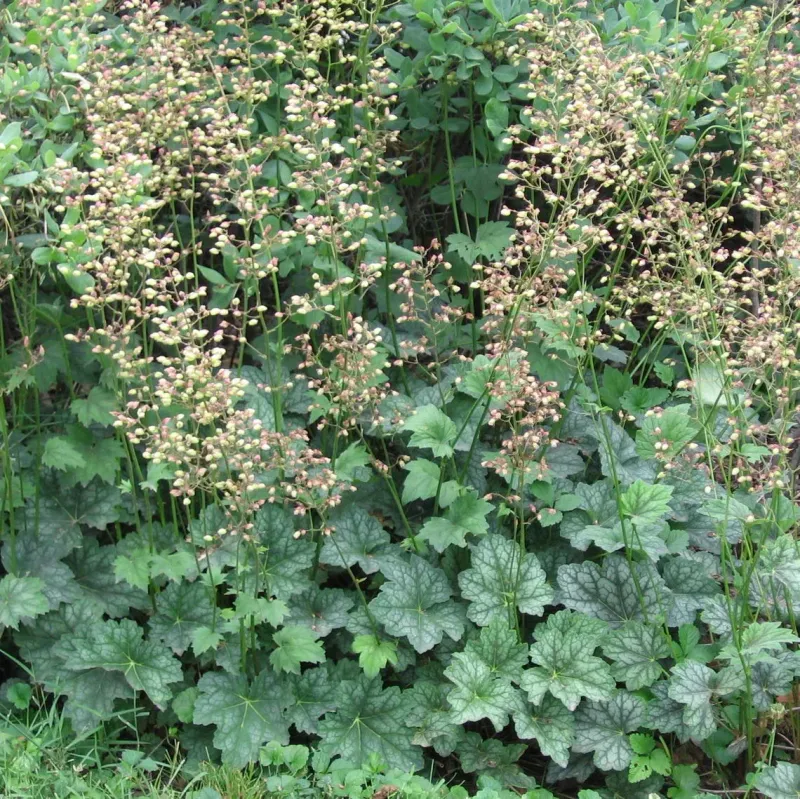
Tucked at the base of an evergreen where the soil is dry and the light barely reaches, alumroot does something most plants struggle to do – it simply holds on and looks good doing it.
The scalloped, rounded leaves form low rosettes that stay close to the ground, making alumroot a natural fit for spots where taller plants would look awkward or compete with tree roots too aggressively.
Heuchera americana, the native alumroot found across Ohio, grows in rocky woodlands and shaded slopes where dry, lean soil is common.
It handles the dry conditions under evergreens better than many other low-growing natives, especially once established.
The wiry flower stalks rise above the foliage in late spring, producing small, airy blooms that attract native bees and other small insects.
In Ohio residential gardens, alumroot works well as a low border along a shaded foundation bed, at the edge of an evergreen planting, or tucked between larger ferns and sedges to fill in gaps with interesting foliage texture.
The leaves can show some variation in color and pattern, adding quiet visual interest even when the plant is not in bloom.
New plants benefit from regular watering through the first season, after which they generally manage well with natural rainfall in most Ohio garden settings.
8. Green And Gold Covers Shady Ground
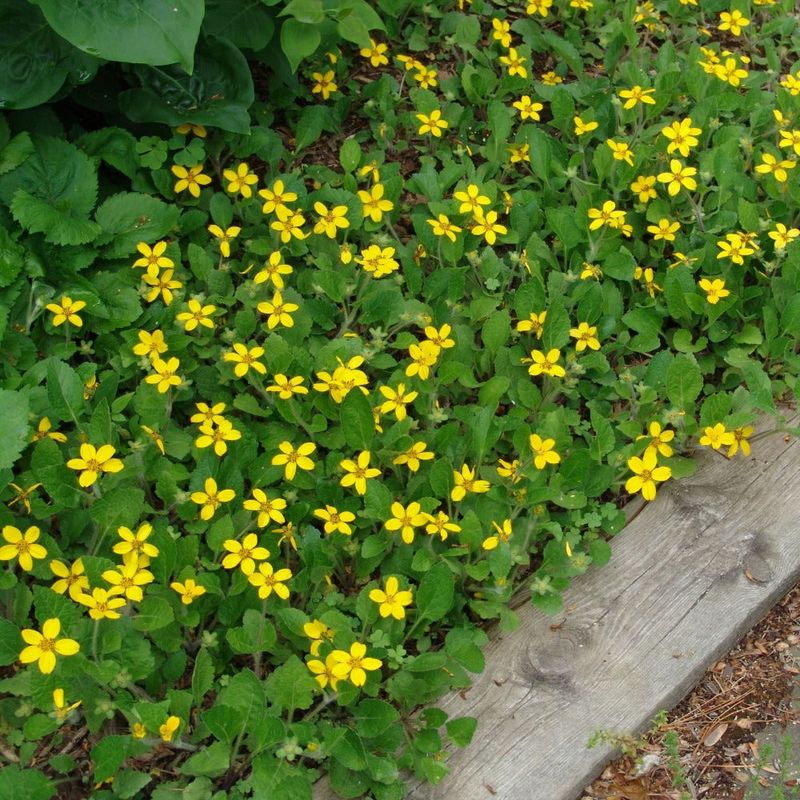
Bright yellow flowers spreading across the ground under a dense evergreen canopy might sound too good to be true, but green and gold pulls it off with minimal fuss.
This low-growing native groundcover blooms in spring and often again lightly in fall, offering cheerful color in spots where most plants struggle to produce any flowers at all.
The semi-evergreen foliage stays attractive through Ohio winters, holding its green color in sheltered spots.
Chrysogonum virginianum grows naturally in woodland settings across the eastern United States, where it handles dry to moderately moist shade without much intervention.
Under evergreens in Ohio, it does best along the outer edges of the canopy where some filtered light still reaches the ground.
Very dense, dry shade directly beneath the center of a large spruce or pine may limit its spread and flowering.
Plants grow only about six to nine inches tall but spread steadily by stolons, gradually creating a low, weed-suppressing mat that looks tidy in residential garden beds. Spacing plants about twelve inches apart encourages quicker coverage without overcrowding.
Green and gold pairs well with ferns, sedges, and wild ginger in layered Ohio shade plantings.
It also attracts native bees during bloom periods, adding a small but meaningful ecological benefit to shaded foundation beds and woodland-style garden edges.
9. Running Strawberry Bush Creeps Under Trees
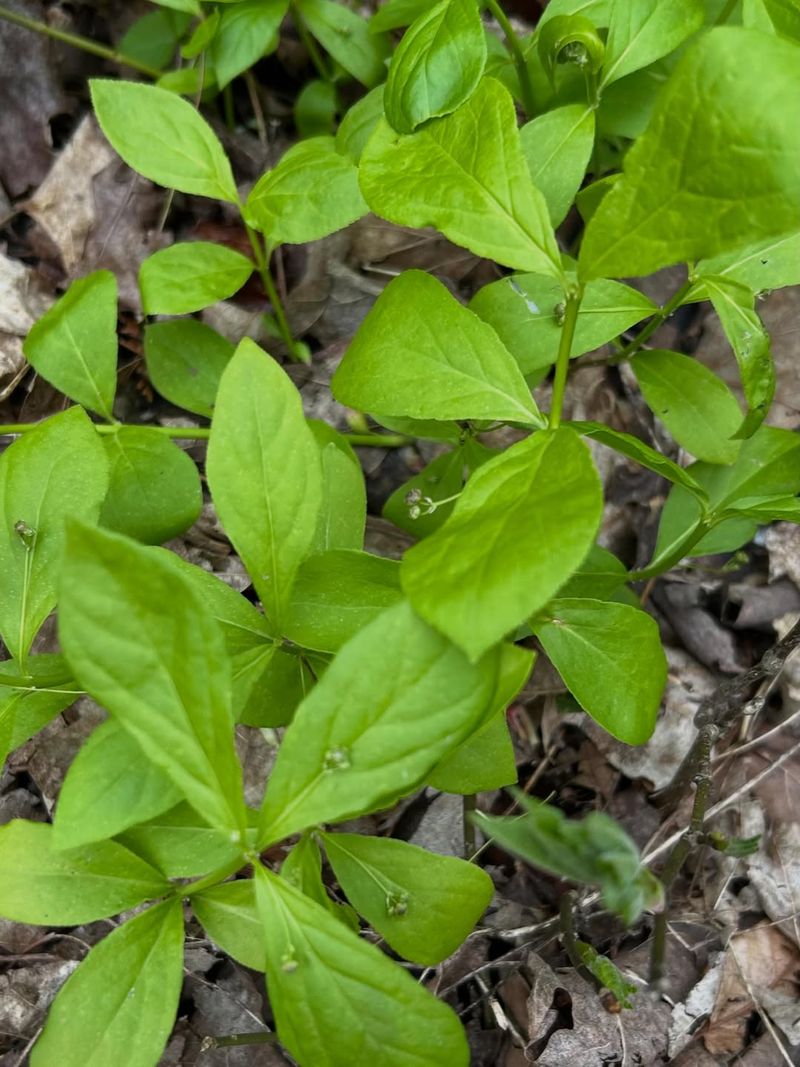
Needle-covered ground beneath a mature hemlock or pine can look uninviting for most of the year, but running strawberry bush treats it like an opportunity.
This low, creeping native shrub spreads along the ground by trailing stems that root where they touch soil, gradually covering bare patches with small, neat leaves and occasional interest through its unusual pink and orange seed capsules in fall.
Euonymus obovatus is native to Ohio woodlands, where it grows in shaded, moist to moderately dry conditions beneath large trees.
Under evergreens, it adapts reasonably well to lower light and drier soil, though it tends to spread more vigorously where some moisture is available.
Amending very dry spots with compost and watering consistently during the first season gives it a better start.
Running strawberry bush stays low, typically only a few inches tall, which makes it a practical choice for covering ground without blocking views or competing visually with taller plants in the same bed.
In Ohio residential landscapes, it works well beneath mature evergreens along shaded slopes, foundation beds, and path edges where erosion control and ground coverage are priorities.
Wildlife, including wild turkeys and other birds, occasionally feed on the fall fruit, adding a natural connection to the broader Ohio landscape right in the backyard.