This Beetle Could Invade Tennessee, And Here’s Why You Should Never Touch It
Something could soon be chewing its way through Tennessee’s trees, and the damage it leaves behind is hard to reverse.
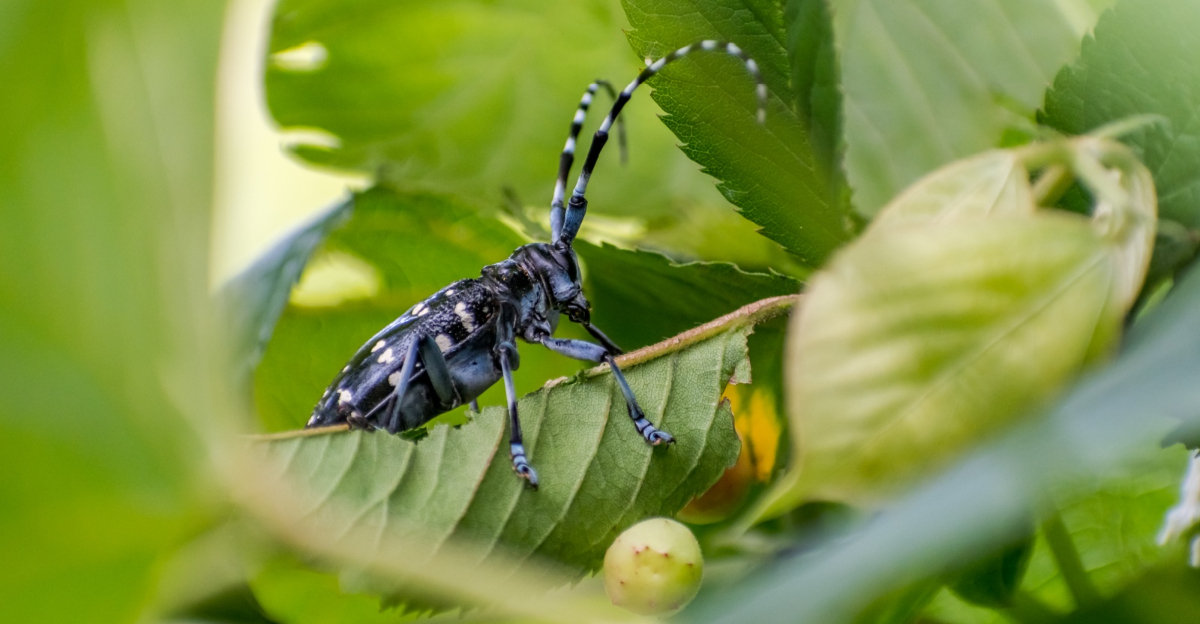
Reports describe a strange insect, glossy black with a scattering of white spots, that has been found in neighborhoods and along forest edges in other states.
It looks almost too polished to be a threat, more like a piece of jewelry than a pest. But looks are doing a lot of lying here.
Trees across Tennessee are quietly hollowing out from the inside, weakening long before anyone notices anything wrong on the surface.
Once this insect settles into an area, it rarely leaves on its own. Homeowners are finding unfamiliar holes in bark.
Hikers are spotting something unusual clinging to branches. Whatever this insect is, ignoring it could cost entire neighborhoods their shade within a few short years.
What This Invasive Beetle Actually Is
Picture a beetle so striking it looks like it belongs in a museum display case. The Asian Longhorned Beetle, known to scientists as Anoplophora glabripennis, is not native to North America.
It arrived in the United States hidden inside wooden packing crates shipped from Asia in the 1990s.
This insect is a wood-borer, meaning it spends most of its life inside trees. Adult females chew small pits into tree bark and lay eggs directly inside.
When the larvae hatch, they tunnel deep into the wood and feed from the inside out. The beetle targets hardwood trees almost exclusively.
Maples, elms, birches, willows, and poplars are among its favorite hosts. A single infested tree can harbor dozens of larvae quietly destroying it from within.
Unlike many insects that damage only weak or stressed trees, this one targets healthy, thriving specimens too.
That makes it especially alarming for homeowners who think their trees are safe. No healthy tree is immune once this pest moves in.
The insect typically has a one-to-two-year life cycle inside the tree before adults emerge, depending on climate. By the time you notice the damage, the infestation is often already severe.
Early identification is the only real advantage homeowners have against this relentless invader. Understanding what this beetle is and where it came from helps explain why officials treat every sighting as a crisis.
One beetle found in a new area can mean hundreds more are already hidden nearby. The risk to Tennessee’s trees is significant.
Why Experts Say Don’t Touch Or Move It
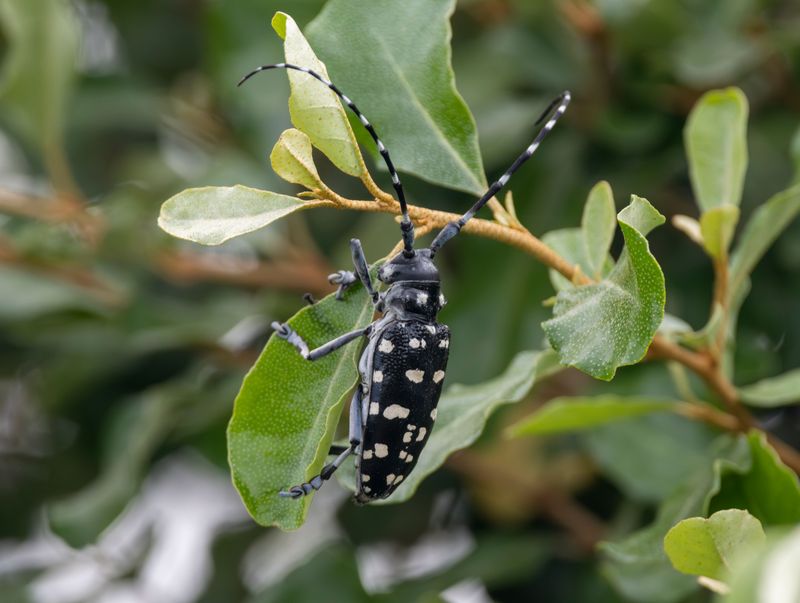
Your instinct might be to pick it up and get a closer look. That impulse, however innocent, could help the insect spread to new areas.
Experts and federal officials strongly urge the public never to touch, collect, or relocate this beetle. Moving even one live beetle to a new location can start a fresh infestation miles away.
This insect does not spread quickly on its own. It typically stays close to where it emerged. Humans accidentally carry it much farther, faster.
Transporting firewood is one of the biggest ways this pest jumps to new areas. Beetle larvae can be hidden inside logs with no visible signs on the outside.
Your Tennessee Garden Changes Every Week. Your Plan Should Too.
Gardening in Tennessee changes quickly throughout the season. Every Friday you’ll receive a simple weekly plan showing exactly what to plant, prune, fertilize, harvest, and protect so you never miss the right timing.
Burning that wood at a campsite far from home spreads the problem to untouched forests. Federal quarantine zones exist in several states for exactly this reason.
Within these zones, moving wood, branches, or even certain plants without permits is illegal. Violations can result in serious fines and legal consequences.
Even well-meaning people who try to capture the beetle for reporting purposes can cause harm. Keeping it alive in a container while traveling to a reporting station risks escape.
The safest approach is to photograph it clearly and leave it exactly where you found it. Officials want your photos and your location data, not the bug itself. Your smartphone camera is the most powerful tool you have right now.
Snap a clear picture, note the exact spot, and report it immediately to your state agriculture department. That single action could protect thousands of trees.
How To Identify The Asian Longhorned Beetle
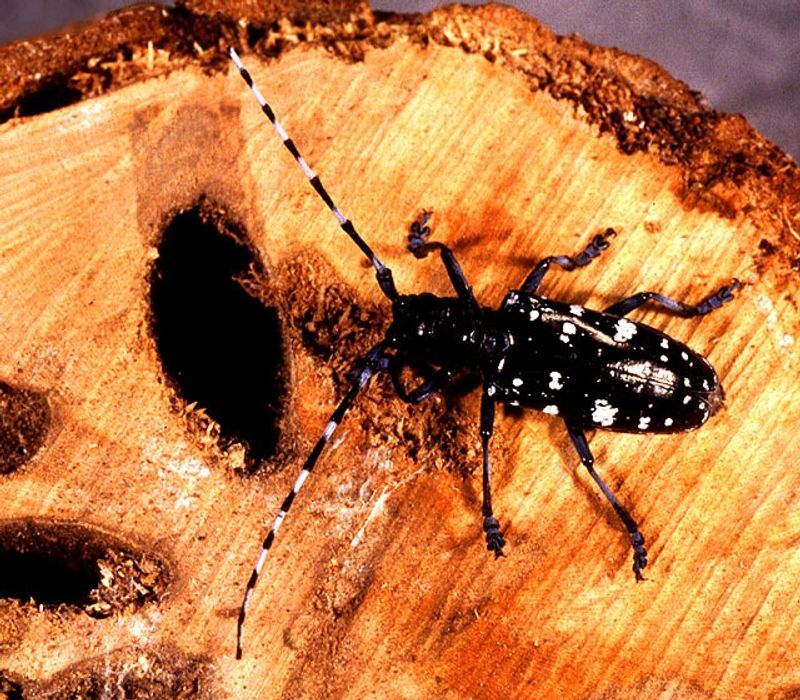
Spotting this insect correctly is crucial, because misidentifying it wastes precious response time.
Fortunately, the Asian Longhorned Beetle has a very distinctive appearance that sets it apart from most native species. Once you know what to look for, you will not forget it.
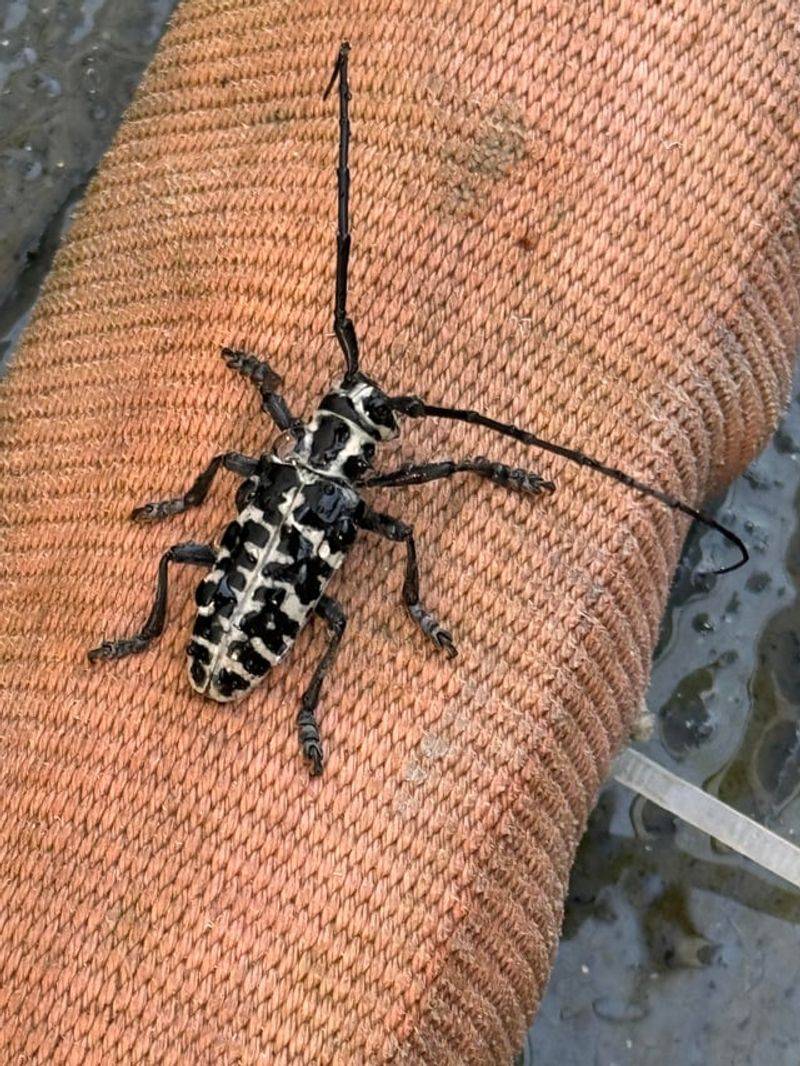
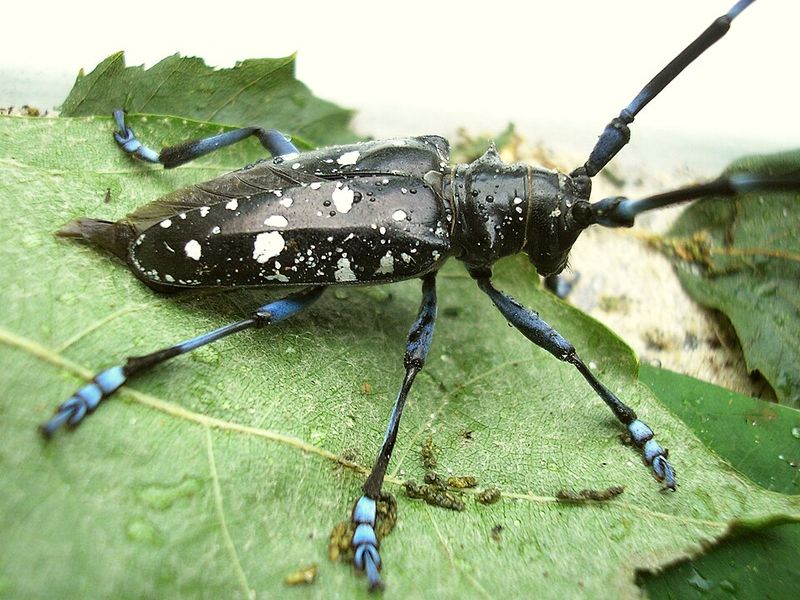
The body is glossy black and roughly one to one-and-a-half inches long. Scattered across the wing covers are between 20 and 30 irregular white spots.
Those spots are one of the clearest visual clues that you are looking at this particular species.
The antennae are the most dramatic feature of all. They are longer than the beetle’s own body and banded in black and white.
No native North American beetle shares that exact combination of size, spots, and banded antennae.
The feet have a faint bluish tint that becomes visible in good lighting. The underside of the body also shows patches of white.
These subtle details help confirm an identification when you are reviewing photos. A common look-alike is the Whitespotted Sawyer Beetle, which is native and harmless.
The key difference is that the Sawyer has a small white dot between its wing covers at the top. The Asian Longhorned Beetle lacks that single central dot entirely.
Size matters too. This invader is noticeably larger than most beetles you will encounter in a backyard.
If you see a big, shiny, spotted beetle with absurdly long striped antennae on a hardwood tree, trust your gut. Photograph every angle you can and report it right away.
The Damage It’s Already Caused Across the U.S.
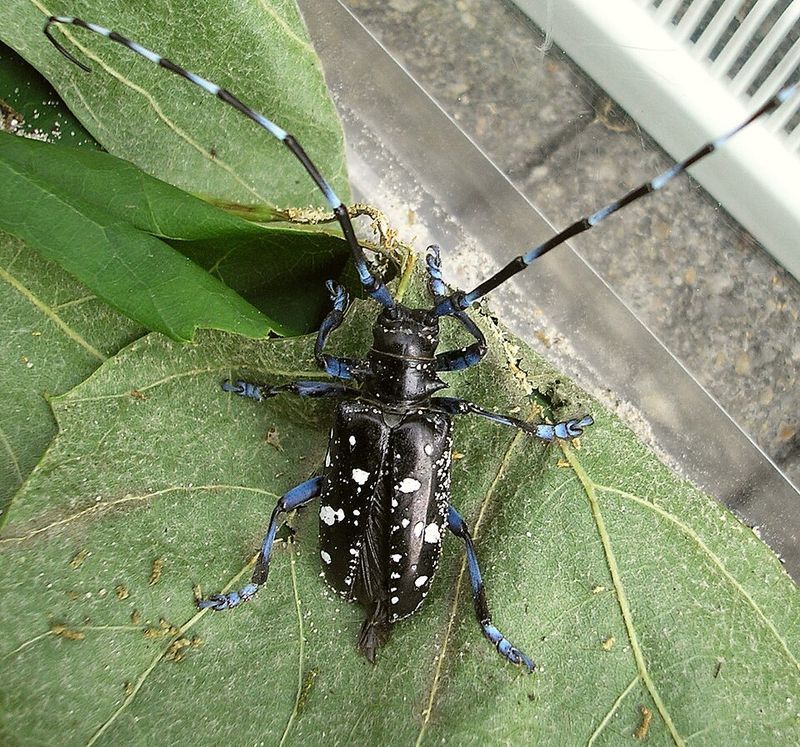
The numbers behind this beetle’s destruction are significant. Since its first confirmed U.S. sighting in Brooklyn, New York in 1996, it has triggered the removal of well over 200,000 trees across multiple states.
That is not a typo, well over two hundred thousand trees, gone. New York, Massachusetts, Ohio, New Jersey, Illinois, and South Carolina have all battled major infestations.
Eradication efforts in those states cost hundreds of millions of taxpayer dollars. And in most cases, the only proven solution was cutting down every infested and nearby tree.
Maple trees have been affected the most. Sugar maples, red maples, and silver maples are among the beetle’s preferred hosts.
For New England states that depend on maple syrup production, the economic threat is enormous. Beyond economics, the ecological loss is substantial.
Mature hardwood trees take decades to grow and cannot be quickly replaced. Entire neighborhoods and natural areas have been stripped bare in the effort to stop the spread.
Ohio’s infestation, discovered in 2011, led to the removal of tens of thousands of trees in the Clermont County area alone.
Residents described entire streets looking bare after the clearing crews finished. The landscape changed overnight in ways that will take generations to recover.
Tennessee has not yet experienced a confirmed outbreak on that scale. But its abundant hardwood forests make it vulnerable if the beetle spreads further.
What happened in Ohio and Massachusetts is a preview of what could happen here if action is delayed.
Warning Signs Your Trees May Be Infested
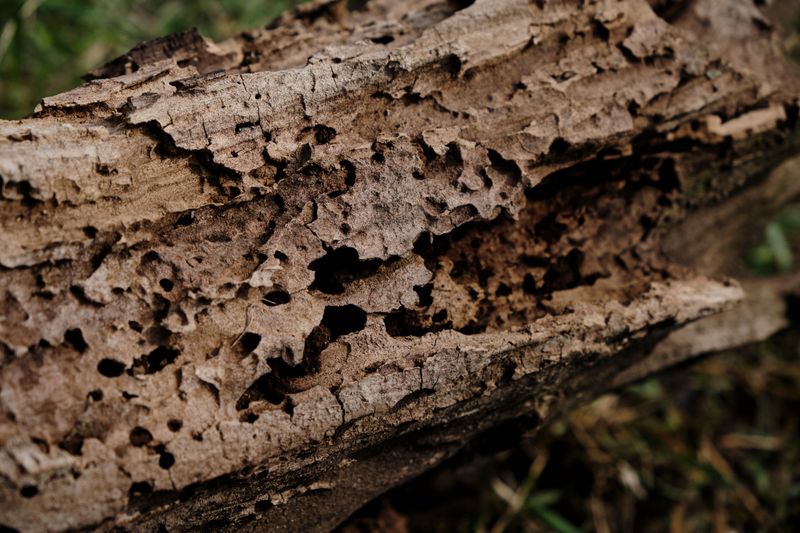
Your trees cannot speak, but they leave clues if you know where to look. Catching an infestation early is the difference between saving nearby trees and losing an entire block of hardwoods.
A quick monthly walk around your yard could matter more than you realize. The most obvious sign is perfectly round exit holes in the bark, about the size of a dime. Adult beetles chew these holes when they emerge from inside the tree.
Finding even one of these holes on a hardwood tree is reason enough to report immediately.
Look for shallow, oval-shaped pits or scars on the bark surface. Female beetles chew these spots before laying eggs.
The wounds often look like small gouges or scrapes running across the outer layer of bark. Sawdust-like material called frass may collect at the base of the trunk or in bark crevices. This coarse, fibrous debris is pushed out by tunneling larvae.
Fresh frass is a strong indicator that larvae are actively feeding inside right now. Sap oozing from the bark in unusual spots is another red flag. Stressed trees often weep sap around egg-laying wounds.
Combined with other signs, weeping sap points strongly toward beetle activity. Yellowing or wilting branches on an otherwise healthy-looking tree can signal internal damage.
By the time crown dieback appears, the infestation may already be advanced. Do not wait for the tree to look obviously sick, check the bark and base regularly throughout summer and fall.
What To Do If You Spot One In Tennessee
Stay calm, but act quickly if you spot this insect. If you see what looks like an Asian Longhorned Beetle, the steps you take in the next few minutes genuinely matter.
Your quick response could protect thousands of acres of forest. First, do not touch the insect or disturb the tree.
Leave everything exactly as you found it. Your goal is to document, not to intervene. Take as many clear photos as you can from multiple angles.
Capture the body, the antennae, the spots, and the tree it is on. A blurry photo is far less helpful than a sharp one taken from a few different positions.
Note the exact location, a street address, GPS coordinates from your phone, or a nearby landmark all work. The more specific your location data, the faster officials can respond.
Vague descriptions like “near the park” slow everything down. Report your sighting to the USDA Animal and Plant Health Inspection Service at 1-866-702-9938. You can also submit a report online at the USDA’s Hungry Pests website.
Tennessee residents can contact the state’s Department of Agriculture directly for local follow-up.
Your report triggers a professional inspection of the area, often within days. Inspectors will confirm the identification and assess the scope of any infestation.
Taking action today is the most powerful thing you can do to protect Tennessee’s hardwood forests from the Asian Longhorned Beetle’s growing reach.