What To Do With Your Florida Ixora In July So The Blooms Don’t Stop Until Fall
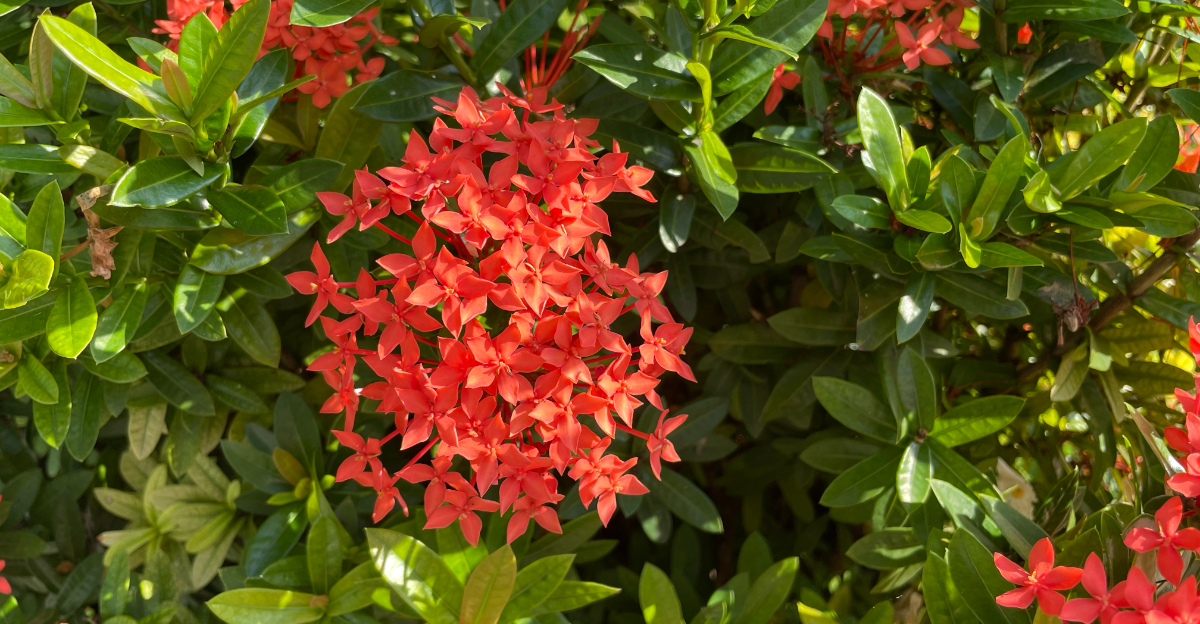
Ixora in July looks like it is managing Florida summer without any help. Bold color, dense foliage, a shrub that seems built for exactly this kind of heat.
Most Florida homeowners take that as a sign to leave it alone through the hardest stretch of summer. That hands-off approach is what turns a strong July bloom into a disappointing August.
Ixora has specific needs in July that most gardeners never address because the plant looks fine without it. Fine and thriving are different things, and the gap between them shows up clearly in bloom production as the season moves forward.
One targeted task right now keeps the color coming through August and into fall. Skip it and the blooms thin out gradually, the kind of slow decline that is easy to miss until the plant has already lost significant momentum.
July is the month ixora actually needs your attention. Most homeowners give it in spring and never again.
1. Give Ixora The Acidic Soil It Craves
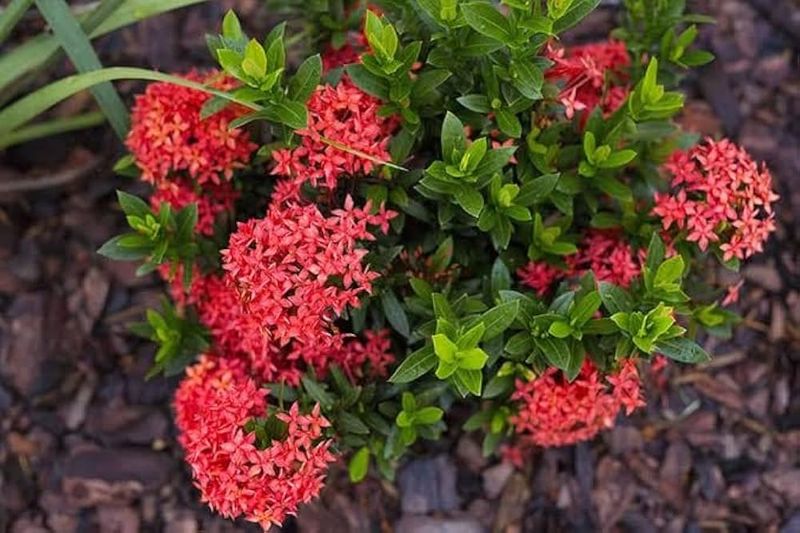
Soil chemistry might not be the most exciting topic, but for ixora, it is one of the most important factors behind healthy growth and consistent flowering. Ixora performs best in acidic soil with a pH roughly between 5.0 and 6.5.
When the soil tips toward alkaline conditions, the plant struggles to absorb iron and other micronutrients. That shows up as yellowing leaves, weak new growth, and reduced blooming.
Many yards in Florida have naturally alkaline or neutral soil. The problem gets worse near concrete sidewalks, driveways, foundations, or areas with shell-based fill.
These materials can raise soil pH over time, quietly working against your shrub even when everything else seems fine. If your ixora has been yellowing or flowering less than usual, soil pH is one of the first things worth checking.
A basic soil test from your local UF/IFAS county extension office can give you accurate results and guidance on how to adjust.
Certified acidifying amendments like elemental sulfur or acid-forming fertilizers designed for plants like azaleas and gardenias are commonly recommended options.
Follow product labels and extension advice carefully. Homemade vinegar treatments or random acidifying tricks are not reliable and can cause more harm than good.
Steady, soil-level corrections take time, but they support better nutrient availability and stronger bloom potential from the ground up.
2. Water Deeply Without Drowning The Roots
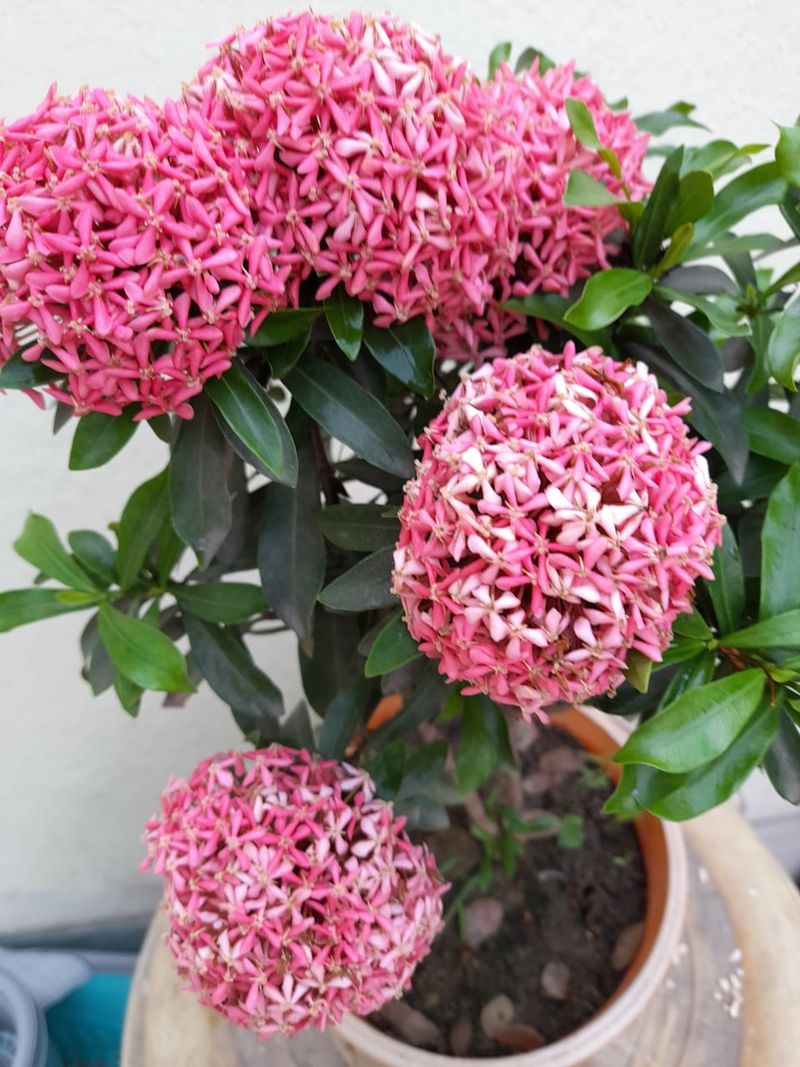
Summer watering sounds straightforward until you factor in afternoon downpours, sandy beds, and the fact that too much moisture can be just as stressful as too little.
Ixora needs consistent moisture to support active growth and flowering in July, but roots sitting in soggy soil can become stressed and unhealthy over time.
The goal is deep, even moisture without waterlogging.
Before you water, check the soil a few inches down. If it still feels damp from yesterday’s rain, hold off.
Containers, raised beds, sandy spots, and shaded areas all dry at different rates. That is why a one-size-fits-all irrigation schedule rarely works well during Florida’s stormy season.
Automatic sprinkler systems set to daily watering can easily overwater ixora, especially when summer storms are already providing plenty of moisture.
Your Florida Garden Changes Every Week. Your Plan Should Too.
Gardening in Florida changes quickly throughout the season. Every Friday you’ll receive a simple weekly plan showing exactly what to plant, prune, fertilize, harvest, and protect so you never miss the right timing.
When you do water, aim at the soil level rather than spraying the foliage. Watering the leaves in humid conditions can encourage fungal issues over time.
Deep, less frequent watering encourages roots to grow downward, which makes the plant more resilient during brief dry spells between storms. Drought stress can slow blooming noticeably, so do not let the soil dry out completely for extended periods.
Finding that steady middle ground between too wet and too dry is one of the most practical things you can do to keep blooms coming through the heat of midsummer.
3. Feed Lightly While Blooms Keep Coming
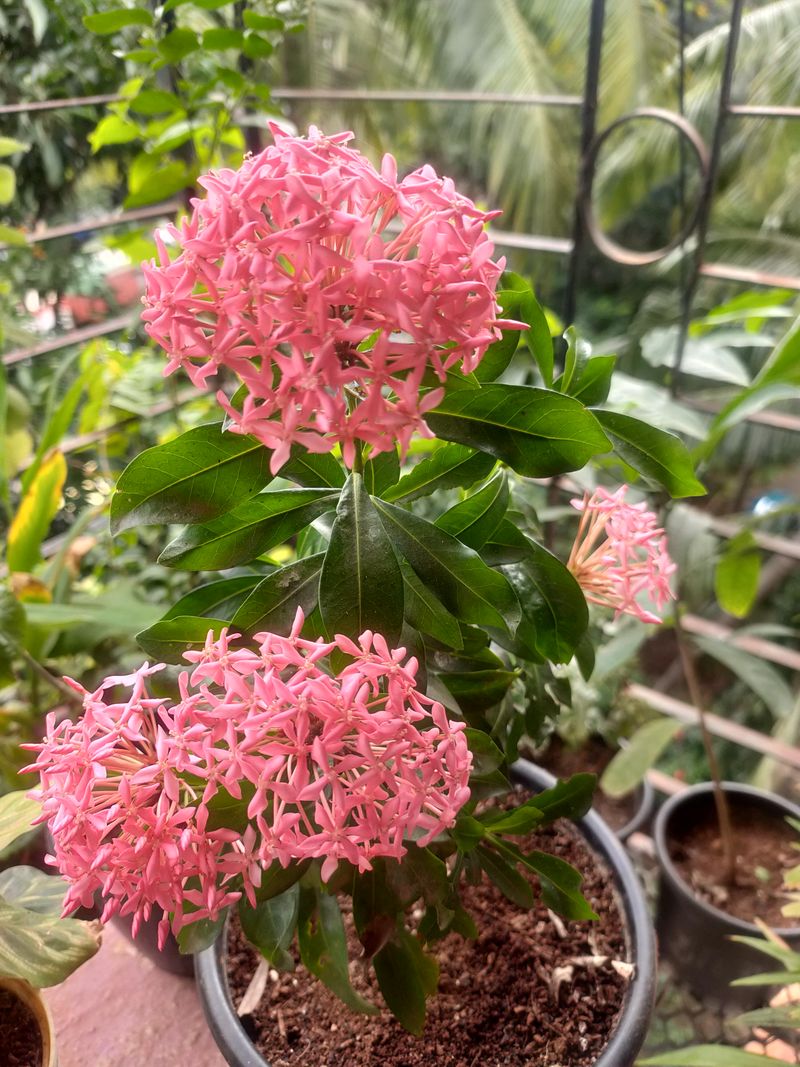
Fertilizing ixora in July feels tempting, especially when you want those flower clusters to keep coming. A light, well-timed feeding can support active growth during the warm season, but overfeeding is a real risk.
Heavy fertilizer applications can push excessive leafy growth at the expense of flowers. This is especially true with high-nitrogen products, which may also stress the plant during peak summer heat.
Ixora responds well to fertilizers designed for acid-loving plants, such as those formulated for azaleas, gardenias, or camellias. These products typically contain micronutrients like iron and manganese that ixora needs and that become harder to absorb in alkaline soil.
Always follow the label directions for application rates and timing. More fertilizer does not mean more blooms, and it can lead to nutrient burn or root stress if applied too heavily or too close to the stem.
Keep in mind that feeding alone will not fix yellow leaves caused by high soil pH. If the soil is too alkaline, nutrients simply stay locked out no matter how much fertilizer you apply.
Addressing soil pH through proper amendments, as guided by UF/IFAS or your county extension office, is a necessary step before fertilizing makes a meaningful difference.
A light, consistent feeding schedule during the growing season gives ixora useful nutritional support.
Combined with proper soil conditions, it helps sustain flowering through July and beyond.
4. Prune Only To Shape Not Shock
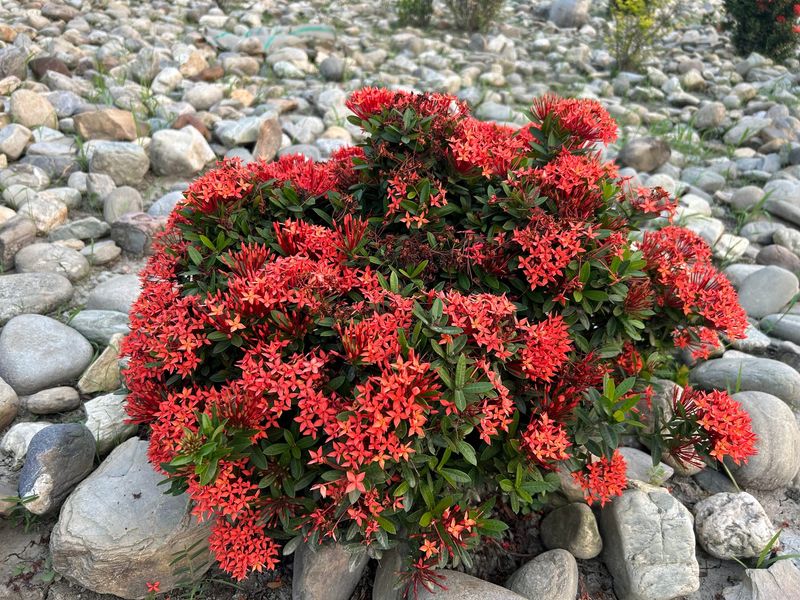
Grabbing the hedge trimmers and giving your ixora a major haircut in July might seem like a good way to refresh the plant. Heavy pruning during midsummer can actually work against your bloom goals.
Ixora produces flower clusters at the tips of new growth, so cutting back too aggressively removes the very shoots that are preparing to bloom. A severe shearing can leave you waiting weeks for new tips to develop and bud again.
Light, strategic pruning is a different story. If you have awkward, crossing, or overly long shoots that are throwing off the shape of the plant, trimming those back carefully after a bloom cycle makes sense.
Removing spent flower heads can also encourage the plant to redirect energy toward producing new growth and future clusters. Use clean, sharp bypass pruners rather than dull or dirty blades, which can tear stems and invite disease.
For ixora used as a hedge or foundation planting, avoid the instinct to shear everything flat and uniform. That approach removes too many growing tips at once and can dramatically reduce flowering.
Instead, selectively cut only what needs to go, leaving plenty of healthy branch tips intact. If the plant is already blooming or has visible buds forming, hold off on any pruning until that flush finishes.
Patience here pays off with more flower clusters rather than fewer as summer moves toward fall.
5. Watch Yellow Leaves Before Guessing
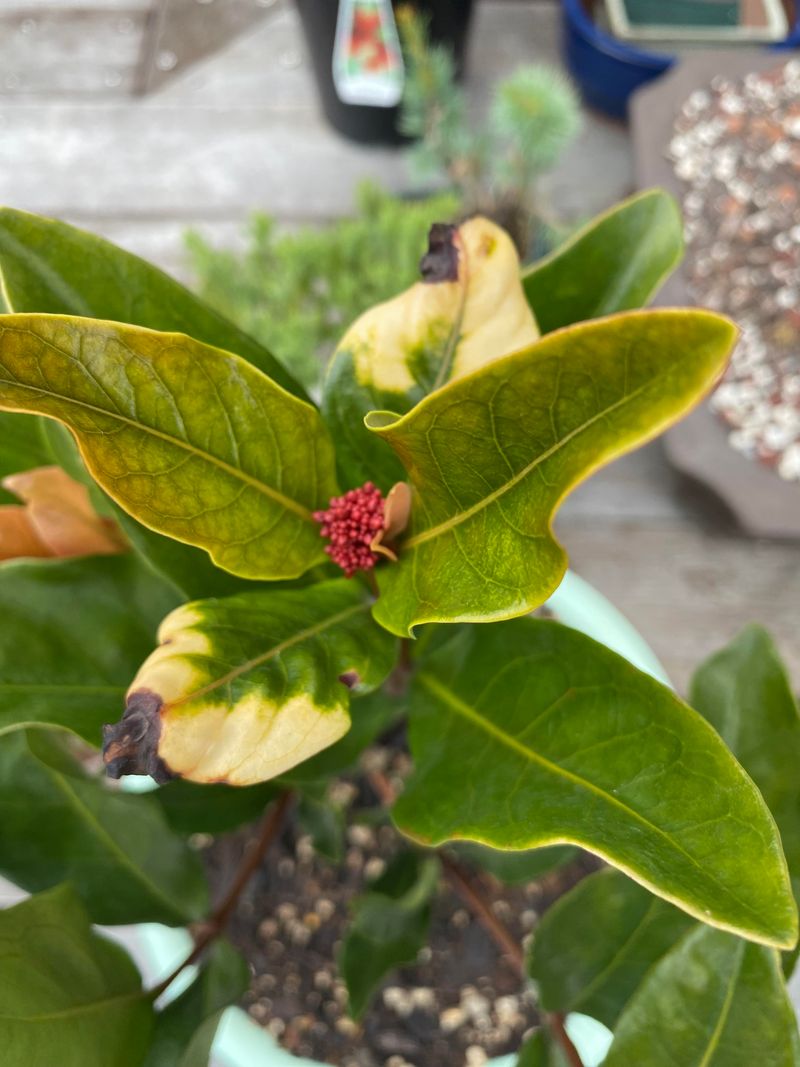
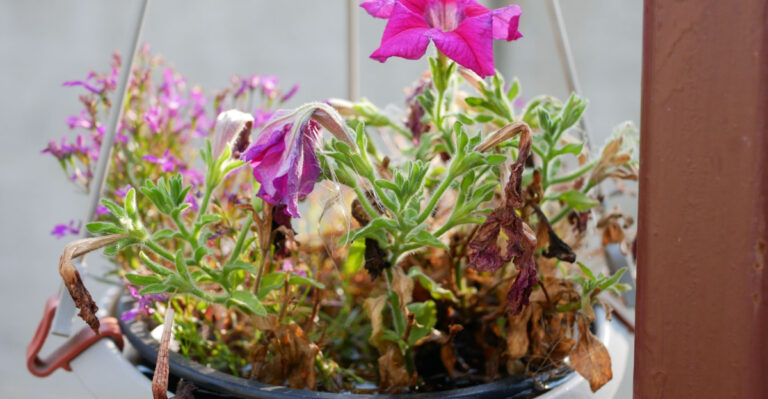
Yellow leaves on ixora can send a Florida homeowner scrambling for a quick fix, but acting before you understand the cause often makes things worse. Several different issues can cause yellowing, and they require different responses.
Alkaline soil, iron or micronutrient deficiency, overwatering, underwatering, root stress, and pest activity can all show up as yellow foliage. Even normal older-leaf drop can cause yellowing at different points on the plant.
One useful clue is where the yellowing appears. If newer leaves near the growing tips are turning yellow while older leaves stay green, that pattern often points to an iron or micronutrient issue tied to alkaline soil.
If older leaves lower on the plant are yellowing while new growth looks healthy, that can be a sign of normal leaf cycling or a watering issue.
Checking soil moisture before and after watering, and noting whether the shrub is near concrete or alkaline fill, gives you better information to work with.
A soil test from your county extension office is the most reliable way to know what you are actually dealing with. Guessing and applying random treatments can waste time and money.
That includes homemade acid solutions or whatever product happens to be on sale at the garden center in Florida. Observe the pattern, consider the location, check moisture levels, and get professional guidance when the cause is not clear.
Smart diagnosis leads to better outcomes than reactive fixes.
6. Keep Mulch Fresh But Off The Stems
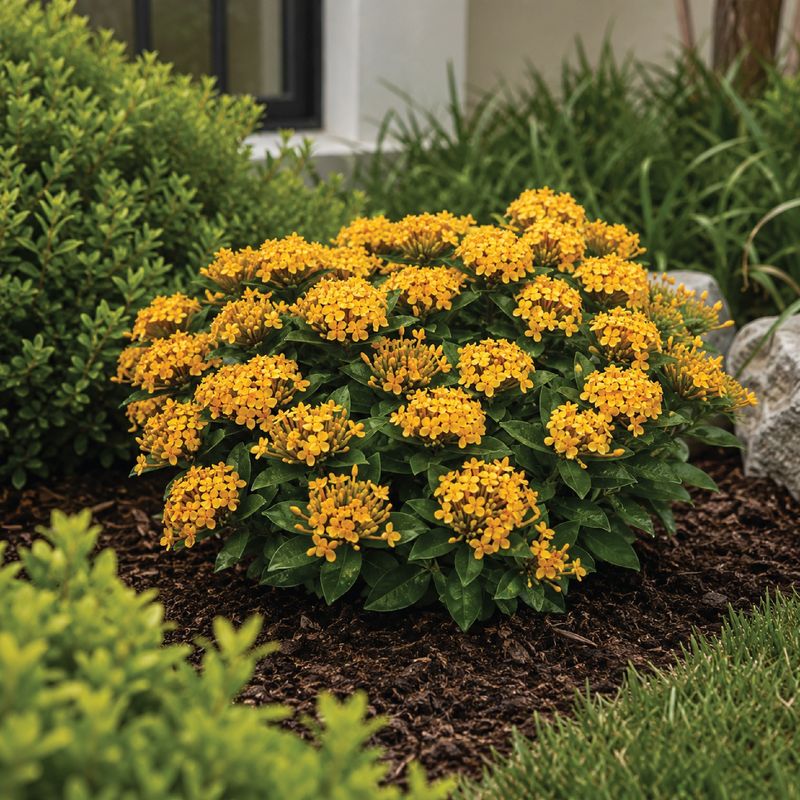
A good layer of mulch around your ixora does quiet but important work, especially during July when soil temperatures can climb and heavy rain can wash nutrients away.
Mulch helps moderate soil temperature, slow moisture evaporation between waterings, and suppress weeds that compete for nutrients.
It also protects the shallow root system that ixora relies on. If your mulch has thinned out, washed away during recent storms, or broken down since spring, July is a smart time to refresh it.
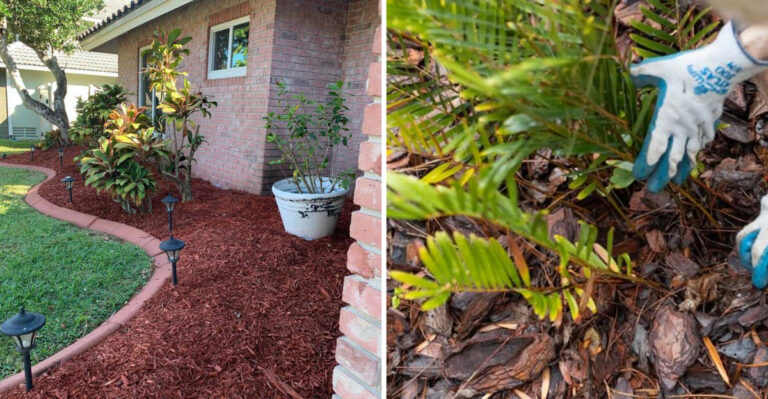
Organic mulch options like pine bark, pine straw, hardwood chips, or fallen leaves work well around acid-loving plants. Pine bark and pine straw can have a mild acidifying effect over time as they decompose, which is a small but helpful bonus for ixora.
Aim for a layer roughly two to three inches deep across the root zone, extending out to the drip line of the plant if possible.
One mistake that can cause real problems is piling mulch directly against the stems or base of the shrub. That trapped moisture creates conditions where fungal issues, rot, and pest activity can develop more easily.
Pull the mulch back a few inches from the stems to allow airflow and keep the base of the plant dry. A properly mulched ixora stays cooler and holds moisture more evenly.
It also handles the swings between heavy rain and dry heat much better than an unmulched one.
7. Check For Scale Before Sooty Mold Spreads
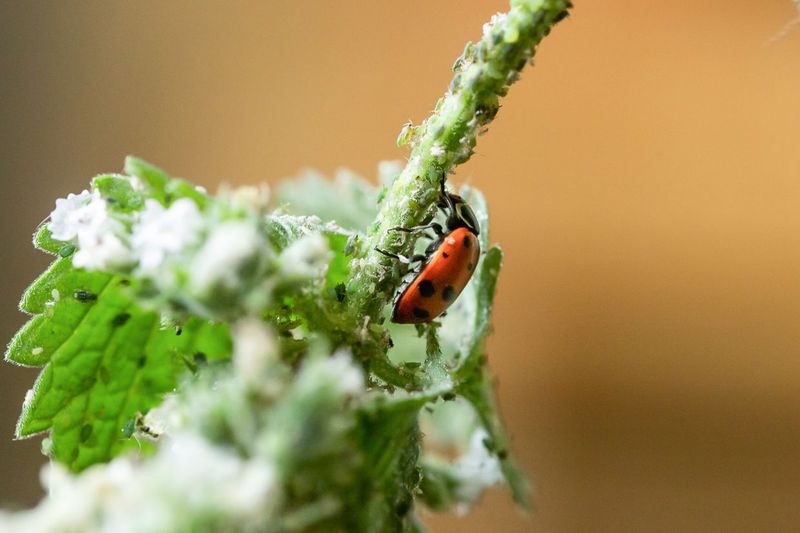
If you notice a dark, powdery coating on your ixora leaves that looks like soot from a fire, do not assume it is a disease that struck out of nowhere. Sooty mold is almost always a secondary symptom, not the root problem.
It grows on honeydew, a sticky substance produced by sap-feeding insects like soft scale, mealybugs, or whiteflies. The mold itself does not feed on the plant, but it blocks sunlight and signals that an insect problem is already present.
Start by looking carefully at the undersides of leaves, along stems, and at new growth. Scale insects often look like small bumps or crusty spots attached to the surface.
You might also notice ants moving up and down the plant, which is a common sign that honeydew-producing pests are active nearby. Ants protect these insects because they feed on the honeydew, so ant activity can be an early clue worth investigating.
Before reaching for any spray, identify what you are dealing with. The UF/IFAS Entomology and Nematology resources and your local county extension office can help you confirm the pest and choose an appropriate management approach.
Neem oil products and horticultural oils labeled for scale on ornamentals are commonly used options. Always follow label directions and avoid spraying during the hottest part of the day.
Treating the actual pest is what reduces the sooty mold over time.
8. Protect Fall Blooms With Steady July Care
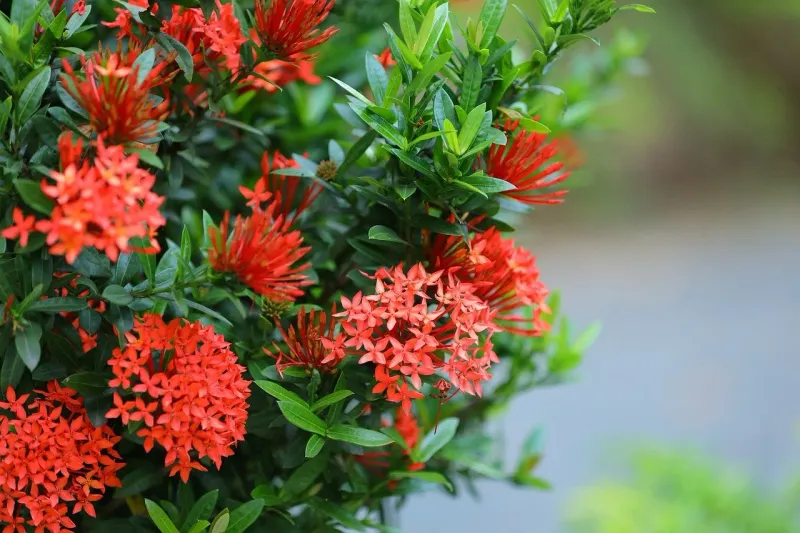
Everything you do for your ixora in July builds toward what the plant can produce in late summer and fall. Flowering does not happen on demand, and no single action flips a switch overnight.
Steady midsummer care keeps the shrub healthy, well-nourished, and free from unnecessary stress. That helps prevent it from slowing down and stopping the new growth tips where blooms form.
Think of July care as a checklist you revisit each week rather than a one-time fix. After a heavy storm, check whether mulch has washed away and whether the soil is staying too wet.
On a dry week, make sure the shrub is getting enough moisture at root level. Watch for new yellowing, check leaf undersides for pests, and trim only what genuinely needs to go.
If you made a soil amendment earlier in the season, give it time to work before adding more.
Ixora can bloom heavily in warm climates when sunlight, soil acidity, moisture, drainage, and plant health all line up. July is not the time to force the plant with aggressive treatments.
It is the time to stay consistent, observe carefully, and avoid the kind of stress that sets the shrub back heading into fall.
A patient, attentive approach through the heat of summer gives your ixora the best shot at delivering those vivid flower clusters right through the cooler months ahead.