Florida Native Trees That Grow Fast Enough To Actually Use For Privacy
Planting a privacy screen and then staring at a row of skinny sticks for five years is genuinely frustrating. Most people want results they can actually see, not a long-term science experiment in their backyard.
The good news is that some Florida native trees grow at a pace that feels rewarding, and they bring real benefits beyond just blocking a neighbor’s view. When you match the right tree to the right spot, you get shade, wildlife habitat, seasonal beauty, and privacy.
You also get a screen that fits this state’s heat, humidity, and soil far better than anything forced into a landscape it was never meant for. None of these trees build a solid wall overnight, and that is worth saying plainly.
But “fast enough” means you will notice real progress within two or three growing seasons. That is especially true when you give young trees a strong start with proper planting, watering, and spacing.
Choosing native trees also means working with nature instead of against it, which saves effort and supports the local ecosystem at the same time.
The trees below are practical, honest picks for homeowners who want privacy without waiting forever or planting something that will cause regret later.
1. Wax Myrtle Fills Privacy Gaps Faster Than Most Native Trees
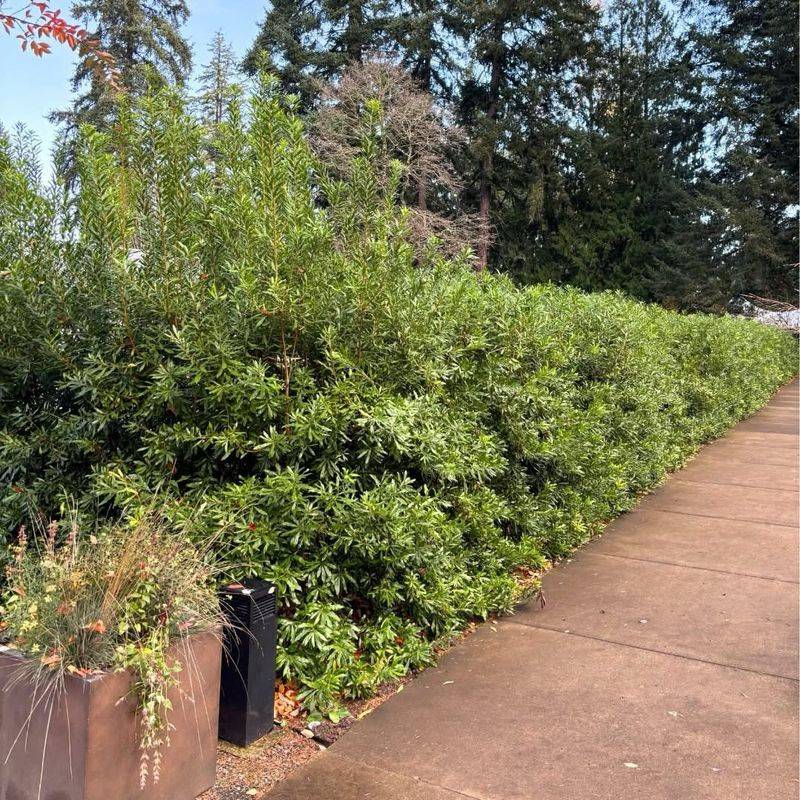
Picture a fence line with a clear view straight into the neighbor’s yard. Wax myrtle (Morella cerifera) is often the fastest native solution for closing that gap, and it earns its reputation honestly.
Wax myrtle is classified as a large native shrub or small tree depending on how it is managed. It can reach 10 to 15 feet or taller when allowed to grow upward with selective pruning.
Growth rates vary by site, but established plants in good conditions can push two to four feet per year, which is noticeably quick for a native woody plant. The foliage is evergreen to semi-evergreen depending on the region and winter conditions.
Northern regions may see some leaf drop in colder winters, while southern and central regions tend to hold leaves year-round. Leaves have a pleasant aromatic quality when brushed.
The waxy gray-blue berries on female plants are a favorite food source for yellow-rumped warblers and other birds.
Wax myrtle adapts to a wide range of soils, including wet areas, sandy uplands, and coastal sites with some salt exposure. It tolerates both sun and partial shade, which makes it flexible along property lines that shift between open and shaded areas.
According to UF/IFAS, it is also nitrogen-fixing, meaning it improves soil quality over time.
The practical catch is spacing. Planting wax myrtles too close together or right against a structure creates a crowded thicket that traps moisture and loses its screening shape.
Space plants eight to ten feet apart for a natural hedge effect, or give individual specimens more room to develop a multi-trunk tree form. Regular light pruning keeps the screen tidy and encourages denser branching rather than leggy upward growth.
2. Southern Red Cedar Builds Evergreen Screening With Backbone
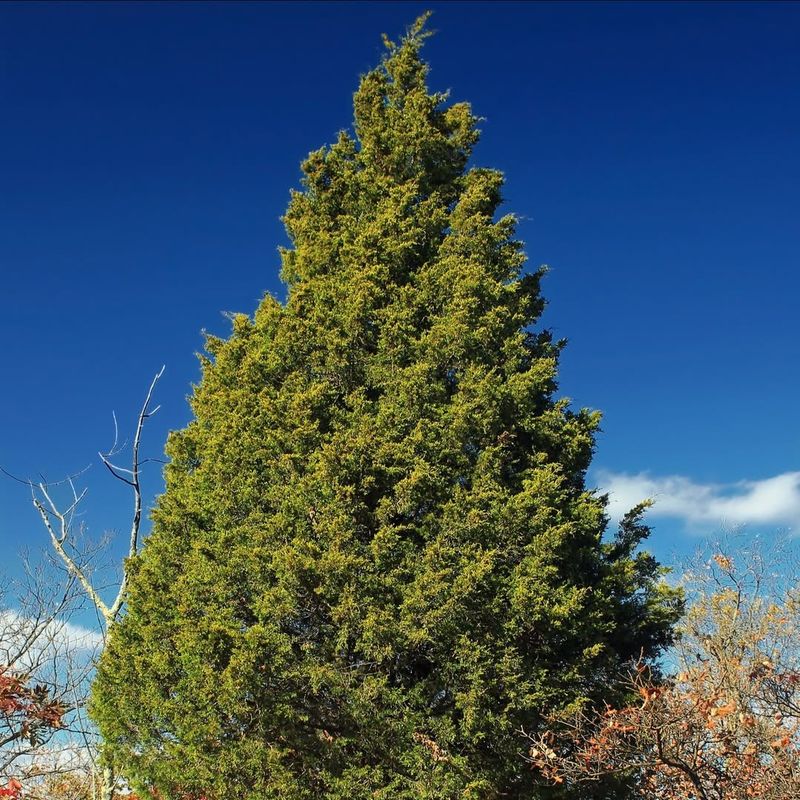
Some trees just look like they mean business, and southern red cedar (Juniperus silicicola) is one of them. Dense, upright, and fully evergreen, this native conifer holds its rich green foliage through every season.
Your Florida Garden Changes Every Week. Your Plan Should Too.
Gardening in Florida changes quickly throughout the season. Every Friday you’ll receive a simple weekly plan showing exactly what to plant, prune, fertilize, harvest, and protect so you never miss the right timing.
That makes it one of the most reliable year-round screens available to homeowners in this state. It is closely related to eastern red cedar but is considered the native species for Florida and much of the coastal Southeast.
Mature height typically ranges from 40 to 50 feet, though many landscape specimens stay shorter depending on soil and site conditions. Growth is moderate rather than blazing fast.
But the evergreen density means even a young tree contributes screening value relatively quickly compared with deciduous options. UF/IFAS notes that southern red cedar is highly adaptable to poor soils, drought, salt spray, and coastal conditions.
That makes it a strong performer in spots where other trees struggle.
Wildlife value is impressive. The small blue-gray berries are a critical food source for cedar waxwings, mockingbirds, and other fruit-eating birds.
Dense branching also provides nesting cover and shelter, turning a privacy planting into a living wildlife corridor along the property edge.
Spacing matters significantly with this tree. Plant specimens at least 10 to 12 feet apart to allow proper air circulation and full canopy development.
Crowding causes lower branch loss and reduces the screen’s density near the ground, which defeats the purpose. Keep southern red cedar well away from rooflines, gutters, and overhead utilities because the mature size is real and the tree does not stay small.
Given the right open site with full sun, it becomes a structural anchor for a privacy planting that will outlast most fences by decades.
3. Dahoon Holly Adds Year Round Cover In Moist Spots
Low-lying yards, wet corners near retention ponds, and soggy spots along the back fence are notoriously difficult to screen. Most traditional privacy trees want well-drained soil, which means those wet areas stay open and exposed.
Dahoon holly (Ilex cassine) is one of the few native evergreen trees that actually thrives in those conditions. That makes it a genuinely useful option where other choices would struggle.
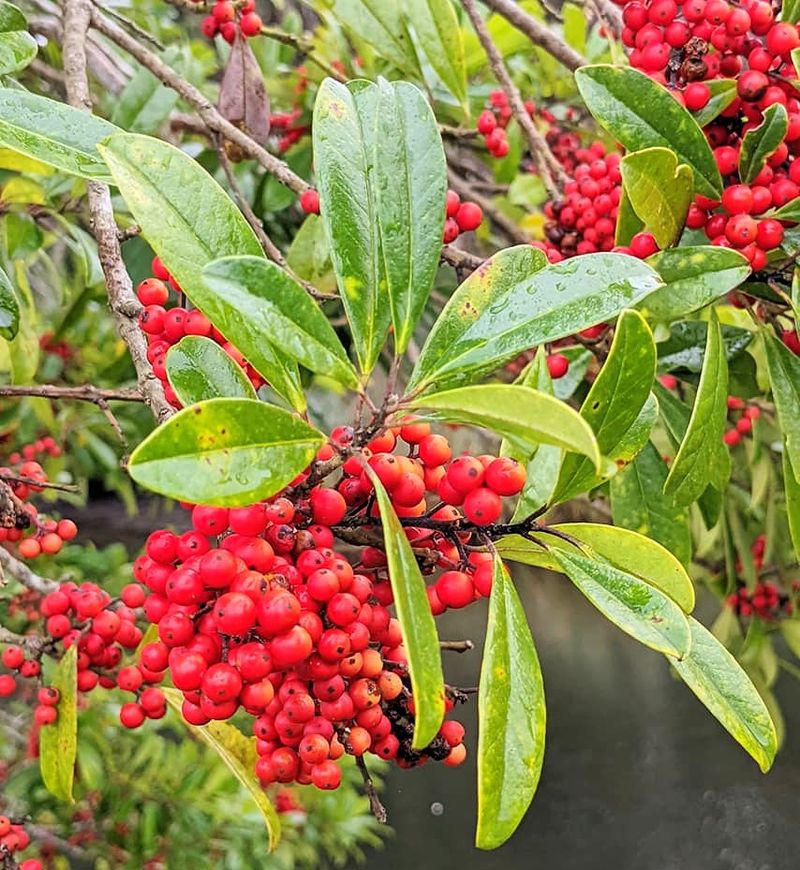
Dahoon holly is a small to medium native tree, typically reaching 20 to 30 feet at maturity, with glossy dark green leaves that stay on the tree year-round. The evergreen foliage creates a consistent screen without seasonal gaps.
The tree also develops a fairly dense canopy that blocks sightlines effectively when planted in a staggered row or informal grouping.
Growth rate is moderate, generally one to two feet per year under good conditions, which is reasonable for a tree that also tolerates standing water seasonally.
Female plants produce clusters of small red berries that ripen in fall and persist well into winter. Those berries provide an important food source for robins, cedar waxwings, and other birds during cooler months.
A male plant nearby is needed for berry production, so plan accordingly when purchasing plants for a screening row.
Dahoon holly performs best in full sun to partial shade and prefers moist to wet, acidic soils. UF/IFAS lists it as native throughout most of the state, from the Panhandle through the peninsula.
It is a strong fit for wet flatwoods, pond edges, and low-lying landscape areas. Dry sandy sites without supplemental irrigation are not a good match.
Planted in the right spot, though, dahoon holly is a low-maintenance native screen with real wildlife value and reliable year-round coverage.
4. Walter’s Viburnum Turns Into A Screen Without A Long Wait
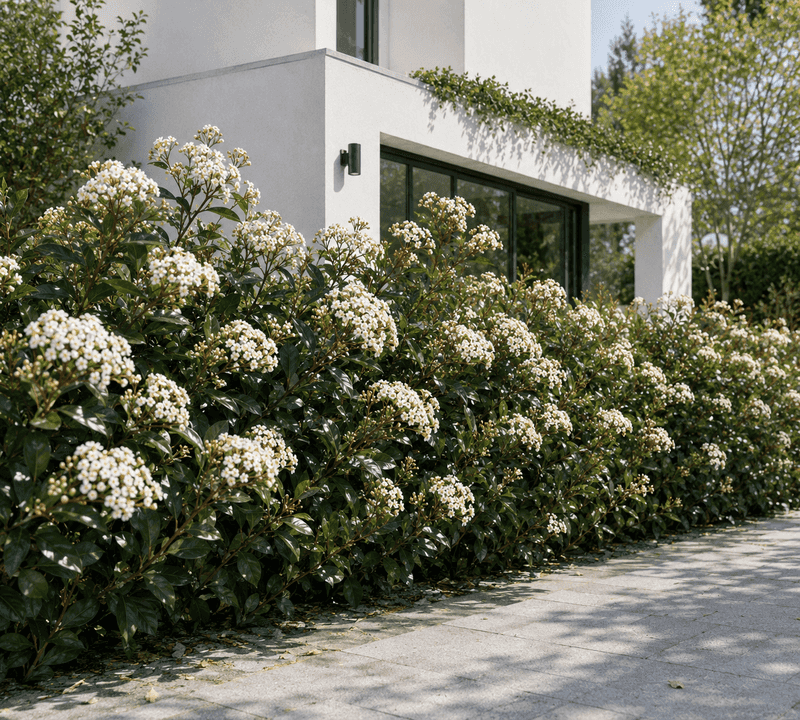
Not every privacy solution needs to be a full-sized canopy tree. Walter’s viburnum (Viburnum obovatum) occupies a useful middle ground as a large native shrub that can be trained into a small tree form.
It offers dense screening at a height that works well along fences, patios, and property lines where something too tall would feel overwhelming. When selected and pruned with intent, it earns a spot on any honest list of fast-performing native privacy plants.
Growth is relatively quick for a native woody plant, and the foliage is evergreen to semi-evergreen depending on the region and winter temperatures.
Northern regions may experience partial leaf drop during cold snaps, while central and southern areas tend to hold leaves through winter.
The small white flower clusters that appear in late winter to early spring are a nice bonus. They attract native bees and other pollinators before most other plants have woken up for the season.
Cultivar selection makes a real difference here. The straight species can grow 12 to 18 feet tall, which works well for a taller screen.
Compact cultivars like ‘Densa’ stay much shorter and tighter, better suited for low hedges or foundation-adjacent plantings.
Choosing the wrong cultivar and then constantly shearing it back creates unnecessary work, so match the form to the function before buying.
Walter’s viburnum tolerates a range of soil conditions from moist to moderately dry and performs well in full sun to partial shade. According to UF/IFAS, it is native to Florida and adaptable across much of the state.
Birds eat the small dark fruits, adding wildlife value to the screening function. Train young plants by removing lower side branches gradually to build a clean trunk and a fuller canopy above fence height.
5. Sweetbay Magnolia Screens Views With Fragrant Native Charm
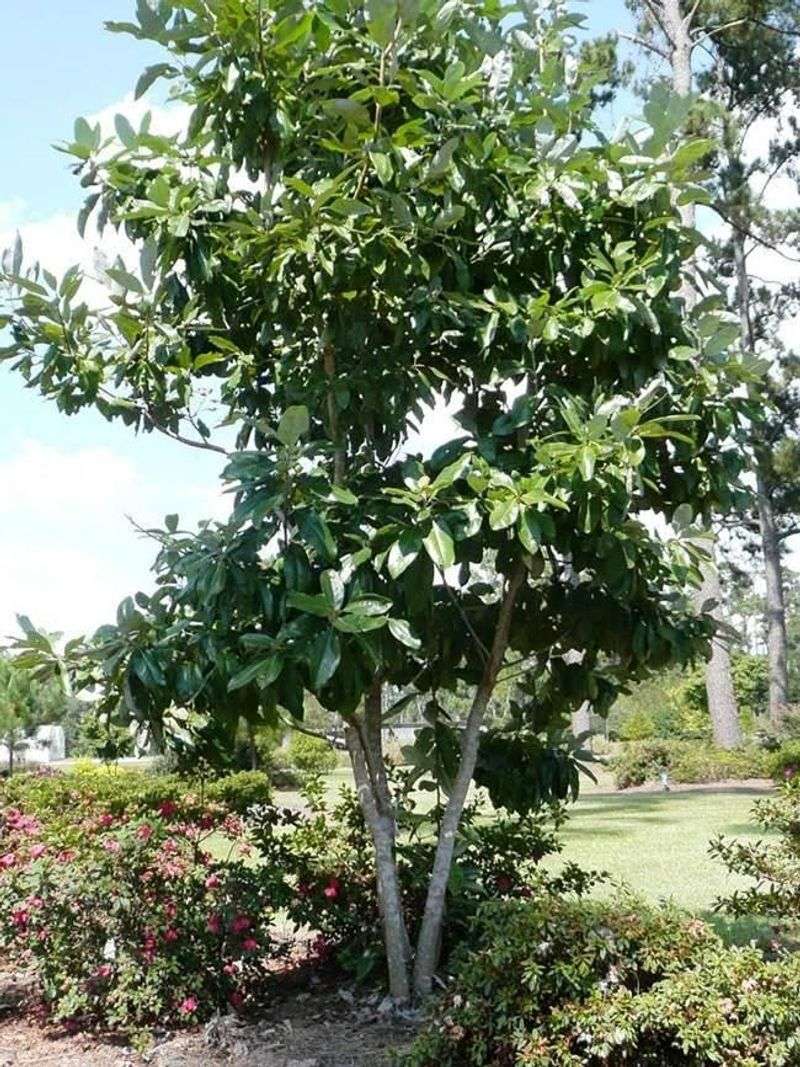
Few things in a home landscape smell as good as a sweetbay magnolia (Magnolia virginiana) in bloom. Creamy white flowers with a light vanilla-lemon scent open from late spring into summer.
They appear on a tree that also happens to be a graceful, well-behaved native with real screening potential. It may not be the fastest tree on this list, but what it offers in beauty, fragrance, and wildlife value makes the wait worthwhile.
Sweetbay magnolia is semi-evergreen to nearly evergreen in central and southern regions. That means the silvery-green leaves, which show a soft silver-white underside, stay on the tree through most of the year.
In northern regions, colder winters may cause significant leaf drop. The tree often develops a multi-stem form in natural settings, which spreads its canopy broadly and creates a layered, soft screen rather than a tight wall.
Mature height typically ranges from 10 to 35 feet depending on the site, with wetter conditions often producing taller specimens.
Placement is critical for getting the best screening value. Sweetbay magnolia prefers moist to wet, acidic soils and performs best in full sun to partial shade.
Low spots, wet flatwoods edges, pond margins, and poorly drained areas where other trees struggle are exactly where this tree tends to shine. Dry, sandy, well-drained upland sites without regular irrigation are a poor match.
UF/IFAS confirms its native status throughout much of the state, and the Florida Native Plant Society recognizes it as a valuable landscape plant for appropriate sites. Birds and small mammals eat the red seeds that appear in late summer.
Planting two or three specimens in a loose cluster creates a fuller screen with seasonal flowers and attractive foliage. It also adds genuine native character that no vinyl fence can replicate.