Why Your Florida Desert Rose Isn’t Blooming And What To Do About It
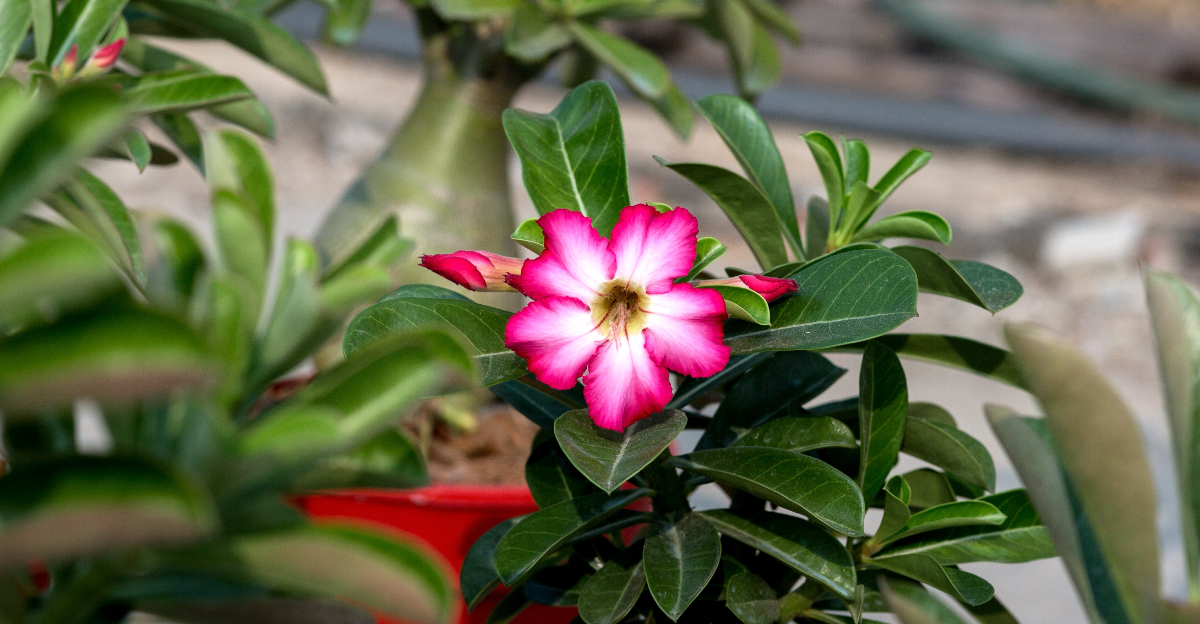
Desert rose has one job in the Florida garden and that is to bloom. Big, showy, tropical flowers in colors that stop people mid-walk.
When it delivers, there is not much that compares. When it sits there month after month with nothing but leaves, the frustration sets in fast.
The tricky part is that a non-blooming desert rose usually looks perfectly fine. Green, full, apparently healthy.
No obvious signs of distress. Just a stubborn refusal to do the one thing you planted it for.
Florida gardeners tend to blame the heat, the soil, or plain bad luck. Most of the time the real reasons are more specific than that, and more fixable than that too.
A desert rose that has stopped blooming is usually trying to tell you something. A few targeted changes to how it is grown tend to shift things in the right direction fairly quickly.
1. Too Little Bright Light Keeps Blooms Away
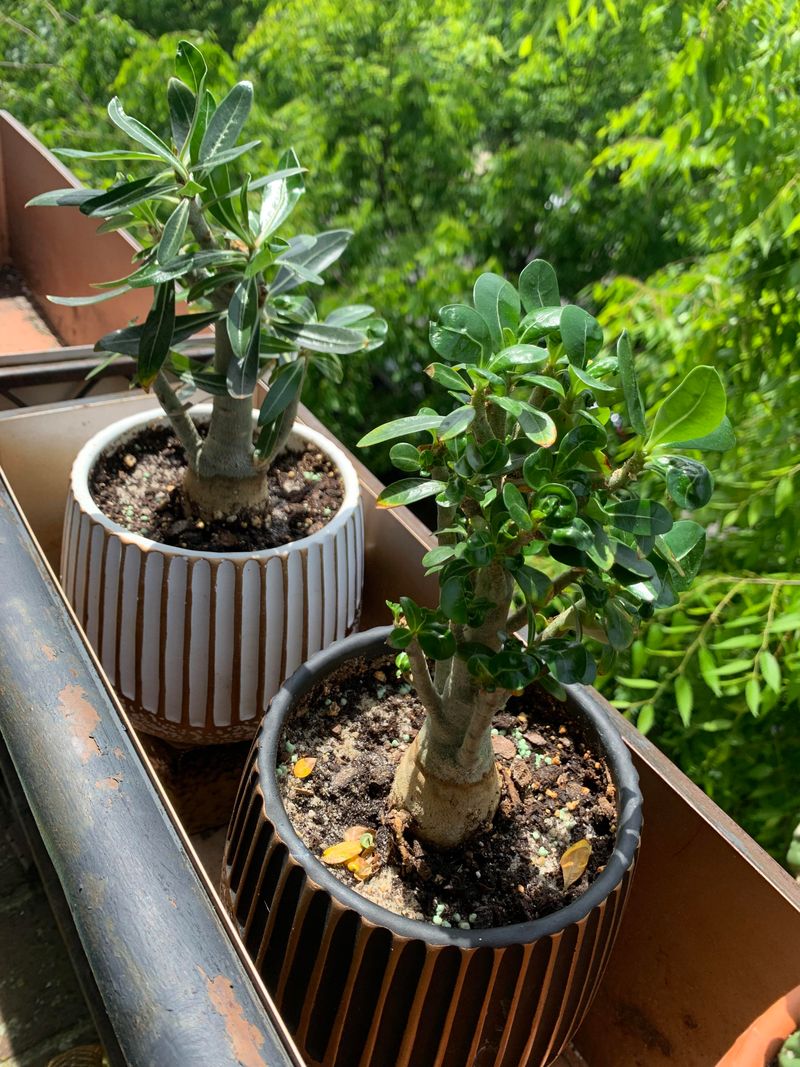
Shade is one of the quietest reasons a desert rose refuses to flower. Strong, direct sun is not just helpful for this plant, it is practically a requirement.
When light levels drop below what the plant needs, energy shifts toward producing leaves rather than blooms. A lush, leafy plant with zero flowers is often a plant that simply is not getting enough sun.
Florida patios, balconies, screened enclosures, and tree-shaded yard spots can all reduce light intensity more than you might expect. Even a location that feels bright to you may not deliver the full-sun hours this plant craves.
According to UF/IFAS, desert rose performs best in full sun conditions, and reduced light can noticeably reduce flowering.
Container placement makes this easy to fix. Start by moving the pot gradually toward a brighter spot over a week or two rather than going straight from shade to full afternoon sun.
A sudden shift can stress the plant and cause leaf drop. Aim for a south- or west-facing exposure with at least six hours of direct sun daily.
Once light levels improve and the plant settles in, blooms are much more likely to follow during the warm growing season.
2. Wet Roots Put Flowers On Hold Fast
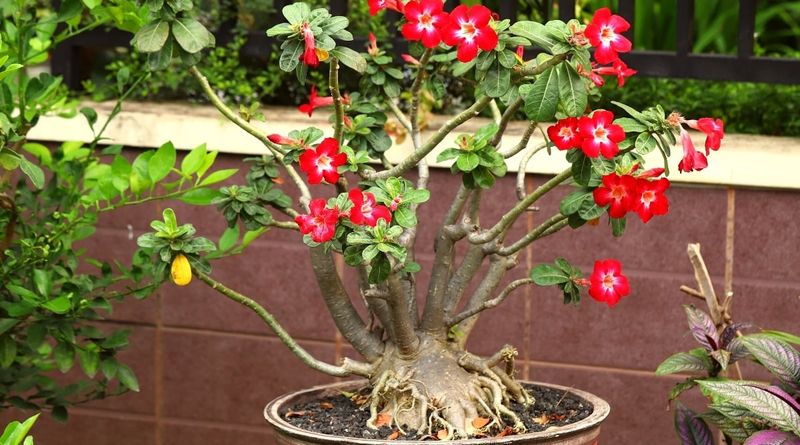
Standing water around the roots is one of the fastest ways to stop a desert rose from blooming. This plant evolved in dry, rocky environments, and its roots are simply not built for soggy conditions.
When soil stays wet for too long, the plant shifts its focus away from flowering and toward basic survival.
During this state’s rainy season, overwatering becomes especially risky. Even if you are not watering by hand, heavy rainfall can saturate a pot quickly, especially if drainage holes are blocked or the potting mix holds moisture too long.
A mix that includes coarse sand, perlite, or grit will drain much faster than standard potting soil and gives roots the air they need between watering cycles.
Pots with generous drainage holes are non-negotiable. Raise containers slightly off the ground so water can flow freely from the bottom.
Your Florida Garden Changes Every Week. Your Plan Should Too.
Gardening in Florida changes quickly throughout the season. Every Friday you’ll receive a simple weekly plan showing exactly what to plant, prune, fertilize, harvest, and protect so you never miss the right timing.
During extended wet stretches, moving pots under an overhang or covered area can protect them from getting soaked repeatedly. Check the soil before watering by pressing a finger about an inch into the mix.
If it still feels damp, wait. Letting the soil dry out between waterings is one of the simplest ways to encourage the plant back toward blooming.
3. Cool Weather Can Pause The Bloom Show
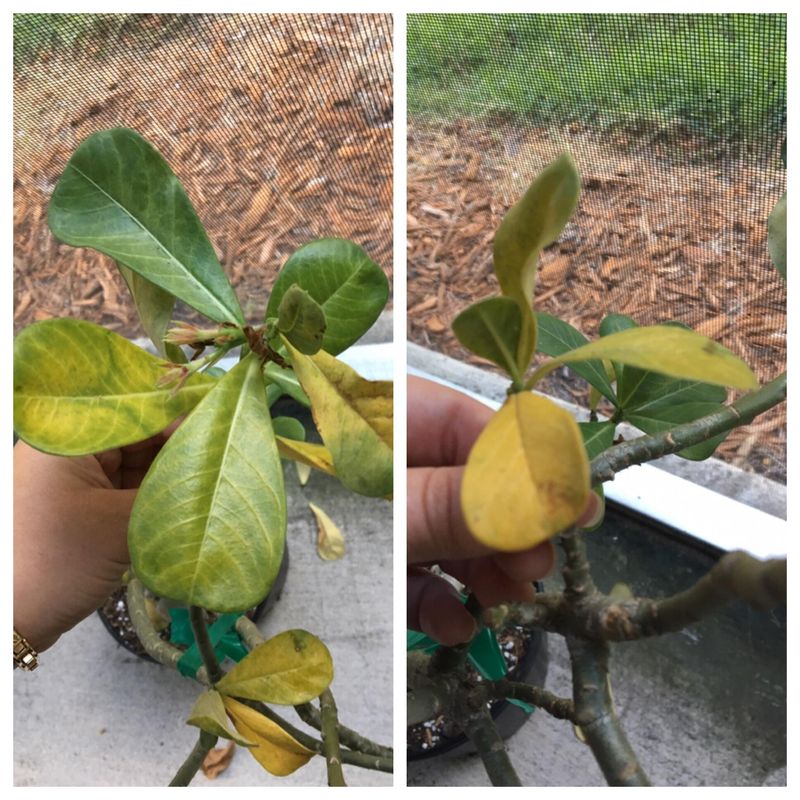
Cold Florida nights have a way of putting desert rose into a quiet holding pattern. This plant is native to warm, arid regions and genuinely dislikes cold temperatures.
When the thermometer dips, the plant may slow its growth or drop its leaves. This is especially common during cooler stretches in northern and central regions, and it may simply stop producing buds altogether.
Leaf drop during cooler months is not always a sign that something is wrong. It can be a normal response to lower temperatures and reduced light.
However, blooms are far less likely during this dormancy-like phase. Flowers show up during warm, active growth, and trying to push the plant to bloom during a cold spell usually does not work.
Container gardeners have a real advantage here. Moving pots indoors or into a sheltered spot during cold snaps protects the plant and keeps it from experiencing stress that can delay the next bloom cycle.
Even a covered patio or screened porch can buffer temperatures enough to help. Once warm weather returns and the plant puts out fresh new growth, that is your cue to resume regular watering and watch for bud development.
Patience through the cooler months pays off once the heat comes back.
4. Too Much Nitrogen Pushes Leaves Over Flowers
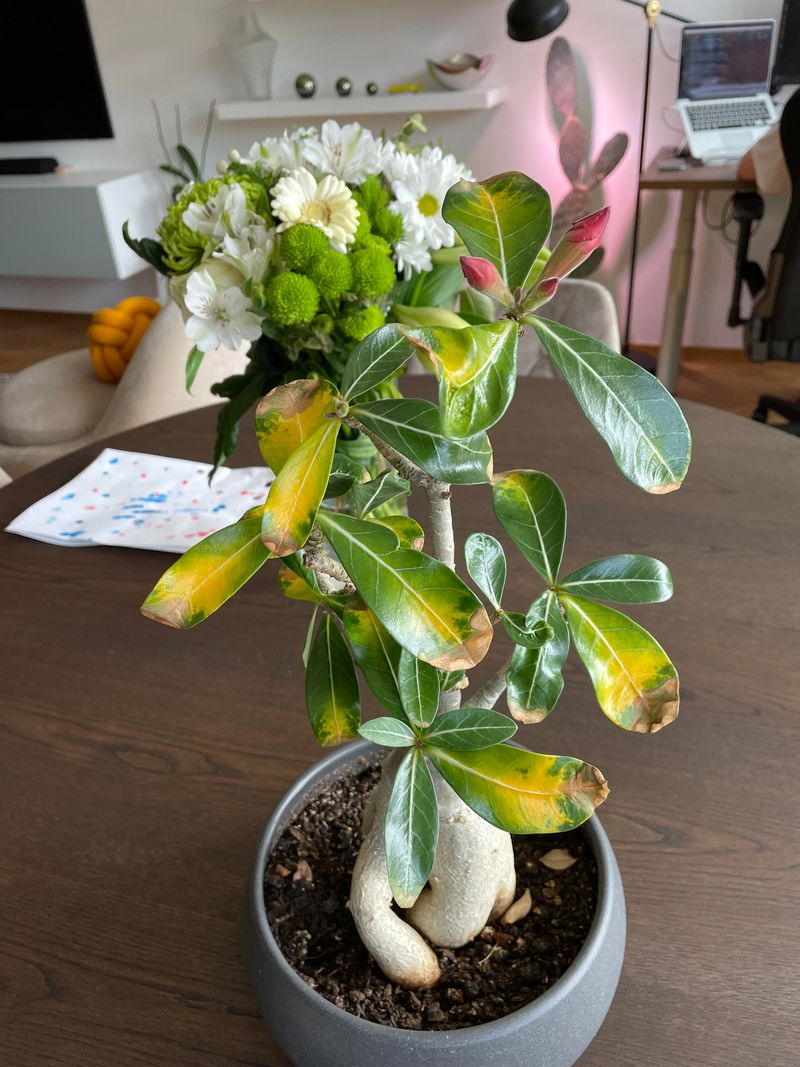
Fertilizer is meant to help, but the wrong kind at the wrong time can actually work against blooming. High-nitrogen fertilizers push plants to produce lots of green, leafy growth.
For desert rose, that can mean a full, attractive plant that never bothers to set a single bud.
Nitrogen is the first number on a fertilizer label, and when that number is much higher than the other two, the plant gets a strong signal to grow leaves.
During active warm-weather growth, a more balanced fertilizer or one with a higher phosphorus content is generally a better fit for encouraging flowers.
UF/IFAS and Extension resources note that phosphorus supports root and flower development, making it a smarter choice for bloom-focused feeding.
Avoid heavy feeding when the plant is not growing strongly, such as during cool weather, after repotting, or when the plant appears stressed. Feeding a plant that is not actively growing does not speed things up and can create problems in the soil over time.
Light, careful fertilizing during the warm growing season, combined with good sun and drainage, gives the plant what it needs without overwhelming it. Less is often more when it comes to fertilizer and flowers.
5. A Tight Pot May Be Helping More Than Hurting
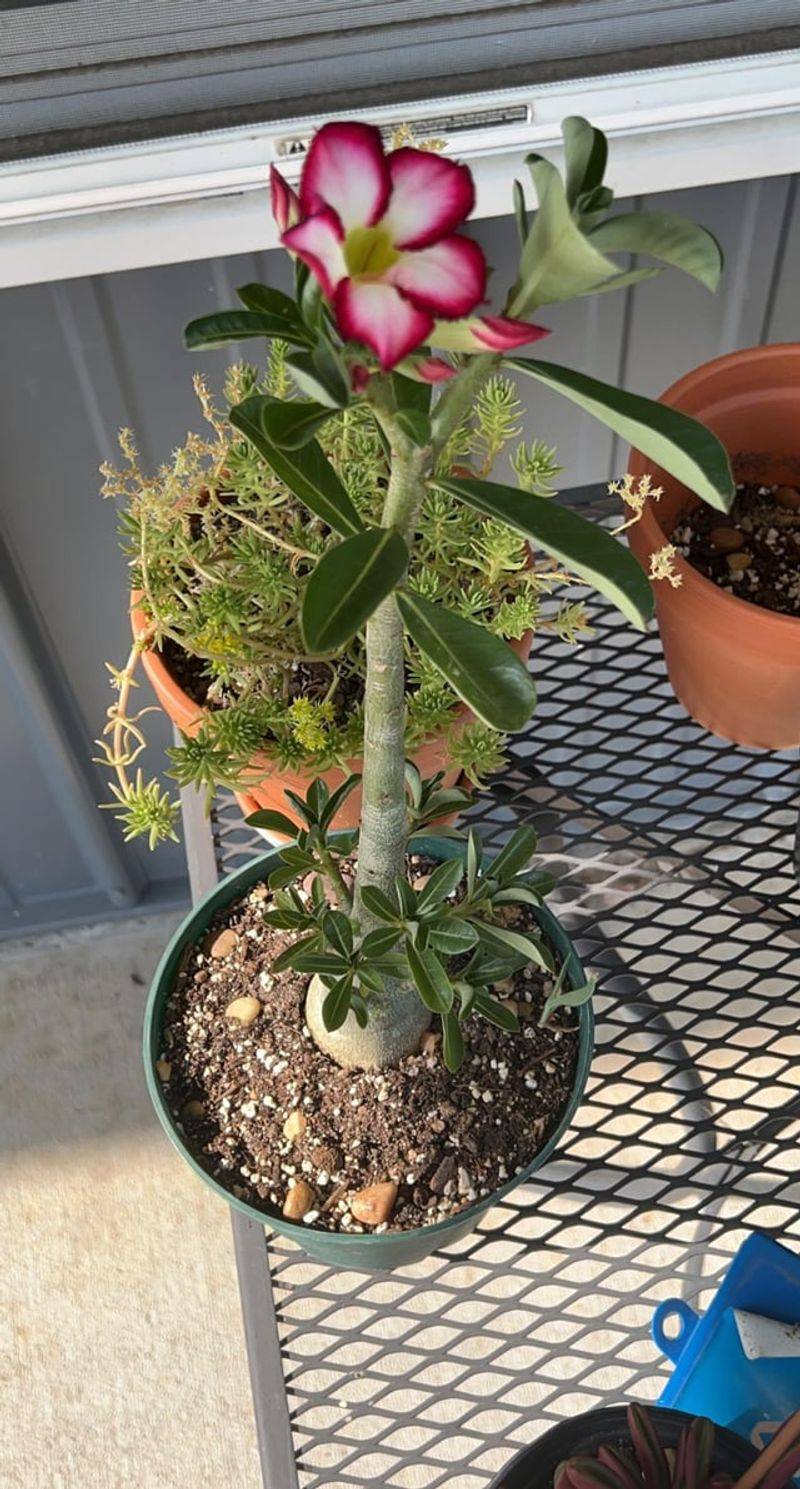
Reaching for a bigger pot when a plant is not blooming feels like a logical move, but with desert rose, it can backfire.
Moving this plant into an oversized container surrounds the roots with a large volume of soil that holds moisture much longer than the roots can use.
That extra moisture is exactly the kind of condition that discourages blooming and encourages root stress instead.
Desert rose does not need a lot of space to flower well. A container that fits the root system comfortably, with just a little room to grow, is usually the right size.
The key is that the pot must have drainage holes and be filled with a fast-draining mix. Terracotta pots work especially well because they allow moisture to evaporate through the walls, helping the soil dry faster between waterings.
When you do need to move up a pot size, go just one size larger rather than jumping to something much bigger. Check that the new pot drains freely before planting.
Sandy or gritty mixes designed for cacti and succulents work well for this plant in container settings. Keeping the root environment on the drier side, rather than constantly moist, supports the conditions this plant prefers for putting out its best blooms.
6. Skipped Pruning Leaves Growth Thin And Awkward
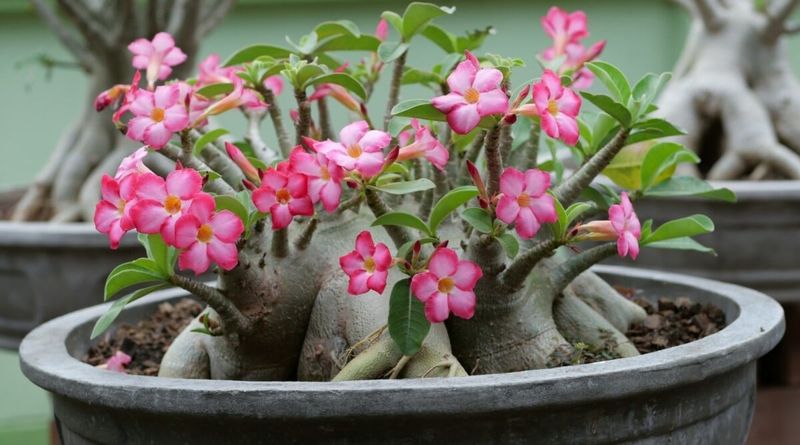
Light pruning can do more for a desert rose than many container gardeners expect. Without any trimming, the plant can become long and leggy over time, with growth concentrated at a few tips and not much branching lower down.
Flowers form at the tips of new growth, so more branching generally means more potential bloom sites across the plant.
A careful trim during active warm-weather growth encourages the plant to push out new side branches. Each new tip becomes a possible location for future buds.
The goal is not to cut back heavily, just enough to shape the plant and encourage denser, more branched growth. Avoid pruning during cold weather or when the plant is already under stress from pests, poor drainage, or low light.
One detail that matters every time you prune: the sap of this plant is toxic and can irritate skin and eyes. Wear gloves, and keep the sap away from your face.
Use clean, sharp tools to make smooth cuts rather than tearing the stems. Wipe your tools with rubbing alcohol before and after to avoid spreading any issues between plants.
After pruning, give the cut ends a day or two to dry before resuming normal watering. New growth usually follows within a few weeks in warm conditions.
7. Winter Leaf Drop Is Not Always A Bloom Problem
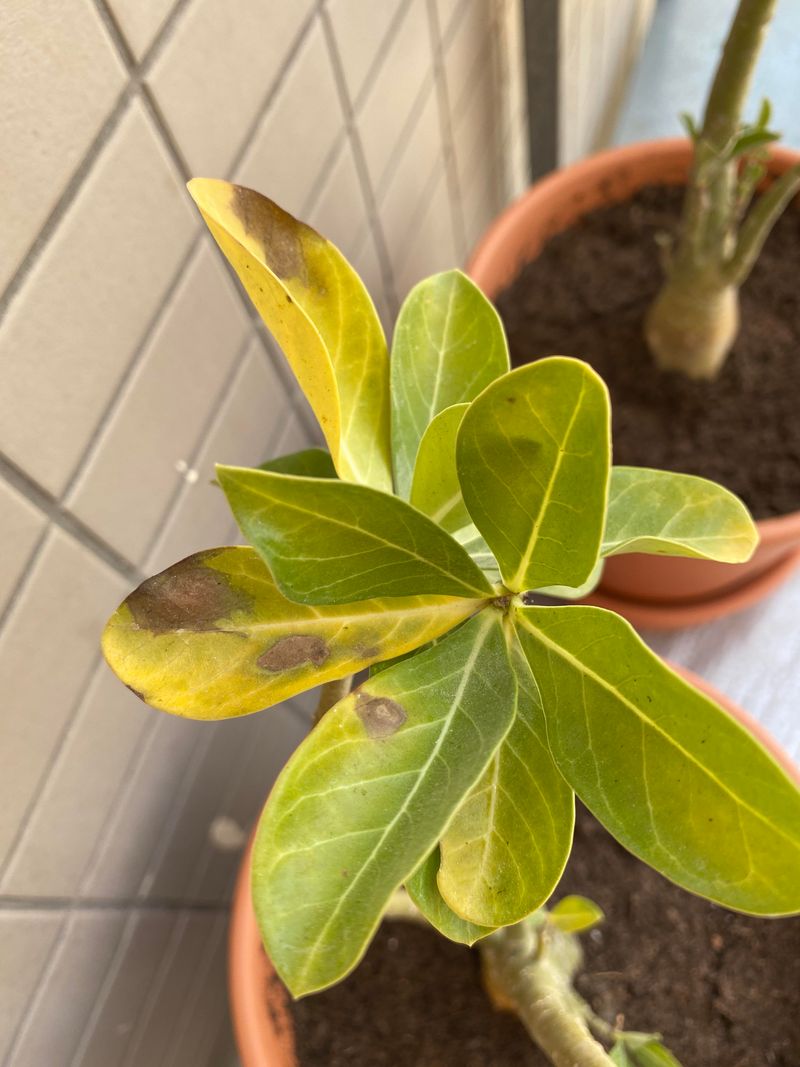
Watching a desert rose drop all its leaves can feel alarming, especially if you are new to growing one. But leaf drop during cooler or drier periods is a natural part of how this plant responds to seasonal changes.
It is not a sign that the plant has failed, and it does not mean blooms will never return.
Think of it as a rest period. The plant slows down, conserves energy, and waits for conditions to improve.
Trying to force it back into growth with heavy watering or feeding during this phase usually causes more harm than good. Reduce watering significantly when growth slows, letting the soil dry out much more than you would during the warm season.
Once temperatures warm back up and light levels increase, the plant typically pushes out fresh new leaves fairly quickly.
That flush of new growth is a reliable signal that active growth is resuming, and blooms are most likely to follow during this energetic phase.
Resume regular watering gradually as growth picks up, and consider light fertilizing once the plant is clearly growing again. Being patient through the quiet period is one of the most useful habits a desert rose grower can build.
Responding to the plant’s natural cues, rather than fighting them, matters just as much.
8. Pests Can Drain Energy Before Buds Open
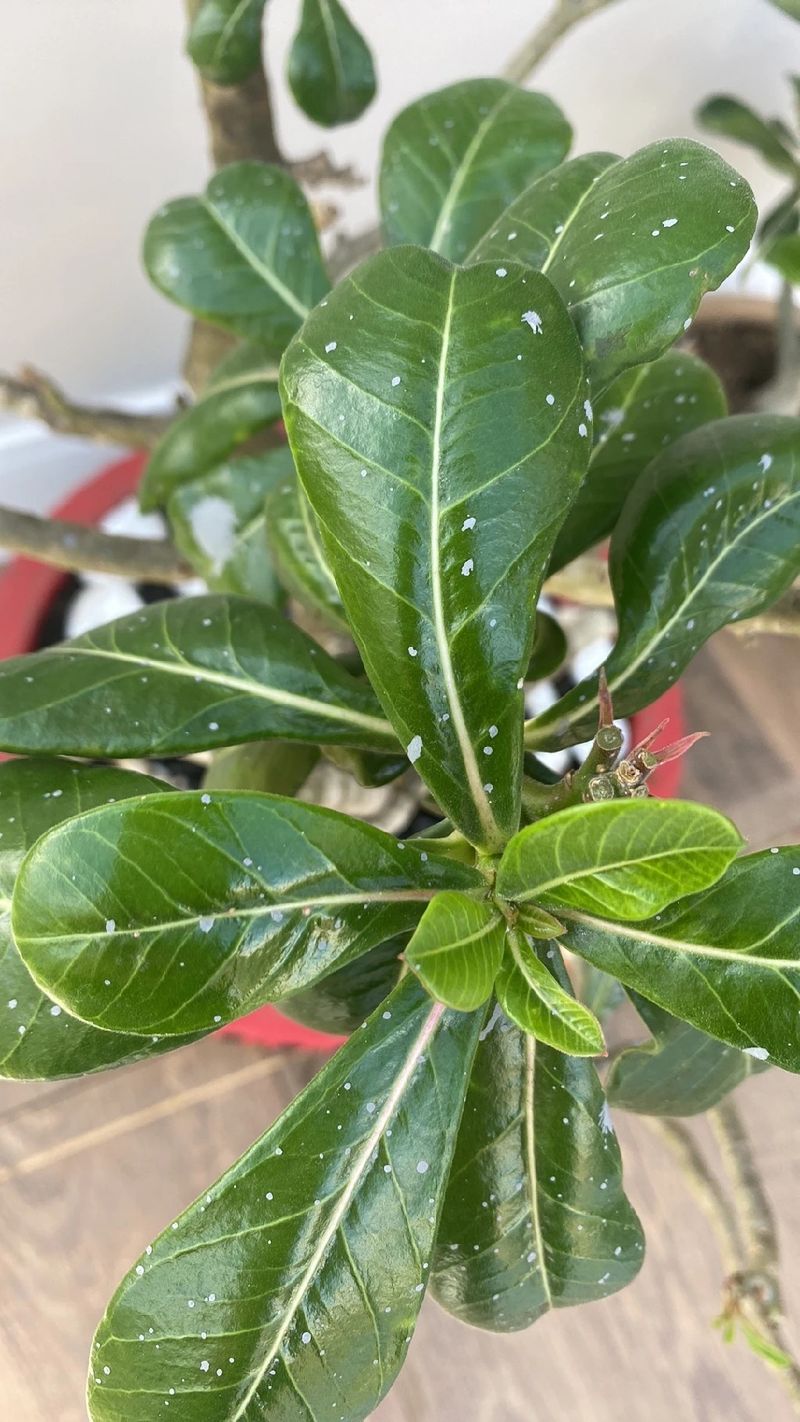
A plant dealing with an active pest problem has less energy available for flowering. Scale insects, mealybugs, aphids, spider mites, and oleander caterpillars are all known to target desert rose, and each one can weaken the plant in different ways.
Some feed on sap, others chew through new growth, and a few can cause bud drop before flowers even open.
Regular inspection is one of the best habits you can build. Check the undersides of leaves, along stems, around new growth tips, and near any developing buds.
Mealybugs often look like small bits of white fluff tucked into leaf joints. Scale can appear as raised bumps on stems.
Spider mites tend to show up during dry, hot spells, leaving tiny webs and stippled leaf surfaces. Oleander caterpillars are bright orange with black tufts and can strip a plant fast.
For control guidance, UF/IFAS Extension and county Extension offices provide reliable, research-backed recommendations specific to this state’s pest pressures.
Avoid harsh treatments that are not supported by credible sources, since some can stress the plant further.
Catching a pest problem early gives you the most options before it builds into a large infestation. It also gives you the best chance of protecting the plant’s energy for producing the blooms you have been waiting for.