The Native Ohio Alternative To Japanese Honeysuckle That Wildlife Actually Prefers
Japanese honeysuckle has been covering Ohio fences, trees, and natural edges for long enough that most people assume it belongs here. It does not.
It has been quietly displacing native vegetation across the state for decades. The wildlife value most people assume it provides is only a fraction of what the native alternative delivers.
Ohio has a honeysuckle that belongs here. Same climbing habit, similar flower shape, and a relationship with Ohio’s native wildlife that Japanese honeysuckle never comes close to replicating.
Hummingbirds prefer it. Native bees work it seriously.
The fruit it produces feeds birds in ways that the invasive version simply does not. The swap is straightforward once the plants are side by side.
One belongs in this landscape and earns its place through every season. The other has been borrowing space that was never meant for it.
Your fence line deserves the version that actually works for Ohio.
1. Choose Coral Honeysuckle Instead Of The Invasive Lookalike
A trip to a garden center can get confusing fast when you see multiple plants labeled simply as honeysuckle. The word alone does not tell you whether you are buying a well-behaved native or an aggressive invader.
That is why checking the botanical name before purchasing matters so much.
Japanese honeysuckle, Lonicera japonica, is the vine that causes problems. OSU Weedguide and the Ohio Department of Natural Resources both recognize it as invasive.
That means it can spread beyond planted areas and outcompete native vegetation in natural spaces. It twines tightly around tree trunks and shrubs, and its seeds spread easily by birds.
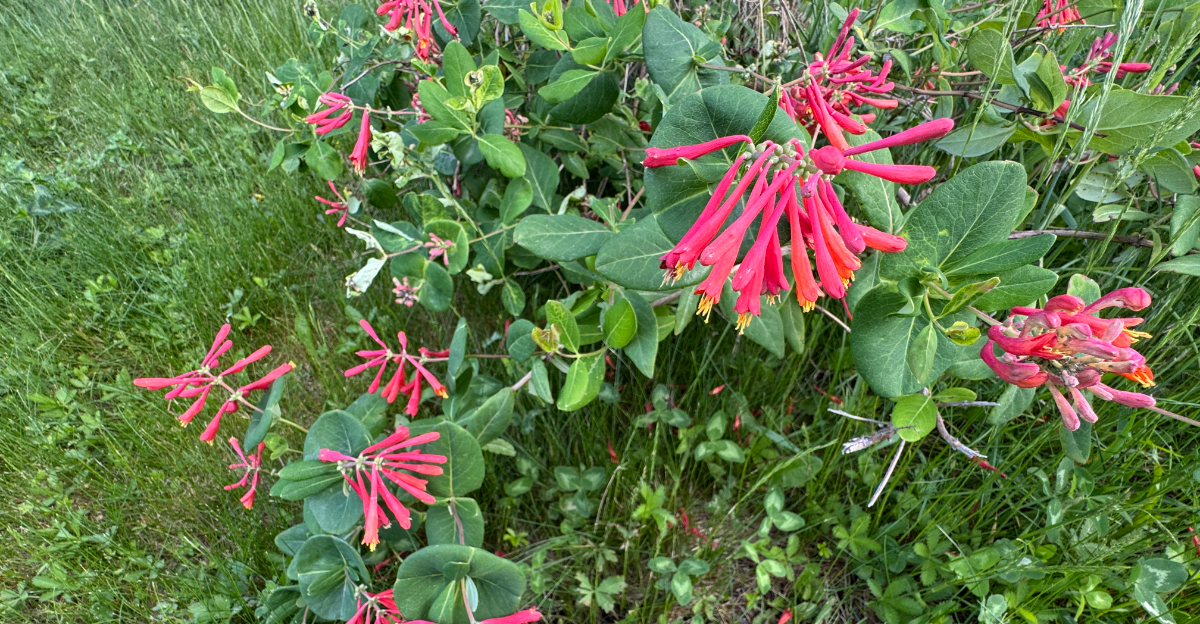
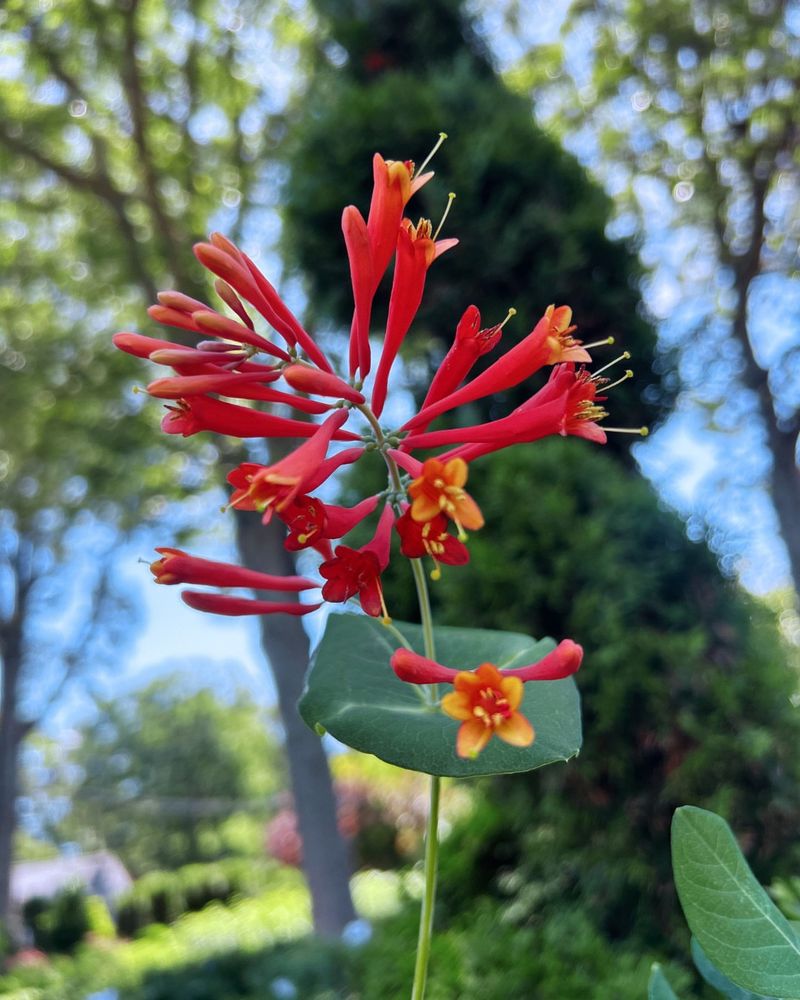
Coral honeysuckle, Lonicera sempervirens, is the native alternative worth planting instead. It offers a similar vining habit and showier flowers without the same invasive reputation.
Native plant nurseries are the most reliable place to find it under the correct botanical name. Always read the label and look for Lonicera sempervirens specifically, not just any plant called honeysuckle.
Common names are shared among dozens of different plants, and a name alone is not a safe guide. Buying from a reputable native nursery reduces the risk of accidentally bringing home the wrong vine.
2. Give Hummingbirds The Native Trumpet Blooms They Want
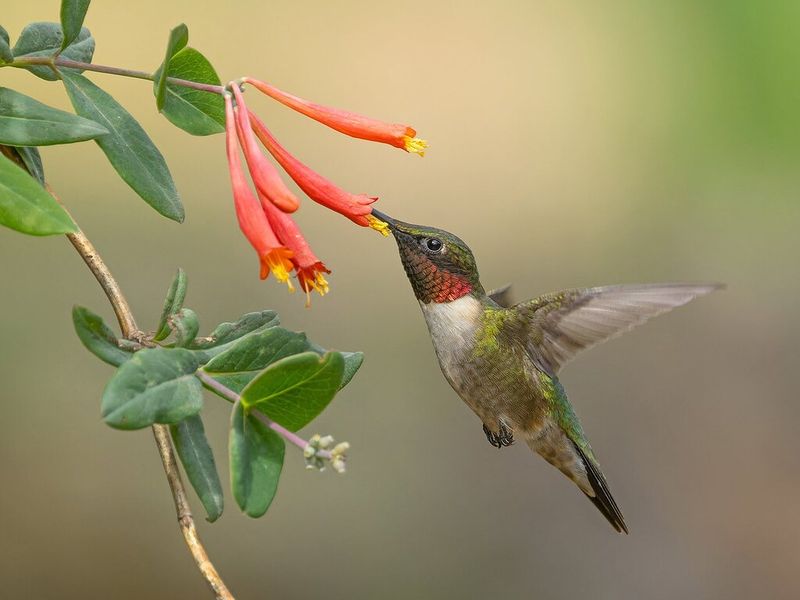
Picture a ruby-throated hummingbird hovering at a cluster of slender red trumpets, its bill fitting perfectly into each bloom. That is exactly what coral honeysuckle is built for.
The plant’s long, narrow, tubular flowers are well-suited to hummingbird feeding. The ruby-throated hummingbird is the species most commonly seen across Ohio during warmer months.
Cornell Lab of Ornithology and Audubon both recognize native tubular flowers as important food sources for ruby-throated hummingbirds during migration and nesting season.
Coral honeysuckle blooms from spring into summer, sometimes producing a second flush later in the season depending on conditions.
Planting it near a trellis, fence, arbor, or sunny garden edge puts the flowers in a visible, accessible spot where hummingbirds can find them more easily.
Japanese honeysuckle may attract some pollinators with its fragrant white-and-yellow flowers. Its tangled, smothering growth can damage the surrounding habitat that hummingbirds and other wildlife also depend on.
Your Ohio Garden Changes Every Week. Your Plan Should Too.
Gardening in Ohio changes quickly throughout the season. Every Friday you’ll receive a simple weekly plan showing exactly what to plant, prune, fertilize, harvest, and protect so you never miss the right timing.
A tidy coral honeysuckle trained on a support offers blooms without the habitat damage. Keep in mind that hummingbird visits depend on many factors, including nearby habitat, season, and pesticide use.
Planting coral honeysuckle improves the odds without making any guarantees.
3. Let Red Berries Feed Birds Without Taking Over
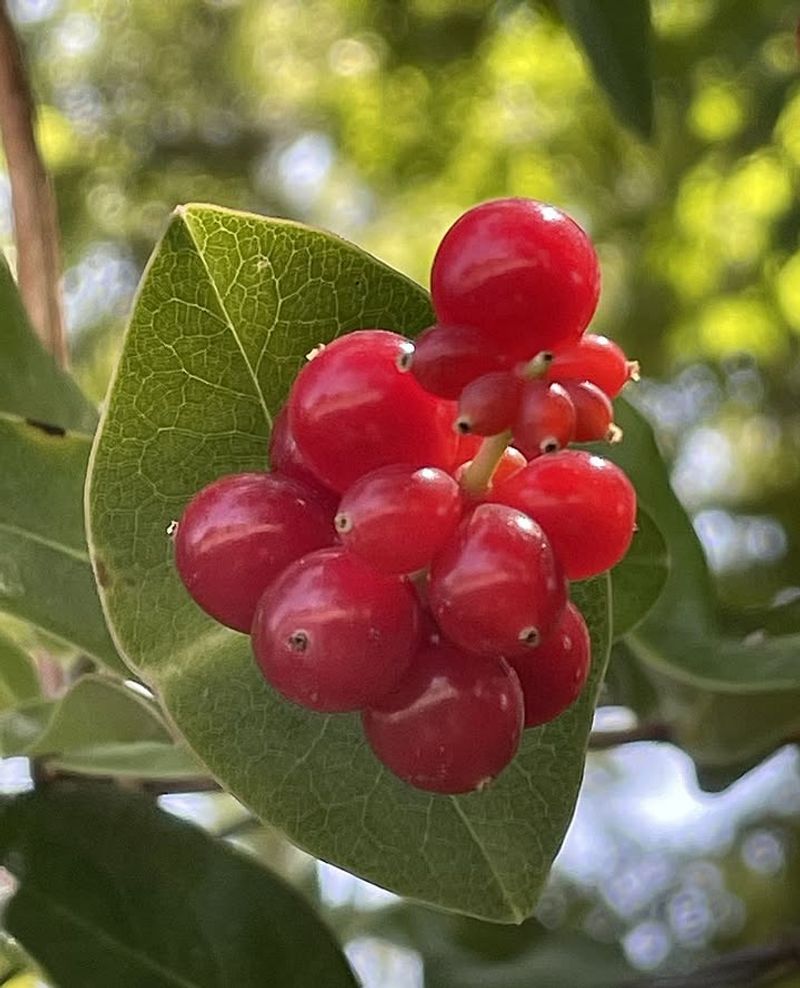
After the flowers fade, coral honeysuckle produces small clusters of bright red berries that can attract birds looking for late-season food. Native plant organizations and university extension sources note that the berries add wildlife value beyond the bloom period.
That gives the vine a second wave of usefulness in the garden.
Not every bird species will seek out the berries. Wildlife visits depend on the season, local bird populations, surrounding habitat, and how much other food is available nearby.
Still, leaving the berries on the vine rather than clipping them off right after flowering gives birds the chance to find and use them. Resisting the urge to over-tidy the plant after summer is one of the simplest things a gardener can do to support local wildlife.
Coral honeysuckle berries are not recommended for human consumption, so keep that in mind if children or pets spend time near the planting. The focus here is entirely on wildlife value.
Planting the vine where it has support but not unlimited room to sprawl keeps it productive and manageable. A fence line or sturdy trellis works well for keeping the plant structured while still allowing berries to develop and remain accessible to visiting birds.
4. Train The Vine Where Japanese Honeysuckle Used To Sprawl
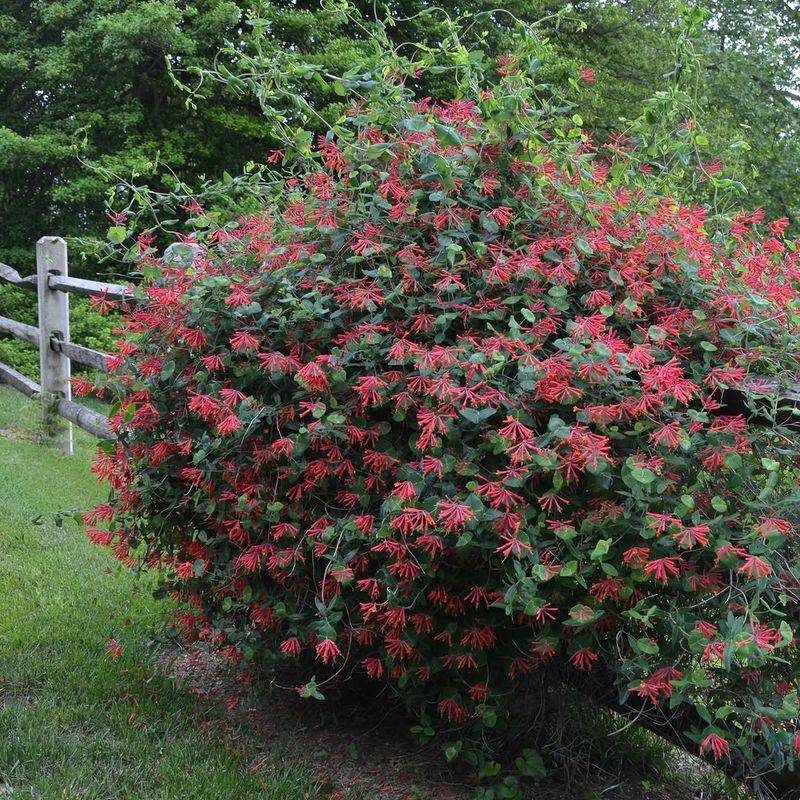
Removing Japanese honeysuckle from a fence line or garden edge leaves a gap that can quickly fill with weeds or new invasive regrowth.
Planting coral honeysuckle in its place is one of the most practical ways to fill that space with something that actually belongs there.
OSU Extension guidance on invasive plant removal recommends monitoring treated areas closely after removal. Japanese honeysuckle roots and seeds can produce new growth.
Pulling new sprouts consistently during the first season or two helps prevent the invasive vine from reclaiming the space. Once the area is under control, coral honeysuckle can be planted with support already in place.
A trellis, fence, or arbor gives it somewhere to climb right away..
For large infestations of Japanese honeysuckle, do not attempt full removal alone. Consulting local extension guidance or an invasive-plant professional is a smarter move.
Small patches can often be managed by homeowners with consistent pulling and monitoring. The goal is to replace an aggressive invader with an Ohio native climber that can be guided and shaped.
Coral honeysuckle still needs occasional attention and a sturdy support. It will not creep into the woods, strangle nearby trees, or carpet the forest floor the way Japanese honeysuckle can.
5. Check The Berries Before You Trust The Honeysuckle
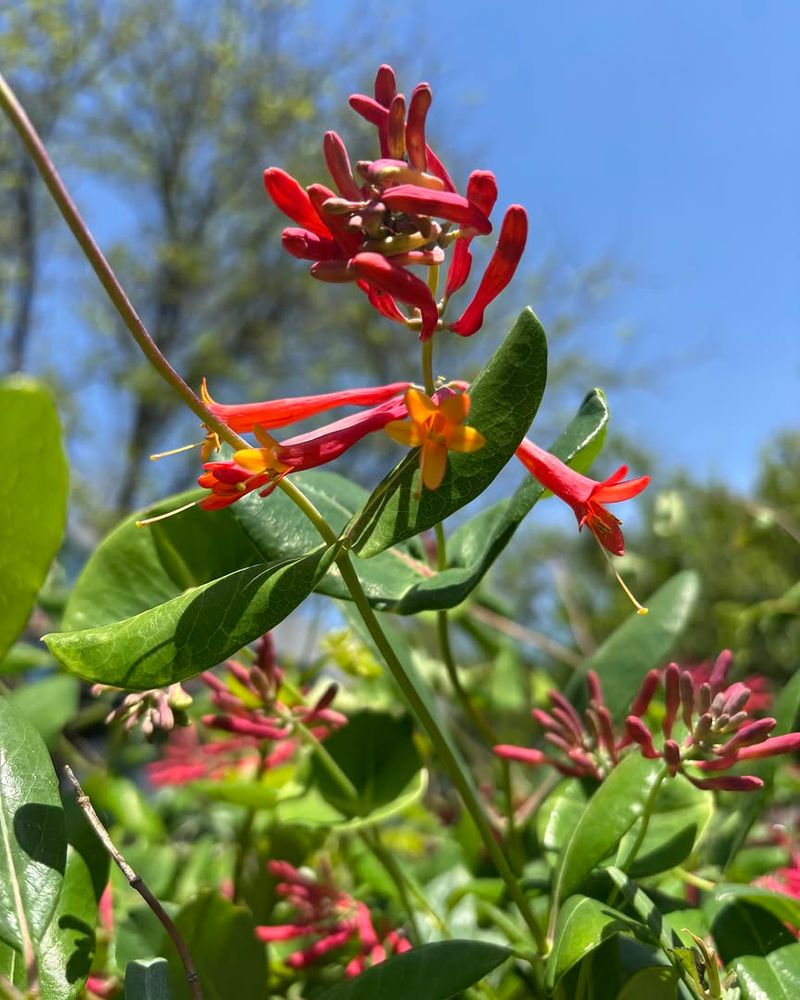
Misidentifying a honeysuckle vine is easier than most gardeners expect. The word honeysuckle gets attached to several different plants, including invasive vines, invasive shrubs, and native species that look somewhat similar at a glance.
Relying on flower fragrance or the common name alone is not a reliable way to tell them apart.
Coral honeysuckle and Japanese honeysuckle differ in several key ways. Coral honeysuckle typically has unscented red to orange tubular flowers and produces red berries.
Japanese honeysuckle has strongly fragrant white and yellow flowers and produces black berries when mature. Leaf shape and growth habit also differ.
A trusted field guide or OSU Extension identification resource is the best place to confirm those details rather than relying on a single visual clue.
Invasive honeysuckle shrubs, such as bush honeysuckle, add another layer of confusion in local landscapes. They are separate plants from the vining species but share the honeysuckle name.
Getting identification right before removal or planting protects both the native plants already present and the investment being made in a new vine. When uncertain, a reputable native plant nursery or local extension office can help confirm what is growing in the yard before any digging or planting begins.
6. Plant It In Sun For Stronger Flowers And More Visitors
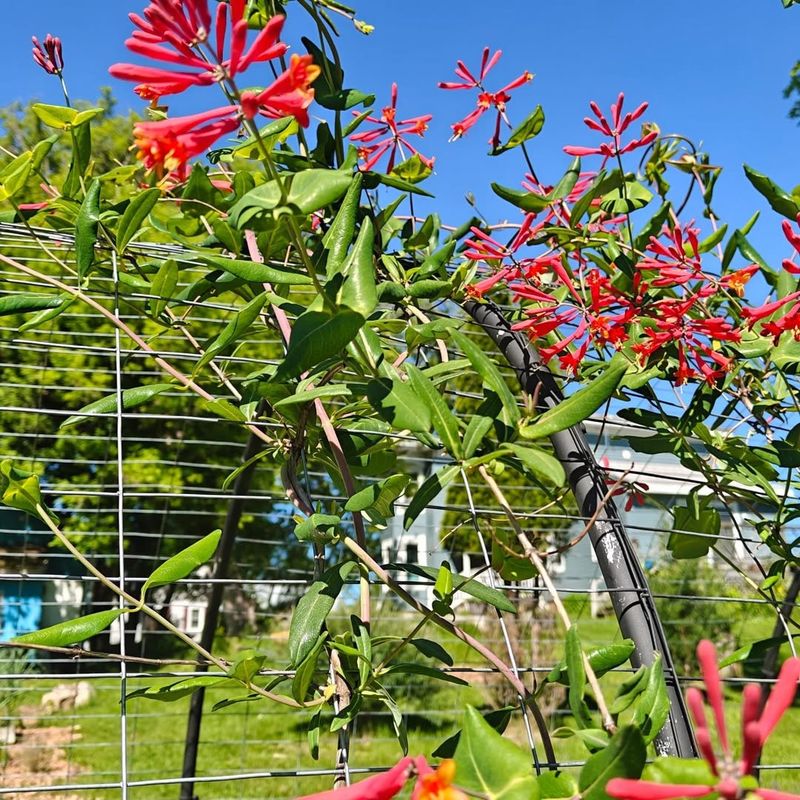
Sunny spots bring out the best in coral honeysuckle. University extension and Ohio native plant sources consistently note that the vine produces more flowers and grows more vigorously when it receives full sun to partial sun.
A site with at least six hours of direct light per day is a solid starting point for strong blooms and healthy growth.
The plant can tolerate some shade, but flowering tends to decrease as light decreases. Fewer flowers mean fewer opportunities for hummingbirds and pollinators to find the vine.
Choosing the sunniest available spot is a practical way to get the most out of the planting. Good airflow around the vine also helps reduce the chance of fungal issues that can develop in humid, shaded areas.
Coral honeysuckle prefers well-drained soil and does not perform well in areas with standing water or consistently soggy conditions. Watering during the first growing season helps the plant establish a strong root system before it faces summer heat or dry spells.
After establishment, it generally handles moderate dry periods without much extra attention. Avoid planting in heavily compacted soil if possible.
A site with decent drainage, sun, and a sturdy support structure gives the vine the best conditions to thrive and attract the wildlife activity the garden is hoping for.
7. Prune Lightly So The Vine Stays Neighborly
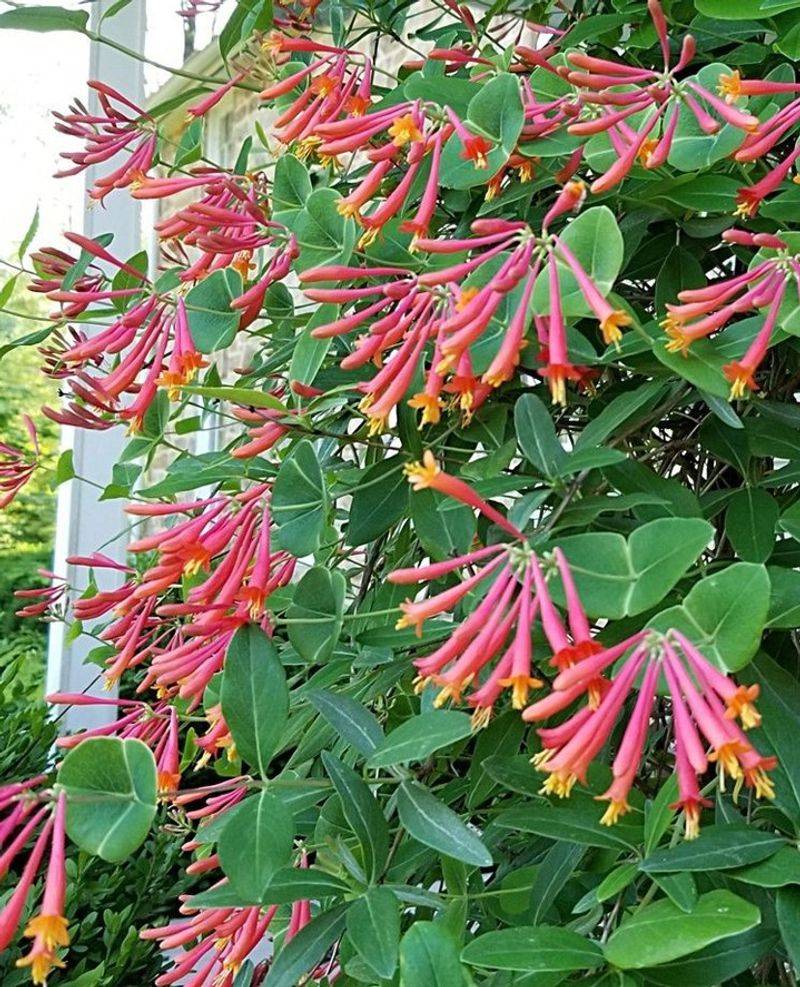
A coral honeysuckle vine left entirely to its own devices can wander into gutters, creep across siding, or drape over nearby shrubs in ways that create extra work.
Light pruning and occasional training keep the plant on its support and out of places it does not belong.
University extension and horticulture sources recommend shaping vines with a light hand rather than cutting them back severely.
The best time for light shaping is generally after a main flowering period, when the plant has finished its most active bloom flush. Removing stray stems and redirecting new growth onto the support structure keeps the vine tidy without stressing the plant.
Avoid heavy pruning during very hot or dry spells, which can put the vine under unnecessary strain.
Coral honeysuckle is not a maintenance-free plant, and expecting it to manage itself completely is a setup for a tangled mess. The good news is that it responds well to gentle guidance.
It does not require the intensive management that Japanese honeysuckle demands when it escapes into natural areas. Regular checks during the growing season and a quick trim here and there are usually enough.
A sturdy support structure also helps keep this native vine looking good and staying in its lane.
8. Replace A Tangled Invader With A Wildlife Friendly Climber
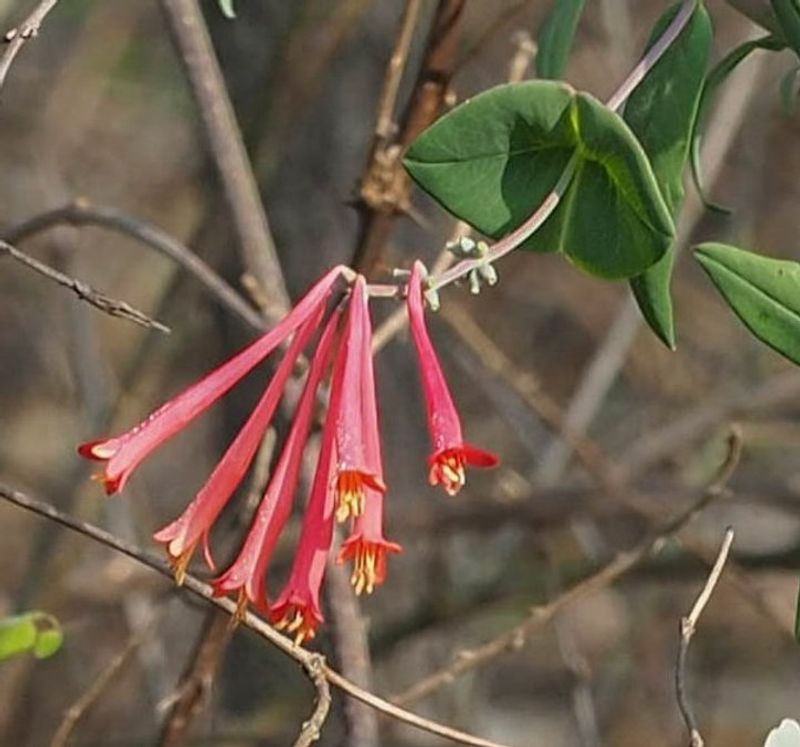
Swapping Japanese honeysuckle for coral honeysuckle is one of the most rewarding native plant upgrades an Ohio homeowner can make. The change gives the yard a flowering vine that supports local wildlife more responsibly.
It does that without the risk of spreading into nearby natural areas and smothering native vegetation.
Coral honeysuckle offers tubular blooms that can attract hummingbirds and some pollinators, plus red berries birds may use after the flowers fade. It also has a manageable growth habit that stays on its support with occasional guidance.
Native plant organizations advise buying from reputable native nurseries. Always check the label for the botanical name Lonicera sempervirens to make sure the right plant is going in the ground.
Removing Japanese honeysuckle before it sets more seed reduces the chance of it spreading further into the yard or nearby green spaces. For larger patches, local extension offices and invasive-plant professionals can offer site-specific guidance.
Once the invasive vine is cleared, planting coral honeysuckle in its place closes the gap with something that genuinely belongs in a local landscape.
The result is a vine that looks beautiful, earns its place in the garden, and gives the wildlife around it a native option worth returning to season after season.
9. Spot The Difference Between Native And Invasive Growth Habits
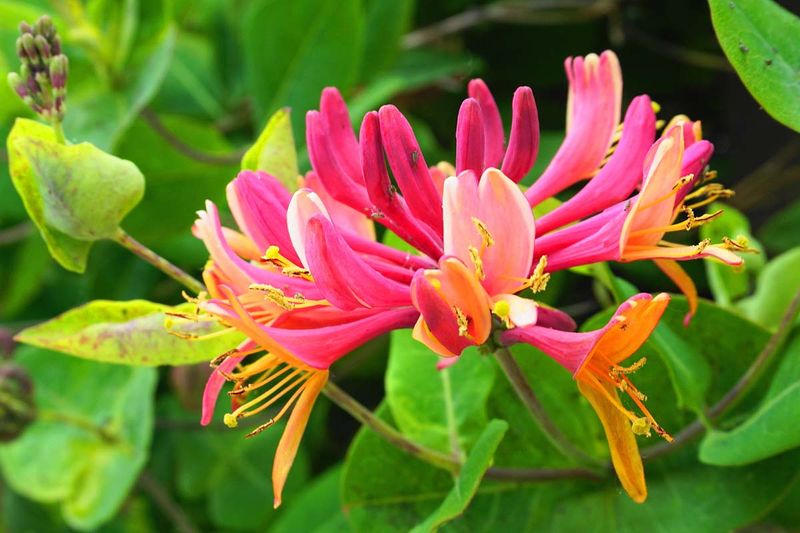
Growth habit is one of the clearest ways to understand why these two vines are treated so differently by native plant experts.
Japanese honeysuckle twines aggressively, wrapping tightly around tree trunks, shrub stems, and fences, often girdling woody plants over time.
OSU Weedguide notes that it can form dense mats that shade out native ground-layer plants in woodland edges and disturbed areas.
Coral honeysuckle climbs more gently and tends to stay manageable when given a proper support structure. It does not have the same tendency to form impenetrable tangles or spread far from where it was planted.
That behavioral difference is a big reason why native plant organizations and extension sources recommend it as a responsible alternative for home landscapes.
Understanding growth habit also helps during removal. Japanese honeysuckle roots can be persistent, and cut stems often resprout.
Pulling new growth consistently after initial removal is important for keeping it from reclaiming a space.
Recognizing how each vine grows, twines, and spreads makes it easier to manage what is already in the yard and make smarter choices about what to plant next.
Choosing a vine with a manageable habit from the start saves a lot of work down the road. It also keeps the garden healthier for the wildlife that depends on the surrounding plants.