This North Carolina Rain Garden Plant Belongs In Soggy Yard Corners
North Carolina puddle corners may be trying to tell you something.
That low spot by the fence. The muddy patch near the downspout. The sad grass that gives up after every summer storm.
Maybe it is not a lawn problem. Maybe it is an invitation.
Southern blue flag iris understands wet North Carolina soil in a way turf never will. This native beauty handles slow-draining clay, temporary flooding, and rain garden edges without acting personally offended by every puddle.
Then spring arrives, and the whole soggy corner turns elegant.
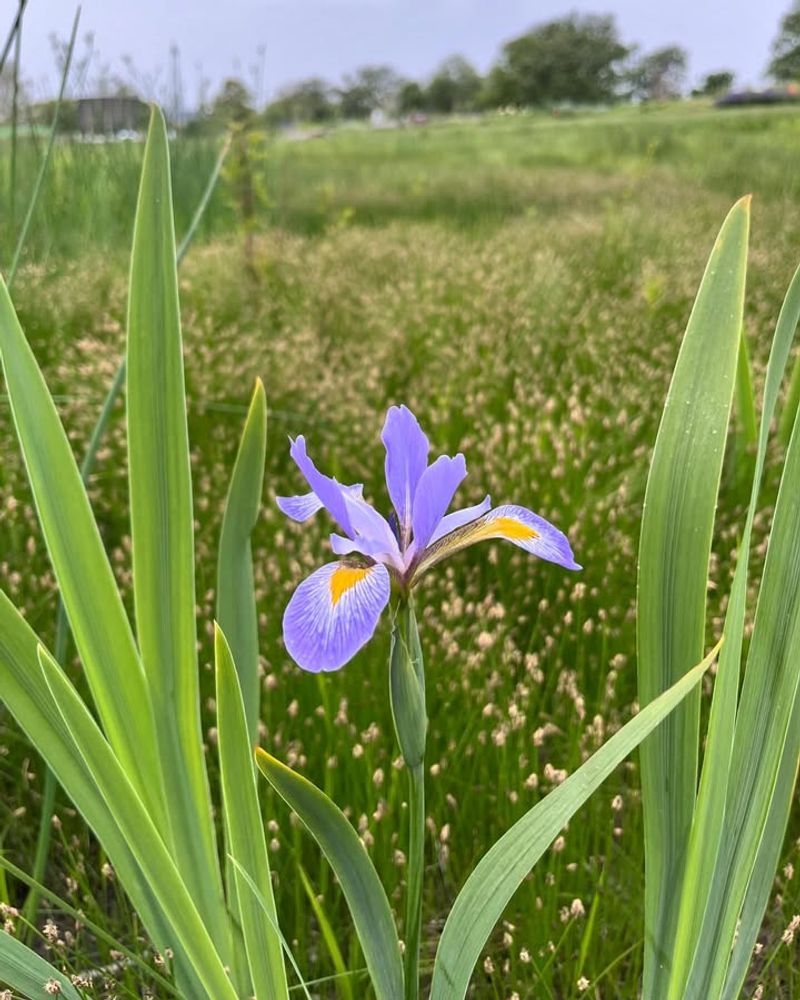
Tall sword-like leaves rise first. Purple blooms follow. Pollinators show up like they received a formal notice.
So why keep forcing grass into a place that clearly wants something better?
Start with a plant that belongs there. Southern blue flag iris brings color, habitat value, runoff help, and a much calmer relationship with water.
That muddy corner might not need fixing. It might need the right native plant to finally make sense.
Southern Blue Flag Iris Belongs Here
That low corner of a North Carolina backyard after a hard July rain is where this plant was made to live.
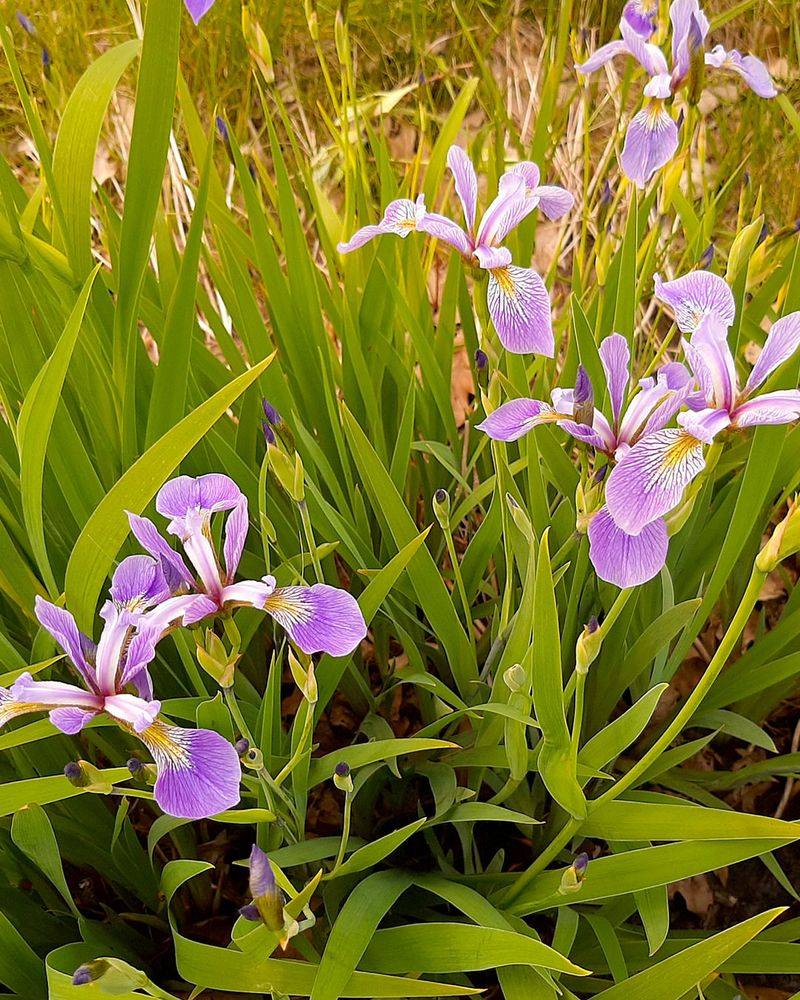
Water pools up, the grass turns yellow, and nothing seems happy there. Southern blue flag iris, known scientifically as Iris virginica, earns its place in exactly that kind of spot.
This native plant is found naturally along stream banks, pond edges, and wetland margins from Virginia down through the Carolinas and into Florida.
It evolved to handle exactly what your soggy yard corner throws at it: periods of standing water followed by drier spells. NC State Extension lists it as one of the most reliable native plants for rain garden use in the state.
The blooms are genuinely show-stopping.
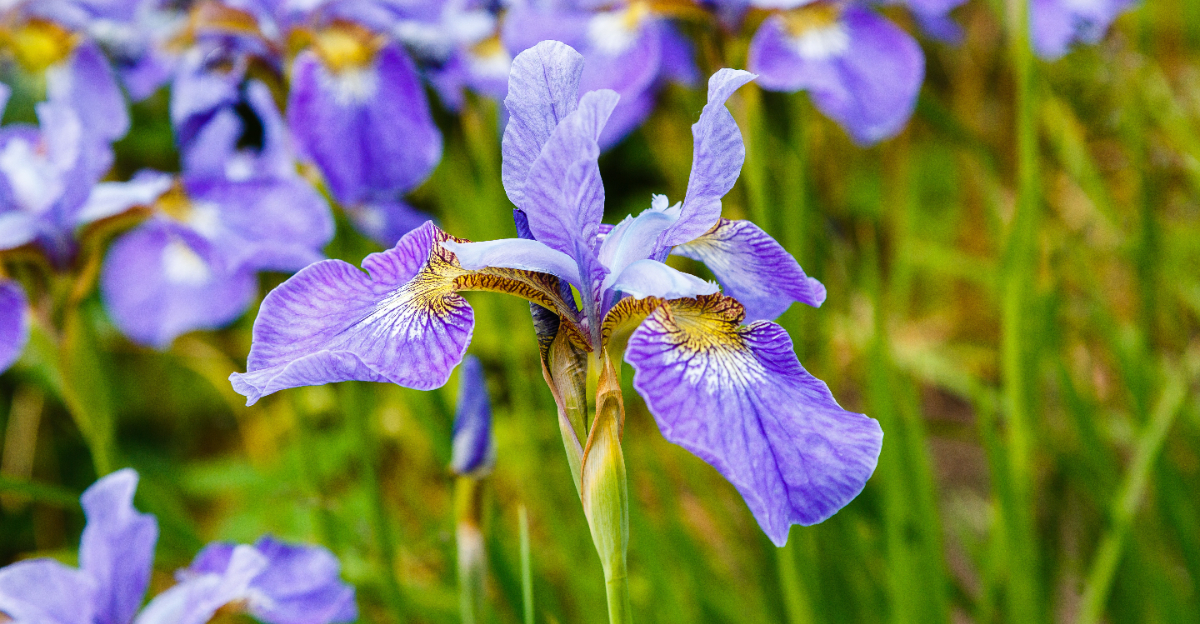
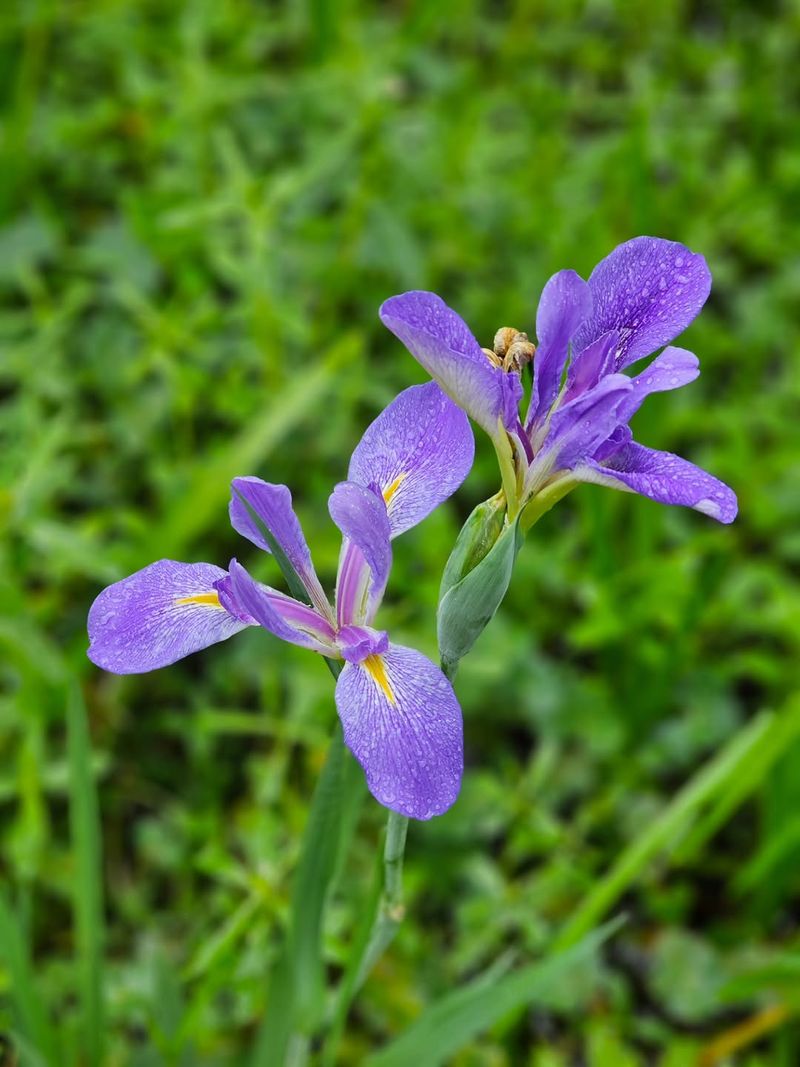
Each flower carries shades of violet, lavender, and soft yellow that look almost hand-painted. They appear in late spring, usually between April and May depending on your location in the state.
Planting southern blue flag iris in a rain garden is not just a practical move. It is a design choice that says you understand your yard instead of fighting it.
Wet Corners Finally Get Color
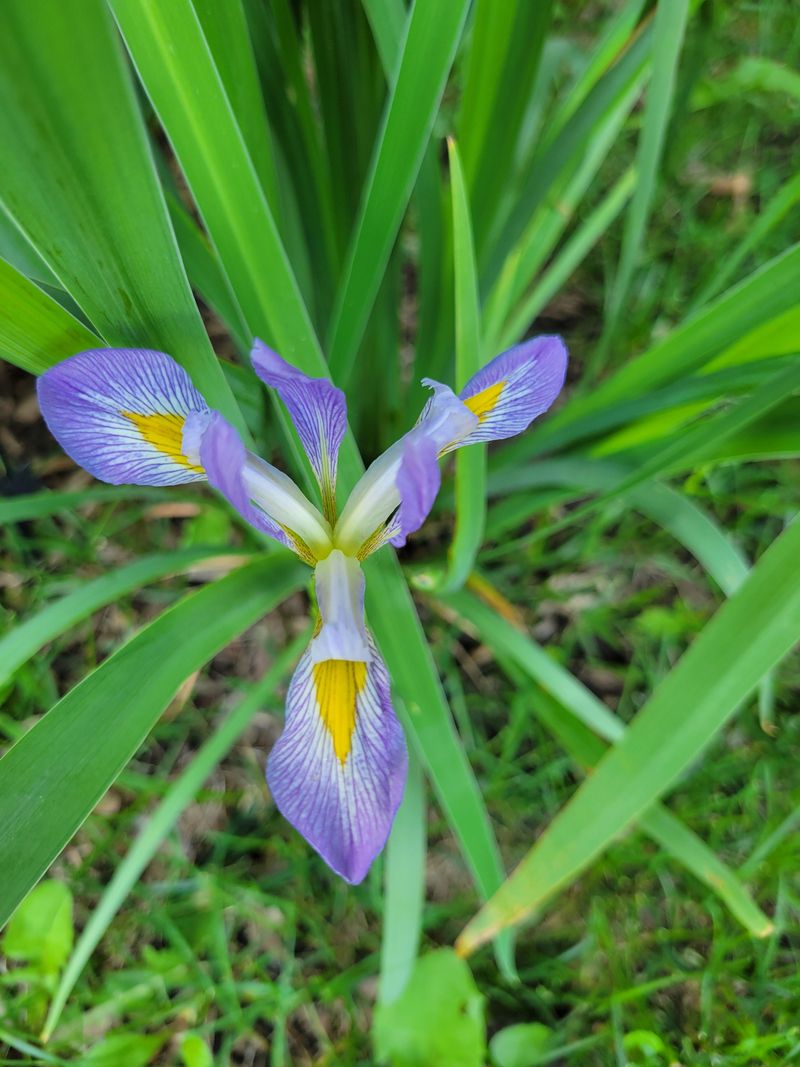
Many homeowners have surrendered that one corner of the yard where turf simply refuses to cooperate.
Soggy soil compacts under foot traffic, grass thins out, and the whole area looks sad and neglected from spring through fall. Southern blue flag iris changes that completely.
When the blooms open in April or May, that forgotten wet corner suddenly becomes the most interesting spot in the whole yard.
The flowers stand up to three feet tall on sturdy stems, and their deep violet petals with gold veining catch every bit of morning light. Neighbors who never noticed your yard before will start slowing down to look.
The color show lasts only a few weeks, but the visual impact lingers long after the petals drop.
Many gardeners pair southern blue flag iris with other rain garden companions like swamp rose or cardinal flower to extend seasonal interest through summer.
Your North Carolina Garden Changes Every Week. Your Plan Should Too.
Gardening in North Carolina changes quickly throughout the season. Every Friday you’ll receive a simple weekly plan showing exactly what to plant, prune, fertilize, harvest, and protect so you never miss the right timing.
You can create a whole wet-corner garden that performs from spring into fall without any single plant carrying the full burden.
Turf grass needs consistent drainage to thrive.
A corner that sits on slow-draining clay is essentially hostile territory for lawn grass. Accepting that reality and planting something that genuinely loves those conditions is not giving up. It is gardening smarter.
Roots Handle Short Soaks Well
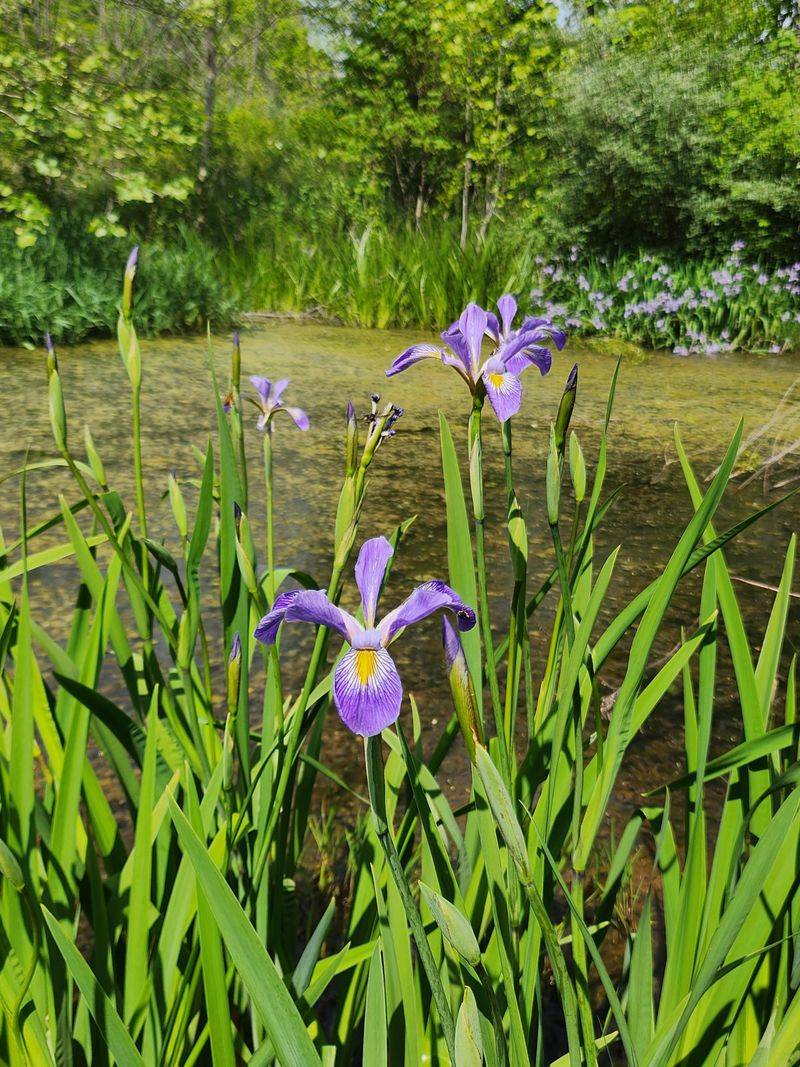
A gardener kneeling at the edge of a rain garden after a storm might wonder how any plant survives repeated soaking.
The answer for southern blue flag iris lies underground, where thick rhizomes anchor the plant and store energy through wet and dry cycles alike.
The key phrase here is short soaks.
Southern blue flag iris is built for temporary flooding, not permanent standing water. NC State Extension rain garden guidance recommends plants that can tolerate inundation for up to 48 hours at a time.
This iris fits that window comfortably. After the water recedes, the roots access oxygen again and the plant continues growing without stress.
Permanent ponding is a different situation entirely.
If your yard corner holds water for five or more days after every storm, the rhizomes can begin to struggle. That is not a plant failure. That is a drainage design problem that needs a different solution before any planting happens.
The rhizomes also spread slowly outward over time, gradually filling in a planting area and creating a dense root mat that helps stabilize soil and slow runoff.
This spreading habit is an asset in a rain garden because it means more roots filtering more water each year.
Spring Blooms Feed Early Visitors
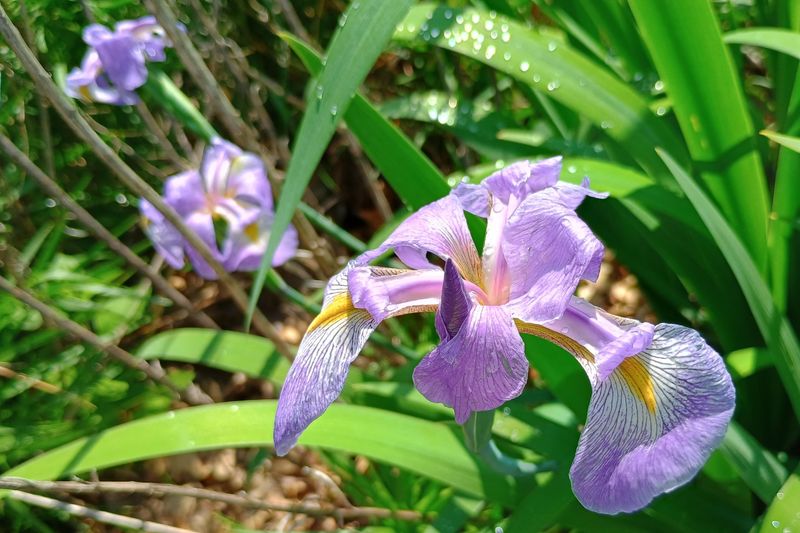
Bees wake up hungry.
After a long winter, native bumblebees and early mason bees emerge looking for pollen and nectar, and they need reliable sources fast.
Southern blue flag iris delivers exactly that when it blooms in April and May, right when early pollinators need a meal most.
The flower structure of this iris is brilliantly designed for pollinator access.
The broad, downward-curving petals called falls act as landing pads, and the yellow nectar guides lead bees directly to the reward.
Hummingbirds also visit the blooms during spring migration through North Carolina, adding another layer of wildlife value to that once-useless wet corner.
Native plant advocates often point out that native plants and native pollinators evolved together over thousands of years.
Southern blue flag iris and the bees that visit it share that long history. A non-native ornamental iris might look similar, but it does not always offer the same ecological connection that pollinators depend on during vulnerable seasonal windows.
Planting a small grouping of three to five iris clumps in your rain garden creates enough floral mass to attract multiple pollinators at once.
Think of each bloom as a tiny welcome mat rolled out for the insects and birds that keep your whole garden ecosystem running smoothly each year.
Sword Leaves Add Clean Structure
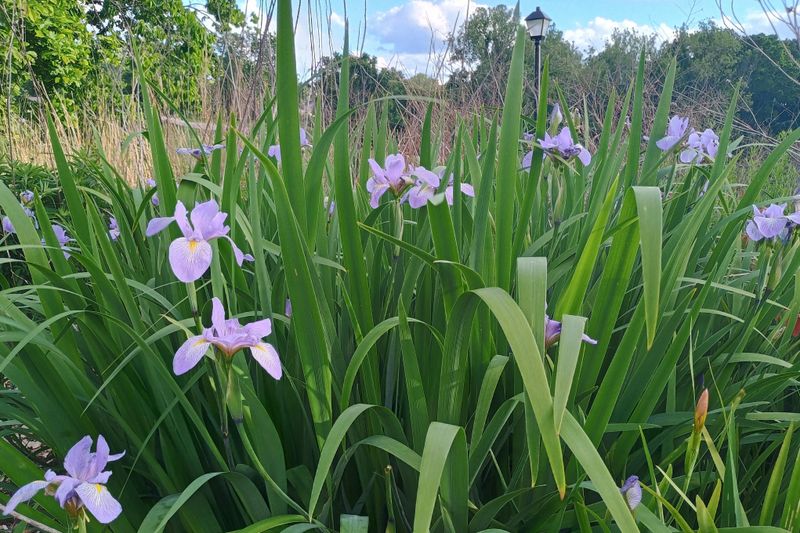
Flowers get all the attention in spring, but the leaves of southern blue flag iris pull their weight for the rest of the growing season.
Long, flat, and sharply upright, the foliage stands up to four feet tall and creates a strong vertical line that landscape designers call structure.
Structure matters in a garden corner that might otherwise look messy.
After the blooms fade, you still have a handsome clump of green leaves that organizes the space visually.
The upright habit contrasts nicely with rounder, mounding plants like swamp rose mallow or soft-textured grasses, giving the rain garden a layered, intentional look rather than a random jumble of wet-tolerant plants.
The leaves stay green and attractive through most of the summer in North Carolina.
By late fall they begin to fade and brown, which is a natural part of the plant cycle. Many gardeners leave the old foliage standing through winter because it provides shelter for small insects and seeds for birds.
Cutting it back in late winter before new growth emerges keeps the clump tidy heading into spring.
From a design standpoint, southern blue flag iris works beautifully at the back of a rain garden bed, where its height creates a backdrop for shorter plants in front.
Clay Soil Needs Drainage Help
Clay soil is both the reason your yard corner stays wet and the reason you need to think carefully before planting anything there.
North Carolina Piedmont soils are famously heavy with clay, which drains slowly and compacts easily. That slow drainage is what creates the puddle problem in the first place.
Southern blue flag iris tolerates clay, but it performs better when you give the soil a little help.
Mixing compost into the top several inches loosens the texture and adds organic matter that improves both drainage and root penetration.
Amending a planting hole that is about twice as wide as the root ball and slightly shallower than the rhizome depth is usually enough to get the plant established.
Avoid adding sand alone to clay soil without organic matter.
Sand mixed directly into clay can actually create a concrete-like texture that makes drainage worse, not better.
Compost is your best tool here. A two-inch layer worked into the top eight inches of soil before planting goes a long way toward giving southern blue flag iris the balanced moisture environment it truly loves.
NC State Extension has published detailed guidance on rain garden construction that includes soil amendment ratios for clay-heavy sites, and following those guidelines is worth the extra step.
Rain Gardens Need Dry Time Too
A well-built rain garden is not a pond. That distinction matters more than most people realize when they first start planning one.
The whole point of a rain garden is to collect stormwater runoff and let it soak into the ground slowly, not to hold water indefinitely like a decorative water feature.
NC State Extension and North Carolina stormwater management resources both emphasize that a functioning rain garden should drain completely within 24 to 48 hours after a storm event.
That dry-out period is not just good for plants. It is essential for preventing mosquito breeding, which requires about 72 hours of standing water for larvae to develop.
Southern blue flag iris fits beautifully into this rhythm.
It handles the wet phase without complaint and then sits comfortably in moist but not waterlogged soil during the dry phase.
This alternating wet-dry cycle actually mimics the natural conditions along the stream banks and wetland edges where the plant evolved in the wild.
If your rain garden is not draining within two days after rain, that is a signal worth investigating.
The overflow outlet may be blocked, the soil may be too compacted, or the basin may be too flat to move water effectively.
A soggy corner that drains well is a rain garden. A soggy corner that never dries out is just a problem waiting to get worse.