The Invasive Tree Spreading Spotted Lanternfly Through North Carolina Yards
Tree of heaven sounds like something worth keeping. It is not.
This fast growing invasive tree has spread across North Carolina and become one of the most serious ecological problems the state is dealing with right now, largely because most people either do not recognize it or underestimate how quickly it takes over.
What makes it especially damaging is its connection to spotted lanternfly, an invasive pest that prefers tree of heaven above almost any other host plant.
Spotted lanternfly populations follow this tree, and as it spreads through North Carolina yards, roadsides, and natural areas, it creates new footholds for an insect that threatens fruit trees, vineyards, and ornamental plants across the region.
Knowing how to identify tree of heaven, understanding why it spreads so aggressively, and removing it correctly before it re-sprouts are the most important steps North Carolina gardeners can take against both threats right now.
1. Tree Of Heaven Is The Spotted Lanternfly’s Favorite Host Tree
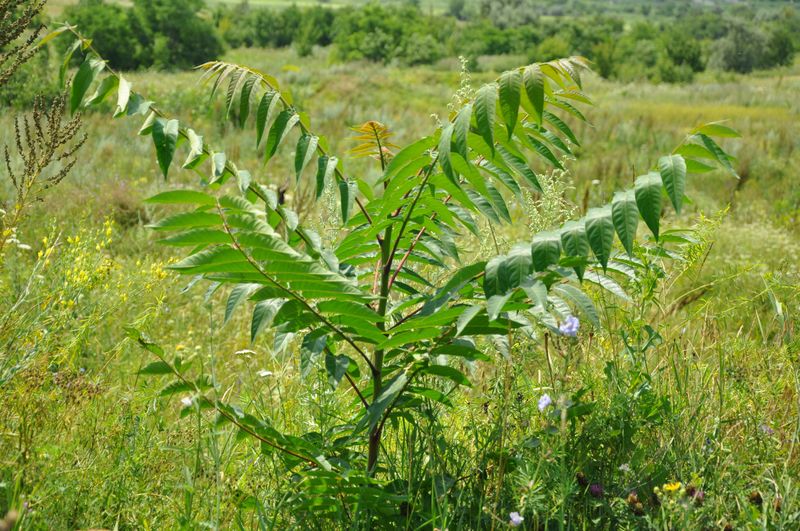
Few plants have earned such an unwanted reputation as Ailanthus altissima, the Tree of Heaven.
While its name sounds almost poetic, its relationship with the spotted lanternfly, scientifically known as Lycorma delicatula, is anything but harmless.
Spotted lanternflies use this invasive tree as their go-to gathering spot, feeding heavily on its sap and laying egg masses on its bark throughout the season.
Spotted lanternflies do feed on grapes, maples, and fruit trees, but Tree of Heaven acts like a magnet for large populations.
Research from Penn State University has shown that Tree of Heaven is the preferred host where lanternflies congregate in the highest numbers.
Removing it from your property can meaningfully reduce the number of lanternflies attracted to your yard.
North Carolina has already confirmed spotted lanternfly sightings in several counties, and wildlife officials are watching the spread carefully.
The more Tree of Heaven grows unchecked in backyards, roadsides, and woodland edges, the easier it becomes for lanternfly populations to build up.
Homeowners who spot either the tree or the insect are encouraged to report it to the North Carolina Department of Agriculture and Consumer Services right away.
Early action genuinely makes a difference when dealing with invasive species like these.
2. Tree Of Heaven Spreads Faster Than Many North Carolina Gardeners Realize
Most gardeners are surprised to learn just how fast Ailanthus altissima can take over a property.
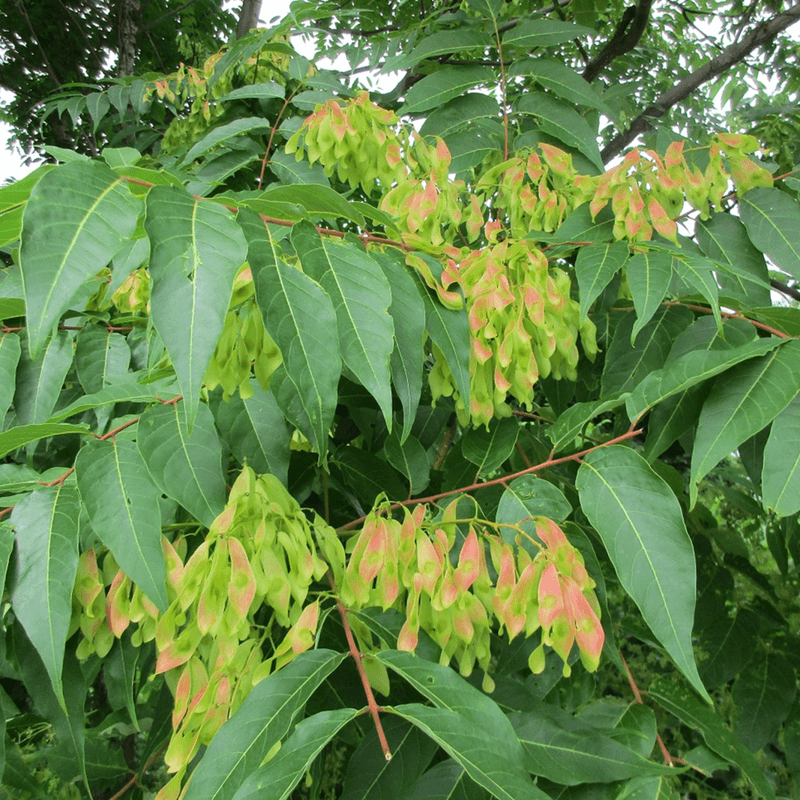
A single mature tree can produce up to 325,000 seeds in one year, and those seeds are lightweight with papery wings that carry them far on the wind.
Within just a few growing seasons, what started as one tree along a fence line can turn into a thick stand covering a large area of your yard. Seed production is only part of the story.
Underground root suckers are equally aggressive, sending up clusters of new stems that spread outward from the original tree.
These root colonies can extend many feet in every direction, popping up through lawns, garden beds, and even cracked pavement.
Disturbed soil makes the problem worse, which is why roadsides, construction sites, and vacant lots often become heavily infested quickly.
Your North Carolina Garden Changes Every Week. Your Plan Should Too.
Gardening in North Carolina changes quickly throughout the season. Every Friday you’ll receive a simple weekly plan showing exactly what to plant, prune, fertilize, harvest, and protect so you never miss the right timing.
The speed of spread catches many North Carolina homeowners off guard because young saplings can look harmless at first.
A small stem near a fence post might seem easy to ignore, but that seedling can grow several feet in a single summer.
Catching new growth early and addressing it consistently is the most practical way to keep Ailanthus altissima from establishing a permanent foothold on your property.
Staying observant through spring and summer gives you the best chance of staying ahead of it.
3. North Carolina Gardeners Often Mistake Tree Of Heaven For Native Trees
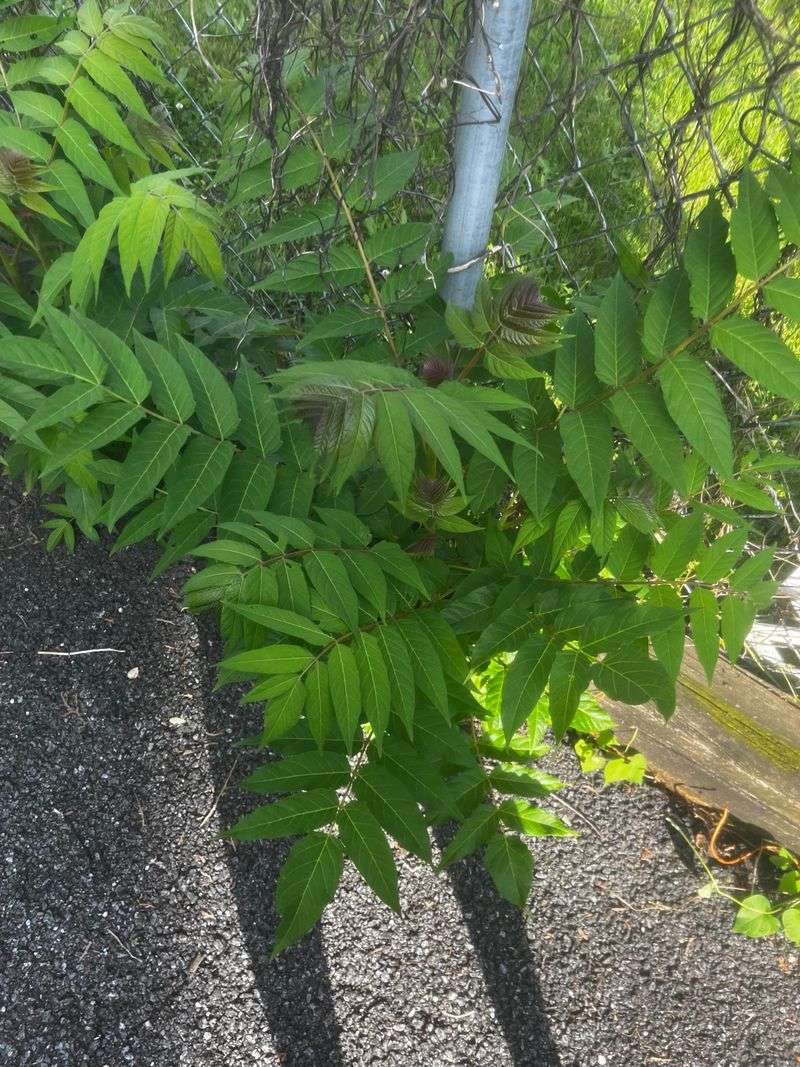
Spotting Tree of Heaven in your yard sounds straightforward until you realize how much it resembles some beloved native plants.
Ailanthus altissima is frequently confused with native sumac species and even black walnut, especially when the plants are young.
Getting identification right matters because treating the wrong plant wastes time while the actual invasive tree keeps growing.
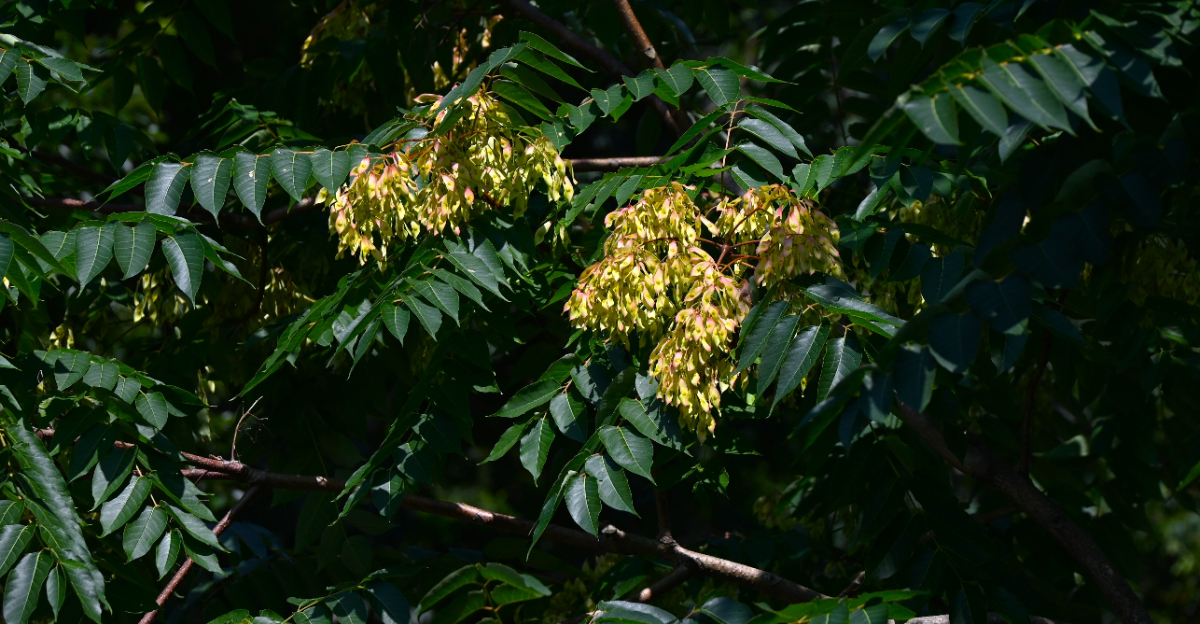
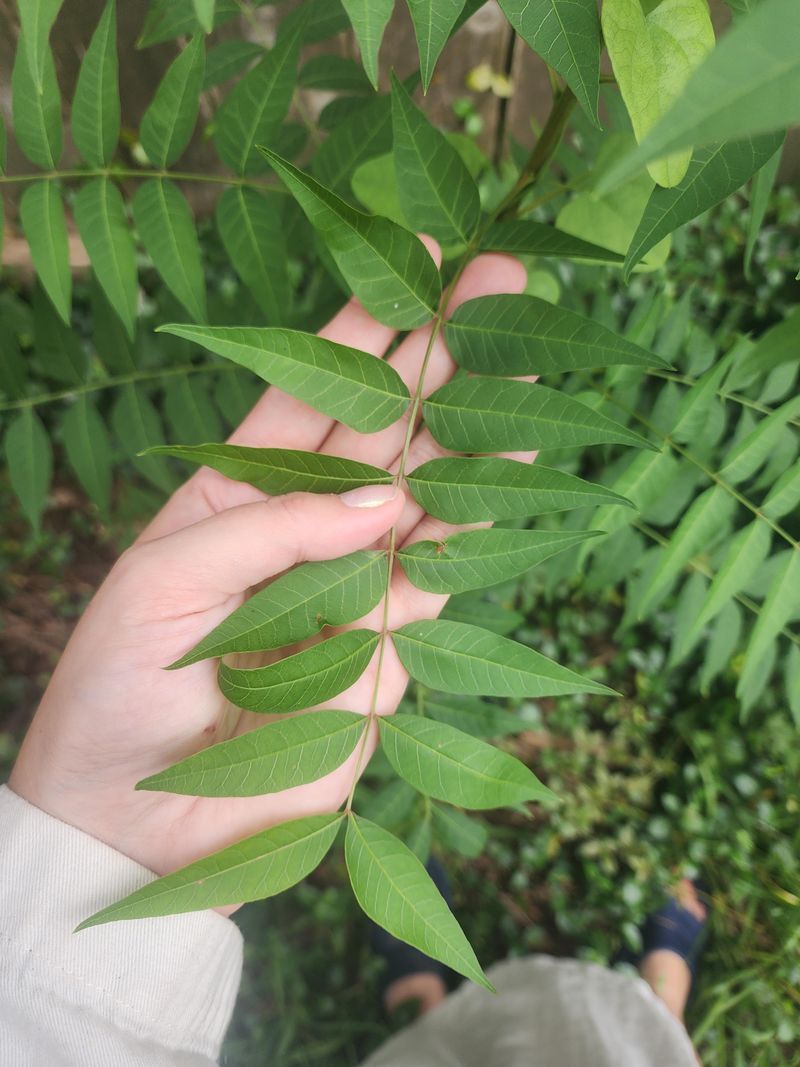
A few key features help separate Tree of Heaven from look-alikes. Its compound leaves are long, sometimes stretching over two feet, and each leaflet has smooth edges with one or two small notched glandular teeth near the base.
Crush a leaf and you will notice a strong, unpleasant smell often compared to peanut butter gone bad or burnt rubber.
Native sumac, by contrast, has toothed leaf edges all the way along the leaflet margins and no strong odor when crushed. Growth habit also gives it away.
Ailanthus altissima shoots up remarkably fast with a straight, smooth gray trunk and few lower branches when young, giving it a tall, lanky appearance.
Clusters of yellowish-green flowers appear in early summer, followed by twisted, papery winged seeds that hang in large bunches and turn reddish-orange as they mature.
Familiarizing yourself with these traits before planting season begins makes it much easier to catch this invasive tree early and take action before it establishes itself deeply in your landscape.
4. Tree Of Heaven Creates Dense Colonies That Push Out Native Plants
Walk along almost any woodland edge or neglected lot in North Carolina and there is a good chance you will find Ailanthus altissima growing in dense clusters.
This invasive tree does not just grow alongside native plants. It actively outcompetes them by growing faster, seeding more aggressively, and thriving in conditions that challenge most native species.
Native wildflowers, young trees, and understory shrubs often struggle to survive once Tree of Heaven moves in.
The canopy created by a mature stand of Ailanthus altissima is thick enough to block the sunlight that native plants depend on to grow.
Meanwhile, its aggressive root system spreads widely underground, competing for water and nutrients.
Urban spaces, park edges, and disturbed woodland areas are especially vulnerable because the soil in those areas has often been loosened or degraded, giving invasive roots an easy path forward.
Ecologists studying North Carolina forests have noted that areas heavily dominated by Ailanthus altissima show significant reductions in native plant diversity over time.
Birds, pollinators, and beneficial insects that depend on native plants for food and habitat lose resources when invasive trees crowd out the plants they rely on.
Homeowners who remove Tree of Heaven from their property are not just tidying up their yard.
They are actively helping restore habitat for the native species that belong in North Carolina ecosystems. Every patch cleared creates space for something valuable to grow back.
5. Cutting Tree Of Heaven Down Incorrectly Often Makes The Problem Worse
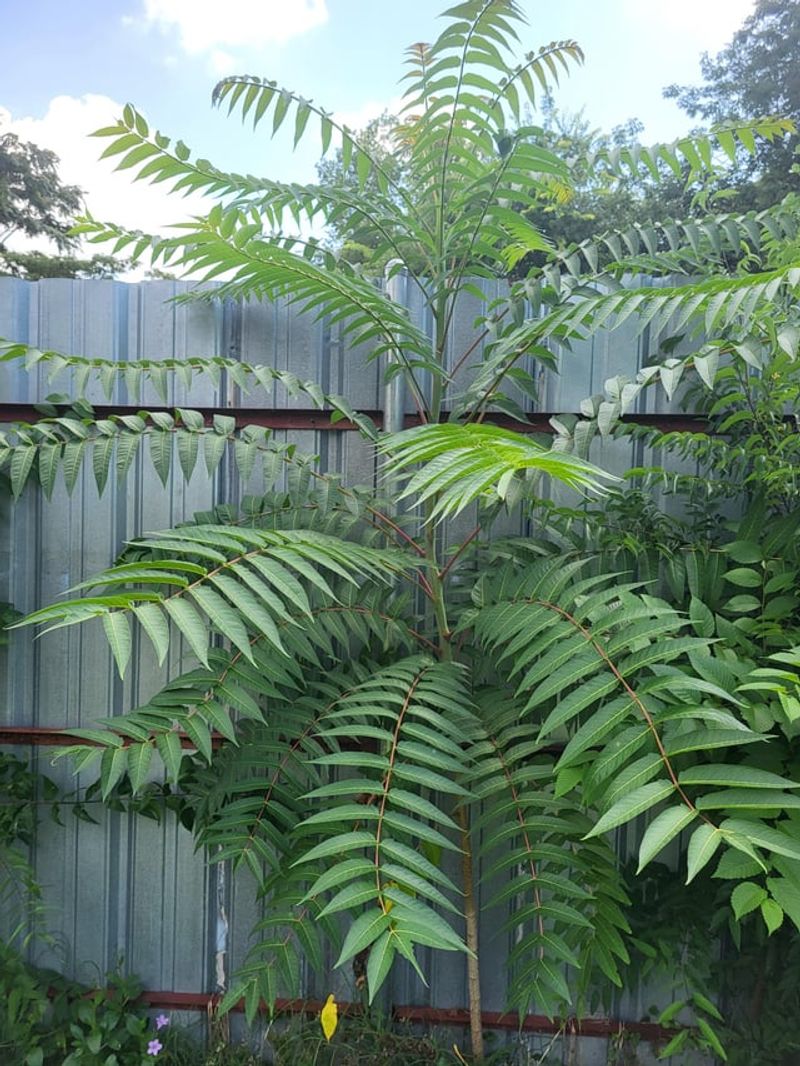
Grabbing a saw and cutting down a Tree of Heaven sounds like a logical first move, but without the right approach it often backfires.
When Ailanthus altissima is cut without proper follow-up treatment, the root system responds aggressively by sending up large numbers of new shoots from the stump and from roots spreading underground.
One cut tree can turn into dozens of new stems in a single growing season. Timing matters more than most people expect.
Late spring and early summer, when the tree is actively growing and pushing energy upward into new leaves, is actually one of the worst times for simple cutting without treatment because the root reserves are still strong.
Late summer, when the tree begins drawing energy back down into the roots, is often recommended by extension specialists as a better window for more effective management approaches.
Following up consistently over multiple seasons is essential because roots remain alive and capable of sending up new growth for a long time.
North Carolina Cooperative Extension recommends consulting local resources or a certified arborist before attempting large-scale removal of Ailanthus altissima on your property.
Small seedlings pulled by hand when the soil is moist are much easier to fully remove before the root system deepens.
For established trees, a combination of proper technique and consistent follow-up monitoring over at least two to three growing seasons gives you the best realistic chance of keeping this invasive tree from bouncing back stronger than before.
6. Spotted Lanternflies Feed On More Than Just Tree Of Heaven
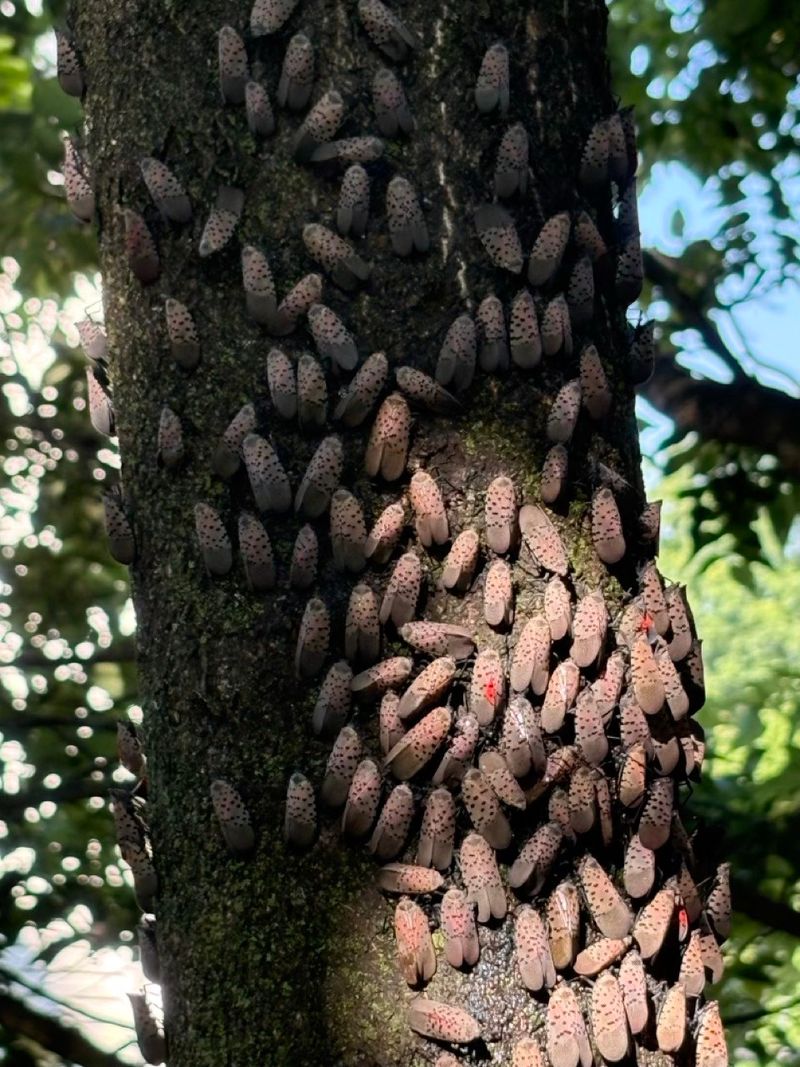
One of the most common misconceptions about spotted lanternflies is that removing Tree of Heaven solves the entire problem.
Lycorma delicatula is actually a wide-ranging feeder that attacks over 70 different plant species documented across the eastern United States.
Grapes, apples, peaches, hops, maples, black walnut, and many ornamental plants commonly grown in North Carolina yards are all on the menu for this pest.
Vineyards and orchards are particularly at risk because spotted lanternflies feed by piercing plant tissue and sucking out sap in large numbers.
Heavy feeding weakens plants over time and can reduce fruit production significantly. The sticky honeydew they excrete also encourages sooty mold growth, which coats leaves and further stresses the plant.
For backyard gardeners growing grapes or fruit trees, a nearby spotted lanternfly population is a serious concern worth taking seriously.
Ailanthus altissima still plays a central role in the spotted lanternfly story even though the insect feeds on many hosts.
Tree of Heaven acts as a preferred late-season gathering site where adults congregate in large numbers before laying eggs.
By hosting dense lanternfly populations on your property, it increases the pressure on every other plant nearby.
Removing Tree of Heaven reduces the peak population that builds up each season, which in turn lowers the feeding pressure on your grapes, fruit trees, and garden plants.
It is one practical piece of a broader management approach.
7. Tree Of Heaven Thrives In Harsh North Carolina Conditions
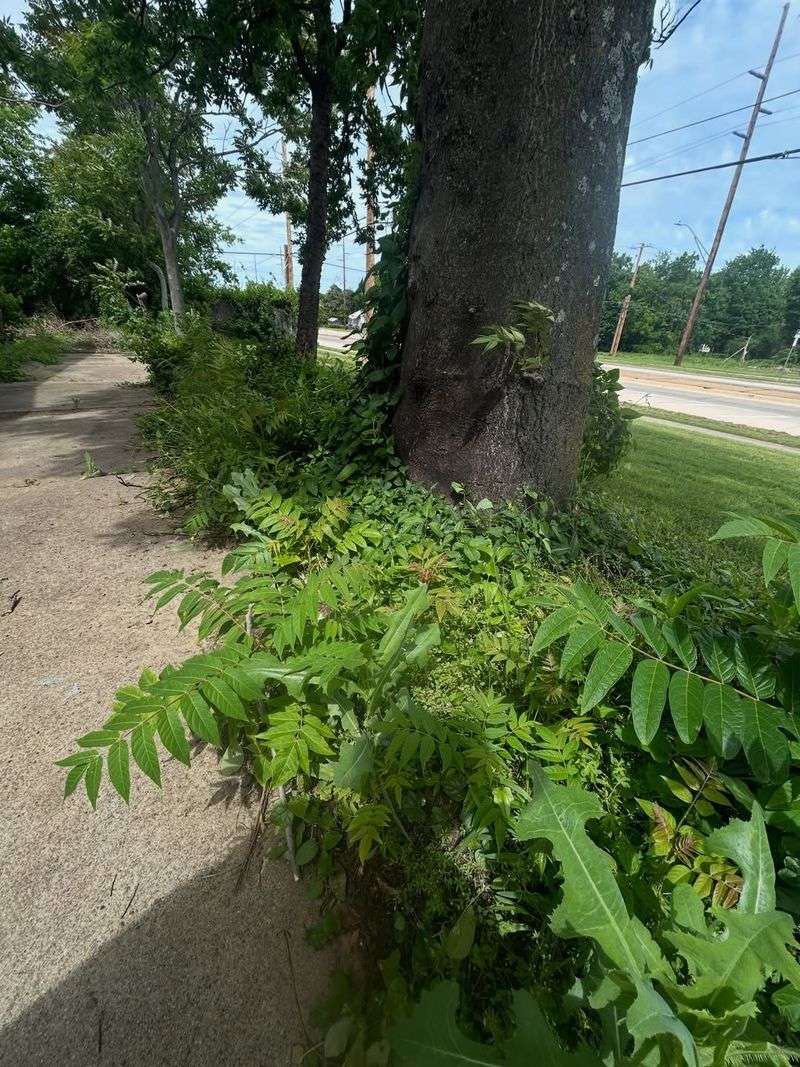
Most plants struggle when the soil is poor, the heat is intense, or moisture is scarce. Ailanthus altissima almost seems to prefer those conditions.
This invasive tree has an extraordinary ability to establish itself in places where native species simply cannot compete, including cracked sidewalks, highway medians, abandoned lots, and roadsides baked by summer heat and polluted by vehicle exhaust.
Its tolerance for compacted, low-nutrient soil gives it a serious advantage in urban and suburban North Carolina environments.
While native trees need decent soil structure and adequate water to get established, Tree of Heaven pushes roots through nearly anything. Drought conditions that stress native plants barely slow it down.
Studies on urban tree ecology have noted that Ailanthus altissima is one of the most pollution-tolerant trees known, thriving in environments that would harm most other woody plants.
This toughness is a big part of why it spreads so effectively along North Carolina roadsides and into neighborhoods.
Seeds landing in a gravel shoulder or a neglected corner of a yard find just enough to get started, and once roots are established the tree grows with remarkable speed.
Homeowners sometimes assume that harsh growing spots are safe from invasive plants, but Tree of Heaven proves that wrong every season.
Checking those forgotten corners of your property regularly is a smart habit that can catch new seedlings before they become a much bigger challenge to manage.
8. Tree Of Heaven Releases Chemicals That Suppress Nearby Plants
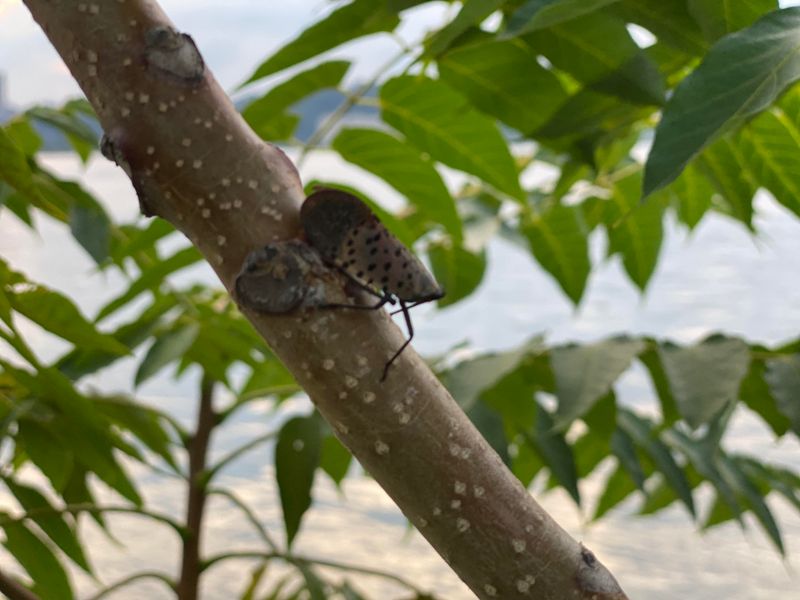
Beyond shading out competitors and outgrowing them, Ailanthus altissima has a biological trick that gives it yet another edge over surrounding plants.
The tree releases allelopathic chemicals from its roots, bark, and fallen leaves into the surrounding soil.
These compounds interfere with the germination and growth of nearby plants, essentially creating a chemical buffer zone that discourages competition from taking root too close.
Research published in plant science journals has identified ailanthone, a compound found in Tree of Heaven tissues, as the primary allelopathic agent.
Ailanthone has been shown to inhibit the growth of a wide range of plant species, including both agricultural crops and native wildflowers.
In practical terms, this means that even after you remove Tree of Heaven from a spot, the soil may remain somewhat hostile to new plant growth for a period while residual compounds break down.
For North Carolina gardeners trying to restore a fence row, woodland edge, or neglected garden bed, this chemical legacy is worth knowing about.
Patience and soil amendment can help speed up recovery in areas where Ailanthus altissima has been growing for a long time.
Adding compost to improve soil biology and planting tough, well-established native transplants rather than seeds gives the best chance of successful revegetation.
Understanding why recovery takes time helps gardeners stay motivated through the process rather than giving up when results are slow to appear in previously infested areas.