The Pennsylvania Highlands Plants Handling Drought Better Than Anything In The Valleys
Pennsylvania soil has a talent for extremes. One month it is holding water like it has nowhere better to be, and the next it is cracked, dry, and making everything planted in it look deeply reconsidered.
Sunny slopes, exposed banks, and lean upland borders tend to get the worst of it, baking through July and August while moisture-dependent plants quietly give up on the whole situation.
Here is the thing though: some of Pennsylvania’s most interesting native plants were practically built for these conditions.
Deep roots, drought-adapted foliage, and a long history of handling exactly the kind of dry summer heat that pushes less-suited plants to their limits.
Choosing the right natives for dry beds, curbside strips, or sunny slopes can keep a Pennsylvania garden looking full of life and color even during the toughest stretches of summer.
1. Butterfly Weed Handles Hot Dry Slopes
Sun-baked slopes can be some of the hardest spots to plant in a Pennsylvania garden, but butterfly weed treats them like prime real estate.
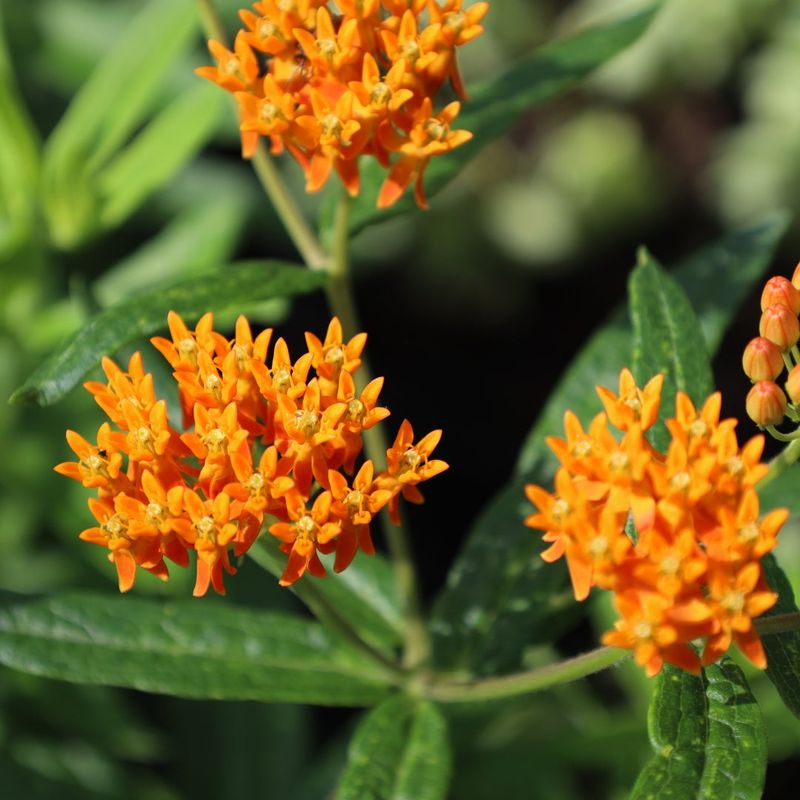
This native perennial, known botanically as Asclepias tuberosa, grows a thick, deep taproot that reaches down through lean, dry soil to find moisture long after the surface has dried out.
That root system is one reason it handles dry, sunny conditions so well once it has settled in.
Butterfly weed puts on a show from late spring through midsummer with clusters of vivid orange blooms that practically glow in full sun.
It is also a critical host plant for monarch butterflies and draws in a steady stream of native bees, skippers, and other pollinators.
The seed pods that follow the flowers have their own quiet beauty as they split open and release silky-tailed seeds in late summer.
One thing to keep in mind is that butterfly weed is slow to emerge in spring, so mark its location carefully to avoid disturbing it. It really does need excellent drainage and full sun to perform well, and it tends to struggle in heavy clay or sites that stay wet.
Water it regularly during its first season to help it establish, and after that it generally handles dry Pennsylvania summers with minimal extra attention. Avoid moving it once it is planted, since disturbing the taproot tends to set it back significantly.
2. Bearberry Covers Lean Sunny Ground
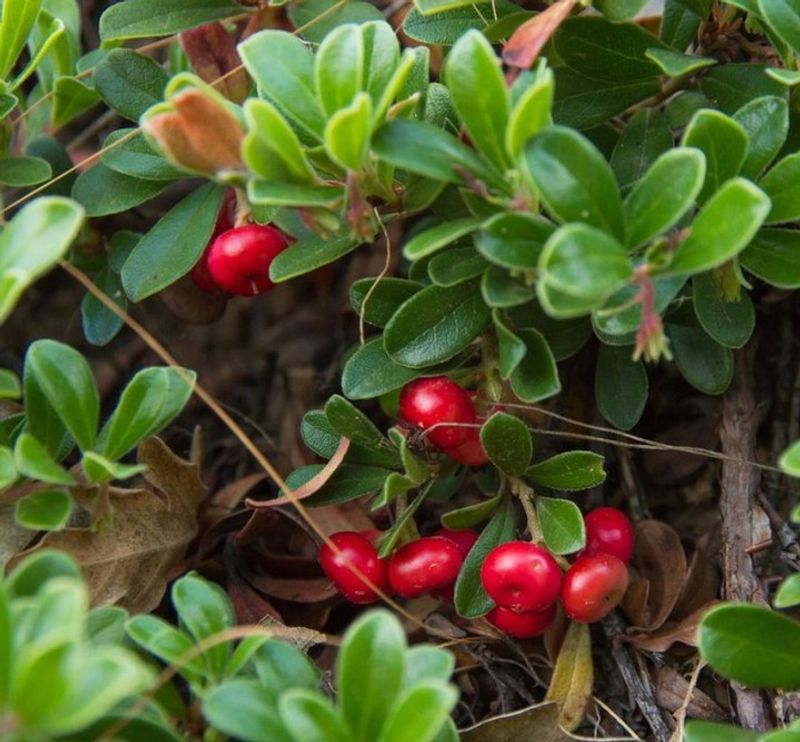
Gravelly edges near driveways, sandy banks, and thin-soiled sunny strips are exactly the kind of spots where bearberry earns its place in a Pennsylvania garden.
This low-growing native ground cover, known as Arctostaphylos uva-ursi, spreads slowly across the ground in a dense, weed-suppressing mat that stays green through most of the year.
Its glossy little leaves hold their color even during dry summer stretches, giving a slope or border a tidy, finished look without much fuss.
In spring, bearberry produces small, urn-shaped pinkish-white flowers that are easy to miss unless you look closely. By late summer and into fall, those flowers give way to bright red berries that birds and wildlife find very attractive.
Your Pennsylvania Garden Changes Every Week. Your Plan Should Too.
Gardening in Pennsylvania changes quickly throughout the season. Every Friday you’ll receive a simple weekly plan showing exactly what to plant, prune, fertilize, harvest, and protect so you never miss the right timing.
That combination of seasonal interest makes it a practical and visually appealing choice for dry, exposed sites in Pennsylvania.
Bearberry is native to Pennsylvania and thrives in sandy, well-drained, acidic soils with full sun to light shade. It is not a good fit for heavy clay or consistently moist ground, and it tends to establish more slowly than some other ground covers.
Consistent watering during the first growing season gives it the best chance of spreading and filling in well.
Once established, it handles lean conditions and dry heat with real staying power, making it a strong candidate for slopes, curbside plantings, and other challenging dry-site spots where many other plants would struggle to survive.
3. New Jersey Tea Fits Dry Upland Borders
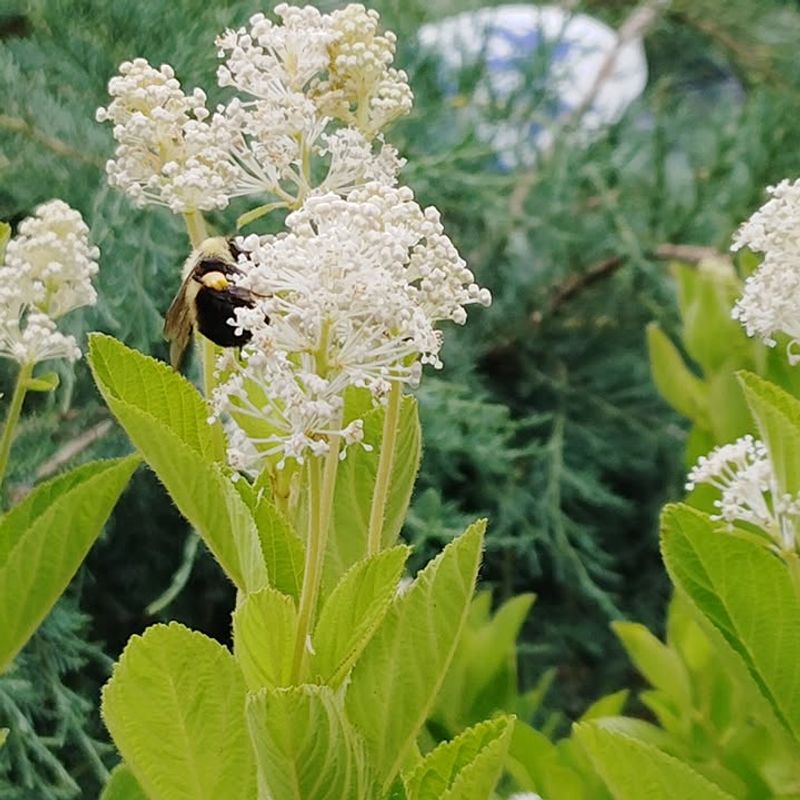
Not many flowering shrubs can hold their own in a dry Pennsylvania upland border while also supporting pollinators, but New Jersey Tea manages both with quiet confidence.
Ceanothus americanus is a compact native shrub that typically grows two to three feet tall and wide, making it a tidy fit for borders where space is limited and soil tends to be lean and well-drained.
Its frothy white flower clusters appear in late spring to early summer and attract a remarkable variety of native bees, butterflies, and other beneficial insects.
What makes this shrub especially suited to dry upland sites is its deep root system, which includes nitrogen-fixing nodules that help it thrive in poor soils without much fertilizing.
It handles full sun to partial shade and performs best in dry to medium, well-drained soils.
Heavy clay or poorly drained ground tends to cause problems, so good drainage is genuinely important when choosing a planting spot.
New Jersey Tea has an interesting historical footnote too. During the American Revolution, colonists reportedly used its leaves as a tea substitute when imported tea was scarce, which is how it got its common name.
For Pennsylvania homeowners, it works well along sunny mixed borders, at the edges of meadow-style plantings, or on dry slopes where a low-maintenance native shrub can add structure and seasonal bloom.
Water it through its first summer, and it should settle into a reliable, low-effort presence in the garden over time.
4. Sweet-Fern Thrives In Tough Dry Soil
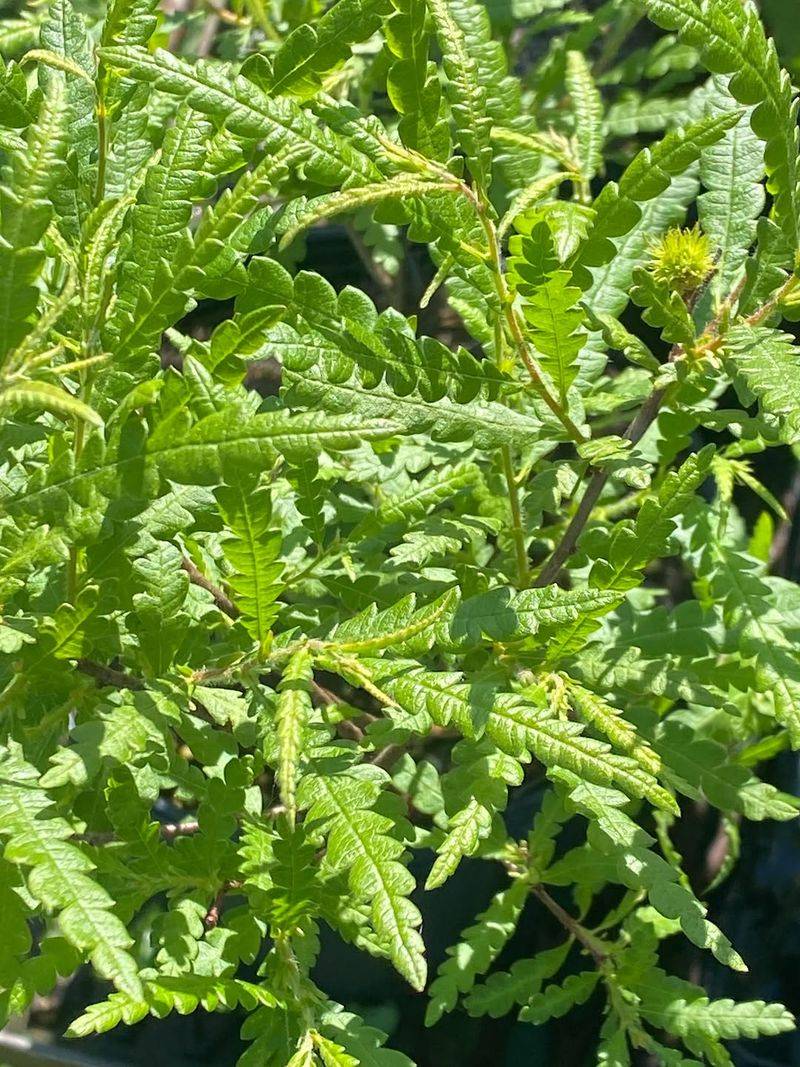
Running your fingers along a sweet-fern leaf releases a warm, spicy, almost resinous fragrance that is unlike anything else growing in a Pennsylvania garden. Despite the name, sweet-fern is not actually a fern at all.
Comptonia peregrina is a native shrub with deeply lobed, fern-like leaves that spreads gradually by root suckers to form a low, aromatic colony.
It is one of the toughest plants available for dry, acidic, sandy, or gravelly sites where many other shrubs simply cannot find enough to work with.
Sweet-fern grows best in full sun to light shade and handles lean, infertile soils with ease. Like New Jersey Tea, it has nitrogen-fixing root nodules that allow it to persist and even improve poor soil over time.
It is a Pennsylvania native with a long history in dry, open, and disturbed upland habitats, including roadsides, sandy barrens, and rocky slopes.
For homeowners, sweet-fern works well as a spreading ground cover on dry banks, along sunny slopes, or in naturalized areas where a low-maintenance, spreading shrub is welcome.
It is not the right choice for tidy formal borders since it does spread, but for stabilizing a dry slope or filling in a naturalistic planting, it is hard to beat.
Water it regularly during establishment, make sure drainage is good, and avoid rich amended soils, which can actually work against it. Once settled, it tends to look after itself through dry Pennsylvania summers quite reliably.
5. Fragrant Sumac Holds Sunny Banks
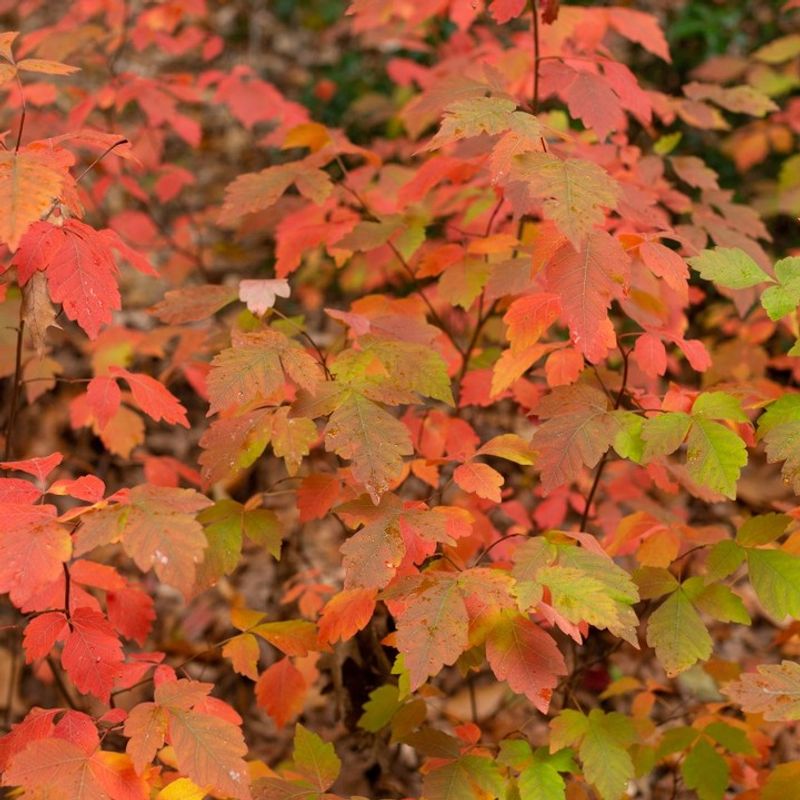
Exposed banks and steep sunny slopes can erode quickly in Pennsylvania, especially on properties where the soil is thin and dry.
Fragrant sumac, known as Rhus aromatica, is a native shrub that spreads by layering and suckering to form a dense, stabilizing cover that holds soil remarkably well on challenging sites.
It grows in a loose, arching form that typically reaches three to six feet tall, though lower-growing cultivars like Gro-Low are available and popular for smaller residential slopes.
The seasonal show this shrub puts on is genuinely impressive. Small yellow flowers appear in early spring before the leaves emerge, providing early-season nectar for pollinators.
The foliage turns brilliant shades of orange, red, and purple in fall, making it one of the more colorful native shrubs available for Pennsylvania dry-site gardens. Small red fuzzy fruits follow the flowers and attract birds through late summer and fall.
Fragrant sumac handles full sun to partial shade and grows well in dry to medium, well-drained soils, including sandy, rocky, and clay-heavy ground. It does tend to spread, so give it room to do what it does naturally.
For homeowners dealing with a dry, sunny bank that is hard to mow or maintain, fragrant sumac can be a practical and attractive solution.
Regular watering during the first growing season helps it establish a strong root system, and after that it generally handles dry Pennsylvania summers without much extra intervention.
6. Blue False Indigo Brings Deep-Rooted Structure
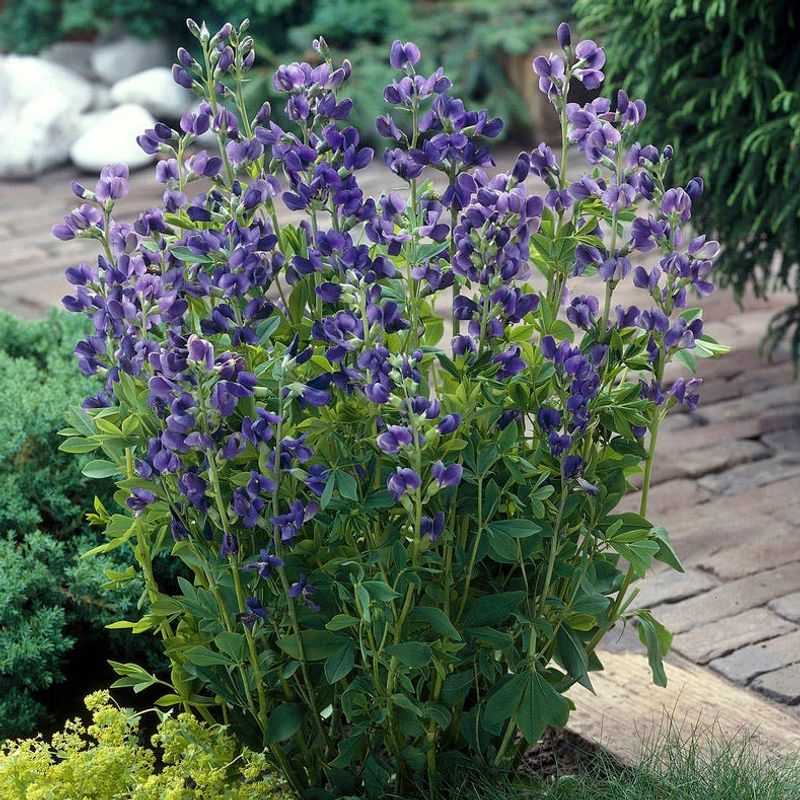
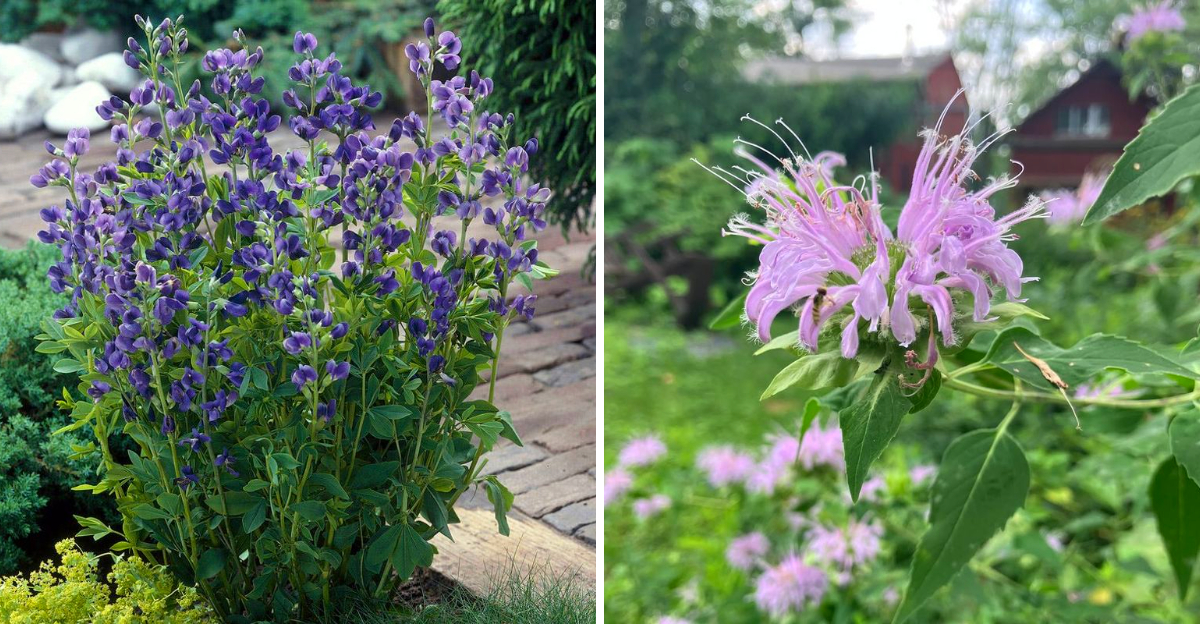
Few native perennials can match the architectural presence that blue false indigo brings to a dry Pennsylvania garden border.
Baptisia australis grows into a large, rounded clump of blue-green foliage that looks attractive from the moment it emerges in spring right through the end of the growing season.
In late spring, tall spikes of deep blue-purple flowers rise above the foliage in a display that rivals many showier garden plants, and the inflated seed pods that follow are interesting in their own right.
What makes blue false indigo genuinely valuable for dry sites is its extraordinary root system. It develops a deep, thick taproot and extensive lateral roots that anchor it firmly in the ground and allow it to reach moisture far below the dry surface layer.
That root structure also means it takes a few seasons to fully establish and reach its mature size, so patience is part of the deal with this plant.
Blue false indigo performs best in full sun with dry to medium, well-drained soil. It is a Pennsylvania native that handles lean conditions well once established and rarely needs dividing or moving.
Avoid planting it in heavy, poorly drained soil or overly shaded spots, as those conditions tend to reduce its vigor and bloom. Water it consistently during its first one to two growing seasons to support root development.
Once it has settled in, blue false indigo tends to be a long-lived, low-maintenance anchor plant for sunny dry borders in Pennsylvania gardens.
7. Rattlesnake Master Stands Strong In Dry Heat
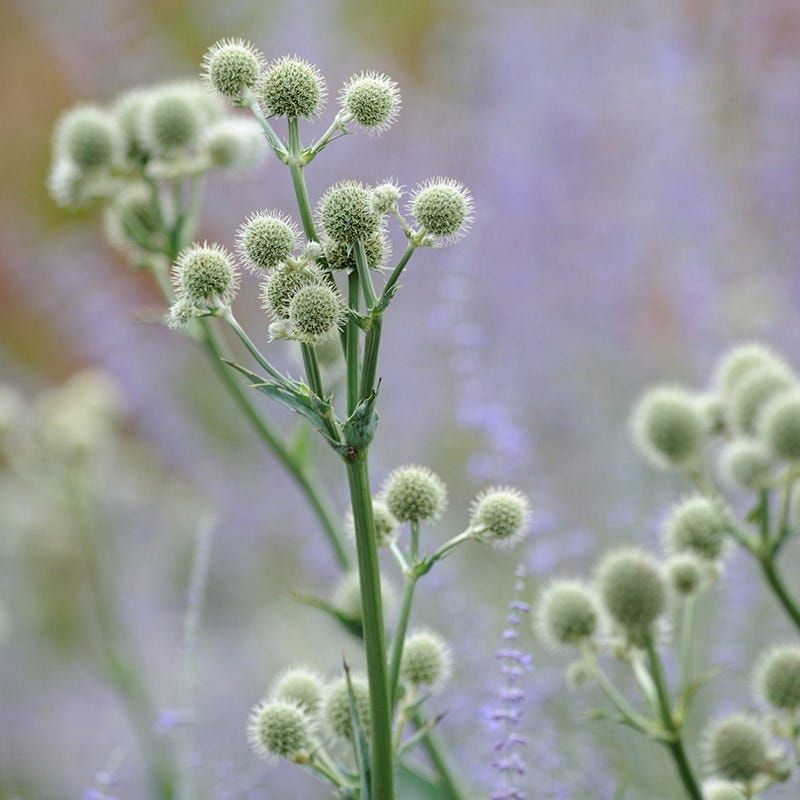
There is something almost sculptural about rattlesnake master standing in a dry Pennsylvania meadow planting on a hot July afternoon.
Eryngium yuccifolium is a native perennial with stiff, strap-like, blue-green leaves and rounded, thistle-like flower heads that rise on branching stems to four feet or more.
The whole plant has a bold, architectural quality that looks striking from a distance and holds its form well through summer heat and dry spells.
Rattlesnake master is native to prairies and open upland areas across much of eastern North America, and it performs well in full sun with dry to medium, well-drained soil.
Sandy, gravelly, or lean soils suit it well, and it tends to handle dry summer conditions better than many other perennials once it has had a season or two to settle in.
Its unusual flower heads attract native bees, wasps, and other pollinators that are not always drawn to more conventional garden flowers.
For Pennsylvania homeowners, rattlesnake master works well in meadow-style plantings, dry native plant borders, or as a bold accent in a sunny bed with good drainage. It can self-seed modestly, so deadheading is worth considering if you want to manage its spread.
Give it full sun and good drainage, water it regularly during its first growing season, and avoid heavy clay or wet sites.
Once established, it tends to handle Pennsylvania dry summers with striking composure, holding its structure and color when many nearby plants start to look worn and tired.
8. Wild Bergamot Adds Color To Dry Summer Beds
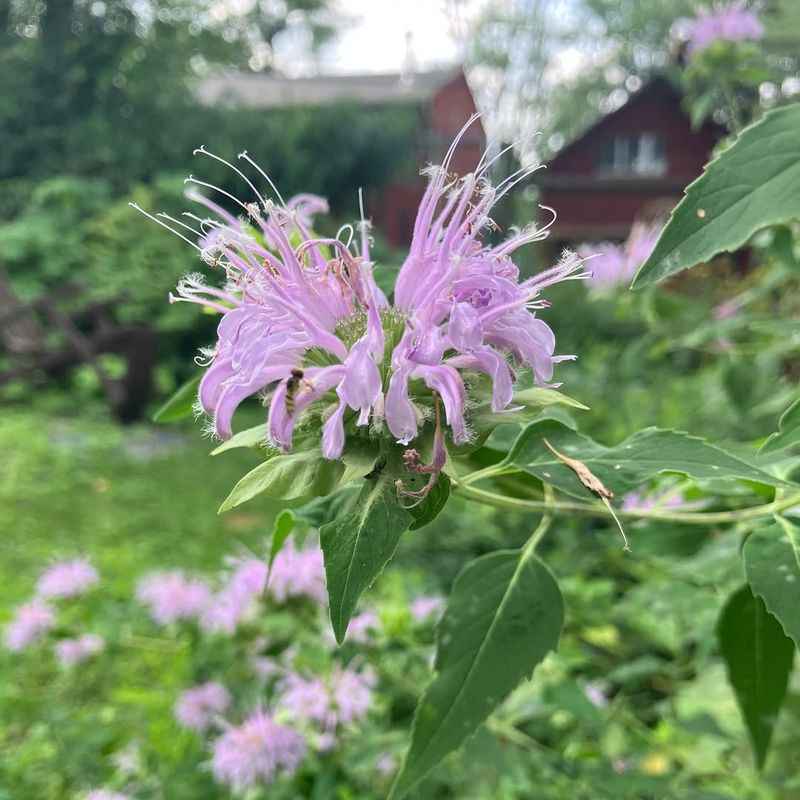
Pollinators moving through a Pennsylvania garden in midsummer have a way of finding wild bergamot before you even notice it is in bloom.
Monarda fistulosa is a native perennial that produces loose, shaggy heads of lavender-pink flowers from midsummer into late summer, and the fragrant, oregano-scented foliage adds a pleasant herbal quality to the garden even when the plant is not in flower.
It is one of the more reliable native bloomers for dry, sunny beds in Pennsylvania.
Unlike its showier cousin bee balm, which tends to prefer moist conditions, wild bergamot is genuinely suited to dry, well-drained, lean soils in full sun to light shade.
It handles dry summer spells without wilting dramatically, and it tends to be less prone to powdery mildew when grown in a sunny, open spot with good air circulation.
Bumblebees, hummingbirds, and a wide range of native bees visit the flowers regularly through the bloom period.
Wild bergamot spreads gradually by rhizomes and can form a loose colony over time, which is useful for filling in a dry bed or sunny border but worth managing in smaller spaces.
Dividing clumps every few years keeps it vigorous and prevents it from crowding neighbors.
Water it through its first growing season to help it establish, then reduce supplemental watering as it settles in.
For Pennsylvania gardeners looking to add late-season color and pollinator value to a dry, sunny bed, wild bergamot is a genuinely rewarding choice that earns its space.