The Purple Michigan Lawn Flower Many People Pull Before Realizing Pollinators Love It
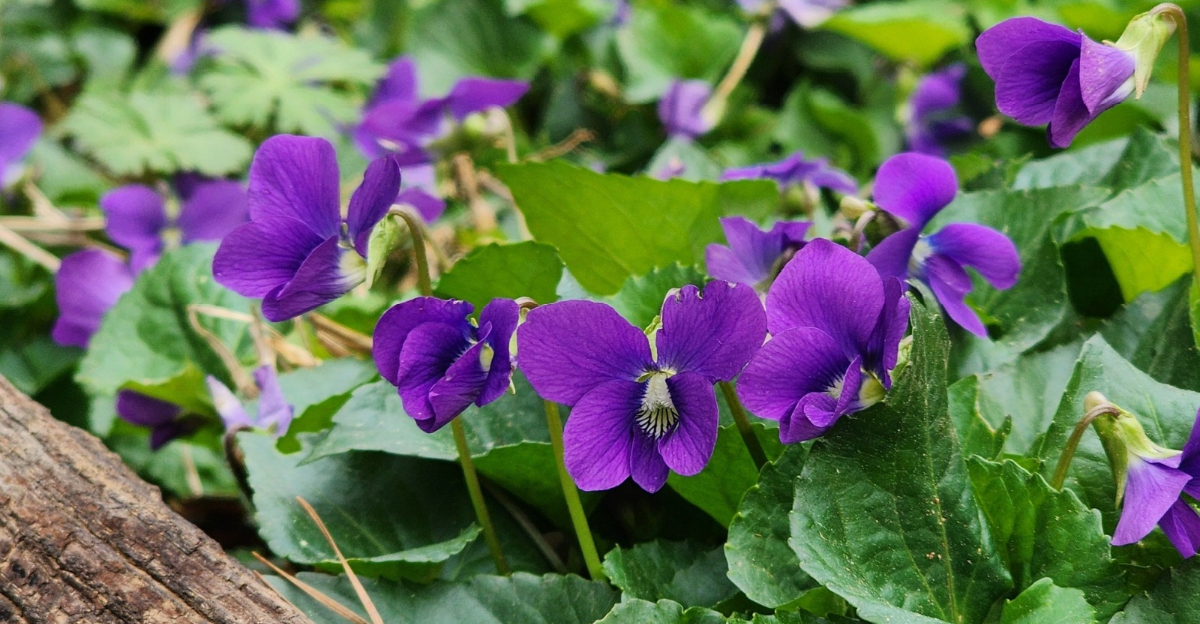
Every spring, small purple flowers appear across Michigan lawns and trigger an immediate weeding response that is, frankly, a little hasty. Common Blue Violet has a reputation for spreading and showing up uninvited, and that reputation is not entirely undeserved.
But pulling every last one without a second thought means removing a plant that blooms earlier than almost anything else in the yard and feeds native bees at a time when very little else is available.
It also thrives in the shaded, difficult corners where most other plants simply refuse to cooperate.
It is not the right plant for every spot in a Michigan yard, and nobody is suggesting turning the whole lawn purple.
But knowing what it actually contributes before reaching for the trowel tends to change the calculation at least a little.
1. Common Blue Violet Hides In Plain Sight
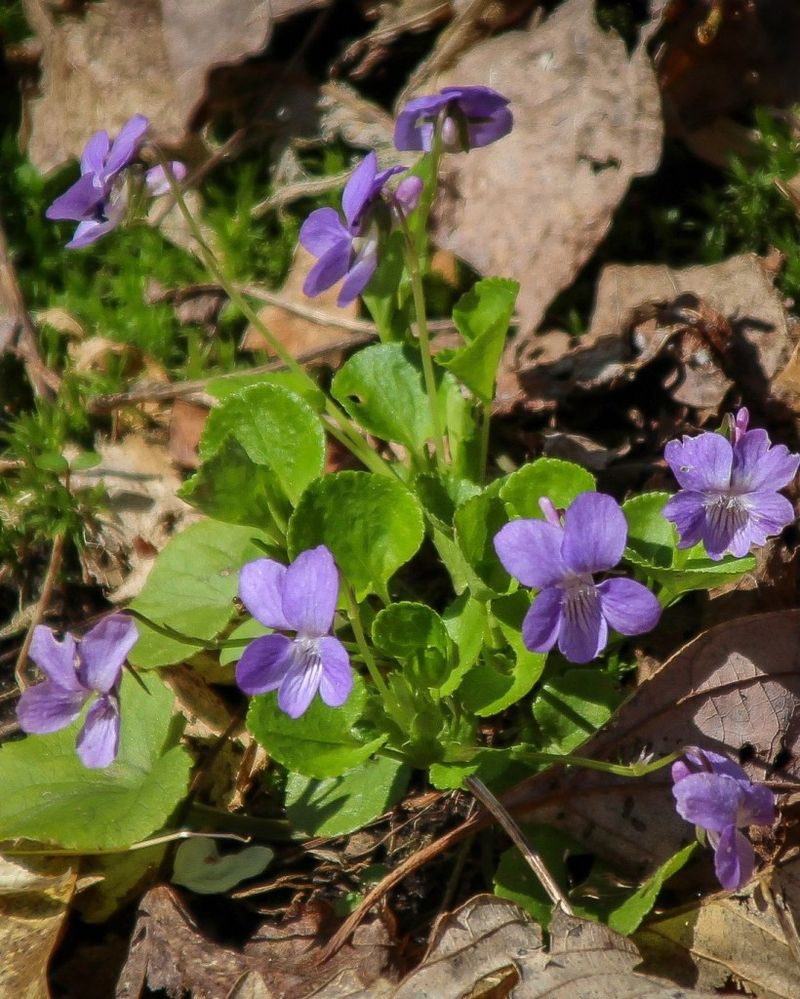
Plenty of Michigan homeowners walk right past Common Blue Violet for weeks without realizing what they are looking at.
The plant stays low to the ground, tucks itself between blades of grass, and does not call much attention to itself until those small purple flowers open up in spring.
By then, it has already settled in and made itself comfortable.
Common Blue Violet, known by the scientific name Viola sororia, is native to Michigan and grows naturally in woodland edges, meadow margins, and residential lawns across the state.
It tends to show up in spots where the grass is a little thin, the soil holds some moisture, and shade from a nearby tree or fence makes conditions less ideal for turf.
Those are exactly the kinds of spots where many Michigan yards struggle to grow a dense, uniform lawn.
Because the leaves are low-growing and the plant does not tower above the grass, it often goes unnoticed until the blooms appear. Once the flowers fade, the leaves remain through the rest of the season, looking a bit like any other broad-leaved plant in the turf.
That is part of why so many people are surprised when they finally identify it. It has likely been there far longer than they realized, quietly growing in the background of their Michigan lawn.
2. Purple Flowers Appear Early In Spring
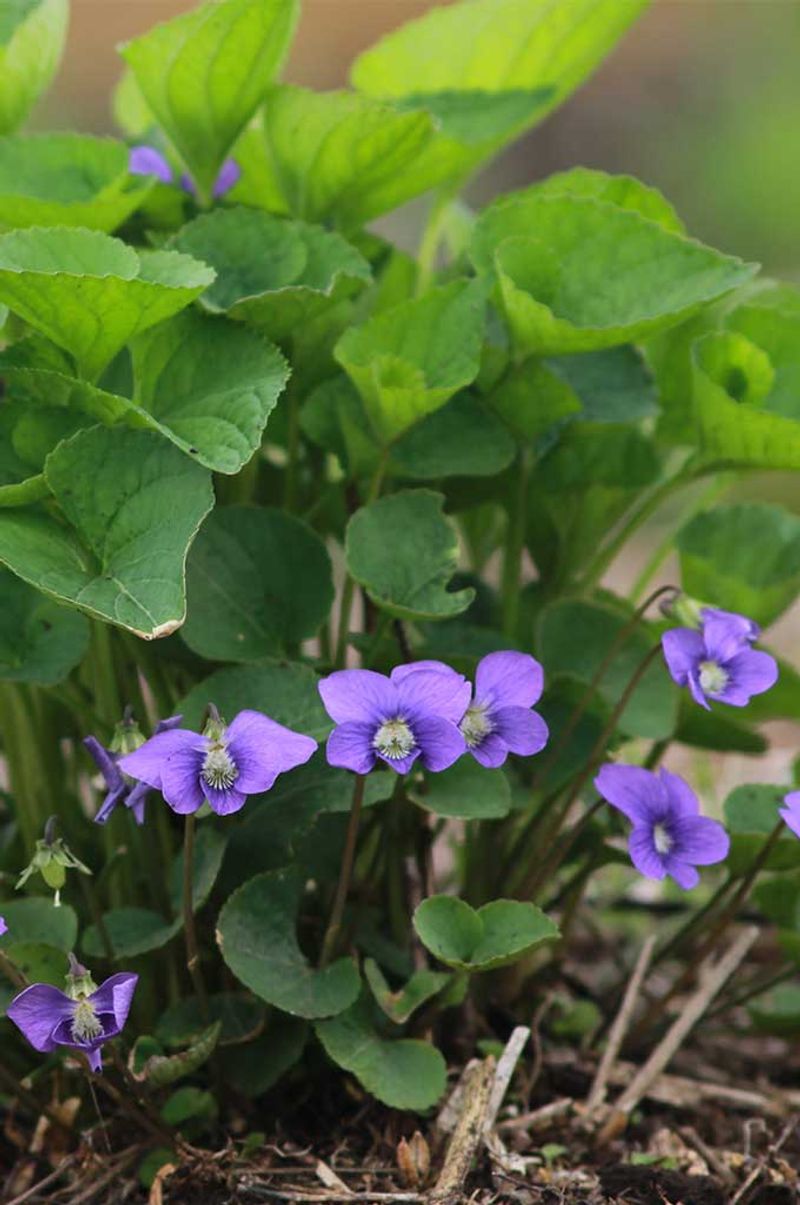
One of the most striking things about Common Blue Violet is how early it blooms.
In Michigan, the flowers can appear as soon as late March or April, often before most homeowners have thought about spring lawn care or even pulled out the mower for the first time.
That early timing is actually one of the plant’s most useful qualities.
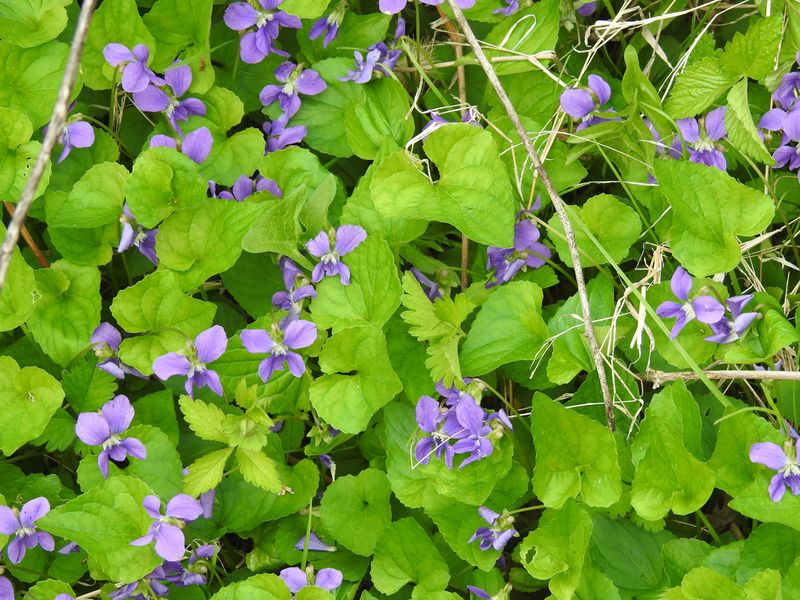
The blooms are small, typically around half an inch wide, and range from pale lavender to a rich blue-purple. They sit on slender stems just above the leaf surface and face slightly outward, making them easy to spot once you know what to look for.
In a lawn that is still waking up from a Michigan winter, those purple dots of color can be surprisingly cheerful.
What many people do not know is that Common Blue Violet also produces a second type of flower later in the season. These secondary flowers, called cleistogamous flowers, never open at all.
Your Michigan Garden Changes Every Week. Your Plan Should Too.
Gardening in Michigan changes quickly throughout the season. Every Friday you’ll receive a simple weekly plan showing exactly what to plant, prune, fertilize, harvest, and protect so you never miss the right timing.
They self-pollinate underground or near the soil surface and produce seeds without any help from insects. That hidden flowering habit is part of why the plant can spread steadily across a yard even in seasons when visible blooms are limited.
The early purple flowers that catch your eye in April are just one part of a surprisingly productive plant that works quietly through much of the Michigan growing season.
3. Heart-Shaped Leaves Help Identify It
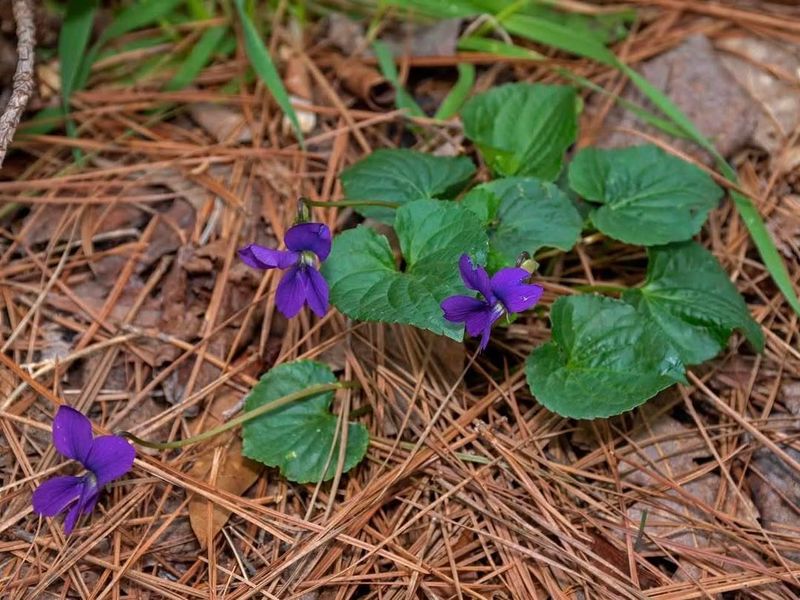
When the flowers are gone, the leaves are what give Common Blue Violet away. Each leaf has a distinct heart shape with a slight indentation at the base where the stem attaches, and the edges are gently scalloped rather than smooth.
Once you learn to recognize that shape, you will start spotting it in Michigan lawns everywhere.
The leaves tend to be a medium to dark green and have a slightly glossy surface. They grow on long petioles, meaning the stem connecting the leaf to the plant base is noticeably longer than what you would see on many other low-growing lawn plants.
That gives the leaves a slightly raised, open appearance even when the plant is nestled close to the ground. In shaded areas of a Michigan yard, the leaves can grow a bit larger than in sunny spots, which makes them easier to identify at a glance.
Knowing what the leaves look like matters because Common Blue Violet is sometimes confused with other plants in the lawn.
Ground ivy, for example, also has rounded leaves and creeping growth, but its leaf shape and texture are noticeably different once you compare them side by side.
Creeping Charlie, another common Michigan lawn weed, has a more scalloped, kidney-shaped leaf and a distinct minty smell when crushed.
Taking a moment to check the leaf shape before pulling a plant can save you from removing something that might actually be worth keeping in a low-input corner of your yard.
4. Pollinators Use The Early Blooms
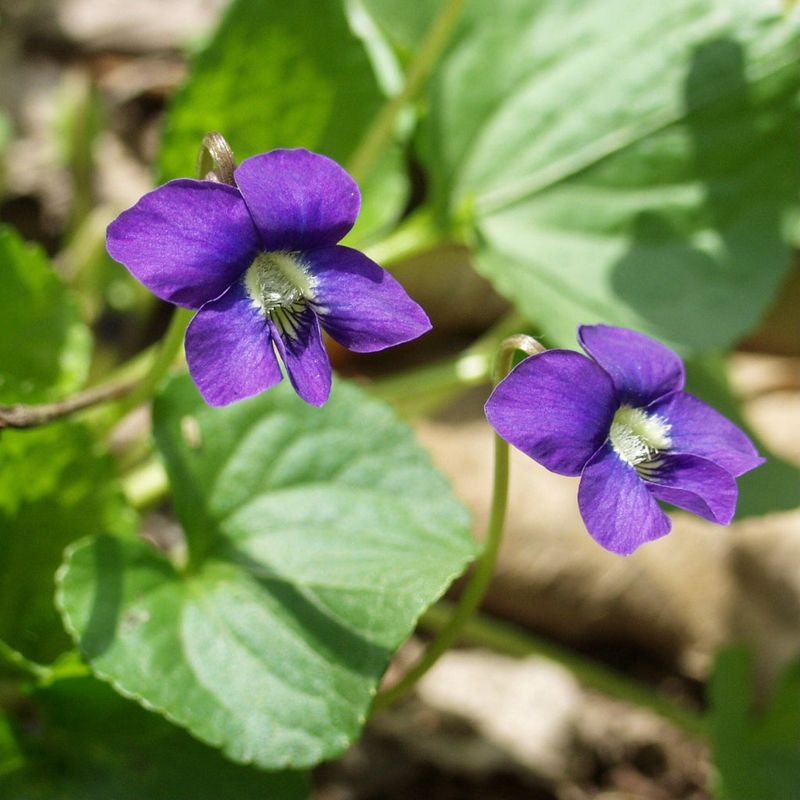
Early spring is a tough time for pollinators in Michigan. Many native bees are just emerging from winter, and the landscape has not yet caught up with their need for food.
Most flowering trees and garden plants are still weeks away from blooming, which makes any early flower genuinely useful to the insects that are already active and searching.
Common Blue Violet is one of the plants that fills that gap. Several native bee species visit the flowers for nectar and pollen, including some small sweat bees and mining bees that are among the first to become active in a Michigan spring.
The plant is also a host plant for a group of butterflies called fritillaries, including the Great Spangled Fritillary, which lays eggs near violet plants so that caterpillars have something to eat when they hatch.
That connection makes Common Blue Violet more than just a nectar source.
None of this means a lawn full of violets will solve pollinator challenges on its own. But having a few patches of early-blooming plants in a Michigan yard can make a real difference for the insects that emerge before much else is available.
Even a modest cluster of violet plants along a shaded lawn edge or under a tree can provide a small but meaningful food source during a season when options are genuinely limited. That early value is something worth considering before pulling every plant in sight.
5. Shady Lawns Often Suit Violets
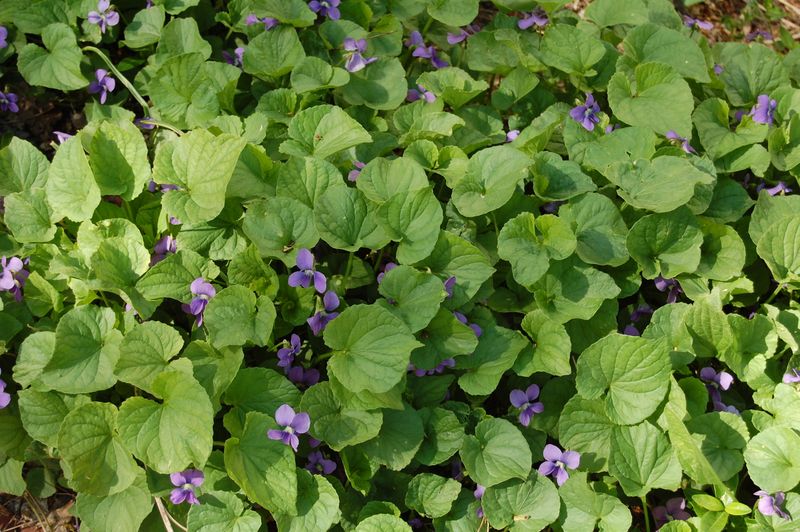
Shaded spots are some of the most frustrating areas in a Michigan lawn. Grass thins out under trees, along north-facing fence lines, and beside structures where sunlight barely reaches for more than a few hours a day.
Homeowners often reseed those areas repeatedly, only to watch the turf struggle and fade again by midsummer.
Common Blue Violet handles low-light conditions far better than most turf grasses. It grows naturally in woodland settings and along shaded edges, which means the kind of dappled light that discourages grass growth is actually well-suited to this plant.
In Michigan yards with large oaks, maples, or other mature trees, violet plants often fill in the bare or patchy areas beneath the canopy without any encouragement from the homeowner.
Whether that is a problem or a benefit depends entirely on what the homeowner wants from that space. For someone committed to a uniform grass lawn, Common Blue Violet in a shaded area may feel like a setback.
But for someone open to a less formal look, especially in a back corner or along a low-traffic edge of the yard, the violet can provide ground cover that grass simply cannot sustain in those conditions.
It stays relatively low, holds the soil, and adds seasonal color without requiring watering, fertilizing, or special attention.
For shaded Michigan lawns where turf has been a constant struggle, that low-effort presence can actually be a practical solution worth thinking about.
6. Spreading Growth Can Surprise Homeowners
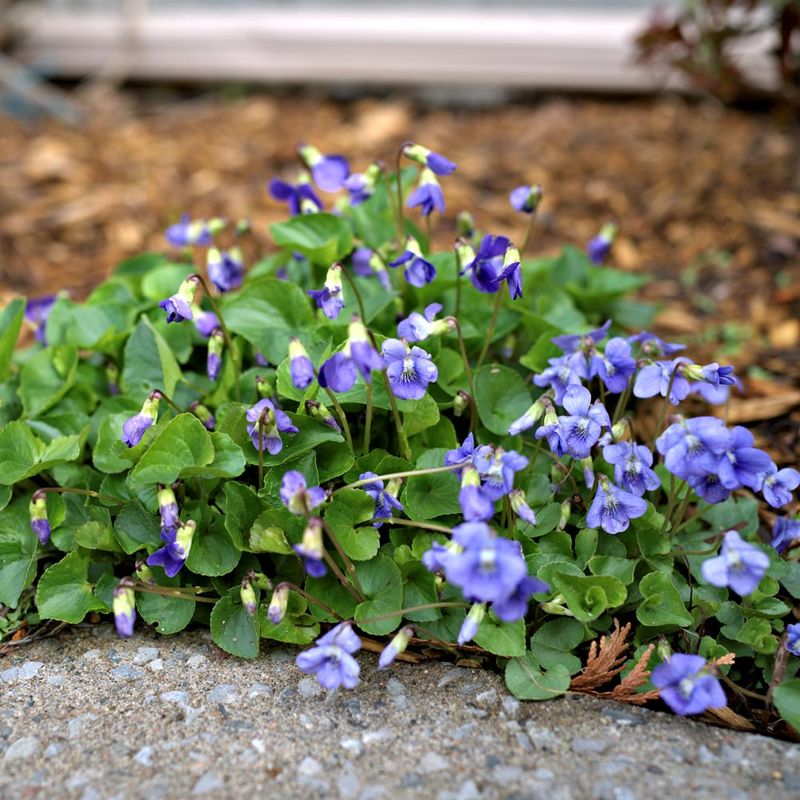
Finding a single violet plant in spring can feel harmless enough, but give it a few seasons and that one plant can become a noticeable patch.
Common Blue Violet spreads through two methods: seeds from its visible flowers and seeds from those hidden underground flowers mentioned earlier.
Both methods work efficiently, and the plant does not need much help to move across a lawn.
The underground cleistogamous seeds are particularly effective because they develop close to the soil and do not rely on wind, insects, or any other outside factor to disperse. The plant essentially seeds itself in place, year after year, expanding its footprint gradually.
In a Michigan lawn with thin turf or bare spots, the violet can move into open areas fairly quickly. Along garden bed edges or in low spots where soil stays moist, the spread can be even more noticeable.
This does not mean Common Blue Violet is impossible to manage. Removing plants by hand before seeds mature can help limit spread in areas where you want to keep a more traditional lawn.
Maintaining dense, healthy turf through proper mowing and soil care also makes it harder for violet seedlings to establish in areas where you prefer grass.
The key is deciding early on where you are comfortable letting the plant grow and where you want to keep it out.
Once you have a clear boundary in mind, managing it in a Michigan lawn becomes much more straightforward than it might first appear.
7. Bee Lawns Give Violets A Purpose
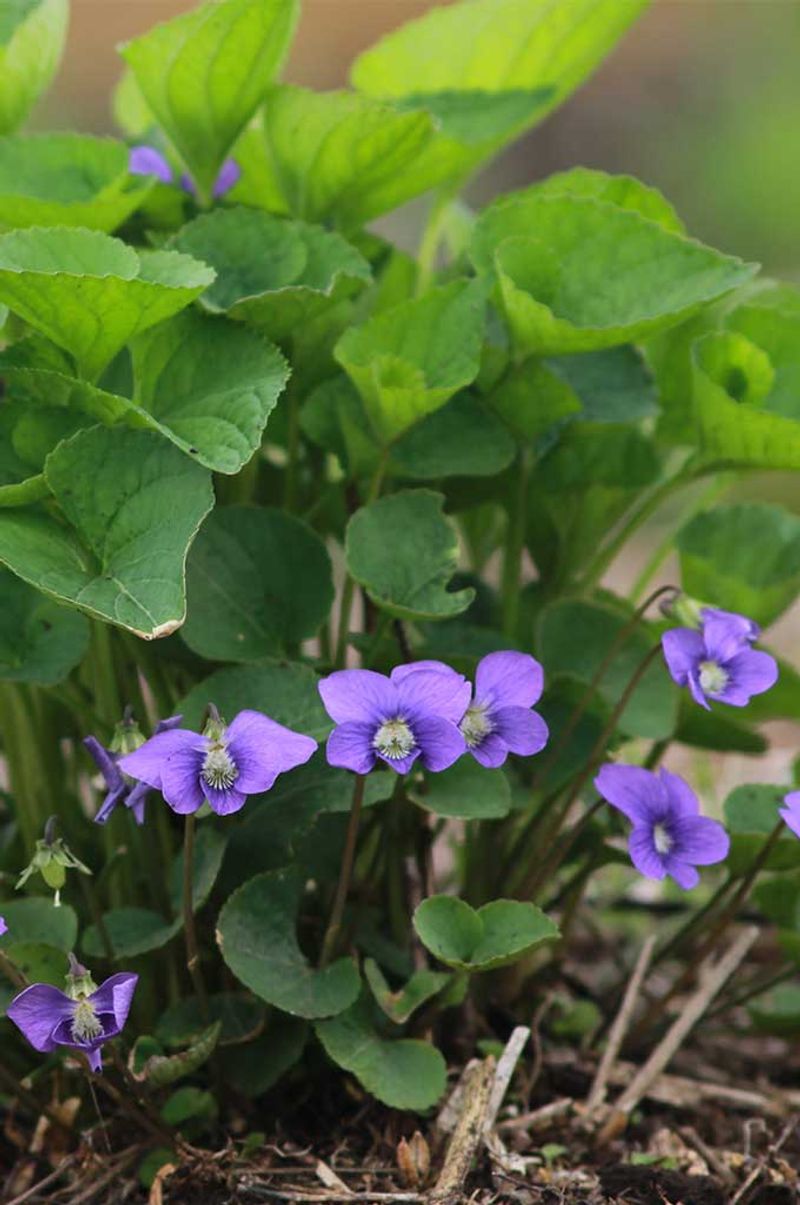
Bee lawns have become a growing conversation among Michigan homeowners who want a yard that supports pollinators without converting the whole space into a wildflower meadow.
The idea is simple: instead of a lawn made up entirely of turf grass, a bee lawn includes a mix of low-growing flowering plants that can be mowed occasionally and still provide bloom periods throughout the season.
Common Blue Violet fits naturally into that kind of setup. It stays low enough to coexist with grass, blooms early when few other plants are flowering, and tolerates the occasional mowing without losing its ability to rebound and flower again.
In Michigan yards where homeowners are experimenting with reducing inputs like fertilizer and herbicides, violet is one of the plants that tends to show up on its own and slot into the mix without much effort.
A bee lawn does not have to cover the entire yard to be useful. Even a section of the backyard, a shaded strip along a fence line, or a low-traffic corner near a garden bed can function as a small bee lawn area.
Allowing Common Blue Violet to grow in those selected spots, alongside plants like clover or self-heal, gives early pollinators a reliable food source during the weeks when Michigan lawns are otherwise just green and flowerless.
It is a small shift in how a lawn is managed, but it can make a noticeable difference in how many bees and butterflies visit the yard each spring.
8. Keeping A Few Patches Can Help
Not every Michigan homeowner needs to embrace Common Blue Violet across the entire lawn.
For most people, the more practical approach is simply deciding which areas can tolerate a little less uniformity and letting the plant stay in those spots while managing it more carefully elsewhere.
That middle-ground approach tends to work well for yards that are part traditional turf and part relaxed, pollinator-friendly space.
Shaded corners under trees, damp edges along a fence, or the strip of lawn between a garden bed and the sidewalk are all spots where violet tends to show up naturally and where a less formal look is usually more acceptable.
Allowing it to grow in those areas while keeping the main lawn area seeded with grass gives homeowners the best of both approaches.
The violets provide early blooms and ground cover in spots where turf struggles, and the rest of the lawn stays looking tidy and maintained.
If the patch gets larger than you would like, hand-pulling young plants in late spring before seeds mature is the most straightforward way to keep it from expanding further.
Mowing regularly at a moderate height also helps limit spread without removing the plants entirely.
Common Blue Violet is not a plant that suits every Michigan yard, and there is no reason to feel obligated to keep it.
But for homeowners who have been pulling it out of habit rather than intention, taking a second look at what it offers might just change how they see that small patch of purple every April.