The Beech Tree Disease Spreading Through Michigan Yards That Most Homeowners Haven’t Heard Of
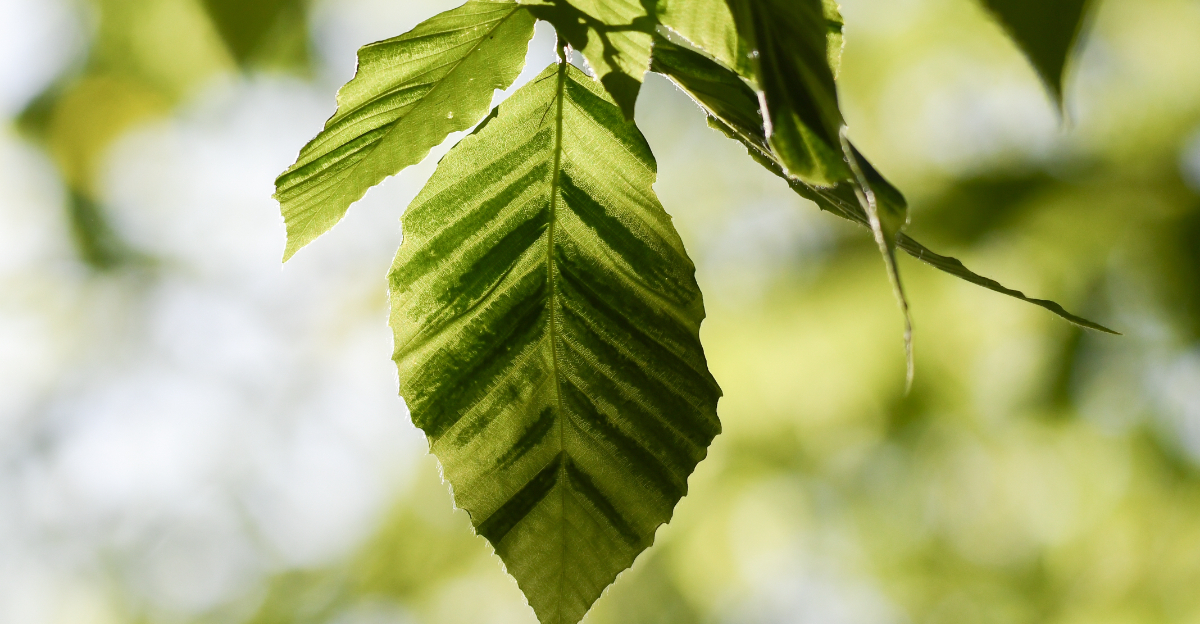
Beech trees are among the most beautiful and ecologically significant trees growing in Michigan landscapes.
A disease that has been moving steadily through the state’s beech population deserves far more public awareness than it currently has among homeowners.
Beech leaf disease produces visible symptoms that are easy to miss or misattribute to other causes until the decline in affected trees becomes impossible to overlook.
By that point, the disease has typically been present and progressing for longer than most people realize. Michigan’s forests and residential landscapes both face real losses from this disease.
Homeowners with mature beeches on their property have good reasons to know what the early warning signs look like and what options currently exist for responding to them.
1. The Disease Is Beech Leaf Disease
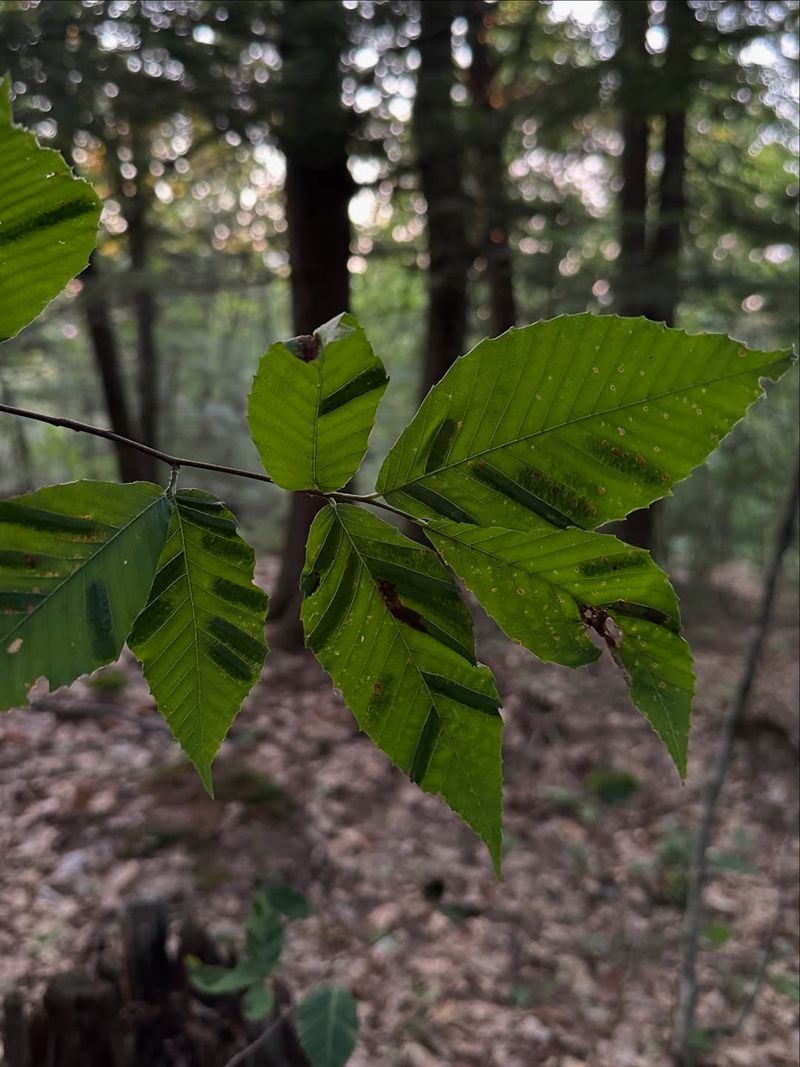
Not many Michigan homeowners have heard of beech leaf disease, but it is quickly becoming one of the more serious tree health concerns in the state.
It targets beech trees specifically, and it has caught the attention of Michigan’s invasive species program, which means officials consider it significant enough to monitor and track across the region.
Beech trees are a beloved part of Michigan’s landscape. You will find them in backyards, along property lines, and throughout wooded neighborhoods.
American beech trees, in particular, are a native species that many families have grown up around, so their health matters beyond just aesthetics.
Beech leaf disease was not always on the radar for most tree owners.
It was first identified in Ohio in 2012 and has been moving steadily through the northeastern United States ever since.
Michigan was eventually reached, and the concern has been growing among foresters and arborists who monitor tree health statewide.
If you have a beech tree in your yard, now is a great time to start paying closer attention to it.
Learning to recognize the signs early gives you more options for supporting your tree and connecting with local experts who can help you understand what you are seeing.
2. It Was First Found In Michigan In 2022
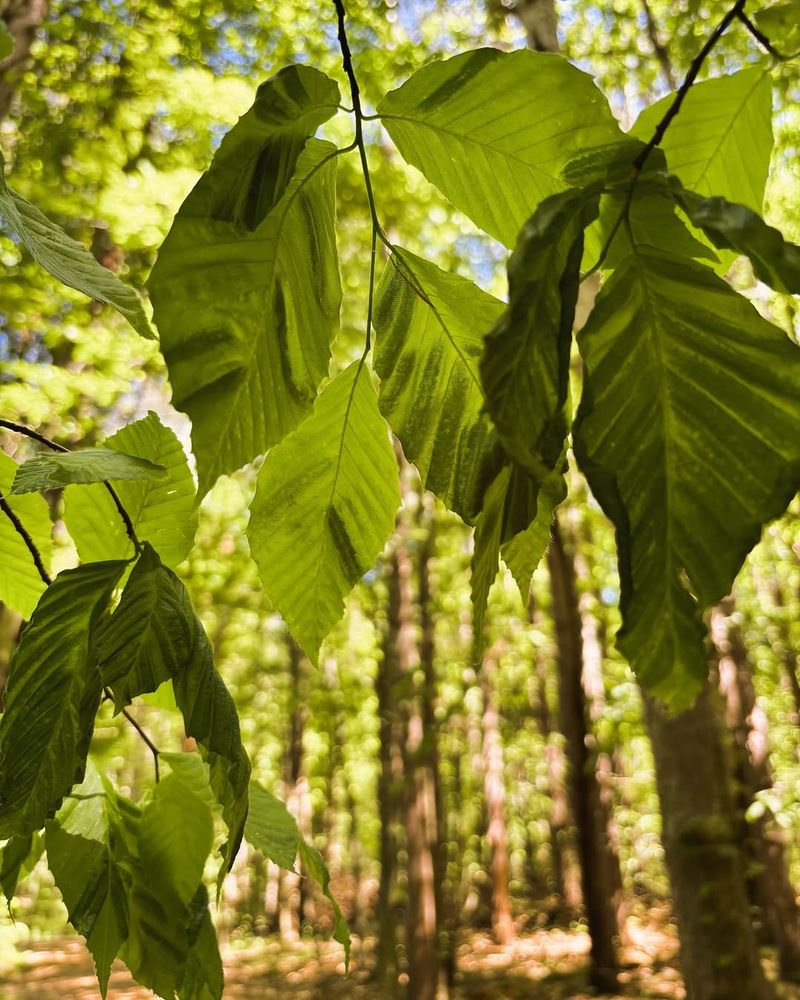
Beech leaf disease officially arrived in Michigan in 2022, with the first confirmed detection occurring in St. Clair County.
That initial discovery was followed by additional detections in other parts of southeast Michigan, signaling that the disease had already begun moving beyond a single location.
For many homeowners, 2022 does not feel that long ago. But in terms of how plant diseases spread through a landscape, a few years can be enough time for something to travel farther than most people realize.
Beech trees are connected through shared environments, and the movement of this disease has not slowed down on its own.
Just because your county has not reported many confirmed cases yet does not mean you are completely in the clear.
Disease presence is often underreported simply because people do not know what to look for, or they assume a struggling tree has a different problem.
Early detections in one area often hint at a wider spread that has not yet been fully documented.
Your Michigan Garden Changes Every Week. Your Plan Should Too.
Gardening in Michigan changes quickly throughout the season. Every Friday you’ll receive a simple weekly plan showing exactly what to plant, prune, fertilize, harvest, and protect so you never miss the right timing.
Paying attention now, even if your neighborhood seems unaffected, puts you ahead of the curve.
Homeowners who learn to recognize the symptoms early are the ones who can take action sooner, report what they see, and potentially protect a tree they have had in their yard for years.
3. It Is Not The Same As Beech Bark Disease
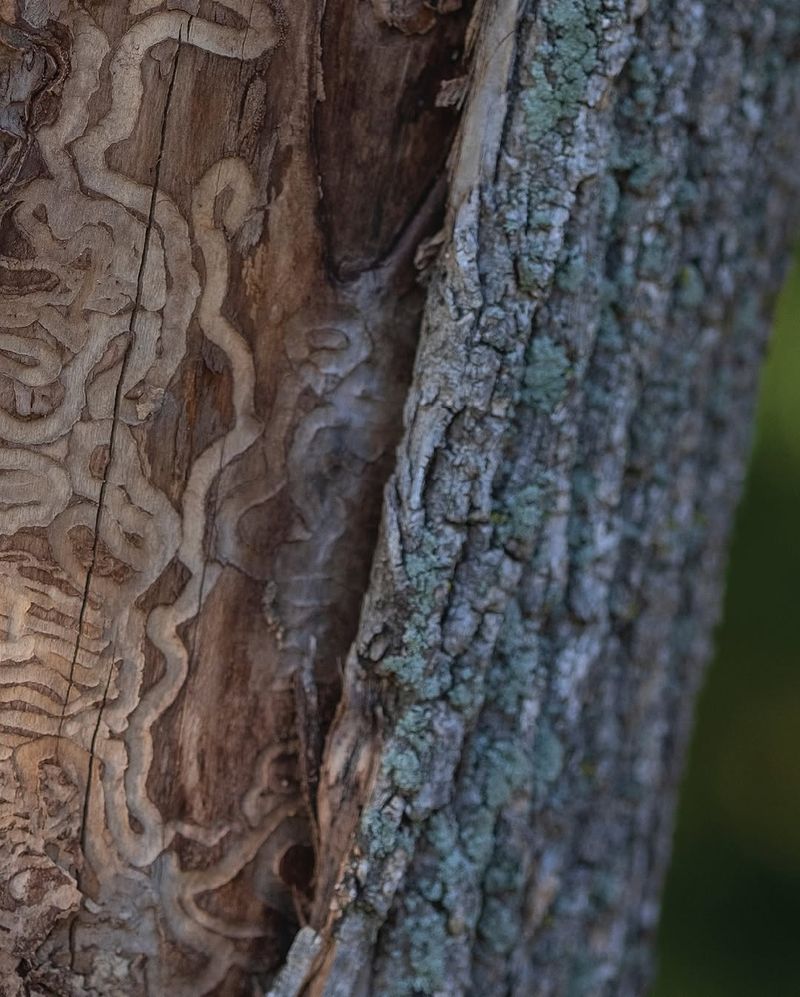
Many people hear about a beech tree problem and assume it must be beech bark disease, which has been around for decades and is already well known in Michigan’s forests.
Beech leaf disease is an entirely separate issue, and mixing the two up can lead homeowners to misread what is actually happening with their tree.
Beech bark disease primarily shows up as damage to the bark of the trunk and branches, often connected to a scale insect and a fungus working together.
Beech leaf disease, on the other hand, is visible in the leaves themselves. The symptoms look very different once you know what to compare.
A tree can technically have both conditions at the same time, which makes careful observation even more important.
If you notice bark problems on one visit and leaf problems on another, those may be two separate situations that each deserve their own attention and response.
Before assuming what is affecting your beech tree, take a close and careful look at both the bark and the leaves.
If possible, take clear photos of both areas and bring them to a local arborist or extension office.
Getting the right diagnosis matters because the response to each condition can be quite different, and acting on the wrong assumption wastes time that your tree may not have to spare.
4. The Main Sign Is Dark Banding Between Leaf Veins
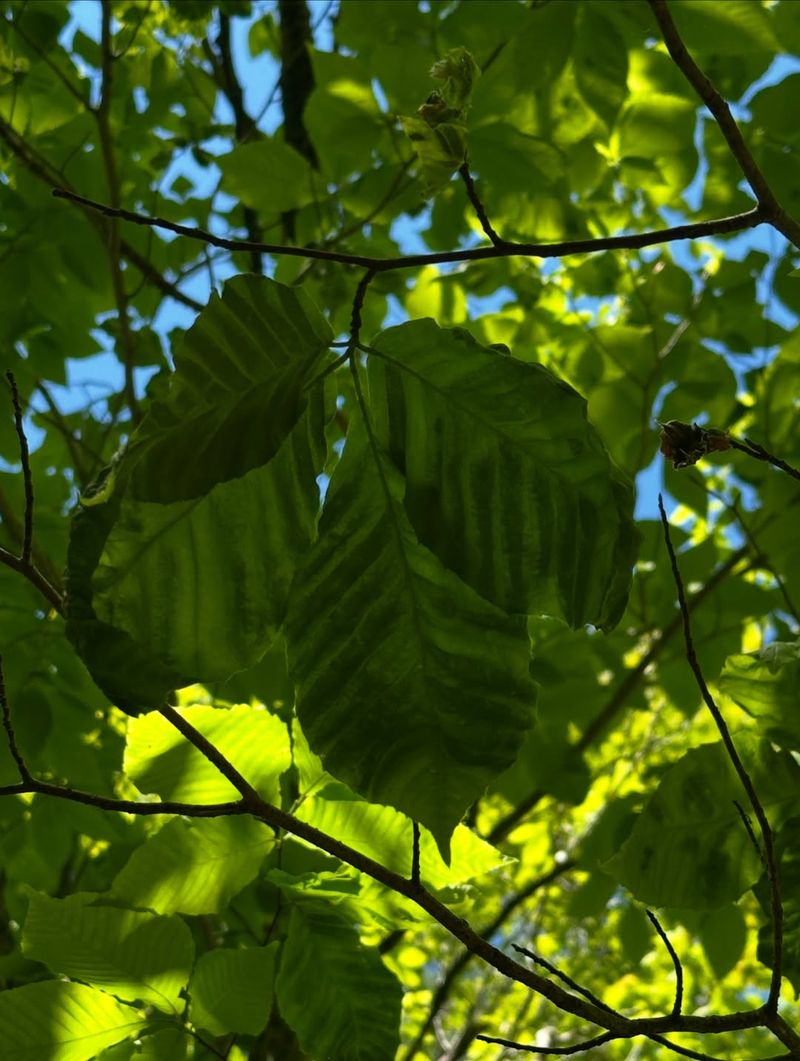
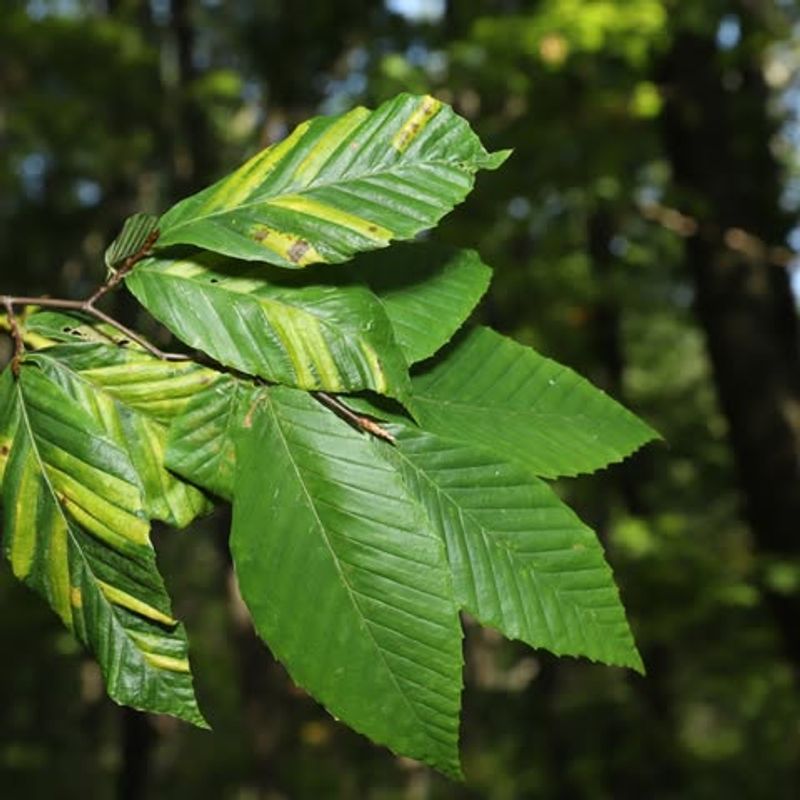
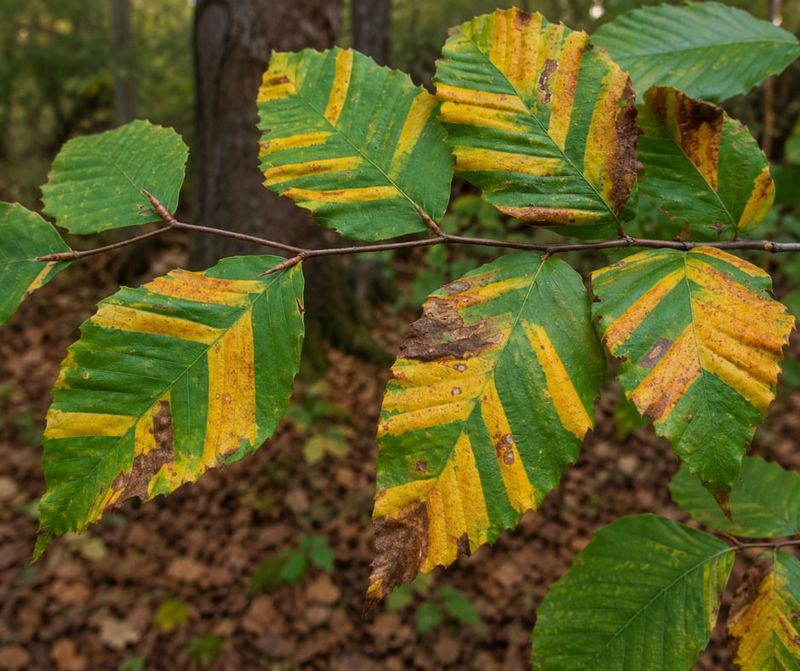
One of the clearest and most recognizable signs of beech leaf disease is dark green banding that appears between the veins of the leaves.
Instead of the usual smooth, even green color you would expect from a healthy beech leaf, affected leaves show uneven, darker stripes running across the surface in the spaces between the veins.
Spotting this from the ground can be tricky at first. The striping tends to show up much more clearly when light is passing through the leaf, which is why looking up into the canopy on a bright day gives you the best view.
Holding a leaf up toward the sky or sunlight can also make the banding stand out dramatically.
Early in the season, only a few leaves or branches may show symptoms, so you might walk past a tree multiple times before noticing anything off.
Making a habit of looking up and examining leaves rather than just glancing at the overall shape of the tree can help you catch things sooner.
If you spot that distinctive striped pattern, do not brush it off as normal variation in leaf color. Take a few clear photos and note which part of the tree the leaves came from.
That information becomes very useful when you reach out to a local expert or submit a report to Michigan’s tracking programs.
5. Curled Or Puckered Leaves Are Another Warning Sign
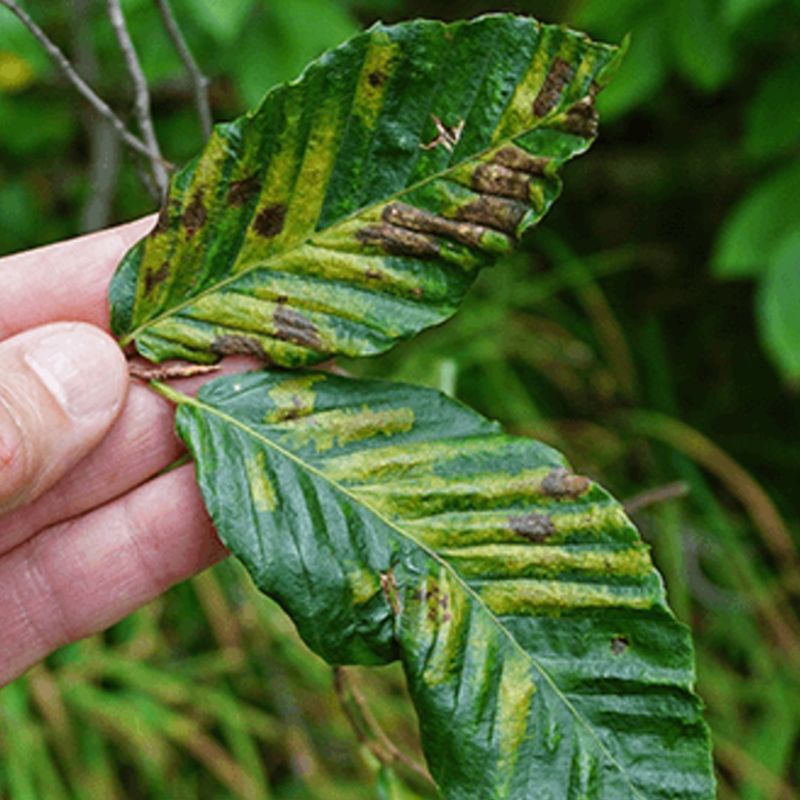
Beyond the dark banding, beech leaf disease can also cause leaves to look noticeably distorted.
Curling, puckering, thickening, and an overall crinkled texture are all symptoms that have been observed on affected trees, and they can sometimes be even more striking than the banding when symptoms progress.
What makes this tricky is that the symptoms do not always show up evenly across the whole tree at once.
One branch might have heavily affected leaves while another nearby branch looks completely fine.
That uneven appearance can make it easy to dismiss the problem, assuming just a few leaves got damaged by weather or insects. Thickened leaves are worth paying special attention to.
Healthy beech leaves have a relatively thin, smooth feel, so if you notice leaves that seem unusually stiff, leathery, or bunched up, that is a meaningful difference worth investigating further.
Comparing a suspicious leaf to a healthy one from the same tree is a helpful way to see the contrast clearly.
Because symptoms can vary from branch to branch and season to season, checking your tree more than once throughout the growing season gives you a much better picture of what is happening.
Spring and early summer, when new leaves are emerging, tend to be the best times to look carefully and catch early warning signs before they become harder to track.
6. It Can Affect Native And Ornamental Beeches
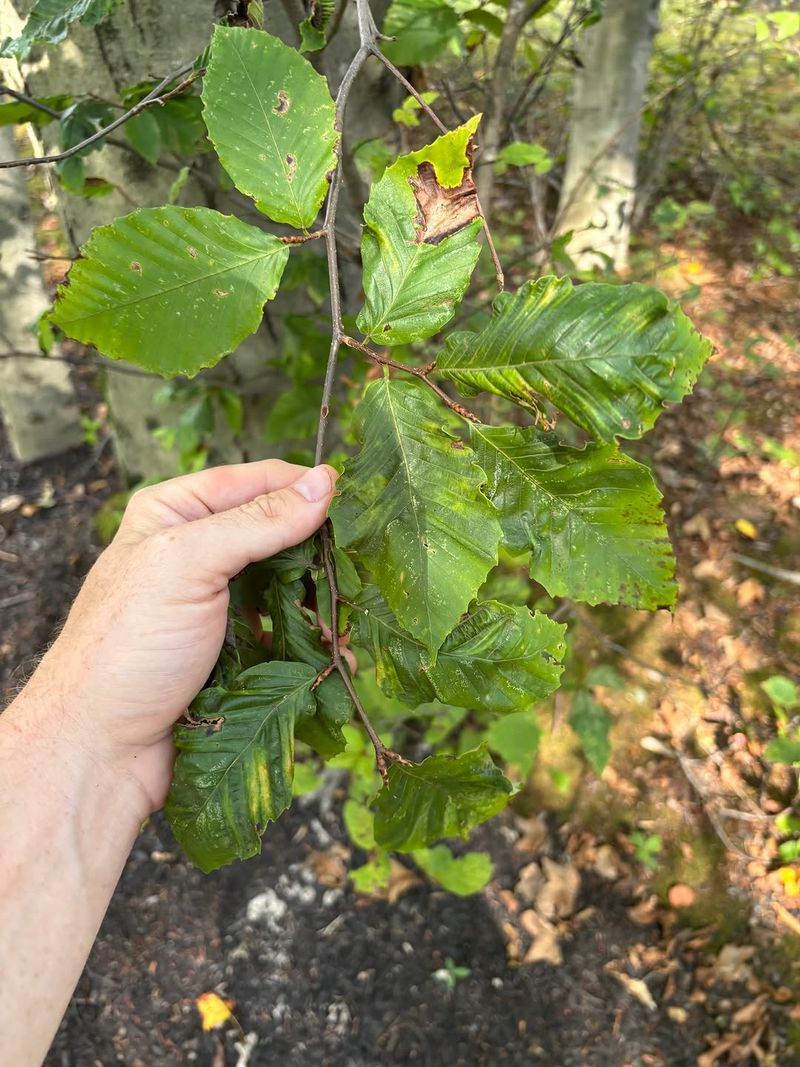
Beech leaf disease does not limit itself to just one type of beech tree. American beech, which is native to Michigan and common in many wooded backyards and natural areas, is affected.
European beech and some introduced Asian beech varieties can also be affected, including ornamental landscape beeches.
For homeowners with decorative beech trees planted near their home, sidewalk, or garden, this is especially worth knowing.
Ornamental beeches are often chosen for their striking foliage, interesting bark, or unique shape, and they can represent a meaningful investment in a property’s curb appeal and landscape design.
European beech varieties, including purple-leafed cultivars that are common in Michigan neighborhoods, have shown susceptibility to beech leaf disease in studies and field observations.
That means a tree you planted specifically for its beauty could be at risk, not just the wild beeches growing in woodlots or natural areas nearby.
Knowing which species of beech you have in your yard is a useful starting point. If you are not sure, a local nursery, arborist, or cooperative extension office can help you identify it.
Once you know what you have, you can watch for the right symptoms and make informed decisions about how to care for and protect that tree going forward.
7. The Way It Spreads Is Still Not Fully Understood
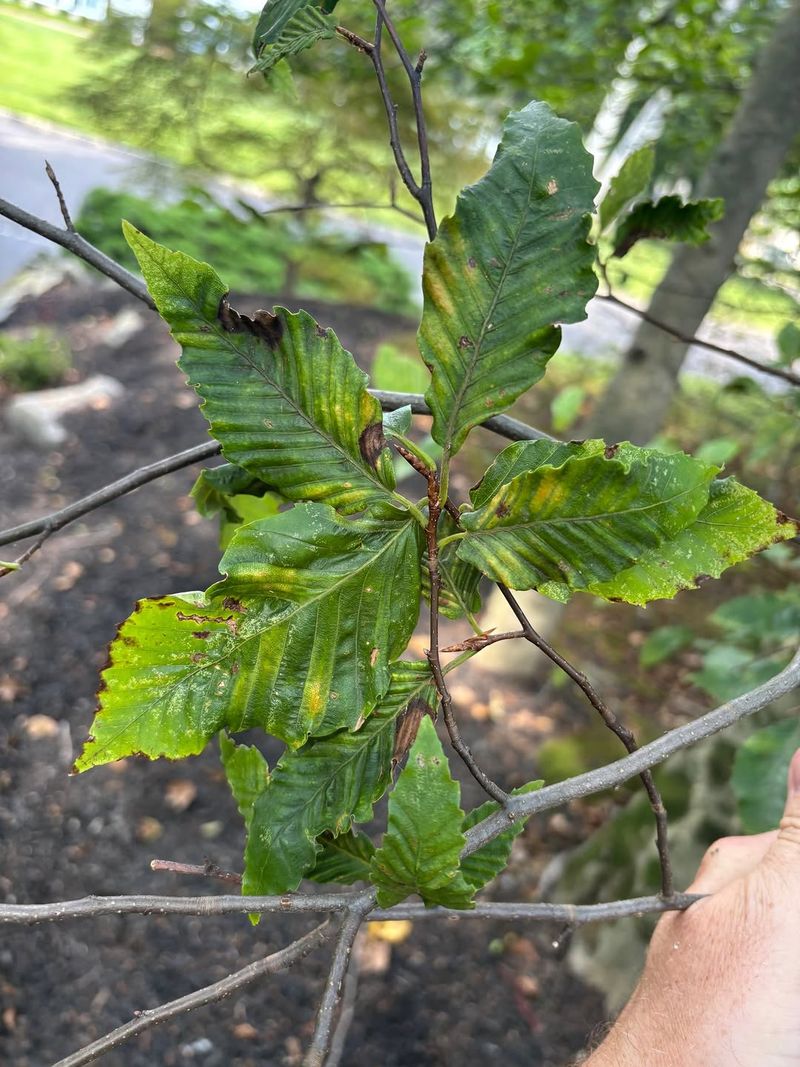
Here is something that surprises most people: scientists are still working to fully understand exactly how beech leaf disease moves from tree to tree.
Beech leaf disease is associated with the foliar nematode Litylenchus crenatae, but researchers are still studying whether other associated organisms are involved and how the disease moves through the landscape.
What is known is that moving beech nursery stock, which means young beech trees purchased from a nursery and transported to a new location, could play a role in spreading the disease to new areas.
Leaves and buds that carry the associated nematode may move it along with them, which is why some experts recommend caution when sourcing and transporting beech plant material.
If you live near a known affected area, avoiding the movement of beech material such as branches, cuttings, or fallen leaves to unaffected locations is a sensible precaution.
While this may sound overly careful, it reflects the kind of responsible approach that has helped slow the spread of other plant diseases in the past.
Staying informed as research develops is genuinely helpful here.
Michigan State University Extension and the Michigan Department of Natural Resources both publish updates on beech leaf disease.
Following those sources keeps you connected to the most current guidance as scientists learn more about how this disease behaves in the field.
8. There Is No Reliable Home Cure Yet
One of the most important things to understand about beech leaf disease right now is that there is no guaranteed cure or practical forest-scale treatment.
However, some management options for valuable landscape trees are emerging and should be discussed with a certified arborist or local extension office.
Research is actively ongoing, and while some treatments have shown promise or effectiveness in trials, none should be presented as a simple guaranteed fix that homeowners can apply casually and expect to solve the problem.
You may come across products or suggestions online that claim to help, but those claims should be approached with caution and checked against current research, product labeling, and advice from a certified arborist or local extension expert.
Applying unproven treatments to a tree can sometimes cause more stress rather than helping, and it can also give a false sense of security that delays more useful action.
The most practical approach right now combines a few steady habits.
Monitoring your tree regularly throughout the season, reporting what you observe to local authorities, and reaching out to a certified arborist when you have concerns about a valuable tree are all steps that make a genuine difference.
An arborist who is familiar with beech leaf disease can give you advice that is specific to your tree’s condition and location.
Supporting the overall health of the tree through good basic care is also a reasonable and realistic strategy.
A tree that is not under additional stress from drought, soil compaction, or other issues is simply in a better position to handle whatever challenges come its way.
Keeping expectations realistic while staying proactive is the right mindset here.
9. Good Tree Care Still Matters
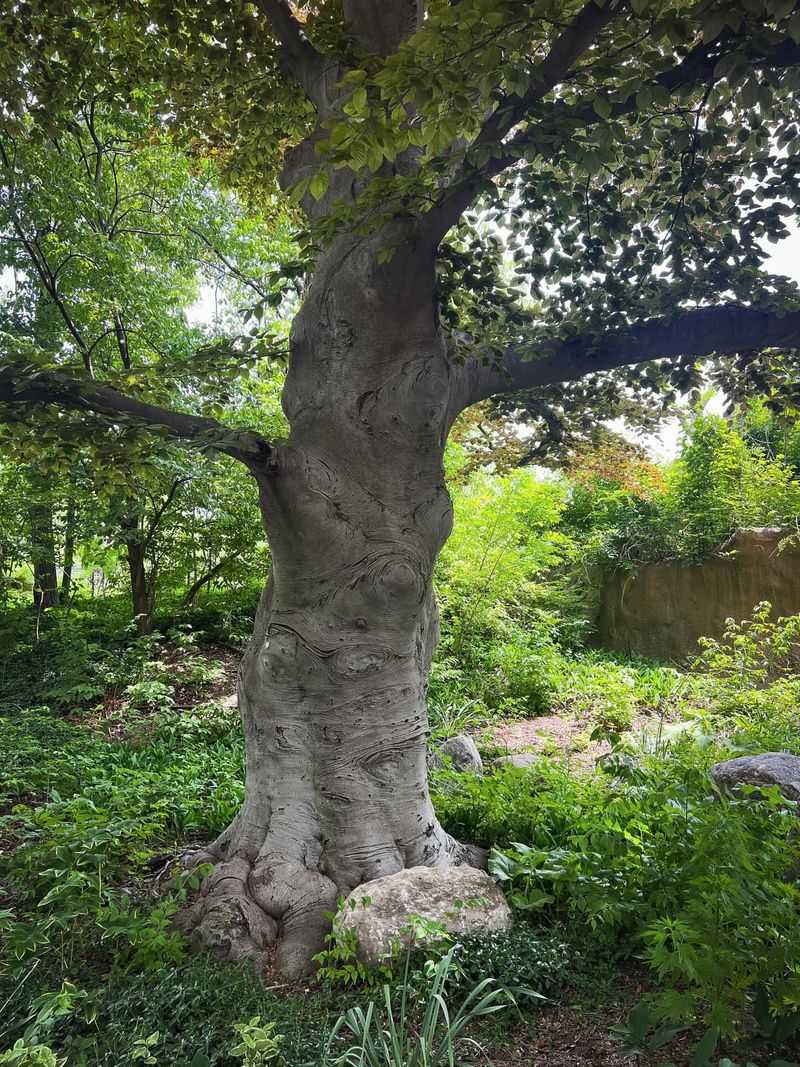
Even without a proven treatment, there is plenty a homeowner can do to support a beech tree that is under stress.
Good basic care goes a long way, and the steps involved are straightforward enough that most people can put them into practice without specialized equipment or a big budget.
Watering during dry periods is one of the most helpful things you can do.
Beech trees have relatively shallow root systems that spread out wide, and they can feel the effects of drought more quickly than some other tree species.
A slow, deep watering at the base of the tree during dry summer stretches helps the root system stay strong and functional. Protecting the soil around the tree is equally important.
Compacted soil limits the oxygen and water that roots can access, so avoiding heavy foot traffic, parking, or construction activity near the root zone makes a real difference.
Applying a layer of natural mulch around the base of the tree, without piling it against the trunk, helps retain moisture and keeps soil conditions more favorable.
When it comes to pruning, less is more, and timing matters. Have pruning done only when there is a clear reason for it, and always use a qualified professional who understands tree health.
Unnecessary cuts create entry points for additional stress, so keeping that work minimal and intentional is the smartest approach for a tree that is already facing challenges.
10. Homeowners Should Report Suspicious Symptoms
If you notice something unusual on your beech tree, reporting it is one of the most genuinely helpful things you can do.
Michigan relies on observations from homeowners, hikers, and landowners to track where beech leaf disease is appearing, and that information directly shapes how resources and monitoring efforts are directed across the state.
When you report, quality matters more than speed. Take clear, well-lit photos of the affected leaves, showing both the top and underside if possible.
Note the location as specifically as you can, including your county, city, and even a street address if you are comfortable sharing it. The more precise your report, the more useful it is to the people tracking this disease.
Michigan’s invasive species reporting can be done through the Midwest Invasive Species Information Network, also known as MISIN, or through the Michigan Department of Natural Resources.
Both platforms are set up to receive reports from the public and pass that information along to the right experts for review.
Reporting does not mean your tree will immediately receive a visit or a response, but it does add your observation to a growing picture of where this disease is active.
Over time, those data points help researchers understand the spread, identify patterns, and develop better tools for managing beech leaf disease across Michigan.
Your yard observation genuinely contributes to something bigger than just your own property.