Why Monarchs Fly Past Some Michigan Yards And Skip The Landing
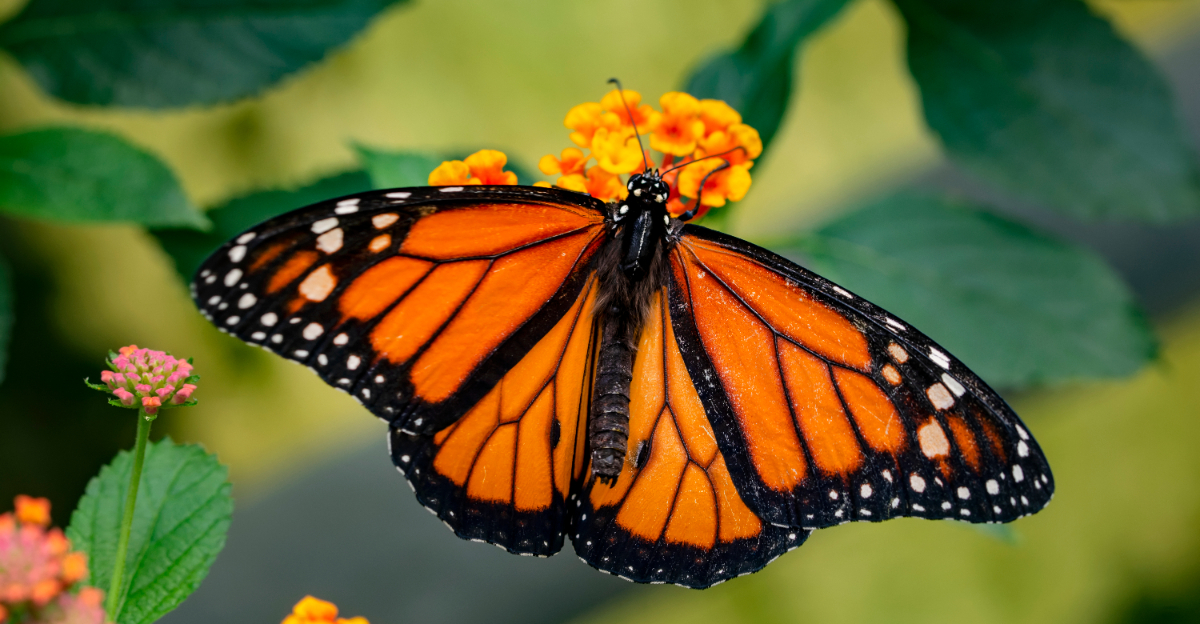
Late August in Michigan brings one of nature’s most beautiful sights: orange and black wings drifting over rooftops, gardens, and open lawns as monarch butterflies head south toward Mexico.
But for many Michigan homeowners, that glimpse lasts just a few seconds before the butterfly flaps on without stopping.
It can feel a little defeating, especially if you planted a few flowers and hoped for the best.
The truth is, monarchs are picky travelers with very specific needs, and most yards are missing a few key things that would make them want to pause, refuel, and rest before continuing their long journey.
The butterfly is not being indifferent. It is being practical.
A journey of over two thousand miles requires careful fuel stops, and a yard that does not meet the minimum requirements simply does not register as worth the landing.
Understanding what monarchs are actually looking for is the first step toward becoming one of the yards they choose.
Eight reasons monarchs fly past some Michigan yards and skip the landing, and what to do about each one.
1. Milkweed Is Missing
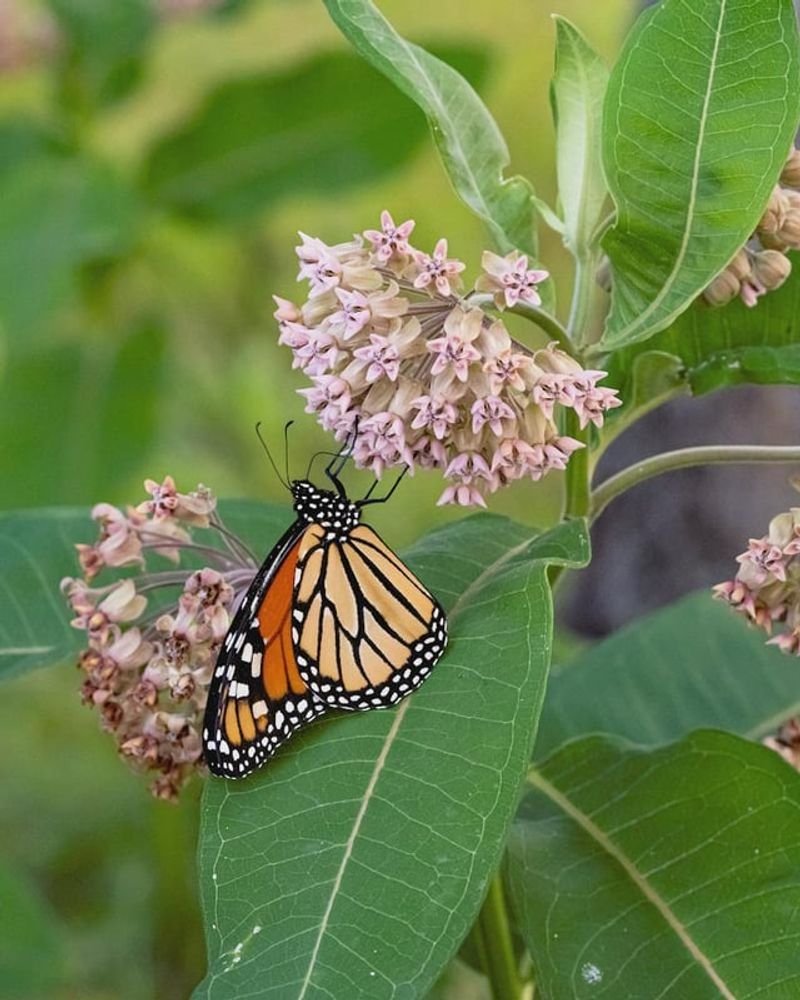
A monarch floating low over a tidy Michigan lawn, antennae twitching, searching for something that simply is not there, is a butterfly that will keep moving.
Without milkweed, that butterfly has no reason to land.
Milkweed is not just a nice bonus plant. It is the only plant monarch caterpillars can eat, which means no milkweed means no caterpillars, no eggs, and no next generation of monarchs traveling through your yard.
Michigan State University Extension recommends planting native milkweed species suited to the region, including common milkweed, butterfly weed, and swamp milkweed.
Each of these grows well in Michigan’s climate and supports monarch reproduction from late spring through summer.
Common milkweed spreads naturally and does well in sunny spots with decent drainage. Swamp milkweed thrives near wet areas and rain gardens.
One important detail many gardeners miss is that tropical milkweed, the bright orange variety sold at many big-box stores, is not ideal for Michigan.
It can disrupt migration cues if it stays green too long into fall. Native species go dormant naturally, which aligns better with monarch behavior during migration season.
Starting with just three to five milkweed plants in a sunny corner can make a real difference.
Monarchs are drawn by scent and familiarity, so grouping plants together helps them notice the patch from above.
Give milkweed a permanent home in your yard and the monarchs may start giving yours a second look on their way south.
2. Nectar Runs Out Too Early
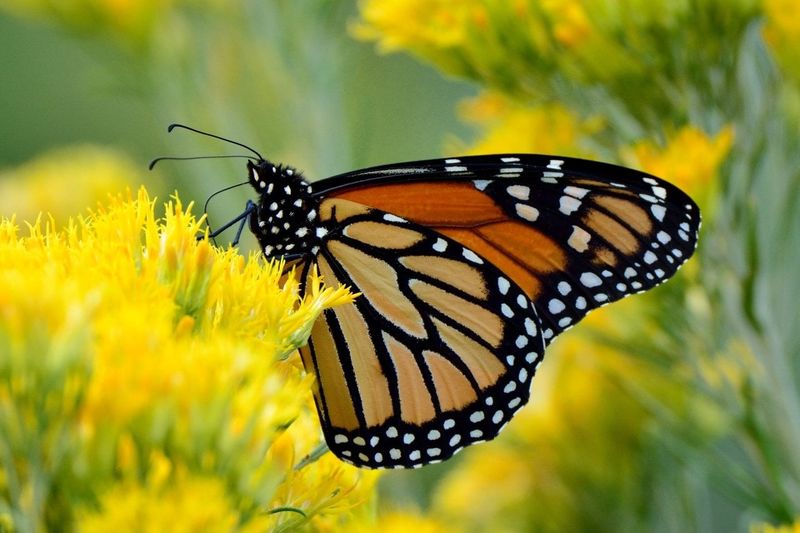
A monarch butterfly passing through Michigan in late August or September is running on fuel, and that fuel comes entirely from flower nectar.
Many Michigan yards offer a great nectar buffet in June and July, but by the time migration kicks into full gear, the flowers are gone and the butterflies have nowhere to refuel.
Timing matters enormously on a journey that stretches over two thousand miles.
Spring and early summer bloomers like bee balm, coneflower, and black-eyed Susan are wonderful for pollinators, but they tend to fade before peak monarch migration arrives.
Your Michigan Garden Changes Every Week. Your Plan Should Too.
Gardening in Michigan changes quickly throughout the season. Every Friday you’ll receive a simple weekly plan showing exactly what to plant, prune, fertilize, harvest, and protect so you never miss the right timing.
Monarchs passing through Michigan in late August and September need nectar sources that are still going strong at that point in the season.
MSU Extension highlights plants like goldenrod, native asters, and ironweed as excellent late-season nectar sources that align with monarch movement windows.
Goldenrod alone can be a powerhouse for migrating monarchs and is often unfairly blamed for hay fever when ragweed is actually the culprit.
Spreading bloom times across your garden from spring through fall keeps nectar available when monarchs actually need it most.
Think of your yard as a roadside diner on a long highway.
If the kitchen closes too early, the travelers keep driving. Keeping late-season flowers in the mix means your yard stays open for business right when the migration crowd arrives.
3. Fall Flowers Are Too Sparse
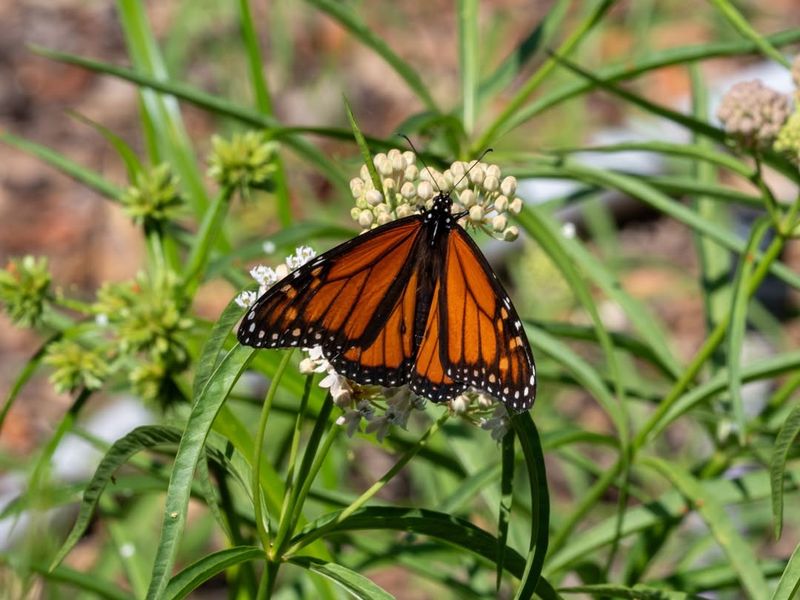
September in Michigan can feel like the garden is winding down, but for monarchs, it is one of the most critical travel weeks of the year.
A yard with only a handful of struggling late-summer blooms does not offer enough energy reward to justify a landing.
Monarchs need to consume significant amounts of nectar to build fat reserves for their long flight to Mexico, so a sparse flower bed simply does not cut it.
The fix is not complicated, but it does require some planning.
Planting clusters of fall-blooming natives rather than scattering a few individual plants makes a yard far more visible and appealing from above.
Dense groupings of native asters, particularly New England aster and smooth blue aster, are among the best choices for Michigan gardens during monarch migration season.
MSU Extension also points out that native goldenrod species bloom at exactly the right time and provide both nectar and pollen in generous quantities.
Pairing goldenrod with asters creates a late-season combination that monarchs find genuinely hard to pass up.
These plants are also low-maintenance once established, making them a practical choice for busy homeowners.
Aim for at least a three-foot-wide cluster of fall bloomers in a sunny spot.
A bold patch of purple asters glowing in September light is the kind of landing invitation that even a butterfly mid-flight cannot easily ignore.
4. Sprays Make The Yard Risky
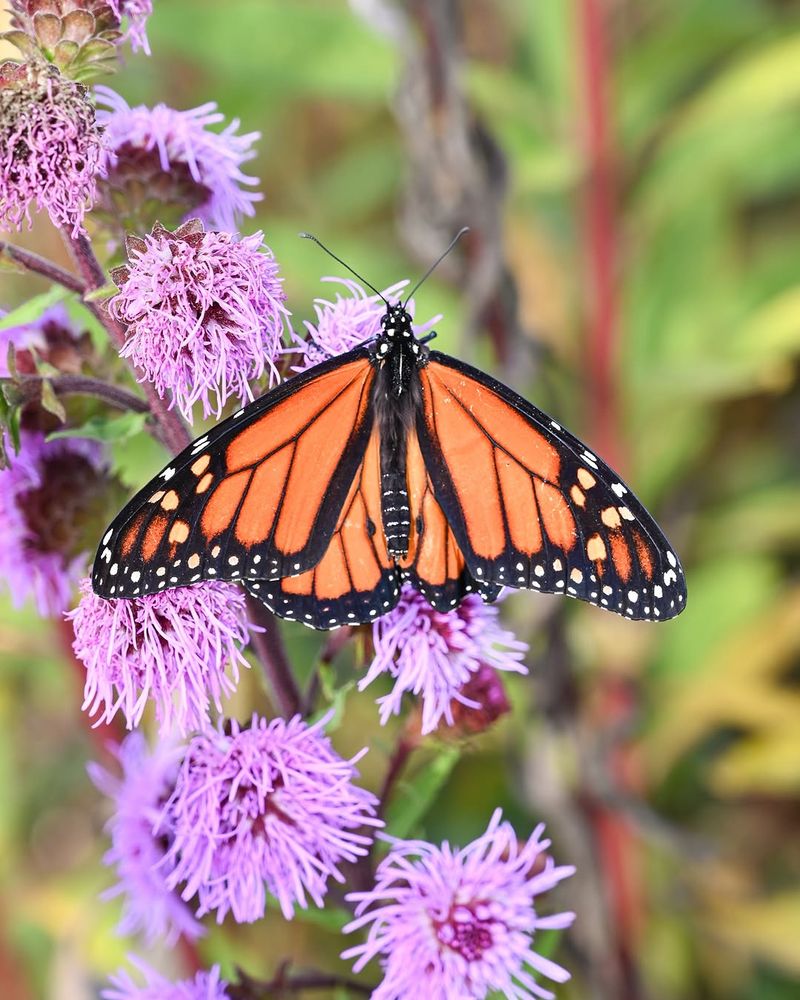
Even a yard full of milkweed and nectar flowers can be a dangerous stop for monarchs if pesticides have been applied recently.
Monarchs are sensitive to a wide range of insecticides and herbicides, including many products marketed as safe or natural.
A butterfly that lands in a treated yard may absorb chemicals through its feet or while feeding, which can affect its ability to navigate, fly, or complete migration.
MSU Extension strongly advises against using broad-spectrum insecticides anywhere near pollinator habitat.
Products containing neonicotinoids are especially problematic because they are systemic, meaning the chemical moves into the plant tissue and can show up in nectar and pollen.
Even if you do not spray directly on flowers, treating nearby soil or turf can still put monarchs at risk.
Herbicides are another concern.
Many homeowners use weed killers to tidy up lawn edges, but milkweed and native wildflowers are often the first casualties of a casual spray session.
Switching to hand-pulling weeds, using physical barriers, or tolerating a slightly wilder look in pollinator garden areas can make a significant difference.
If pest control is necessary, spot-treating in the evening when butterflies are less active and avoiding flower areas entirely gives monarchs a safer experience.
A yard that looks a little less manicured but stays chemical-free is far more welcoming to wings than a pristine but toxic one.
5. Wide Lawns Offer Little Fuel
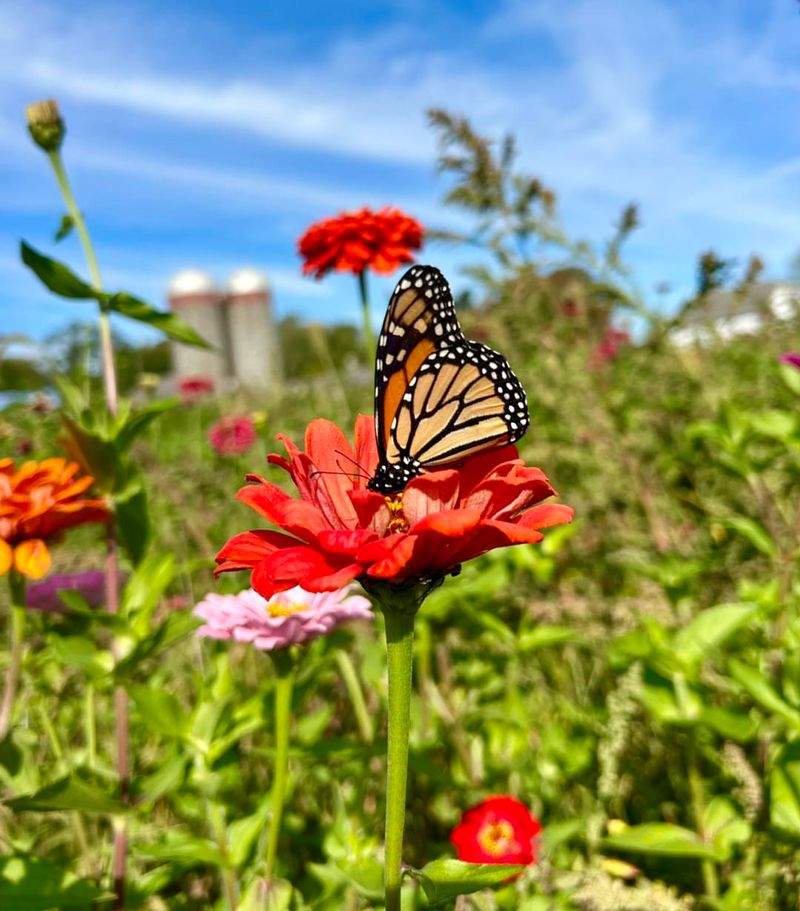
A broad, perfectly trimmed lawn looks neat from the curb, but from a monarch’s perspective, it is basically a green desert.
Turf grass offers zero nectar, zero milkweed, and very little shelter.
Monarchs traveling south are burning energy with every wing beat, and they are not going to waste effort landing somewhere that offers nothing in return.
The math is pretty simple.
A yard that is ninety percent lawn and ten percent garden gives monarchs very little reason to slow down.
MSU Extension notes that converting even small sections of lawn to native plantings can meaningfully improve habitat quality for pollinators, including monarchs.
Starting with a garden bed along a sunny fence line or near a south-facing wall gives monarchs a visible, sheltered spot to land.
Replacing a strip of lawn along the front walk with native wildflowers adds habitat without dramatically changing the yard’s appearance.
Letting white or red clover grow in sections of lawn adds nectar at ground level and supports other pollinators that share the monarch’s journey.
The goal is not a messy yard but a yard that works harder for wildlife than traditional turf ever could.
6. Windswept Yards Need Landing Cover
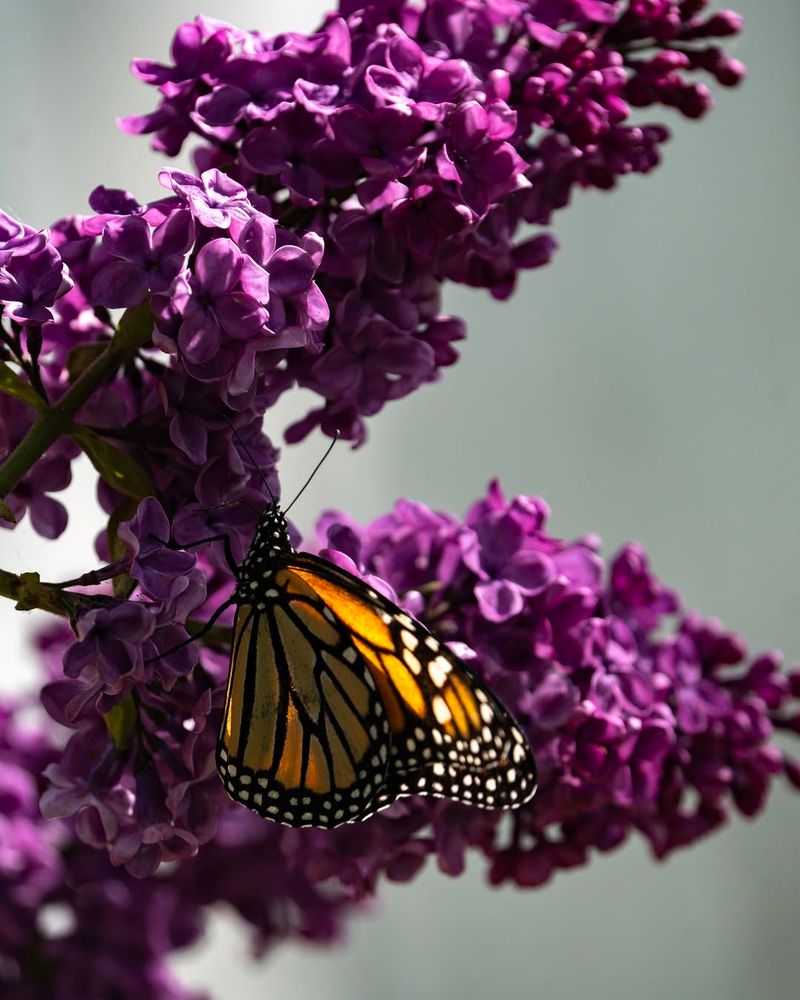
Monarchs are strong fliers for their size, but wind is their constant challenge during fall migration.
An open, exposed yard with no shrubs, tall grasses, or structural plantings gives a tired butterfly no shelter to rest in.
Without a calm landing zone, monarchs will simply ride the wind past your yard and keep moving until they find somewhere more protected.
MSU Extension recommends creating layered plantings that include shrubs, native grasses, and perennials to provide the kind of wind buffer that makes a garden feel safe and inviting.
Native shrubs like buttonbush, ninebark, and native viburnums are excellent choices for Michigan yards because they provide structure, shelter, and in some cases, additional food sources for wildlife.
Tall native grasses like big bluestem and switchgrass act as natural windbreaks while also adding late-season beauty to the garden.
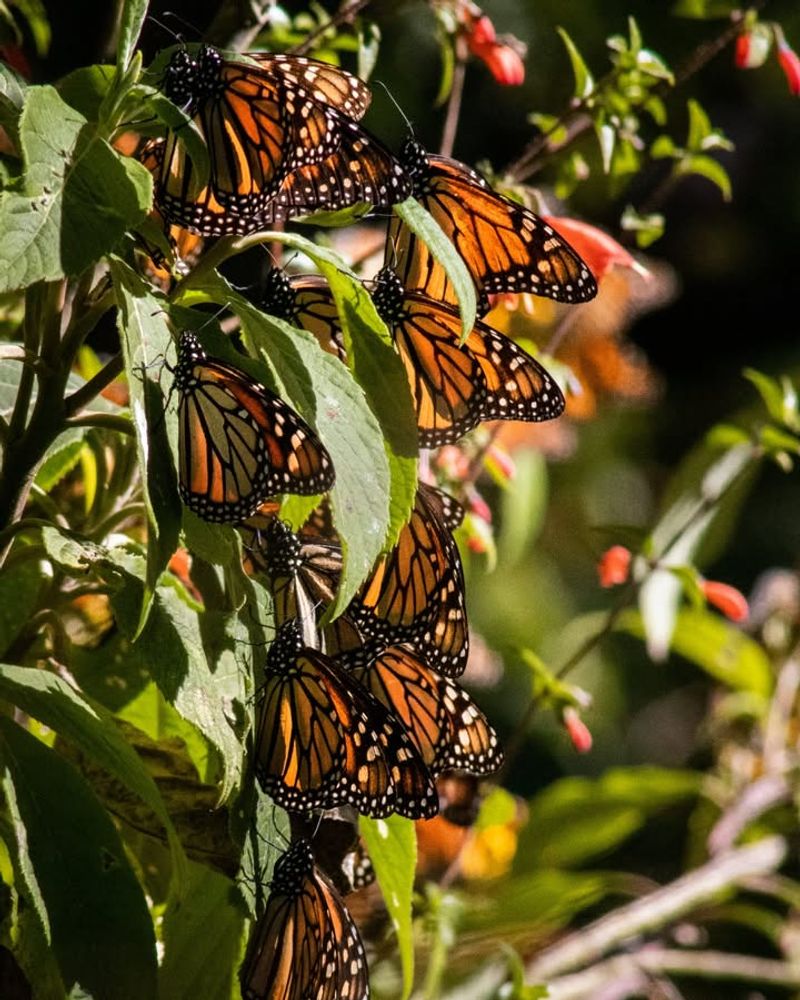
Monarchs will often roost overnight in sheltered vegetation during migration, so having a cluster of tall grasses or dense shrubs near nectar plants creates an ideal combination of food and rest cover.
Positioning sheltered plantings on the north or west side of a garden bed helps block prevailing fall winds while keeping the sunny south-facing side open for butterflies to warm up and feed.
Even a modest windbreak of three or four native shrubs can transform a breezy, exposed yard into a calm pocket that monarchs recognize as worth a closer look.
7. Containers Are Too Isolated
Container gardening is a wonderful way to grow plants on a patio or small outdoor space, and many Michigan gardeners load up their pots with colorful flowers each summer.
The problem is that a few isolated containers scattered across a deck or driveway do not read as habitat to a passing monarch.
From the air, those pots look like dots, not a destination.
Monarchs are more likely to notice and land in connected, dense plantings rather than individual containers spread far apart.
A single pot of milkweed sitting alone near a grill is unlikely to catch a migrating butterfly’s attention the way a grouped cluster of containers or a garden bed would.
The visual and scent signal just is not strong enough to compete with larger patches of habitat nearby.
Grouping five or six pots together to create a concentrated burst of color and scent makes a much stronger impression.
Placing grouped containers directly adjacent to an in-ground garden bed amplifies the effect even further, essentially extending the habitat signal outward.
MSU Extension encourages gardeners with limited space to think about connectivity.
Even on a small patio, arranging containers in a tight cluster near a railing where monarchs can land and rest while feeding creates a more functional stopover than isolated pots ever could.
Swapping a few annual container plants for native perennials like butterfly weed or native asters makes those grouped pots work even harder for migrating wings.
8. Bloom Timing Misses Migration
Planting the right flowers is only half the equation.
Planting them so they bloom at the right time is where many Michigan gardens quietly fall short.
A yard full of beautiful plants that peak in May and June is not much help to a monarch passing through in late August or September. Migration timing and bloom timing need to line up for a yard to function as a real stopover.
In Michigan, monarch migration typically moves through the state from late August into October, with the heaviest movement often occurring in September.
MSU Extension guidance points to this window as the critical period when yards need to be offering abundant, accessible nectar.
Native plants are generally the most reliable choice for matching bloom time to migration because they have evolved alongside Michigan’s seasonal rhythms.
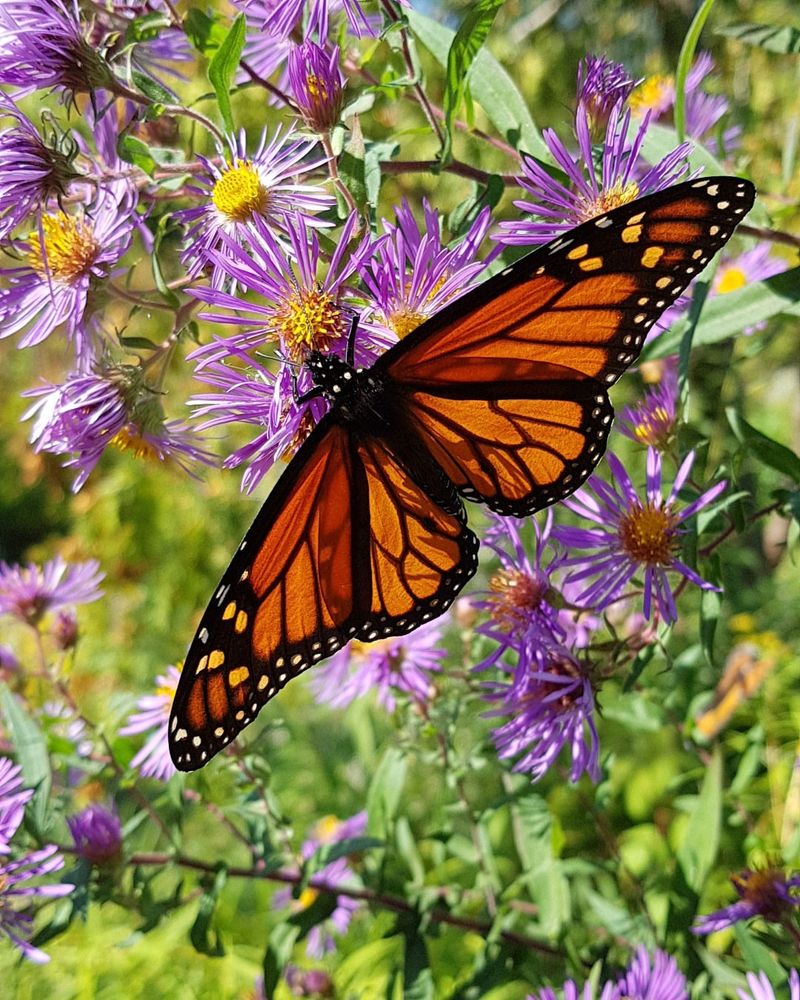
New England aster, smooth aster, stiff goldenrod, and tall goldenrod all bloom during peak migration and are well-documented monarch nectar sources.
Keeping a simple garden journal or using a free plant bloom calendar from MSU Extension can help you map out when your current plants flower and identify the gaps.
Filling those late-season gaps with even two or three well-chosen native species can shift your yard from a flyover zone to a genuine monarch pit stop.
That is a pretty satisfying upgrade for any Michigan gardener.