How Georgia Gardeners Are Preventing Slope Erosion Without Retaining Walls
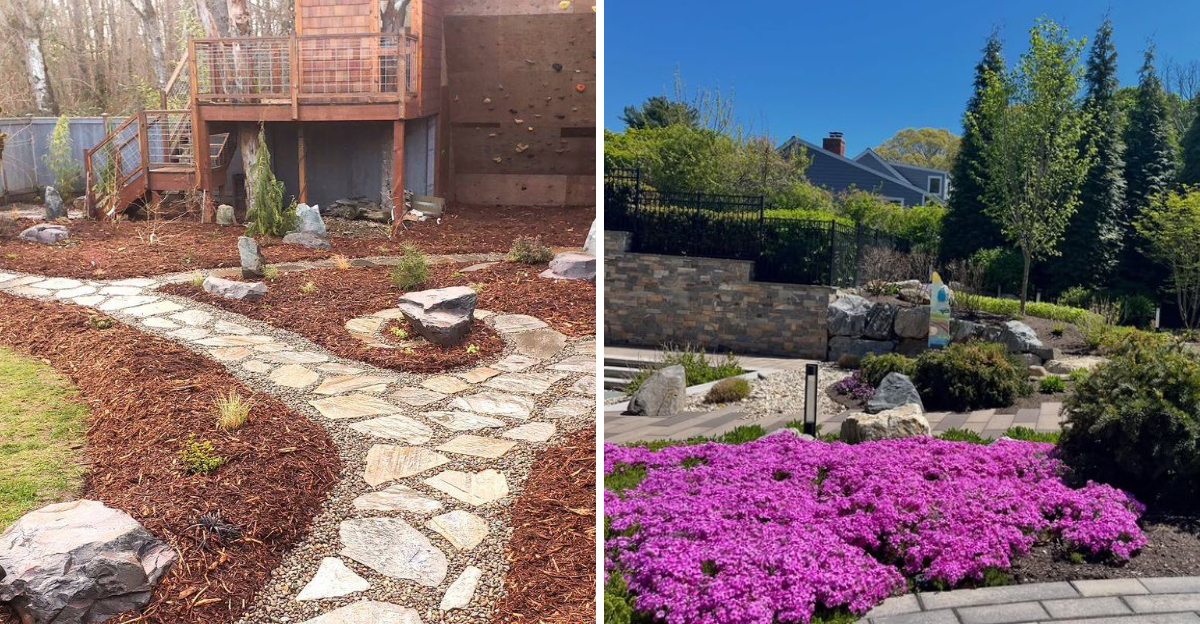
You do not have to accept losing part of your yard every time it rains. Watching soil wash downhill after every storm gets old fast.
It also makes establishing new plants much more difficult. Many sloped yards look impossible to manage until someone shows a better way.
The solution is not always expensive, and it does not always involve heavy construction. Working with the landscape instead of fighting it often brings better results.
More gardeners are choosing that approach because it makes long-term sense.
In Georgia, simple planting methods and smarter water management are helping stabilize slopes without retaining walls.
Those practical changes protect the soil, support healthier plants, and prove that a natural solution can be just as effective as a large construction project.
1. Plant Deep-Rooted Native Grasses
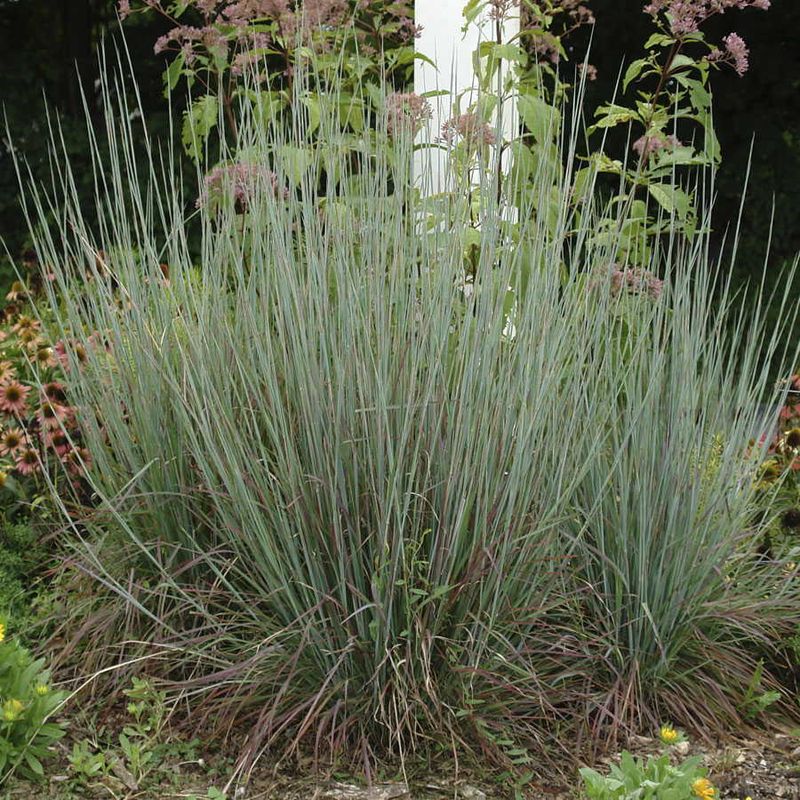
Roots are the real heroes of slope protection. Native grasses grow thick, fibrous root systems that reach deep into the soil and grip it firmly, even during heavy downpours.
Little bluestem and switchgrass are two strong choices for sloped areas in the Southeast. Both are well adapted to the region’s clay-heavy soils and humid summers.
They establish relatively quickly compared to many ornamental grasses, though results can vary depending on soil prep and rainfall.
Once rooted, these grasses form a dense mat that slows water movement across the surface.
That slowing effect gives rain a chance to soak in rather than rush downhill, which reduces soil displacement over time.
Planting in clusters or rows across the slope tends to work better than scattering individual plugs randomly.
Spacing them about 18 to 24 inches apart gives each plant room to spread while still covering ground efficiently.
Watering during the first growing season helps roots establish more deeply. After that, most native grasses handle dry spells fairly well on their own, though a drought can still stress young plantings.
One underrated bonus is how these grasses look in fall. Little bluestem turns a rich copper-red that adds real color to an otherwise plain hillside.
2. Grow Ground Covers That Hold Soil In Place
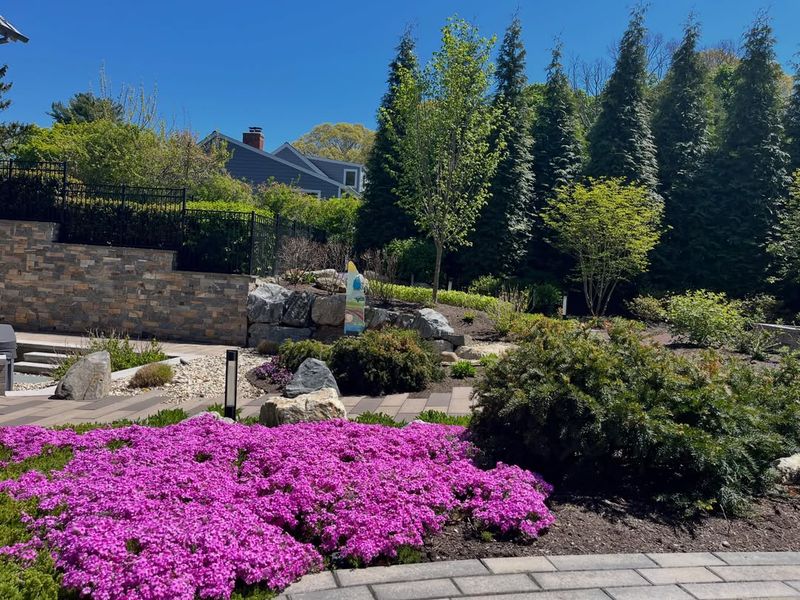
Bare soil on a slope is basically an open invitation for erosion. Ground covers are one of the fastest ways to close that invitation and protect exposed areas before rain does real damage.
Creeping juniper, liriope, and Asian jasmine are popular picks for sloped landscapes in the South. Each spreads horizontally to cover ground quickly while sending roots downward to anchor the soil.
Results depend on the specific site conditions, so it helps to check which varieties perform best in your local area.
Liriope is especially useful because it tolerates both sun and partial shade. Many slopes have mixed light conditions depending on nearby trees or structures, and liriope handles that variability pretty well.
Planting ground covers in a staggered pattern across the slope improves coverage.
Straight rows can leave gaps where water finds a path to run through, so offsetting each plant helps close those weak spots.
Mulching around new plantings holds moisture and gives roots time to settle before a storm hits.
Your Georgia Garden Changes Every Week. Your Plan Should Too.
Gardening in Georgia changes quickly throughout the season. Every Friday you’ll receive a simple weekly plan showing exactly what to plant, prune, fertilize, harvest, and protect so you never miss the right timing.
Without that buffer, newly planted ground covers can shift or wash away before they get established.
Ground covers also crowd out weeds over time, which means less maintenance once they fill in.
3. Add Mulch To Reduce Heavy Rain Splash
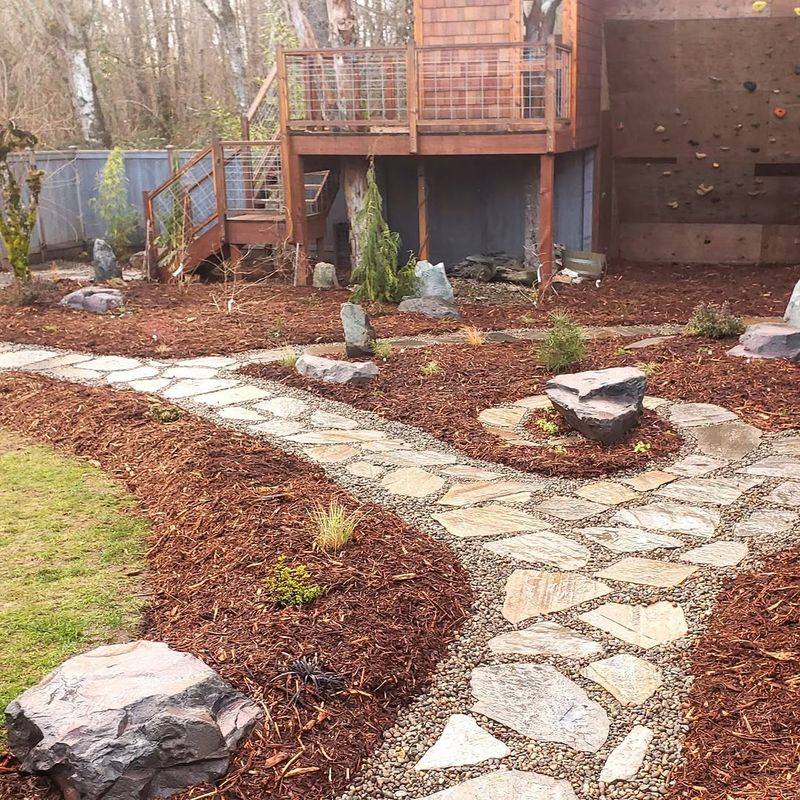
Raindrops hit bare soil harder than most people realize. Each drop acts like a tiny impact that loosens soil particles and sends them moving downhill with the water flow.
Mulch breaks that impact before it reaches the soil surface.
A layer of shredded wood chips or bark mulch absorbs the force of falling rain and keeps the soil underneath much more stable during storms.
Aim for a mulch layer around three to four inches deep on sloped areas. Thinner layers shift easily in heavy rain, while layers that are too deep can prevent water from reaching plant roots effectively.
Shredded hardwood mulch tends to knit together better than nugget-style bark on slopes.
The interlocking texture resists sliding and stays in place more reliably when water runs across it, though no mulch is completely immune to movement in a heavy downpour.
Reapplying mulch once or twice a year keeps that protective layer consistent.
It breaks down over time, which actually improves soil structure, but the depth needs refreshing to stay effective.
One practical tip worth knowing: avoid piling mulch directly against plant stems or tree trunks. That trapping of moisture can cause stem rot over time.
4. Build Rain Gardens To Slow Water Runoff
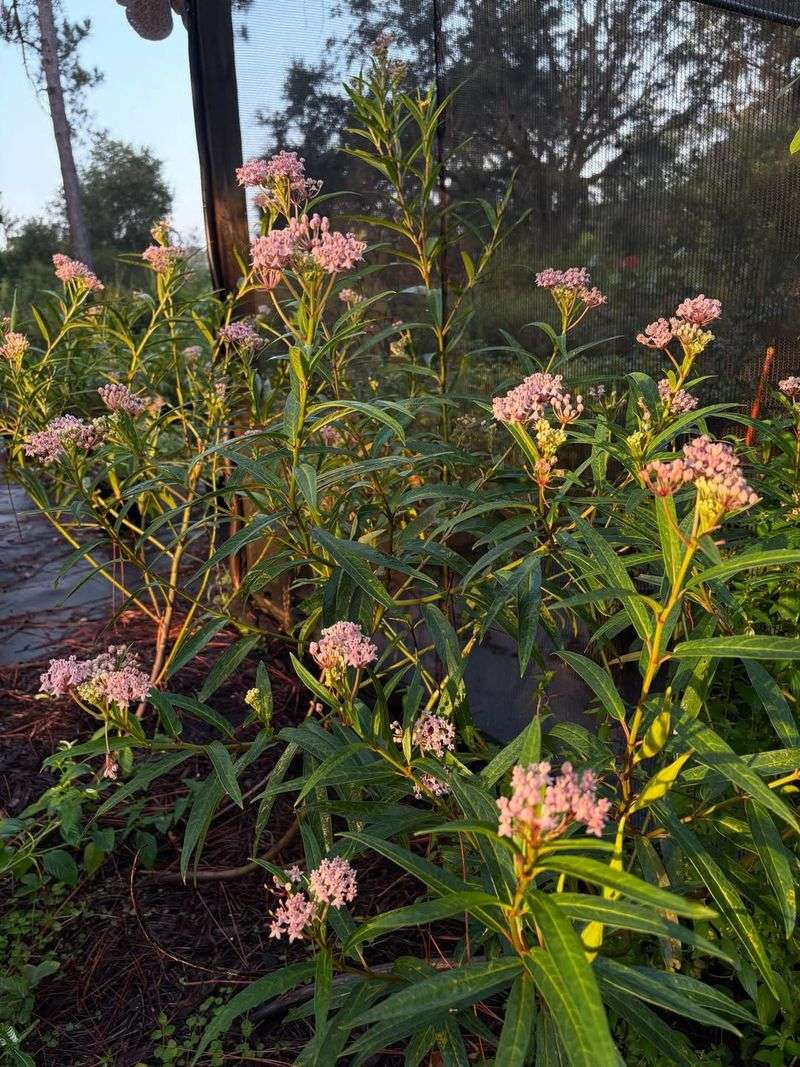
Water that moves too fast causes most of the erosion damage on slopes. Slowing it down changes everything, and a well-placed rain garden does exactly that.
A rain garden is a shallow, bowl-shaped planting area positioned to catch runoff as it flows downhill.
Instead of rushing across the surface, water collects in the garden and soaks into the ground gradually over several hours.
Native plants work best inside rain gardens because their deep roots help water infiltrate faster.
Plants like swamp milkweed, cardinal flower, and river oats handle both wet and dry periods reasonably well, which suits the fluctuating conditions inside a rain garden.
Location matters a lot. Place the rain garden at the base of the slope or at a natural low point where water already tends to gather.
Avoid placing it directly against a foundation or septic system, as pooling water in those areas can cause separate problems.
Sizing the garden to match the slope’s drainage area improves performance.
A general guideline is to make the garden about 20 to 30 percent of the size of the area draining into it, though soil type and slope grade affect that estimate.
Rain gardens in Georgia’s red clay regions sometimes need amended soil to improve drainage.
5. Use Erosion Control Blankets On Bare Slopes
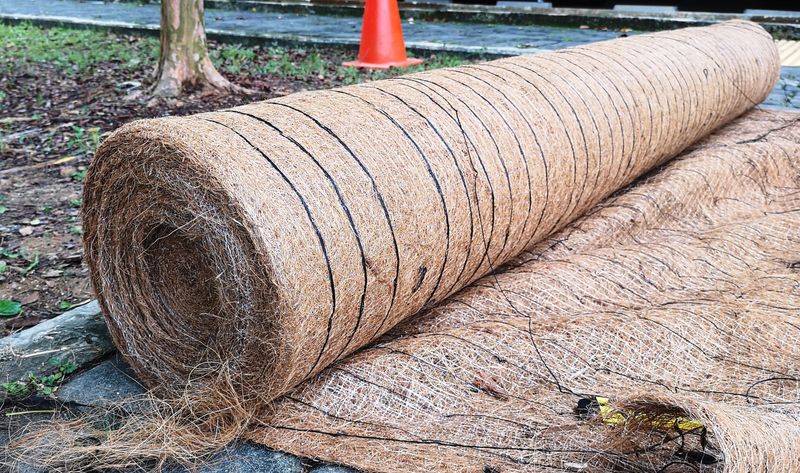
Newly graded slopes or freshly seeded areas face the highest erosion risk. Nothing holds soil together yet, and the first real storm can wash weeks of work away in minutes.
Erosion control blankets are a practical short-term fix for exactly that situation.
These woven or matted materials cover bare soil, protect seeds, and hold everything in place while vegetation gets established underneath.
Biodegradable options made from straw, coir, or wood fiber break down naturally over one to two growing seasons.
By the time the blanket decomposes, plant roots have typically taken over the job of holding the soil, though this depends on how well seeds germinate and establish.
Proper installation makes a big difference in how well blankets perform.
Stake them firmly into the soil according to the manufacturer’s guidelines, and overlap seams by at least six inches so water cannot sneak underneath and lift an edge during a storm.
Blankets work especially well when combined with seeding. Spread seed directly onto the soil surface before laying the blanket on top.
Water and light still reach the seeds through the material, and germination rates can improve because the blanket retains moisture.
On steeper slopes, check the blanket after heavy rains for any areas that have lifted or shifted.
6. Create Terraces With Natural Stone Or Timber
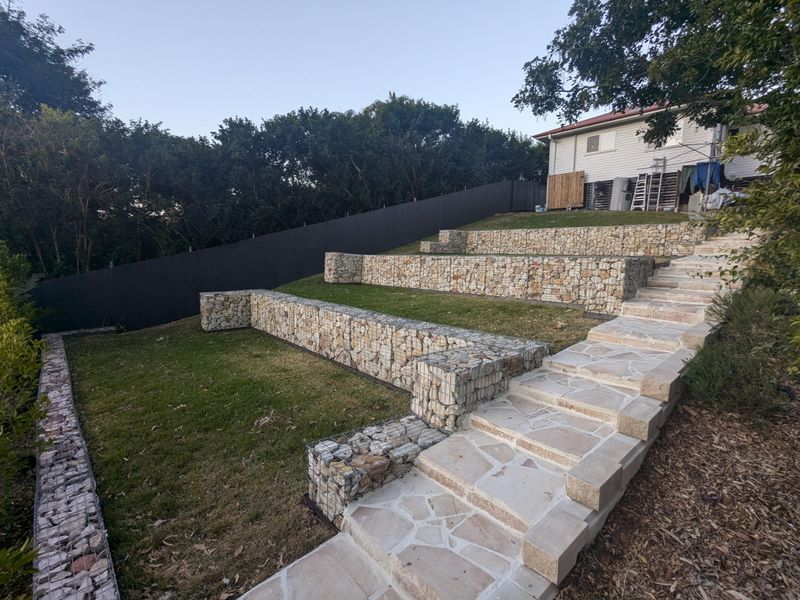
Steep slopes shed water fast, and no amount of planting fully compensates for a grade that is simply too sharp. Terracing breaks that steep run into smaller, flatter sections where water slows down and soaks in.
Natural fieldstone and pressure-treated timber are two affordable options for building informal terraces without hiring a contractor.
Fieldstone blends naturally into a garden setting and holds up well over many years. Timber is easier to cut and shape but may need replacing after a decade or more depending on moisture exposure.
Each terrace level acts like a mini flat garden bed. Planting those beds with ground covers, vegetables, or flowering perennials adds beauty while the roots continue reinforcing the soil below the surface.
Keeping individual terrace heights under 18 inches makes construction manageable without heavy equipment.
Taller walls require more structural support and may need professional assessment depending on local regulations.
Drainage is a critical part of terrace design. Without a way for water to exit each level, it can build up behind the wall and cause it to shift or buckle over time.
Gravel backfill or a perforated pipe behind each terrace helps water move through without pressure building up.
Terracing also opens up gardening space that was previously too steep to use.
7. Redirect Downspouts Away From Steep Hillsides
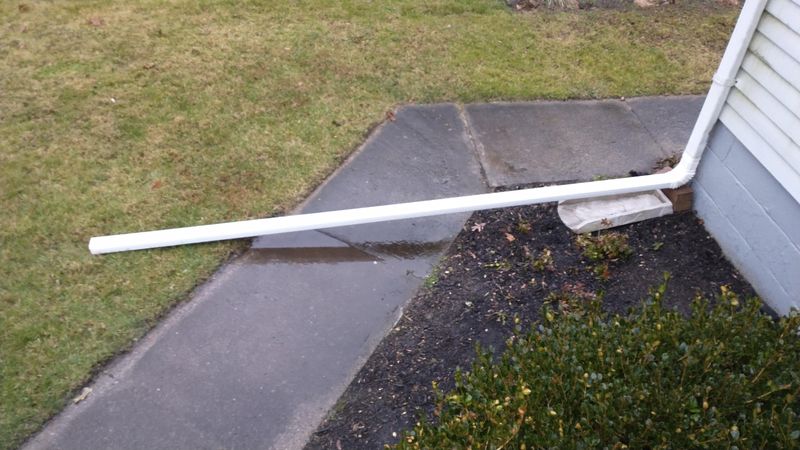
Most people focus on what is growing on their slope, but forget to check where their roof water is going.
A single downspout can dump hundreds of gallons onto a hillside during one storm, and that concentrated flow carves channels fast.
Redirecting downspouts is one of the simplest fixes available.
Flexible extender pipes attach to the bottom of a standard downspout and carry water away from the slope to a flatter area where it can spread out and absorb gradually.
Splash blocks placed at the downspout exit also help break the force of falling water. Without them, water hits the ground hard in one spot and creates a small crater that slowly grows with each rain event.
Extending a downspout toward a rain garden or a vegetated swale is even more effective.
That pairing captures the redirected water and filters it through plant roots before it moves further across the property.
Check downspout extensions after heavy storms to make sure they have not shifted or clogged.
Leaves and debris can block the flow and cause water to back up and overflow right at the base of the slope again.
Underground drainage pipes are another option for homeowners who want a cleaner look.