Why Japanese Beetles Are Destroying Pennsylvania Rose Gardens In July And What Actually Works To Stop Them
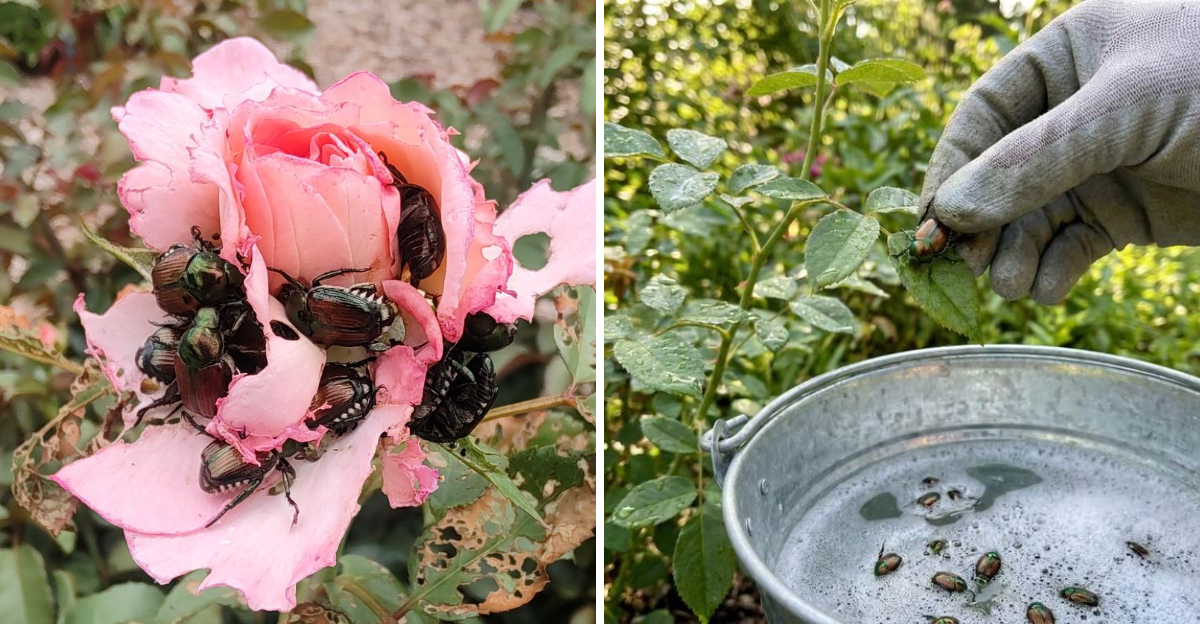
July in Pennsylvania and Japanese beetles go together like a bad combination that nobody asked for.
Every summer, right when roses should be hitting their most beautiful stretch of the season, these metallic green and copper pests show up and start skeletonizing leaves and shredding blooms with an efficiency that feels almost personal.
If you have roses and you haven’t dealt with Japanese beetles yet this July, consider yourself on borrowed time. They’re coming.
And they have a particular obsession with roses. Out of all the plants in a Pennsylvania garden, roses rank among the very highest on the Japanese beetle preference list.
That makes rose gardens ground zero for some of the most aggressive feeding of the entire season. A small infestation can become a serious one in days, and the damage accumulates faster than most gardeners expect.
The good news is that there are approaches that actually work. Not just temporarily, but in ways that reduce pressure on your roses for the rest of the season.
1. July Is Peak Adult Beetle Season
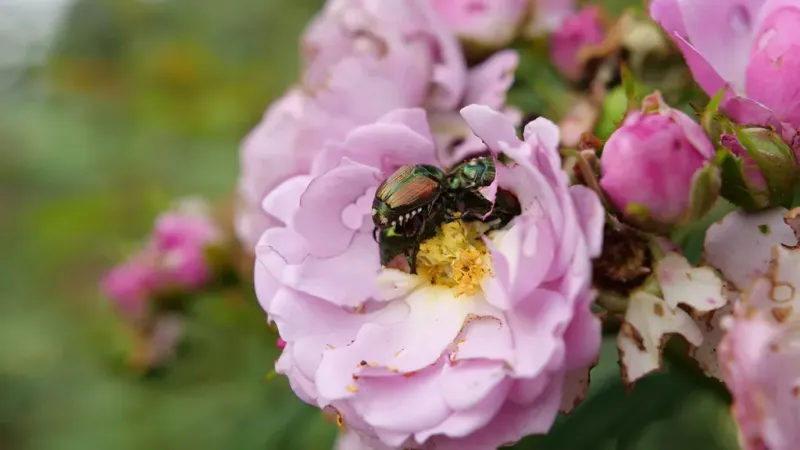
Right around the Fourth of July, Pennsylvania rose gardeners start seeing the damage, and it is not a coincidence. Japanese beetles have a very predictable life cycle, and adult beetles emerge from the soil every year between late June and early July.
They are most active and most destructive throughout the entire month of July, which lines up perfectly with peak summer bloom time for many rose varieties.
Adult beetles only live for about six to eight weeks, but they pack a lot of damage into that short stretch. During July, they feed heavily to build up energy for mating.
Females will feed, mate, and then return to the soil to lay eggs, often in nearby lawns. That cycle repeats several times across the summer, keeping adult numbers high through most of July and into early August.
The warm, sunny days that Pennsylvania summers are known for actually speed up beetle activity. Beetles are cold-blooded, so warmer temperatures make them more mobile, more aggressive about feeding, and harder to manage.
Cooler mornings in July are actually the best time to catch them moving slowly on your roses. Knowing that July is the peak window helps you plan ahead, so you are not caught off guard when the first beetles appear.
Starting your management routine in late June, before the peak hits, gives you a real head start on protecting your rose garden before the worst of the feeding frenzy begins.
2. Roses Are One Of Their Favorite Targets
Out of all the plants in a typical Pennsylvania yard, roses tend to draw the heaviest Japanese beetle feeding season after season.
Scientists have studied why, and the answer comes down to a combination of factors that make roses almost irresistible to these insects.
Rose petals are soft and easy to chew. The flowers are often fragrant, and that scent acts like a signal that travels far on a warm summer breeze.
Your Pennsylvania Garden Changes Every Week. Your Plan Should Too.
Gardening in Pennsylvania changes quickly throughout the season. Every Friday you’ll receive a simple weekly plan showing exactly what to plant, prune, fertilize, harvest, and protect so you never miss the right timing.
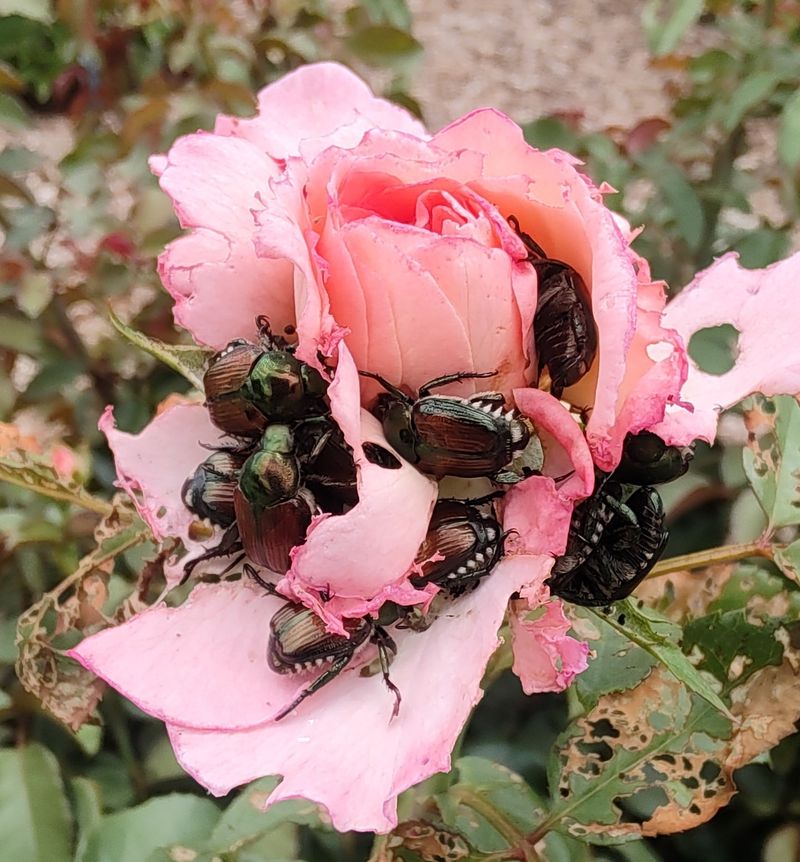
Beetles use smell to find food, and roses produce strong floral compounds that beetles are wired to seek out. Once one beetle lands and starts feeding, it releases additional chemical signals that pull in even more beetles from the surrounding area.
A single rose bloom with three or four beetles on it can quickly turn into a cluster of twenty or thirty within just a few hours. That group feeding behavior is part of why rose damage can look so sudden and so severe.
Beyond fragrance, roses also tend to grow in open, sunny spots with lots of exposed blooms, which gives beetles easy access without having to navigate dense foliage.
Varieties with lighter-colored or more fragrant blooms, like pale pinks, whites, and yellows, often get hit harder than deep red varieties in some gardens. Hybrid tea roses, floribundas, and climbing roses are all common targets.
If you have been puzzled about why beetles seem to skip other garden plants and head straight for your roses, now you know the answer. Protecting your roses means understanding exactly what draws beetles in the first place.
3. Sunny Rose Beds Make The Problem Worse
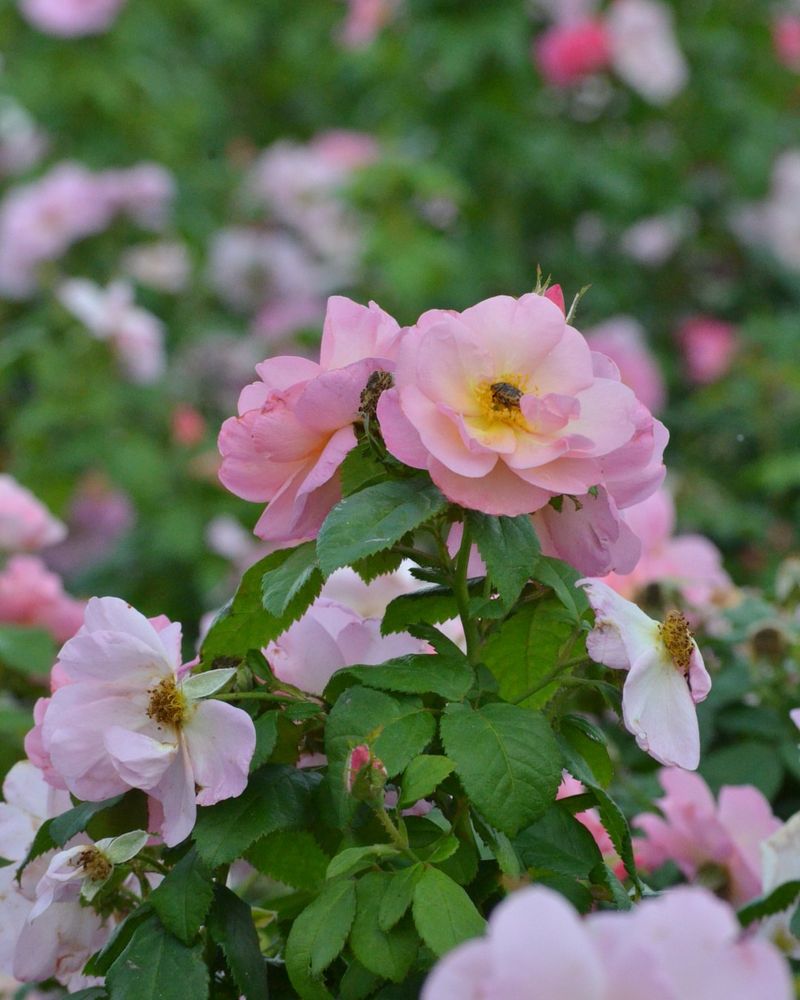
Here is something most rose gardeners do not realize until the damage is already done: the location of your rose bed can actually make your Japanese beetle problem significantly worse. Adult beetles are sun-loving insects.
They prefer to feed on plants that are growing in full, direct sunlight, and they tend to avoid shaded or partially shaded areas of the garden whenever they have a sunny option nearby.
Most rose growers know that roses need at least six hours of direct sun per day to bloom well, which means the very conditions that make roses thrive are also the conditions that attract the most beetles.
Open, south-facing beds with no tree cover or shade structure are basically a welcome sign for foraging beetles.
During peak afternoon heat in July, you can often find the heaviest beetle concentrations on the sunniest blooms in the garden.
There is not a simple fix here, because shading your roses to deter beetles would also hurt their growth and bloom production. But understanding this connection does help you make smarter decisions.
Planting a few less-attractive companion plants around the edges of your rose bed can help disrupt beetle movement.
Keeping your rose bushes well-watered during heat waves also helps, because stressed plants tend to release more distress chemicals that can attract additional insects.
Mulching around the base of your roses reduces soil temperature, which slightly discourages female beetles from laying eggs in the immediate area.
Every small step adds up when you are managing a pest as persistent as the Japanese beetle throughout a long, hot Pennsylvania July.
4. Hand-Picking Actually Works For Small Gardens
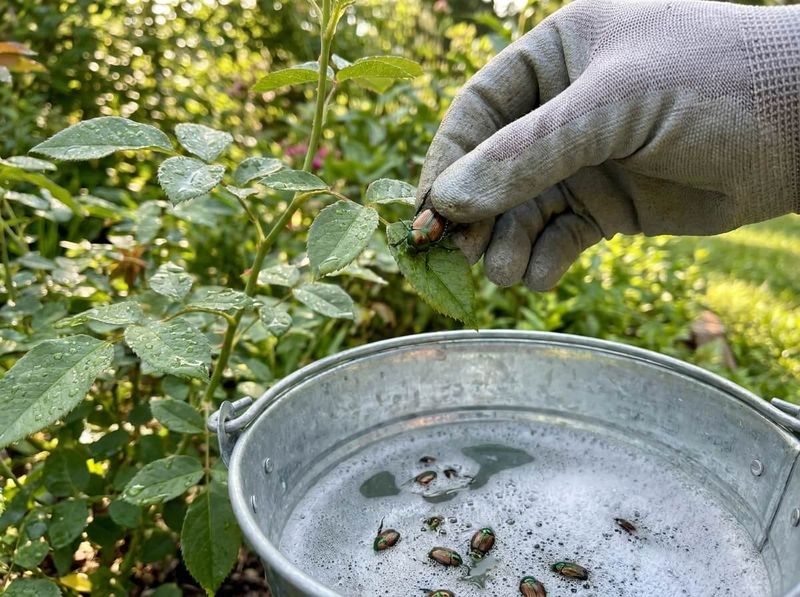
Before you spend money on sprays or traps, try the method that experienced rose growers have relied on for generations: picking beetles off by hand.
It sounds too simple to work, but for home rose gardens with a manageable number of bushes, hand-picking is genuinely one of the most effective tools available. The key is doing it consistently, ideally every single morning during the July peak season.
Fill a container with water and add a few drops of dish soap. The soap breaks the surface tension so beetles cannot float and escape.
Walk through your rose beds early in the morning, when temperatures are still cool and beetles are sluggish. Hold your container directly under each bloom or leaf where beetles are clustered, then give the plant a quick, firm shake.
Beetles will drop straight into the soapy water before they have a chance to fly away. Do not try to grab them with your fingers first, because disturbed beetles will often drop or fly before you can catch them.
Morning timing matters more than most people expect. Once temperatures climb above the mid-70s, beetles become much more agile and harder to catch by shaking.
Checking your roses again in the early evening can also help, since beetles tend to slow down as temperatures cool. Gardeners who hand-pick every day during peak season often report much less overall damage than neighbors who rely entirely on chemical sprays.
It takes about ten to fifteen minutes per morning for a typical backyard rose bed, and that small daily habit can protect your blooms better than almost anything else you can do during July.
5. Beetle Traps Can Make Rose Damage Worse
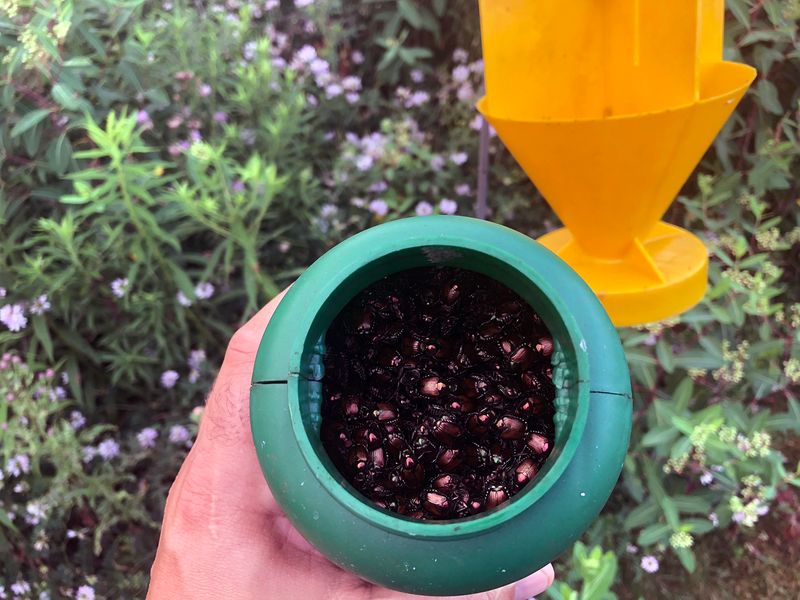
Walk into any Pennsylvania garden center in July and you will see Japanese beetle traps prominently displayed near the checkout. They are popular, and they are cleverly marketed, but the research behind them tells a more complicated story.
Multiple university studies, including work done by Penn State Extension, have found that beetle traps often attract far more beetles into an area than they actually capture and remove.
The traps use a combination of a floral lure and a sex pheromone to draw beetles in. Those lures are extremely powerful and can pull beetles from distances of a quarter mile or more.
The problem is that not every beetle that gets attracted to the trap area actually ends up inside it. A significant number of beetles get drawn into your yard, smell your roses nearby, and decide to stop there before even reaching the trap.
The result is that gardens with traps nearby sometimes suffer more damage than gardens with no traps at all.
If you feel strongly about using a trap, placement is everything. Traps should be positioned at least 30 to 50 feet away from any plants you want to protect, ideally at the far edge of your property or even in a neighboring open area.
Never hang a trap right beside your rose bed or even in the same garden zone. Empty the collection bag frequently, because a full bag loses effectiveness and can become a smelly mess in summer heat.
For most home rose gardeners in Pennsylvania, skipping traps entirely and focusing on hand-picking or targeted insecticide use is a smarter, more reliable approach to protecting blooms all season long.
6. The Best Control Is A Layered Plan, Not One Miracle Spray
A lot of gardeners go looking for one product that will solve their Japanese beetle problem completely, and that search usually ends in frustration.
No single spray, trap, or technique eliminates Japanese beetles entirely, but combining several strategies at once can dramatically reduce the damage your roses suffer each July.
Thinking of pest management as a layered system rather than a one-time fix changes everything about how you approach the problem.
Start with the basics: hand-pick beetles daily during peak season, and deadhead any blooms that have already been damaged. Ruined flowers release strong scent signals that attract more beetles, so removing them quickly helps break that cycle.
Keep your roses well-watered during heat spells, because stressed plants are more vulnerable to heavy feeding.
Avoid planting extra beetle-favorite plants like linden trees, grapes, or zinnias right beside your rose beds, since those plants can pull even larger numbers of beetles into the immediate area.
When damage is severe and hand-picking alone is not keeping up, targeted insecticide use can help.
Products containing pyrethrins, neem oil, or spinosad are options that many gardeners use, and some systemic insecticides labeled for ornamental use can provide longer protection.
Always read the label carefully before applying anything. One of the most important rules is to avoid spraying open blooms when bees or other pollinators are actively visiting your garden, usually during mid-morning through afternoon.
Spray in the early evening instead, when pollinator activity drops. Combining physical removal, smart planting choices, and careful chemical use when truly needed gives your Pennsylvania rose garden the best possible defense against summer beetle pressure.
7. Grub Control In Fall Helps Next Year’s Roses
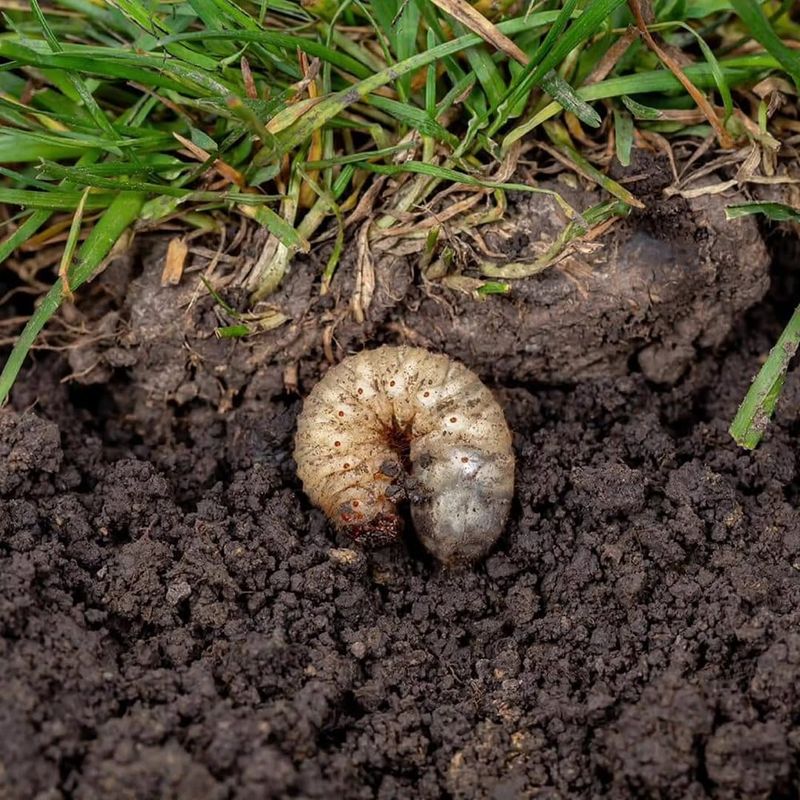
Most of the focus on Japanese beetles happens in July when the adults are visible and the damage is obvious, but smart rose gardeners also think about what happens underground in late summer and fall.
After adult females feed and mate, they burrow into nearby lawns and garden soil to lay their eggs.
Those eggs hatch into white, C-shaped grubs that spend the rest of summer and fall feeding on grass roots just below the soil surface.
Those grubs are the next generation of beetles that will emerge the following June and July, ready to feed on your roses all over again.
Targeting grubs in late summer and early fall, before they grow large and burrow deep for winter, is one of the most effective long-term strategies for reducing beetle pressure on your garden year after year. Fewer grubs in the soil now means fewer adult beetles next season.
Milky spore is a naturally occurring soil bacterium that specifically targets Japanese beetle grubs and is safe for people, pets, and beneficial insects. It takes a season or two to establish in the soil, but once it does, it can provide long-term grub suppression.
Beneficial nematodes are another biological option that can be applied to lawns in late August or early September when grubs are still small and close to the surface. Both products work best when soil is moist and temperatures are still warm.
Talking to your local Penn State Extension office about timing and application rates for your specific region of Pennsylvania is a great way to make sure you are getting the most out of any grub control effort you put in this fall.