The Meaning Behind A Whooping Crane Appearing Near Your Texas Property
There are wildlife sightings, and then there are whooping crane sightings.
If a large, striking white bird has appeared near your Texas property and something about it felt genuinely different from the usual backyard visitors, there is a good chance your instincts are right.
Whooping cranes are among the rarest birds in all of North America, and spotting one is not something that happens every day, or every year, for most Texans.
These birds have a remarkable story tied directly to this state, since the Gulf Coast serves as the primary wintering ground for the main wild migratory population.
A crane resting near a wetland on your land or passing through during migration is almost always connected to very specific landscape features, seasonal habitat needs, and timing rather than coincidence.
Understanding that context makes the sighting even more fascinating.
1. Your Property May Be Along A Migration Route
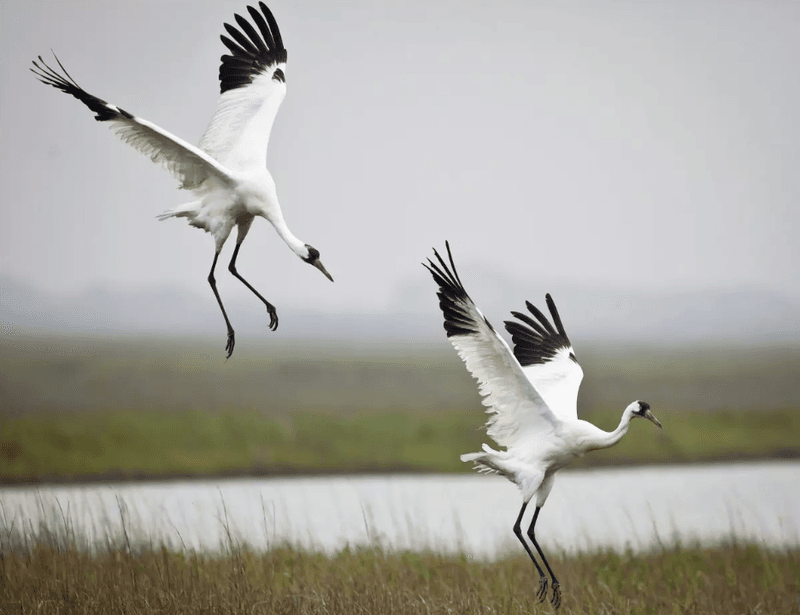
Seasonal migration is one of the most logical reasons a whooping crane might appear near a Texas property. Each year, the main wild population travels a long distance between nesting grounds in northern Canada and wintering areas along the Texas Gulf Coast.
That journey covers hundreds of miles, and the birds do not always follow a perfectly straight path.
Properties located anywhere along or near this general north-to-south corridor through the central and coastal parts may occasionally fall within the flight path.
Open landscapes, low human activity, and access to water can make a stretch of land attractive as an overnight or short-term stop.
The crane is not choosing your property as a permanent home but simply using the landscape as part of a much longer trip.
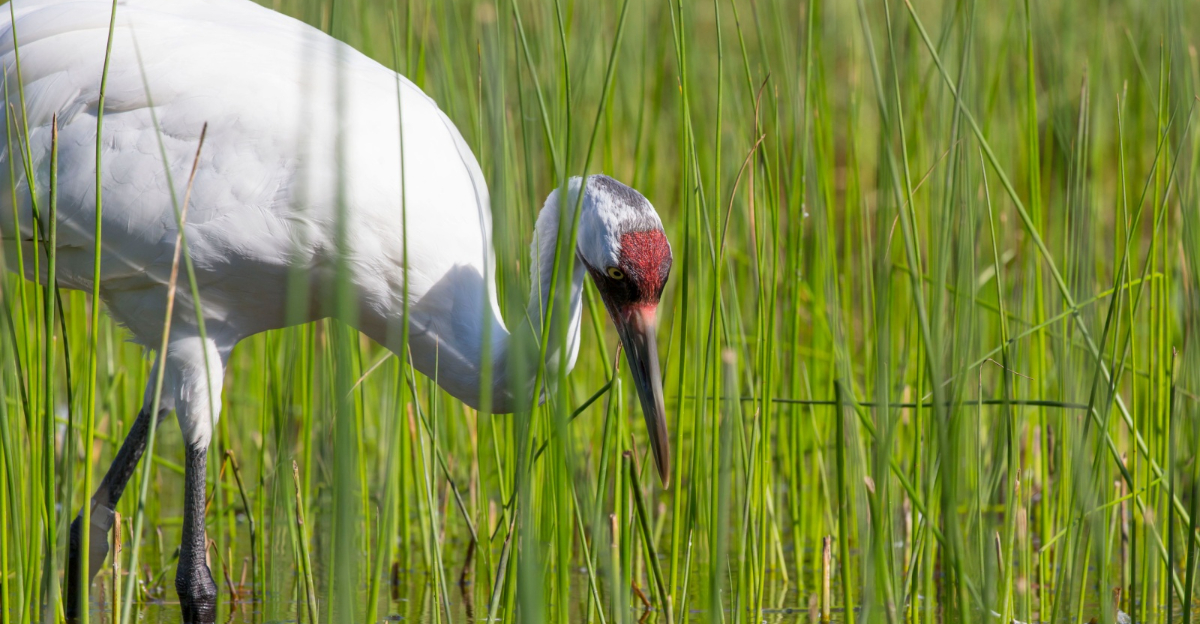
Whooping cranes are very large birds, mostly white with black wingtips that become especially visible when they are in flight. They fly with their long necks fully extended, which helps distinguish them from herons that tuck their necks back.
If you saw the bird flying overhead or landing nearby, paying attention to those features can help you confirm what you spotted.
Reporting the sighting to a Texas wildlife agency can also contribute to ongoing migration tracking efforts that help researchers better understand how these birds move across the state each season.
2. Nearby Wetlands Or Fields May Offer A Stopover
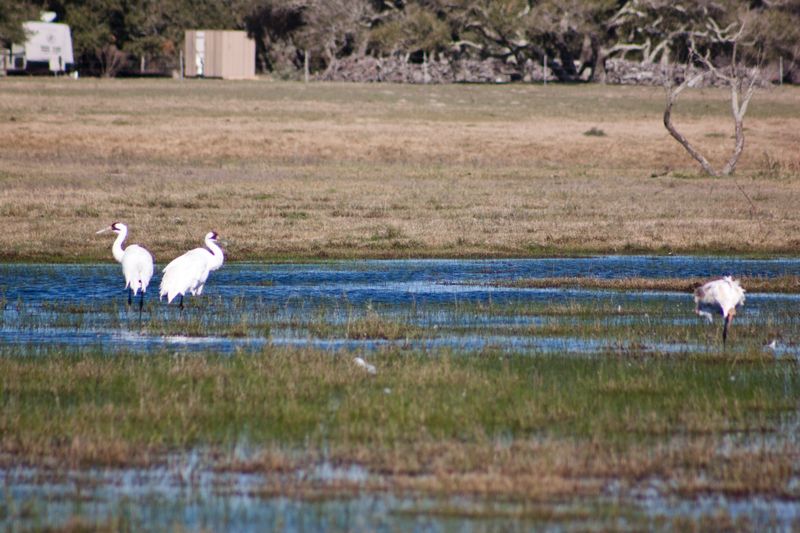
Wet fields, shallow ponds, flooded pastures, and coastal marshes scattered across Texas provide exactly the kind of landscape a migrating whooping crane looks for during a rest stop.
These birds are not picky about whether the water source is natural or human-made.
A low-lying pasture that holds rainwater after a storm, a stock tank near a ranch, or a roadside ditch with shallow standing water can all serve as temporary feeding areas.
Whooping cranes feed on a range of food sources depending on what is available. In coastal areas, blue crabs are a staple of their winter diet.
During inland stopovers, they may pick through fields for grain, insects, frogs, or small aquatic creatures.
If your property or the land nearby offers any of these food sources combined with open sightlines and minimal foot traffic, a crane may linger for a few hours or even a day or two before continuing its journey.
Your Texas Garden Changes Every Week. Your Plan Should Too.
Gardening in Texas changes quickly throughout the season. Every Friday you’ll receive a simple weekly plan showing exactly what to plant, prune, fertilize, harvest, and protect so you never miss the right timing.
One sighting does not confirm that your property is a reliable stopover location. The crane may never return, or it may pass through again during a future migration season depending on weather, water levels, and landscape conditions at the time.
Keeping notes on the date, location, and behavior of the bird can be genuinely useful information for Texas wildlife monitoring programs that track where these rare birds appear across the state.
3. A Coastal Sighting May Point To Wintering Habitat
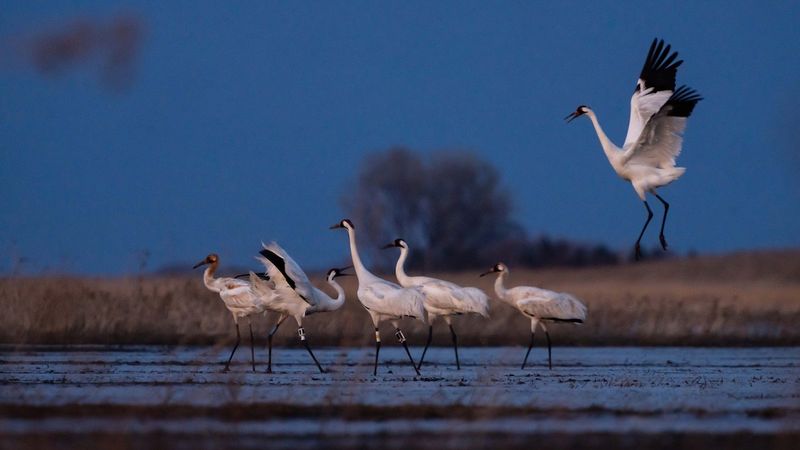
Along the Texas Gulf Coast, whooping crane sightings carry a different significance than those seen farther inland.
The Aransas National Wildlife Refuge area near Rockport serves as the primary wintering ground for the main wild migratory population, and birds typically arrive there in late October and begin departing in March or April.
Coastal properties near bays, estuaries, tidal flats, and salt marshes in that region have a much higher chance of hosting a wintering crane than inland areas.
If your property sits along or near the coast in this general region, a whooping crane appearing nearby during the fall or winter months may simply be using the surrounding habitat in the way it naturally would.
These birds establish loose territories on their wintering grounds and tend to return to familiar areas from one season to the next.
A crane near a coastal Texas property during winter is likely a wintering bird rather than a migrating one passing through briefly.
Coastal homeowners and ranchers near suitable habitat may notice the same individual or pair returning year after year.
Whooping cranes are tall enough to stand out clearly in open marsh or bay flats, reaching about five feet in height with a wingspan of roughly seven to eight feet.
Their size alone makes them easy to spot from a reasonable distance, which means you can observe them comfortably without ever needing to move closer to get a good look.
4. The Area May Provide Valuable Wildlife Habitat
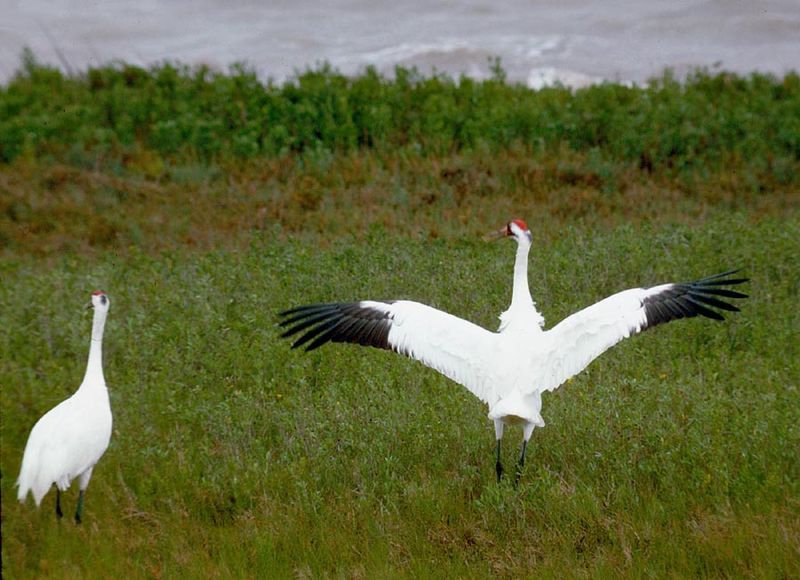
Finding a whooping crane near your property can prompt a closer look at what the surrounding landscape actually offers to wildlife.
Open water, native grasses, wetland edges, and minimal development are features that tend to attract a wide range of birds and animals, and whooping cranes respond to some of those same qualities.
A crane stopping on or near your land suggests the area has at least some characteristics worth noticing.
That said, one visit does not confirm that your land meets the full habitat requirements these birds need over the long term. Whooping cranes require large, open areas with good visibility so they can watch for potential threats.
They tend to avoid heavily wooded areas, dense brush, and places with frequent human activity or machinery noise. A temporary stop may simply mean the bird found a patch of shallow water or open ground convenient enough to use for a short rest.
Texas landowners who manage their property with native plants, maintain wetland areas, and limit heavy disturbance near water sources often find that their land supports richer wildlife communities over time.
Whether or not a whooping crane ever returns, those practices benefit dozens of other bird and animal species that share the same landscape.
If you are curious about whether your property could support better wildlife habitat, your local Texas Parks and Wildlife Department office can offer guidance tailored to your region and land type.
5. The Sighting Represents A Notable Conservation Event
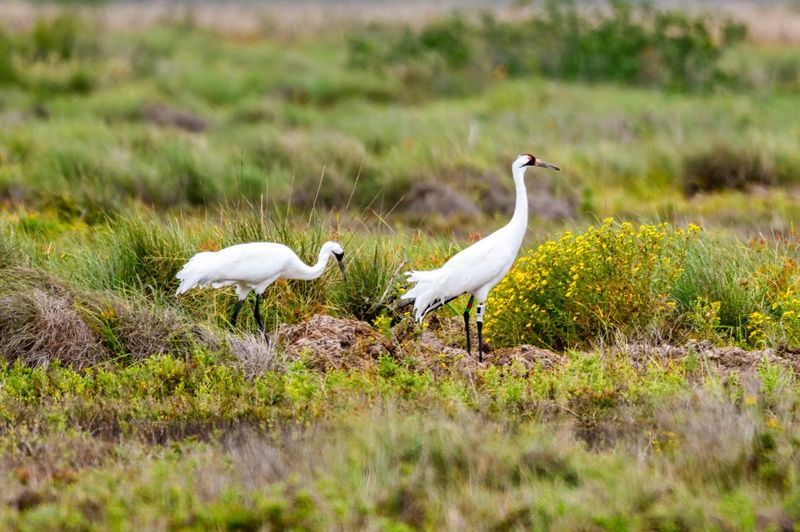
Whooping cranes came remarkably close to vanishing entirely during the twentieth century, and the recovery of this species is one of the most closely followed conservation stories in North American wildlife history.
At the lowest point, fewer than two dozen birds remained in the wild.
Decades of dedicated work by wildlife agencies, researchers, and conservation programs have helped increase that number, though the species remains endangered and every individual bird matters enormously to the overall population.
Seeing one near your Texas property is not an everyday occurrence. Most people who spend their entire lives in Texas never encounter a whooping crane up close.
When one appears, it is worth taking a moment to recognize how significant that actually is.
The bird you are looking at represents a species that has survived against difficult odds, and its presence near your land is a reminder of how much effort has gone into keeping these cranes alive.
You can play a small but meaningful role in that conservation story simply by reporting the sighting. Texas Parks and Wildlife Department and other wildlife organizations actively collect data on whooping crane locations throughout the migration and wintering seasons.
A reported sighting from a rural property, farm, or coastal area adds to a broader picture of where these birds are moving and what landscapes they are using.
That kind of community observation helps researchers track population health and identify areas that may deserve additional protection or habitat management attention.
6. The Bird May Be Traveling With Its Family
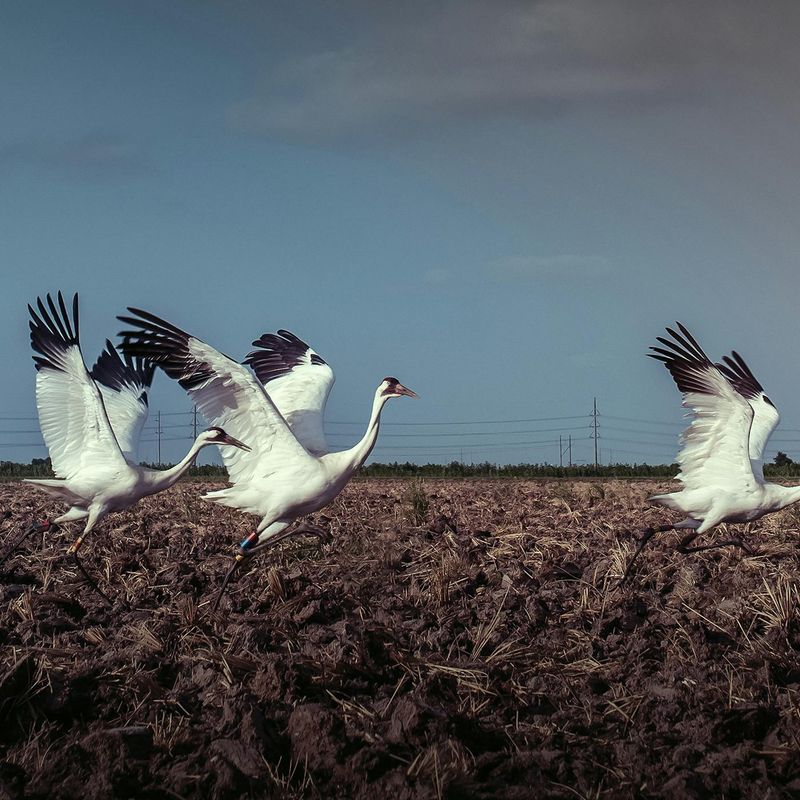
Whooping cranes do not always travel alone. Mated pairs often migrate together, and during a young crane’s first migration and first winter season, it typically stays close to its parents.
If you spotted more than one crane near your property, there is a reasonable chance you may have been watching a small family group rather than unrelated individuals passing through at the same time.
Juvenile whooping cranes look noticeably different from adults.
Young birds have brownish or rusty-colored feathers mixed into their white plumage during their first year of life, which can make them look quite different from the bright white adults standing nearby.
If one of the birds you noticed appeared smaller or had a warmer, more mottled coloring, that could indicate it was a bird hatched the previous spring making its first trip south through Texas.
Watching a family group from a distance can be one of the more rewarding wildlife experiences available to Texas landowners and residents.
The birds communicate with each other through posture and calls, and family groups tend to stay within close range during stops along the migration route.
Avoid the temptation to move closer for a better view.
Cranes that feel crowded or threatened may abandon a rest stop before they are fully ready to continue traveling, which can add unnecessary stress during an already demanding seasonal journey across hundreds of miles of varied landscape.
7. The Whooping Crane Needs Space And Minimal Disturbance
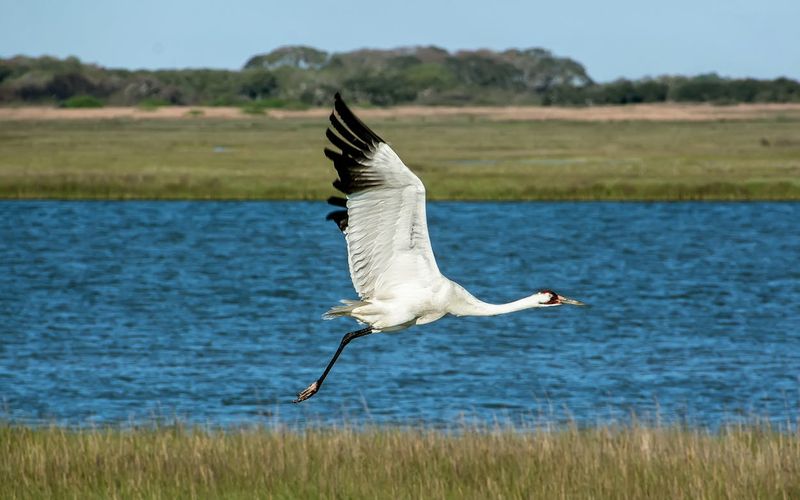
Responsible observation matters more than most people realize when a rare bird like a whooping crane appears nearby.
These birds are sensitive to human activity, and what feels like harmless curiosity to a person can feel like a genuine threat to a crane trying to rest or feed.
Approaching too closely, making sudden movements, or making loud noises can cause the bird to flush and abandon a suitable resting spot before it has recovered enough energy to continue migrating.
Pets, vehicles, farm equipment, and recreational activity near the bird should be kept to a minimum while it is present. Dogs and other animals that move unpredictably can startle cranes even from a moderate distance.
If you need to carry out normal property tasks nearby, try to move calmly and avoid directing activity toward the bird. In many cases, a crane that feels unthreatened will continue feeding or resting on its own schedule and eventually move on naturally.
Whooping cranes are protected under the federal Endangered Species Act, which means it is against the law to harm, harass, pursue, or otherwise disturb them.
You do not need to do anything special to host a crane on your property other than give it room and time.
Binoculars or a spotting scope are the best tools for getting a satisfying look without closing the distance. Watching quietly from inside a building or vehicle can also reduce the bird’s awareness of your presence while allowing you to observe it comfortably.
8. Any Symbolic Meaning Depends On Cultural Context
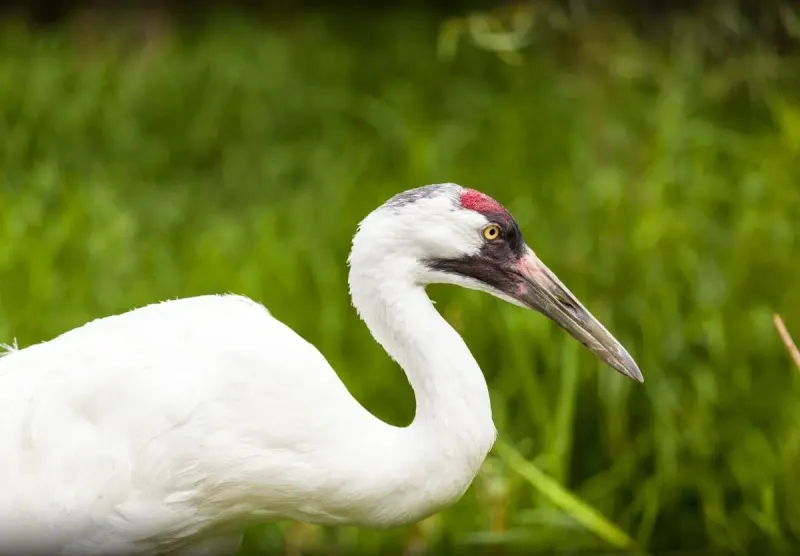
Cranes have held meaningful places in human culture for thousands of years across many parts of the world. In some Indigenous traditions and cultural communities, cranes carry symbolic significance tied to longevity, family, resilience, or spiritual connection.
Those meanings are real and deserve respect, but they vary considerably from one community or tradition to another and cannot be applied universally to every crane sighting everywhere.
Seeing a whooping crane near your Texas property does not carry a scientifically supported spiritual message, prediction, or omen.
Science does not assign universal symbolic meaning to animal appearances, and no credible wildlife source suggests that a crane appearing near your home forecasts luck, change, protection, or any future event.
If you personally find the encounter meaningful or moving, that is a completely understandable human response to witnessing something rare and beautiful.
What the sighting does confirm is something grounded and factual: a bird that nearly vanished from the planet found its way near your land and paused for a moment in its long seasonal journey.
That pause gave you a rare glimpse of one of North America’s most extraordinary wildlife recoveries.
That on its own is worth appreciating without needing to assign it a larger cosmic meaning.
The whooping crane’s story is already remarkable enough on its own terms, and your corner of Texas played a small part in it simply by offering the landscape the bird needed, even briefly.