What To Do With Your Florida Mandevilla In July So It Covers The Fence
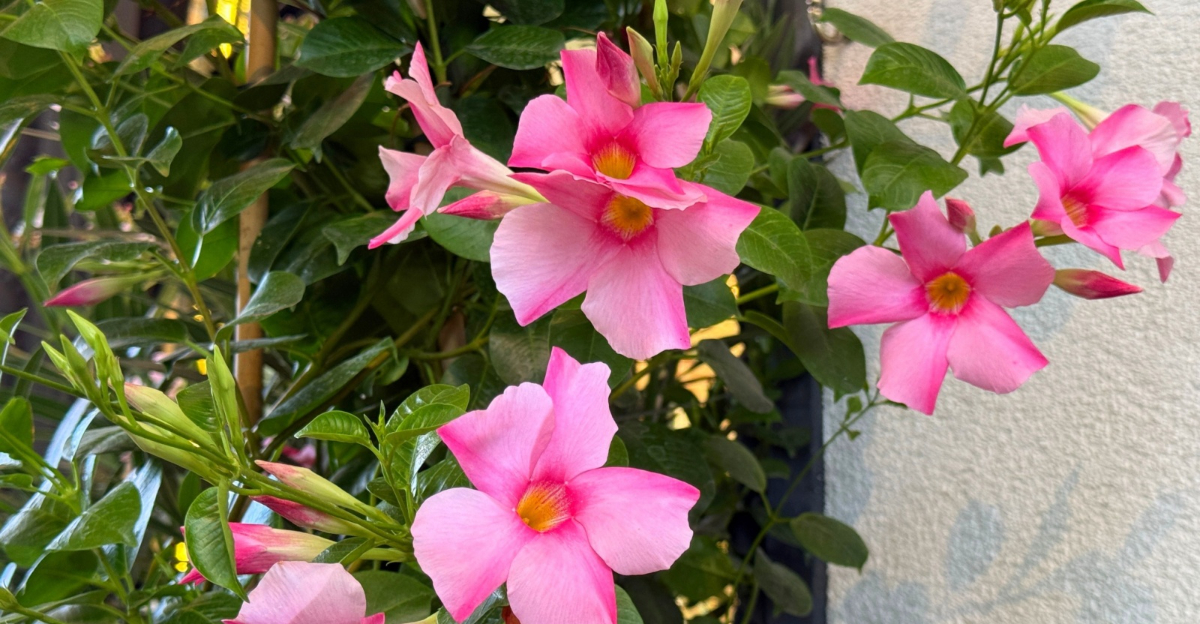
Mandevilla in July is basically Florida gardening on fast forward. The heat is intense, afternoon rain arrives on schedule, and this tropical vine responds by pushing out new growth at a pace that is genuinely exciting if you know how to work with it.
Left to its own devices though, a mandevilla can end up sparse, tangled, and nowhere near the lush fence coverage most gardeners had in mind when they planted it.
Getting a mandevilla to actually fill a fence takes a specific combination of care that goes well beyond just pointing it in the right direction and hoping for the best.
Full sun, well-drained soil, consistent fertilizer, smart watering, gentle training, and regular pinching all play a role, and July is honestly one of the best months to get those details dialed in for a strong finish to the season.
1. Give It Full Sun For Strong Flowering
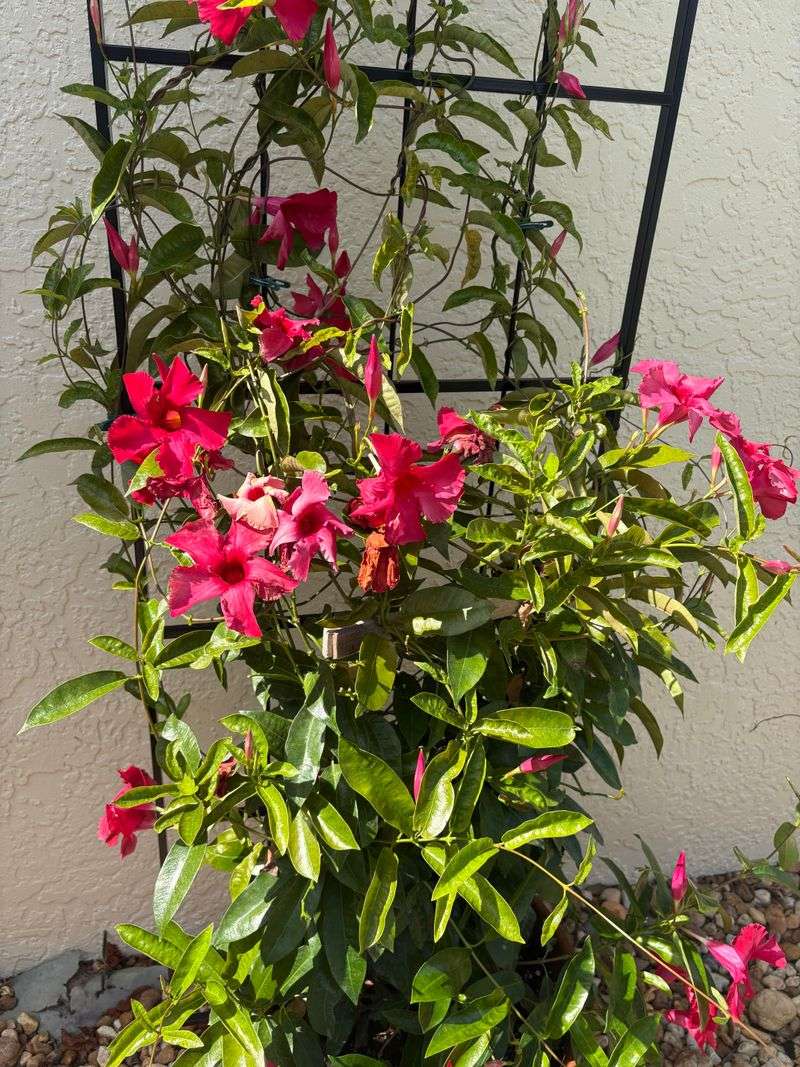
Those bright trumpet-shaped flowers that make mandevilla so eye-catching on a Florida fence are not going to show up without plenty of direct sunlight.
Mandevilla is a sun-loving tropical vine, and in July it needs a solid six to eight hours of full sun each day to flower well and push out the kind of growth that actually fills a fence.
Less light often means fewer blooms, weaker stems, and a vine that stretches toward light rather than spreading across the fence evenly.
One thing Florida gardeners sometimes overlook is that a fence location does not automatically mean full sun. Nearby trees, rooflines, pergolas, or even the fence itself can cast shade across the vine for a good portion of the morning or afternoon.
If your mandevilla is blooming lightly or looking thin on one side, it is worth stepping back and watching how the sun moves across that section of fence throughout the day.
Moving a container-grown mandevilla to a sunnier spot along the fence is an easy fix if shade is the problem. For in-ground vines, trimming back any nearby shrubs or low branches that block light can help open things up.
Mandevilla planted in bright, open Florida sun typically rewards you with fuller vines and more consistent blooming through the long summer months, which is exactly what you want when the goal is covering a fence with color.
2. Keep The Soil Well Drained
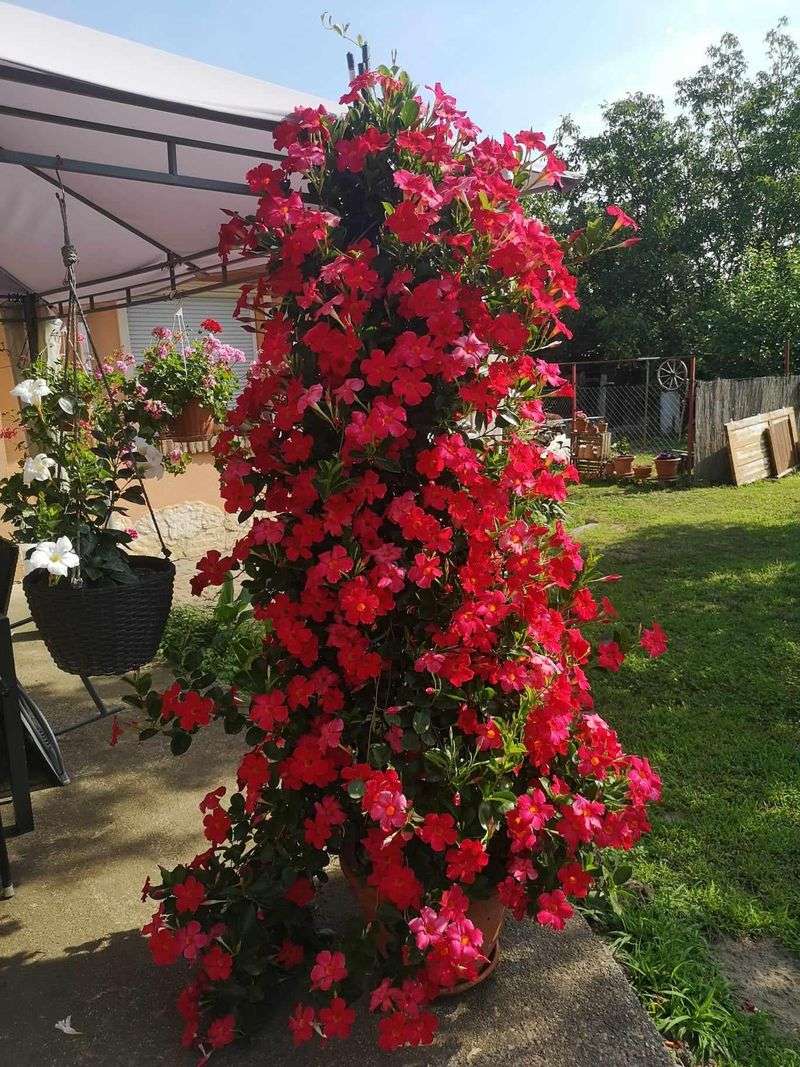
Bare fence panels with a struggling mandevilla at the base are often a sign that something is off at the root level, and in Florida’s July rainy season, poor drainage is one of the most common culprits.
Mandevilla can grow in a variety of soil types, but it does need good drainage to stay healthy.
Roots sitting in waterlogged soil can become stressed, which slows growth and reduces the vine’s ability to climb and fill the fence.
Florida’s sandy soils actually drain well on their own in many areas, but spots near fences can be tricky.
Runoff from the fence, compacted soil along the fence line, and thick mulch that stays packed and wet can all create drainage issues even in an otherwise well-draining yard.
Your Florida Garden Changes Every Week. Your Plan Should Too.
Gardening in Florida changes quickly throughout the season. Every Friday you’ll receive a simple weekly plan showing exactly what to plant, prune, fertilize, harvest, and protect so you never miss the right timing.
If water tends to pool near the base of your mandevilla after a summer storm, that is a sign the drainage needs attention before the next round of heavy afternoon rain rolls in.
Improving drainage can be as simple as loosening the soil around the base of the plant, adding a layer of coarse mulch that allows water to move through, or raising the planting area slightly.
Container-grown mandevilla should always be in a pot with drainage holes, and the saucer underneath should not hold standing water for extended periods.
Good drainage gives the roots a healthy environment to support strong climbing growth through Florida’s wet summer months.
3. Water Regularly Without Keeping It Soggy
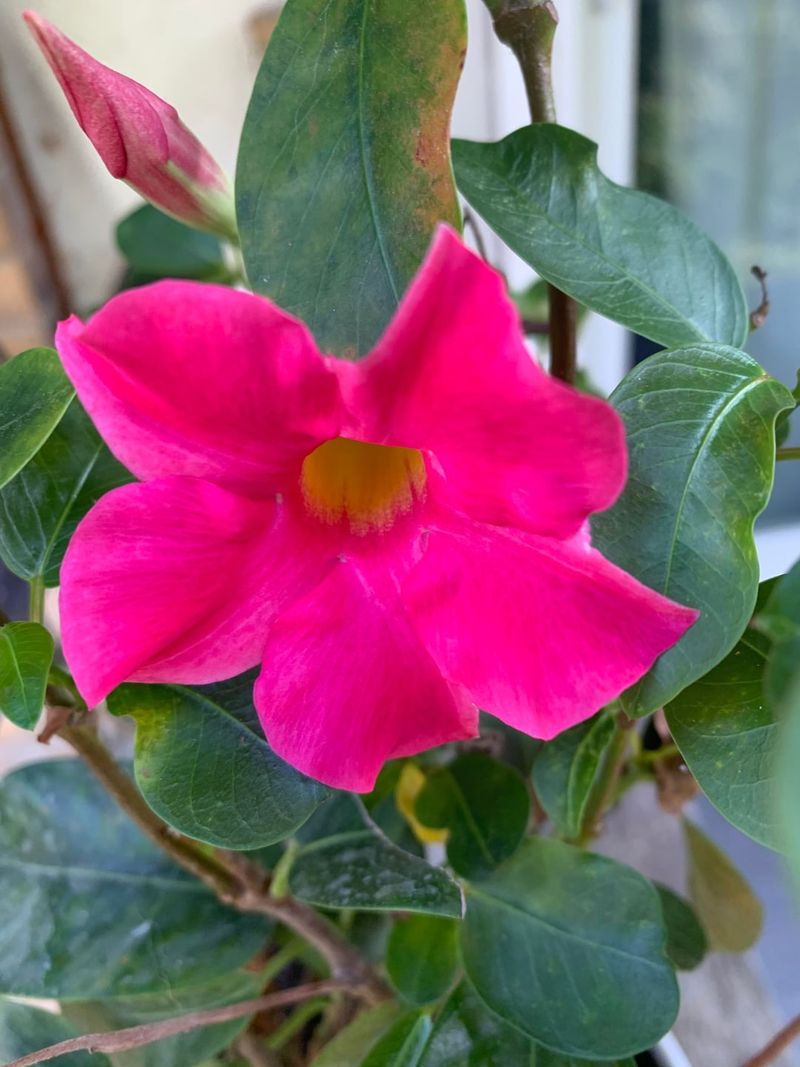
Checking soil moisture before reaching for the hose is one of the most useful habits a Florida gardener can build in July.
Mandevilla needs regular watering to support its active summer growth, but soggy soil is just as harmful as dry soil when it comes to keeping the roots healthy.
During Florida’s rainy season, it is easy to overwater without realizing it simply because the schedule does not account for how much rain already fell this week.
A simple finger test works well here. Push your finger about an inch into the soil near the base of the vine.
If it still feels moist, hold off on watering for another day and check again. If it feels dry, go ahead and water thoroughly so moisture reaches the root zone.
The goal is consistent moisture without the soil staying wet between waterings, which can stress the plant and slow the growth you are counting on for fence coverage.
Container-grown mandevilla on a Florida patio may need more frequent watering than in-ground plants because pots dry out faster in the heat. During weeks with heavy afternoon storms, you may barely need to water at all.
During drier stretches, more frequent checks keep the vine from getting stressed. Steady, thoughtful watering through July supports healthy root development and gives the vine the energy it needs to keep sending stems up and across the fence.
4. Fertilize Regularly During Active Growth
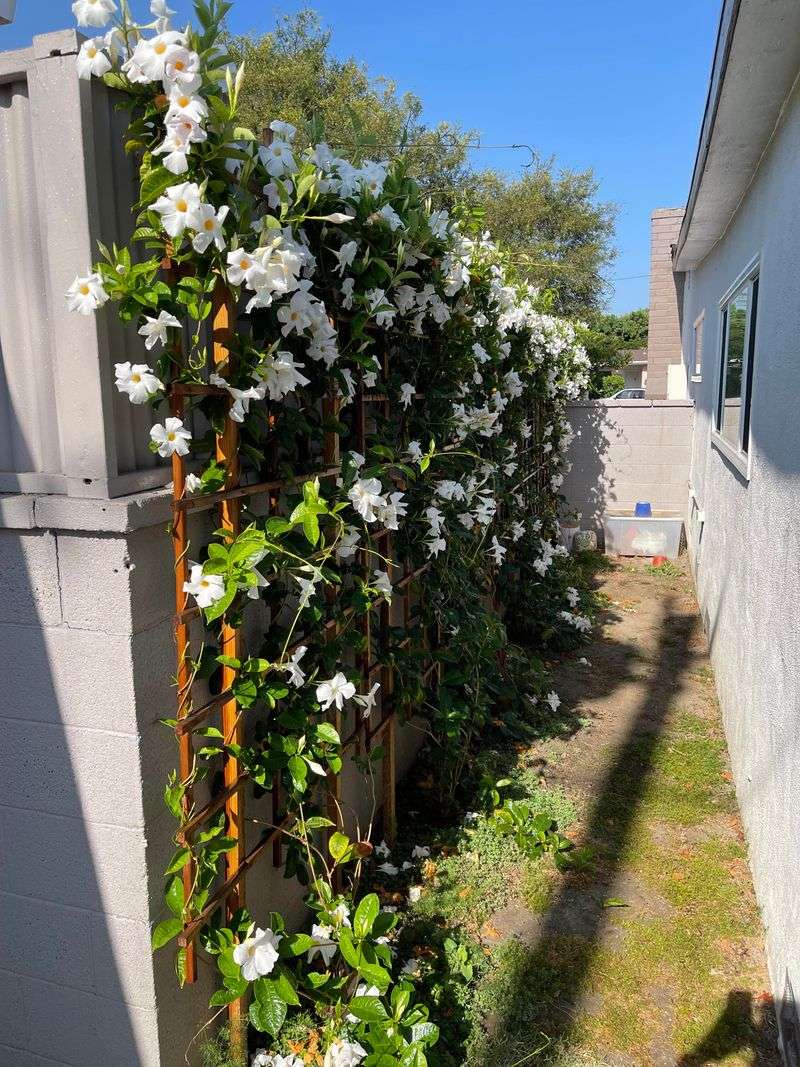
A mandevilla climbing a Florida fence in July is working hard, and regular fertilizer helps it keep up that pace. During active summer growth, mandevilla benefits from consistent feeding that supports healthy stems, glossy leaves, and steady flower production.
Without enough nutrients, the vine may slow down, produce fewer blooms, and look thinner along the fence than you would like.
A balanced fertilizer or one slightly higher in phosphorus can support both root development and flowering.
Slow-release granular fertilizers applied every few months work well for in-ground plants, while liquid fertilizers applied more frequently can suit container-grown mandevilla on a patio or deck near the fence.
Whatever product you choose, following the label directions carefully helps avoid overfeeding, which can push leafy growth at the expense of flowers.
One thing worth keeping in mind is that fertilizer is not a fix-all solution.
If a mandevilla is struggling because of poor drainage, too much shade, or inconsistent watering, adding more fertilizer will not solve the underlying problem and may add unnecessary stress to already strained roots.
Get the basics right first, and then use regular feeding to support a vine that is already in reasonably good shape.
A healthy, well-fed mandevilla in a Florida summer has the energy to push new stems outward and upward, which is exactly the kind of growth that starts filling in those bare sections of fence over time.
5. Train Stems Onto A Sturdy Fence Support
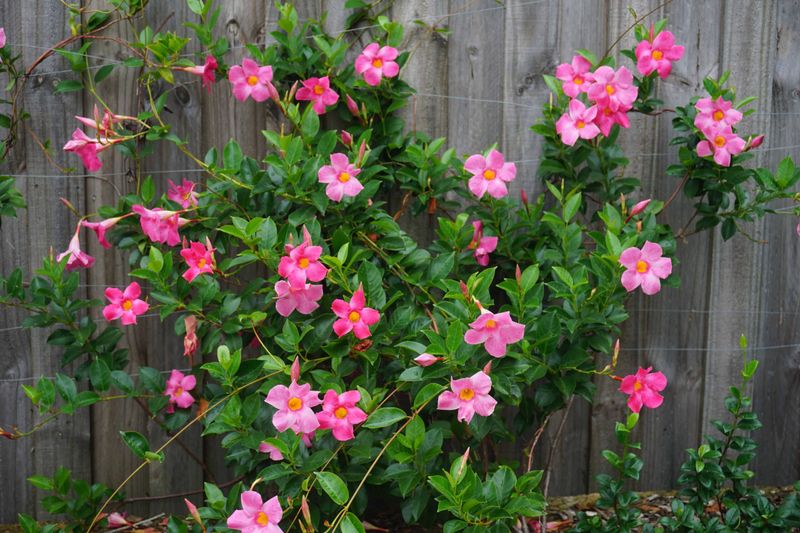
A flat wooden privacy fence can look like the obvious place to grow a mandevilla, but the vine may not grip a smooth surface on its own the way some climbing plants do. Mandevilla is a twining vine, meaning it wraps its stems around whatever is nearby to climb.
Without something to grab onto, the vine may flop, hang loosely, or grow along the ground instead of rising up and spreading across the fence the way you are hoping.
Adding a trellis, wire grid, lattice panel, or other open support structure directly in front of or attached to the fence gives the vine the grip points it needs to climb naturally.
Even a few horizontal wires strung between fence posts can make a significant difference in how quickly and evenly the mandevilla spreads.
The more contact points available, the more opportunities the vine has to anchor itself and keep moving across the fence.
July is a good time to make sure whatever support you have in place is sturdy enough to handle the weight of a growing vine through the rest of the Florida summer. Mandevilla can get quite heavy when it fills in, especially after rain.
Checking that the support is firmly attached to the fence and not pulling away from the structure is a quick step that prevents bigger problems later.
A well-supported vine has a much better chance of covering the fence evenly rather than bunching up in one area.
6. Pinch New Shoot Tips For Fuller Growth
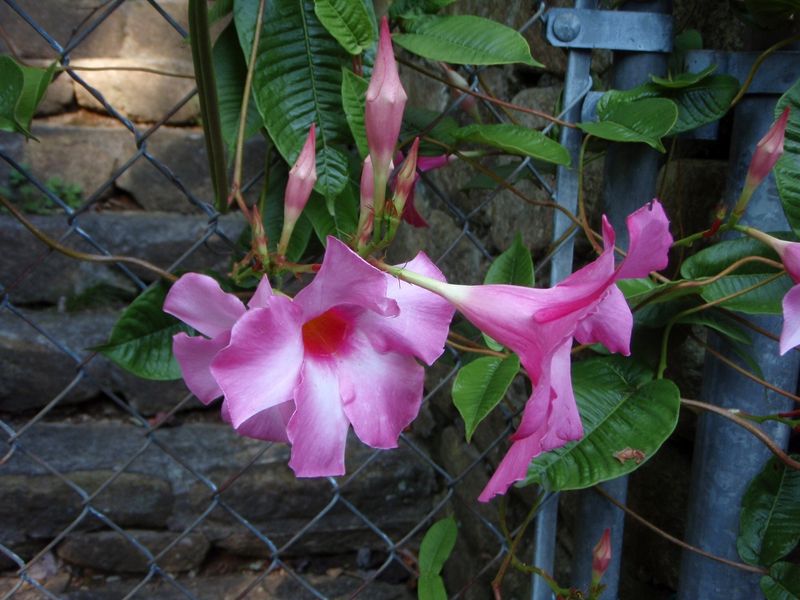
Stringy, single-stemmed vines that reach upward without branching are a common complaint from Florida gardeners trying to get mandevilla to fill a fence.
The good news is that a simple technique called pinching can help change that growth pattern without any special tools or products.
Pinching means using your fingers or small clean scissors to remove the very tip of a new shoot, just above a leaf node, which encourages the plant to branch out from that point instead of continuing in one long direction.
In July, mandevilla is actively pushing new growth, which makes it a good time to pinch selectively. Each pinched tip can result in two or more new side shoots forming below the cut, gradually giving the vine a fuller, more branched appearance along the fence.
Doing this consistently on the longest, thinnest stems can help fill in gaps and create a denser look over the course of the summer.
The key word here is selectively. Removing too many tips at once can slow down the vine and reduce blooming in the short term, since flowers form on new growth.
A light approach works better than an aggressive one, especially on a vine that is still establishing itself along the fence.
Pinching a few tips every couple of weeks through the summer is a low-effort habit that can gradually shift a sparse, reaching vine into something fuller and more evenly distributed across your Florida fence.
7. Tie Vines Gently As They Climb
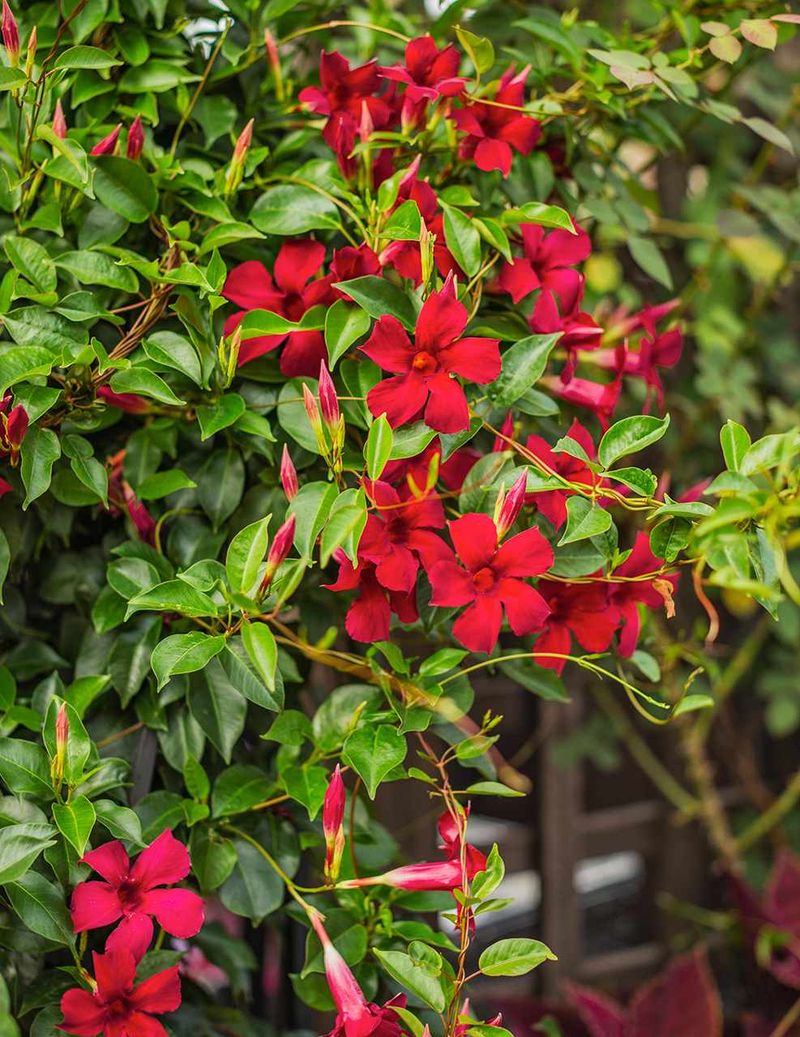
Even with a good support structure in place, mandevilla stems sometimes grow in directions that leave sections of the fence bare while other areas get crowded and tangled.
Guiding the vine with soft ties is one of the most practical ways to encourage even coverage across the fence.
Gently redirecting a stem while it is still young and flexible takes just a moment and can save you from having to work around a stiff, woody stem later in the season.
Soft plant ties, strips of stretchy fabric, or even loosely knotted twine work well for this purpose. The goal is to hold the stem in place against the fence or support without squeezing or constricting it.
A tie that is too tight can cut into the stem as it grows thicker, which can damage the vine and interrupt the flow of water and nutrients to the upper portions of the plant.
Checking your ties every few weeks through July and August is a good habit to build. Florida mandevilla grows quickly during summer, and a tie that felt loose when you first put it on can become tight faster than expected.
As you check the vine, look for stems that have wandered away from the fence and gently redirect them while they are still easy to move.
This kind of regular, light maintenance keeps the vine spreading evenly and gives you much better fence coverage over the course of the growing season.
8. Watch For Milky Sap And Common Pests
Handling mandevilla stems after pruning or pinching can come as a surprise if you are not expecting it, because the plant produces a milky white sap that oozes from cut or broken stems.
That sap can irritate skin and eyes, so wearing gloves when you work with the vine is a sensible precaution.
It is also worth keeping pets and young children in mind around mandevilla, as the sap and plant parts may cause irritation if handled or ingested.
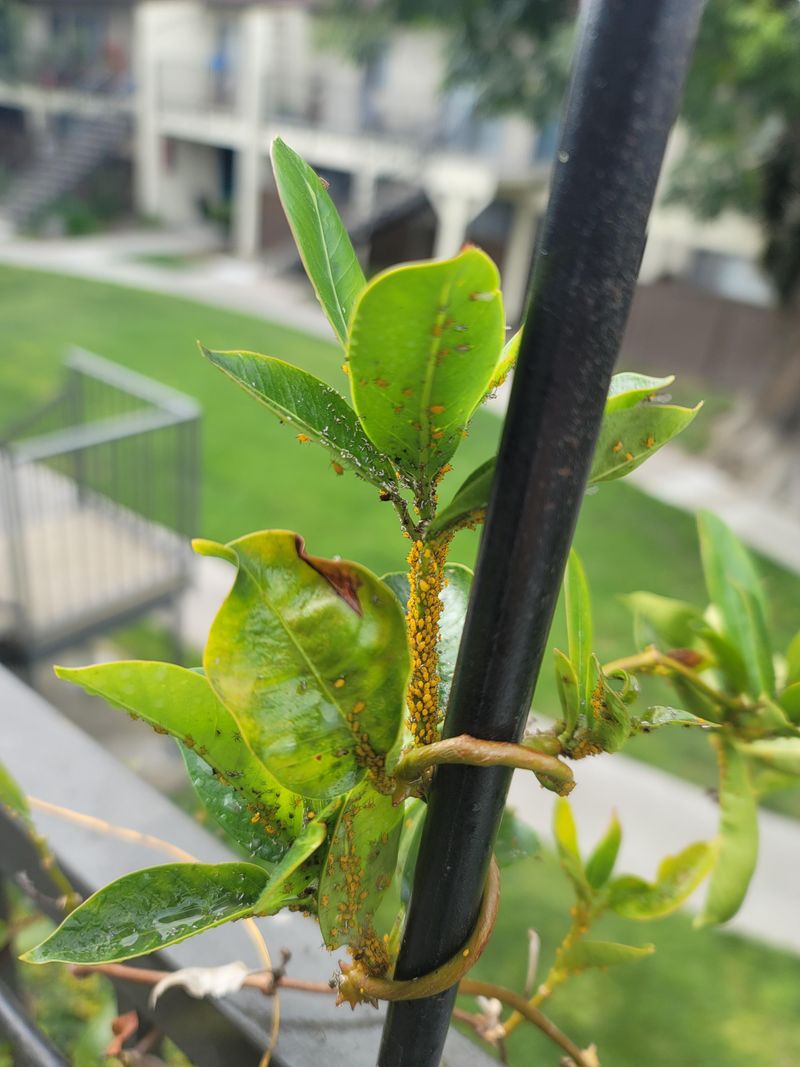
July is also a good month to make pest monitoring part of your regular fence check. Tender new growth and the undersides of leaves are common spots where spider mites, aphids, scale insects, and other pests tend to show up on mandevilla.
Florida’s warm, humid July conditions can allow pest populations to build up quickly on a vine that is putting out lots of soft new growth along the fence.
Catching a pest problem early makes it much easier to manage. A strong spray of water from the hose can knock off aphids and mites before they spread.
For more persistent problems, insecticidal soap or horticultural oil applied according to label directions can help reduce populations without harming beneficial insects more than necessary.
Staying observant as you water, tie, and pinch through July means you are much more likely to spot a small pest issue before it turns into something that sets back the vine’s progress along the fence.