The One Thing North Carolina Zinnias Need In August Or Powdery Mildew Will Take Them Out Before Fall
Zinnias and powdery mildew have a predictable relationship in North Carolina, and August is when that relationship reaches its most destructive point.
The warm days, cooling nights, and humidity that define late summer in this state create conditions where powdery mildew spreads across zinnia foliage faster than most gardeners expect once it gets started.
There is one specific thing zinnias need during this window that directly changes how vulnerable they are to that spread. Plants that receive it come through August and into fall still producing strong color.
Plants that do not start showing the white coating that signals a bloom season ending weeks earlier than it should in a state with as much growing season remaining as North Carolina still has in August.
1. Give Zinnias More Airflow Before August Humidity Builds
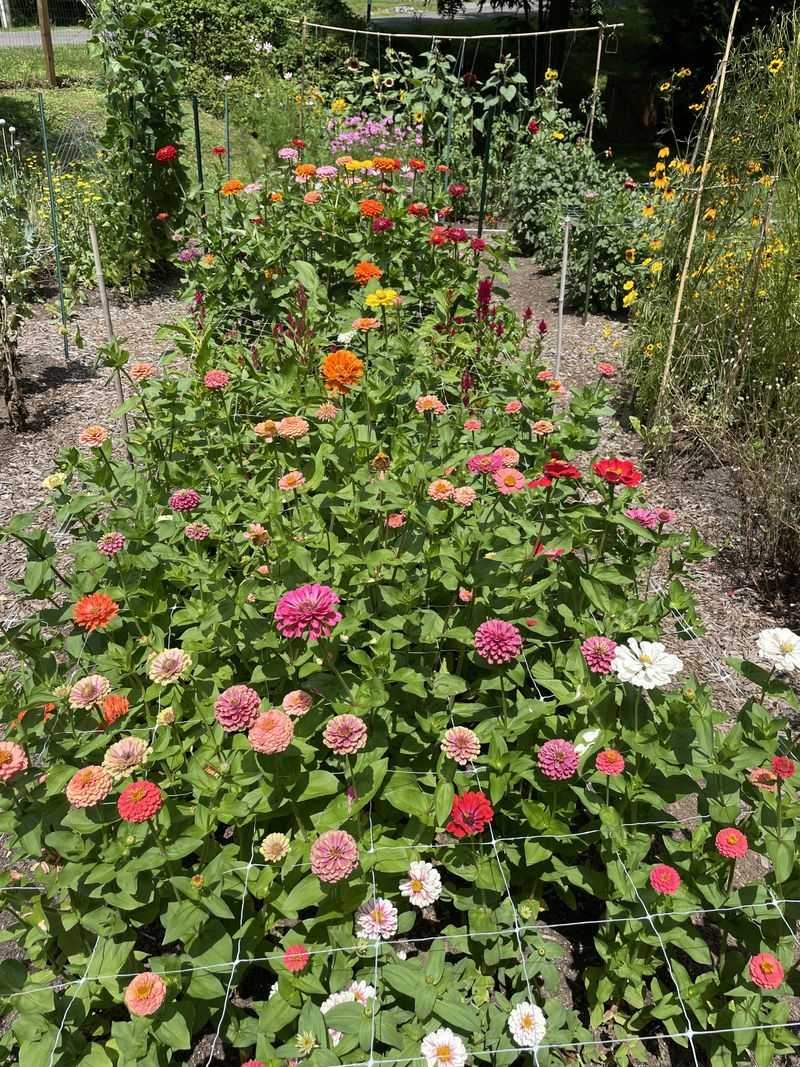
Hot, sticky August air is practically a welcome mat for powdery mildew, and crowded zinnias are the first plants to suffer. When stems grow packed tightly together, air barely moves between the leaves.
That trapped moisture just sits there, and powdery mildew spores love exactly that kind of warm, damp, still environment.
North Carolina summers bring high humidity that can linger for days without a real break. Even on sunny afternoons, the air between crowded plants stays heavy and wet longer than most gardeners realize.
Improving airflow is not complicated, but it does require action before you start seeing white powdery patches on the foliage.
Opening up space between your zinnia stems is one of the most effective moves you can make right now. Walk through your beds and look honestly at how tight the growth has become.
If stems are touching or overlapping, that is your signal to act immediately. Pulling out a few stems or repositioning nearby plants may feel like a loss, but it is actually protecting your entire bed from a problem that spreads fast.
Powdery mildew can move from plant to plant with surprising speed once conditions favor it. Better airflow slows that process down significantly.
Think of it like opening a window in a stuffy room. The plants can breathe, moisture evaporates faster, and the environment becomes far less friendly to fungal spores.
Starting this habit before symptoms appear gives your zinnias the best possible chance of finishing the season looking their absolute best.
2. Thin Crowded Stems So Leaves Can Dry Faster
Picture a bunch of wet umbrellas packed into a narrow closet. Nothing dries out properly, and everything stays damp for hours.
That is almost exactly what happens inside a crowded zinnia plant after a North Carolina summer rain.
Dense stem growth traps humid air deep inside the plant where sunlight and breeze cannot reach. After rain, dew, or even an overhead watering, those inner leaves stay wet far longer than they should.
That extended wetness is a perfect setup for powdery mildew to take hold and spread outward to healthier growth.
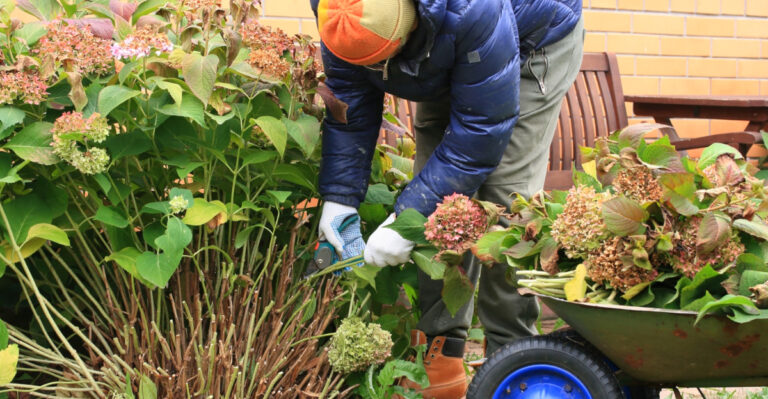
Thinning crowded stems is one of the most practical things you can do for your zinnias in August. Start by removing stems that are crossing over each other, growing inward, or blocking light from reaching the center of the plant.
Your North Carolina Garden Changes Every Week. Your Plan Should Too.
Gardening in North Carolina changes quickly throughout the season. Every Friday you’ll receive a simple weekly plan showing exactly what to plant, prune, fertilize, harvest, and protect so you never miss the right timing.
You do not need to remove a huge amount to make a real difference.
Even pulling out three or four congested stems per plant can dramatically improve how quickly leaves dry after moisture hits them. Faster drying means less time for fungal spores to germinate and establish.
That simple timing difference can be the reason one bed stays clean while another one struggles all the way through September.
Use clean scissors or pruners and make cuts close to the base of the stems you remove. Leaving stubs can create spots where moisture collects and problems begin.
Compost what you remove, tidy up the bed, and notice how much lighter and airier your zinnias look almost immediately after thinning.
3. Water At Soil Level Instead Of Wetting The Leaves
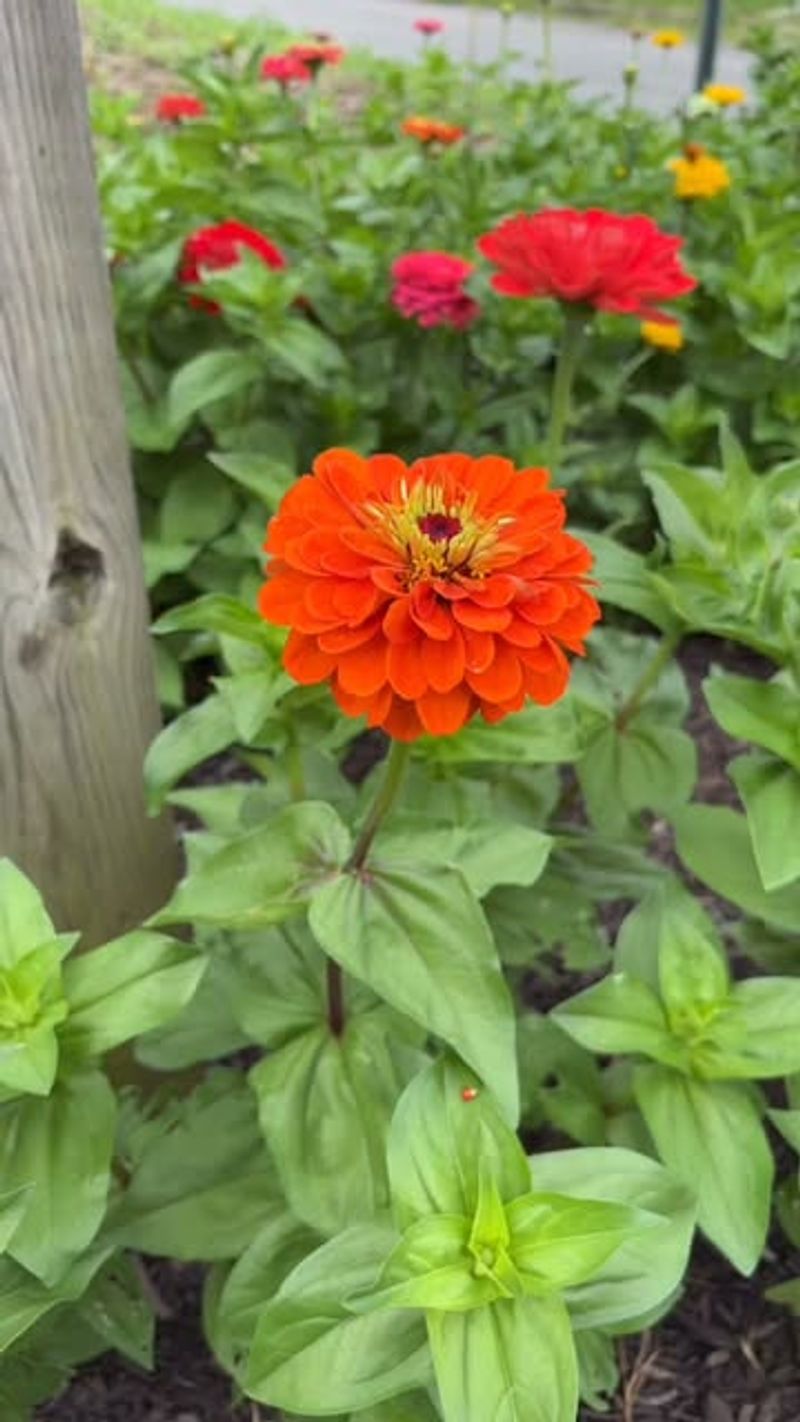
Watering zinnias from above feels natural, especially if you are using a hose or sprinkler, but that habit can quietly work against you all through August.
When water lands on zinnia leaves late in the afternoon or evening, those leaves may stay damp for hours overnight. Powdery mildew thrives in exactly that kind of prolonged surface moisture.
Aiming water directly at the soil around the base of your plants keeps the root zone hydrated without ever touching the foliage.
Soaker hoses and drip irrigation systems are excellent tools for this because they deliver moisture right where it is needed and leave the leaves completely dry.
Even watering carefully by hand with a low-aimed hose nozzle works well if you take your time.
Timing matters just as much as technique. Morning watering is always the better choice because any accidental splash on the leaves has hours of sunlight and warmth to evaporate before nightfall.
Evening watering, especially overhead watering, is the combination most likely to encourage fungal problems in a North Carolina August.
Zinnias actually prefer slightly drier foliage conditions. They are drought-tolerant plants at heart and handle dry leaves far better than they handle consistently wet ones.
Keeping the leaves dry while keeping the roots moist is the balance that supports strong, healthy growth through the end of the season.
One simple switch in your watering routine can reduce powdery mildew pressure noticeably over just a couple of weeks. Soil-level watering is one of the easiest adjustments any gardener can make.
4. Keep Zinnias In The Sunniest Spot You Can
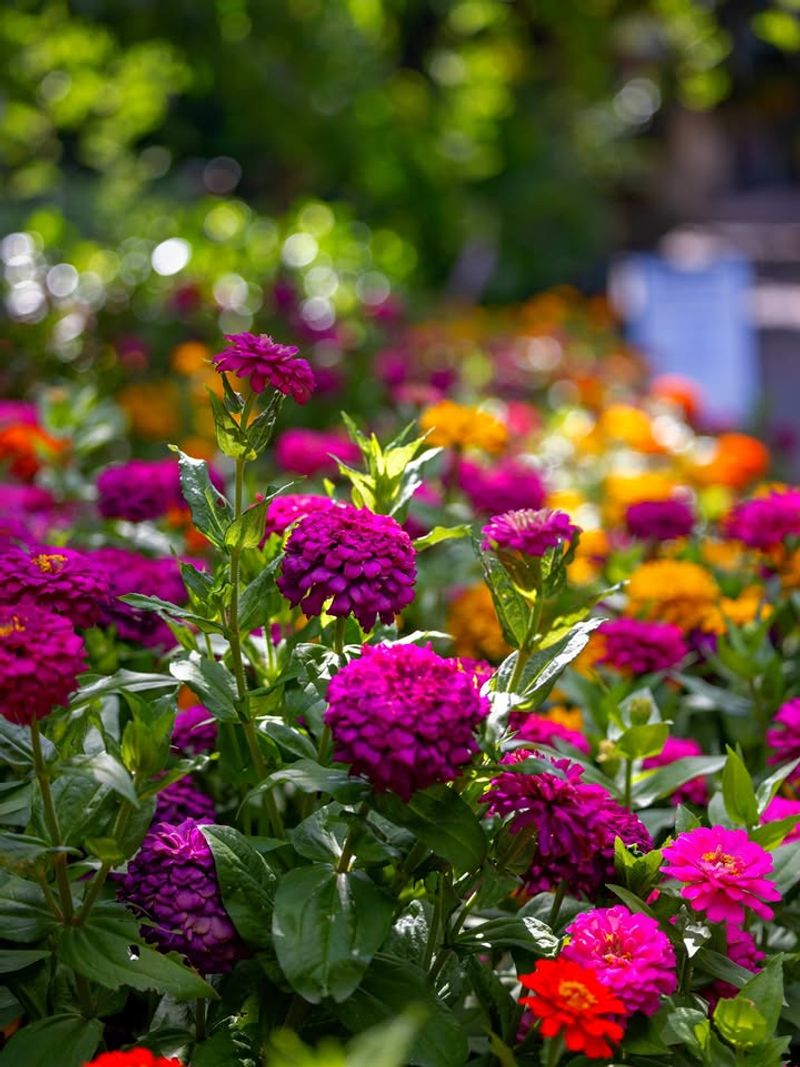
Zinnias are sun lovers through and through, and that preference is not just about producing more flowers. Full sun actually plays a direct role in keeping foliage dry and powdery mildew at bay.
The more direct sunlight your plants receive, the faster moisture evaporates from leaf surfaces after rain, dew, or watering. In North Carolina, a spot that gets six to eight hours of direct sun daily is ideal.
Beds near fences, walls, or large shrubs that cast afternoon shade may look fine in spring, but by August those shaded areas hold humidity longer and create exactly the low-light, damp conditions that powdery mildew favors.
Even partial shade can make a noticeable difference in how quickly problems develop.
If your zinnias are already planted in a less-than-sunny spot, trimming back nearby shrubs or removing overhanging branches can open up more light without moving the plants themselves.
More light equals more warmth, more airflow, and faster leaf drying after moisture events. All three of those factors work together to reduce fungal pressure.
Gardeners who grow zinnias in containers have a real advantage here. Moving a pot from a partially shaded patio into a sunnier position is a quick fix that can genuinely improve plant health within days.
Foliage that dries faster simply gives powdery mildew fewer opportunities to establish.
Full sun also encourages stronger stems, more vibrant blooms, and faster recovery after deadheading. Every reason points in the same direction: the sunniest spot in your yard is always the right spot for zinnias.
5. Remove The Worst Spotted Leaves Early
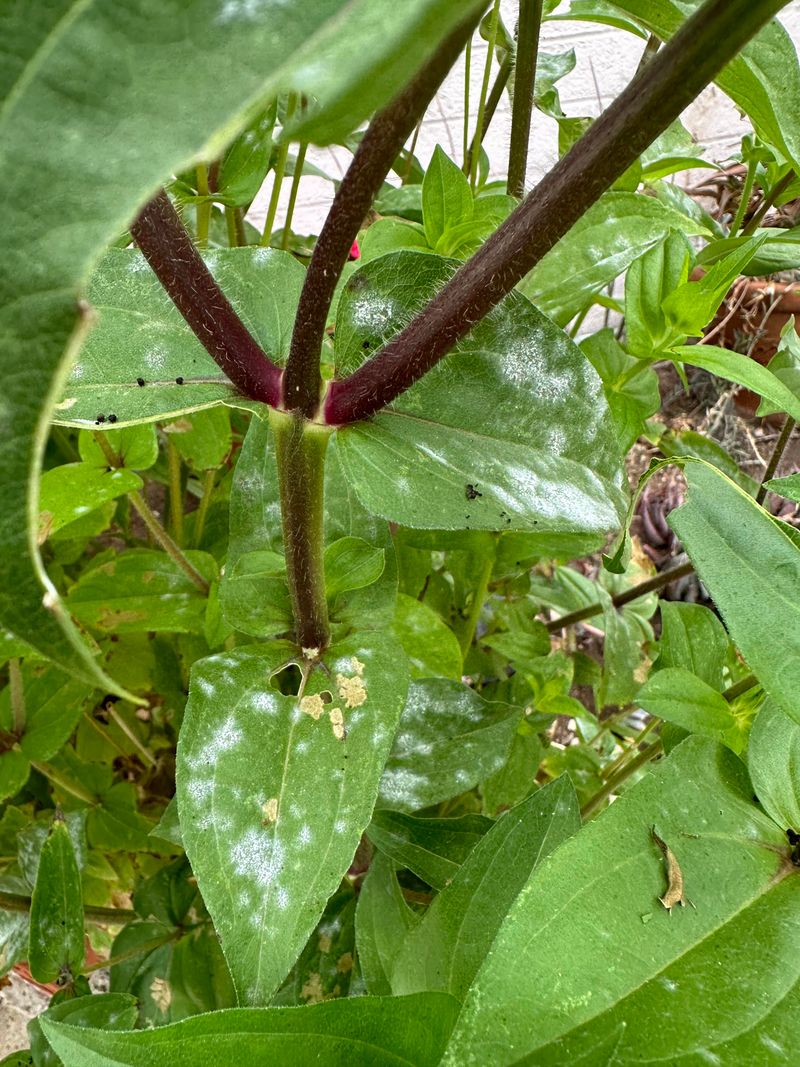
Spotting the first signs of powdery mildew on your zinnia leaves can feel discouraging, but catching it early is actually a huge advantage.
Those first affected leaves are telling you exactly where the problem is starting, and removing them promptly can slow its progress before it spreads across the whole bed.
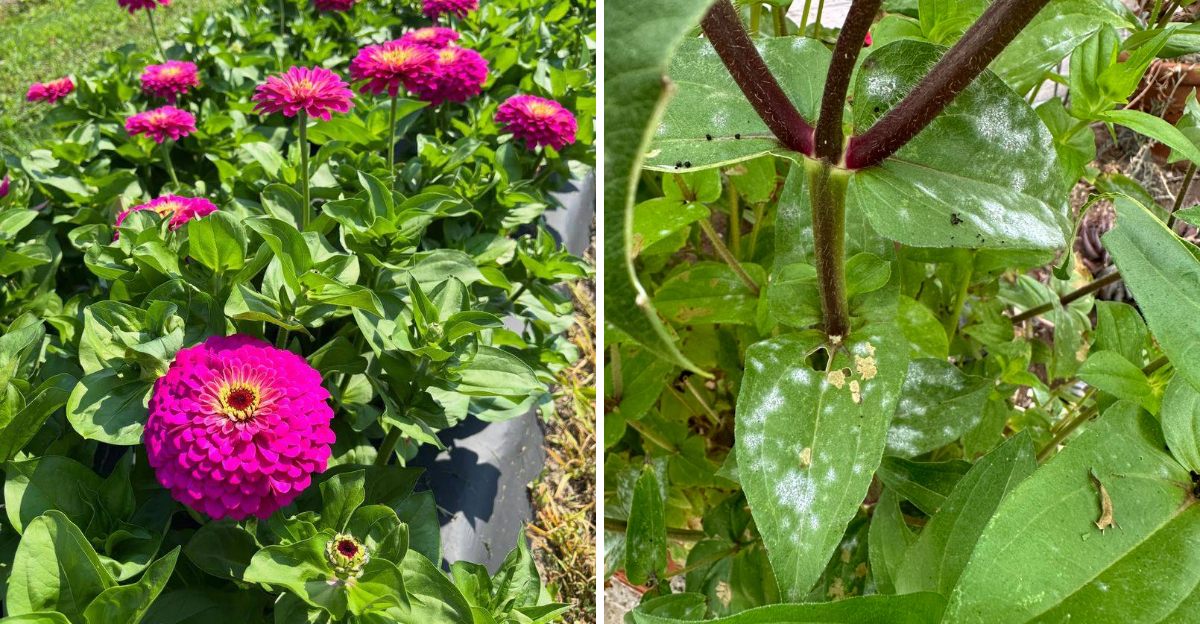
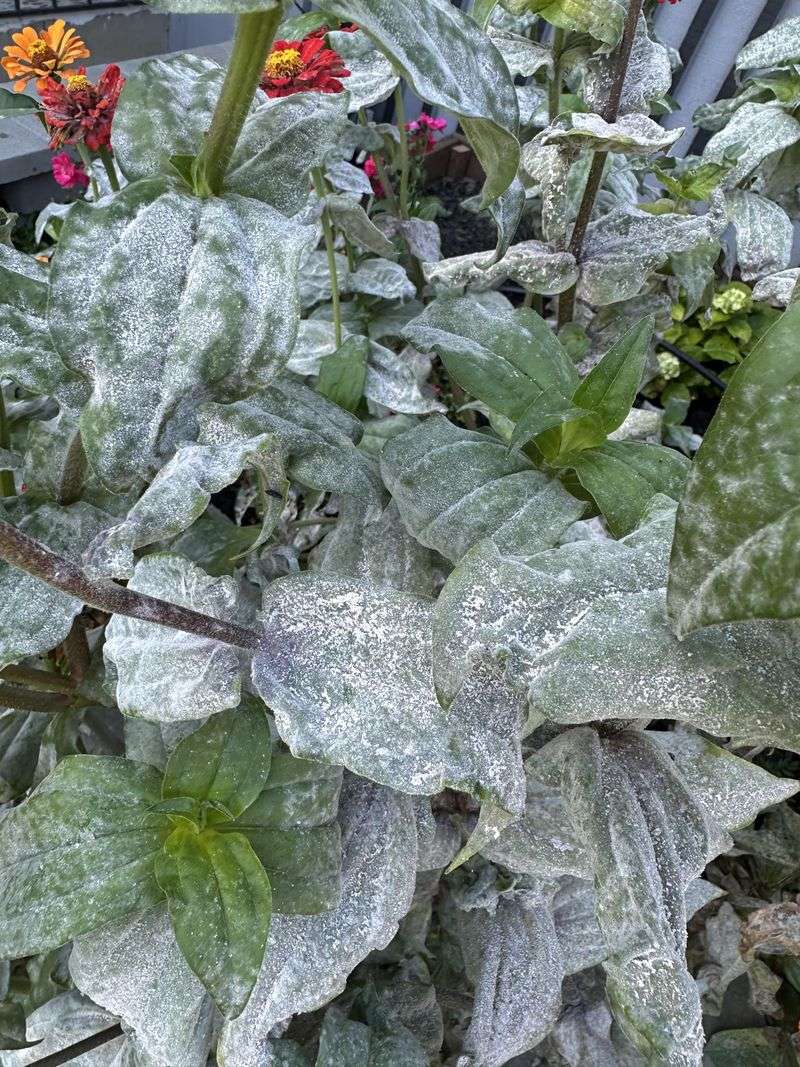
Powdery mildew appears as white or grayish powdery patches, usually starting on older lower leaves or in spots where airflow is weakest. When you see those patches, do not wait and hope the problem resolves on its own.
Pull those leaves off cleanly, seal them in a bag, and put them in the trash rather than composting them. Composting affected material can allow spores to survive and return.
Removing badly spotted leaves does more than just improve the appearance of your plants. It opens up airflow in the areas where crowding was likely contributing to the problem in the first place.
It also gives you a clearer view of the plant so you can monitor whether the issue is getting better or spreading to new growth.
Check your plants every few days during August and remove any new affected leaves as soon as you spot them. This is not about achieving perfection.
It is about staying ahead of a problem that moves faster than most gardeners expect during hot, humid weeks.
Keeping a small pair of pruners in your pocket during garden walks makes this easy to do consistently. Early removal combined with better airflow is a powerful one-two strategy for protecting your zinnias through fall.
6. Do Not Crowd New Zinnias Into Tired August Beds
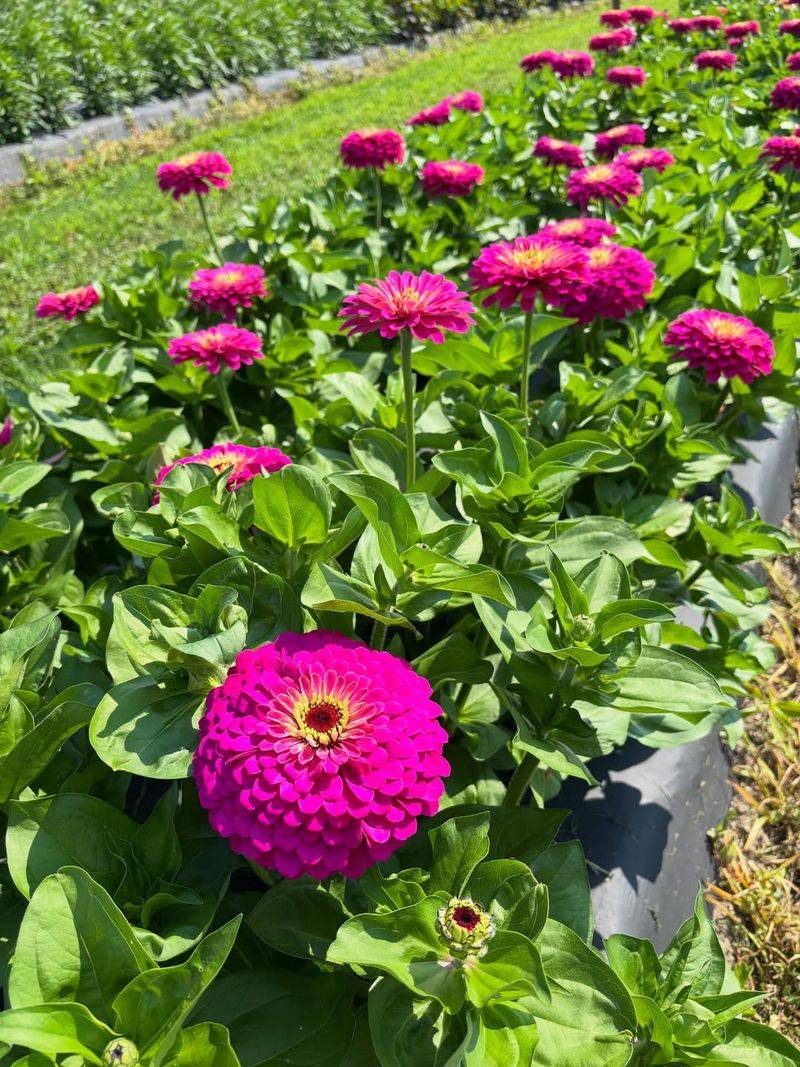
August is tempting. Nurseries still have zinnia transplants available, bare patches in the garden feel frustrating, and the instinct to fill every gap is strong.
However, cramming new plants into an already crowded bed is one of the fastest ways to create the exact airflow problem that leads to powdery mildew taking over before fall arrives.
Every zinnia variety has a mature spread that it will reach regardless of how close you plant it to its neighbors. Most standard zinnias need at least twelve to eighteen inches of space between plants to grow properly and allow air to circulate.
Planting closer than that may look full immediately, but within weeks the plants will be competing for light, space, and airflow in ways that stress them and invite fungal problems.
If you are adding late-season zinnias to replace ones that are struggling, be disciplined about spacing. Plant fewer new starts with proper room rather than many starts packed tightly.
A bed with eight well-spaced, healthy plants will always outperform a bed with twenty overcrowded ones by September.
Also consider what is already in the bed. Existing plants may have spread wider than you realize.
Factor in the mature size of everything already growing there before you decide where new transplants will fit without creating a traffic jam of stems and leaves.
Resist the urge to plant for instant fullness. Planting for airflow and long-term health gives your zinnias the room they need to keep blooming strong and mildew-free right through the first fall cool snap.
7. Choose Better Varieties For Humid Summers Next Time
August powdery mildew is genuinely frustrating, but it also carries a useful message for next year.
Not all zinnia varieties handle North Carolina’s humid summers equally well, and choosing more resistant types at planting time can make a dramatic difference in how your garden looks by late summer.
Some zinnia varieties have been specifically bred for better tolerance of humid conditions and fungal pressure. The Zahara series and Profusion series are two of the most widely recommended options for hot, humid climates.
Both produce abundant flowers on compact plants with noticeably better resistance to powdery mildew compared to many traditional large-flowered varieties.
They may not have the giant blooms of classic zinnias, but they hold up beautifully when August arrives with its full force.
Variety selection is only part of the picture. Even the most resistant zinnia will struggle if it is planted in shade, crowded too tightly, or watered overhead in the evening.
Pairing a resistant variety with good planting practices compounds the benefit and gives you a bed that stays clean and colorful far longer into the season.
Make notes now while the memory of this August is fresh. Write down which varieties struggled most, where the worst problems appeared, and what conditions those spots share.
That information is genuinely valuable when you are choosing seeds or transplants next spring.
Trying one or two resistant varieties alongside your favorites next year is a low-risk experiment with a potentially high reward. One good season with mildew-resistant zinnias often converts gardeners completely, especially after a tough August like this one.
After a hot, humid North Carolina August, the zinnias that finish the season looking their best are almost always the ones that had one thing going for them: good airflow.