Skip Privet Along Your North Carolina Fence Line And Plant This Bird-Friendly Native Screen Instead
That hedge running along your back fence looks solid enough, but there is a good chance it is Chinese privet, and it has already been sending seeds into the woods behind your yard for years. Invasive privet is one of the most persistent shrubs in North Carolina, and pulling it out is only half the job. The other half is replacing it with something that actually earns its place on the fence line, something that feeds birds, holds a screen, and does not jump the property line the way privet does.
Southern Wax Myrtle Fits Many Carolina Fence Lines
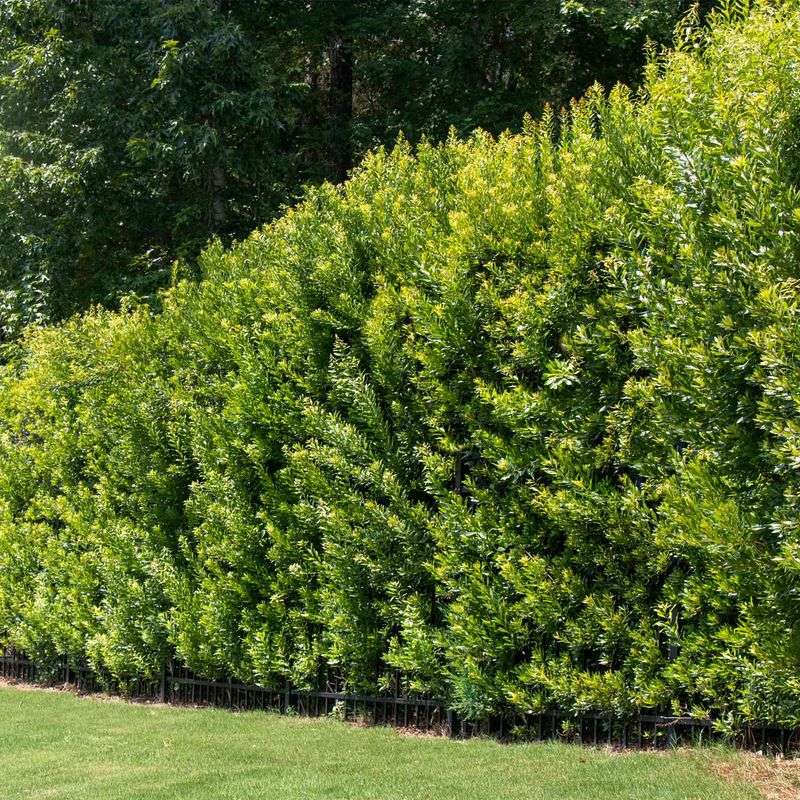
Most privacy shrubs sold at big-box stores are either privet or something clipped into a shape it never wanted to be. Southern wax myrtle, Morella cerifera, is different. You may find it at the nursery under its former botanical name, Myrica cerifera, and the tag might also say wax myrtle, southern bayberry, or candleberry. Whatever the label reads, the plant is a North Carolina native that NC State Extension identifies for privacy screens, barriers, and hedges.
The growth habit is what makes it work. Wax myrtle pushes up in a dense, upright, spreading form, filling a fence line with layered foliage that holds most of its leaves through winter. It grows fast, which matters when you have just ripped out a hedge and your neighbor can suddenly see your patio furniture. At maturity it typically reaches about 20 to 25 feet tall and 8 to 10 feet wide, though most residential plantings stay smaller with occasional shaping.
Give it full sun to partial shade and it will adapt. It handles average to wet soils and, once established, tolerates dry upland conditions too. That range covers a lot of Piedmont clay yards and sandy Coastal Plain lots without special soil work.
The one honest regional limit is cold. Wax myrtle is listed for USDA Zones 7a through 11b, which fits most of the Piedmont and all of the Coastal Plain. Push it into the North Carolina mountains and a hard winter can cause browning, leaf drop, and less dependable evergreen coverage. If your address sits above 2,500 feet, talk to your county extension office before committing to a full row of these.
Identify The Privet Before You Replace It
Not every privet is the same problem. That is worth saying plainly before you start cutting, because the word privet covers a whole group of species, and they do not all behave identically in North Carolina landscapes. The one that deserves the most concern in this state is Chinese privet, Ligustrum sinense.
NC State Extension documents Chinese privet as invasive in North Carolina, and the North Carolina Native Plant Society lists Chinese, Japanese, and glossy privets among the state’s serious invasive threats. Chinese privet spreads two ways at once: it drops enormous quantities of seed that birds carry into surrounding woods, and it sends up suckers from the root system so that cutting the visible stems often just triggers more growth below ground. The result is a dense thicket that shades out native wildflowers, shrubs, and tree seedlings. NC State describes established populations as difficult to eradicate, which is a polite way of saying it fights back.
Your North Carolina Garden Changes Every Week. Your Plan Should Too.
Gardening in North Carolina changes quickly throughout the season. Every Friday you’ll receive a simple weekly plan showing exactly what to plant, prune, fertilize, harvest, and protect so you never miss the right timing.
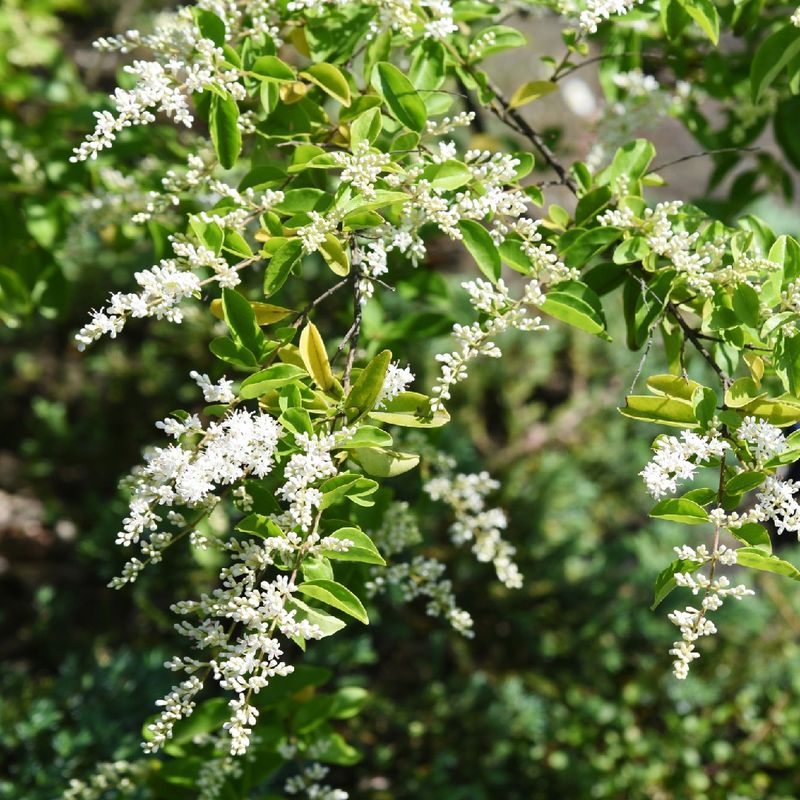
Before you replace your hedge, look at what you actually have. Chinese privet has small, opposite, oval leaves, clusters of small white flowers in spring with a heavy sweet smell many people find unpleasant, and dark berries that ripen in fall. If you are not sure of the species, your local NC State Extension office or a regional invasive-plant group can help you identify it.
Knowing the species matters because removal strategy depends on it. Wax myrtle is a native plant with some spreading behavior of its own, but it is not a nonnative invasive forming impenetrable thickets across the state. The distinction is real, and it changes how you think about the replacement.
The Screen Offers Birds More Than A Green Wall
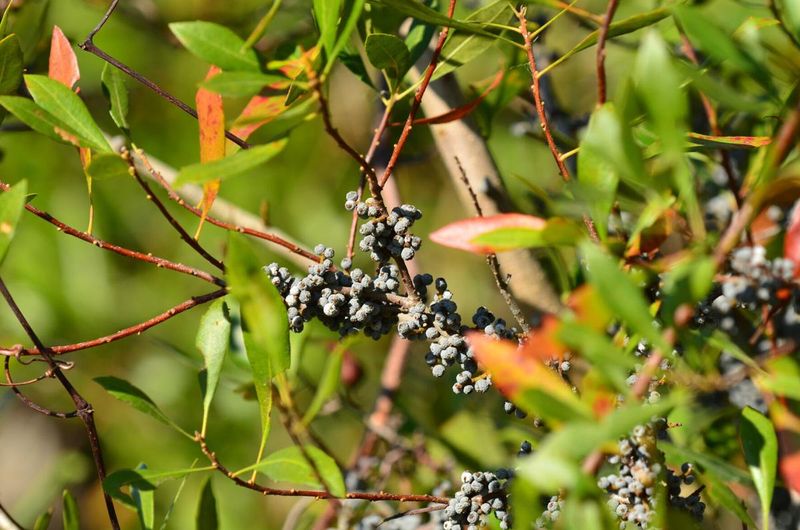
A solid green wall of privet does one thing: it blocks the view. Wax myrtle does that too, but it also runs a kind of neighborhood diner for the birds on your fence line, and the menu changes by season.
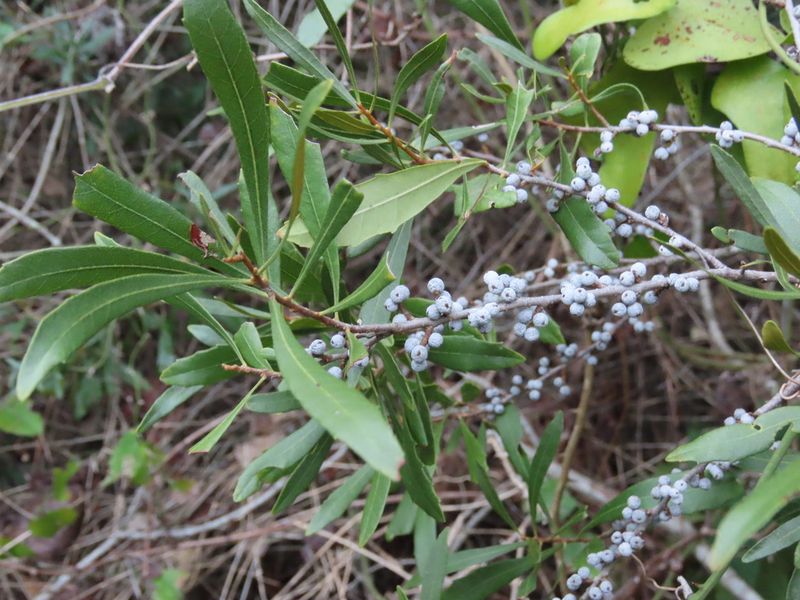
Dense foliage provides cover year-round, which matters to birds that need somewhere to hide from hawks or wait out a cold rain. Flowers open in spring and draw bees and butterflies before most of the yard has woken up. Then, from late summer into winter, female plants produce clusters of small, waxy, blue-gray fruit that yellow-rumped warblers and tree swallows actively seek out. NC State Extension confirms that wax myrtle fruit is eaten by birds and that the plant supports pollinators through its flowers.
Here is where it gets tricky with the berries. Wax myrtle is generally dioecious, meaning male and female flowers grow on separate plants. A row made entirely of male plants will not produce a single berry. Ask your nursery whether the plants are sexed and whether you are getting both sexes.
Some nurseries sell unsexed plants, which means you are taking your chances. Plan for at least one male among your females, and if fruit production matters to you, get that answer before you pay.
The wildlife value goes deeper than fruit. A residential-landscape study on Carolina chickadees found that yards dominated by nonnative plants had fewer arthropods and lower reproductive success than yards with more than 70 percent native plant biomass. That finding comes from a specific study context, not a promise for every North Carolina yard, but it points to something real: native plants can support more of the insects that insect-eating birds need to raise young, and that matters more than the berries alone.
Remove Invasive Privet And Plan For Follow-Up
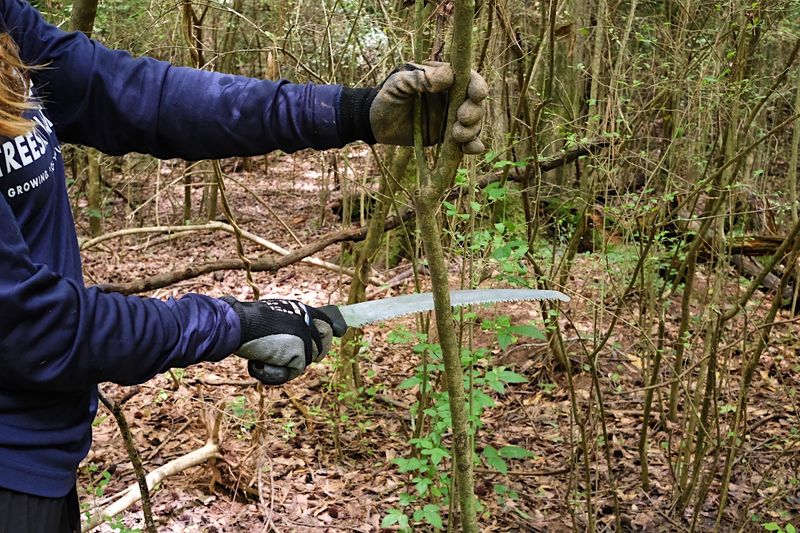
Pulling out the visible hedge is the satisfying part. You can see the progress, the fence line opens up, and it feels like the problem is solved. But with Chinese privet, the visible plants are only part of what you are dealing with.
Established Chinese privet can regenerate from root fragments and send up new suckers after cutting. Seeds already on the ground or in nearby soil can sprout for years. Thorough removal reduces ongoing spread and opens room for your replacement planting, but it does not guarantee eradication. Plan to walk that fence line every spring and fall for at least two to three years, pulling seedlings as soon as you spot them and cutting suckers close to the ground.
Catching them small is far easier than letting them re-establish.
For a modest hedge that has not spread far, you can cut stems at the base and dig out as much of the root system as practical. Remove the cut material from the property rather than composting it, since berries in the pile can still sprout. NC State Extension documents Chinese privet as difficult to control once established, and the North Carolina Native Plant Society recommends species-specific guidance for larger infestations. If your privet has spread well beyond the fence into a wooded area, contact your local NC State Extension office or a regional invasive-plant program before proceeding.
They can advise on appropriate removal methods for your specific situation without you guessing at herbicide rates from an article.
Removing the privet is the right first move. Just go in knowing you are starting a process, not finishing one.
Give Wax Myrtle Enough Room To Become A Screen
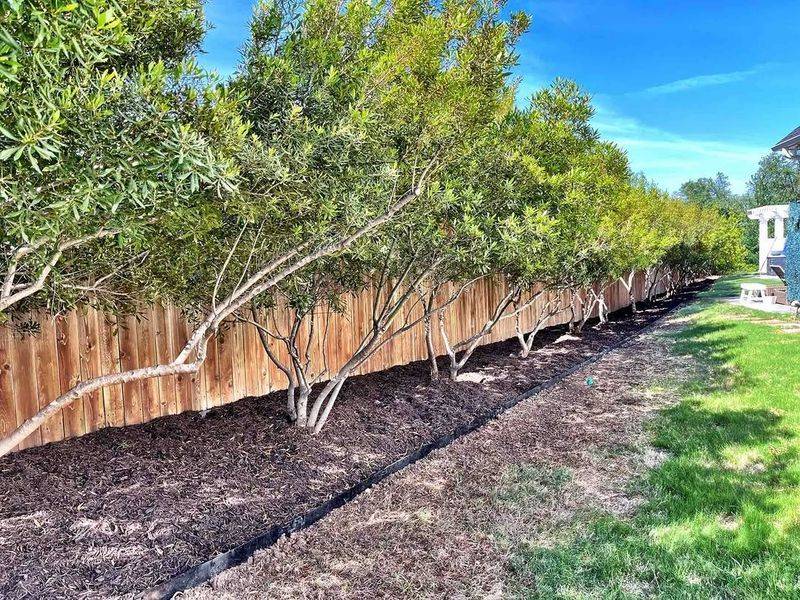
A mature wax myrtle is not a narrow boxwood. At full size it can reach 20 to 25 feet tall with a spread of 8 to 10 feet, and that width is the number most people underestimate when they are standing in the nursery holding a 3-gallon pot.
For a fuller screen, spacing plants approximately 8 to 10 feet on center is a reasonable starting point based on that mature width. NC State Extension lists an available planting space of 6 to 12 feet, and Mississippi State Extension lists 10 to 15 feet as a general spacing range for southern waxmyrtle. Those ranges reflect different site conditions, cultivars, and pruning goals. The honest advice is to check the mature dimensions on the nursery tag for the specific plant or cultivar you are buying before you decide how far apart to dig your holes.
Before you plant a single one, walk the fence line with a tape measure. Check where property lines actually fall, where gates swing open, where utility corridors run, and whether a septic system or drain field is nearby. Sidewalks and neighbor access matter too. NC State Extension recommends planning for mature plant dimensions before installation, not after the screen has grown into the gate latch.
Piedmont clay and sandy Coastal Plain soil also respond differently to a new planting. Clay holds moisture but compacts easily. Sandy soil drains fast and dries out between rains. Both situations are manageable, but they call for different attention during establishment, and that is the next part of the job.
Plant In North Carolina When Conditions Favor Establishment
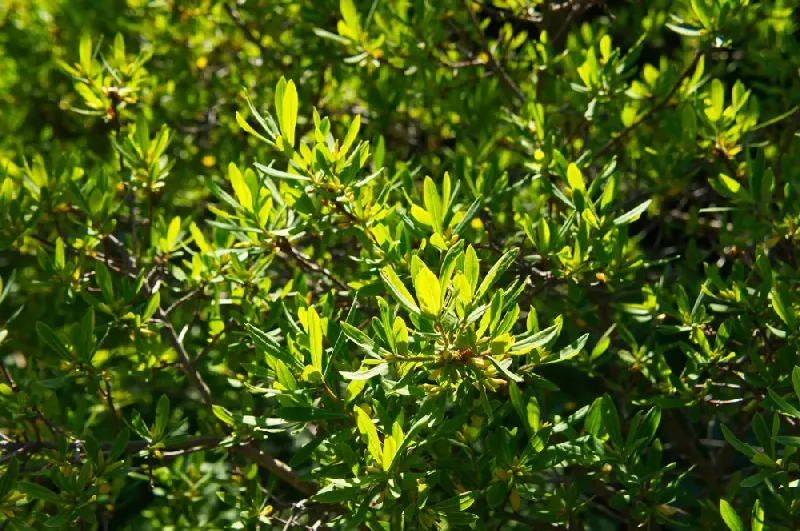
Fall is often a good time to plant woody shrubs in North Carolina. Cooler air temperatures reduce stress on new transplants while soil is still warm enough for roots to grow, giving plants a head start before the following summer arrives. That said, local conditions and severe-winter exposure matter. A plant set out in October along an exposed Piedmont ridgeline faces different risks than one tucked against a south-facing fence on the Coastal Plain.
Use fall as a general guide and adjust for your specific site.
NC State Extension advises keeping new native plants well watered during the first weeks after planting, with supplemental irrigation during hot, dry periods as needed. For wax myrtle, that first-year watering commitment is not optional. NC State notes that wax myrtle does best with consistent moisture during establishment, even though it becomes more drought-tolerant later on.
Water thoroughly right after planting, then keep the root zone consistently moist through the first weeks and through the following summer. A new plant sitting beside a hot metal fence, a concrete driveway, or a south-facing wall absorbs extra heat and dries out faster than you expect, especially in sandy Coastal Plain soil where water moves through quickly. Plan to check soil moisture rather than running on a fixed schedule.
Apply about 2 to 3 inches of organic mulch over the root zone, and NC State Extension recommends keeping mulch at least 6 inches away from the trunk or crown to prevent rot and pest problems. Mulch holds moisture, moderates soil temperature, and reduces competition from weeds during the months when your new screen needs every advantage it can get.
Prune Lightly And Respect The Fire-Safety Boundary
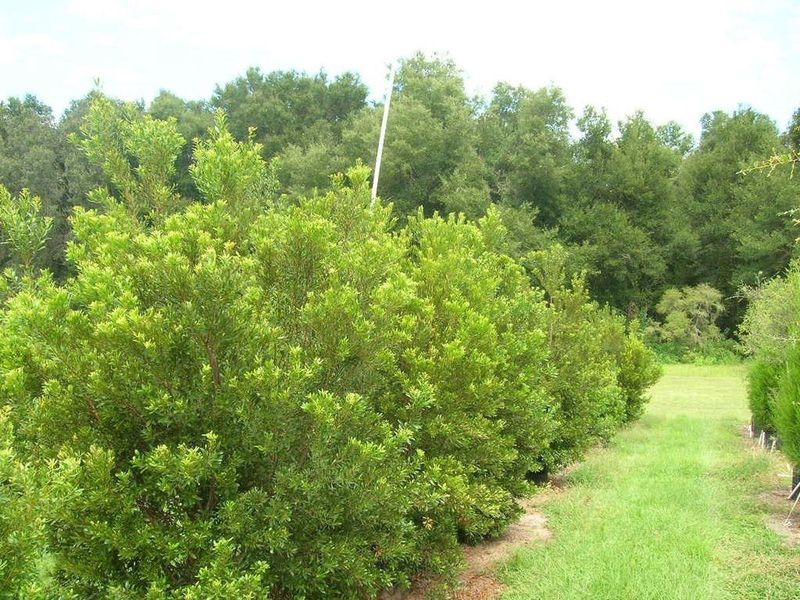
Wax myrtle grows fast, and that growth can tempt you to reach for the hedge trimmer and cut it into a neat green rectangle. That approach works against you in two ways. First, NC State Extension notes that next season’s fruit appears on old growth, what gardeners sometimes call old wood. Shear it hard and you remove the branches that would have carried berries, which defeats the point of planting a bird-friendly screen in the first place.
Light pruning or selective limbing keeps the plant’s natural, layered form intact. Remove crossing branches, lift the canopy a bit if you need clearance underneath, and shape the sides gently rather than cutting flat across the top. If fruit production matters to your plan, confirm before pruning season that you have both male and female plants in your row. No female plants, no berries, no matter how carefully you prune.
Wax myrtle can also sucker from the base and spread slowly outward. That is worth watching. Pull or cut suckers that move beyond your intended planting area, especially if they head toward a neighbor’s yard or a garden bed you want to keep clear. Native status does not mean unmanaged.
Now for the fire-safety piece, and this one is non-negotiable. NC State rates wax myrtle as highly flammable. The aromatic compounds in its leaves, stems, and branches burn readily. Do not plant it directly against your house, deck, propane tank, or any structure where wildfire exposure is a concern.
Keep it outside the home’s defensible space. For most suburban fence lines set well away from structures, the placement is fine. But if your property sits in a fire-prone area or your fence runs close to a deck or outbuilding, check your local wildfire guidance before you plant.
Build A Layered Bird Habitat Beyond The Hedge
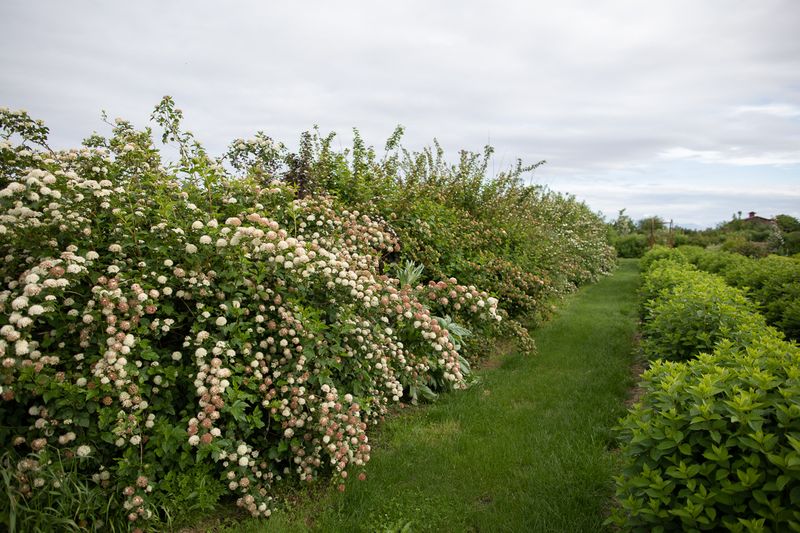
One row of wax myrtle is a good start, not a finished habitat. Think of the hedge as the back wall of a room you are still furnishing. The screen provides cover and winter fruit, but birds need food and shelter across every season, and a single species of shrub cannot cover all of that on its own.
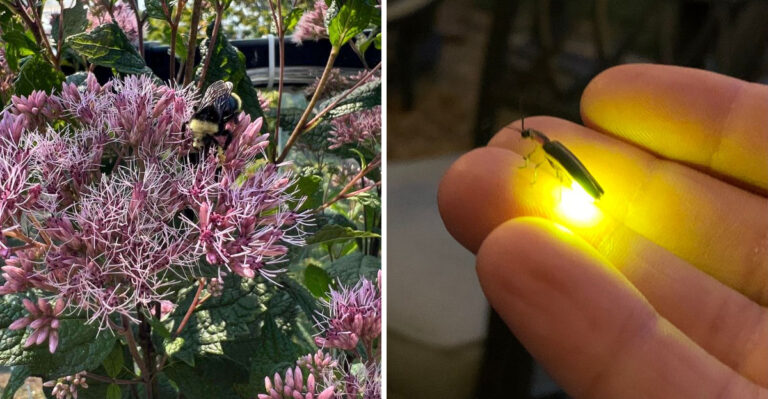
Audubon connects native plantings with fruit, caterpillar habitat, nectar, and cover across different seasons, and the practical takeaway is that variety matters more than volume. A border that mixes wax myrtle with native flowering plants like goldenrod, Joe Pye weed, and native asters adds seed heads in fall, nectar in late summer, and insect habitat throughout the growing season. Low native cover at the base, a groundcover or a low shrub layer, gives ground-feeding birds somewhere to scratch and hide.
The Carolina chickadee research mentioned earlier found that yards with more than 70 percent native plant biomass supported more arthropods and better reproductive success than yards dominated by nonnative plants. That result came from a specific study, not a guarantee for every North Carolina fence line, but the direction is clear: more native plant diversity tends to support more of the food web that birds actually depend on.
Replace the invasive hedge thoughtfully, leave real room for mature growth, and monitor that fence line for privet resprouts every spring. Add native layers in front of the screen over time, even one or two plants per season, and the habitat improves steadily without requiring a complete overhaul. The fence line that once fed an invasive thicket can genuinely become one of the most productive edges in your yard, and that is a trade worth making.