These Two Plants Often Confuse Texas Gardeners (Here Are The Major Differences)
Every Texas gardener has had that moment of standing in the garden and genuinely not being sure what they’re looking at. Elderberry and pokeweed are two plants that cause this confusion more than almost any other pairing in the Texas landscape.
They share a striking visual similarity at certain stages of growth, and even experienced gardeners occasionally do a double take when they encounter one in the wild or in their yard. But the differences between these two plants matter enormously.
One is a beloved native shrub with edible berries, valuable wildlife habitat qualities, and a long history of medicinal and culinary use. The other is toxic, capable of causing serious harm to humans and pets, and needs to be handled with care and respect.
Treating one like the other is not just a gardening mistake. In some cases, it can be a dangerous one. Once you know what to look for, telling them apart is actually quite straightforward.
Here’s how to tell elderberry from pokeweed once and for all, and why getting it right matters so much.
Elderberry Grows As A Persistent Woody Shrub
Walk past an American elderberry in late summer and you might be surprised by how established it looks. Unlike many wildflants that disappear after a single season, elderberry puts down real roots and builds a lasting presence in the landscape.
It is a multi-stemmed native shrub that spreads outward over time, forming wide colonies that can fill a ditch bank or woodland edge.
The mature stems of elderberry become noticeably woody as the plant ages. They turn grayish brown, develop a rough texture, and stay standing all through the winter months even after the leaves have dropped.
That woody persistence is one of the first clues that you are looking at elderberry rather than pokeweed.
New growth tells a slightly different story. Fresh shoots are green and soft, and if you cut one open, you will find a pale, spongy pith running through the center.
That pithy core is a well-known identifying feature among plant enthusiasts. Elderberry thrives in moist environments across Texas. You will commonly find it growing near streams, drainage ditches, low-lying areas, and the shaded edges of woodlands.
It prefers spots where the soil stays consistently damp but not waterlogged. Native pollinators absolutely love it, and birds flock to the ripe berries every season.
Gardeners who want to encourage elderberry on their property should know that it spreads through both seeds and underground root suckers. Once established, a colony can expand steadily year after year without much help.
That persistence is part of what makes elderberry such a reliable and recognizable plant across the Texas landscape.
Pokeweed Returns Each Spring From A Large Taproot
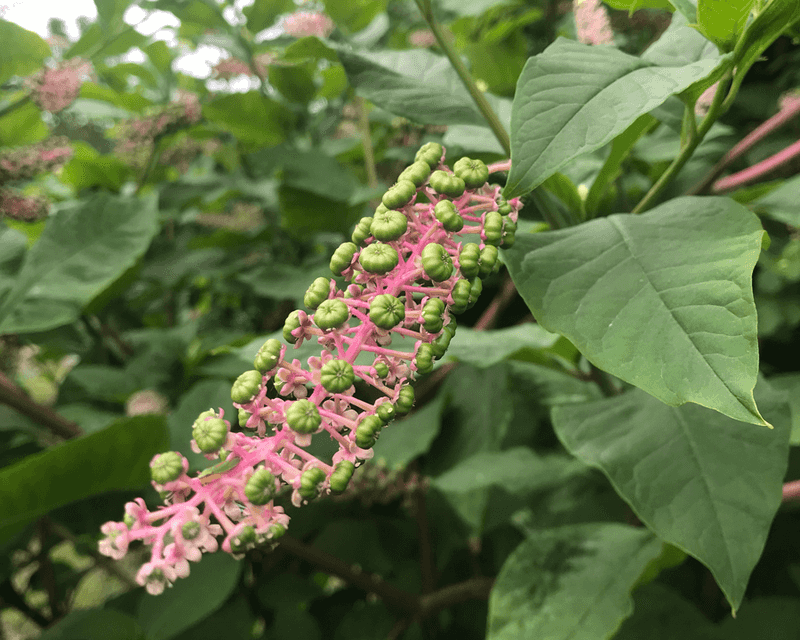
There is something almost dramatic about the way pokeweed shows up each spring. One week the ground looks bare, and the next, thick green shoots are already pushing upward with impressive speed.
Pokeweed is a herbaceous perennial, which means its aboveground stems are soft and fleshy rather than woody, even when the plant reaches towering heights.
Your Texas Garden Changes Every Week. Your Plan Should Too.
Gardening in Texas changes quickly throughout the season. Every Friday you’ll receive a simple weekly plan showing exactly what to plant, prune, fertilize, harvest, and protect so you never miss the right timing.
During a single growing season, pokeweed stems can shoot up several feet tall. The plant can easily reach eight to ten feet under the right conditions, which makes it one of the most imposing wildplants in the Texas landscape.
Those thick, hollow stems are smooth and often develop a purplish tint as the season progresses.
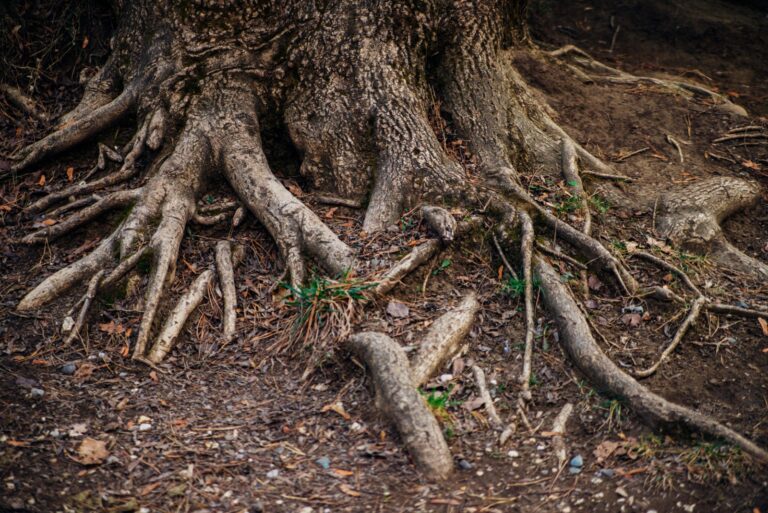
When freezing weather arrives, the entire aboveground portion of the plant collapses and breaks down. But underground, a massive taproot survives completely intact.
That root can grow to an enormous size over the years, sometimes resembling a large parsnip or small log buried just beneath the soil surface.
Because that taproot stores so much energy, pokeweed bounces back stronger every spring. Gardeners who try to remove it by cutting the stems will find the plant returning reliably the following year.
Getting rid of an established pokeweed plant requires removing as much of the taproot as possible, which can be a real challenge in hard or rocky soil.
Understanding this growth habit helps explain why pokeweed can be so persistent in a garden bed or along a fence line. It is not just a weed that blew in on the wind.
It is a deeply rooted perennial with serious staying power, and Texas gardeners should plan accordingly when they spot it.
Elderberry Has Opposite Compound Leaves And Broad Flower Clusters
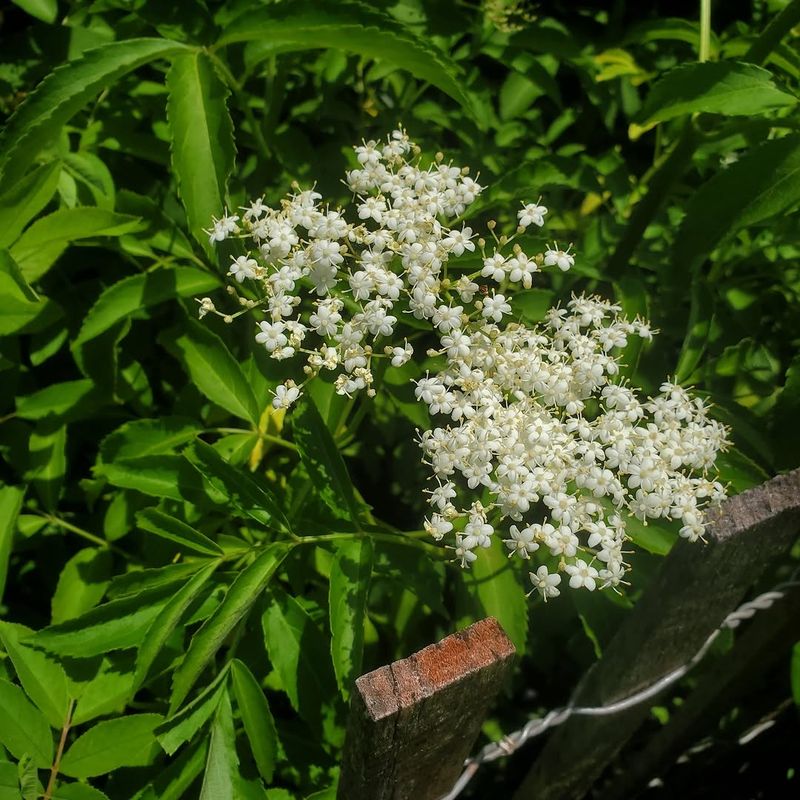
Leaf arrangement might sound like a small detail, but it is one of the fastest ways to separate elderberry from pokeweed in the field. On an elderberry plant, leaves grow in opposite pairs directly across from each other on the stem.
That mirrored arrangement gives the branches a balanced, symmetrical look that is easy to spot once you know what to look for.
Each elderberry leaf is also compound, meaning it is made up of several smaller leaflets attached to a central stalk. A single leaf typically carries five to nine narrow leaflets, each with sharply toothed edges.
Run your finger along the margin of a leaflet and you will feel those tiny, pointed teeth clearly. The leaflets themselves are a deep, rich green with a slightly rough surface texture.
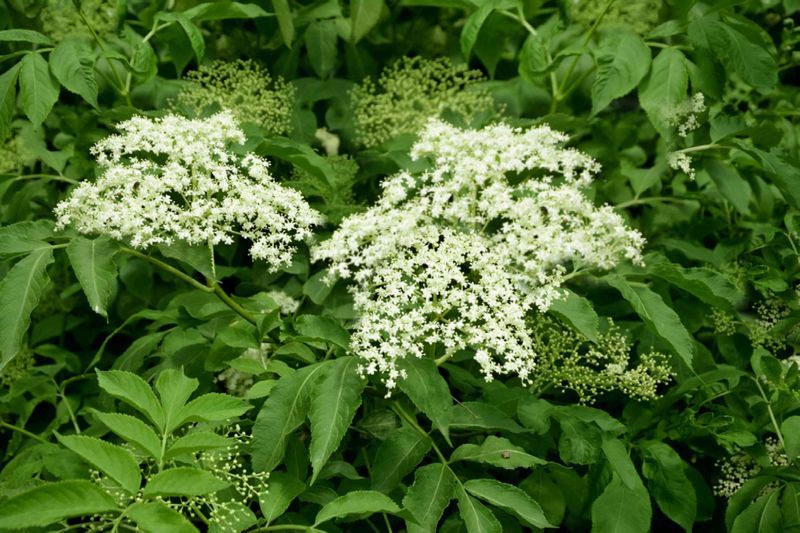
Elderberry puts on a spectacular flower show, usually in late spring to early summer across most of Texas. The flowers are creamy white and tiny, but they appear by the thousands in broad, flat-topped clusters called cymes.
These clusters fan out like an open umbrella and can measure several inches across. The fragrance is sweet and pleasant, attracting bees, butterflies, and other beneficial insects in large numbers.
After pollination, those same flower clusters gradually transform into drooping bunches of small, dark berries. The branching structure of the flower cluster remains visible in the fruit stage, giving the berry bunches that characteristic wide, spreading shape.
For gardeners trying to confirm an identification, finding both compound opposite leaves and flat-topped flower or fruit clusters together on the same plant is a strong indicator that you are looking at elderberry and not its lookalike neighbor.
Pokeweed Has Alternate Simple Leaves And Narrow Flower Spikes
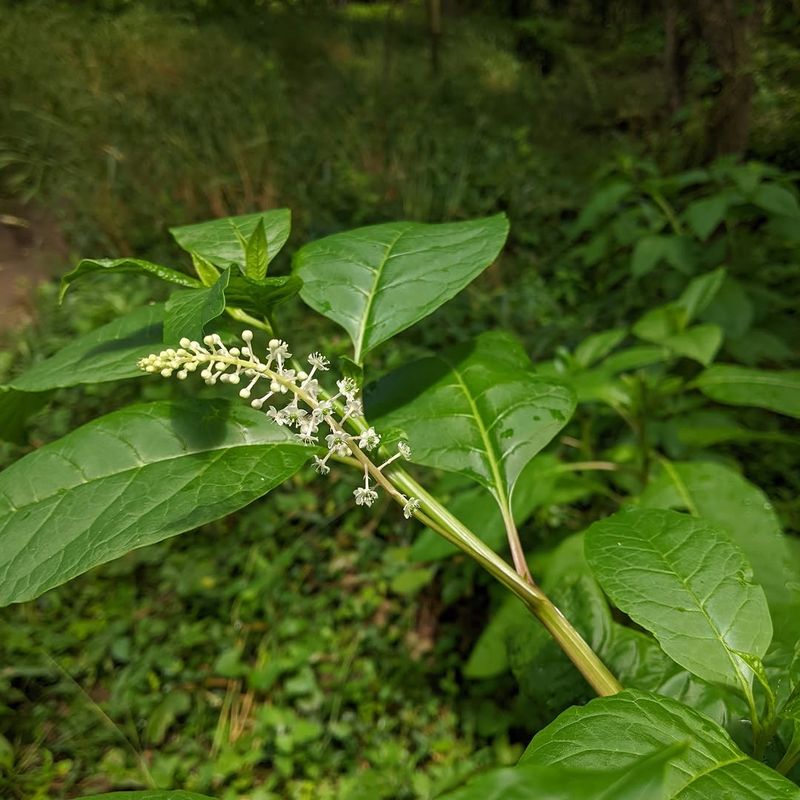
Pokeweed takes a completely different approach when it comes to leaves. Instead of the paired, compound leaves you see on elderberry, pokeweed produces one large, undivided leaf at each point along the stem.
These leaves alternate from side to side as you move up the plant, so no two leaves sit directly across from each other. That alternating pattern is a reliable identification clue.
The leaves themselves are impressively large. On a mature plant, individual leaves can stretch twelve inches long or even longer.
They are oval to lance-shaped with a smooth surface and edges that are mostly even, with only a gentle wave rather than the sharp teeth you find on elderberry leaflets. The size alone often surprises first-time observers who are not expecting such broad foliage.
Pokeweed flowers look nothing like elderberry blooms. Rather than wide, umbrella-shaped clusters, pokeweed produces long, narrow spikes called racemes.
These flower spikes stand upright at first, then arch gracefully as they grow longer. The individual flowers are small and greenish white, lacking the showy appearance of elderberry’s creamy clusters.
Those racemes eventually give way to developing berries, and the elongated spike structure remains clearly visible throughout the fruiting stage.
That narrow, wand-like arrangement of berries is one of the most distinctive features of pokeweed and looks nothing like elderberry’s wide branching fruit clusters.
Paying attention to both leaf arrangement and flower structure at the same time gives gardeners a reliable two-point confirmation.
If you see large, alternate, simple leaves paired with narrow flower or berry spikes, you are almost certainly looking at pokeweed, not elderberry. These two features together rarely leave room for doubt.
Elderberry Produces Drooping Clusters Of Small Dark Fruit
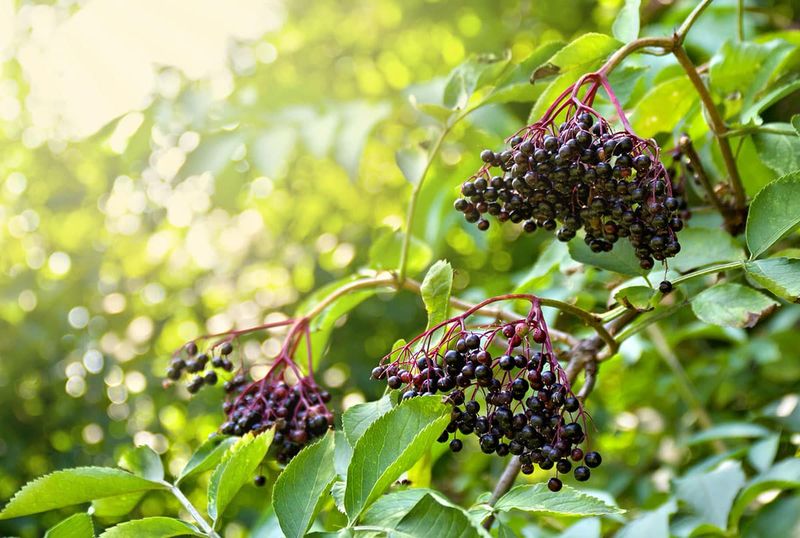
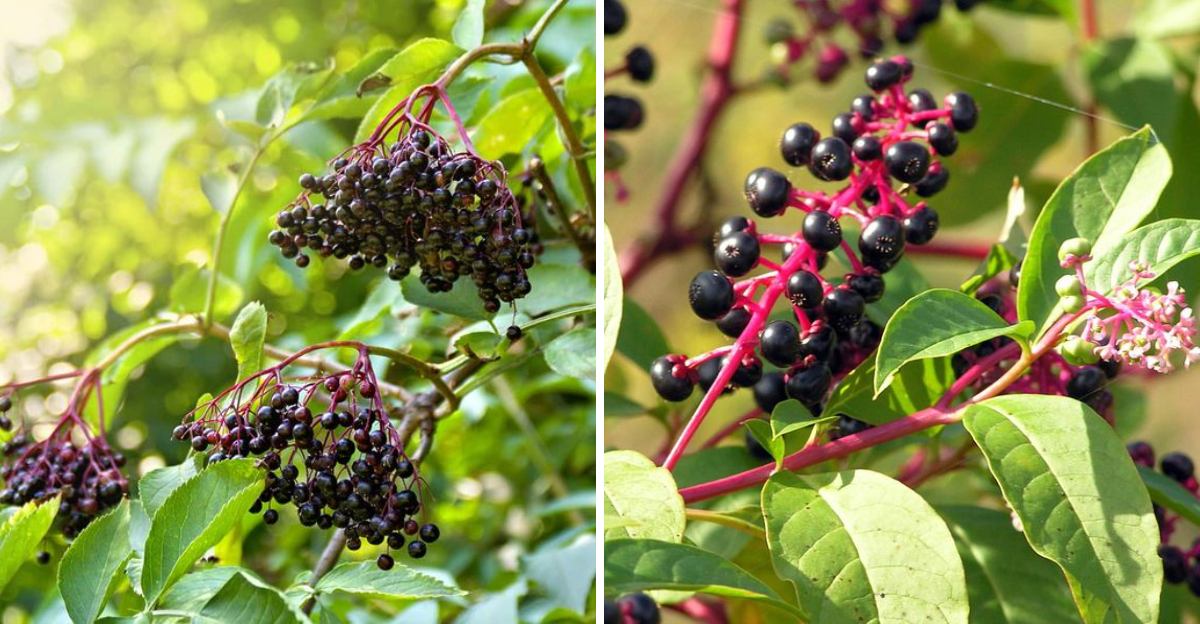
Few sights in a late-summer Texas landscape are as satisfying as a heavily loaded elderberry shrub bending gently under the weight of its own fruit. Ripe elderberries are small and rounded, turning from green to deep purple to nearly black as they mature.
Each individual berry is roughly the size of a small pea, and they develop by the hundreds within each cluster.
The fruit clusters themselves are wide and branching, spreading outward in that same flat-topped or gently rounded shape established during the flowering stage.
As the berries ripen and gain weight, the clusters frequently droop downward, giving the shrub a graceful, heavy appearance. Birds notice this quickly and can strip a cluster clean within hours of peak ripeness.
The stems supporting ripe elderberry fruit are grayish brown and woody rather than fleshy or brightly colored. That muted, bark-like appearance of the supporting branches is another helpful identification point.
Nothing about a ripe elderberry cluster looks vivid or electric in color. The overall palette runs from gray-brown stems to deep, dark berry tones.
Properly identified, fully ripe elderberries have a long tradition of use in cooked preparations like jams, syrups, and pies. Cooking is an important step, because raw or unripe berries and other parts of the elderberry plant can cause stomach upset.
Eating them straight off the bush without preparation is not a good idea, even when you are confident in your identification.
Gardeners harvesting elderberries should wait until the entire cluster has turned dark and the berries feel soft to the touch. Partially ripe clusters with green or reddish berries mixed in should be left on the plant a little longer before picking.
Pokeweed Produces Glossy Berries Along Bright Magenta Stalks
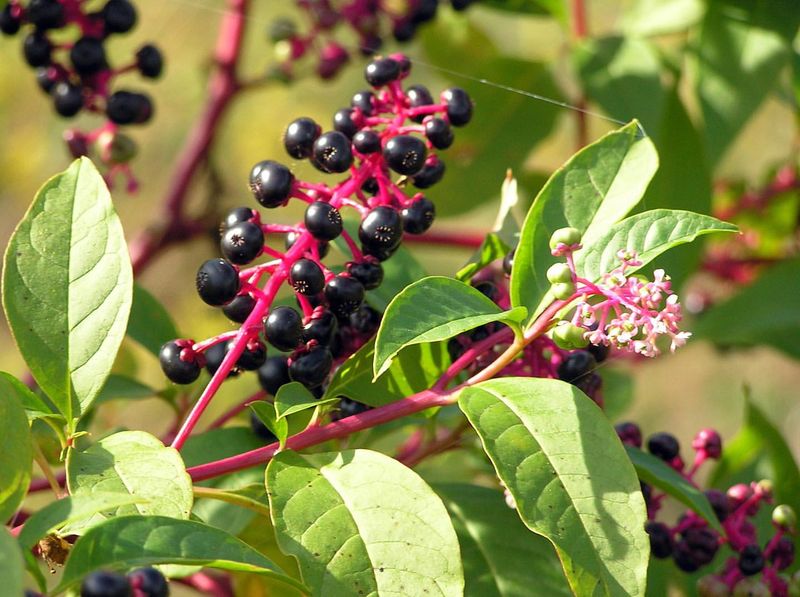
If elderberry fruit clusters are subtle and muted, pokeweed berries are the opposite. There is nothing understated about a fully fruiting pokeweed plant in late summer.
The berries develop along elongated stalks, and as they ripen, those stalks transform into one of the most eye-catching shades of pink, red, or magenta you will ever see on a wild plant in Texas.
The berries themselves are glossy and dark purple, often appearing almost black in low light. They are slightly flattened rather than perfectly round, and each one contains a deep reddish-purple juice that stains fingers, clothing, and skin on contact.
That vivid juice was historically used as an ink and dye, which gives you a good sense of how intensely pigmented it is.
The contrast between the dark berries and the bright magenta stalks is genuinely striking. Once you have seen it, you will never forget what pokeweed fruit looks like.
No other common Texas plant produces that particular combination of glossy dark berries on vividly colored stems. It is almost like the plant is putting on a warning display.
That warning is worth taking seriously. Every part of pokeweed should be treated as poisonous.
The root carries the highest concentration of toxic compounds, but the berries, leaves, and stems are also considered dangerous. Children and pets are particularly vulnerable, so gardeners with pokeweed in their yards should act carefully and promptly.
Gardeners should never eat dark berries based solely on their color or a quick look at an online photograph.
Taking time to check leaf arrangement, stem texture, and fruit cluster shape before drawing any conclusions is always the safer and smarter approach in any garden or wild setting.