What It Means When A Pileated Woodpecker Visits Your Connecticut Yard
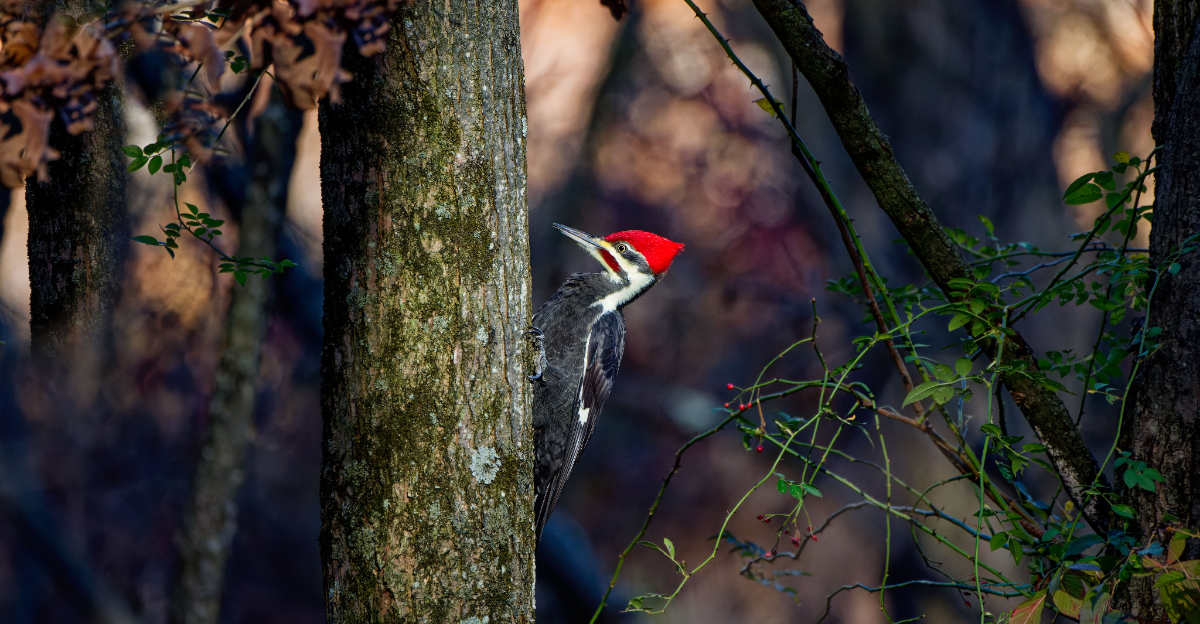
You’re on the porch with your morning coffee when a shadow drops onto the maple tree. The bright red crest registers first, then the size of the bird catches up with your brain, and for a second you doubt what you’re seeing.
This isn’t some rare tropical drifter blown off course. It’s a pileated woodpecker, and it just picked your Connecticut backyard out of every tree on the block.
Homeowners describe the same moment: disbelief, then a grin they can’t shake. These birds don’t land just anywhere. Their visit points to something real about the health of your trees and the quiet balance of the yard around you.
A single sighting can change how you look at that old oak you keep meaning to cut down, or the bare limb you dismissed as clutter. Suddenly it looks like exactly what drew the bird in.
A Pileated Sighting Signals A Healthy Mature Forest Nearby
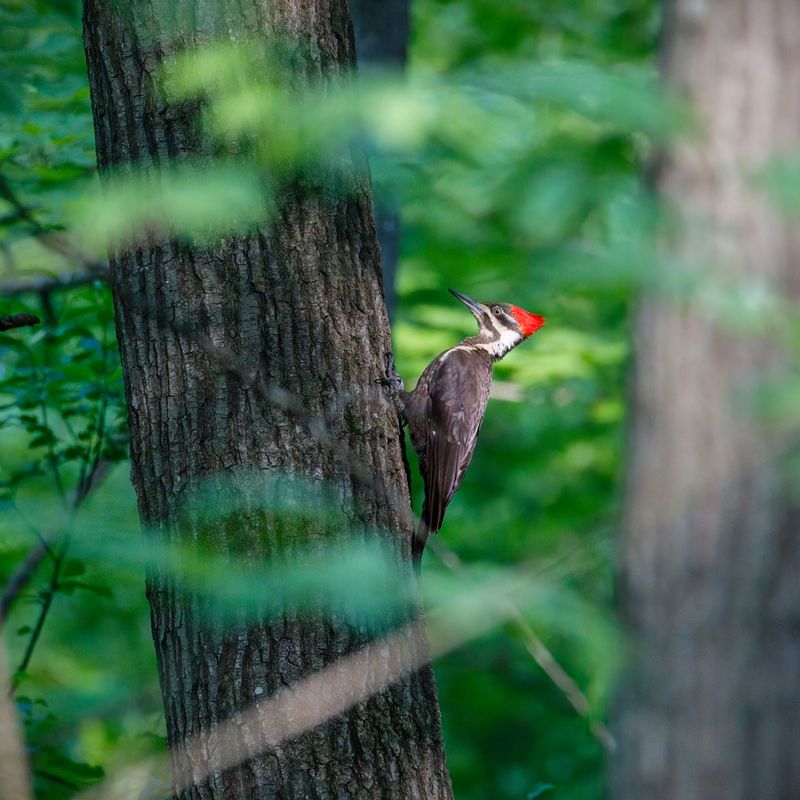
A flash of red and black through the trees stops you cold. When a pileated woodpecker visits your yard, it means something important about your neighborhood ecosystem.
These birds require large, mature forests to survive and breed. They rarely show up in freshly developed suburbs with young saplings and manicured lawns.
A pileated sighting near your home strongly suggests that old-growth or second-growth forest is close by. Connecticut has seen significant forest recovery over the past century, which has helped bring these birds back.
Big, old trees are essential for this species. They need trunks wide enough to carve out massive rectangular feeding holes.
If one lands in your yard, you are likely living near a patch of forest that has had decades to mature. That reflects real strength in local biodiversity.
Mature forests support layers of plant life, insects, amphibians, and mammals that younger forests simply cannot match. A pileated woodpecker is essentially a living indicator of that ecological richness.
Think of it like a quality stamp on your local habitat. Birders and naturalists actually use pileated sightings as a signal when assessing forest health in the Northeast.
Your yard may be the edge habitat that connects a forest patch to open space. Edge zones are surprisingly important for wildlife movement and feeding.
Noticing this bird means your corner of Connecticut still holds onto something wild and worth protecting. That is a reason to feel genuinely proud of your green space.
These Woodpeckers Need Large Decaying Trees To Thrive
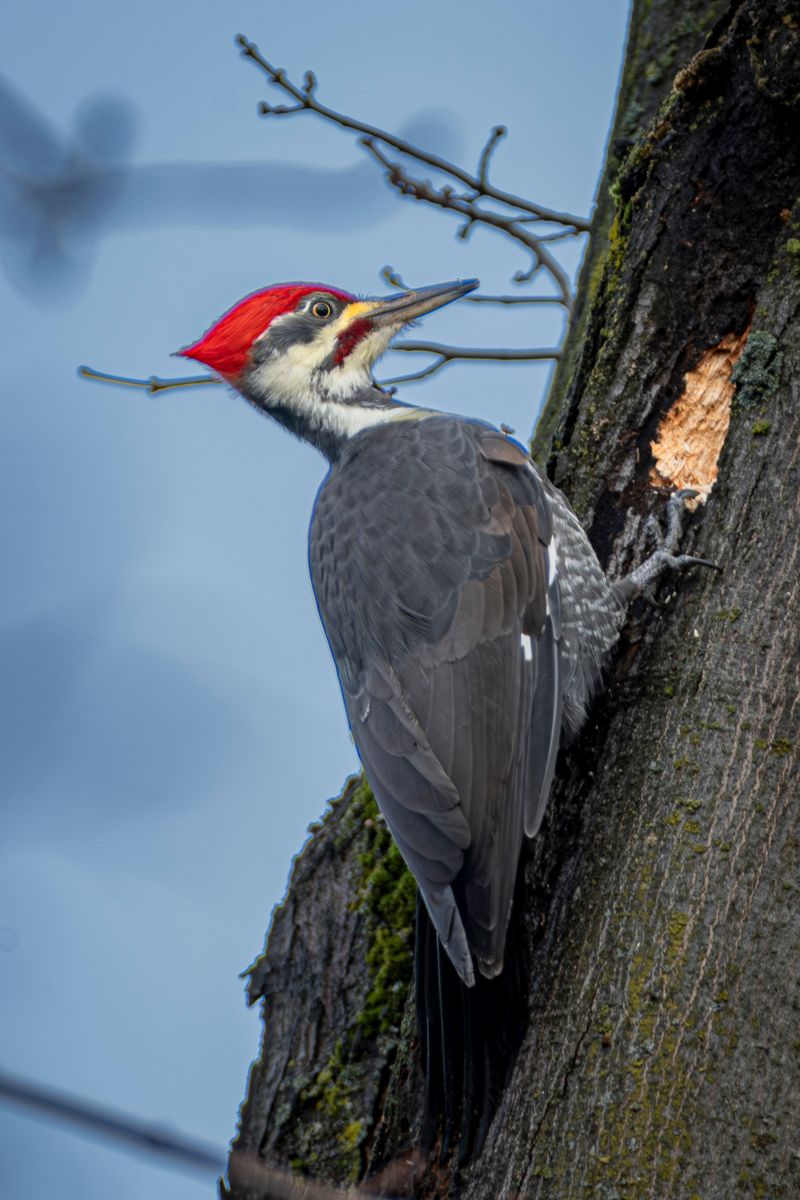
Decaying trees are not yard eyesores. To a pileated woodpecker, a standing snag is basically a five-star restaurant.
These birds feed almost exclusively on carpenter ants and wood-boring beetle larvae. Both insects tunnel deep inside decaying and rotting wood, which is exactly where pileated woodpeckers go looking.
Their chisel-like bills are extraordinarily powerful. A single bird can excavate a hole the size of a brick in just a few hours of focused work.
If you have a declining tree in your yard, that may be exactly what attracted this striking visitor. Removing every decaying tree removes the food source these birds depend on.
Your Connecticut Garden Changes Every Week. Your Plan Should Too.
Gardening in Connecticut changes quickly throughout the season. Every Friday you’ll receive a simple weekly plan showing exactly what to plant, prune, fertilize, harvest, and protect so you never miss the right timing.
Many homeowners rush to cut down decaying trees for safety or aesthetics. But if the snag is not threatening your home or power lines, leaving it standing is a genuine gift to local wildlife.
Pileated woodpeckers do not just peck randomly. They listen for the hollow sound of ant galleries beneath the bark before committing to a dig.
That focused, deliberate behavior is part of what makes watching them so mesmerizing. You can sometimes hear the hammering from inside your house, loud and rhythmic like a tiny jackhammer.
Arborists often recommend leaving a portion of a decaying tree standing as a wildlife snag. That compromise keeps your yard tidy while still offering habitat value.
Keeping even one snag standing could make your property a regular stop on a pileated woodpecker’s feeding route. That is a trade worth making.
Identifying The Pileated By Size And Call
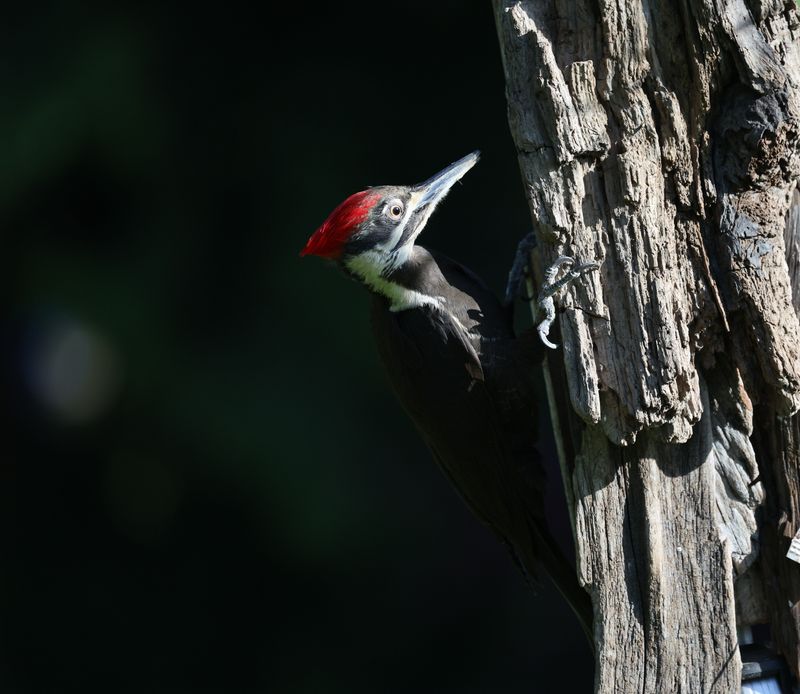
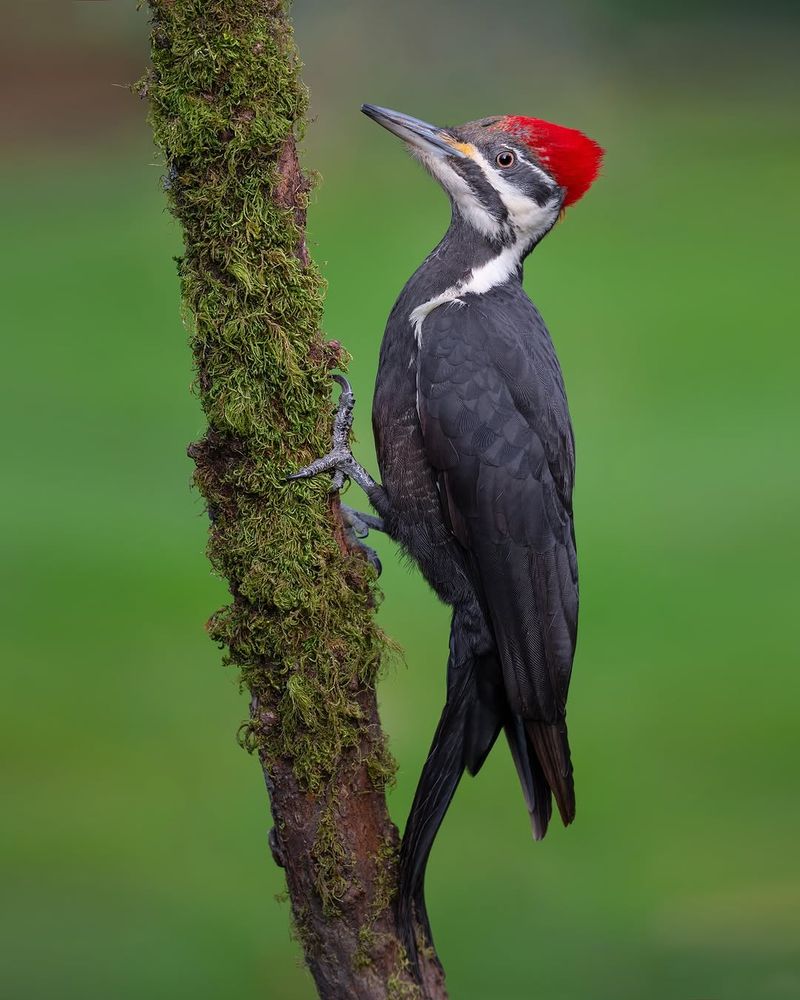
Once you see a pileated woodpecker, you likely won’t mistake it for anything else. This bird is shockingly large compared to the downy or hairy woodpeckers most people know.
An adult measures roughly 16 to 19 inches from bill tip to tail. That puts it close to the size of an American crow, which is already a hefty bird.
The red crest is the showstopper. It rises dramatically from the crown of the head in a pointed triangular shape that looks almost cartoonish in real life.
Males have a red mustache stripe in addition to the crest. Females show a similar red crest but with a gray-brown forehead and a black mustache, rather than the male’s fully red crown.
The call is just as unforgettable as the appearance. A pileated woodpecker sounds like a jungle bird, producing a loud, laughing call that echoes through the trees.
Many people hear this species long before they spot it. That wild, whooping laugh is often described as the inspiration for the classic Woody Woodpecker cartoon character.
In flight, these birds show large white patches under the wings that flash dramatically against the black body. The wingbeats are deep and crow-like rather than the bouncy undulation of smaller woodpeckers.
Knowing these identification markers means you can confirm a sighting with confidence. Grab a pair of binoculars and keep them near your window during winter months when the trees are bare.
Spotting a pileated woodpecker in your Connecticut yard is the kind of moment that turns casual backyard watchers into passionate birders overnight.
Their Feeding Holes Help Other Wildlife Species Survive
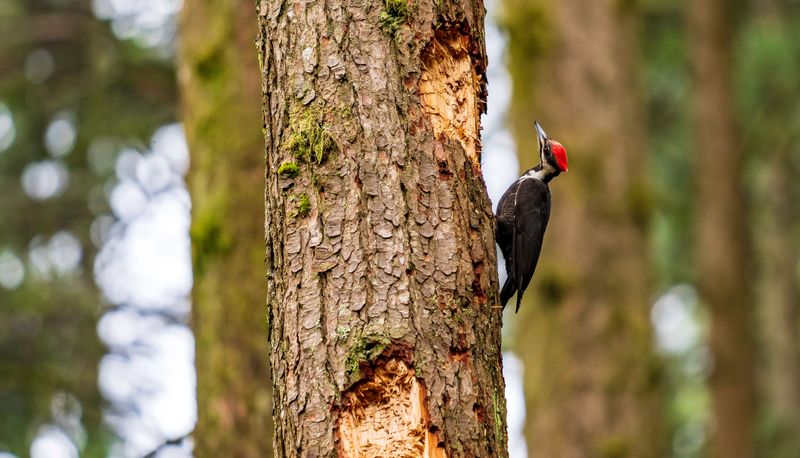
Pileated woodpeckers are accidental architects of the forest. The holes they carve while hunting food become homes for dozens of other species.
Wood ducks, screech owls, flying squirrels, and American kestrels all use old pileated cavities for nesting. Few of those animals can excavate their own holes in hard wood.
Biologists call this kind of animal a keystone species because its behavior supports an entire web of other wildlife. Remove the pileated woodpecker, and multiple species lose critical nesting habitat.
The rectangular shape of their feeding excavations is distinctive and immediately recognizable. These are not small round holes but large, oblong gouges that can be six inches wide or more.
Even the wood chips they scatter on the ground attract ground-feeding birds. Juncos, towhees, and brown creepers will forage through fresh pileated debris looking for exposed insects.
A single tree visited repeatedly by a pileated woodpecker becomes a wildlife hub. Over time, the cavities deepen, the wood softens further, and more species move in.
Watching this cascade of life unfold in your backyard is a quiet form of ecological magic. You do not need a nature documentary when this is happening outside your window.
Supporting pileated woodpeckers means indirectly supporting screech owls, wood ducks, and a host of other creatures. That ripple effect is one of the most compelling reasons to welcome these birds to your property.
A single visiting pileated woodpecker can set off a chain of habitat creation that benefits your yard for years. That is a legacy worth encouraging.
Connecticut’s Woodpecker Comeback Explained
Connecticut was almost entirely deforested by the mid-1800s. Farms and pastures replaced the old forests that once stretched across the state in an unbroken canopy.
When farms were abandoned in the late 19th and early 20th centuries, forests began growing back. That slow recovery has been transformative for forest-dependent species like the pileated woodpecker.
By the mid-20th century, pileated woodpeckers were considered rare in the state. Today, they are regularly reported in woodlands across every county.
The return of mature forest is the single biggest driver of this population recovery. Trees that were saplings in 1950 are now massive old hardwoods with bare limbs and ant-filled trunks.
Conservation efforts have also played a role. Protected state forests, land trusts, and private conservation easements have kept large woodland blocks intact across the region.
Some researchers link warmer winters to growing carpenter ant populations, which may be supporting larger woodpecker numbers over time.
Suburban sprawl has actually helped in some unexpected ways. Green corridors between developments allow wildlife to move between forest patches without crossing open ground.
Homeowners who plant native trees and shrubs contribute to this recovery without even realizing it. Every mature oak or hickory planted today could shelter a pileated woodpecker thirty years from now.
The comeback of this spectacular bird in your Connecticut yard is a genuine conservation success story. Knowing that history makes each sighting feel even more meaningful and worth celebrating.
Attracting Pileated Woodpeckers To Your Own Backyard
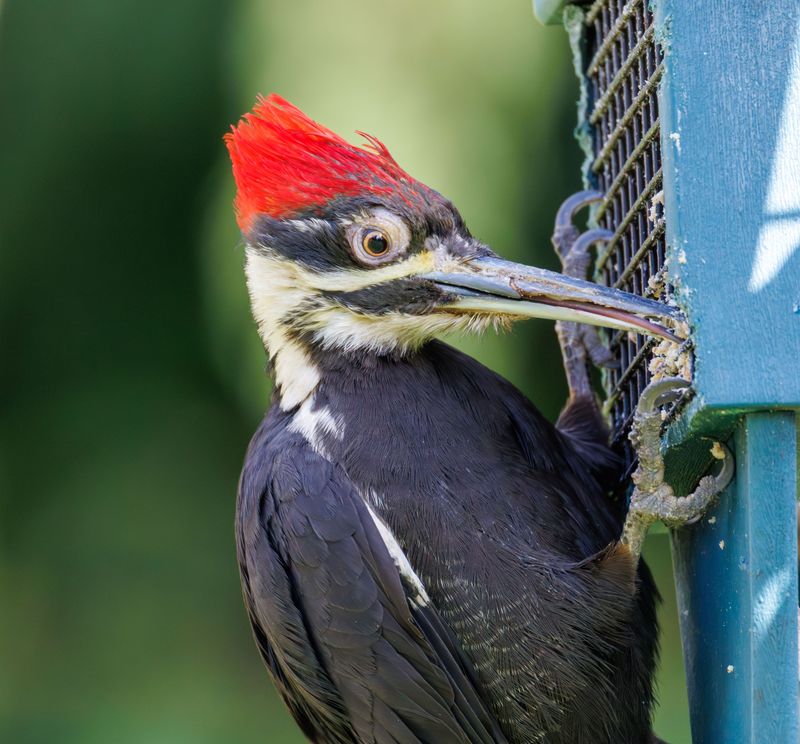
Getting a pileated woodpecker to visit regularly takes patience and the right habitat setup. Luckily, the steps you take will benefit a wide range of backyard wildlife along the way.
Start by leaving any standing decaying wood on your property intact. Even a single large snag near the tree line can become a feeding station for these birds within a season or two.
Suet feeders can attract pileated woodpeckers, especially during cold winter months when carpenter ants are harder to find. Use a large, sturdy feeder mounted high on a post or directly on a tree trunk.
Plain beef suet or high-fat suet cakes without added fruit tend to work best for this species. Position the feeder near mature trees so the bird feels sheltered while feeding.
Planting native hardwoods like oaks, hickories, and wild cherries adds long-term habitat value. These trees attract the insects that pileated woodpeckers rely on as their primary food source.
Avoid pesticides in your yard whenever possible. Insecticides reduce the ant and beetle populations that make your property worth visiting in the first place.
Keep a pair of binoculars and a field guide near your most-used window. Pileated woodpeckers often arrive without warning and stay only briefly before moving on.
Joining a local birding group or logging sightings on eBird can connect you with neighbors who have spotted the same bird. That shared data helps researchers track population movements across the region.
With the right habitat, a pileated woodpecker sighting in your Connecticut yard can become a regular, jaw-dropping experience.