The Most Underrated Florida Patio Herb For Keeping Thrips And Spider Mites From Taking Over
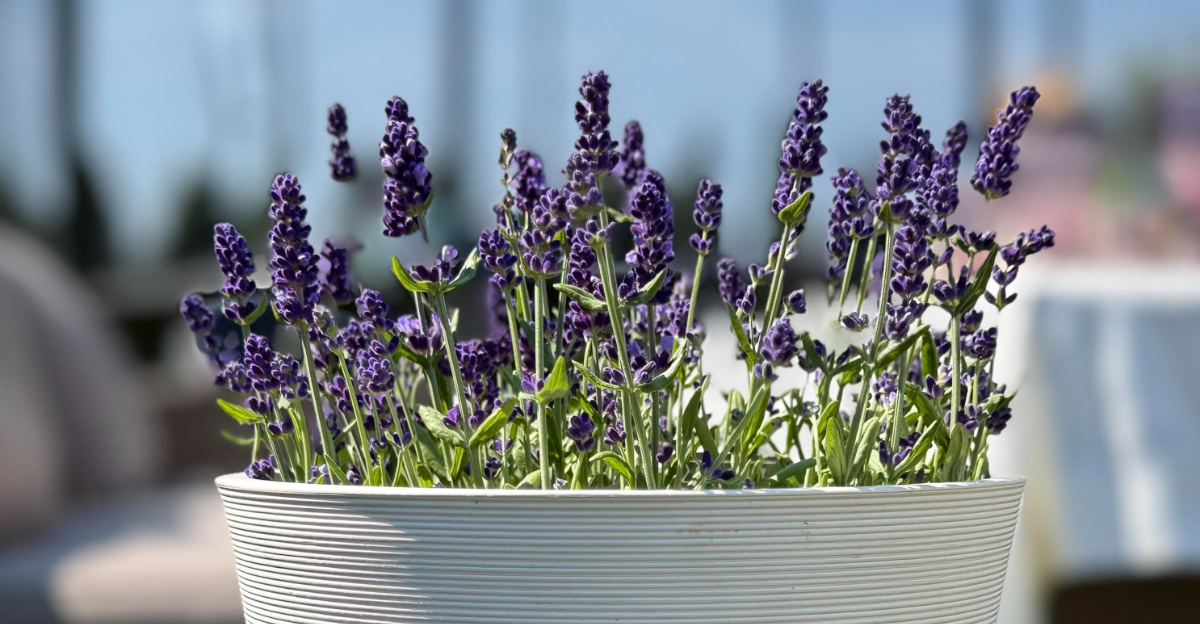
Thrips and spider mites in a Florida patio garden have a way of appearing out of nowhere and spreading faster than most gardeners can respond.
By the time the damage on the leaves is obvious, the population has already been there long enough to become a real problem.
Most Florida gardeners reach for sprays. Some work.
Most require repeated applications through the season and create their own complications in a container garden where beneficial insects are also trying to operate. One patio herb produces compounds that thrips and spider mites find genuinely off-putting.
It does not eliminate either pest on its own. Placed near vulnerable plants, it adds a layer of passive deterrence that costs nothing extra once the herb is established.
It also happens to be one of the better-looking container herbs available for a Florida patio, which makes it an easy addition to justify on more than one count.
1. Lavender Belongs In Dry Sunny Patio Setups
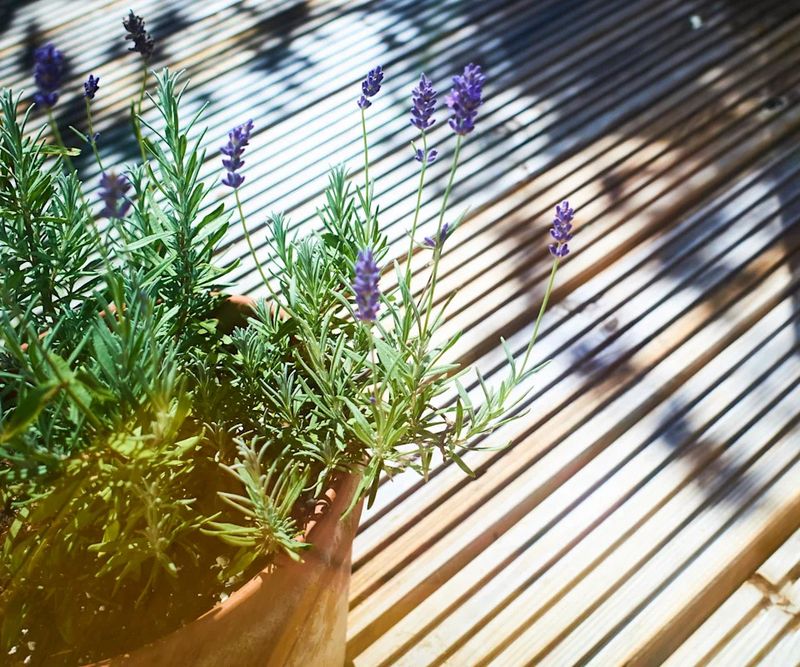
Plenty of herbs tolerate a shady corner or a soggy pot, but lavender is not one of them. It needs at least six to eight hours of direct sun daily, fast-draining soil, and a container with working drainage holes.
Those requirements are not just about keeping the plant alive. They shape the entire way you manage your Florida patio.
Wet, crowded, poorly lit container setups are exactly the conditions where thrips and spider mites can spread quietly. Stressed plants in damp corners get overlooked, and pest damage builds up before a gardener realizes anything is wrong.
Lavender pushes you to create the opposite kind of environment.
Humidity and poor drainage are real challenges in this state, especially in coastal areas and southern regions during summer.
A well-chosen container with drainage holes, a gritty or sandy potting mix, and a sunny south- or west-facing patio spot give lavender its best chance.
That same setup also keeps nearby containers drier, better lit, and easier to inspect regularly. Lavender does not repel thrips or spider mites on its own.
Its value comes from the sunny, open, well-drained patio style it requires, which is the same style that makes pest outbreaks harder to ignore.
2. Airflow Makes Pest Outbreaks Harder To Ignore
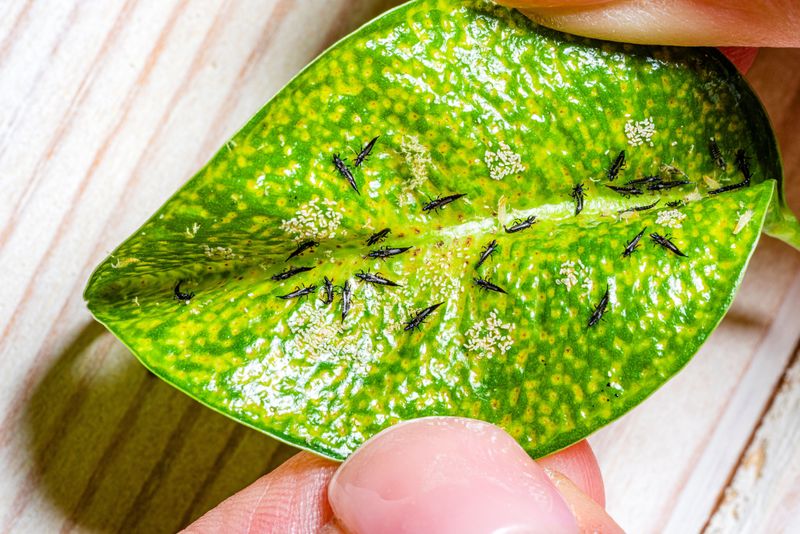
Picture a patio where pots are packed together so tightly that leaves from three different plants are touching. That setup is easy to create over a season of adding new containers, and it is one of the fastest ways to let pests go unnoticed.
Overlapping foliage creates stagnant, shaded pockets where thrips can shelter and spider mites can build webbing without being disturbed.
Spacing containers so air can move between them is a simple habit that pays off. It does not guarantee that pests will never appear, but it removes the hidden, crowded spots where problems can grow unchecked.
When pots are spread out, you can actually see the undersides of leaves, check new growth, and spot early warning signs like stippling or tiny moving insects.
Lavender fits naturally into an open Florida patio layout because it needs sun on all sides and does poorly when crowded against other plants. Placing it with room to breathe encourages the same spacing habit for everything nearby.
Your Florida Garden Changes Every Week. Your Plan Should Too.
Gardening in Florida changes quickly throughout the season. Every Friday you’ll receive a simple weekly plan showing exactly what to plant, prune, fertilize, harvest, and protect so you never miss the right timing.
Airflow alone does not control thrips or spider mites, but it is one of the practical tools extension-backed integrated pest management programs consistently recommend.
Better visibility means earlier detection, and earlier detection means less chance of a full-blown infestation taking over your containers.
3. Lean Soil Helps Avoid Soft Weak Growth
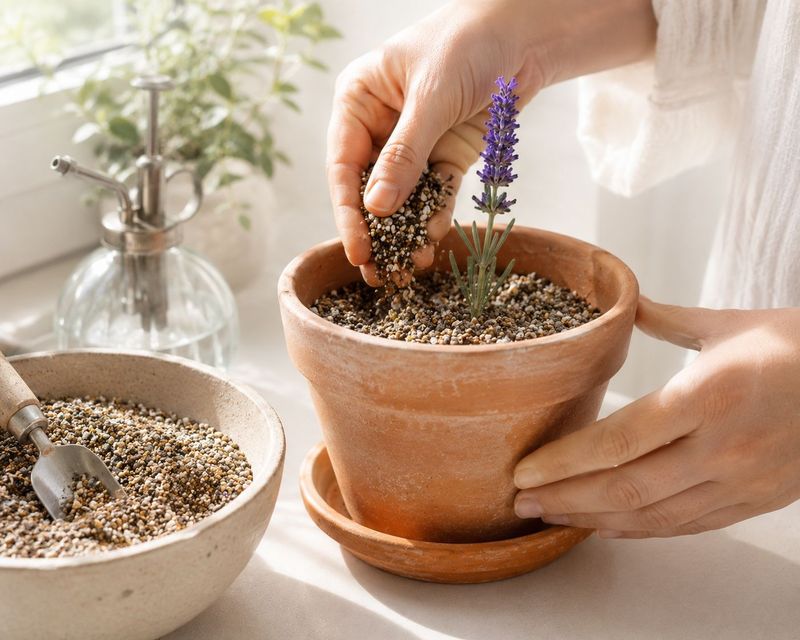
Overfed plants look lush, but that soft, fast growth can be exactly what certain pests prefer. Thrips and spider mites are more likely to exploit tender, weak tissue than firm, healthy growth.
Heavy fertilizer schedules and rich, moisture-retaining potting mixes can push lavender, and other nearby herbs, into exactly that vulnerable state.
Lean soil for lavender means a well-drained, lower-nutrient mix rather than a dense, peat-heavy blend. A gritty or sandy potting mix can keep roots from sitting in moisture.
Blending in perlite or coarse material can also prevent the overly soft growth pests exploit. Lavender does not need heavy feeding.
Following container-specific guidance from a university extension source is far more reliable than guessing with general fertilizer schedules.
Lean does not mean neglect. It means matching the soil and feeding routine to what the plant actually needs, not what makes it grow the fastest.
When you grow lavender on that principle, you naturally start applying the same thinking to other pots on the patio.
Avoiding excess fertilizer across your container setup reduces the chance that soft, stressed growth quietly becomes a pest magnet while you are focused elsewhere.
Healthy but not overfed plants are simply more resilient under pressure.
4. Crowded Pots Give Thrips More Hiding Places
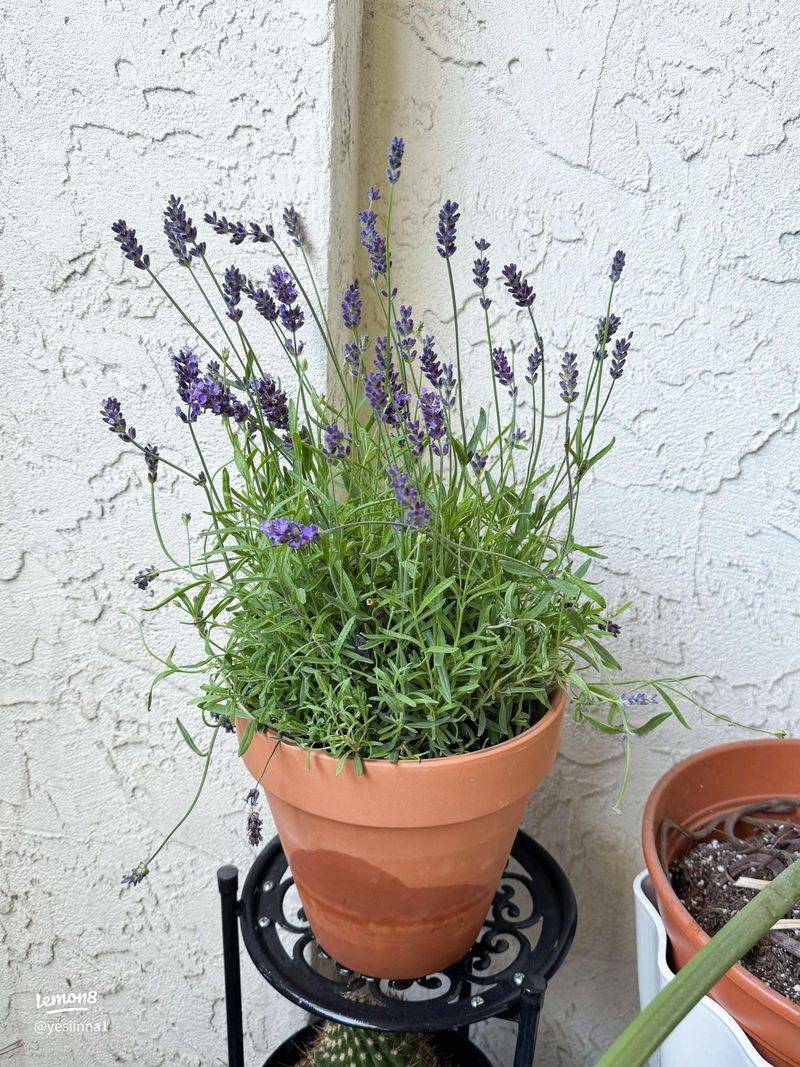
Thrips are tiny. Some species are barely a millimeter long.
They tuck into flower petals, leaf folds, and new growth where they are almost impossible to spot without a close look. A patio where pots are jammed together and flowers are brushing against neighboring plants is a setup that works in the pest’s favor, not the gardener’s.
Crowded arrangements make it nearly impossible to check leaf undersides, inspect new buds, or catch early signs of damage like silvery streaking or distorted growth.
Thrips can move from plant to plant through direct contact, so overlapping foliage speeds up that process considerably.
Spacing pots so leaves do not touch is one of the most practical things a patio gardener can do to slow that movement.
Lavender does not keep thrips away from nearby containers. What it does is encourage a less crowded layout because it performs poorly when squeezed between other plants.
Rotating pots occasionally so you can check every side is another simple habit worth building. If you find a heavily affected plant, moving it away from others while you assess the damage is a reasonable step.
Correct identification matters too, so extension resources or a local county agent can help confirm what you are dealing with before deciding on next steps.
5. Spider Mites Spread Fast On Stressed Plants
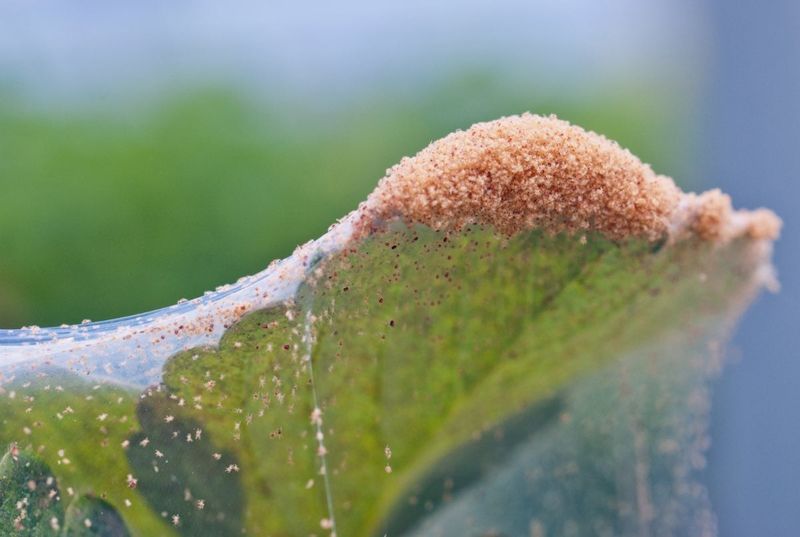
A dusty leaf in a hot, dry corner of the patio is practically an invitation for spider mites. These pests thrive on heat-stressed, dehydrated plants and can build large populations fast, especially during dry stretches in warmer months.
By the time fine webbing or stippling shows up on leaves, a serious infestation may already be underway.
Spider mites are not a lavender-specific problem. They will attack herbs, ornamentals, vegetables, and flowers anywhere on the Florida patio.
Lavender itself can be affected if it is stressed by drought, poor drainage, or root problems. The broader pest-prevention point is simple.
Lavender requires good sun, proper watering, airflow, and regular attention. Those same habits help you catch mite problems early on every other pot.
Dusty leaves are worth rinsing occasionally on susceptible plants, since dust can shelter mites and reduce the effectiveness of natural predators.
Do not apply random miticides or homemade sprays without checking with a county extension office or reading a verified product label first.
Reducing plant stress through correct watering, appropriate feeding, and good drainage is the most reliable foundation. It keeps spider mite populations from exploding across your patio containers before you can respond.
6. Regular Trimming Keeps Plants Open
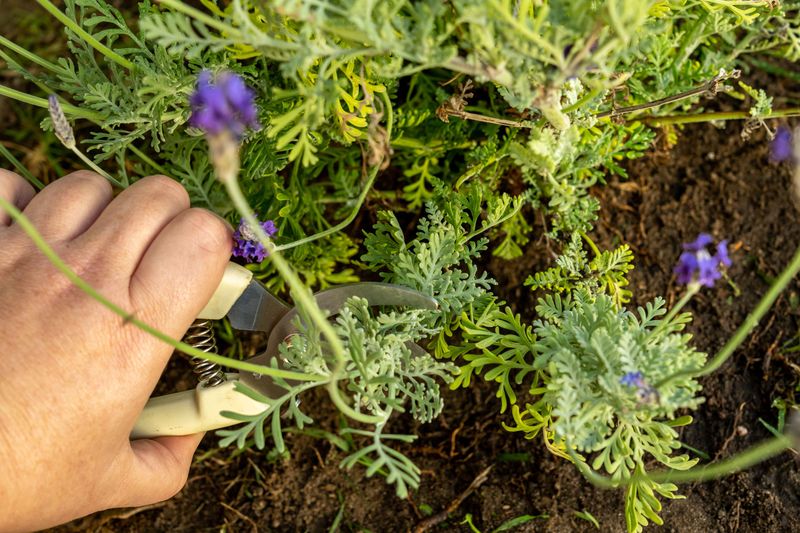
A lavender plant left to grow without any attention can become a woody, tangled mound that is hard to inspect and even harder to keep healthy in a container.
Spent flower stems, crossed branches, and dense interior growth all reduce airflow and make it difficult to see what is happening inside the plant.
Light, regular trimming changes that quickly.
For container lavender, the goal is not dramatic reshaping. Remove spent flower stems after blooming.
Lightly shape the outer growth to keep the plant open and rounded, which is usually enough to maintain airflow and visibility. Trimming also encourages fresh growth from the base rather than long, floppy stems that flop over neighboring pots.
One caution worth knowing: cutting hard into old, woody growth can damage lavender significantly, especially if done at the wrong time of year.
Staying above the woody zone and trimming lightly and consistently is the approach most often supported by extension horticulture guidance.
Trimming is not a cure for pest problems, but a well-shaped, open plant is simply easier to check during weekly inspections. When you can see every stem and leaf clearly, early signs of thrips damage or spider mite activity are easier to catch.
That helps stop the problem before it spreads across the patio.
7. Nearby Containers Still Need Weekly Checks
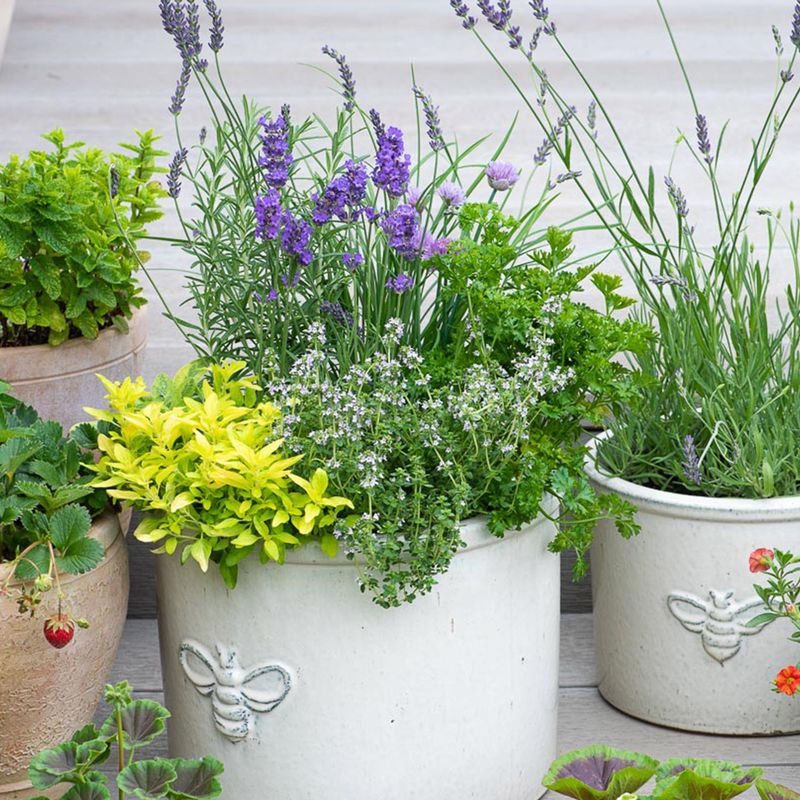
One of the biggest mistakes Florida patio gardeners make is assuming that because one plant looks healthy, everything nearby must be fine too. Lavender does not emit any protective barrier around the other pots on your porch or lanai.
Herbs, flowers, ornamentals, hanging baskets, and vegetables all need their own regular attention regardless of what is growing beside them.
Weekly checks do not have to take long. Flip a few leaves on each pot and look at the undersides, where thrips and spider mites often hide or lay eggs.
Check new growth for distortion, silvery streaking, or tiny moving specks. Look at flower buds and petals, which thrips especially favor.
If you notice webbing between leaves or along stems, that is a sign spider mites may already be active.
Simple scouting methods can help with identification before you decide on any response. One example is tapping a stem over white paper to check for falling mites.
If one pot has a significant problem, moving it away from others while you assess the situation is a practical first step. The entire patio matters, not just the plants that catch your eye first.
Building weekly checks into your routine is one of the most effective habits a container gardener can develop.
8. The Real Protection Comes From Better Patio Care
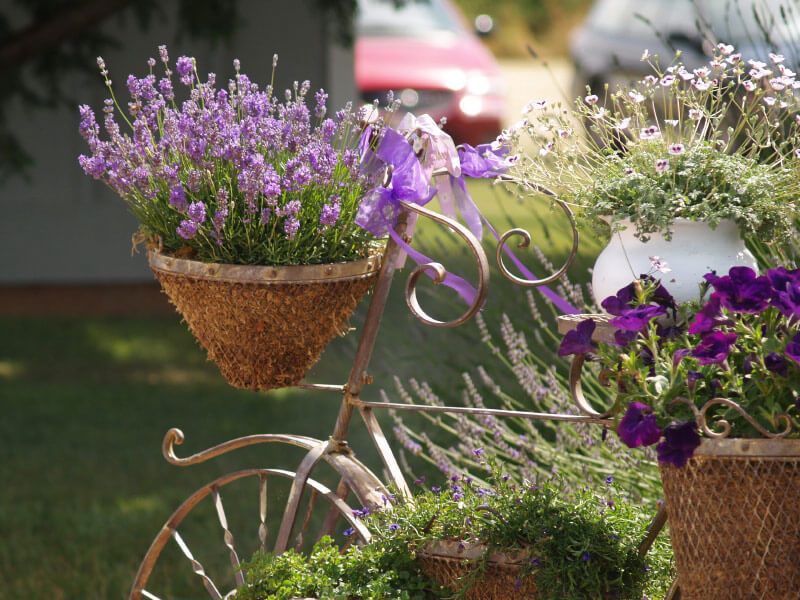
No single herb can defend a patio full of containers from thrips and spider mites. What lavender actually offers is a reason to build a smarter growing routine from the start.
Sun, sharp drainage, open spacing, careful watering, moderate feeding, light trimming, and consistent scouting are the habits that make a real difference over a season.
When you commit to growing lavender correctly, you naturally start applying those same standards to everything else on the patio. You check drainage holes before watering.
You space pots so you can walk around them. You trim spent growth before it becomes a tangled hiding spot.
You look at leaf undersides because you are already paying attention to plant health.
That shift in routine is the real value lavender brings to a Florida patio. It is not a standalone pest shield.
It is a practical anchor for a growing style that keeps containers healthier and less stressed. It also makes them less vulnerable to the conditions where thrips and spider mites take hold.
If pest pressure does develop, reaching out to a local county extension office for identification and treatment guidance is always the right move.
Lavender works best as part of a system, sunny, airy, well-drained, and closely watched, that keeps the gardener one step ahead of the problem.