Why Florida’s Swallow-Tailed Kites Suddenly Disappear In September
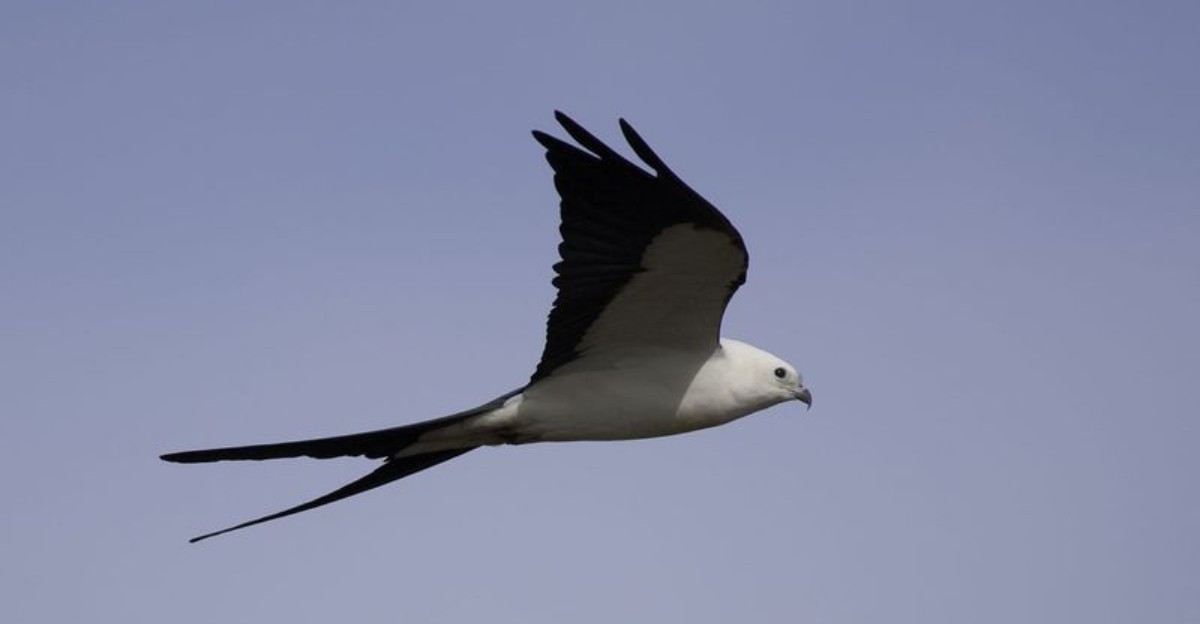
Every summer, one of the most beautiful birds in North America rules the skies over Florida. Then, in a matter of days, it disappears.
The swallow-tailed kite is hard to miss. Its forked tail cuts through the air like a pair of scissors. Its wings stretch nearly four feet wide. It plucks dragonflies from the sky with effortless skill.
Locals spot them daily above highways, backyards, and cypress swamps all season long.
Then September arrives, and the show ends. The kites do not trickle away. They seem to evaporate.
Birds that circled the same neighborhood for months are simply gone, and almost nobody ever sees them leave.
For decades, the sudden exit puzzled even seasoned birdwatchers. The truth, once scientists pieced it together, turned out to be far stranger than anyone had guessed.
It involves a hidden rendezvous, a massive gamble, and a choice the birds make long before summer ends.
1. The Swallow-Tailed Kites Are Heading South
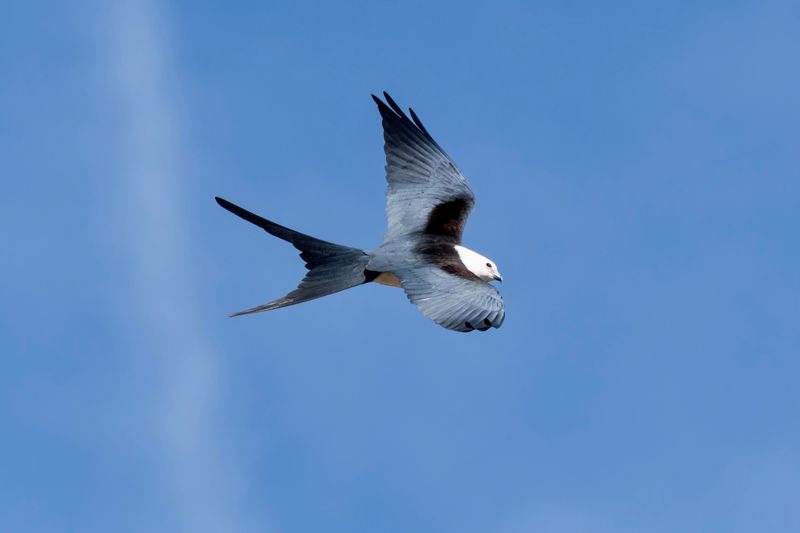
Imagine packing for a trip with no suitcase, no map, and no snacks except the ones you catch along the way. That is basically what every kite leaving the state signs up for each year.
Some birds travel thousands of miles to reach their wintering grounds in South America.
Why go so far? When winter creeps into North America, the flying insects these birds depend on start to fade, while South America is heading into its own warm season.
Swapping hemispheres means the kites get two summers a year. Honestly, that sounds like a pretty smart travel plan to anyone who has shivered through a cold snap.
The journey takes several weeks, and the birds glide much of the way to save energy. Their long, forked tails work like a rudder, helping them steer and catch rising air with little effort.
Scientists have tracked some kites with tiny satellite tags. Those tags show the birds can travel hundreds of miles in a single day when the weather cooperates.
Next time you spot one overhead in summer, try to picture it soaring above the Amazon rainforest a few months later. It changes how you see that little black-and-white speck, doesn’t it?
2. September Marks The End Of Their Florida Summer
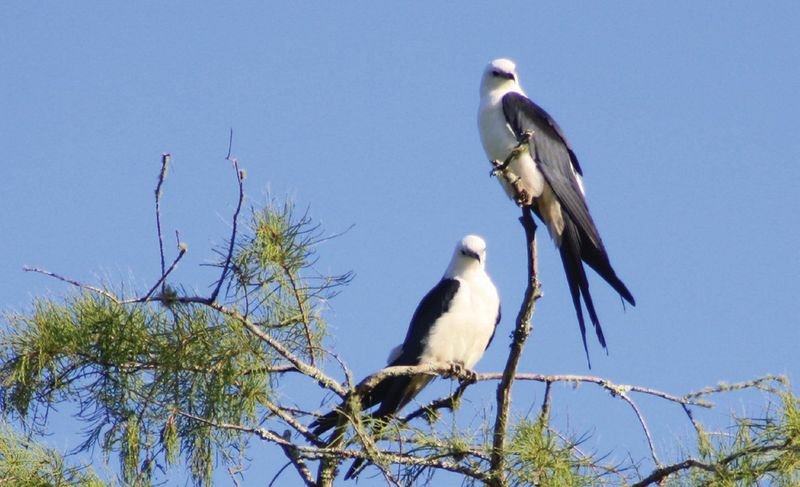
Here is a surprise for many Floridians: by September, most of the kites have already packed up. The month mostly marks the tail end of a goodbye that began weeks earlier.
Some adults start heading south as early as late July. By August, the sky gets noticeably quieter, and the majority are generally gone by early September.
That makes these birds among the earliest migrants to leave North America. While backyard songbirds are still hanging around, the kites are already halfway to another continent.
Their early exit makes sense when you think about their schedule. They arrive in late winter, raise their chicks in spring, and wrap up family duties by midsummer.
Once the kids can fly and feed themselves, there is little reason to stay. Leaving early also gives them plenty of time for a long, careful trip.
Your Florida Garden Changes Every Week. Your Plan Should Too.
Gardening in Florida changes quickly throughout the season. Every Friday you’ll receive a simple weekly plan showing exactly what to plant, prune, fertilize, harvest, and protect so you never miss the right timing.
If you want to catch a final glimpse, mark your calendar for late July and August. Keep your eyes on open fields, marsh edges, and the tops of tall trees in the afternoon.
By the second week of September, a sighting feels like finding a rare coin. Treat it as a lucky send-off from a bird with somewhere important to be.
Jot down the date if you see one, since local bird groups love these late records. Your note could help scientists track how migration timing shifts over the years.
3. Watch Communal Roosts Fill Before They Empty
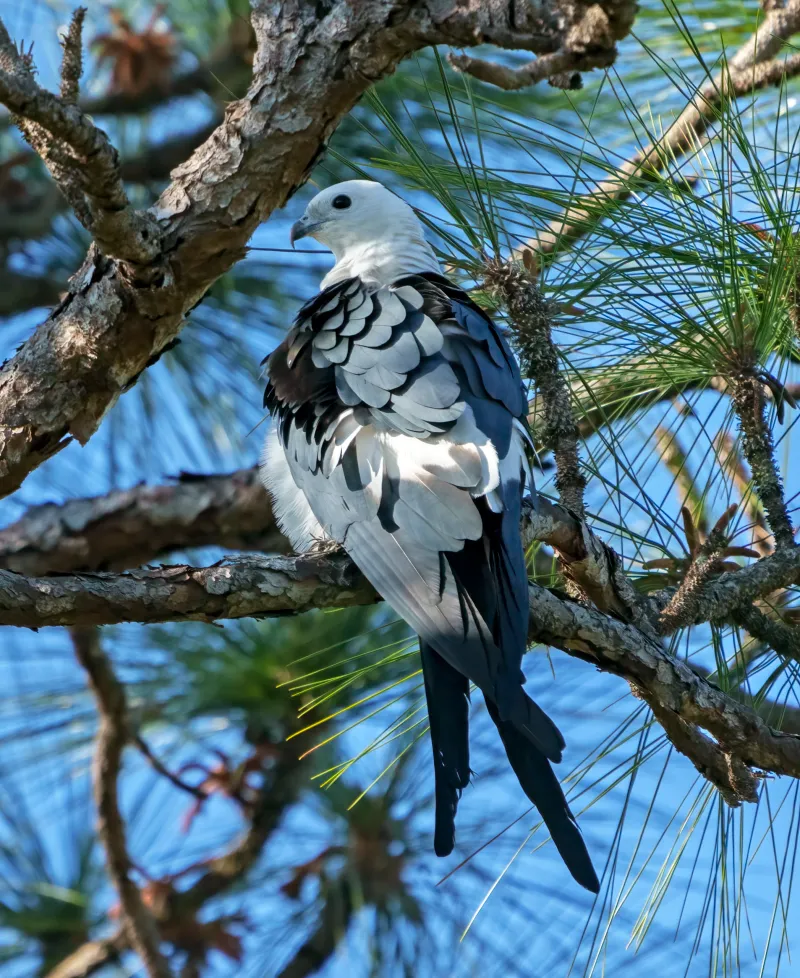
All summer long, kites act a bit like independent teenagers, doing their own thing across the sky. Then late summer hits, and suddenly everyone wants to hang out together.
Before leaving, the birds gather in large communal roosts. These gatherings can hold dozens, hundreds, or even thousands of kites settling into the same patch of trees each evening.
Some Florida roosts can hold hundreds or even thousands of kites at once, making them important gathering places before migration.
Why crowd together? Roosting in a group offers safety from predators like great horned owls, plus a restful place to recharge between long days of feeding.
Scientists also suspect the birds share information in these spots. A kite that finds great hunting grounds might lead others there the next morning, like a friend recommending a new restaurant.
Watching a roost fill at sunset is a thrill, as waves of birds drift in and circle before landing. Still, give them plenty of space, since disturbing them can waste precious energy.
Local Audubon chapters and wildlife groups sometimes lead roost counts. Joining one is a fun way to see the spectacle while helping researchers keep tabs on the population.
Visit again a few weeks later, and those same branches may be bare. The emptiness is the clearest sign the big trip has begun.
4. Young Kites Join The Journey After Leaving Their Nests
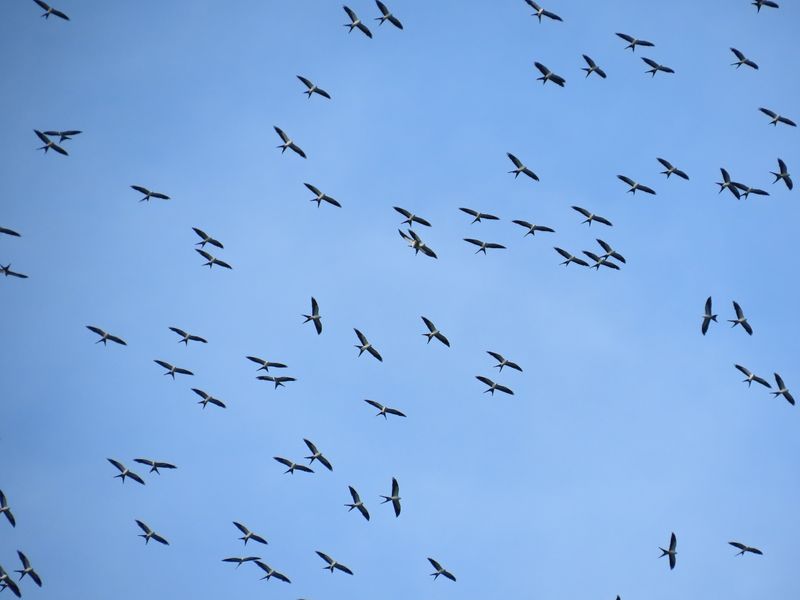
Growing up fast is the name of the game for a baby kite. Just a few weeks after hatching high in a treetop, it is flapping, wobbling, and testing the breeze.
Here is the twist: many adults head south first. The fledglings stay behind for several weeks, building strength and sharpening their skills before tackling the trip on their own.
That might sound harsh, but young kites come with built-in instincts. Somehow they know which direction to fly without a parent leading the way.
Their biggest homework assignment is learning to snatch insects out of midair. A clumsy young bird might miss a dragonfly again and again before finally getting the hang of it.
Every successful catch adds fuel and confidence. Those practice sessions matter, because a kite that cannot feed itself on the wing will struggle on a flight covering thousands of miles.
Wildlife rehab centers in the state sometimes care for young kites that fell from nests during storms. When the birds recover, workers may release them at communal roosts.
That clever trick lets the youngsters mingle with experienced travelers before migration. It is a bit like dropping a new student off with a friendly group on the first day of school.
If you ever find a grounded kite chick, contact a licensed wildlife rehabber right away. Please do not try to raise it yourself.
5. Florida’s Insects Help Fuel The Final Migration Push
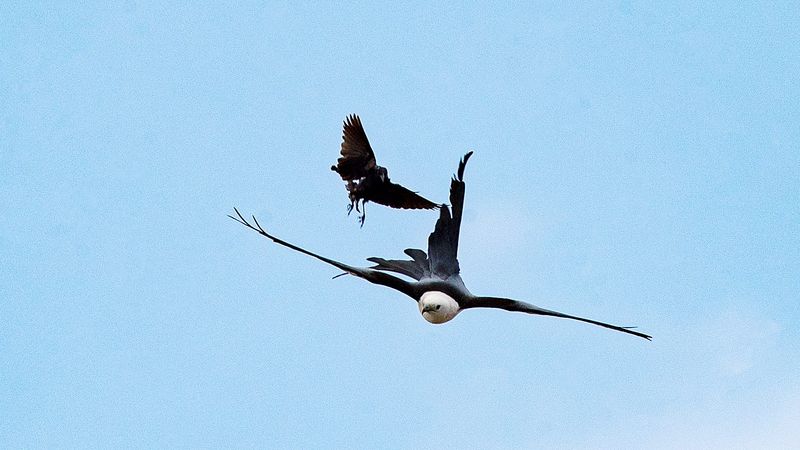
Think of late summer in the state as an all-you-can-eat buffet with wings. For a kite getting ready to travel, every buzzing bug is a chance to top off the tank.
Before leaving, kites feed heavily to build up fat reserves. Researchers sometimes describe this stored fat as jet fuel, since it powers the birds across huge stretches of land and sea.
The menu is impressively varied. Dragonflies, beetles, wasps, and flying ants are favorites, but kites also grab tree frogs, lizards, and small snakes from treetops.
Most of this dining happens in midair. A kite swoops low, plucks a snack with its feet, and eats while gliding, like a person munching popcorn on a roller coaster.
Some birds even skim the surface of ponds to take a quick drink on the fly. Talk about multitasking at its finest.
Healthy wetlands, fields, and forests keep those insects coming. Pesticide overuse can shrink bug populations, which means less fuel for the birds that rely on them.
Want to help from home? Plant native flowers and shrubs, cut back on bug sprays, and let a corner of your yard grow a little wild.
Your garden may seem small, but every patch of habitat adds up. Those dragonflies zipping around your porch could end up powering a flight to Brazil.
6. Strong Winds Can Shape When The Birds Finally Leave
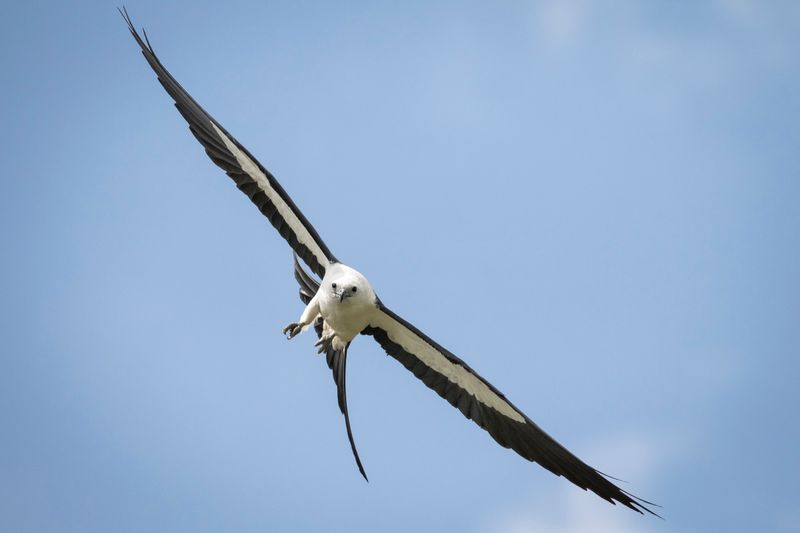
Ever wish you had a built-in weather app? Kites basically do, and they rely on it to decide the perfect moment to take off.
These birds can sense shifts in air pressure and other subtle clues in the atmosphere. When conditions line up just right, they seize the chance and head out.
Tailwinds are the secret ingredient. A strong push from behind lets a kite glide farther while burning less of its hard-earned fat.
Kites can take advantage of favorable winds associated with large weather systems, although storms can also create dangerous conditions along the route.
Of course, storms carry risks too. Tracking studies have shown that bad weather over the ocean can blow birds off course or wear them out.
Over land, kites lean on thermals, which are columns of warm rising air. They circle upward inside one, then glide forward to the next, barely flapping their wings.
It works a lot like a kid riding an elevator up and a slide down, over and over. The method saves loads of energy on such a long trip.
Watch the sky on a warm, breezy afternoon in summer, and you might see this in action. A kite hanging almost motionless on the wind is a small lesson in natural engineering.
7. Some Kites Cross The Gulf While Others Follow A Different Route
Not every kite reads the same map. Satellite tags have revealed that these birds pick a surprising mix of routes on their way south.
Many Florida kites appear to head across the Caribbean, often hopping to Cuba first. From there, they aim for the Yucatán Peninsula in Mexico.
Other birds take the long way around the Gulf of Mexico, sticking closer to land. That path adds miles but offers more places to rest and refuel.
Once in Central America, many travelers funnel south through countries like Belize, Honduras, and Panama. Eventually, some cross over or around the towering Andes Mountains.
Tagged birds have also shown very different stopover habits. One kite might rest for days in a single spot, while another pushes onward with barely a pause.
Why the variety? Age, experience, weather, and even luck all seem to play a part, much like how families choose different highways for the same vacation.
Crossing open water is the riskiest stretch, since there are no trees for resting and few insects to eat. Birds that time it well with helpful winds tend to fare better.
Groups like the Avian Research and Conservation Institute share maps of tagged kites online. Following a bird’s journey in real time can be as exciting as tracking a pizza delivery.
8. Tall Trees Become Staging Grounds Before Departure
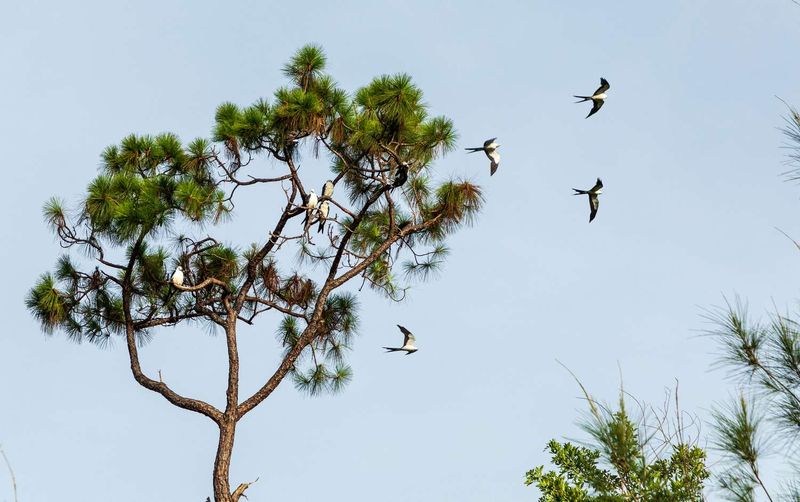
Every great journey needs a launch pad, and for kites, that launch pad has bark. Tall trees serve as the final gathering spots before the big trip south.
Staging grounds often sit in cypress domes, swamps, and other wetlands. Large stands of towering pines and cypress trees are especially popular.
Height matters here. Lofty branches give the birds a clear view of approaching danger and an easy spot to launch into the wind each morning.
Wet areas below the trees also tend to buzz with insects. That means breakfast is close by, which saves energy for the long trip ahead.
Sadly, some of these special places are shrinking as Florida grows. New roads, neighborhoods, and cleared forests can wipe out a roost that kites have used for years.
Protecting old, tall trees on public and private land makes a real difference. Conservation groups often work with ranchers and landowners to keep key roosts standing.
You can pitch in by supporting land trusts and local parks. Even speaking up at a town meeting about saving a stand of big pines can help.
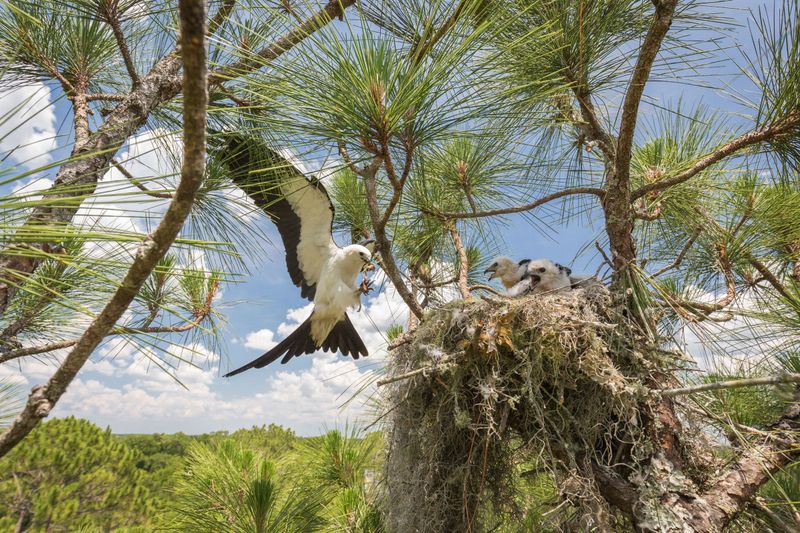
Fun fact: kites build their nests near the very tops of tall trees too, sometimes over 100 feet up. For these birds, the higher the perch, the better life seems to be.
9. Look Up Again Next Spring When The Kites Return
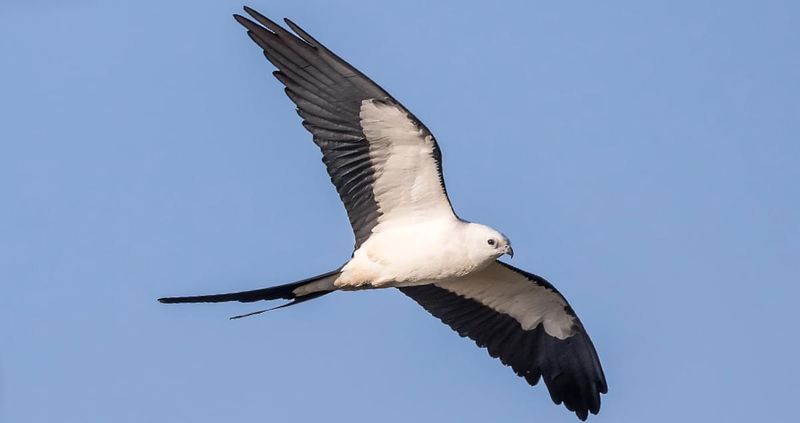
Good news: that empty sky will not stay empty for long. Come late winter, the familiar forked tails start popping up over our backyards and marshes again.
Most kites arrive in early March, though a few eager birds show up by mid-February. Many Floridians treat that first sighting as the real start of spring.
Once back, the birds get right to business. Pairs build nests high in tall trees, weaving together twigs and soft Spanish moss they grab while flying.
Soon, one or two eggs appear, and the whole cycle begins again. By summer, a new generation will be learning to snag dragonflies over the steamy treetops.
Want to be ready? Keep binoculars near a window and scan open areas along rivers, marshes, and pine forests on warm afternoons.
Consider joining a sighting project too. Some Florida conservation groups ask the public to report nests and early arrivals, which helps experts protect the places kites need most each year.
There is something magical about spotting that first kite of the year. After months away, it seems to glide in as if it had simply stepped out for a moment.
So when fall leaves you missing those graceful shapes, remember the pause is only temporary. Mark February on your calendar, and keep looking up.