8 California Plants That Laugh At Hot Driveways And Blazing Walls
California driveways can cook a plant before lunch.
Concrete stores heat. Stucco throws it back. Gravel strips glare like tiny ovens, and that innocent south-facing wall can turn a normal planting spot into a punishment zone by July.
Plenty of shrubs look brave at the nursery, then crisp up once pavement, reflected sun, and dry summer air team up.
That is not failure. It is a plant-location mismatch.
California natives offer a smarter answer because many evolved on rocky slopes, chaparral hillsides, dry ridges, and open scrub where heat is not a surprise.
The right ones can handle blazing walls, driveway edges, hot fences, and gravel borders without acting personally attacked by the forecast.
So which plants actually belong in those brutal microclimates?
Start with natives that love drainage, tolerate summer dryness, and keep their cool when the hardscape starts radiating heat. Your driveway strip does not need softer weather.
It needs plants tough enough to make July look ordinary, and your hottest wall can finally stop looking abandoned, too.
1. Cleveland Sage
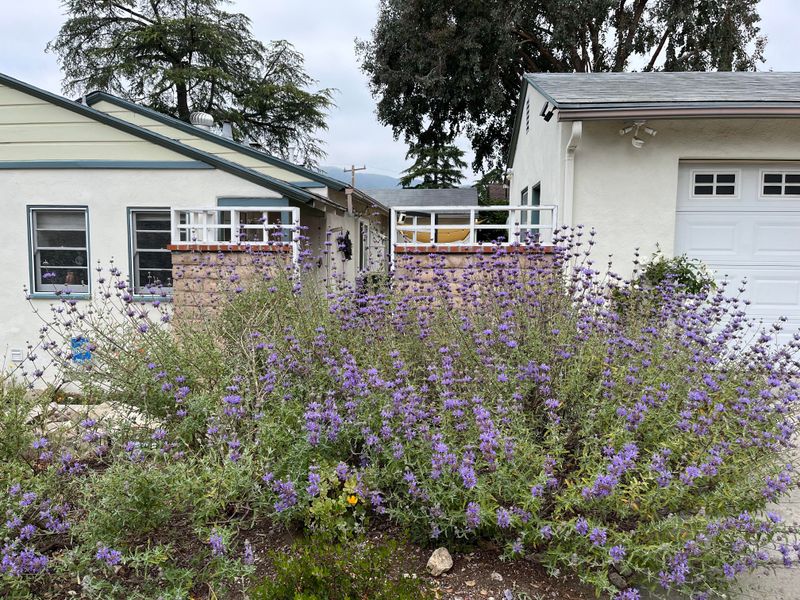
Press your hand against a south-facing stucco wall on a July afternoon and you will feel exactly what Cleveland sage was designed for.
Salvia clevelandii is a Southern California native that thrives in the kind of reflected heat that sends most plants into retreat.
Its silvery-gray leaves are coated with fine hairs that reduce moisture loss, and that aromatic, almost electric scent you smell when you brush against it is no accident.
Those oils help the plant cope with intense sun exposure.Against a hot wall, Cleveland sage earns its keep in multiple ways.
The rounded, two-to-four-foot shrub creates a soft buffer between hard surfaces and open garden space.In late spring, it sends up tall wands of violet-blue flowers that draw native bees, bumblebees, and hummingbirds in impressive numbers.
Plant Cleveland sage in fast-draining soil and give it full sun.During the first year, water every week or two to help roots establish.
After that, it needs very little supplemental irrigation and actually performs better when you back off summer watering.
Avoid planting it in clay or low spots where water pools.Hard pruning after bloom keeps it tidy and encourages fresh growth.
Pair it with decomposed granite mulch at the base to reflect a little extra heat right back where this plant loves it most.
2. Toyon
That narrow strip between your driveway and your neighbor’s fence is one of the hardest spots in the California garden.
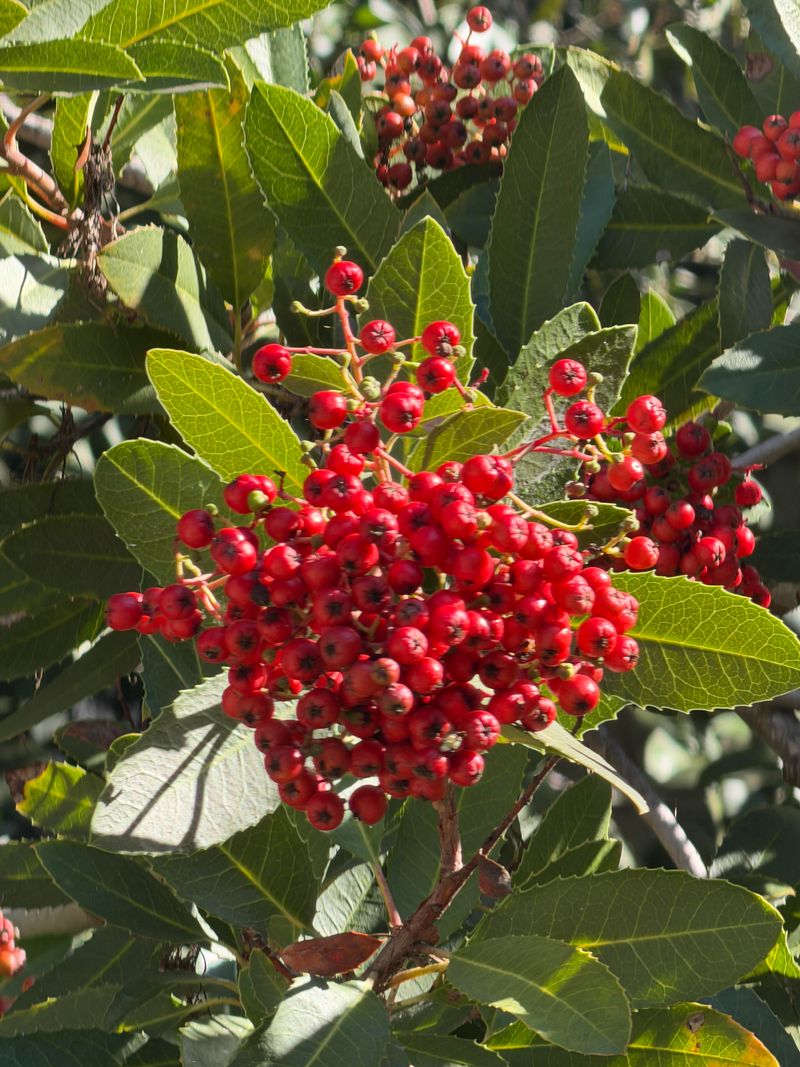
Toyon, known botanically as Heteromeles arbutifolia, is one of the few plants that actually looks at that space and sees potential.
A tough, evergreen California native, toyon handles reflected heat, compacted soil edges, and irregular irrigation with a kind of stubborn dignity that makes it genuinely useful in difficult spots.
Toyon grows as a large shrub or small multi-trunk tree, typically reaching eight to fifteen feet tall depending on conditions.
Its glossy, dark green leaves stay attractive year-round, providing real structure and screening in spots where you desperately need it.
Your California Garden Changes Every Week. Your Plan Should Too.
Gardening in California changes quickly throughout the season. Every Friday you’ll receive a simple weekly plan showing exactly what to plant, prune, fertilize, harvest, and protect so you never miss the right timing.
Come December, clusters of bright red berries ripen and draw cedar waxwings, mockingbirds, and other birds right into your yard.
For side yards with hot walls or fencing that radiates afternoon heat, plant toyon where it gets full sun to part shade.
Give it good drainage and deep, infrequent watering during establishment, roughly every two to three weeks through the first summer.
Once roots are established after one to two years, toyon handles summer drought with ease.
Prune lightly after berry season to shape it without sacrificing next year’s bloom and fruit set.
3. Manzanita
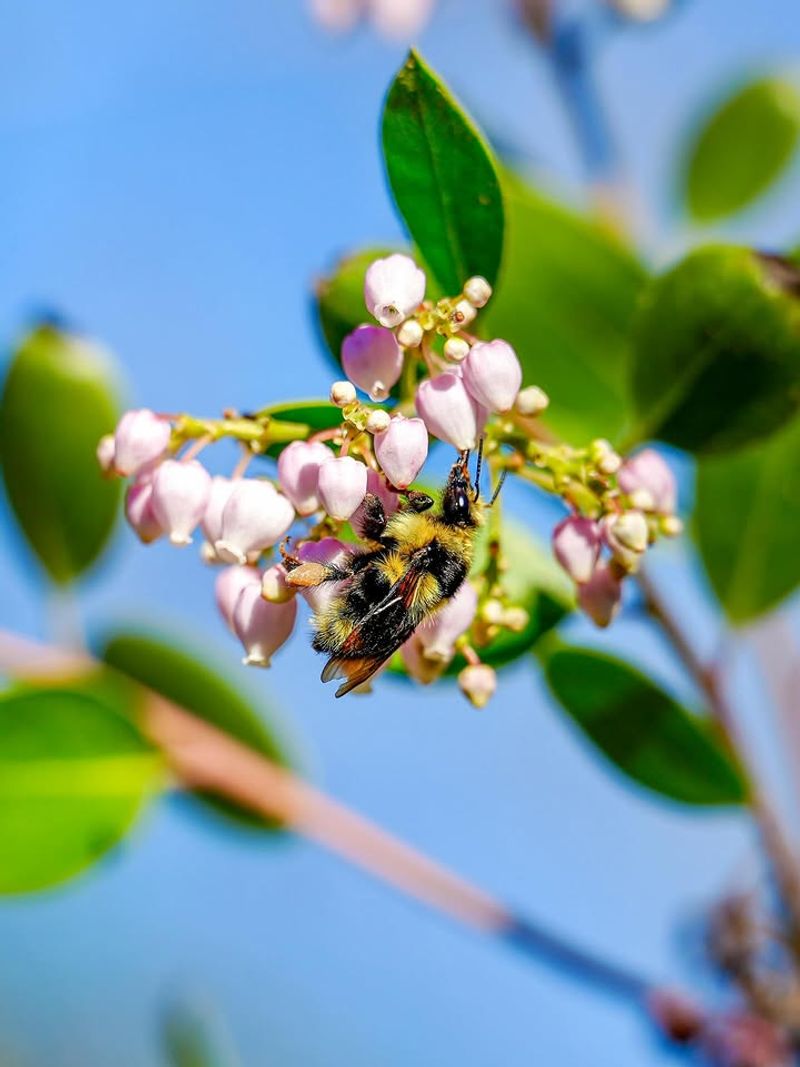
Few plants wear heat as beautifully as manzanita.
The smooth, mahogany-red bark practically glows in afternoon sun, and even on the hottest days, it looks like it belongs exactly where it is.
California has dozens of Arctostaphylos species and cultivars, ranging from ground-hugging mats to large shrubs well over ten feet tall. That range means there is a manzanita suited to almost every hot, bright spot in your garden.
What makes manzanita exceptional in tough spots is its deep, efficient root system and its genuine preference for sharp drainage.
Plant it in heavy clay or low-lying ground and you will see stress quickly. Plant it in well-draining native soil, decomposed granite, or a raised berm, and it rewards you with years of nearly effortless beauty.
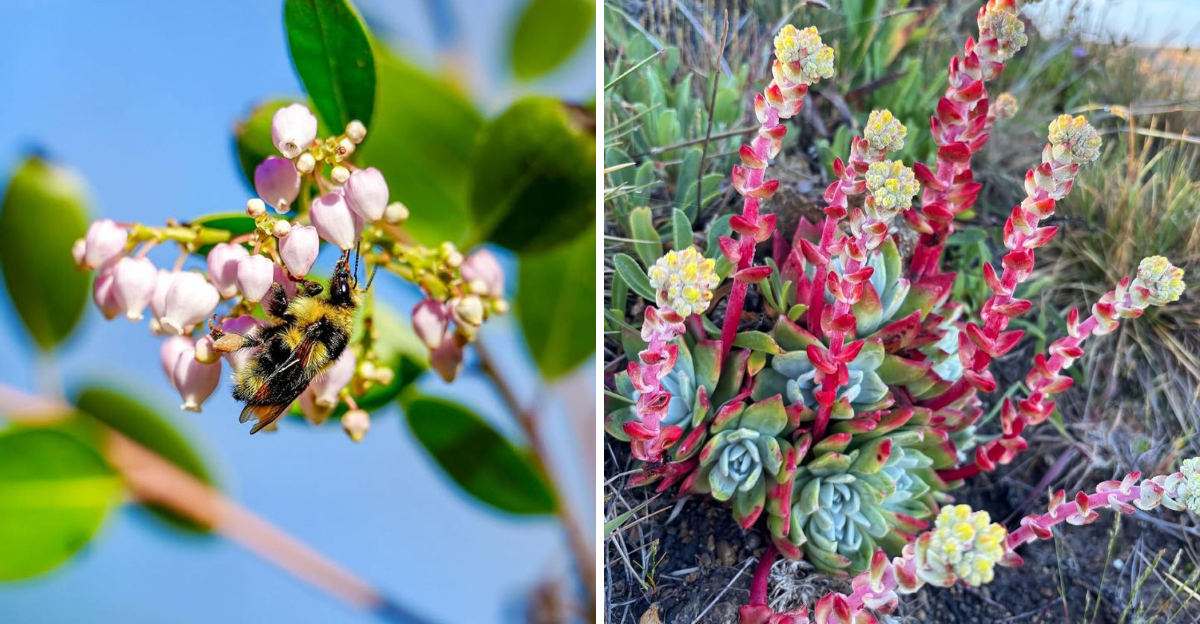
Small, urn-shaped flowers appear in late winter and early spring, often when little else is blooming, and native bees absolutely swarm them.
Establishment watering is the most important investment you will make with manzanita.
Water deeply every one to two weeks through the first dry season, then taper off dramatically. Mature plants resent summer irrigation and are much healthier without it.
Avoid planting near lawn areas or drip zones that stay consistently moist.
Select a cultivar matched to your region, as some species are more tolerant of coastal fog while others prefer the intense inland heat where they truly shine.
4. Deergrass
A long, sun-baked driveway edge does not have to look harsh and bare.
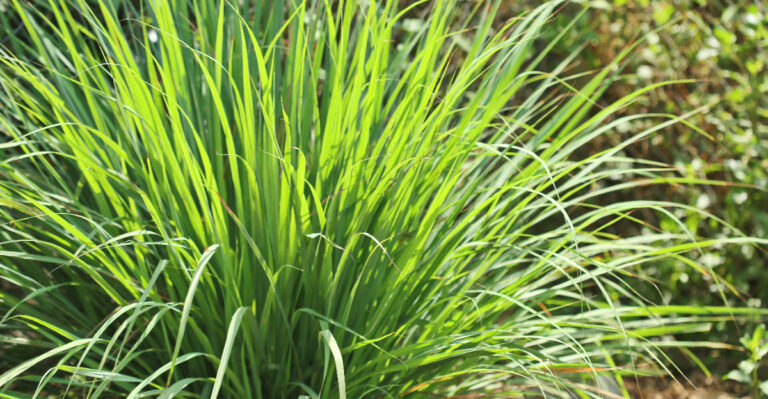
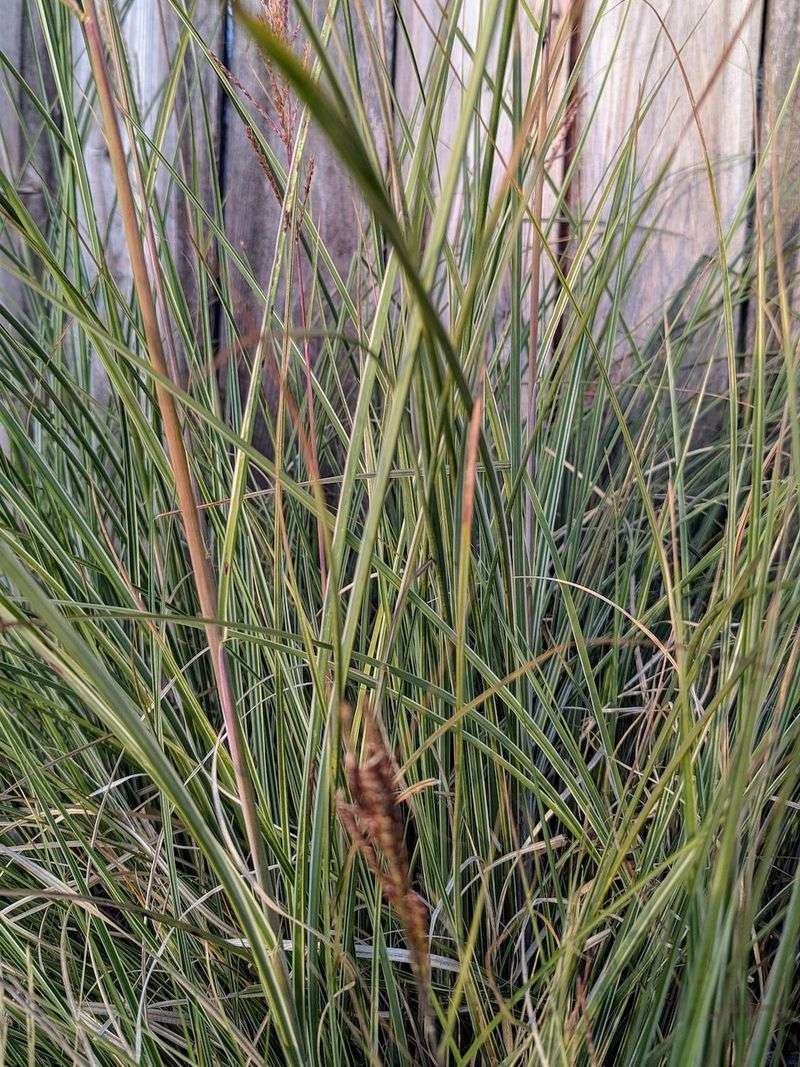
Deergrass, Muhlenbergia rigens, brings movement, texture, and a surprising amount of softness to exactly those kinds of hard, hot borders.
Native to dry slopes, chaparral edges, and open woodlands across California, this ornamental grass handles reflected heat, compacted soil margins, and summer drought in ways that most ornamental grasses simply cannot match.
Deergrass grows in graceful, fountain-like clumps that reach two to four feet tall and wide.
The fine-textured blades catch every slight breeze and create gentle motion that makes a static driveway strip feel alive.
In late summer and fall, slender flower stalks shoot up dramatically, sometimes reaching five or six feet, adding vertical interest right when the garden can feel tired and flat.
Root toughness is one of deergrass’s best qualities.
Once established, those roots push deep and hold soil along slopes and edges where erosion is a real concern.
Plant it in full sun for the best form and density. It tolerates part shade but tends to flop a bit in lower light.
During the first year, water every one to two weeks. After establishment, monthly deep watering during summer is usually plenty in most California climates.
Cut clumps back hard in late winter, about six to eight inches from the ground, to encourage fresh, tidy new growth through the warm season.
5. California Fuchsia
By August, most California gardens are running on fumes.
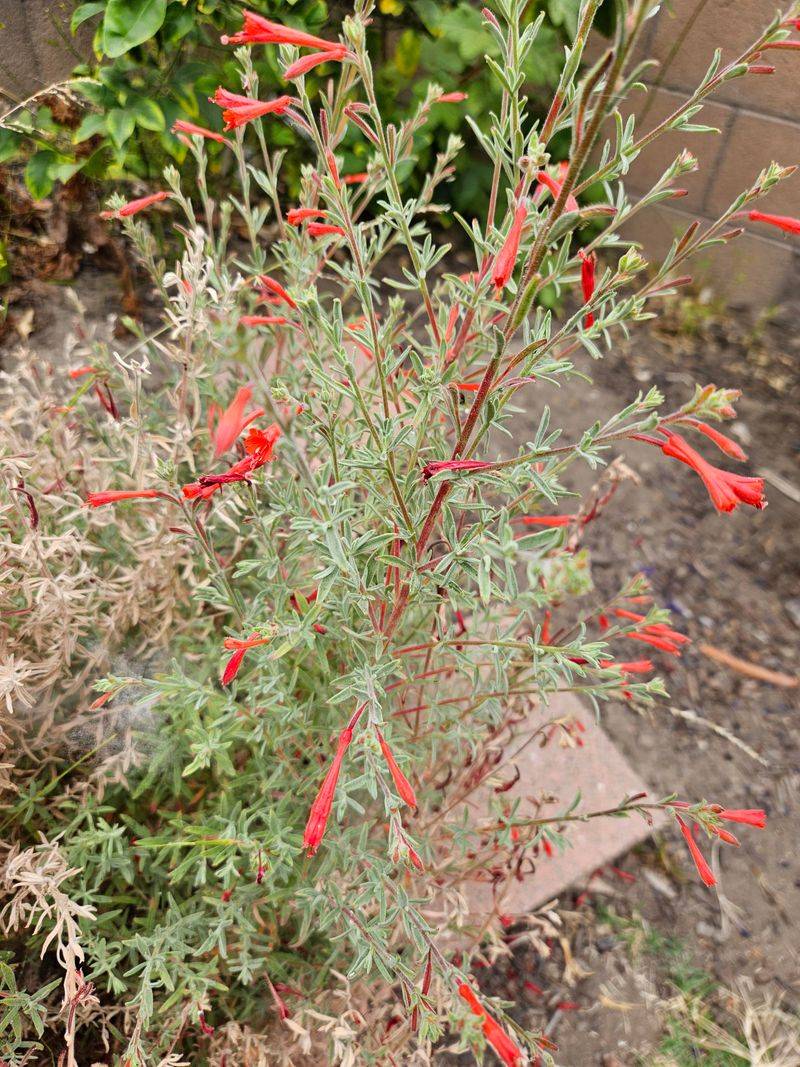
That is exactly when California fuchsia, Epilobium canum, decides to put on a show.
Brilliant scarlet-orange tubular flowers cover this low-growing perennial from late summer well into fall, and hummingbirds treat it like the best restaurant in the neighborhood.
Few natives deliver that kind of late-season color in genuinely hot, dry spots, which makes California fuchsia genuinely valuable in a way that a spring bloomer simply cannot match.
Native to rocky slopes, dry washes, and open chaparral from the coast to the foothills, this plant evolved in conditions that mirror a hot driveway strip or a sun-hammered wall garden.
It spreads by underground runners, which is worth knowing before you plant it.
That spreading habit makes it excellent as a groundcover on a hot bank or at the base of a warm wall, but it needs room or occasional editing to stay contained in a tighter space.
Plant California fuchsia in full sun and fast-draining soil.
Water every one to two weeks during the first summer to establish roots. Once settled in, it handles summer drought well and actually blooms more intensely under stress.
Cut the whole plant back hard in late winter, nearly to the ground, to encourage vigorous new growth and the best possible flower display.
Pair it with boulders or gravel mulch for a look that suits both the plant and California’s natural landscape beautifully.
6. Ceanothus
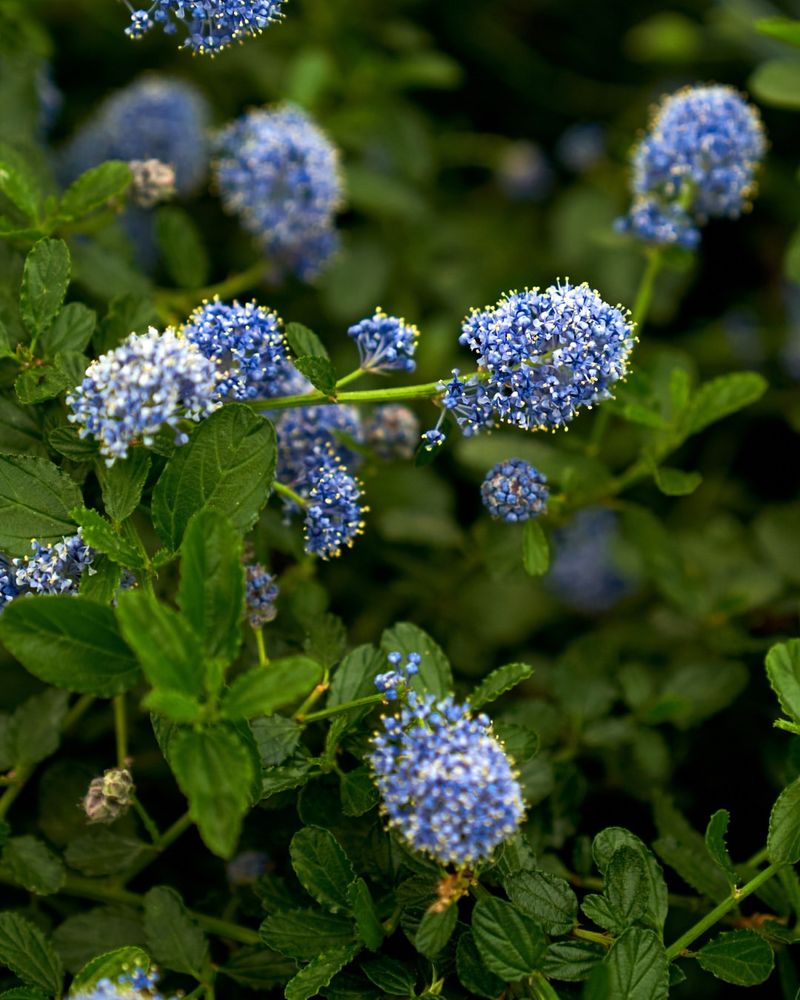
Stand in front of a blooming ceanothus in March and you will understand why California gardeners keep planting it despite its reputation for being finicky.
The flower clusters, ranging from powder blue to deep violet, are genuinely stunning, and the plant hums with native bees from first light.
Ceanothus, often called California lilac, is one of the most rewarding natives you can grow near hot walls and bright driveway exposures, as long as you get the drainage right.
Drainage is not a suggestion with ceanothus. It is the whole game.
Roots sitting in wet soil, especially during summer, invite root rot and rapid decline.
Plant ceanothus on a slight slope, in a raised berm, or in decomposed granite amended soil where water moves through quickly.
A spot near a hot driveway or wall is often ideal because the reflected heat keeps the soil drier and warmer, which is exactly what ceanothus prefers.
Choose your species and cultivar carefully, because they vary enormously in size, from low ground-hugging forms to large shrubs reaching twelve feet.
Full sun is non-negotiable for the best bloom and strongest growth.
Water every one to two weeks during the first dry season, then pull back dramatically. Summer irrigation on established ceanothus is one of the fastest ways to lose the plant.
Treat it right and it will reward you with years of spectacular spring color.
7. Dudleya
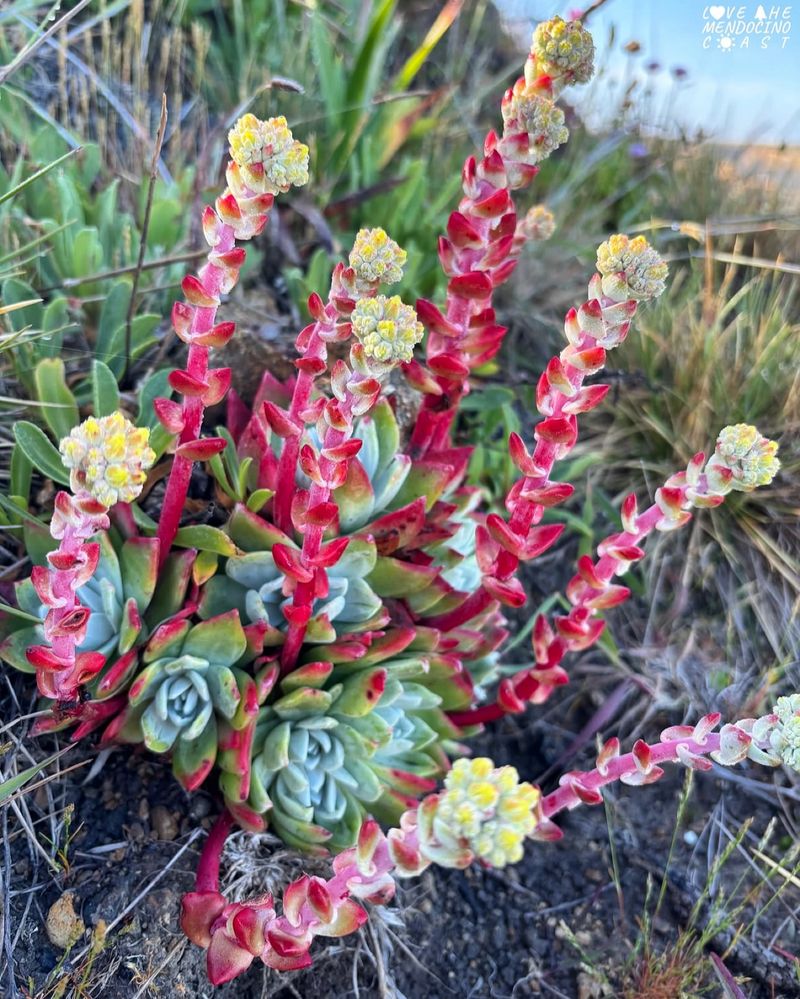
Tucked into a rocky crevice beside a blazing garden wall, a dudleya rosette looks like it was placed there by a designer with impeccable taste.
These California native succulents have a sculptural quality that makes them feel intentional and precise, even when they are simply doing what they have always done on coastal bluffs and rocky outcrops across the state.
California has more than 60 dudleya species, so matching the right one to your conditions matters.
Dudleya brittonii, with its large, chalky-white rosettes, handles intense sun and reflected heat beautifully in coastal and inland gardens.
What nearly all species share is a deep intolerance for soggy soil and poor drainage. Plant them where water drains away immediately, in crevices, raised beds, or slopes near hardscape edges.
The chalky coating on dudleya leaves, called farina, is a natural sunscreen that reflects light and reduces heat stress.
Avoid touching or rubbing the leaves, as you will permanently remove that protective layer.
Water sparingly during summer, as dudleya naturally goes semi-dormant in the heat and resents irrigation during that period.
Establish plants with light watering every two to three weeks in fall and winter, then back off dramatically as temperatures rise.
Pair them with gravel mulch and small rocks to create a naturalistic edge that looks right at home against a hot California wall or driveway border.
8. Flannel Bush
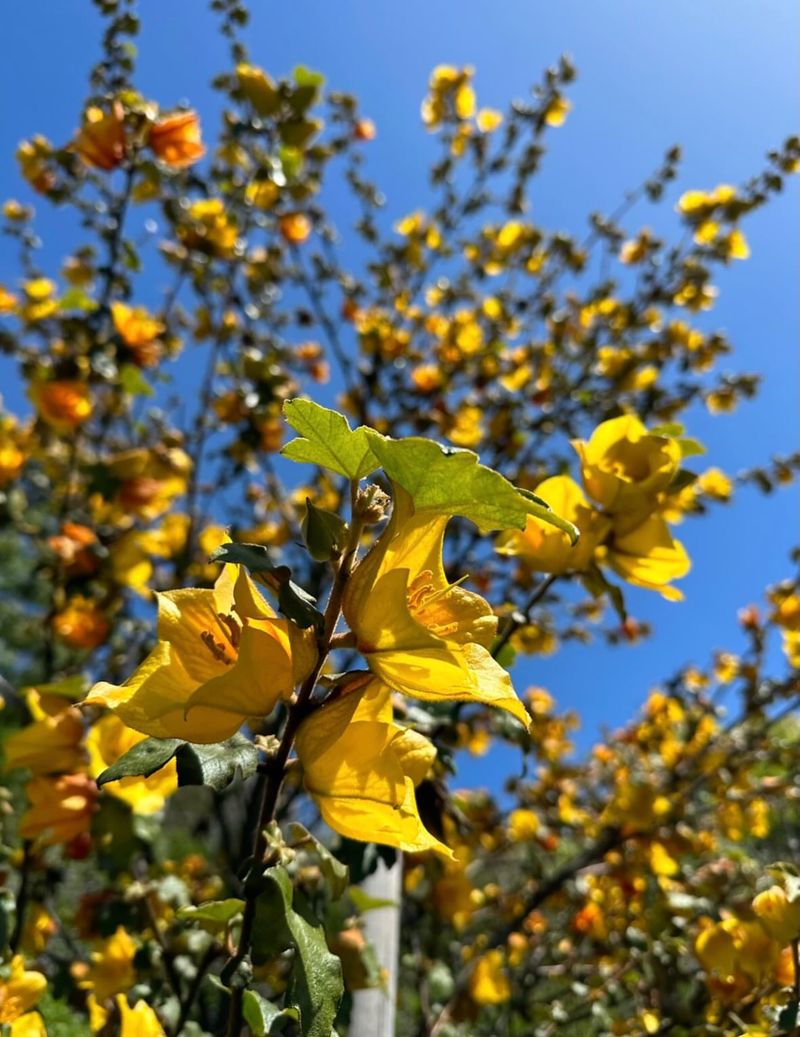
Fremontodendron, commonly called flannel bush, is the kind of plant that stops people in their tracks.
When it blooms in spring, the entire shrub disappears under a canopy of large, waxy, golden-yellow flowers that look almost unreal against a blue California sky.
Planted against a hot wall with good drainage and full sun, it becomes one of the most dramatic sights in any California garden.
The catch is that flannel bush is genuinely demanding about its conditions, and getting them wrong means a short, unhappy plant life.
Hot walls are actually ideal for flannel bush because they provide the sharp drainage and radiant warmth this plant craves.
Native to dry slopes and chaparral in the foothills and mountains, it evolved without reliable summer water and performs best when you respect that history.
Plant it in fast-draining soil, ideally with some slope or a raised position so water never pools at the roots. Full sun is essential.
The biggest mistake gardeners make with flannel bush is summer irrigation.
Once established after the first year or two of careful deep watering every two to three weeks, this plant wants to be left completely dry during summer.
Even a little excess summer water can trigger rapid root rot and decline.
Give it room to grow, as mature plants can reach ten to twenty feet.
The fuzzy leaf hairs can irritate skin, so wear gloves when pruning.
Plant it where it can stretch out against a wall and show off those extraordinary flowers without competition crowding its roots.