What Yellow Squash Leaves In North Carolina Are Signaling Before Powdery Mildew Gets A Foothold
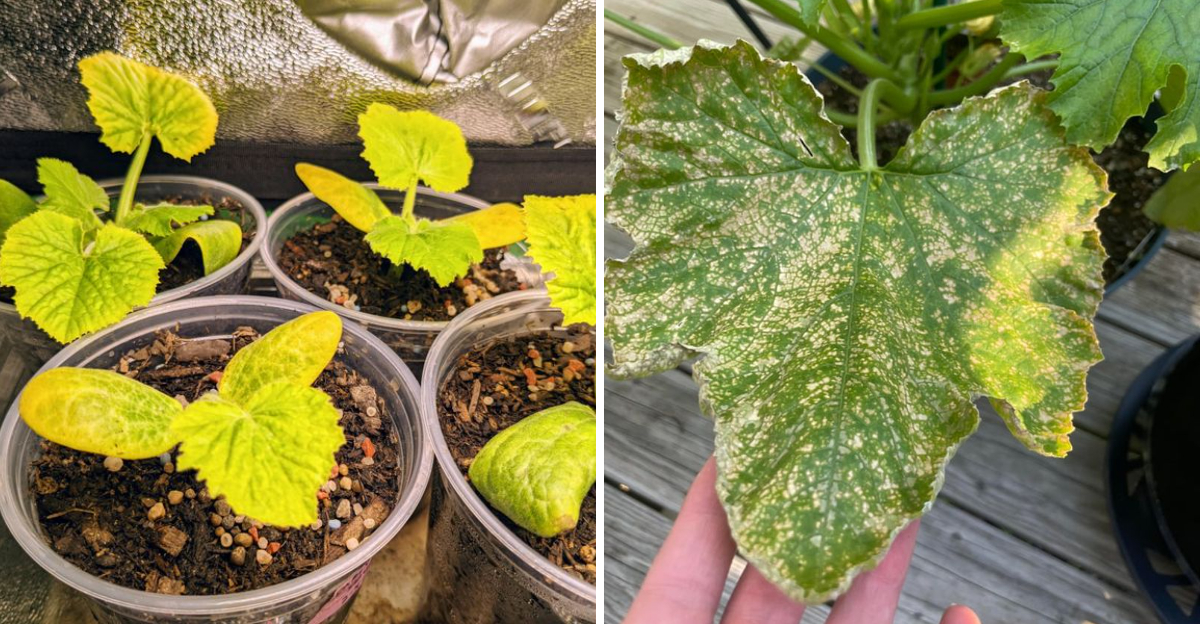
North Carolina squash leaves love to gossip before the real trouble shows up.
One muggy morning, the patch looks fine from the porch. Step closer, and the leaves start telling a different story.
A pale spot near the edge. A yellow patch spreading across older growth. A dusty look that was not there yesterday.
That is the warning window.
Powdery mildew does not usually take over in silence. Long before the white coating becomes obvious, yellow squash leaves often show small signals that heat, humidity, poor airflow, or stress is giving trouble a place to settle in.
So what is your squash plant trying to say before the patch starts looking tired?
Start by reading the leaves, not panicking over them. The pattern matters more than one random spot.
Catch the clues early, and you can improve airflow, adjust watering, remove problem leaves, and keep those vines producing before North Carolina summer turns one small warning into a full squash-patch headache.
1. Yellow Patches Need A Close Look
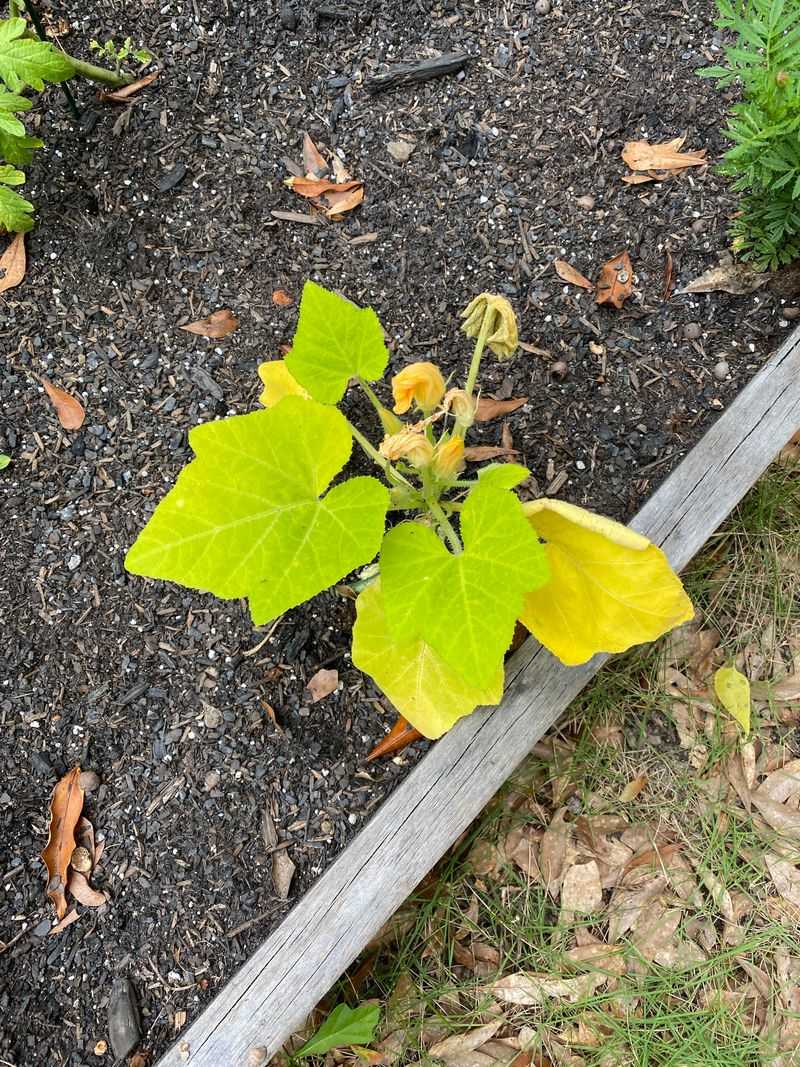
A yellow patch on a squash leaf is not automatically a death sentence for your plant, but it is absolutely worth stopping and crouching down for a closer look.
The shape and location of that yellowing can tell you a surprising amount about what is actually going on.
Angular yellow patches that follow the veins of the leaf are often a sign of downy mildew, while blotchy, irregular yellowing that spreads without a clear pattern can point to something else entirely, like a nutrient issue or early stress from inconsistent watering.
Grab a hand lens if you have one.Turn the leaf over and check the underside carefully. Downy mildew often shows a grayish-purple fuzz on the underside right beneath those yellow patches on top.
Powdery mildew, on the other hand, tends to show up as a white or grayish powder on the upper surface of the leaf.
If you see neither, the yellowing might simply be the plant responding to heat stress or root issues. NC State Extension recommends scouting your garden at least twice a week during summer.
Start at the base of the plant and work outward, checking both sides of every leaf you can reach.Document what you see with your phone camera.
Comparing photos from one week to the next helps you spot patterns quickly.Not every yellow leaf means trouble, but every yellow leaf deserves your attention before things squash your harvest plans.
2. Lower Leaves Speak First
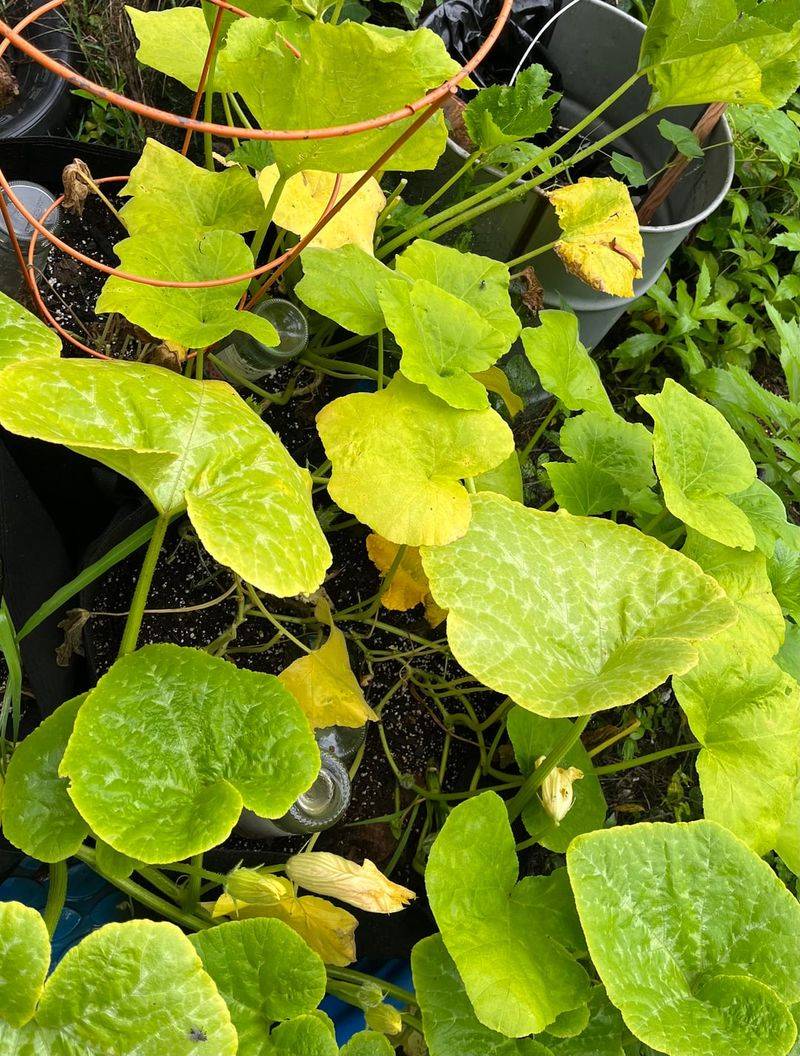
Older leaves near the base of the vine are almost always the first to show stress.
That is not an accident.
When a squash plant is under pressure from disease, drought, or nutrient deficiency, it pulls resources toward new growth and sacrifices the older foliage first.
Those bottom leaves yellowing early in the season are waving a flag that something is off, even if the top of the plant still looks green and cheerful.
Check those lower leaves first every time you scout.
Look for yellowing that starts at the edges and moves inward, which can suggest potassium deficiency. Look for yellowing between the veins while veins stay green, which can point to magnesium or iron issues.
Your North Carolina Garden Changes Every Week. Your Plan Should Too.
Gardening in North Carolina changes quickly throughout the season. Every Friday you’ll receive a simple weekly plan showing exactly what to plant, prune, fertilize, harvest, and protect so you never miss the right timing.
Fungal diseases also tend to start low and work their way up the plant.
Spores splash up from the soil, settle on lower leaves, and begin their work there before spreading upward.
That makes the lower canopy your early warning system.
Removing a few heavily affected lower leaves and disposing of them away from the garden can slow the spread. Do not compost those leaves.
Keeping the base of the plant open and airy gives you a fighting chance to stay ahead of problems before they climb up and take over the whole vine.
3. Humid Nights Raise The Pressure
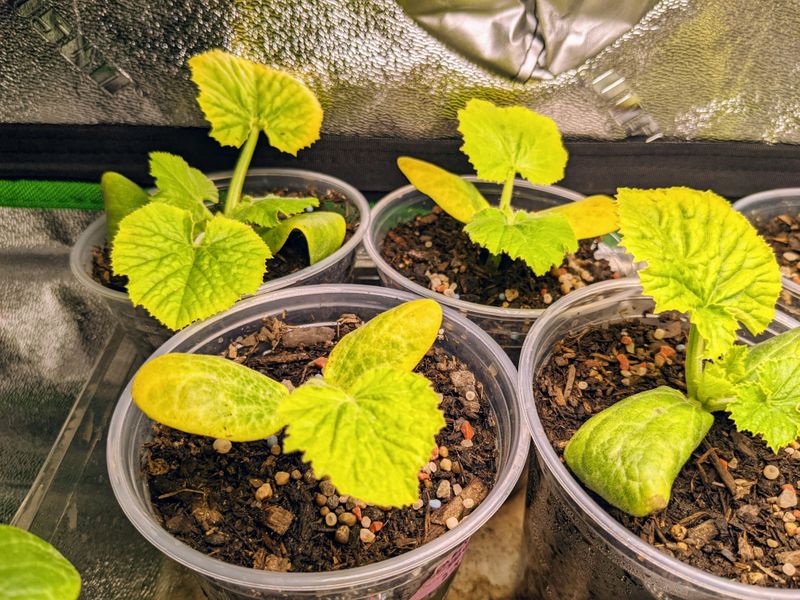
A sticky North Carolina night does wonders for fungal spores.
Powdery mildew is a little unusual compared to most fungal diseases because it actually thrives in warm, dry days paired with humid nights rather than needing constant wetness.
Temperatures between 60 and 80 degrees Fahrenheit with humidity that climbs overnight create nearly perfect conditions for spores to germinate and spread across squash foliage.
North Carolina summers serve up exactly that combination from June through September.
Warm afternoons give way to muggy evenings, and by morning your squash leaves are coated in a fine layer of surface moisture even if it never actually rained.
That thin film of humidity on the leaf surface is enough to get spores moving.
If your nights have been warm and sticky for several days in a row, your squash plants are under elevated fungal pressure whether you can see it yet or not.
Monitoring your local humidity levels is a smart habit.
A simple outdoor thermometer and hygrometer from any hardware store can tell you what conditions looked like overnight.
When humidity stays above 85 percent for multiple nights in a row during summer, treat that as a signal to scout more frequently and consider whether a preventive organic spray like a diluted baking soda solution or potassium bicarbonate might be worth applying.
Acting before white powder appears is always easier than trying to manage an established outbreak on a squash vine that is already feeling the squeeze.
4. Crowded Vines Trap Moisture
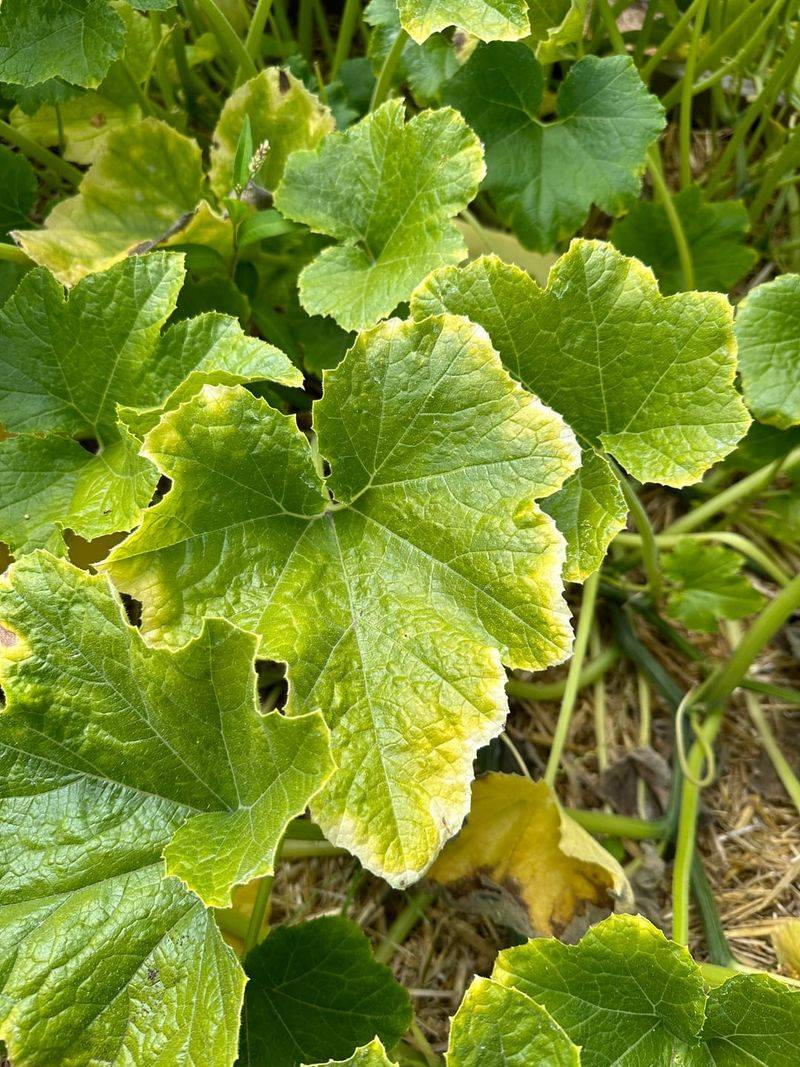
Squash vines are enthusiastic growers, and in a North Carolina summer garden they can go from seedling to sprawling monster in what feels like about ten minutes.
That rapid growth is impressive, but it creates a real problem when vines start overlapping and leaves stack on top of each other.
All that dense foliage traps moisture close to the plant, keeps air from moving through, and creates exactly the kind of shaded, humid microclimate that fungal diseases love to set up shop in.
Crowded beds also make it harder for you to spot trouble early.
If you cannot see the lower leaves or the undersides of leaves in the middle of the canopy, you are flying blind.
Spacing yellow squash plants at least 18 to 24 inches apart, and giving rows at least 3 to 4 feet of clearance, helps enormously with airflow and visibility.
If your plants are already crowded and mid-season pruning feels daunting, start small.
Remove a few of the oldest, most shaded leaves from the base of each plant.
Clear out any leaves that are already showing yellow or brown edges. Thin the canopy just enough so that morning sunlight can reach the soil and air can move through the middle of the plant.
Even modest improvements to airflow can reduce the humidity trapped around your vines and slow the conditions that let mildew gain a foothold.
5. Overhead Watering Adds Risk
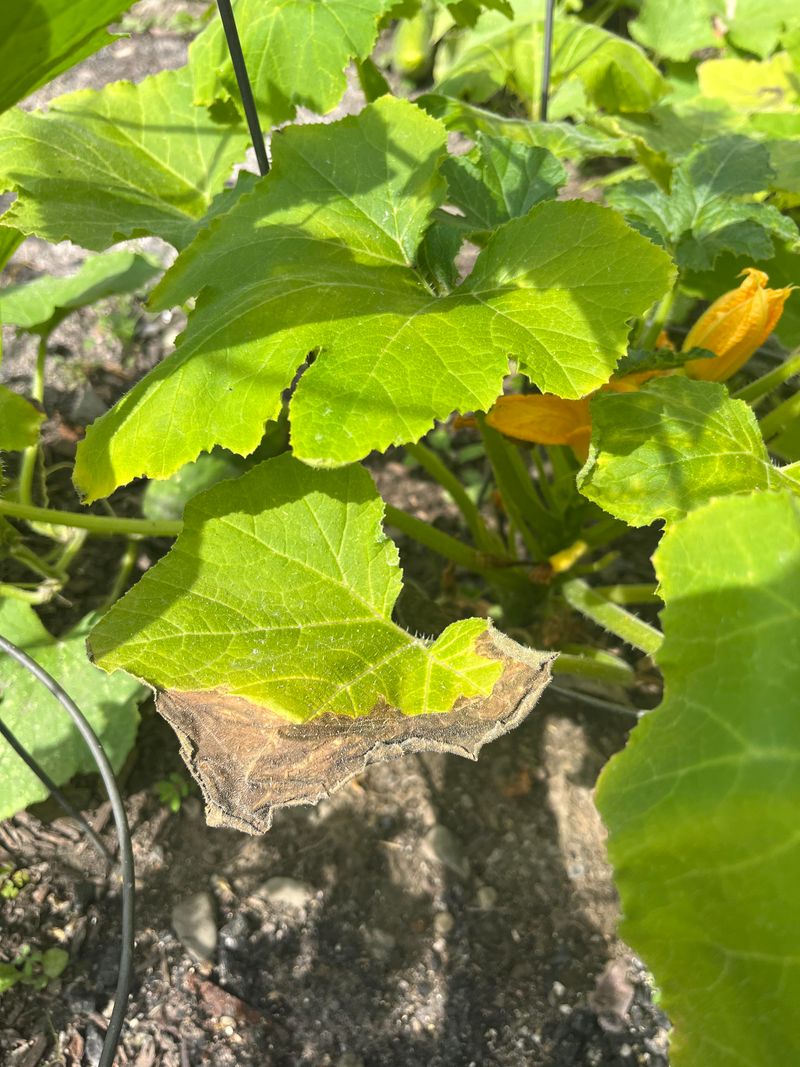
Watering squash from above feels natural, especially when you are using a hose or a sprinkler system set up across the whole garden.
But wetting the foliage of squash plants, especially in the afternoon or evening, dramatically increases the risk of fungal problems.
Wet leaves that stay wet through the night are an open invitation for spores to germinate and spread.
In a North Carolina summer where nights are already humid, adding extra moisture to the leaf surface tips the balance further toward disease.
Switching to drip irrigation or a soaker hose at the base of the plant is one of the most effective changes a home gardener can make.
Water goes directly to the root zone where the plant actually needs it, and the foliage stays dry.
If you do not have drip irrigation set up, try to water in the morning rather than the evening so that any water that does splash onto leaves has the whole day to evaporate before temperatures drop at night.
Mulching around the base of your squash plants also helps.
A good layer of straw or wood chip mulch reduces soil splash when it rains, which is how many fungal spores travel from the soil up onto lower leaves.
Small adjustments in how and when you water can have a surprisingly big impact on whether your squash stays healthy through the long, steamy North Carolina growing season.
6. Airflow Needs Immediate Help
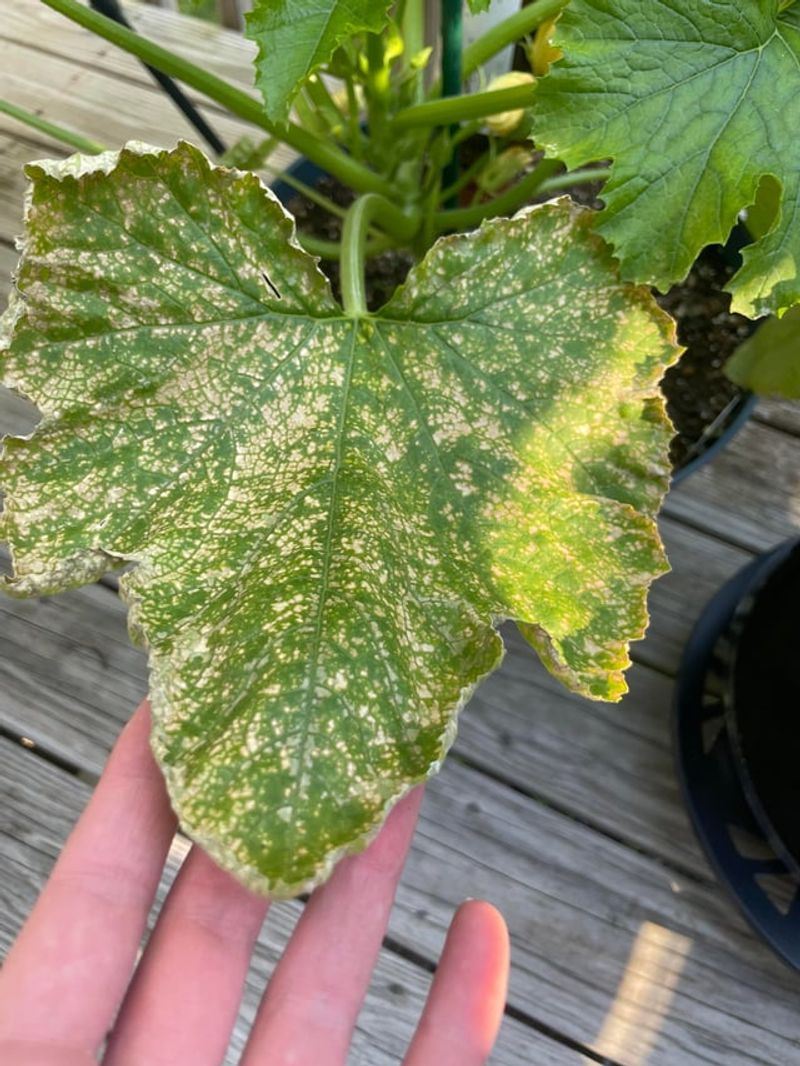
Lift a leaf in the middle of a dense squash plant on a calm summer afternoon and feel how still and warm the air is in there.
That trapped air is a problem.
Good airflow is one of the most underrated tools in a home gardener’s toolkit for managing fungal pressure.
Moving air dries leaf surfaces faster, reduces the humidity that lingers around foliage, and makes it harder for spores to settle and germinate.
Improving airflow does not have to mean a major overhaul of your garden.
Start by removing the lowest three or four leaves on each plant, especially any that are already yellowing or touching the soil.
Those leaves are usually the most shaded, the least productive, and the most likely to harbor early disease.
Clearing them opens up the base of the plant and gets air moving through the lower canopy.
If your squash vines are long enough, consider training them onto a simple trellis or fence to get the foliage up off the ground.
Weeds growing around and through your squash bed also trap moisture and block airflow.
Pulling weeds regularly is not just about competition for nutrients. It is also about keeping the air around your plants moving freely.
Take fifteen minutes every week to clear the area around your plants, trim back any leaves that are overlapping heavily, and give your squash vines room to breathe their way through summer.
7. White Dust May Be Next
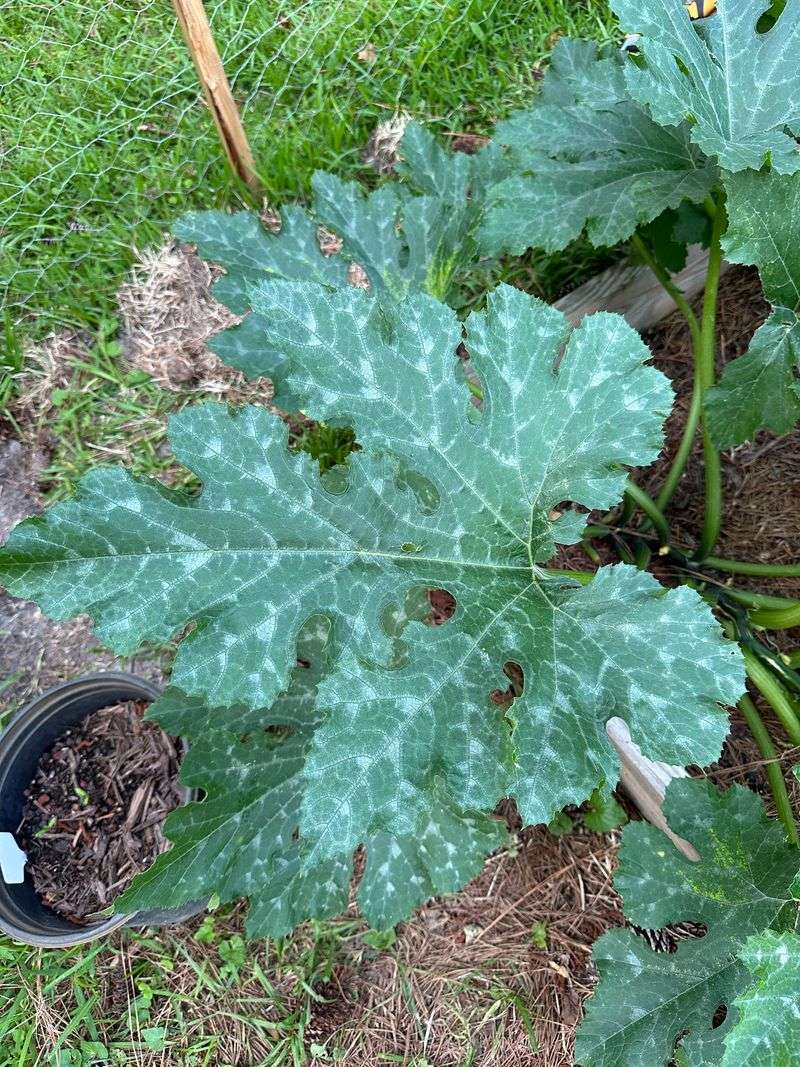
A gardener flipping over a squash leaf and spotting the first faint white dusting on the upper surface knows that sinking feeling.
Powdery mildew has arrived.
Unlike many fungal diseases, powdery mildew does not need free water on the leaf to spread. It spreads through airborne spores, and once it shows up in your garden it moves fast, especially on squash and other cucurbits that are particularly susceptible.
The white powder you see is actually the fungal growth itself, a mass of spores and mycelium sitting right on the surface of the leaf.
Early spots are often small and round, appearing first on the upper side of older leaves.
Within a week or two without intervention, those spots can spread to cover entire leaves and move onto younger growth.
Heavily infected leaves turn yellow, then brown, and eventually the plant loses so much photosynthetic capacity that fruit production drops off sharply.
Catching powdery mildew at the very first sign gives you the best chance of slowing it down.
Organic options like potassium bicarbonate, neem oil, or a diluted baking soda spray applied to both sides of affected leaves can help reduce the spread.
Remove and bag the most heavily affected leaves before treating.
Scout every two to three days once you spot the first white patches.
Consistent scouting and early treatment are far more effective than waiting until the white dust has spread across the whole squash patch and you are left trying to play catch-up.
8. Resistant Varieties Help Later
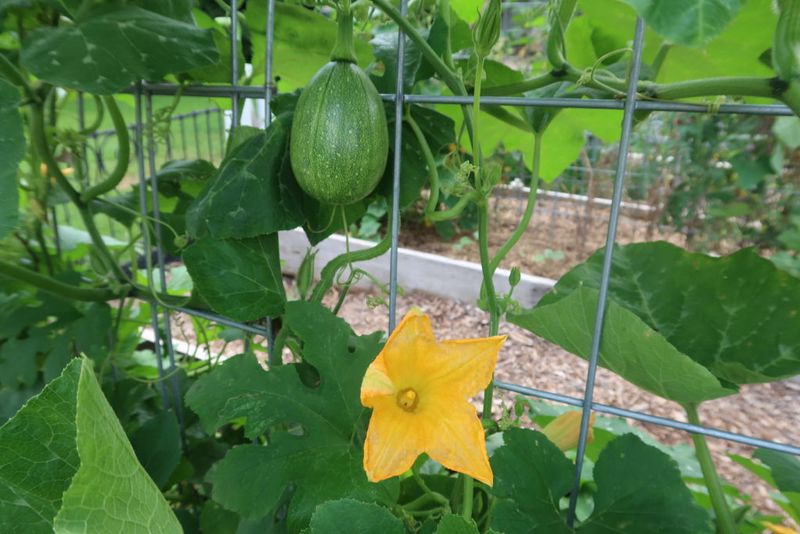
Planning ahead is one of the most satisfying moves a gardener can make.
If powdery mildew showed up in your squash patch this season, there is a good chance it will be back next year.
Fungal spores overwinter in soil and plant debris, and North Carolina’s mild winters do not always wipe them out completely.
Choosing squash varieties with built-in resistance to powdery mildew before you plant next season gives you a real head start.
Several yellow squash varieties have been bred specifically with disease resistance in mind.
Varieties labeled PMR, which stands for powdery mildew resistant, are worth seeking out. NC State Extension also publishes vegetable variety trial results that are specific to North Carolina growing conditions, which is an excellent resource for finding what actually performs well in your region.
Crop rotation is the other piece of the puzzle.
Moving your squash planting to a different part of the garden each year reduces the buildup of soilborne pathogens and gives disease pressure a chance to drop in the beds where squash grew before.
Rotate with non-cucurbit crops like beans, tomatoes, or corn for at least one full season.
Combining resistant varieties with smart rotation, better spacing, and improved watering habits puts you in a much stronger position going into next summer.
Ready to stay a step ahead of whatever the season throws at your squash vines.