This Florida Shrub Gets Less Attention Than A Cottonmouth But Can Be Just As Dangerous
Florida has a well-earned reputation for things that can hurt you. Most residents have a mental list.
Cottonmouths near the water, fire ants in the lawn, jellyfish at the beach. One shrub that grows in yards across the state belongs on that list and almost never makes it.
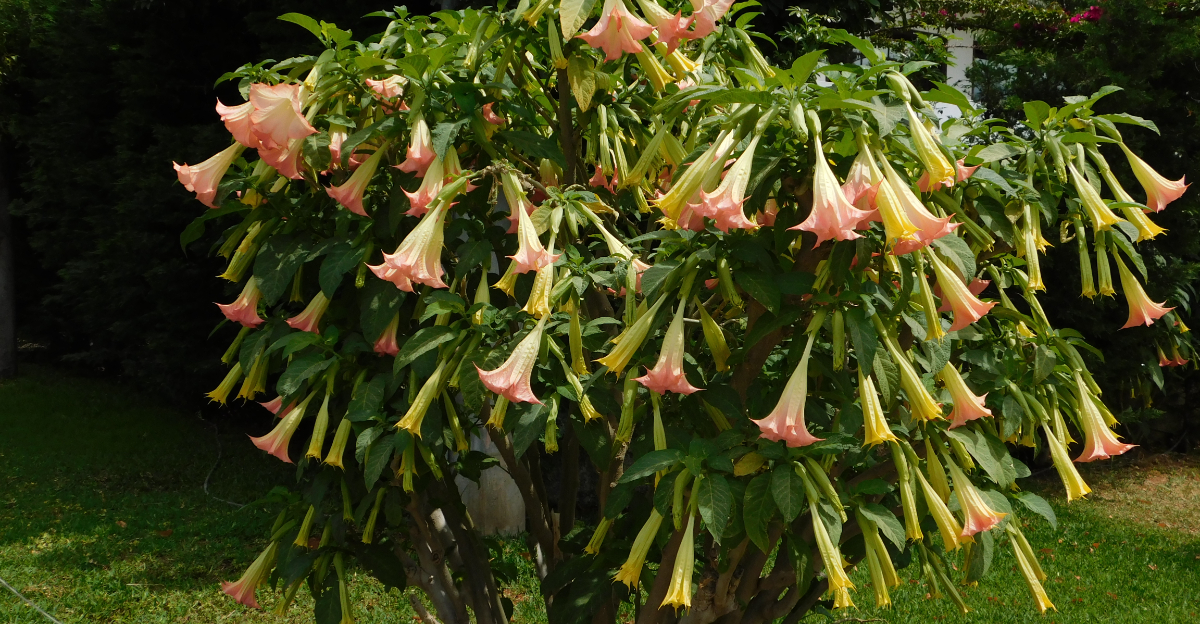
It blooms beautifully. Large, trumpet-shaped flowers that hang in clusters and stop people mid-walk.
It grows fast, handles Florida heat without complaint, and shows up in neighborhoods across the state without anyone questioning whether it should be there. Every part of it is toxic.
Not in a handle-carefully, wash-your-hands way. Seriously toxic, in ways that have sent people to emergency rooms and made international poison control lists.
Most homeowners who have it never knew what they were actually growing. It came with the house, or looked striking at the nursery, or a neighbor divided it without mentioning what it was.
1. Angel’s Trumpet Looks Too Beautiful To Fear
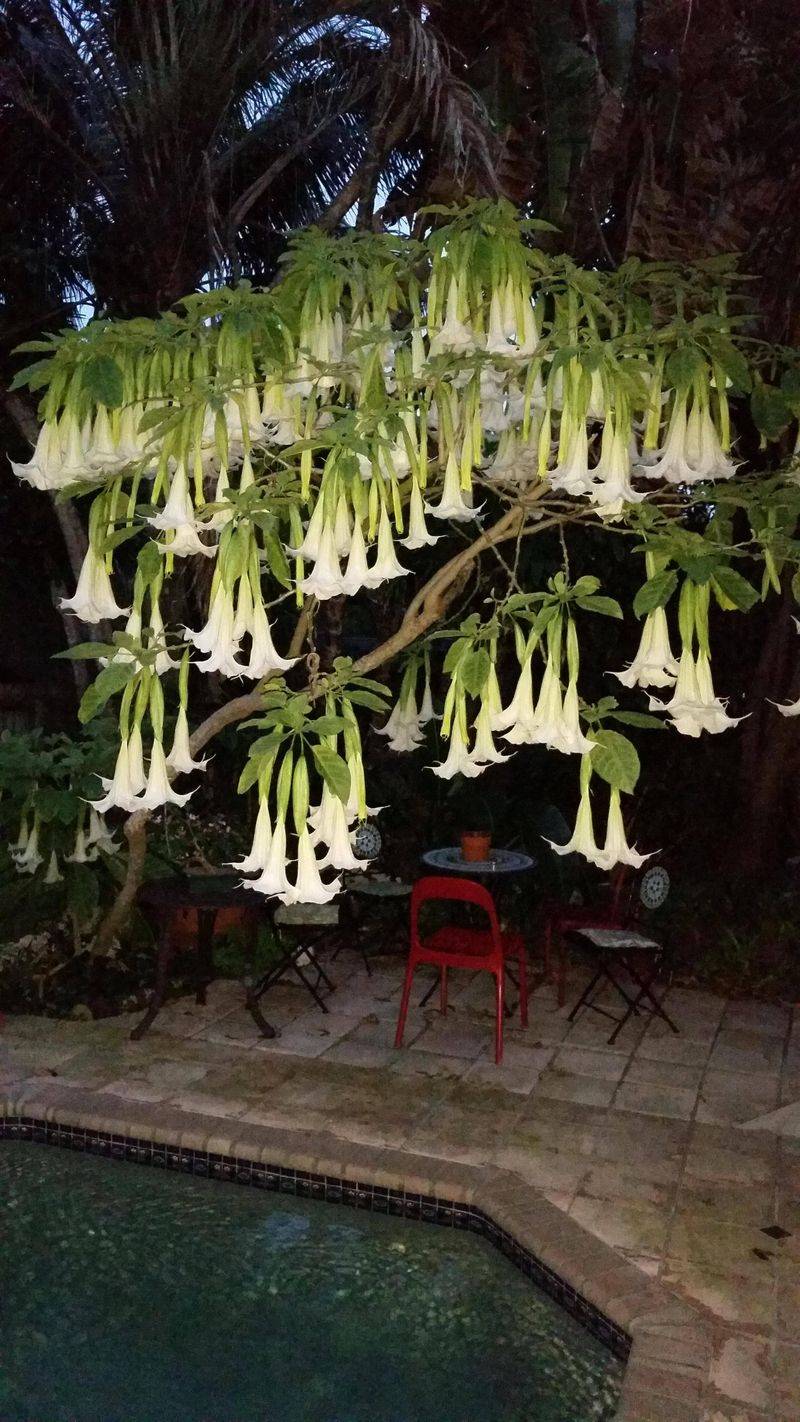
Moonlight catches those enormous hanging blooms in a way that makes you stop and stare. Angel’s trumpet, known botanically as Brugmansia, produces flowers that can stretch up to a foot long, and they come in shades of white, yellow, pink, and peach.
The fragrance at dusk can be so powerful and sweet that neighbors stop to ask what is blooming.
That beauty is exactly the problem. A cottonmouth coiled near a pond gets instant respect because people recognize the shape, the warning, and the risk.
A flowering shrub with tropical good looks gets photographed, planted near entryways, and gifted between neighbors without the same caution.
Angel’s trumpet can grow as a large shrub or small tree depending on conditions and pruning. It thrives in warm-weather gardens across this state, especially in central and southern regions where winters stay mild.
Northern panhandle areas may see it cut back by cold but it often regrows.
Florida gardeners love it for fast growth, bold texture, and year-round interest in warmer zones. Nothing about its appearance signals danger.
That gap between how it looks and what it contains is exactly why it deserves a much closer look before it goes into the ground.
2. Every Part Of The Plant Is Poisonous
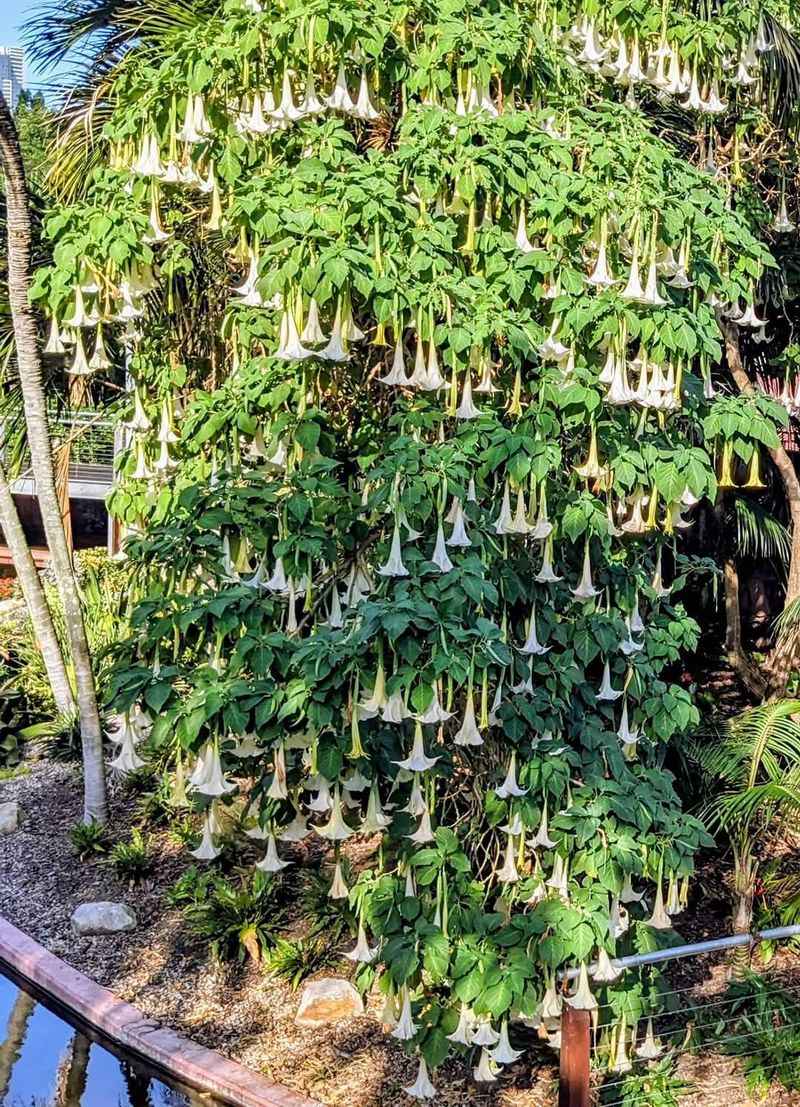
Roots, stems, leaves, flowers, seeds, and every bit of plant material in between contain toxic alkaloids, including scopolamine, hyoscyamine, and atropine.
These compounds are present throughout the entire plant, not just in one convenient part that can be avoided.
According to poison control resources and university extension publications, all parts of Brugmansia are considered toxic when ingested.
The risk is not about brushing past the plant on a garden path. Danger rises when someone chews, tastes, handles plant material and then touches their face, or experiments with any part of the plant.
Children who pick up fallen flowers and put them near their mouths face a real risk. Pets and livestock that graze on leaves or seed pods face serious harm.
Symptoms of exposure can include dry mouth, blurred vision, rapid heartbeat, confusion, and more severe reactions. Severity depends on the amount involved and the person or animal affected.
Your Florida Garden Changes Every Week. Your Plan Should Too.
Gardening in Florida changes quickly throughout the season. Every Friday you’ll receive a simple weekly plan showing exactly what to plant, prune, fertilize, harvest, and protect so you never miss the right timing.
Severity can vary widely. Any suspected ingestion should be treated as a medical emergency.
Contact the Poison Control Center at 1-800-222-1222 right away if a person has been exposed. For pets, call a veterinarian or animal poison control immediately.
Do not wait for symptoms to appear before seeking help.
3. The Fragrant Flowers Hide A Serious Risk
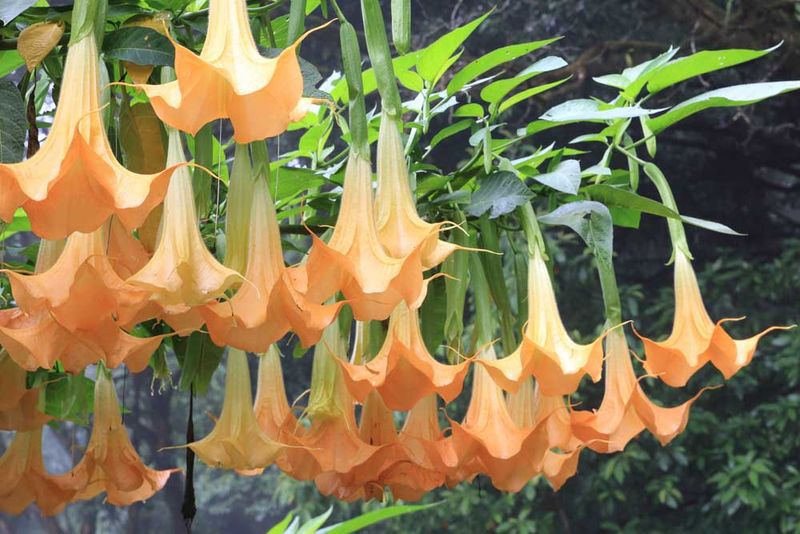
That sweet evening fragrance drifting across a patio can feel like one of the best parts of a Florida summer night. Angel’s trumpet earns its place in sensory gardens for exactly that reason.
But the same flowers that smell incredible are part of a plant that should never be handled casually. That is especially true around young children or curious visitors.
Fallen flowers collect on patios, sidewalks, and lawn edges. Children may pick them up, smell them closely, or carry them around.
Some children may chew or taste plant parts out of curiosity. That kind of contact, especially if hands then touch the mouth or eyes, is where risk increases.
Fragrance alone in a normal outdoor garden setting is not the documented source of poisoning. The toxicity comes from ingesting or handling plant material in ways that allow toxic compounds to enter the body.
Keeping that distinction clear helps homeowners understand the actual risk without overreacting.
Patios, entryways, and evening seating areas where children gather are not ideal spots for this plant. The fragrance is real and lovely, but the plant material that produces it deserves the same careful placement you would give any other serious garden risk.
4. Children And Pets Need Extra Distance
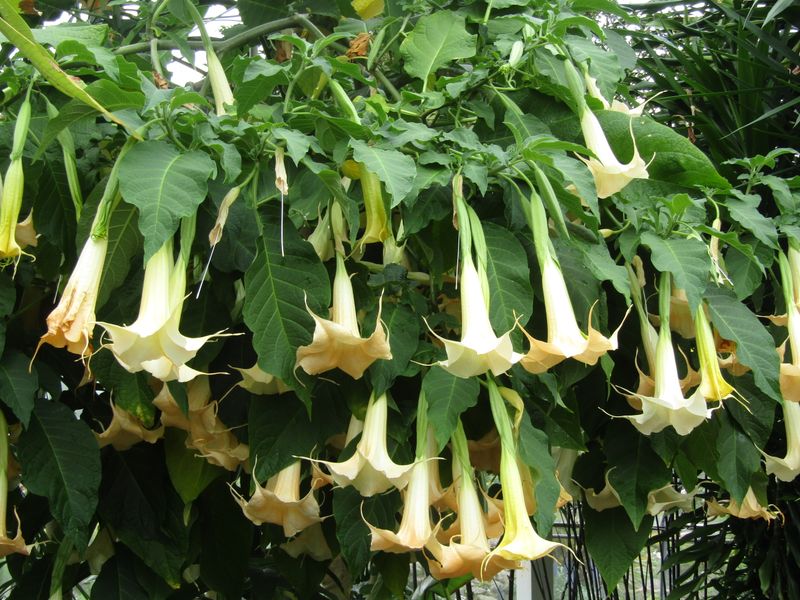
A dog nosing through a flower bed does not know the difference between a safe shrub and a toxic one. Neither does a toddler who spots a big drooping flower on the ground and picks it up.
Placement decisions in a yard are really safety decisions, and angel’s trumpet demands that kind of thinking before it goes into the soil.
Dog runs, fenced play yards, school gardens, porches where children gather, and walkways where fallen flowers land regularly are not appropriate spots for this plant. Seed pods that fall and split open can scatter seeds across a wide area.
Leaves that drop after pruning or wind events can end up anywhere in the yard.
Veterinary poison resources list Brugmansia as toxic to dogs, cats, and horses. Symptoms in animals can include dilated pupils, weakness, rapid heartbeat, and disorientation.
Any pet that has chewed or eaten plant material should be seen by a veterinarian right away. Do not try to treat a pet at home.
Families who love bold tropical plants have plenty of safer choices for high-traffic spaces. Saving angel’s trumpet for a carefully managed, fenced, and monitored area can be a reasonable middle ground.
Keep it away from children and animals to avoid creating a hazard.
5. Seeds And Leaves Deserve Careful Handling
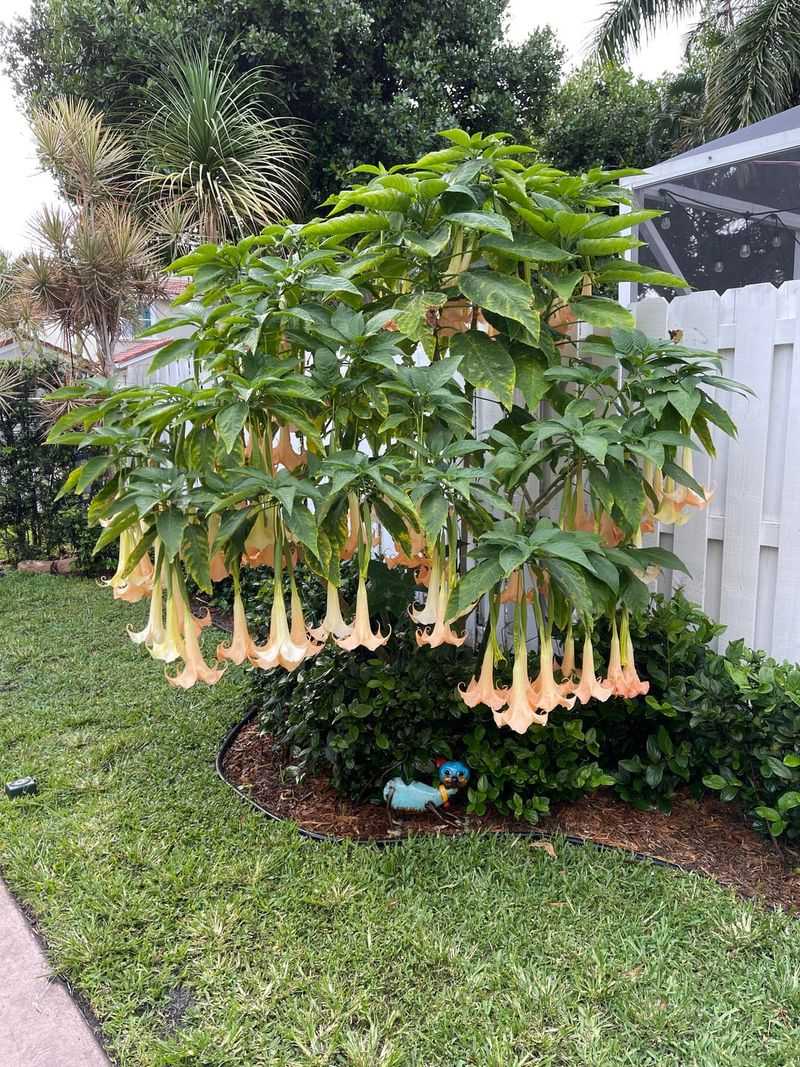
Seed pods on angel’s trumpet are hard to miss once you know what to look for. They hang from the branches and eventually split open, releasing seeds that can end up on the ground, in mulch beds, or carried elsewhere by wind or foot traffic.
Those seeds carry the same toxic compounds found in every other part of the plant.
Leaves are large and can be mistaken by children for something collectible or interesting. Handling leaves and then touching the face, especially near the eyes or mouth, is a route of exposure worth taking seriously.
Washing hands thoroughly after any contact with the plant is a simple but important habit.
Cleanup after the plant drops flowers, leaves, or seed pods should be done with gloves. Bag the clippings and plant debris in sealed bags before placing them in yard waste.
Keep collected plant material away from areas where children or pets play while you are working.
Never encourage children to handle seeds, collect pods, or experiment with any part of the plant. Even well-meaning garden curiosity can lead to accidental exposure.
Labeling the plant clearly in a Florida shared yard or community garden space helps other adults understand what they are looking at and how to respond appropriately around it.
6. Pruning Calls For Gloves And Cleanup
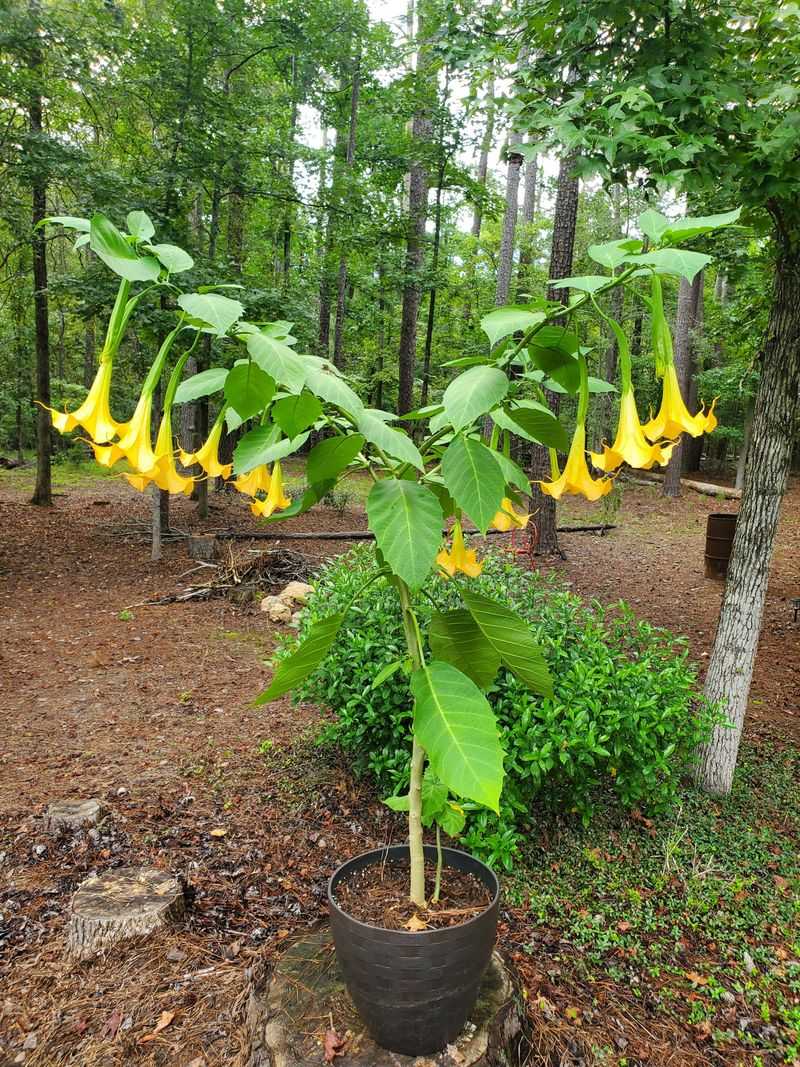
Grab your gloves before you grab your pruning shears. Working with angel’s trumpet without hand protection means your skin may come into contact with sap, leaf surfaces, stems, and cut plant material.
Sensitivity varies from person to person, but there is no reason to test that with bare hands when a good pair of gardening gloves costs almost nothing.
Use clean, sharp tools so cuts are smooth and sap does not spread unnecessarily across your hands, arms, or clothing. After pruning, wash your hands and forearms thoroughly even if you wore gloves.
Avoid touching your face, eyes, or mouth while working with the plant or immediately after.
Clippings should go into sealed yard-waste bags and not left loose in a pile where pets or children can get into them.
Some horticulture safety resources advise against burning toxic plant clippings because smoke from burning plant material can carry irritating compounds.
Following your local yard-waste disposal rules is the safest and most responsible approach.
Pruning angel’s trumpet is not complicated, but it does require a moment of mindfulness that you might not need with a gardenia or a firebush.
Treating the process as a routine safety step, rather than a chore, makes the whole experience simpler and keeps your yard a safer place for everyone in it.
7. Safer Showy Shrubs Belong Near Busy Spaces
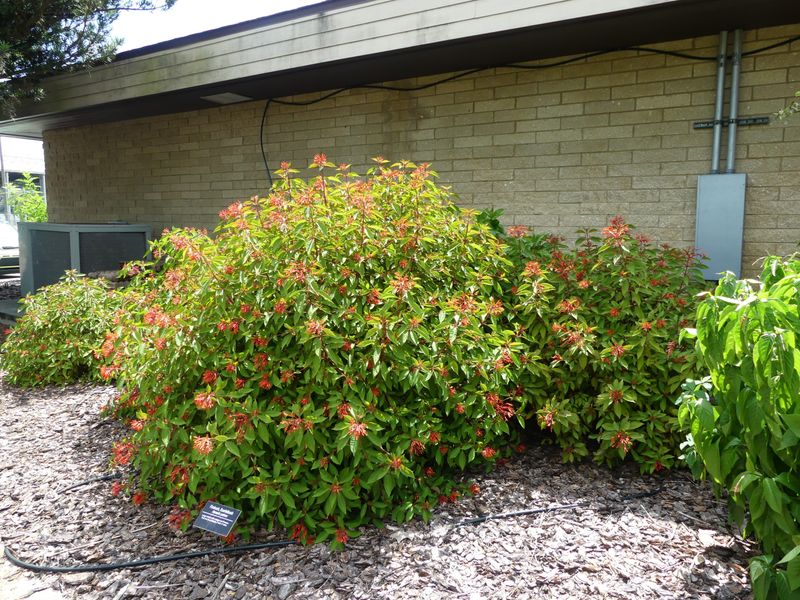
Bold flowers and tropical drama do not have to come with a side of serious risk. Plenty of showy plants thrive in warm-weather gardens without the toxicity concerns that come with angel’s trumpet.
Matching plant selection to yard use is one of the smartest things a gardener can do, especially in spaces where children, pets, and guests spend regular time.
Firebush, plumbago, bougainvillea, and many native flowering shrubs offer striking color and fast growth without the same level of concern. UF/IFAS and local county extension offices publish plant lists for Florida homeowners.
These lists help you choose plants suited to your yard, region, and household needs. Starting there is always a good idea before purchasing something unfamiliar.
Angel’s trumpet does not need to be removed from every yard. Responsible placement means choosing a spot with limited foot traffic.
Keep it away from play areas and pet spaces. Choose a place where fallen flowers and seeds can be cleaned up safely.
Think about who uses your yard and how they use it before deciding where a high-risk plant goes. A quiet back corner with adult supervision is very different from a front-walk flower bed where neighborhood kids cut through daily.
Landscape design is always a safety decision too.
8. Respect The Plant Without Treating It Casually
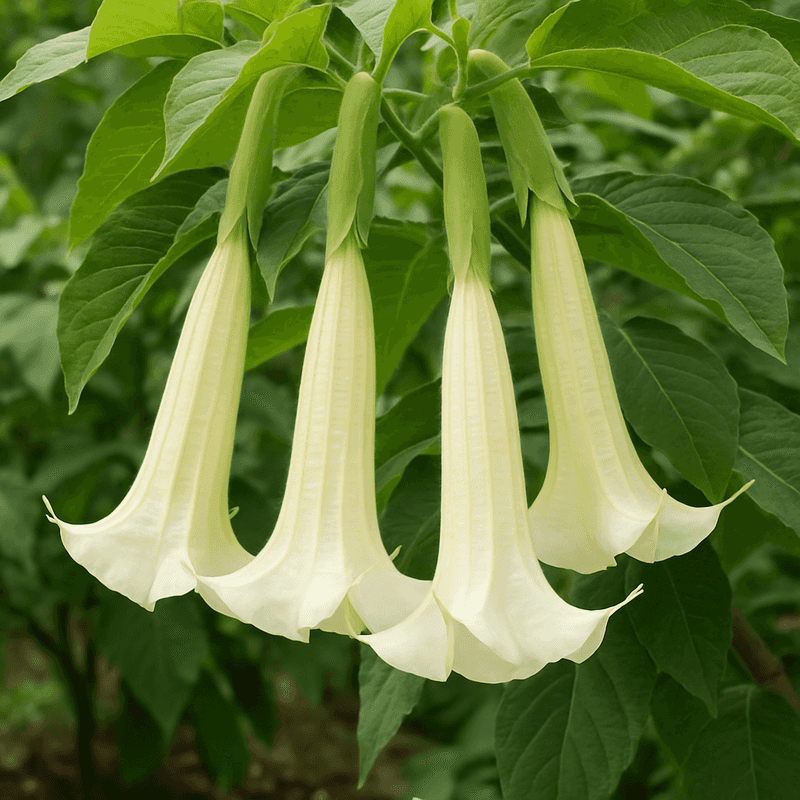
Here is the takeaway that ties everything together. Angel’s trumpet is a genuinely beautiful plant.
It is not a monster, and it does not attack anyone simply by existing in a yard. But it contains toxic compounds in every part.
It is appealing to children and animals in the wrong ways. It can also grow in neighborhoods across this state without any warning label.
A cottonmouth near a retention pond gets noticed because people already know snakes can be dangerous. The risk is visible and familiar.
Angel’s trumpet sits in a flower bed looking spectacular while most passersby have no idea what it is. If a child puts a fallen flower in their mouth, it deserves a call to Poison Control.
Wear gloves when you prune. Clean up fallen flowers and seed pods regularly.
Place the plant away from spaces where children and pets spend time. Make sure everyone in your household knows what it is and why it should not be handled casually.
If someone ingests any part of the plant, call Poison Control at 1-800-222-1222 immediately. For pets, contact a veterinarian right away.
Serious exposure is a medical situation, not a wait-and-see moment. Respecting angel’s trumpet is not about fear.
It is about being the kind of careful, informed gardener your yard and your family deserve.