Never Pinch Back Your Ohio Basil Plants Like This In Late July
Pinching back basil sounds simple. Grab a stem, snap it off, done.
That confidence is exactly what sends Ohio basil into an early decline every late July without anyone understanding why. The technique matters as much as the timing.
Get it wrong in late July specifically and the pinch that was supposed to buy more weeks of production triggers the opposite. The plant reads it as damage, shifts gears toward flowering, and the season ends faster than if the garden had been left alone entirely.
Late July basil is not the same plant it was in June. It is running a different internal calculation, and a pinch that worked perfectly two months ago works against it now.
One adjustment to how the pinch gets done changes the outcome completely. Ohio basil that still has weeks left in it deserves better than the technique that keeps cutting the season short.
1. Never Strip Leaves From The Bottom Up
A tall, skinny basil stem standing alone by the kitchen door is a familiar sight after a few weeks of grabbing leaves from the bottom. It feels natural to reach for the lowest, biggest leaves first, but that habit works against the plant.
Stripping lower leaves while leaving long bare stems behind can make basil lanky and less productive over time.
Ohio university extension herb guidance explains that basil produces new growth from nodes, which are the points where leaves meet the stem.
When lower leaves are removed without cutting back the stem above them, the plant does not receive the same signal to branch out.
The result is often a tall, thin plant with most of its leaves clustered near the top.
Harvesting from the top down is the smarter approach. Choosing stem tips and cutting just above a healthy pair of leaves encourages the plant to send out two new shoots from that node.
One harvested tip can turn into two new stems, which means more leaves for the next round. Lower healthy leaves should stay on the plant to support photosynthesis and overall recovery.
A plant that looks shaped rather than shaved is almost always the more productive one.
2. Pinch Above A Leaf Node Every Time
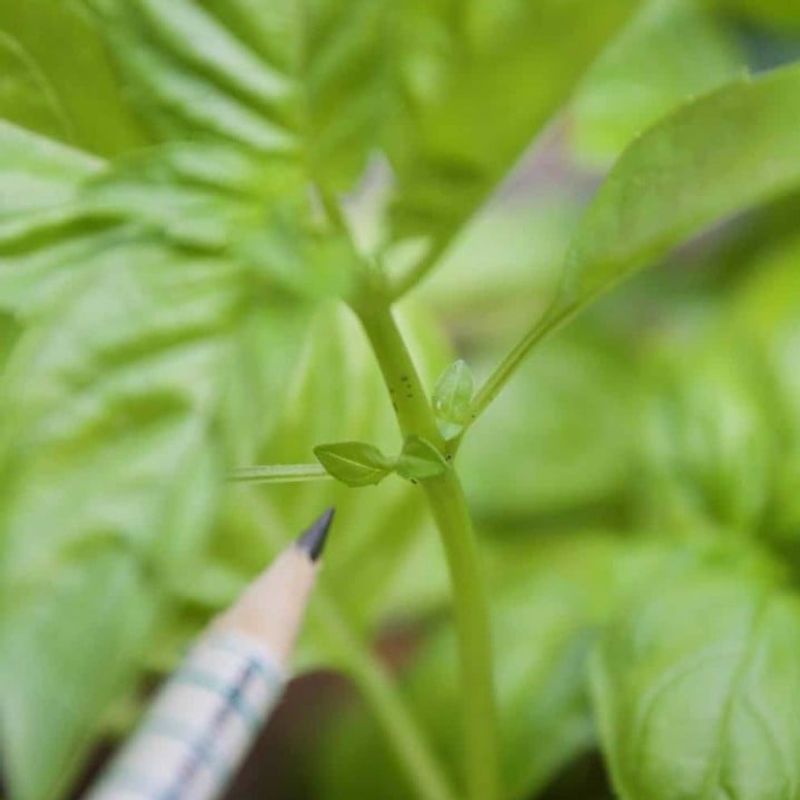
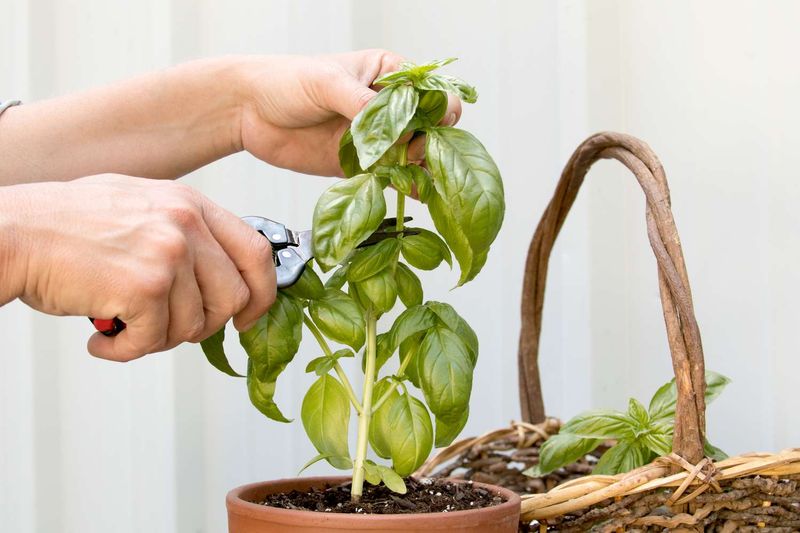
Finding the right spot to pinch is easier than it sounds once you know what to look for. Run a finger down any basil stem and feel for the little bump where a pair of leaves grows out from the sides.
That spot is the node, and it is where the magic happens. Pinching just above that pair of leaves is the move that encourages bushier growth.
Ohio herb gardening guidance recommends making the cut or pinch close above the node without cutting into it. Leaving a very long stub above the node can result in a withered section of stem that looks ragged and may dry out.
Cutting too far below the node removes the growth point entirely, which slows regrowth. The sweet spot is a clean pinch right above that healthy leaf pair.
Your Ohio Garden Changes Every Week. Your Plan Should Too.
Gardening in Ohio changes quickly throughout the season. Every Friday you’ll receive a simple weekly plan showing exactly what to plant, prune, fertilize, harvest, and protect so you never miss the right timing.
Clean cuts matter too. Using fingers works fine for soft green stems.
For thicker or slightly woody stems, a pair of clean snips or small scissors reduces tearing and keeps the plant tidy. Horticulture experts advise keeping tools clean to avoid spreading disease between plants.
The whole process takes seconds once the habit forms, and it pays off with a fuller, more generous plant. Beginners should not overthink it: find the node, pinch above it, and move on.
3. Leave Enough Green Growth To Regrow
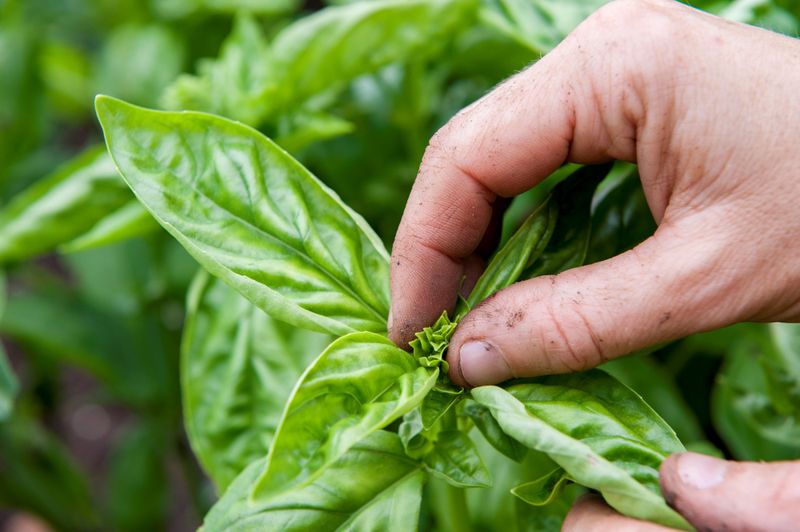
Cutting basil back hard feels satisfying in the moment, especially when pesto season hits and a big batch of leaves is needed fast. The problem is that basil needs its leaves to keep photosynthesizing and recovering after a harvest.
Remove too much at once, and the plant may struggle to bounce back, especially during the heat of late July.
OSU Extension herb guidance recommends harvesting in a way that leaves the plant with enough foliage to continue growing. Several sets of leaves should remain on each stem after any harvest.
Spreading a large harvest across multiple plants is a practical way to get the volume needed without pushing any single plant too hard.
Weak, small, or stressed plants deserve extra care. A seedling that has not fully established should be harvested lightly.
The same is true for a recent transplant or a plant that has been wilting in the heat. Ohio plant-care resources describe basil recovery as depending heavily on how much green growth remains, along with conditions like soil moisture, heat, and variety.
Results vary. Some plants rebound quickly after a moderate harvest.
Others need more time, especially when temperatures stay high and rain is scarce. Patience and lighter harvests tend to give better long-term results than one aggressive cut.
4. Remove Flower Buds Before Flavor Fades
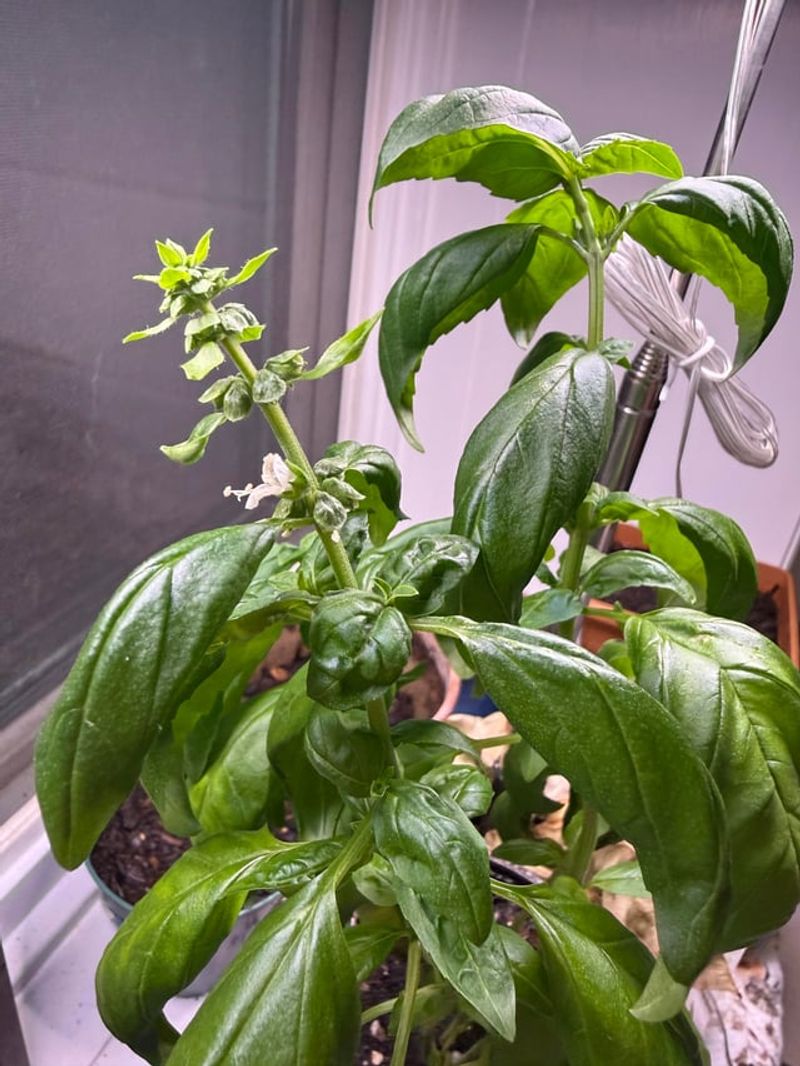
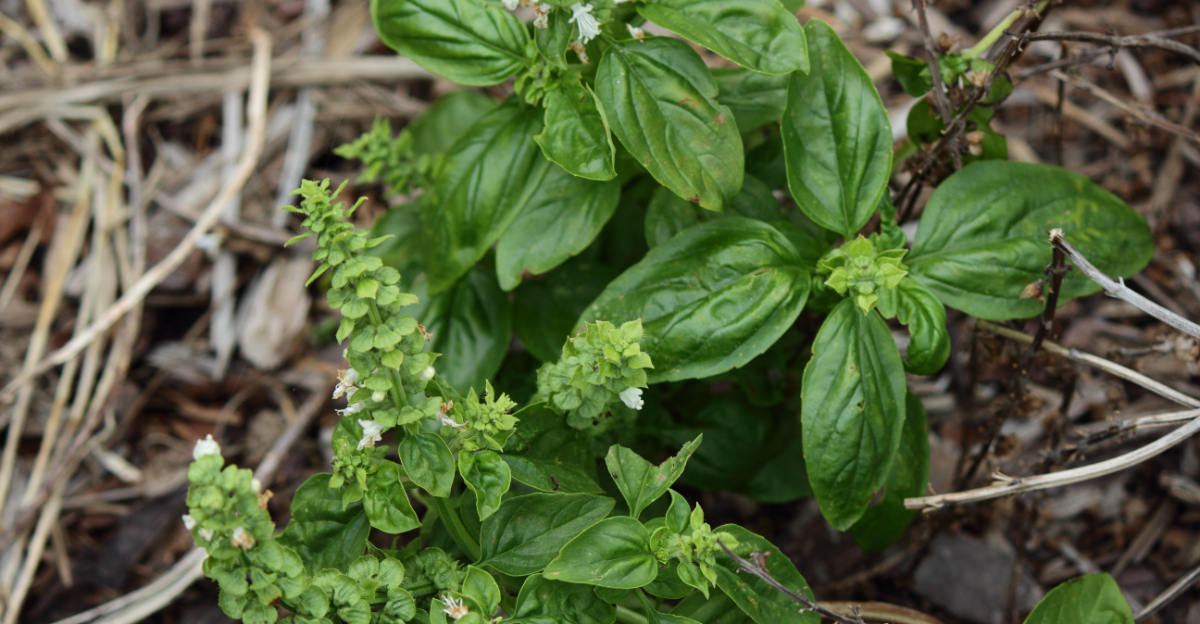
Tiny flower buds at the tip of a basil stem are easy to miss until suddenly the whole top of the plant looks like it is reaching for the sky. Those buds are a signal worth paying attention to.
When basil begins flowering, it shifts energy toward seed production rather than leaf growth. That shift can affect the quality and quantity of leaves available for harvest.
University extension sources explain that basil is best harvested before it flowers for peak leaf production and flavor quality. Flower buds should be pinched off early and often during late July, when warm temperatures and long days encourage the plant to bolt.
Harvesting stem tips that include developing buds is an efficient way to handle both pruning and bud removal in one step.
Flowering does not make basil suddenly useless or unpleasant. Many gardeners still use leaves from a flowering plant with perfectly good results.
The change in leaf quality tends to be gradual rather than instant. Checking plants every few days in late July is the most practical habit.
Early bud removal keeps the plant in a productive, leafy state longer. Think of the flower bud as a helpful reminder rather than an emergency.
Pinch it off, use the stem tip in the kitchen, and keep the harvest rolling.
5. Skip Hard Cuts During Heat Stress
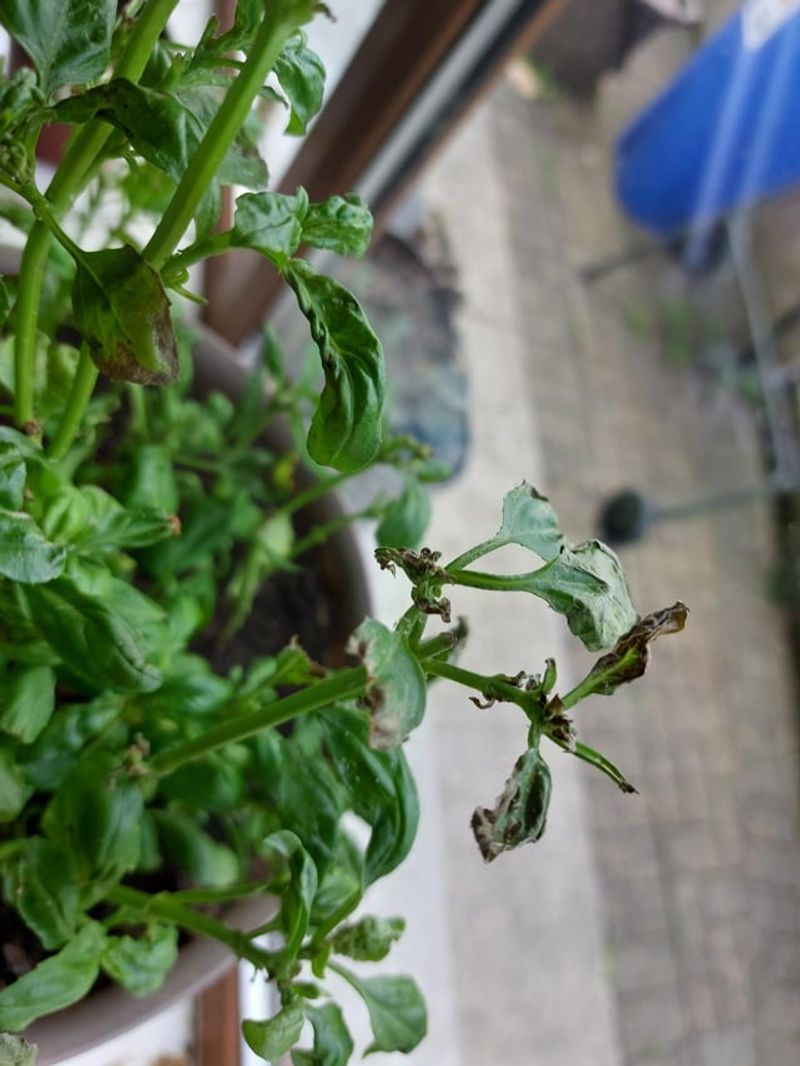
A drooping basil plant on a hot Ohio afternoon in late July is not always ready for a big harvest. Heat stress and drought stress can already be taxing the plant, and adding a heavy pruning session on top of that can push it further.
Timing matters more than many gardeners realize when summer temperatures climb.
Vegetable and herb guidance warns against heavy pruning when plants are wilting, actively drought-stressed, or sitting in bone-dry soil. Watering the root zone first and allowing the plant to perk up before harvesting is the smarter sequence.
Container basil is especially vulnerable because pots can dry out much faster than in-ground beds, sometimes within a day or two during a hot, dry stretch.
Morning harvests tend to work better than midday cuts during a heat wave. Temperatures are cooler, plants are usually better hydrated from overnight recovery, and the stress of pruning is less likely to compound with peak afternoon heat.
This does not mean basil cannot be harvested at all during hot weather. A light pinch of a few stem tips on a hot morning is very different from cutting the plant back by half on a dry afternoon.
Flexibility and weather awareness make late-July basil care easier. Water first, wait for signs of recovery, then harvest lightly and move on.
6. Harvest Whole Stem Tips Not Random Leaves
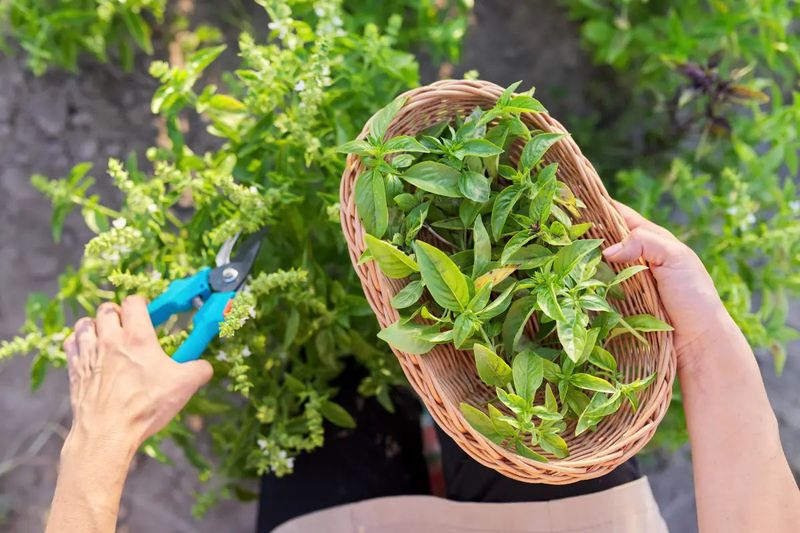
Reaching into a basil plant and pulling off scattered leaves here and there feels quick and harmless. Over time, though, that habit can leave the plant looking tall, thin, and oddly bare in the middle, with long stems and few leaves in useful spots.
A more effective approach is harvesting whole stem tips rather than individual leaves.
Herb gardening guidance favors cutting full stem sections above a healthy node rather than picking single leaves from various spots. Removing a stem tip can prompt two new shoots to grow from the node below the cut.
That branching effect is what keeps basil bushy and productive through the season. Random leaf picking does not trigger the same response.
Rotating harvests around the plant also helps. Instead of always cutting from the same side, moving around the plant and taking tips from different stems keeps growth balanced.
The amount of stem taken for cooking can vary based on what the recipe needs, but keeping the cut above a clear node is the consistent goal.
Horticulture experts in Ohio advise against removing every top shoot at once, since that removes too much growth in one session.
A few stems at a time, spread across the plant and across several harvests, tends to produce a fuller, more generous plant than one dramatic cut ever will.
7. Water Before Basil Turns Woody And Bitter
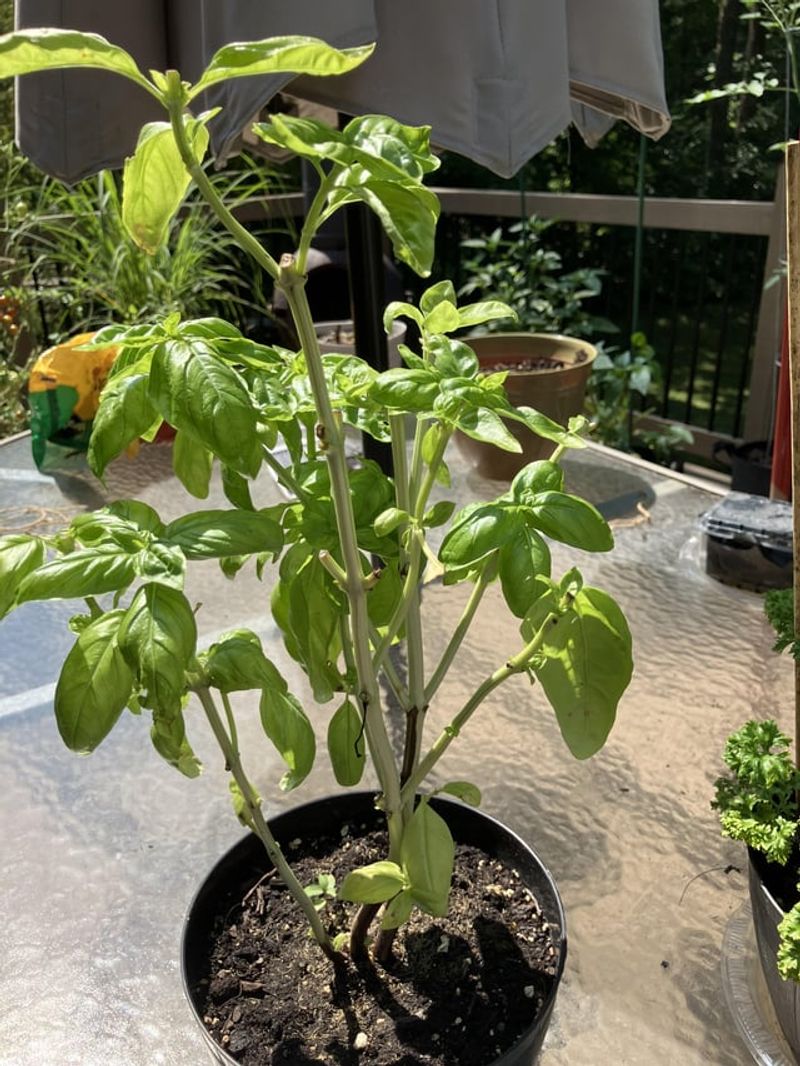
Steady moisture is one of basil’s most basic needs, and late July can test that in a hurry. Patio containers dry out fast in the heat.
Raised beds in full sun can lose moisture quickly too, especially during dry stretches that are common across this state in midsummer. When basil does not get enough water, the plant can show signs of stress that affect both growth and quality.
OSU Extension guidance on herb care notes that consistent soil moisture supports healthy basil growth. Checking soil moisture regularly, rather than watering on a fixed schedule, helps gardeners respond to actual conditions.
Watering at the root zone rather than overhead keeps foliage dry and reduces the chance of fungal issues. In raised beds, a light layer of mulch can help hold soil moisture during hot, dry periods.
Woody stems and stronger, sometimes sharper flavors can develop as basil ages and stresses, though watering alone does not prevent all of those changes. Plant age, heat, variety, and flowering all play a role.
Avoiding soggy soil is just as important as avoiding drought, since basil roots do not tolerate standing water well. The goal is steady, even moisture that supports active growth.
A plant that stays well-watered through late July is better positioned to keep producing tender, flavorful leaves into August.
8. Keep Pinching Lightly Until Cool Nights Arrive
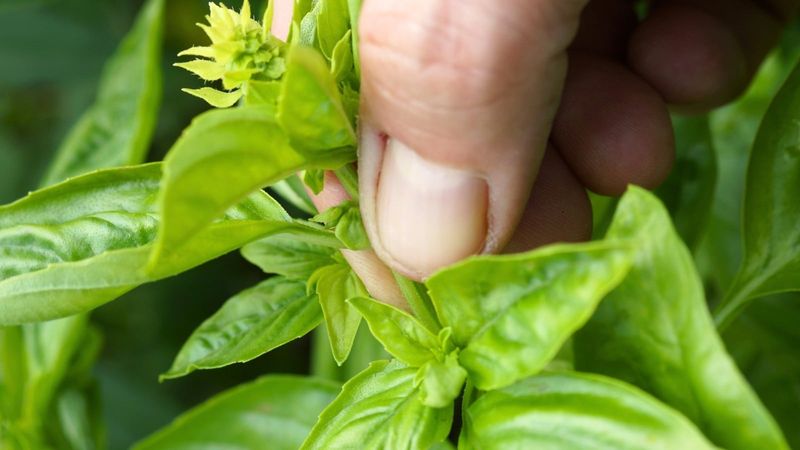
Late-July basil care works best as an ongoing habit rather than a single dramatic event. Small, regular harvests keep the plant leafy, reduce the chance of bolting, and spread the workload out so no single session removes too much at once.
A plant that gets checked every few days is much easier to manage than one left alone for two weeks.
Each visit to the garden is a chance to pinch off any flower buds that have appeared, cut a few stem tips above healthy nodes, and check the soil moisture. Herb gardening guidance supports this light-and-often approach as a way to extend the productive season.
Leaving several sets of leaves on each stem after every harvest gives the plant what it needs to keep growing.
Basil is a tender annual that does not tolerate frost. Once cool nights arrive in the fall, growth slows noticeably, and the plant will not recover the way it does during the warm weeks of summer.
That makes late July and early August some of the most valuable weeks of the growing season in local gardens. Enjoying regular harvests now, while conditions still support fast regrowth, is the reward for getting the pruning right.
Basil stays bushier, more generous, and more flavorful when it is guided steadily from the top rather than stripped from the bottom and left to struggle.