Florida Plants That Bring Woodpeckers And What That Does To The Boring Insect Problem
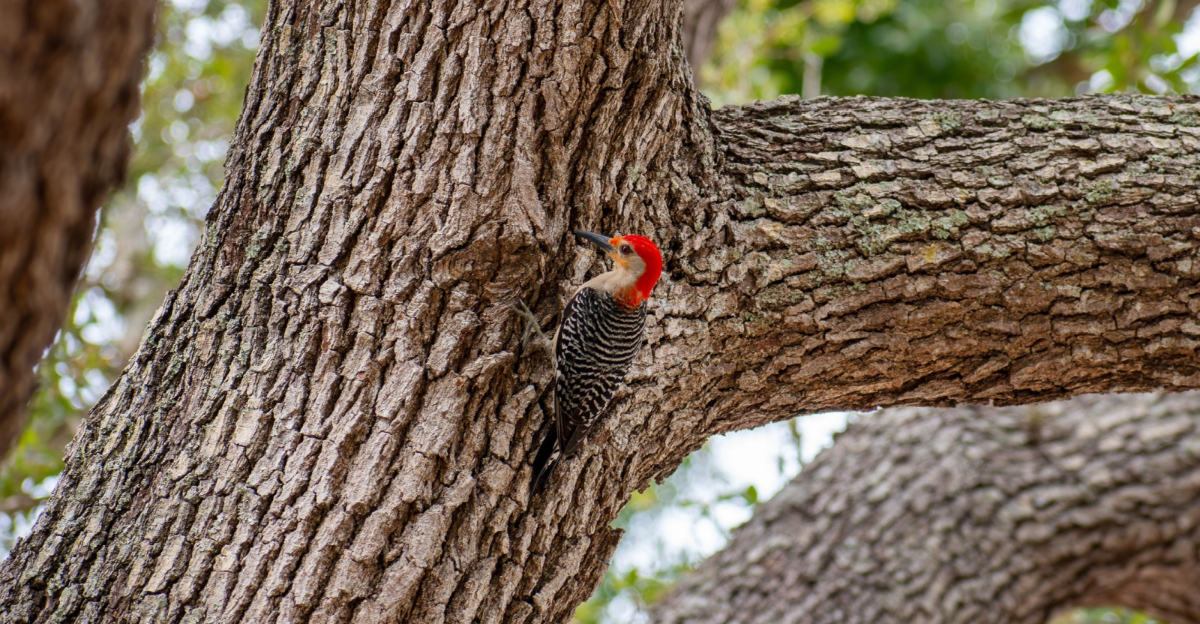
Woodpeckers are one of those backyard visitors that make a yard feel genuinely wild, and once you start noticing them working their way across bark and branches, it is hard not to get a little obsessed.
These birds are not just putting on a show though.
They are actively hunting wood-boring beetle larvae, ants, and other insects living beneath the surface of trunks and limbs, which makes them surprisingly useful allies in any nature-friendly landscape.
Native trees like oaks, pines, and hickories are the real draw, giving woodpeckers the foraging habitat they need while adding serious ecological value to the yard at the same time.
Their presence is not a complete solution to boring insect problems, but it does add a meaningful layer of natural pressure that helps keep Florida landscapes more balanced and genuinely alive.
1. Native Oaks Offer Acorns And Insect-Rich Bark
Few trees are as productive for wildlife as the native oak, and that productivity extends well beyond the acorns that drop each fall.
Live oak, water oak, and laurel oak are common across much of the state, and each one develops bark with enough texture and complexity to support a wide range of insects over time.
That bark becomes a foraging buffet for woodpeckers searching for beetles, ants, and larvae tucked beneath the surface.
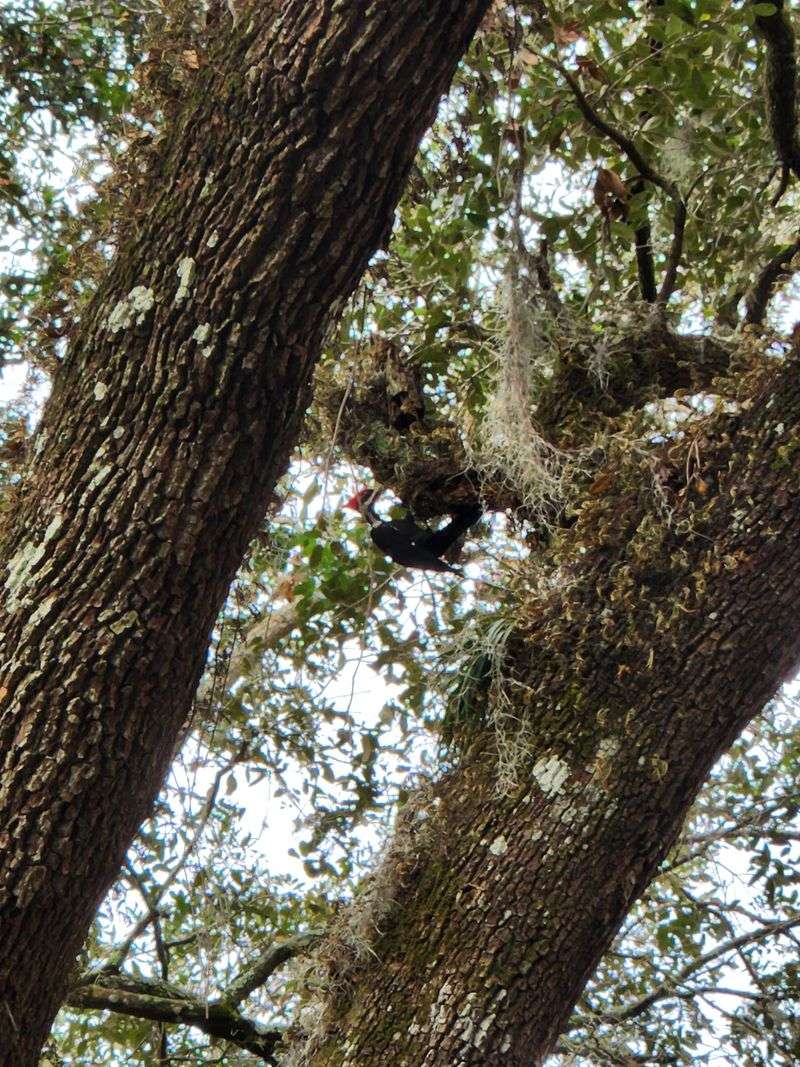
Red-bellied woodpeckers, in particular, are frequently spotted working their way along oak trunks and major limbs throughout Florida neighborhoods and natural areas. Downy woodpeckers also visit oaks, probing smaller branches where insects may be hiding.
Both species use their bills to chip away at bark and reach insects that other birds simply cannot access.
Oaks support this activity because they tend to accumulate more insect diversity as they mature, and older trees with some bark roughness or minor stress may host even more foraging opportunities.
That said, planting a young oak will not immediately attract woodpeckers or resolve a boring insect issue.
These birds tend to visit trees that already offer something worth finding. Native oaks are best suited for properties with enough space, since many reach significant size.
Matching the right oak species to your specific Florida region and soil type will give the tree the best chance of becoming a long-term wildlife asset in your landscape.
2. Longleaf Pines Provide Valuable Woodpecker Habitat
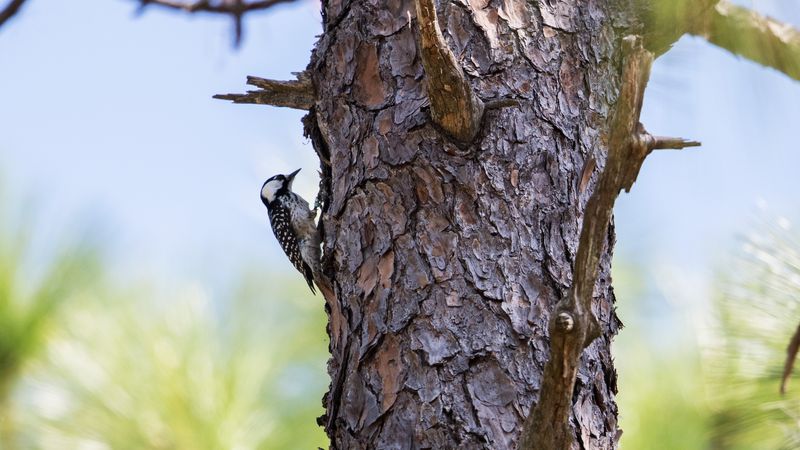
Longleaf pine has a history in Florida that goes back centuries, and its value to wildlife, especially woodpeckers, is hard to overstate.
This stately tree once covered vast stretches of the southeastern United States, and while its range has shrunk considerably, longleaf pine communities still thrive in the Panhandle and parts of the northern part of the state.
The tree’s deeply furrowed bark and tall, open structure make it especially attractive to woodpeckers looking for insects.
The red-cockaded woodpecker is perhaps the most well-known species associated with longleaf pine, though it requires mature forest conditions and old-growth trees that most residential landscapes cannot provide.
Red-bellied and pileated woodpeckers may also visit longleaf pines, particularly trees that show signs of age or insect activity beneath the bark.
Your Florida Garden Changes Every Week. Your Plan Should Too.
Gardening in Florida changes quickly throughout the season. Every Friday you’ll receive a simple weekly plan showing exactly what to plant, prune, fertilize, harvest, and protect so you never miss the right timing.
Longleaf pine grows best in well-drained, sandy soils common across much of north and central Florida. It tends to be slow-growing in its early years, spending much of its energy developing a deep root system before putting on significant height.
Homeowners who plant longleaf pine should think of it as a long-term investment in their landscape rather than a quick solution.
Over time, a maturing longleaf pine can become a focal point for wildlife activity, including woodpeckers that forage along the trunk and branches in search of beetles, ants, and other insects living within the bark.
3. Native Hickories Supply Nuts And Insect Habitat
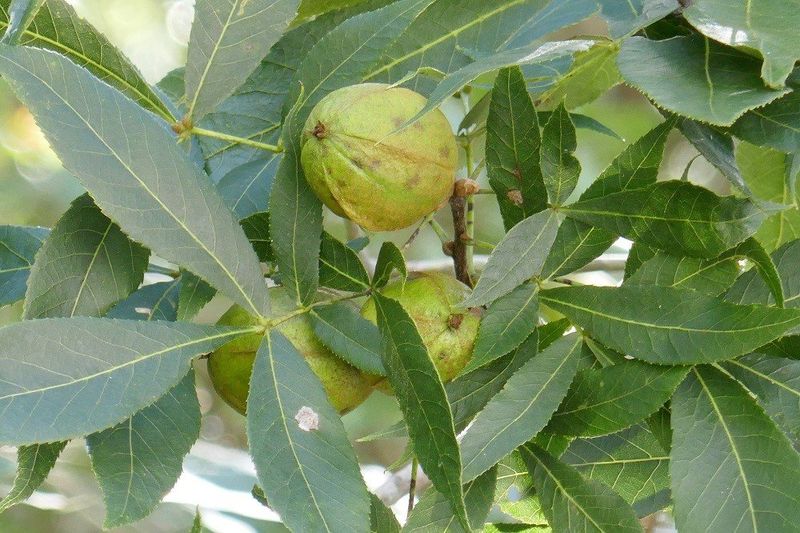
Hickory trees may not get as much attention as oaks or pines in landscaping conversations, but they bring real value to the wildlife that depends on them.
Florida is home to several native hickory species, including pignut hickory and mockernut hickory, both of which produce hard-shelled nuts that attract birds, squirrels, and other wildlife.
Woodpeckers, however, are not just interested in the nuts. They are equally drawn to the bark and wood, where insects may be hiding.
The ridged, interlocking bark of mature hickories creates plenty of surface area for insects to colonize, and that makes these trees a reliable foraging target for woodpeckers.
Red-bellied woodpeckers are among the species most likely to probe hickory bark, working methodically along the trunk and larger branches.
Pileated woodpeckers may also visit larger hickory trees, especially those with soft or decaying wood that harbors carpenter ants or beetle larvae deeper inside.
Hickories tend to prefer well-drained, slightly acidic soils and are generally better suited to north and central parts of the state than to the southern regions. They can take a while to establish, and their growth rate is moderate at best.
Planting a native hickory requires patience, but the result is a tree that ages beautifully and becomes progressively more valuable to local wildlife over time.
Matching the species to the right site conditions in your part of the state is the most important step toward long-term success, and consulting a Florida native plant nursery can help narrow down the best fit for your yard.
4. Slash Pines Create Foraging Areas Beneath The Bark
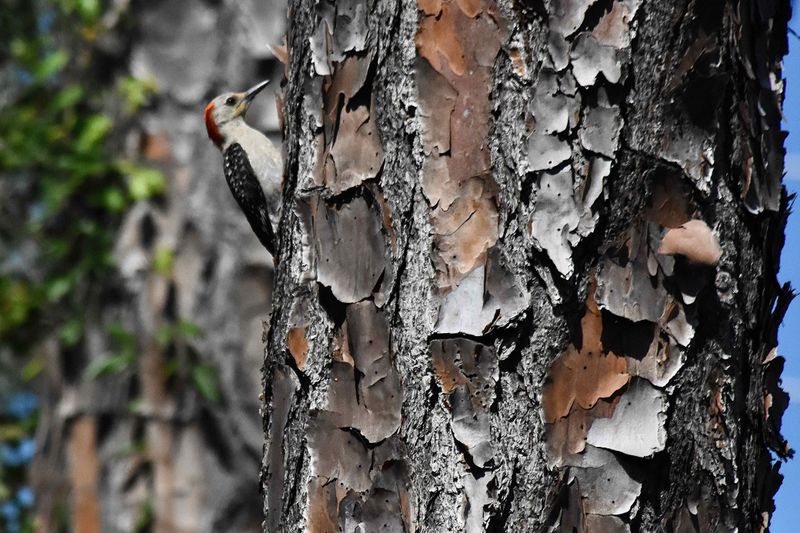
Walk through almost any natural area in central or south Florida and you will likely spot slash pine standing above the understory with its distinctive reddish-brown, plated bark.
This native pine is one of the most widely distributed trees across the peninsula, and it plays an important role in supporting local wildlife, including several woodpecker species that rely on its bark for foraging.
Beneath the outer bark of slash pine, various insects may take up residence, particularly in trees that are stressed by drought, root damage, or bark beetle activity. Woodpeckers pick up on these cues and investigate trunks where signs of insect presence are detectable.
If you notice a woodpecker repeatedly visiting the same pine, that behavior may be worth paying attention to, as it can signal that the tree is under stress and supporting a notable insect population inside its wood.
Slash pine is well-suited to a range of soils, from moist flatwoods to slightly drier upland sites, making it a practical choice for many homeowners across the state.
It grows faster than longleaf pine and can reach meaningful height within a decade or so under good conditions.
Providing adequate space, avoiding soil compaction near the roots, and steering clear of trunk injuries will help keep a slash pine healthy over time.
A healthy tree is less vulnerable to the boring insect activity that woodpeckers tend to find most readily in weakened or declining specimens.
5. Chickasaw Plum Offers Fruit And Foraging Opportunities
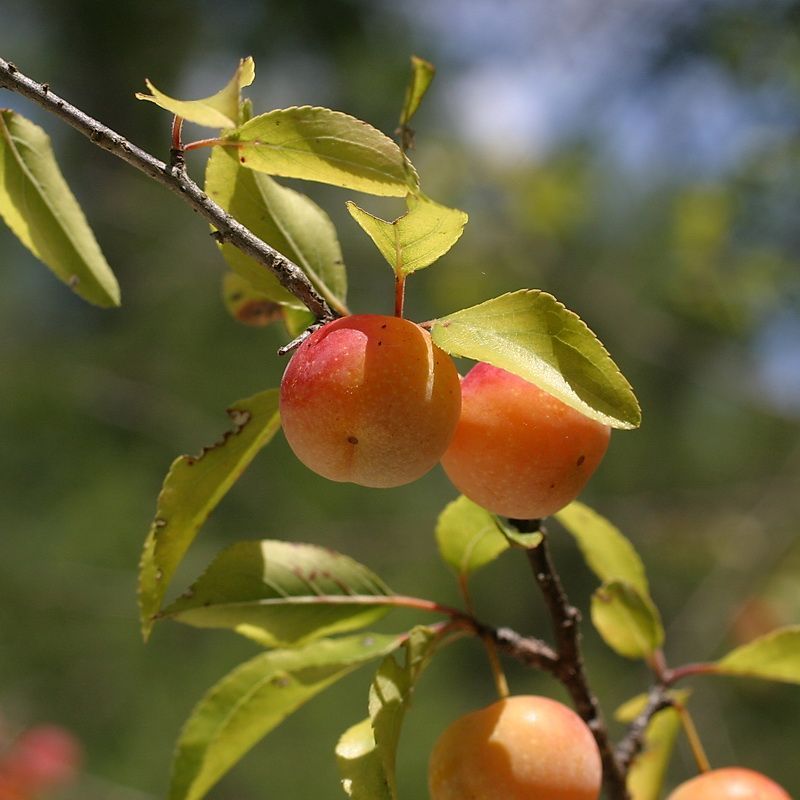
Chickasaw plum is one of those native plants that tends to surprise people with how much wildlife it supports for its modest size.
This small, thicket-forming tree or large shrub blooms early in the year with clusters of white flowers, then produces small red or yellow plums that ripen in early summer.
The fruit draws in birds quickly, but woodpeckers are more likely to visit Chickasaw plum for what is happening beneath the bark than for the plums themselves.
The branches and trunk of Chickasaw plum can host various insects, including borers and beetles that target stressed or aging wood.
Downy woodpeckers are among the smallest common woodpecker species in Florida, and they are well-suited to working through the smaller branches of shrubby plants like Chickasaw plum, where they probe for insect activity that larger woodpeckers might overlook.
Watching a downy woodpecker move through a Chickasaw plum thicket is one of those quiet, rewarding moments that backyard birders genuinely appreciate.
Chickasaw plum spreads by root sprouts and works well as part of a naturalistic hedgerow or wildlife border rather than a formal planting.
It tolerates sandy, dry soils and is adapted to a wide range of Florida conditions, from the Panhandle down through central parts of the state.
Giving it room to spread will allow it to form the kind of dense, layered habitat that benefits multiple wildlife species beyond just woodpeckers. It is a low-maintenance addition with high ecological returns.
6. Mature Trees Give Woodpeckers More Places To Search
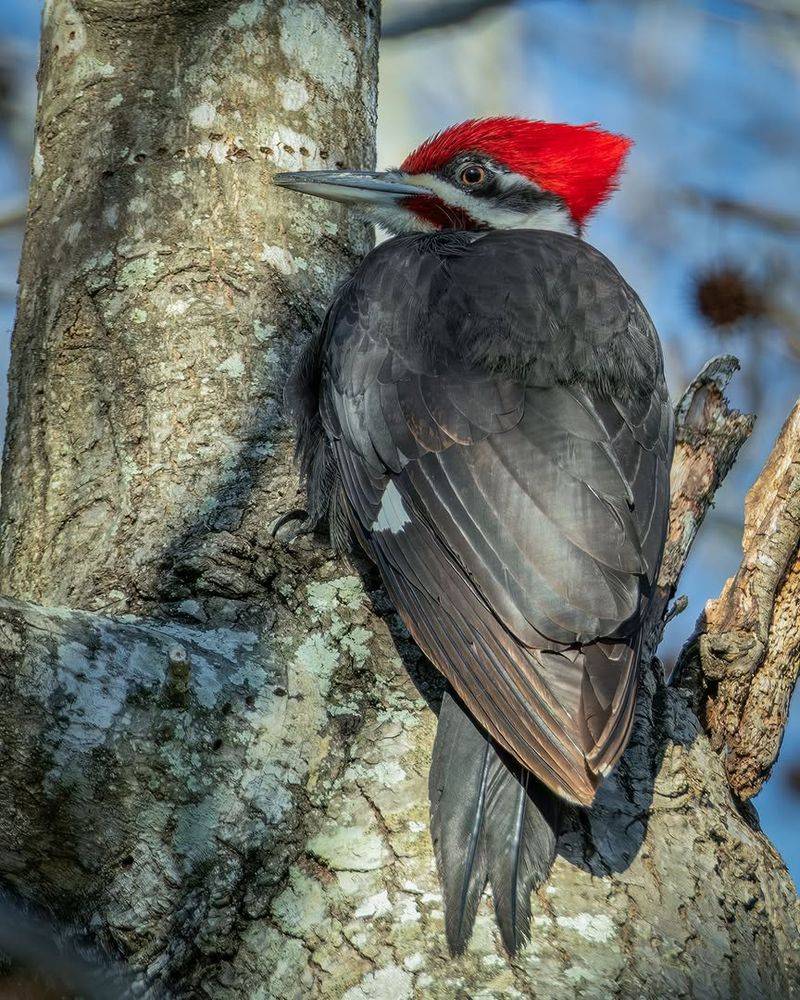
Something changes in a landscape when the trees have had time to grow. Bark thickens, furrows deepen, and the wood itself develops the kind of complexity that supports a much wider range of insect life than a young, smooth-barked sapling ever could.
For woodpeckers, maturity in a tree is essentially a signal that there may be something worth investigating inside.
In Florida, where development pressure has removed so many older trees from residential areas, finding a yard with genuinely mature native trees is increasingly uncommon.
That makes properties with established oaks, pines, or hickories especially valuable as woodpecker habitat.
These birds rely heavily on older wood because it offers more foraging surface, more crevices, and more opportunity to find the insects they are looking for.
Mature trees may also develop natural cavities over time, which some woodpecker species use for nesting or roosting.
If your Florida property already has mature native trees, protecting them is one of the most meaningful things you can do for local wildlife.
Avoiding soil compaction around root zones, keeping mulch pulled back from the base of the trunk, and having a certified arborist assess any trees that show signs of structural concern will all help extend the life of trees that have taken decades to reach their current state.
Adding younger native trees alongside them creates a layered landscape that will continue supporting woodpeckers long into the future, even as individual trees eventually decline and are replaced over time.
7. Woodpeckers Feed On Some Wood-Boring Insect Larvae
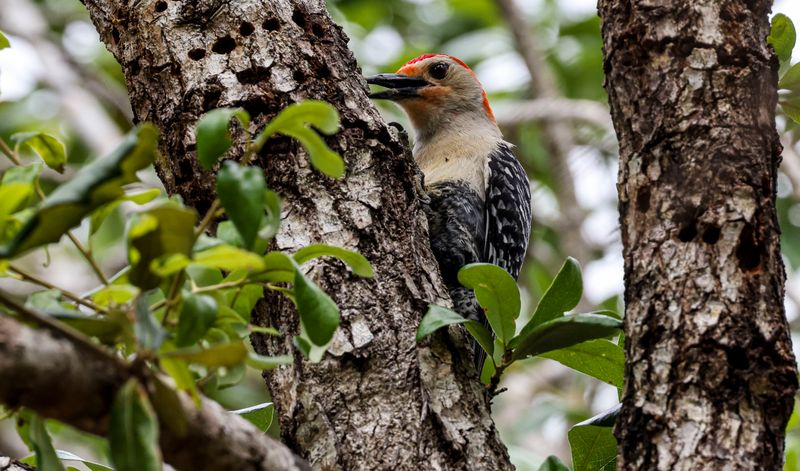
Watching a woodpecker work its way up a tree trunk, tapping methodically and then pausing to listen, gives you a small window into one of nature’s more efficient foraging strategies.
These birds are built for exactly this kind of work, with strong neck muscles, reinforced skulls, and long, barbed tongues designed to extract larvae from inside wood.
In Florida, several species regularly feed on the larvae of wood-boring beetles, which can cause real damage to trees when populations are high.
Red-bellied woodpeckers and pileated woodpeckers are among the species most likely to excavate wood in search of beetle larvae or carpenter ants.
The pileated woodpecker, Florida’s largest woodpecker, is capable of chiseling out large rectangular cavities in search of carpenter ants and other insects deep in decaying wood.
These excavations can look alarming to homeowners, but they often signal that the bird has detected a substantial insect presence that was already there.
Woodpeckers can reach larvae that are close enough to the surface for the bird to detect through sound and vibration. Larvae that are deeper inside a trunk or sealed within heartwood may be beyond what a woodpecker can access.
This means their feeding activity helps reduce some of the insect population, but likely does not eliminate it entirely.
If you notice significant woodpecker excavation on a tree, having the tree assessed by a qualified professional is a reasonable step, since repeated activity often points to a tree under notable stress.
8. Woodpeckers Add Natural Pressure On Boring Insects
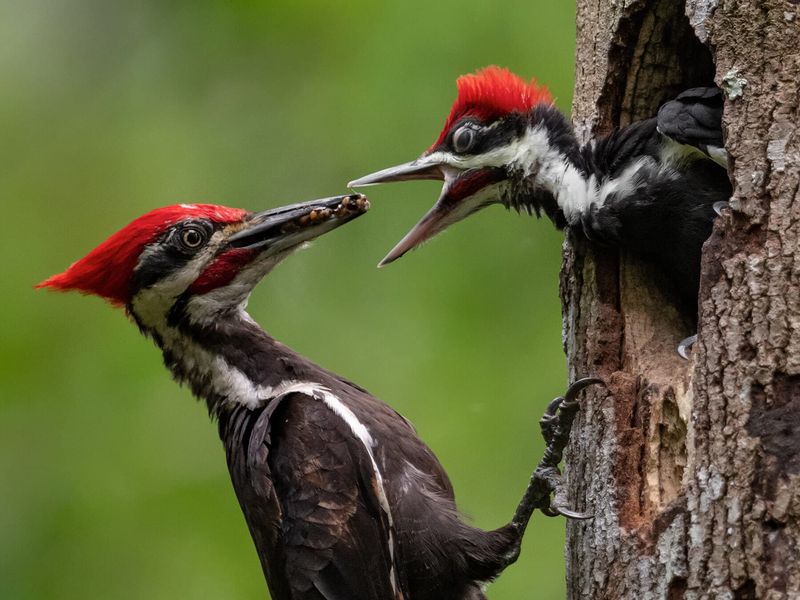
Natural systems rarely rely on a single solution, and the relationship between woodpeckers and wood-boring insects in Florida is a good example of that kind of layered balance.
When woodpeckers are present and actively foraging in a landscape, they add consistent pressure on insect populations that might otherwise go unchecked in bark and wood.
That pressure does not eliminate the insects, but it can be one meaningful part of a healthier, more balanced yard ecosystem.
Wood-boring beetles, including flatheaded borers and roundheaded borers, are among the insects most commonly associated with stressed trees in Florida.
These beetles typically target trees that are already weakened by drought, root damage, disease, or physical injury.
Woodpeckers may detect the presence of these larvae through the sounds of chewing inside wood or through vibrations they pick up while tapping.
Once they locate a productive spot, they return repeatedly, which can reduce the number of larvae that complete their development and emerge as adults.
Relying on woodpeckers alone to manage a serious boring insect problem is not a practical approach. Identifying the insect correctly, determining why the tree became vulnerable in the first place, and addressing any underlying stress factors are all essential steps.
A local UF/IFAS Extension office can help with identification and provide guidance on appropriate responses.
Woodpeckers are a welcome and ecologically valuable part of the picture, but healthy trees supported by proper care will always be more resistant to boring insect pressure than stressed ones, regardless of bird activity nearby.