How To Spot Saguaro Cactus Stress During Extreme Arizona Summer Heat
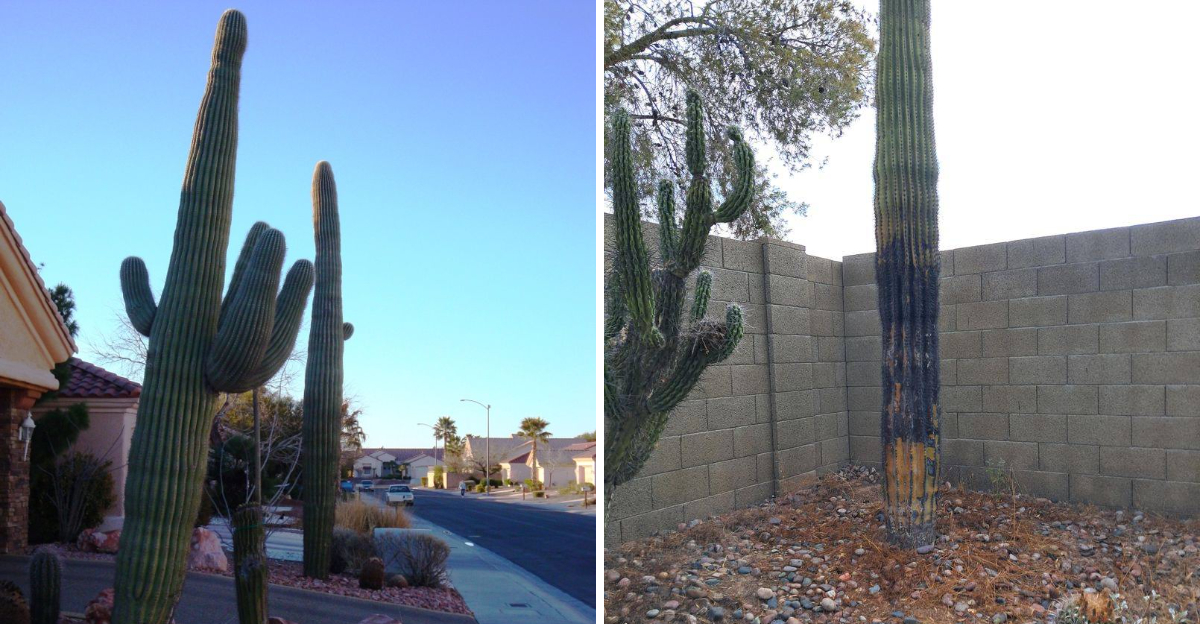
Saguaro cacti are built for harsh conditions, but even these desert giants have their limits. Extreme Arizona heat can push them beyond what they comfortably handle.
The warning signs are not always dramatic at first. Many start small and become much harder to fix when ignored.
Don’t assume your cactus is fine just because it is still standing tall. A careful look can reveal subtle changes that deserve attention.
Learning to recognize those early clues gives you a better chance to protect your saguaro before lasting damage develops. Every healthy cactus tells a story if you know where to look.
Give yours a few extra moments this summer.
Spotting stress early can make all the difference during the hottest weeks and help your iconic desert plant stay stronger for years.
1. Wrinkled Skin Is One Of The First Signs
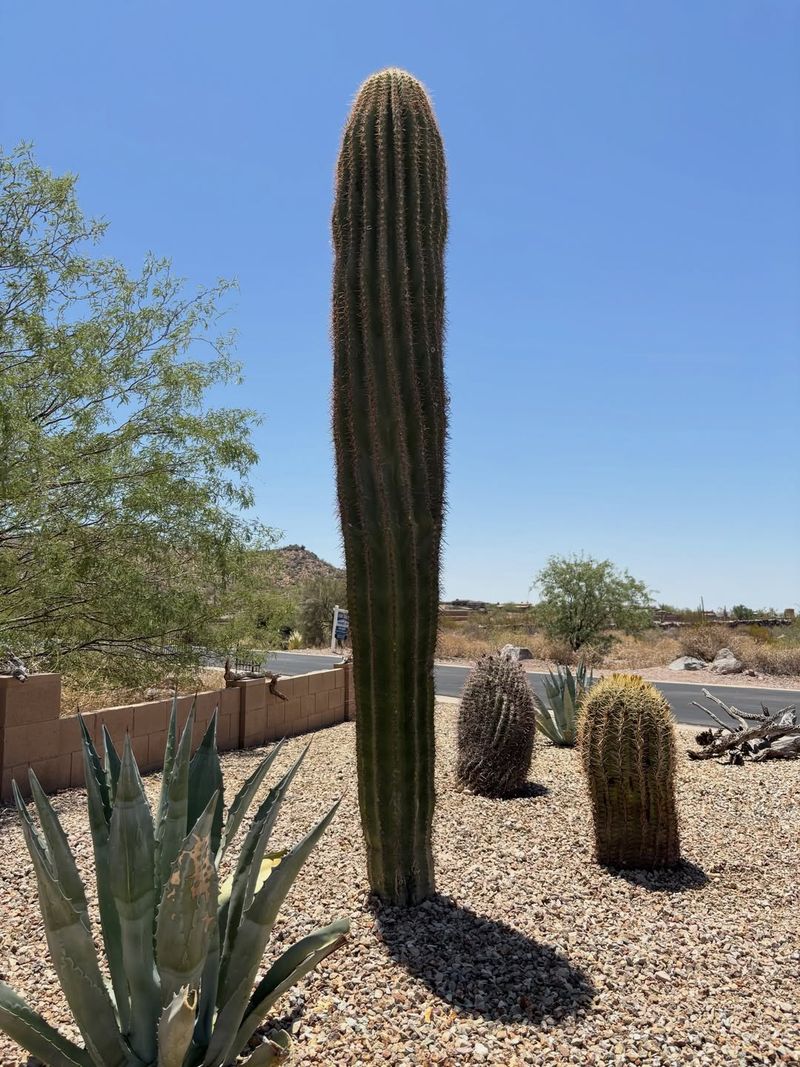
Wrinkled skin on a saguaro is not just a cosmetic issue. It is one of the clearest early warnings that the plant is running low on stored water.
Saguaros expand and contract naturally like an accordion, so some wrinkling after a dry stretch is normal. But deep, persistent wrinkling that does not bounce back after rain is a red flag worth taking seriously.
A healthy saguaro has smooth, plump ridges. When moisture levels drop significantly, those ridges pull inward and the skin looks shrunken or folded.
You might notice it first along the lower trunk, where the tissue tends to show dehydration earlier than the upper arms.
Wrinkling during July and August monsoon season is worth monitoring closely. If the creases deepen even after rainfall, the root system may not be absorbing water efficiently.
Compacted soil, root damage, or fungal issues can all interfere with water uptake.
Check the plant again about a week after a good soaking rain. A recovering saguaro should look noticeably fuller.
If the wrinkles remain deep and the skin stays tight, that is a signal the plant needs a closer look.
2. Yellow Or Brown Patches Can Signal Sun Damage
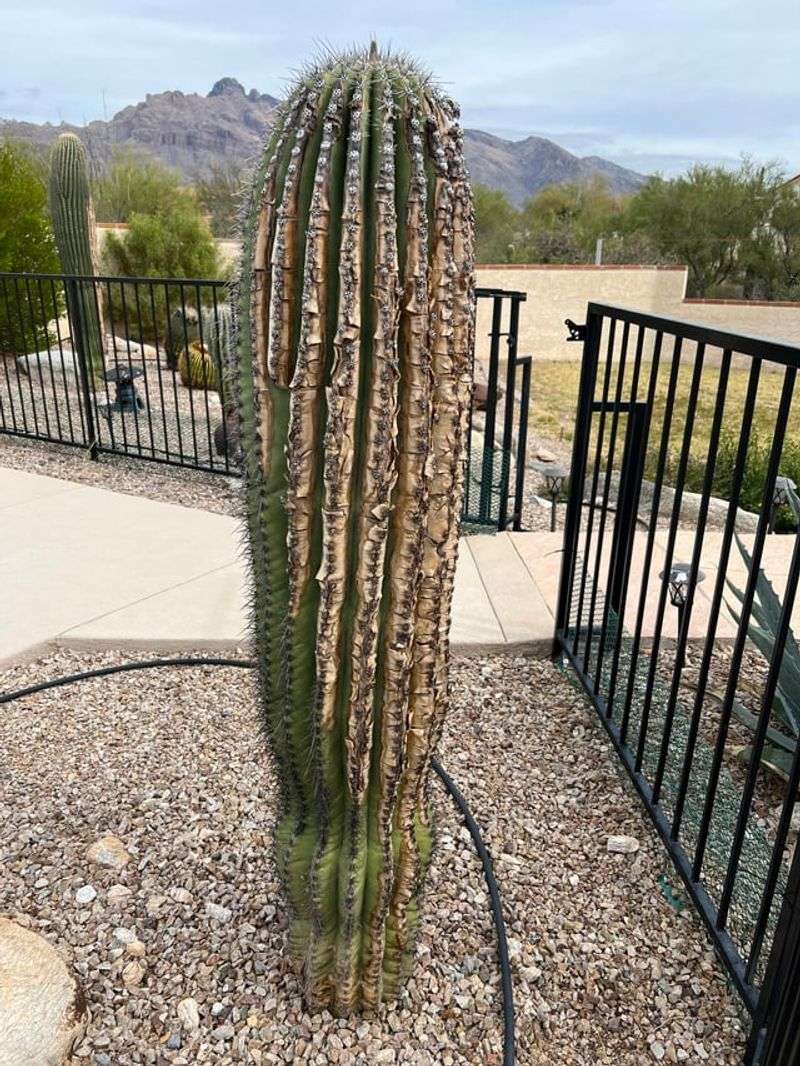
Spotting yellow or brown patches on a saguaro can feel alarming, especially if they appear suddenly after a heat wave. Sun scald is a real issue for these cacti, particularly on the south and west-facing sides where afternoon sun hits hardest.
Temperatures on exposed cactus skin can exceed air temperature by a significant margin, creating localized burn-like damage.
Sun scald patches usually look pale yellow at first. Over time, they may turn tan, brown, or even develop a dry, papery texture.
Young saguaros and recently transplanted ones face higher risk because their root systems are still getting established, limiting their ability to stay hydrated under intense sun exposure.
Not every discolored patch means sun damage. Bacterial necrosis, caused by a pathogen, also creates dark, wet-looking lesions.
Sun scald patches tend to be dry and firm, while bacterial damage usually feels soft and may have a foul odor. Knowing the difference matters before you decide how to respond.
In the Sonoran Desert, southwest-facing saguaros endure the most punishing afternoon light. If you notice a patch forming, avoid cutting into it or applying anything to the surface.
Your Arizona Garden Changes Every Week. Your Plan Should Too.
Gardening in Arizona changes quickly throughout the season. Every Friday you’ll receive a simple weekly plan showing exactly what to plant, prune, fertilize, harvest, and protect so you never miss the right timing.
Let the cactus respond on its own first.
3. Provide Temporary Shade For Young Saguaros
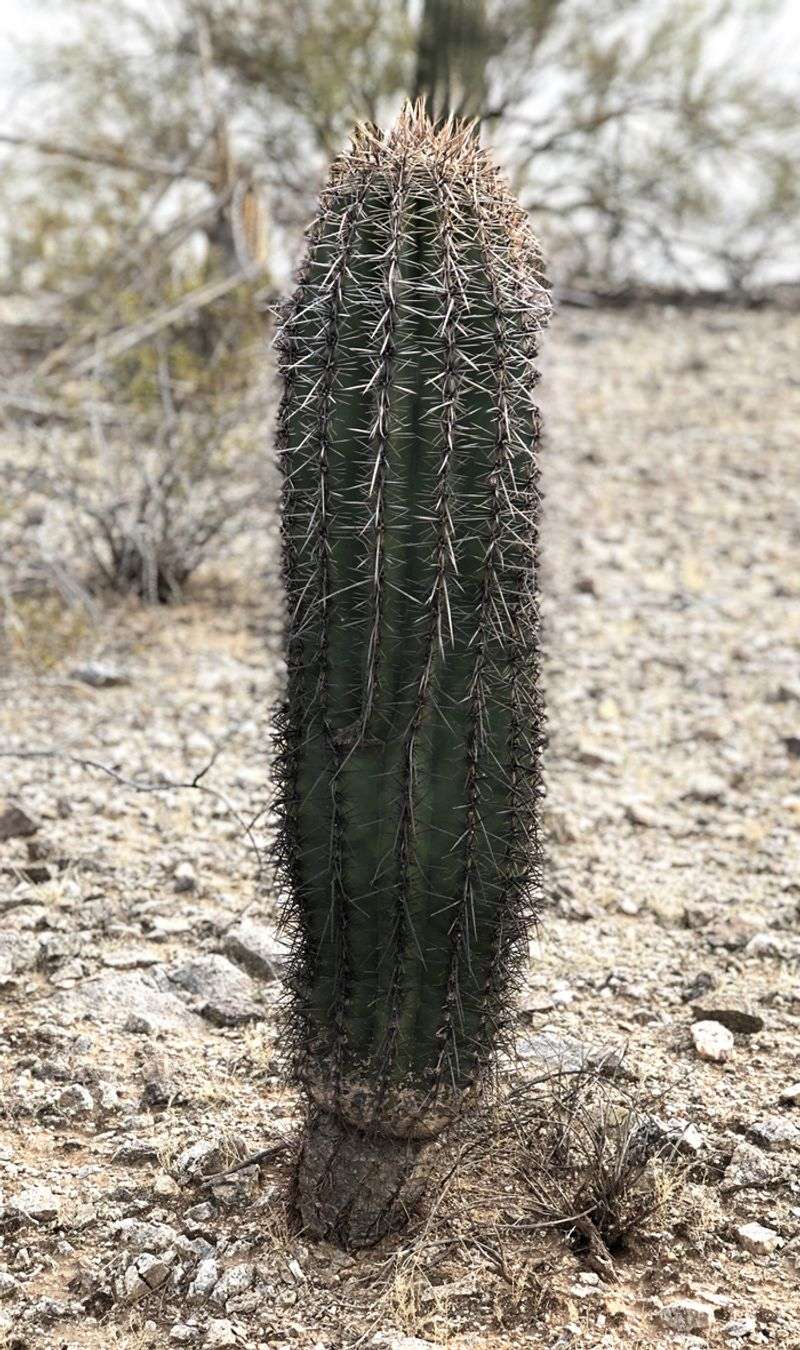
Young saguaros are far more vulnerable to extreme heat than mature ones. A saguaro under two feet tall has a shallow root system and very limited water storage.
When temperatures stay above 105 degrees for several days in a row, young plants can show stress signs quickly. A simple shade cloth positioned on the southwest side can reduce skin temperature and slow moisture loss.
Shade cloth with 30 to 40 percent block rating works well without cutting off too much light. Full shade is not ideal because saguaros still need direct sun to grow and stay healthy.
The goal is to reduce the intensity of afternoon sun, not eliminate sunlight entirely. Wooden stakes and a piece of breathable fabric are enough to make a practical difference.
Avoid wrapping the cactus directly in any material. Trapped heat and restricted airflow can cause more harm than the sun itself.
Keep the shade structure a few inches away from the plant on all sides so air can move freely around the trunk.
Remove the shade structure once temperatures drop and the plant shows no further signs of stress. Leaving it in place too long can interfere with normal growth patterns.
4. Avoid Damaging Stressed Plants
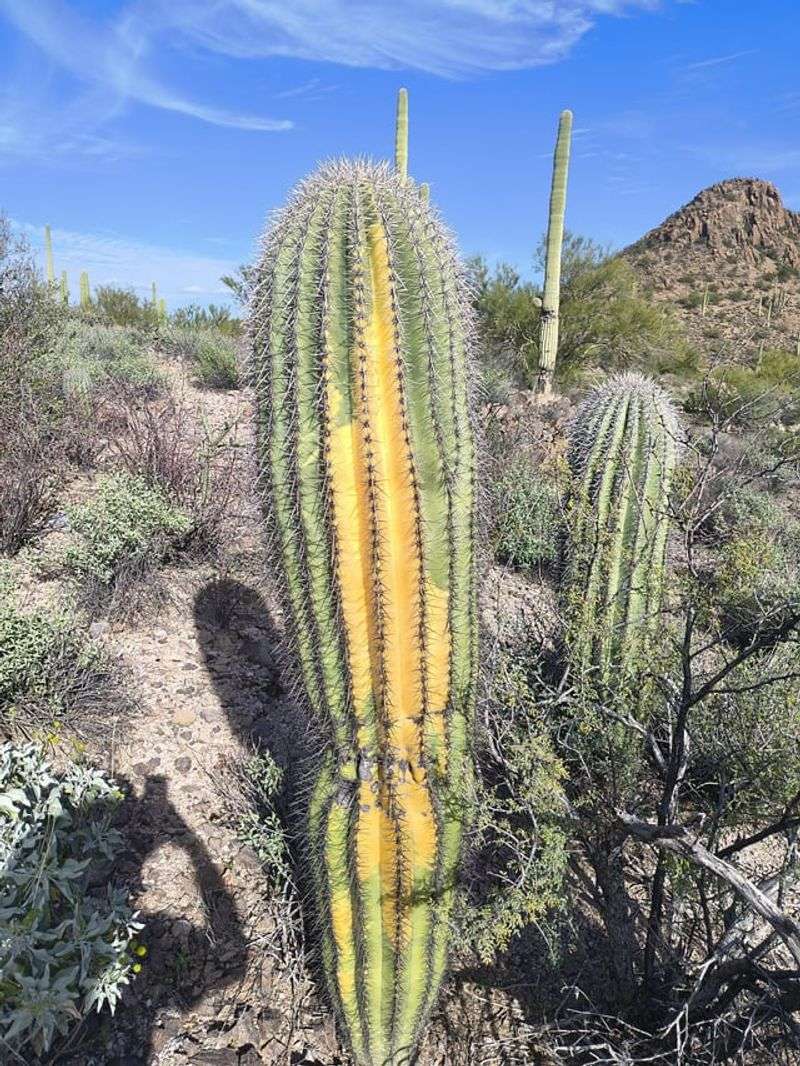
Stressed saguaros are more fragile than they look. When a cactus is already dealing with heat, dehydration, or disease, any additional physical damage can set it back significantly.
Avoid leaning tools against the trunk, running irrigation lines too close to the base, or letting foot traffic compact the soil around the roots.
Vehicle or equipment contact is a leading cause of cactus injury in residential and commercial landscapes. Even a minor scrape can break the outer skin, creating an entry point for bacteria and fungi.
Saguaros do not heal wounds the way trees do. They seal damage with a woody callus, but that process takes time and leaves the plant exposed in the meantime.
Pruning is another area where caution matters. Removing arms or trimming spines from a stressed plant is not recommended.
Cuts create open wounds, and a plant under heat stress does not have the energy to respond quickly. If a branch looks damaged or drooping, observe it for several weeks before making any decisions about removal.
Pets and curious kids can cause more harm than people realize. A single hard knock against a stressed saguaro can crack the skin or dislodge spines in ways that invite infection.
Put up a simple barrier if needed.
5. Soft Or Dark Areas Need Immediate Attention
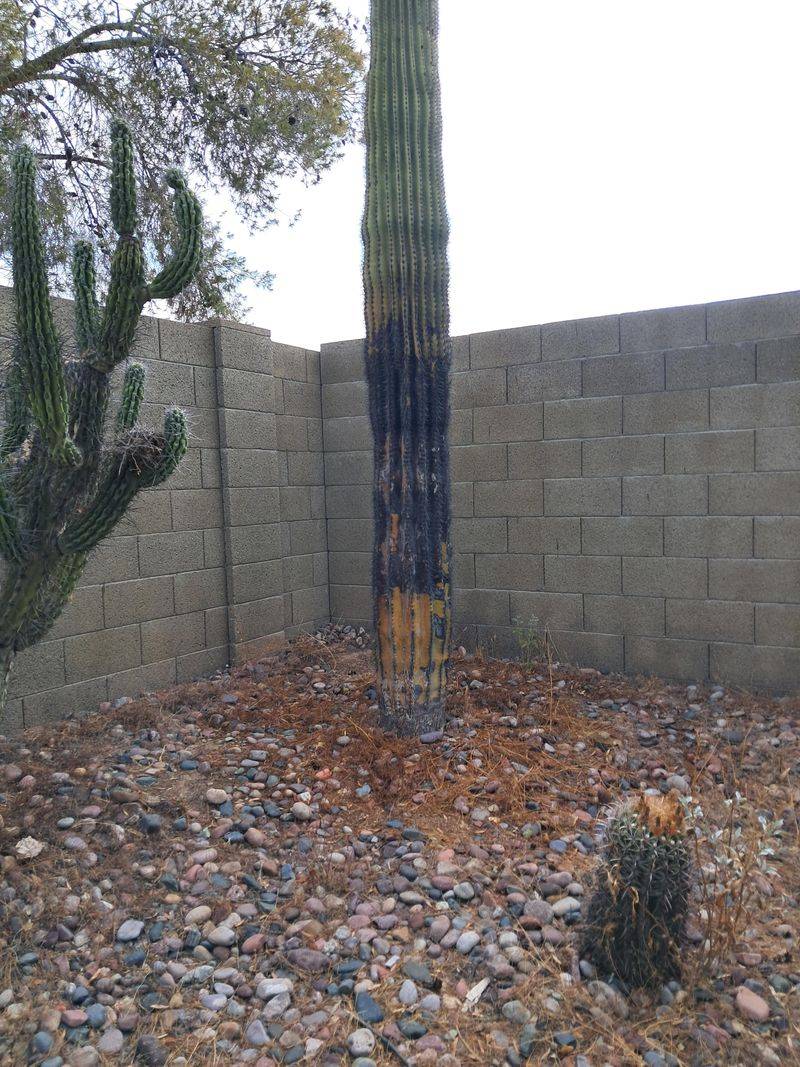
Soft or dark areas on a saguaro trunk are not something to watch and wait on. These spots often indicate internal rot, which can spread faster than you might expect, especially in hot and humid monsoon conditions.
Press gently near the discolored area with a finger. If the skin gives way or feels mushy, the tissue underneath has likely broken down.
Bacterial necrosis is one of the most common culprits. It enters through wounds, insect damage, or freeze cracks and spreads through the interior of the plant.
Dark, wet-looking patches with a foul smell are strong indicators. Left unchecked, this type of damage can compromise a large section of the cactus over a single season.
Woodpecker holes and other physical injuries create entry points for bacteria and fungi. Insects like the saguaro weevil also bore into the trunk, leaving behind damage that invites infection.
In Arizona, saguaro weevil activity tends to peak in late spring through early summer, which means the damage often shows up as visible rot right when heat stress is highest.
Contact a certified arborist or a local extension office if you find soft or dark spots that are growing. Do not attempt to carve out the rot yourself without guidance.
Improper removal can cause more harm.
6. Water Only When The Soil Is Completely Dry
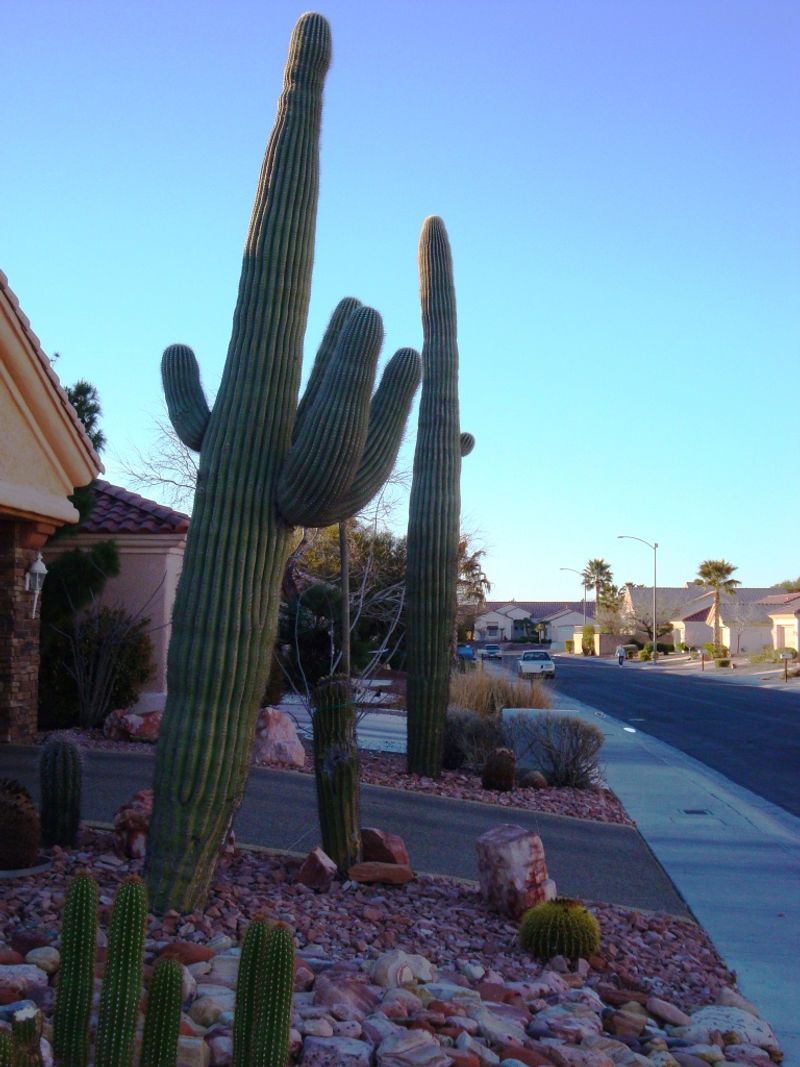
Overwatering a stressed saguaro is a surprisingly common mistake. When a cactus looks rough, the instinct is to give it more water.
But soggy soil around a saguaro causes root rot, which makes stress symptoms worse, not better. Before watering, stick a wooden dowel or a long screwdriver several inches into the soil near the base.
If it comes out damp or cool, hold off.
Saguaros in their natural habitat rely on monsoon rains that arrive in heavy bursts, then allow the soil to drain and dry between events. Mimicking that pattern in a yard setting is healthier than frequent shallow watering.
Deep, infrequent watering encourages roots to grow downward and outward, improving the plant’s ability to access moisture on its own.
Sandy or gravelly soil drains faster than clay-heavy soil. If your yard has dense, slow-draining soil, water even less frequently.
Root rot in poorly draining soil is a serious problem that often goes unnoticed until visible symptoms appear above ground.
During peak summer heat in the desert Southwest, a mature saguaro may benefit from one deep watering every two to three weeks if rainfall has been minimal.
Younger saguaros under ten years old may need slightly more attention since their root systems are not as extensive.
7. Continue Monitoring Through Extreme Heat
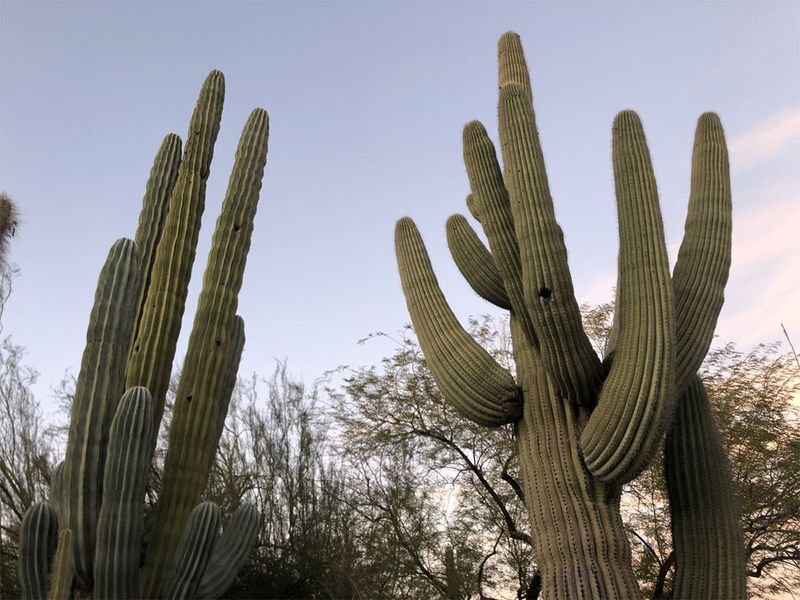
Watching a saguaro through a heat wave is not a one-time task. Conditions change fast in the desert Southwest, and a plant that looks fine on Monday can show new symptoms by Friday.
Set a regular schedule to walk around the cactus and look at it from multiple angles. Changes in color, texture, or shape are easier to catch when you are paying consistent attention.
Keep a simple log if you want to track changes over time. Note the date, temperature, recent rainfall, and any visible symptoms.
Even a few quick notes on your phone can help you spot patterns and determine whether a symptom is improving or getting worse. This kind of record is also useful if you need to consult a professional.
Look at the base of the plant, the trunk, and any arms during each check. Problems do not always show up in the same spot.
A new soft patch near the base and a discolored arm are separate issues that may need different responses. Treating them as one problem can lead to the wrong approach.
Heat waves in Arizona can stretch for weeks, so sustained monitoring matters more than a single inspection.
Once temperatures drop into a more moderate range and monsoon rains arrive consistently, most stable saguaros begin to recover on their own.