Native Arizona Plants That Stay Green Through The Driest Part Of Summer
Summer has a way of changing the look of a yard. Plants that looked fresh a few weeks earlier can suddenly appear tired, faded, or completely dried out.
That is why many homeowners expect at least part of the landscape to lose its color before the season is over. It almost feels like a normal part of living with intense heat.
The good news is that not every plant follows that pattern. Some native species are built for these conditions and continue looking healthy even when rain is scarce and temperatures refuse to let up.
That is one of the biggest advantages of gardening with native plants in Arizona. They have spent countless years adapting to long, hot summers and naturally know how to handle them.
Instead of struggling through the driest weeks, many continue providing green color and attractive texture while needing very little extra attention.
Choosing the right plants can help your landscape look vibrant long after many others have started to fade
1. Desert Spoon Stays Green All Summer
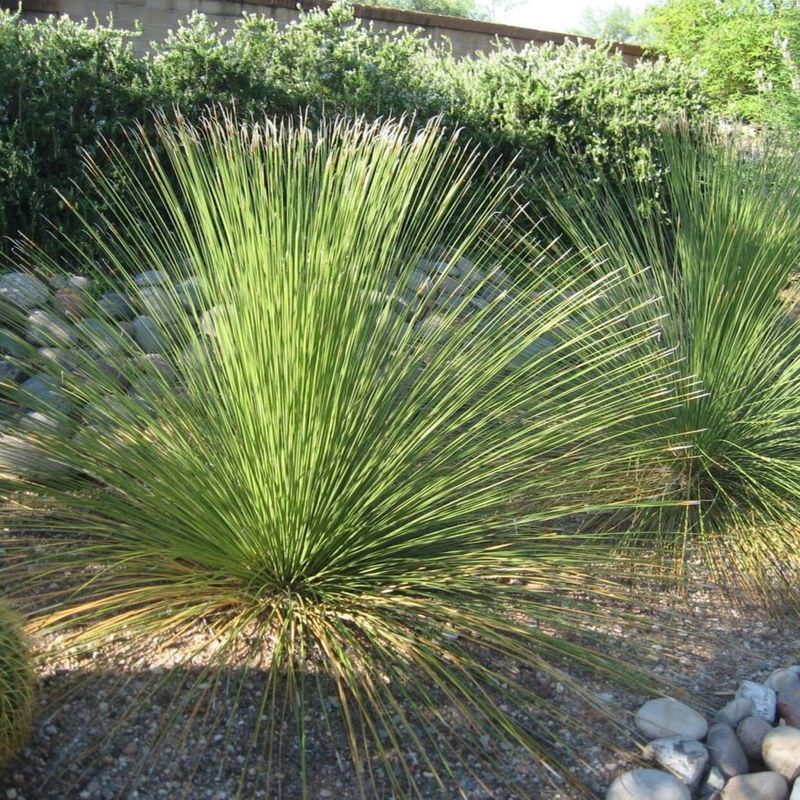
Few plants look this architectural without any effort at all. Desert Spoon, known botanically as Dasylirion wheeleri, keeps its spiky, silver-green leaves all year long, including the harshest stretch of summer.
No leaf drop, no browning out, no drama.
Each leaf grows long and narrow with small teeth along the edges. Up close, the plant looks almost sculptural.
From a distance, it reads as a full, round mound of soft silver-green color that holds up even in triple-digit heat.
Water needs are minimal once established. Most gardeners in the Sonoran Desert region water established Desert Spoon plants once or twice a month during summer, and some go even longer between waterings without any visible stress on the plant.
It grows slowly, which is actually a plus in a landscape. You plant it once and it stays in proportion for years before needing any management.
Root it in well-drained soil and give it full sun, and it basically takes care of itself.
Wildlife benefits matter here too. Birds use the dried flower stalks.
Bees visit the blooms when they appear. Even without flowering, the plant earns its space by staying consistently green through the driest months when everything else looks exhausted.
2. Arizona Rosewood Keeps Its Leaves Year Round
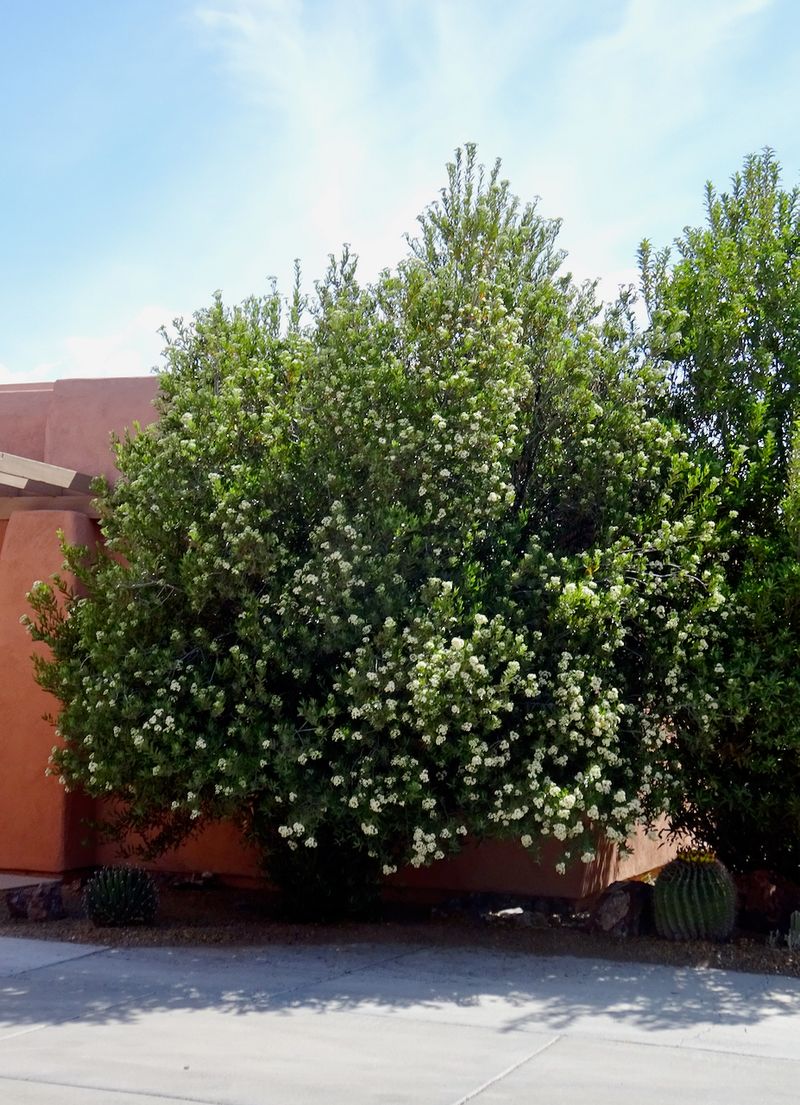
Walk past an Arizona Rosewood in August and you might be surprised. While neighboring plants look parched and pale, this shrub holds onto its small, glossy, dark green leaves like it has no idea summer is happening.
Vauquelinia californica is native to rocky slopes and canyon edges across the desert Southwest. That origin matters because it means the plant evolved to handle dry, hot, exposed conditions without any extra help from irrigation systems.
Leaf size is one reason it manages so well. Smaller leaves lose less moisture than large ones.
Arizona Rosewood keeps its canopy tight and full without burning up water reserves trying to maintain big, broad foliage.
Height-wise, it can reach anywhere from six to eighteen feet depending on conditions.
Your Arizona Garden Changes Every Week. Your Plan Should Too.
Gardening in Arizona changes quickly throughout the season. Every Friday you’ll receive a simple weekly plan showing exactly what to plant, prune, fertilize, harvest, and protect so you never miss the right timing.
Used as a privacy screen or informal hedge, it provides year-round green coverage that most ornamental shrubs simply cannot match during summer months in low desert areas.
Pruning is optional. Left natural, it develops an open, airy form with clusters of small white flowers in spring.
Trimmed lightly, it thickens into a denser screen. Either way, summer heat does not push it into dormancy or cause noticeable leaf loss.
Soil drainage is key for long-term health. Rocky or sandy soil works best.
Heavy clay can cause root problems over time, but in well-drained desert soils it performs reliably season after season.
3. Little Leaf Cordia Handles Dry Summer Heat
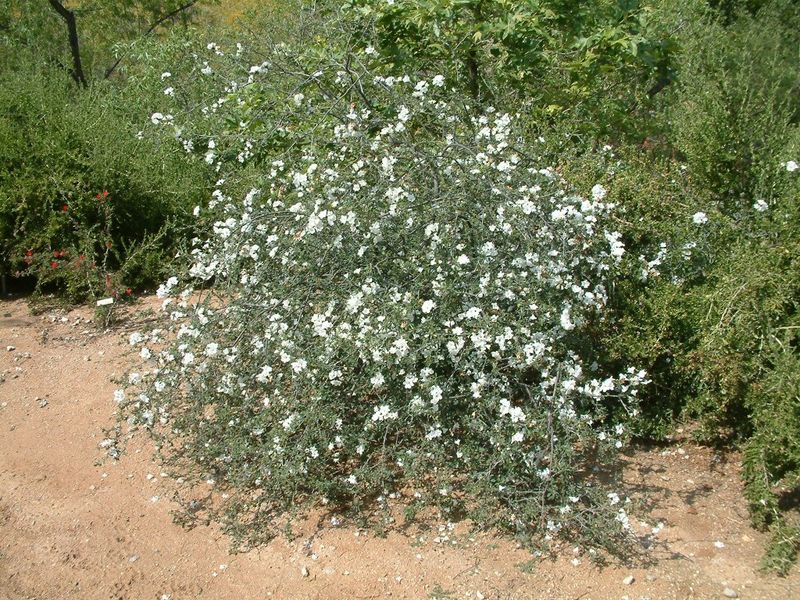
Bright green in the middle of August sounds impossible in desert conditions, but Little Leaf Cordia pulls it off consistently. Cordia parvifolia is a low-water shrub with tiny round leaves that stay green and fresh-looking even when rain is weeks away.
Size and leaf structure are big parts of the story. Small leaves mean less surface area for moisture loss.
That natural adaptation helps the foliage stay dense and green under full desert sun with only an occasional deep soak once established.
Once established, usually after the first full growing season, it handles summer with very little intervention. Gardeners across the low desert region report going three to four weeks between waterings without visible stress on the plant during peak heat.
White flowers appear sporadically through the warm season, adding a nice visual bonus. They are small but numerous, and pollinators like them.
After flowering, the plant keeps its foliage intact rather than going semi-dormant like many other flowering shrubs do.
Height typically reaches four to six feet with a similar spread. It works well as an informal hedge, a filler between larger plants, or as a standalone accent near a wall or pathway.
Full sun is preferred, and it handles reflected heat from walls or pavement better than most plants its size.
Plant it in well-drained soil and skip the heavy fertilizing. It does not need it.
4. Fairy Duster Keeps Fine Green Foliage
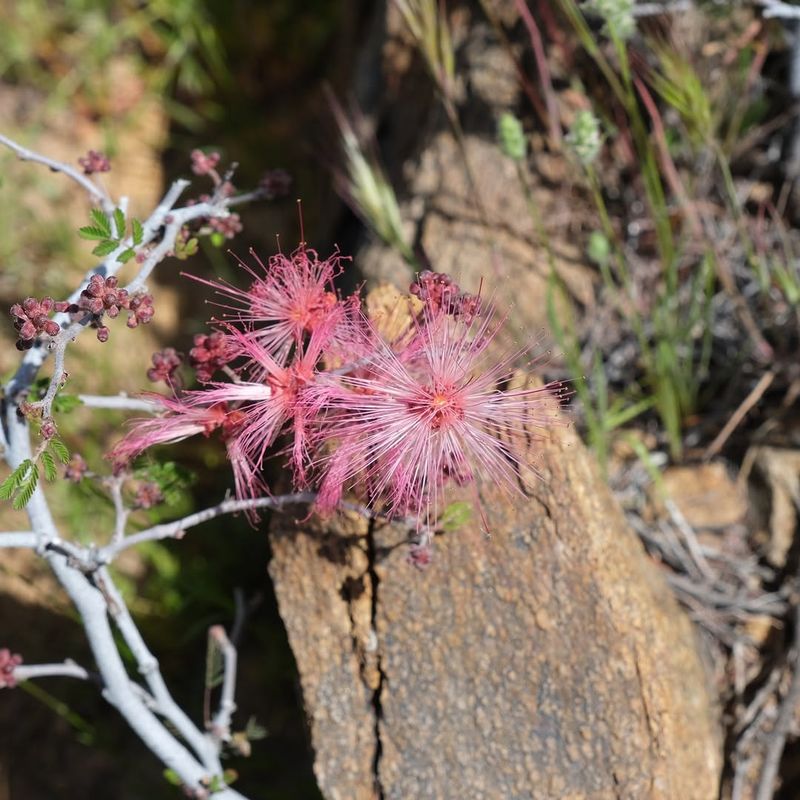
Fairy Duster earns its name from those soft, feathery pink blooms, but the foliage deserves just as much credit.
Calliandra eriophylla holds its fine, fern-like green leaves through summer heat in a way that feels almost too good to be true for such a delicate-looking plant.
Leaves are small and compound, meaning each stem carries many tiny leaflets. That structure reduces water loss dramatically.
Even on a 108-degree afternoon, the foliage stays green and relatively full compared to coarser-leafed plants nearby.
Growth stays manageable. Most plants top out around three feet tall with a loose, open spread.
That low profile makes Fairy Duster useful in spots where you want green coverage without blocking sightlines or crowding other plants.
Blooms appear in late winter and again after summer monsoon rains, but between flowering periods the plant is not bare or boring. Its fine-textured green foliage provides consistent color and a soft visual contrast against boulders, gravel, or larger cacti nearby.
Water needs drop significantly once the plant is established. In rocky desert soils with good drainage, supplemental watering every two to three weeks during dry summer months is usually enough to keep it looking healthy.
Overwatering is more of a risk than underwatering with this plant.
Hummingbirds and native bees visit the flowers regularly. Even without blooms, the plant holds its own as a reliable summer-green accent in low-water landscapes.
5. Banana Yucca Holds Its Color In Heat
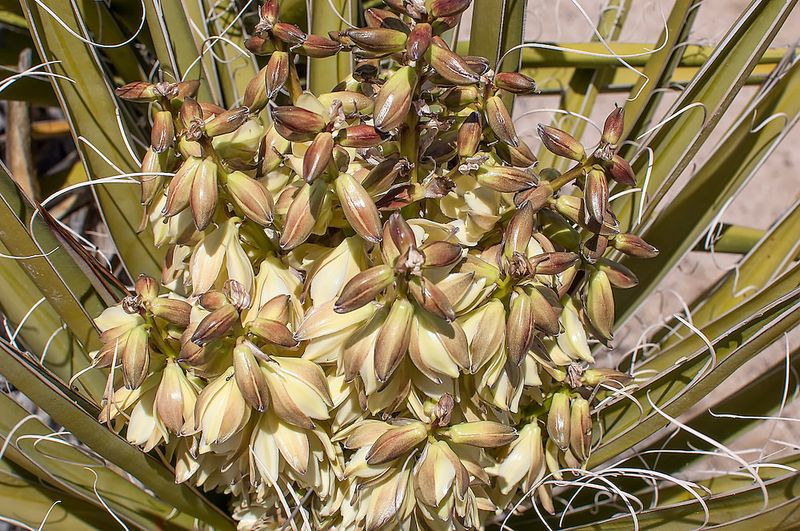
Banana Yucca does not flinch in summer heat. Yucca baccata grows across rocky desert terrain at various elevations, and its broad, stiff, blue-green leaves stay consistent in color from June straight through to September without irrigation support.
Leaf structure is the key to its toughness. Each leaf is thick, waxy, and designed to reflect heat rather than absorb it.
That waxy coating reduces moisture loss while also giving the foliage a clean, blue-green color that actually looks sharper in bright summer light.
Unlike some yuccas that look ragged or bleached by midsummer, Banana Yucca maintains its upright, bold form. Older leaves at the base may dry out over time, but the active rosette stays full and green even during the driest weeks of the year.
Fruit production is another interesting aspect. Large, fleshy seed pods develop after flowering and were historically eaten by Indigenous communities across the desert Southwest.
That cultural connection adds depth to what might otherwise seem like just another spiky landscape plant.
Placement matters for best results. Full sun and excellent drainage are non-negotiable.
Rocky slopes, raised beds, or decomposed granite areas give it the conditions it prefers. Avoid areas where water pools after rain, as saturated roots cause long-term problems.
Water established plants once or twice a month during extreme heat. Skip fertilizer entirely.
This plant thrives on neglect more than it does on attention.
6. Beargrass Stays Green With Little Water
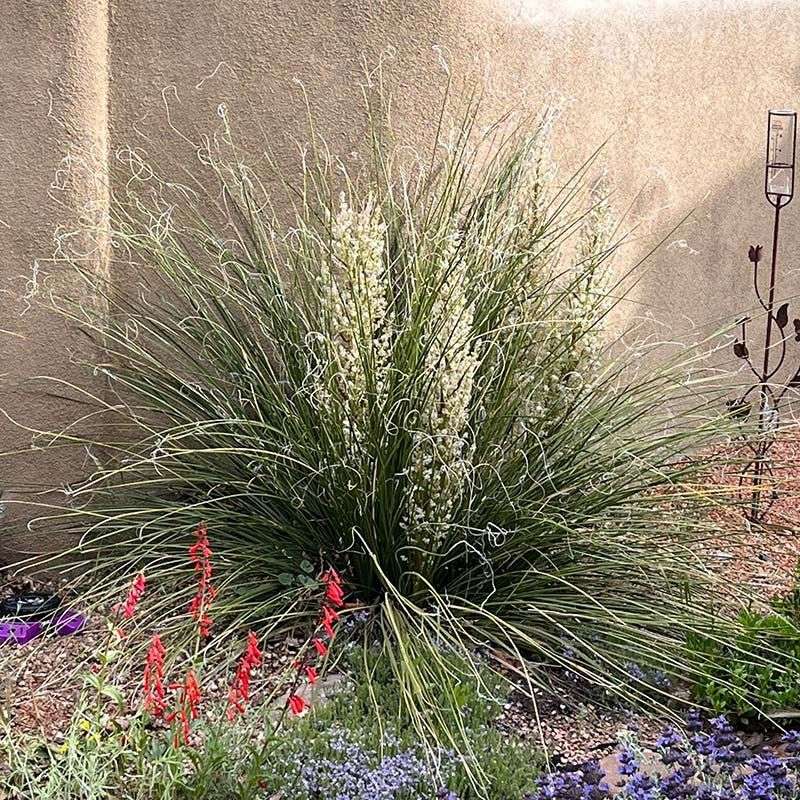
Nolina microcarpa, commonly called Beargrass, is one of those plants that looks like it should need water but genuinely does not.
Its long, narrow, arching leaves form a dense fountain shape that stays green through even the most relentless summer dry spells.
Leaf texture plays a big role in its survival strategy. Each blade is tough, slightly rough along the edges, and flexible enough to bend in the wind without breaking.
That flexibility prevents the kind of physical stress damage that makes other plants look ragged by July.
Color stays consistent across the heat season. Beargrass holds a medium to dark green that does not fade or yellow under intense sun exposure.
Compared to many ornamental grasses that bleach out in summer, this native keeps its fresh appearance without supplemental watering beyond establishment.
Mature clumps can get large over time, sometimes reaching four or five feet in diameter. That size makes it useful as a bold focal point in a dry garden bed or as a natural-looking anchor among boulders and native wildflowers.
Drainage is critical, just like with most desert natives. Sandy or rocky soil suits it well.
In heavier soils, root health can decline during summer heat, so amending with gravel at planting time helps in less-than-ideal spots.
Birds use the dried flower stalks for nesting material. Occasional light grooming to remove old dried blades keeps the plant looking neat, but heavy cutting back is not necessary or recommended.
7. Parry’s Agave Remains Green Through Summer
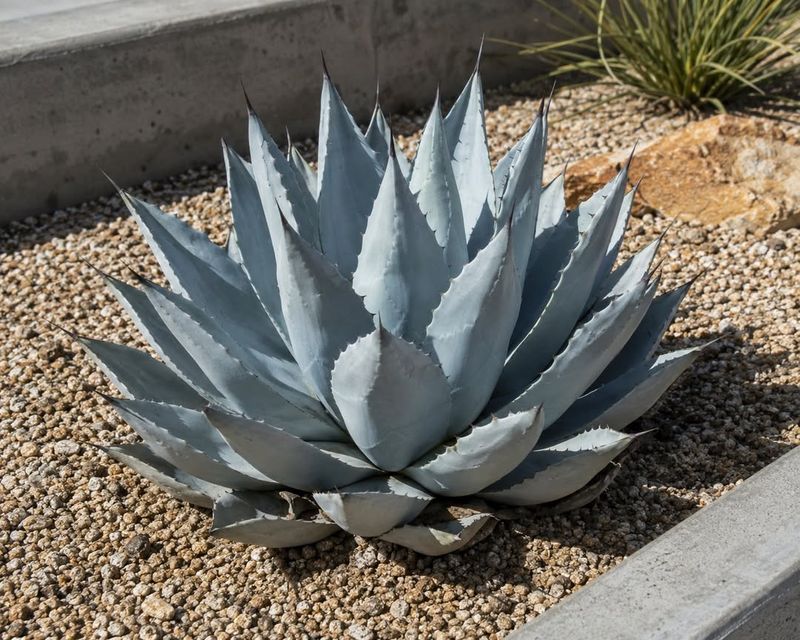
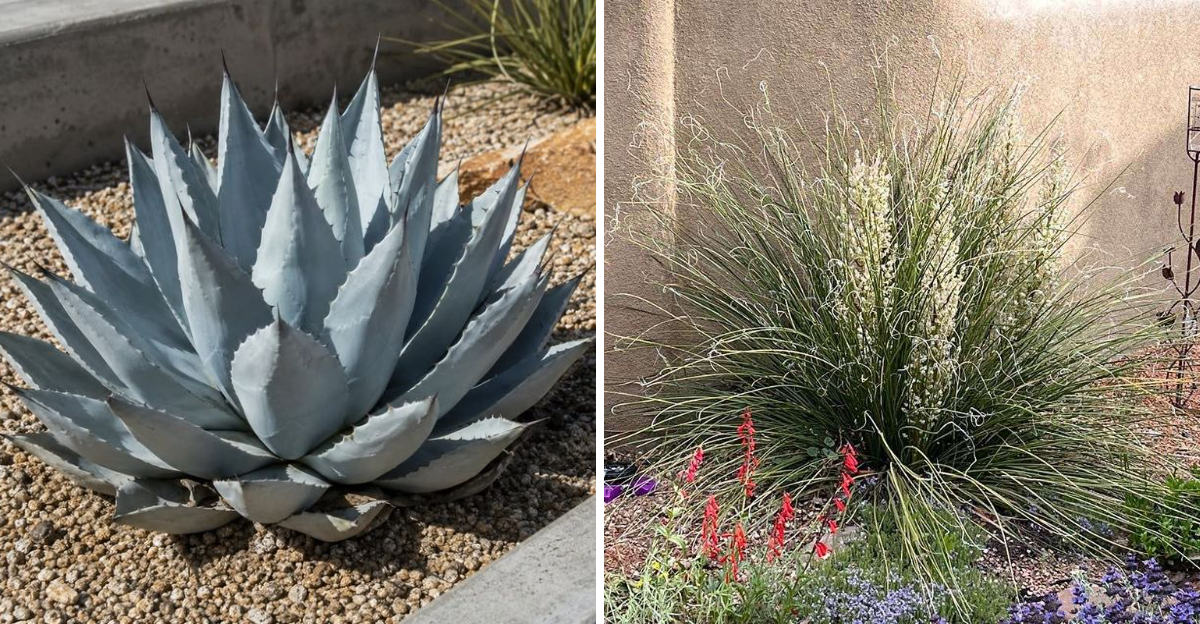
Bold, geometric, and completely unbothered by summer heat, Parry’s Agave is one of the most reliable evergreen plants you can put in a low-water desert garden. Agave parryi holds its thick, blue-gray-green rosette all year with zero seasonal leaf drop.
Leaf thickness is the real advantage here. Each leaf stores moisture internally, acting almost like a built-in water reservoir.
Even after weeks without rain, the leaves stay plump and firm rather than shriveling or losing color. That internal storage system is what separates agaves from most other desert plants.
Size is manageable compared to larger agave species. Parry’s Agave typically reaches about two feet tall and two to three feet wide at maturity.
That compact form fits easily into smaller yards, raised beds, or mixed planting areas without overwhelming the space around it.
Color is a genuine selling point. The blue-gray-green tone looks striking against rust-colored gravel, pale limestone boulders, or dark decomposed granite.
Even without flowers, the plant has strong visual impact through contrast alone.
Flowering happens once in the plant’s lifetime, sending up a tall stalk covered in yellow blooms. After that central plant finishes, offsets around the base continue growing.
So the plant effectively renews itself without any replanting on your part.
Full sun and sharp drainage are the two non-negotiable requirements. Beyond that, established plants need almost no care during summer months and handle reflected heat from walls or pavement without visible stress.
8. Desert Wolfberry Stays Green Through Dry Spells
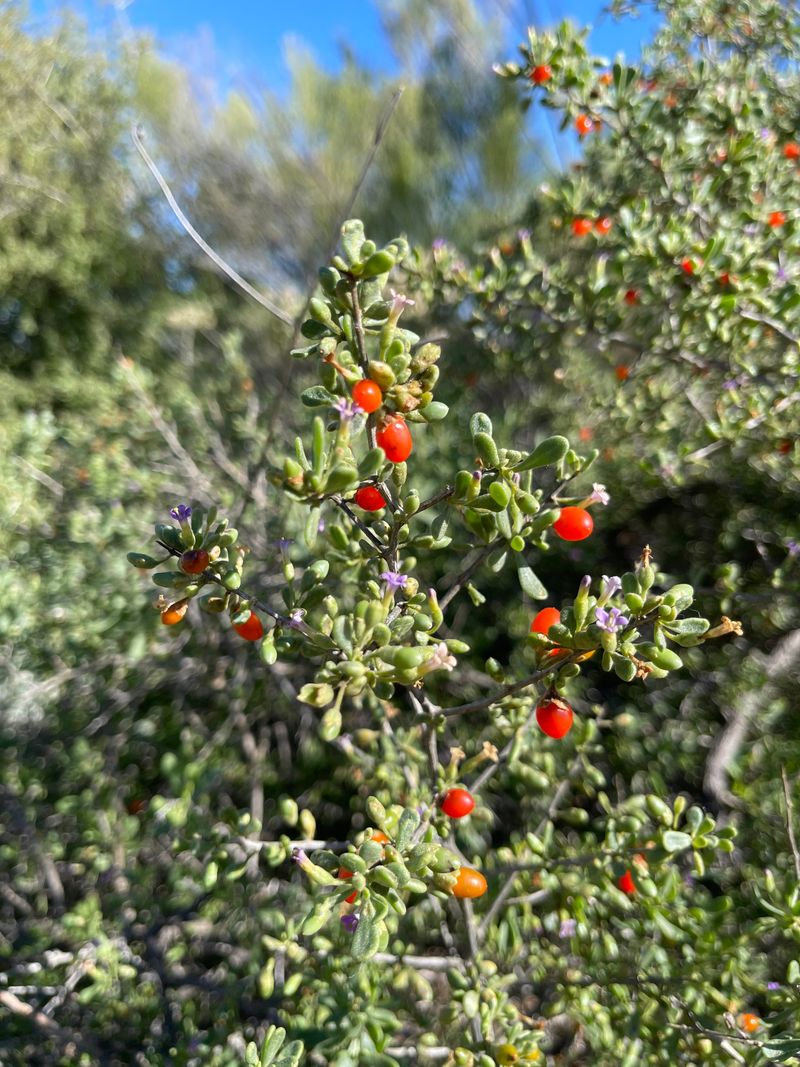
Not every summer-green plant in the desert looks dramatic or architectural. Desert Wolfberry, Lycium fremontii, is quieter in appearance but incredibly tough.
Small green leaves, twiggy branches, and a natural form that holds up through dry spells without any fuss.
Leaf retention during summer sets it apart from many native shrubs that go semi-dormant when heat peaks.
Desert Wolfberry keeps its small green leaves through the driest weeks, giving it a consistently alive look even when surrounding plants have dropped foliage to conserve moisture.
Berries are a major wildlife draw. Small orange-red fruits appear after flowering and attract birds rapidly.
Thrashers, mockingbirds, and other desert species rely on the fruit during summer months when food sources get scarce. Planting it near a window gives you a built-in bird-watching spot.
Growth habit is loose and somewhat spiny, which makes it useful as a barrier plant along property edges or near areas where foot traffic is not wanted. It fills space naturally without requiring pruning to maintain its form.
Water needs are low but not zero during establishment. A deep soak every couple of weeks through the first summer helps roots get established.
After that, natural rainfall combined with occasional supplemental watering during extreme dry stretches is usually enough.
Soil flexibility is a plus. It handles sandy desert soils, rocky ground, and even slightly heavier soils better than many other native plants.
That adaptability makes it a practical choice across a range of planting situations in the low desert region.