This Native Texas Bloom Makes Mosquitos Less Welcome On Hot Summer Evenings
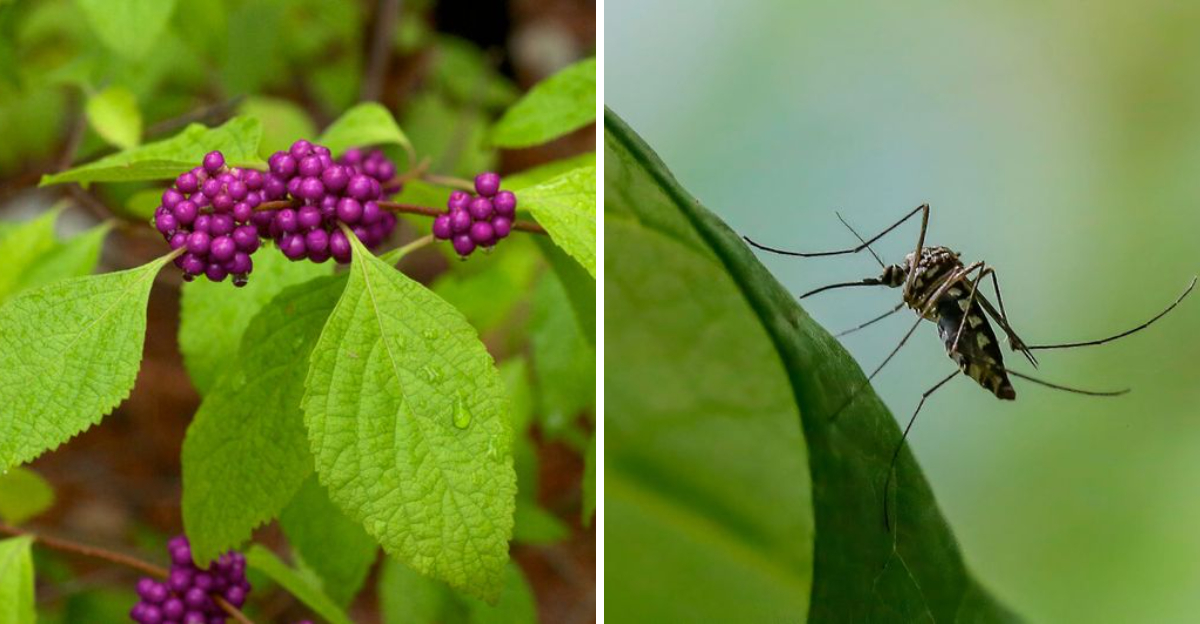
Hot Texas evenings on the porch would be perfect if it weren’t for the mosquitoes. They appear right as the temperature becomes bearable, they zero in with frustrating accuracy, and they turn what should be the best part of a summer day into something you’d rather skip.
Most people reach for the spray and accept that this is just part of Texas summer life. But there’s a native Texas bloom that has other ideas.
This plant produces natural compounds that mosquitoes find genuinely off putting, creating an invisible buffer around wherever it’s growing that makes your outdoor space significantly less welcoming to them on summer evenings.
It works passively, from the moment the blooms open through the whole season, without any effort or reapplication from you.
It also happens to be beautiful, deeply suited to the Texas climate, and attractive to the pollinators you actually want around your garden. A plant that earns its spot multiple times over.
Here’s the native Texas bloom worth adding to your porch or garden before mosquito season peaks.
American Beautyberry Produces Subtle Flowers With A Surprising Reputation
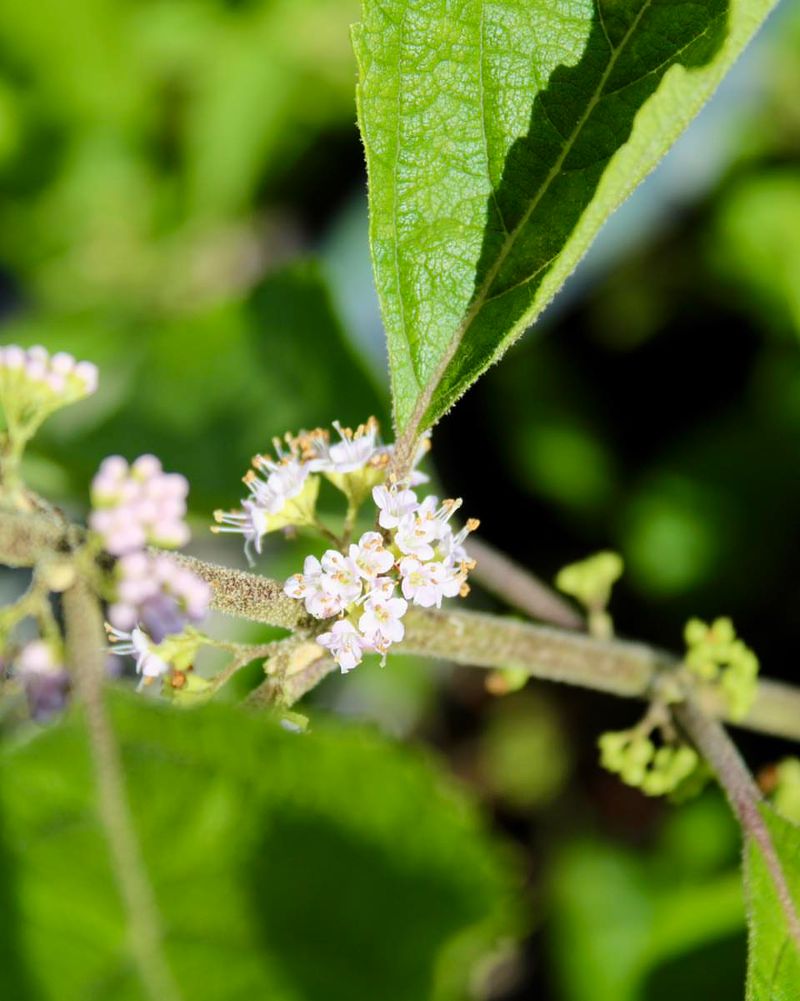
Walk past an American beautyberry shrub in late spring or early summer, and you might not notice its flowers at first. The blooms are small, pinkish-white, and tucked tightly along the stems in little clusters.
They are easy to overlook, but they are the starting point for one of the most eye-catching plant displays in the Texas landscape.
American beautyberry, known scientifically as Callicarpa americana, is a deciduous shrub native to the southeastern United States, including much of Texas. It grows naturally in woodland edges, moist thickets, and shaded understory areas.
The plant can reach six to nine feet tall and wide, with long, arching branches that give it a loose and casual shape.
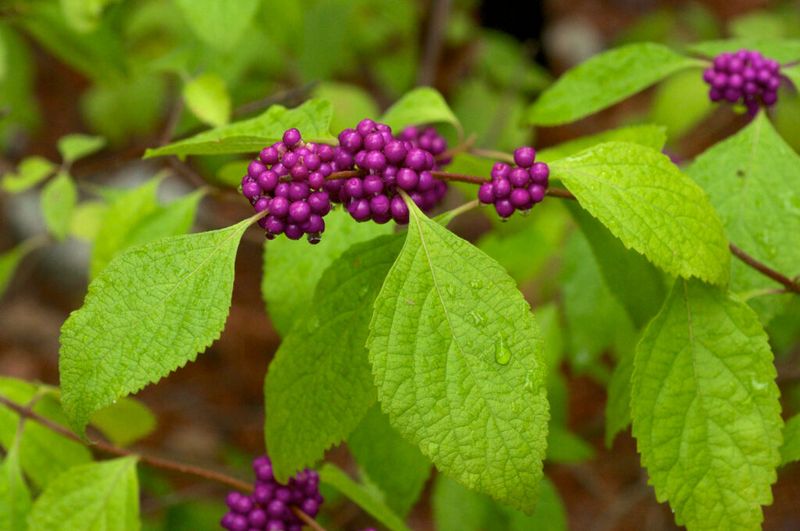
After those modest flowers fade, something remarkable happens. The berries that follow turn a vivid, almost electric shade of purple-violet, wrapping tightly around the stems in dense clusters.
By late summer and fall, the shrub becomes one of the most visually striking plants in any Texas garden.
Here is the part that surprises many people. The mosquito-deterring reputation of this plant does not actually come from its flowers.
Research points to the leaves as the source of the plant’s most interesting compounds. The flowers are lovely, and the berries are spectacular, but the foliage is where the science gets interesting.
Understanding this distinction matters a lot. Gardeners who plant beautyberry expecting the blooms to push mosquitoes away may feel disappointed.
Knowing the full picture helps you appreciate what this native shrub genuinely offers, which is actually quite a lot.
Its Leaves Contain Compounds That Deter Mosquito Bites
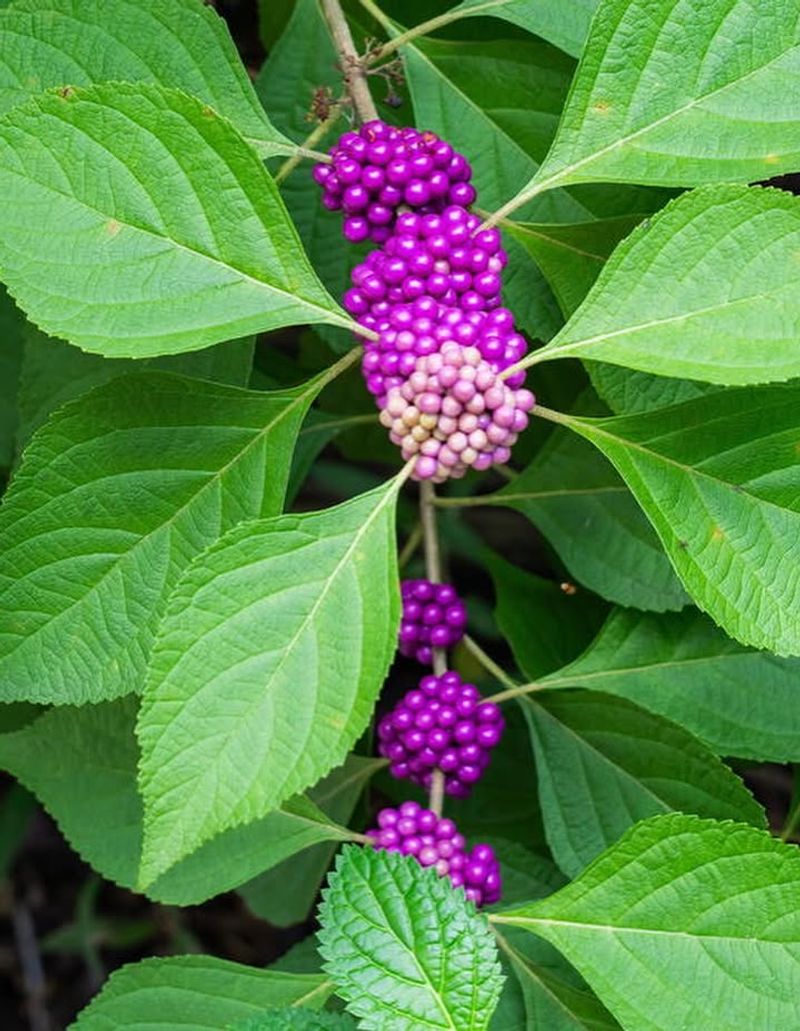
Scientists at the United States Department of Agriculture made a genuinely interesting discovery when they studied American beautyberry leaves. They identified natural compounds called terpenoids in the foliage, specifically callicarpenal and intermedeol.
Laboratory tests found that these isolated compounds discouraged mosquitoes from biting test subjects during controlled experiments.
Your Texas Garden Changes Every Week. Your Plan Should Too.
Gardening in Texas changes quickly throughout the season. Every Friday you’ll receive a simple weekly plan showing exactly what to plant, prune, fertilize, harvest, and protect so you never miss the right timing.
That finding was meaningful because it gave scientific backing to something many rural Texans and Native American communities had practiced for generations.
Historically, people crushed beautyberry leaves and rubbed them on their skin or tucked them under hat bands to keep biting insects away.
The USDA research suggested there was a real chemical reason behind that traditional practice, not just folklore.
Callicarpenal, in particular, showed activity against several mosquito species, including Aedes aegypti, which is the species responsible for spreading certain tropical diseases. Intermedeol also showed promising results in similar tests.
Both compounds belong to a class of plant chemicals that many insects find unappealing. Still, it is important to read that research carefully. The studies worked with isolated, concentrated compounds in controlled settings.
That is very different from what happens in a backyard garden. A growing shrub sitting in a flower bed releases far smaller amounts of these chemicals into the surrounding air than what researchers used in their experiments.
The science supports the idea that beautyberry leaves contain genuinely interesting mosquito-deterring compounds. That is worth celebrating.
Just remember that a lab result and a backyard experience are two different things, and managing expectations keeps everyone happier when they head outside on a warm Texas evening.
Simply Planting The Shrub Does Not Create A Mosquito-Free Zone
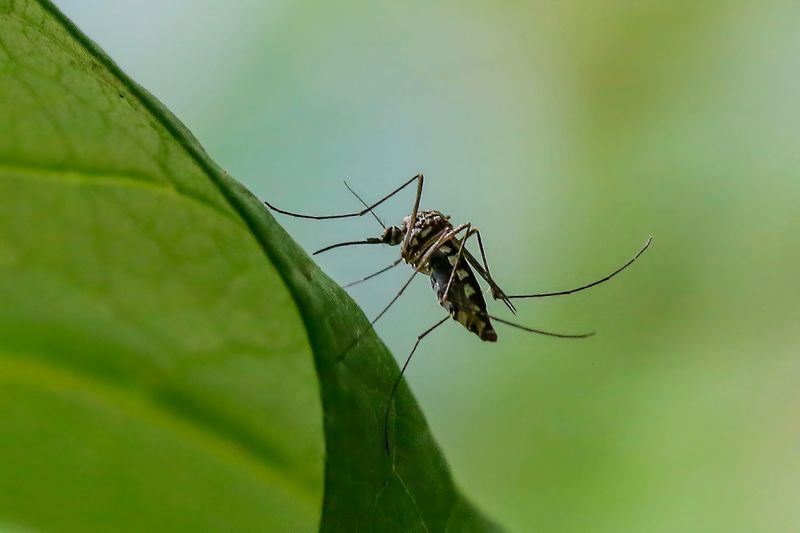
Many gardeners read about beautyberry’s mosquito-related reputation and immediately picture a shrub that quietly pushes insects away from the entire patio. That picture is appealing, but it does not match how the plant actually works.
American beautyberry does not continuously pump enough repellent compounds into the surrounding air to function like a mosquito treatment or a commercial outdoor spray system.
The traditional method that gave this plant its reputation required physical contact with the leaves. People crushed the foliage to break open the plant’s cells and release the aromatic oils inside.
That action made the compounds available in a concentrated form. Simply sitting near an untouched shrub does not trigger that same release in meaningful amounts.
Some websites and social media posts suggest rubbing crushed beautyberry leaves directly on your skin as a homemade repellent. That idea is based on the traditional practice, but it comes with important cautions.
No standardized preparation exists for home use, and the concentration, safety, and duration of protection from a homemade leaf preparation have not been tested or approved by any regulatory body.
Skin sensitivity varies widely from person to person. A plant compound that causes no reaction in one person could cause irritation or an allergic response in another.
Without proper testing, there is no reliable way to know how strong or how safe a homemade preparation would be.
Growing beautyberry in your yard is still a wonderful idea for many reasons. Just be honest with yourself about what it can realistically do.
The flowers are charming, the berries are stunning, and the plant supports local wildlife in meaningful ways.
A Partly Shaded Texas Patio Edge Can Provide The Right Growing Site
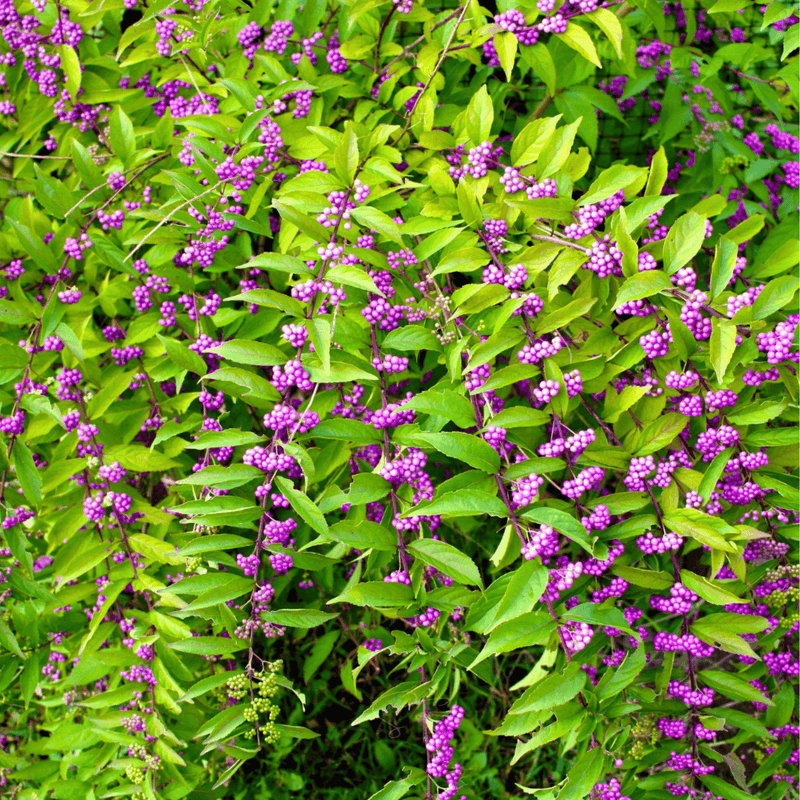
American beautyberry is not a demanding plant once it settles in, but it does have preferences. In the wild, it grows as an understory shrub, meaning it naturally lives beneath taller trees where it receives filtered light rather than full, blazing sun.
A spot along the shaded edge of a patio, fence line, or tree canopy suits it well in Texas gardens.
Partial shade is generally the sweet spot for this shrub. It can tolerate more sun in cooler regions, but in the intense Texas summer heat, too much direct afternoon sun can stress the plant and cause leaf scorch.
Morning sun with afternoon shade tends to produce the healthiest and most attractive growth.
Soil quality matters, too. Beautyberry naturally grows in organically rich, adequately moist soil found in woodland settings.
In home gardens, working compost into the planting area helps replicate those conditions. The shrub is not particularly fussy about soil pH, but it does not love heavy clay that stays waterlogged for long periods.
Give the plant room to breathe. American beautyberry can spread six feet or more in width, with long arching branches that sweep outward gracefully.
Planting it too close to walkways, seating areas, or structures will mean constant pruning and a plant that never looks its best.
Newly planted shrubs need consistent watering during their first growing season while roots get established.
Once settled in, beautyberry shows decent drought tolerance, but extended dry spells during a hot Texas summer can cause early leaf drop and reduce berry production significantly. A layer of mulch around the base helps retain soil moisture and regulate temperature.
Summer Flowers Become A Valuable Fall Food Source For Birds
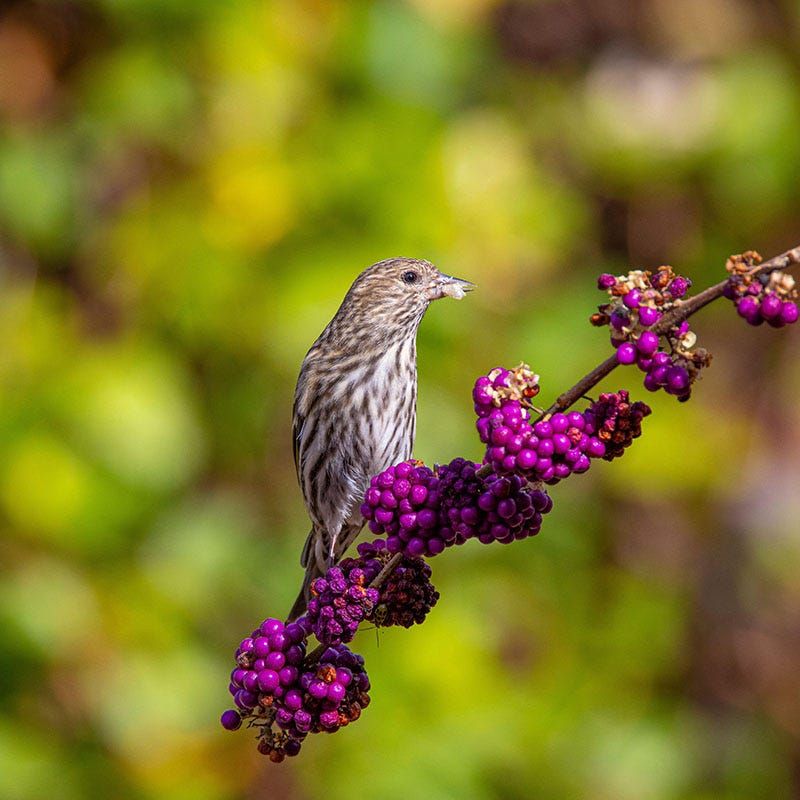
Those small, easy-to-miss flowers that appear along beautyberry stems during late spring and summer are doing quiet but important work.
They attract visiting insects, including native bees and butterflies, that use the blooms as a food source during the long growing season.
The flowers may not win any beauty contests, but they play a real role in supporting local pollinators.
Then fall arrives, and the shrub transforms completely. The berries that follow the flowers ripen into clusters of intense purple-violet that almost look unreal.
They wrap tightly around the stems in a way that makes the whole branch look painted. Few native plants put on a fall display as vivid and unexpected as American beautyberry.
Birds go absolutely wild for these berries. Mockingbirds, robins, brown thrashers, cedar waxwings, and many other species visit the shrub regularly once the fruit ripens.
Deer and small mammals also browse the berries when they are available. For wildlife gardeners, this shrub is a genuine asset that produces food during a season when many other native plants have finished producing.
Thinking about placement with wildlife in mind makes sense. A beautyberry shrub positioned where you can watch it from a window or from a seating area gives you a front-row seat to all that bird activity in autumn.
Just make sure its mature width will not block a walkway or crowd out neighboring plants over time.
The value of this shrub goes well beyond any mosquito conversation. It is a genuinely useful native plant that earns its place in a Texas garden through flowers, berries, and the wildlife it welcomes all season long.
Beautyberry Works Best As One Part Of A Larger Mosquito-Control Plan
Loving beautyberry for what it truly is makes the most sense. It is a beautiful, wildlife-friendly, Texas-native shrub with a fascinating scientific backstory.
What it is not is a standalone solution for mosquito control on warm summer evenings. Treating it as one piece of a larger plan is the realistic and effective approach.
Standing water is the single biggest factor in mosquito breeding around any home. Even small amounts of water sitting in saucers under potted plants, buckets, clogged gutters, or low spots in the yard can produce large numbers of mosquitoes in just a few days.
Eliminating or regularly emptying those spots makes a bigger difference than any plant you could grow.
Birdbaths and other water features that you want to keep should be refreshed at least twice a week during summer. Moving water, like a small fountain or bubbler, is less attractive to breeding mosquitoes than still water.
That simple change can reduce mosquito activity noticeably around a patio.
Screened porches and outdoor fans add another layer of comfort. Mosquitoes are weak fliers, and even a gentle breeze from a fan makes it much harder for them to land on you.
Screened spaces block them entirely, giving you a comfortable outdoor area without chemical treatments.
When you need dependable personal protection, EPA-registered repellents containing DEET, picaridin, or oil of lemon eucalyptus are backed by solid research and proven to work.
Use them as directed for reliable coverage during peak mosquito activity hours around dawn and dusk. Grow beautyberry because it is a genuinely rewarding native plant. Let proven methods handle the mosquitoes.