The Caterpillar Quietly Defoliating Texas Mountain Laurel That Most Homeowners Never Think To Look For
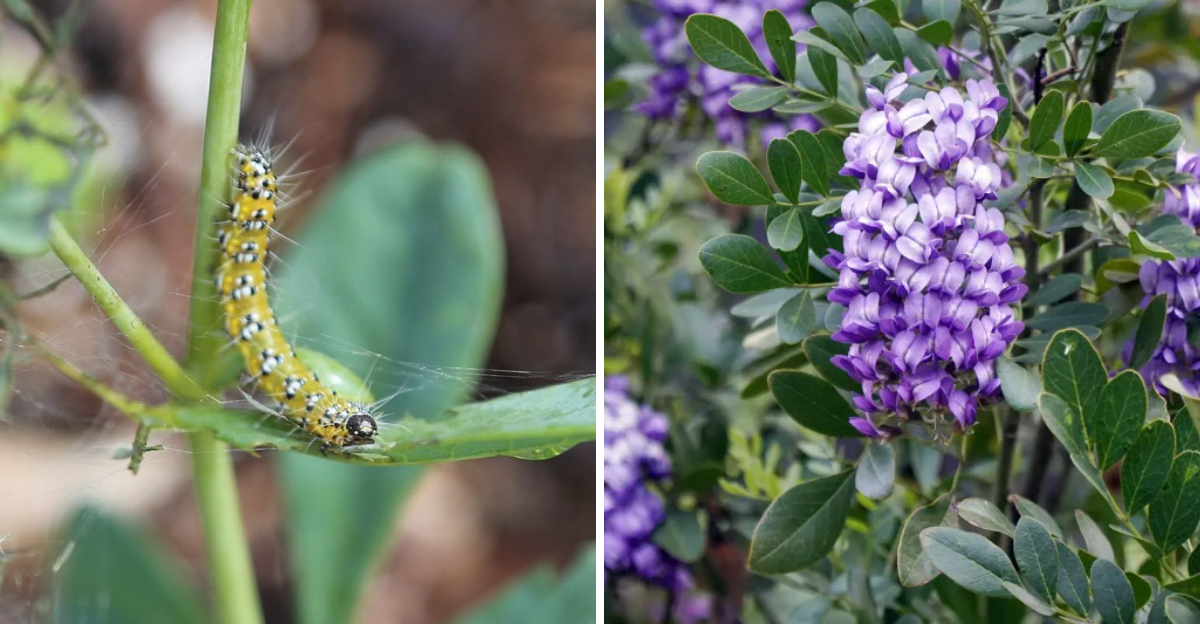
Texas mountain laurel is one of those plants that earns genuine affection from the gardeners who grow it.
That extraordinary grape scented spring bloom, the deep evergreen foliage, the way it anchors a Texas landscape with a quiet, reliable beauty that holds through every season.
When something starts stripping the leaves from a mountain laurel, the discovery feels personal. And most homeowners never see it coming.
There’s a caterpillar that targets Texas mountain laurel with a focus and efficiency that can leave a previously lush plant looking significantly depleted before the gardener even realizes feeding has begun.
It works quickly, it often starts in less visible parts of the plant, and by the time the damage becomes obvious from a distance, the infestation is usually further along than it first appears.
This is not a widely talked about pest, which is a large part of why it causes so much damage. Homeowners simply aren’t looking for it.
Here’s what it is, where to find it, and exactly what to do when you spot it on your Texas mountain laurel.
Meet The Caterpillar Targeting Texas Mountain Laurel
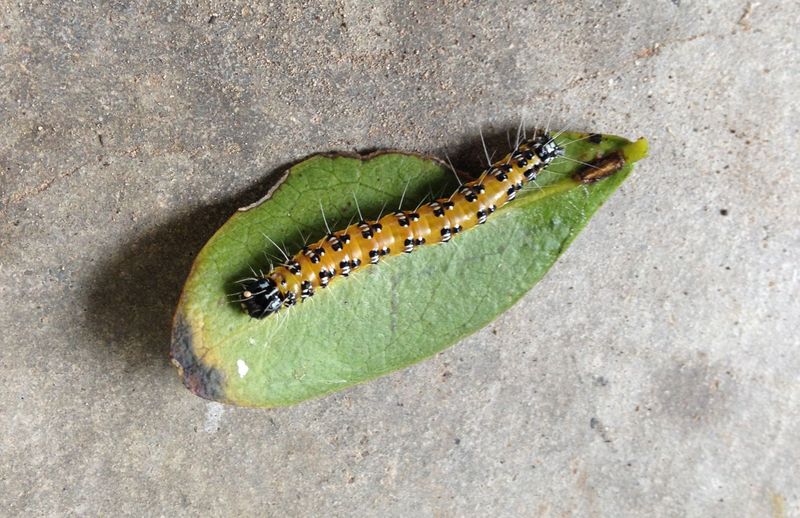
Most people have never heard of the genista caterpillar, but this small larva is one of the most common threats to Texas mountain laurel across Central Texas and the Gulf Coast region.
It is the larval stage of the genista broom moth, a moth species that has developed a strong preference for plants in the legume family, which includes the beloved Texas mountain laurel.
The caterpillars are easy to recognize once you know what to look for. They are usually yellowish-green with bold black spots running along their bodies, and they have fine, short hairs covering their skin.
When they are young, they are tiny and easy to miss. As they grow, they can reach about an inch in length and become much more noticeable, especially when they gather in groups.
One reason homeowners are often caught off guard is that several generations of genista caterpillars can develop during the warmer months. That means an infestation you thought was gone can return just weeks later.
Spring usually brings the first wave, as overwintered pupae develop into adult moths that lay new eggs. Summer and early fall can bring additional rounds of feeding activity, keeping your mountain laurel under pressure for months at a time.
Understanding this pest’s life cycle is the first step toward protecting your plant before serious defoliation happens.
Why Homeowners Often Miss The Infestation
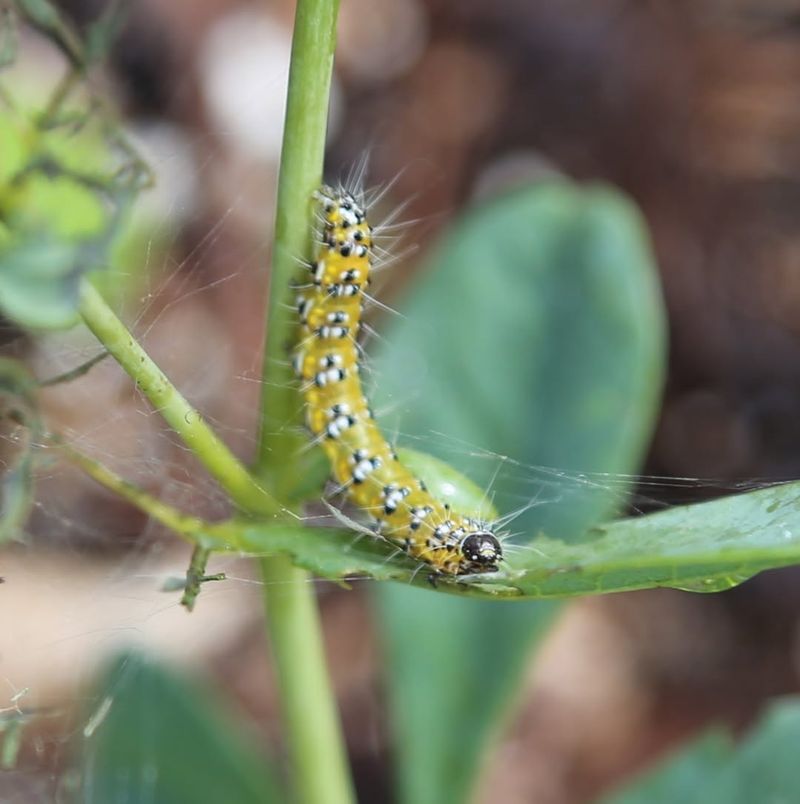
Spotting a genista caterpillar infestation early is tricky, and there are a few very specific reasons why. When the eggs first hatch, the tiny larvae immediately begin spinning loose, silky webbing around tender new foliage.
This webbing acts almost like a protective tent, shielding the young caterpillars from the weather and from natural predators while they feed in relative safety. From a distance, it can look like nothing more than a dusty patch on the plant.
The eggs themselves are equally easy to overlook. They are small, cream-colored, and laid in neat but overlapping clusters on the underside of leaves.
Your Texas Garden Changes Every Week. Your Plan Should Too.
Gardening in Texas changes quickly throughout the season. Every Friday you’ll receive a simple weekly plan showing exactly what to plant, prune, fertilize, harvest, and protect so you never miss the right timing.
Unless you are specifically turning leaves over and examining them closely, you could walk past hundreds of eggs and never realize they are there. This is exactly why many homeowners only notice the problem once the damage has already become severe.
Early feeding activity also tends to happen deep inside dense new growth, where caterpillars are protected by layers of leaves and stems. By the time the outermost leaves show visible damage, the infestation is often well established.
Whole branch tips may be stripped bare before a homeowner takes a second look at the plant. The lesson here is straightforward: do not wait for obvious damage before you start checking.
Regular, close inspection of new growth, especially during spring and summer, is the most reliable way to catch an infestation before it gets out of hand and causes major harm to your plant.
Warning Signs To Look For On The Plant
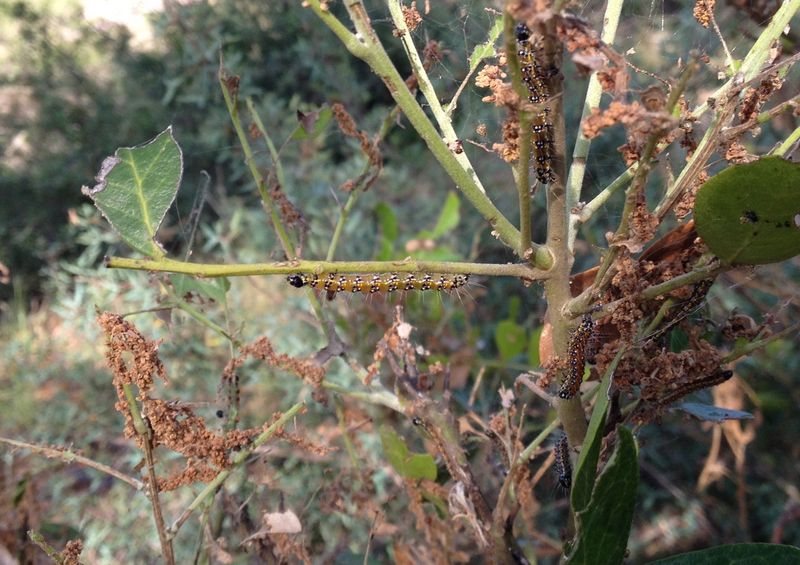
Catching a genista caterpillar problem early comes down to knowing exactly what warning signs to look for. The most obvious early clue is loose, messy silk webbing around the tips of branches and new leaf growth.
Unlike the tight, organized webs of spider mites, genista caterpillar webbing looks sloppy and irregular. It tends to gather around clusters of leaves and tender shoots, and it may have tiny caterpillars or shed skins tucked inside.
As the infestation grows, the feeding damage becomes harder to ignore. Look for leaves with irregular holes chewed through them, or leaves that appear skeletonized, meaning the soft tissue has been eaten away but the leaf veins remain behind.
In heavier infestations, entire sections of foliage may be completely stripped, leaving behind bare, brown stems where lush green leaves once grew. Branch tips are usually hit hardest because that is where the youngest, most tender foliage grows.
Another thing worth checking for is caterpillars of different sizes feeding on the same plant at the same time. Because multiple generations can overlap, you may find tiny newly hatched larvae right alongside larger, more mature caterpillars.
Also scan for cocoons or pupae tucked among older leaves, in bark crevices, or in sheltered spots along the branches. These are signs that the cycle is continuing and more adults will soon emerge to lay fresh eggs.
Catching all these warning signs together gives you a complete picture of how serious the infestation really is and helps you decide on the best response.
How The Caterpillars Damage Mountain Laurels

Watching a healthy Texas mountain laurel get stripped bare is a frustrating experience, and understanding how it happens helps explain why acting quickly matters so much. Genista caterpillars prefer young, tender foliage above everything else.
New growth is softer, easier to chew through, and more nutritious than older, tougher leaves. This is why branch tips are almost always the first and hardest hit areas on any infested plant.
When populations are small, the damage is usually limited and barely noticeable. A few chewed leaves here and there will not threaten the overall health of a well-established mountain laurel.
However, when large groups of caterpillars are feeding at the same time, which is common when multiple generations overlap, the defoliation can become dramatic and happen fast. Whole sections of the plant can go from full and green to bare and brown within just a couple of weeks.
Heavy, repeated feeding puts real stress on the plant, especially if it is young or was recently transplanted. Losing too many leaves too quickly slows down photosynthesis, which limits the plant’s ability to produce the energy it needs for healthy growth.
Young mountain laurels are especially vulnerable because they have smaller root systems and fewer stored resources to draw on during recovery.
Established, mature plants are generally more resilient and can bounce back after light or occasional infestations without lasting problems.
Still, even a healthy mature plant can look rough after a severe defoliation event, so prevention and early intervention are always the smartest approach for any homeowner who cares about their landscape.
When Texas Homeowners Should Start Checking
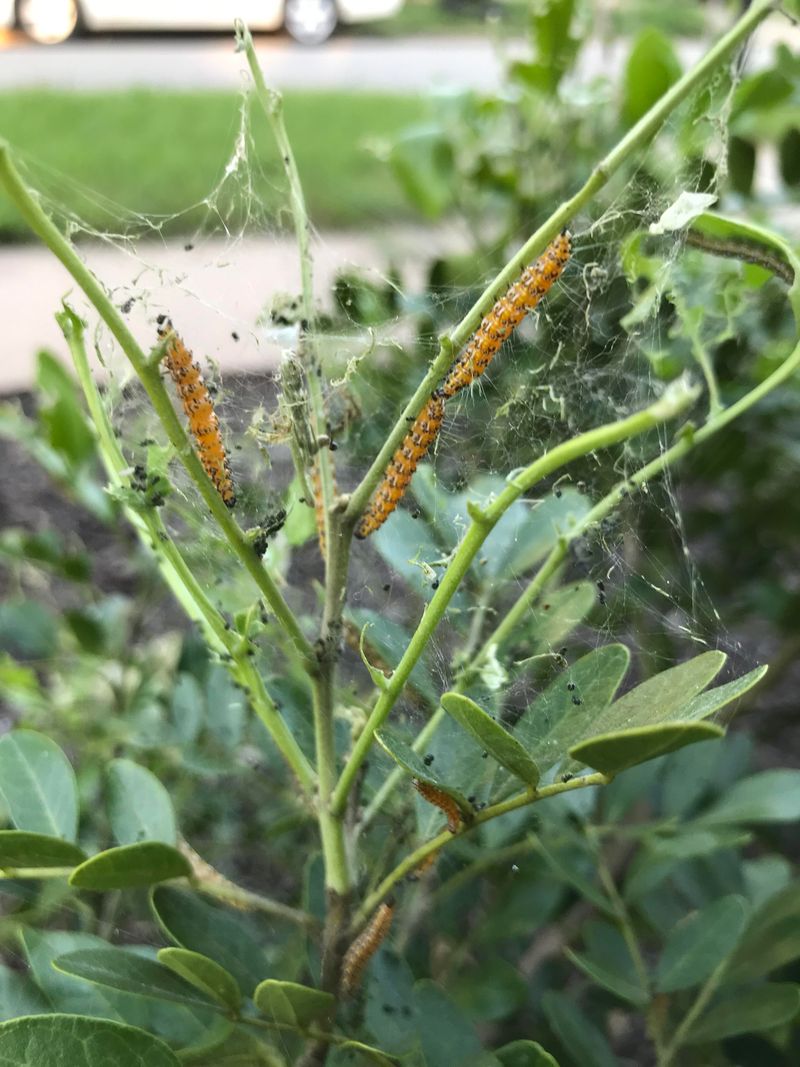
Timing your inspections correctly can be the difference between catching a small, manageable infestation and dealing with a full-blown defoliation event. Spring is the most critical time to start checking your Texas mountain laurel.
As temperatures warm up, overwintered pupae begin developing into adult moths that are ready to lay eggs on fresh new growth. The first generation of caterpillars typically appears in spring, often right around the time the plant is pushing out its most tender new leaves.
Do not let your guard down once spring passes. Warm weather throughout summer and into early fall keeps conditions favorable for additional generations to develop.
Because generations can overlap, there may be eggs, young larvae, and larger caterpillars all present on the same plant at the same time. Checking your plant once a month during warm weather is simply not enough.
A weekly walk-through, especially during peak growing season, gives you the best chance of spotting trouble before it spreads.
Focus your attention on the tender tips of new branches, since that is where egg clusters and freshly hatched larvae are most likely to appear first. Turn leaves over to check the undersides, and look inside any silky webbing you find.
Early detection is incredibly valuable because it opens up your options. A small group of young caterpillars can be removed by hand or knocked off with water, without needing stronger treatments.
Waiting too long means the caterpillars grow larger, spread further, and become much harder to manage with simple methods. Consistent monitoring is your best tool.
How To Control A Genista Caterpillar Infestation

Good news: there are several practical ways to get a genista caterpillar problem under control, and many of them do not require harsh chemicals. For small plants or light infestations caught early, handpicking is surprisingly effective.
Put on a pair of gloves, pick the caterpillars off by hand, and drop them into a bucket of soapy water. While it takes a little patience, this method works well and has zero impact on beneficial insects like bees and butterflies that visit your mountain laurel.
A strong blast of water from a garden hose can also dislodge caterpillars and webbing from the plant. This works best on young larvae that have not yet burrowed deep into the foliage.
Repeat the treatment every few days to knock off any new arrivals. If sections of the plant are heavily webbed or damaged, pruning those branch tips off and disposing of them in a sealed bag is a quick way to remove a large number of caterpillars all at once.
For larger infestations where handpicking is not realistic, Bacillus thuringiensis, commonly known as Bt, is a highly effective and low-impact biological treatment.
Bt is a naturally occurring soil bacterium that targets caterpillars specifically without harming birds, bees, or other beneficial wildlife.
Spinosad is another option that works well on older or larger caterpillars that may not respond as strongly to Bt. Always apply treatments in the early morning or late evening to protect pollinators.
Whichever method you choose, consistency is key because new eggs can hatch within days, so follow-up checks and repeat treatments are often necessary to fully resolve the problem.