Georgia Homeowners Keep Finding This Giant Spider And Mistaking It For A Joro
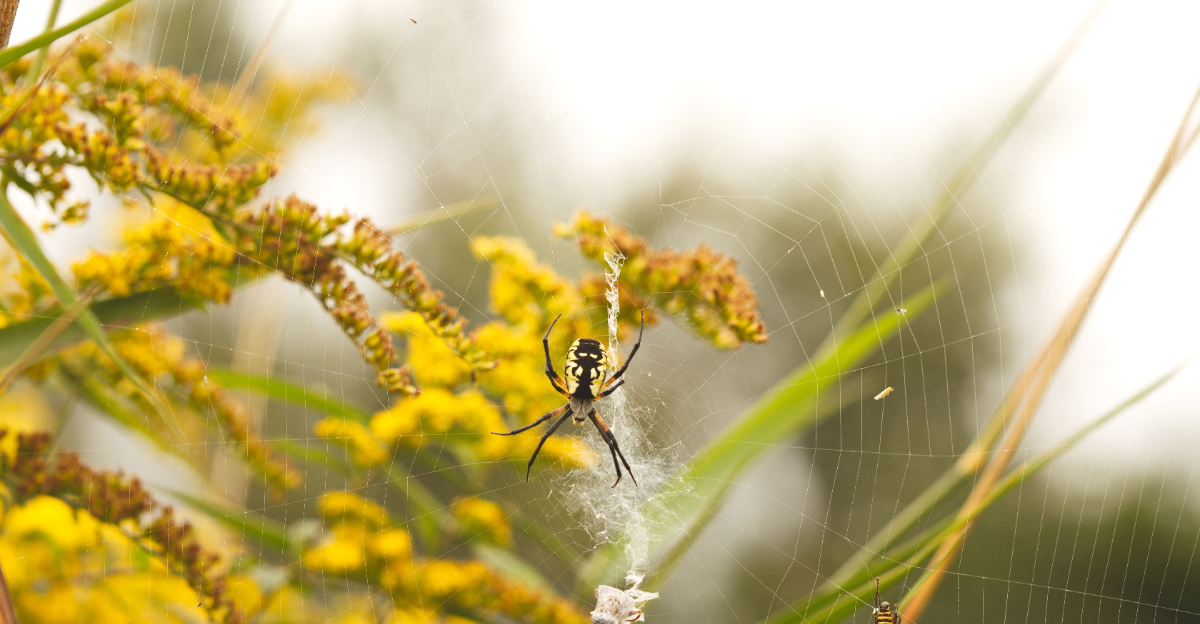
Seeing a giant spider stretched across your yard is enough to make anyone stop. Before you assume it is a Joro, take a closer look.
Georgia is home to another large spider that people regularly mistake for the famous newcomer. The two can look surprisingly similar at first glance, but one important detail sets them apart.
Knowing the difference can save you unnecessary worry and help you better understand what is living around your home. Instead of reacting right away, spend a moment checking the markings and the web.
You may realize the spider in your yard is not the one everyone has been talking about.
A quick look can make the surprise far less alarming and leave you with a much clearer picture of what you actually found today.
1. Yellow Garden Spider Is The One Behind The Sightings
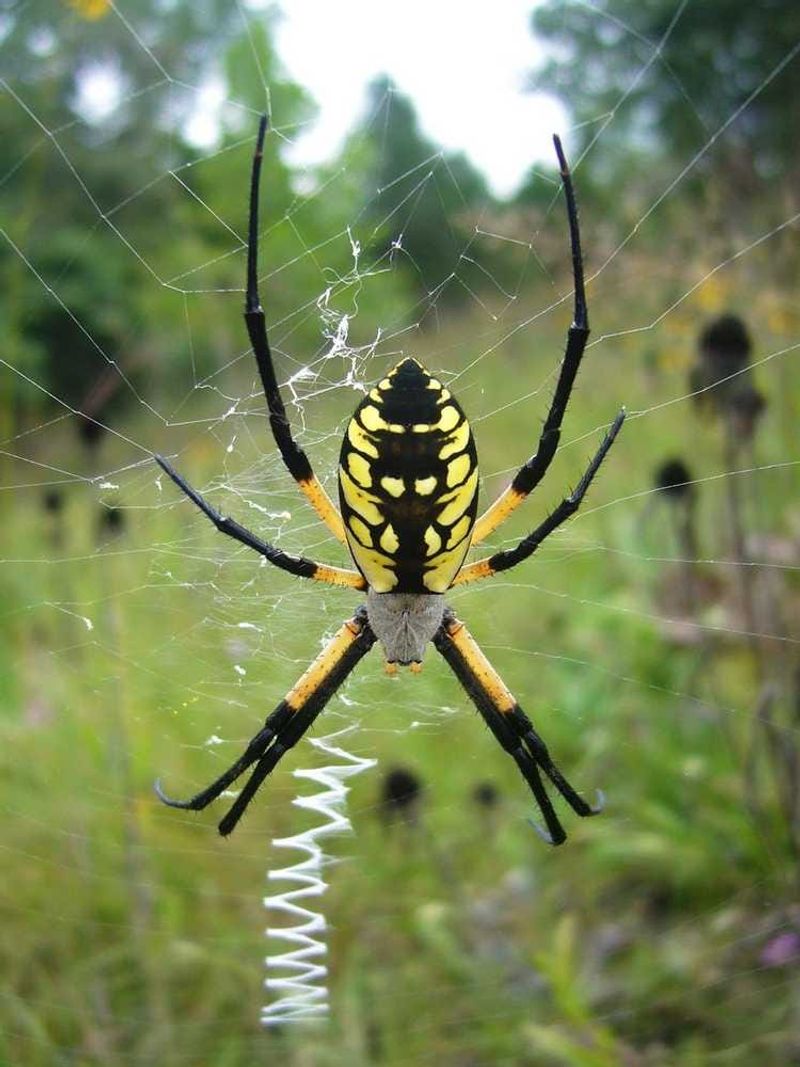
Bold yellow and black markings make this spider nearly impossible to miss. Homeowners spot it and immediately reach for their phones, convinced they found a Joro.
What they are actually looking at is the yellow garden spider, also known as Argiope aurantia.
Yellow garden spiders have lived across North America for a very long time. They are native, well-established, and common in warm, humid states.
Georgia backyards offer exactly the kind of environment they prefer.
One major clue is the web. Yellow garden spiders spin a thick, zigzag band of silk right down the center of their web.
Joro spiders do not do this. That zigzag pattern, called a stabilimentum, is one of the clearest ways to tell them apart.
Body size also creates confusion. A full-grown female yellow garden spider can reach about one inch in body length, with legs extending much further.
At first glance, that size feels alarming, but it is completely normal for this species.
Coloring is another source of mix-ups. Both spiders have yellow and black on their bodies.
Without a close look, they can seem nearly identical to someone unfamiliar with either one. Taking a photo and comparing the web shape usually clears things up quickly.
2. Tall Plants Create Perfect Web Locations
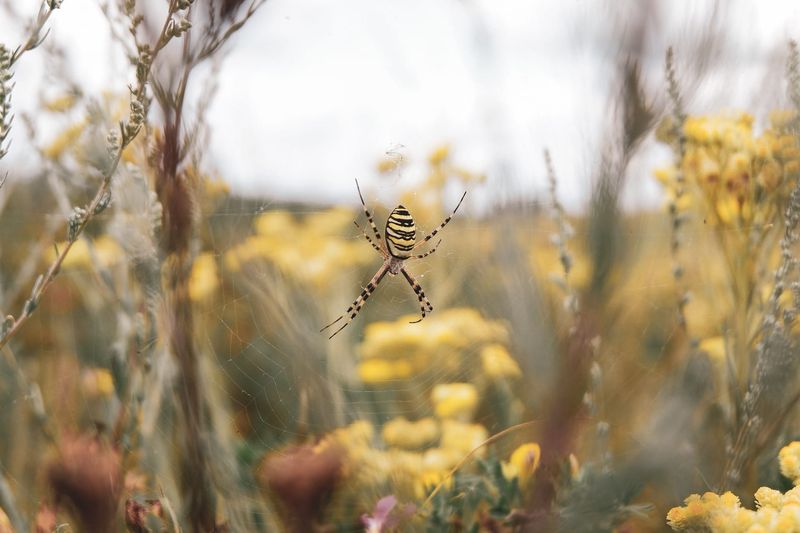
Walk past a row of sunflowers or tall ornamental grasses and you might walk straight into a web. Yellow garden spiders are very deliberate about where they build.
Height, open airspace, and nearby vegetation all factor into their choice.
Tall plants give these spiders the anchor points they need. Sturdy stems and long stalks let them stretch a full-sized orb web without it collapsing.
Shorter plants simply cannot support a web of that scale.
Gardens with tomatoes, okra, sunflowers, and corn are especially popular spots. These plants grow tall, produce lots of insect activity, and stay in place long enough for a spider to settle in.
That combination is hard to beat from the spider’s perspective.
Webs built in tall plants also catch more flying insects. Grasshoppers, moths, and beetles tend to move through that mid-level airspace regularly.
A web positioned there intercepts far more prey than one built close to the ground.
Your Georgia Garden Changes Every Week. Your Plan Should Too.
Gardening in Georgia changes quickly throughout the season. Every Friday you’ll receive a simple weekly plan showing exactly what to plant, prune, fertilize, harvest, and protect so you never miss the right timing.
Homeowners sometimes find webs stretched between a garden plant and a fence post or porch railing. Mixing natural structures with man-made ones gives these spiders even more flexibility when choosing a spot.
Pruning back dense overgrowth can reduce how many webs appear close to walkways. That said, leaving some tall plants standing in open areas of the yard gives these spiders space to build away from high-traffic zones.
3. Summer Brings More Spider Activity
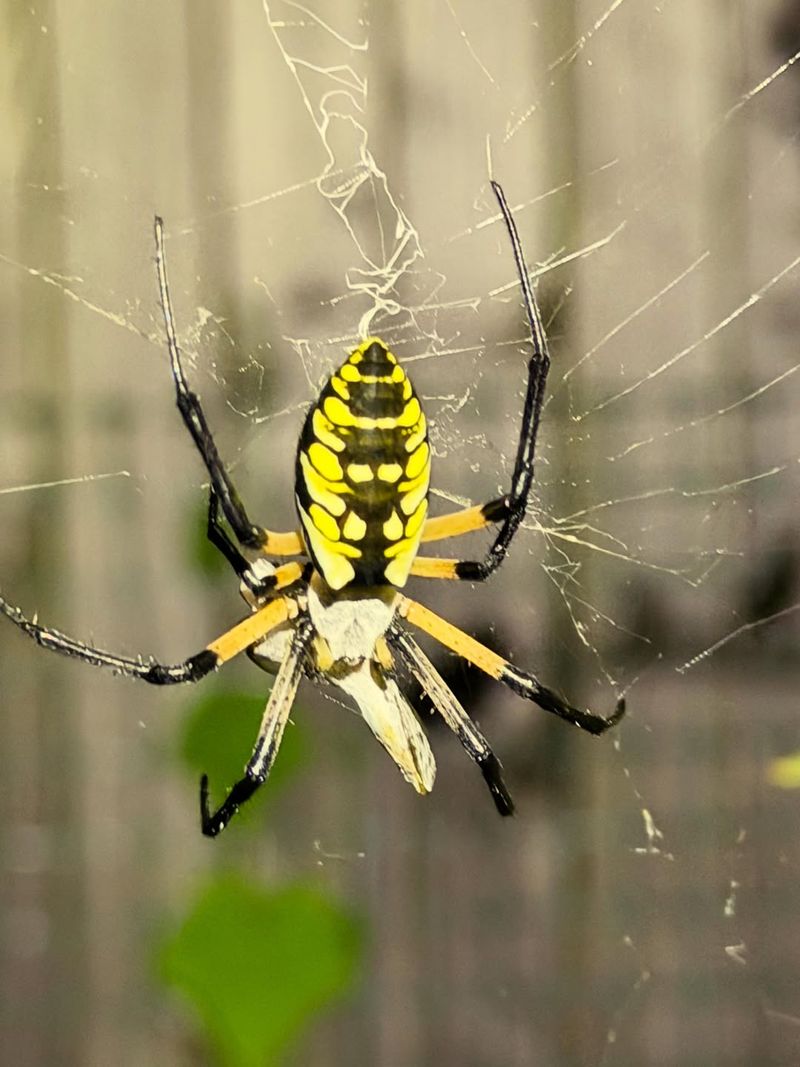
By mid-summer, yellow garden spiders are nearly full-grown and very visible. Warm temperatures speed up their development, and long days give them more time to hunt and rebuild webs.
Late July through September tends to be peak sighting season in the Southeast.
Spiders that were tiny and easy to overlook in spring become hard to miss by August. Their webs also grow larger as the spiders mature.
A web that started small in June can span two feet or more by late summer.
Humidity plays a role too. Warm, humid conditions support the kinds of insects these spiders eat.
More insects in the air means more reasons to build a larger, better-positioned web. The spiders essentially follow the food.
Homeowners tend to notice them more in summer because people spend more time outdoors. Gardening, mowing, and evening walks put people in closer contact with areas where these spiders set up.
That increased exposure leads to more sightings and more questions.
Cooler nights in early fall can slow things down. Activity tends to taper off as temperatures drop, though spiders may stay active well into October depending on local conditions.
Weather patterns vary year to year, so timing is not exact.
4. Females Build The Largest Webs
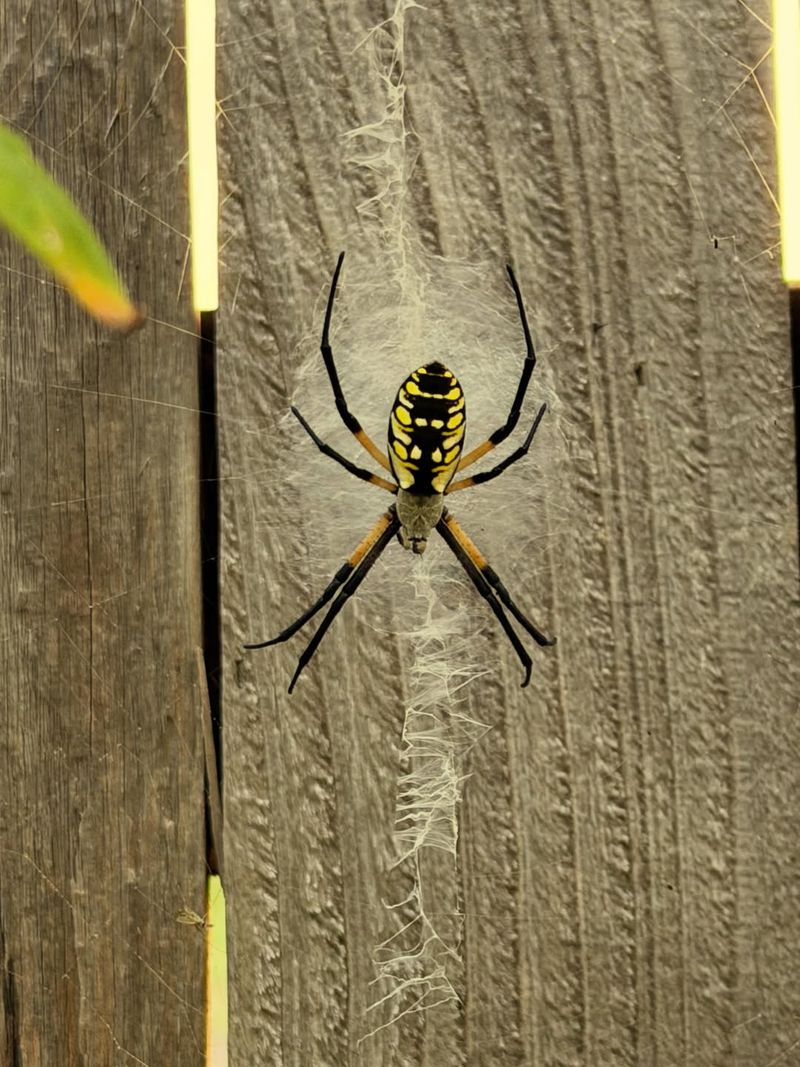
Size difference between male and female yellow garden spiders is dramatic. Females are the ones building those wide, impressive webs.
Males are much smaller and often go completely unnoticed nearby.
A mature female can have a body about one inch long, not counting her legs. With legs extended, the overall size can feel much larger.
That is the spider most people encounter and most people mistake for something else entirely.
Males build much smaller webs, often at the edge of the female’s web. Some males barely build at all once they locate a mate.
Their energy goes toward reproduction rather than web construction, which is why they rarely catch anyone’s attention.
Female yellow garden spiders put real effort into their webs. A full orb web can take less than an hour to construct, and females may rebuild or repair sections regularly.
Consistency and precision are part of how they operate.
Web placement reflects the female’s priorities. She needs a location that intercepts enough insects to fuel her body as she grows and eventually produces eggs.
A well-placed web is not accidental. It reflects deliberate choices about light, airflow, and plant structure.
Seeing a large, perfectly formed web with a big spider at the center almost certainly means you are looking at a female.
5. Egg Sacs Appear Near Protected Areas
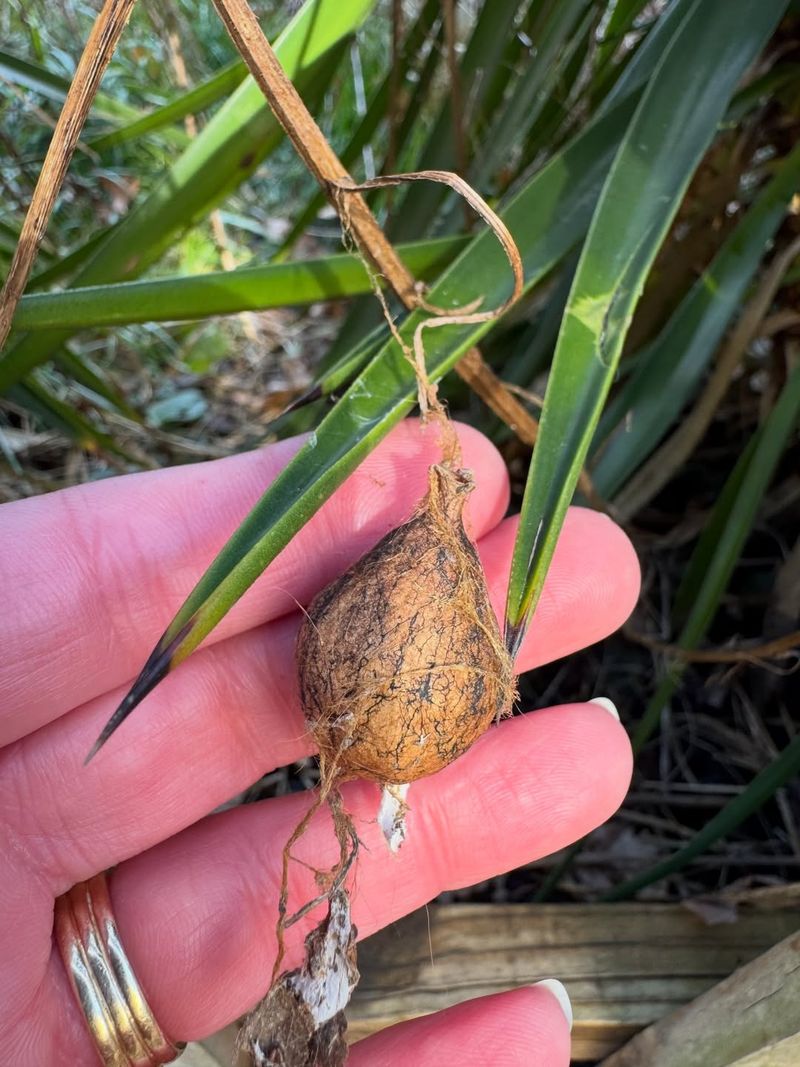
Toward the end of summer, female yellow garden spiders shift their focus. Web-building slows, and egg-laying begins.
The egg sac they produce is one of the most striking things in the garden, and most people have no idea what they are looking at when they find one.
Egg sacs are round, brownish, and wrapped tightly in silk. Some look a bit like a small paper lantern hanging from a stem or fence wire.
A single sac can hold hundreds of eggs, though many spiderlings will not survive to adulthood in the wild.
Protected spots are chosen carefully. Females tend to place sacs where wind, rain, and direct sun are less of a threat.
Dense shrubs, the underside of leaves, and sheltered fence areas are common locations. The sac needs to survive through fall and winter.
Females in Georgia typically produce one to three egg sacs in a season. After laying, the female’s activity slows considerably.
She may stay near the sac for a short time but generally does not survive long into fall.
Spiderlings hatch in spring and immediately begin dispersing. They use a behavior called ballooning, releasing silk threads to catch air currents and travel.
Most land far from where they hatched and begin building tiny webs on their own.
6. Garden Insects Become Their Main Food Source
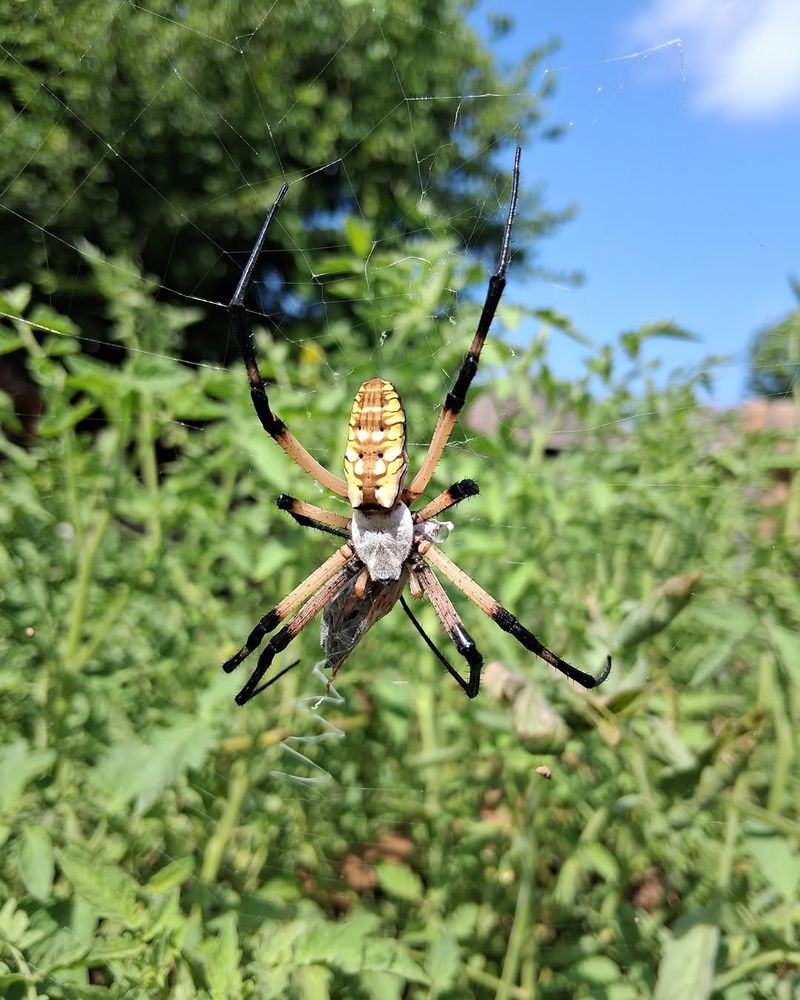
Grasshoppers, beetles, moths, and aphids all end up in yellow garden spider webs at some point. Vegetable gardens are especially productive hunting grounds because they attract so many different insect species throughout the season.
When an insect hits the web, the spider responds fast. Vibration through the silk signals exactly where the prey landed.
The spider moves in, wraps the insect in silk, and begins feeding. The whole process can happen in seconds.
Larger prey like grasshoppers are especially common captures in summer. Grasshoppers jump unpredictably and often land directly in webs stretched across garden beds.
From the spider’s standpoint, a garden full of tall plants and lots of insect traffic is an ideal location.
Yellow garden spiders do not store large amounts of prey. Feeding happens regularly throughout the day as insects get caught.
Webs are kept clean and functional so that new catches keep coming in without interference from old debris.
Homeowners who deal with aphids, whiteflies, and other soft-bodied pests may notice fewer of them in areas where these spiders are active.
That reduction is a natural side effect of having a healthy web-builder nearby, though results vary depending on garden size and pest pressure.
Encouraging yellow garden spiders by avoiding broad pesticide sprays near their webs can help maintain that natural balance.
7. These Spiders Usually Leave People Alone
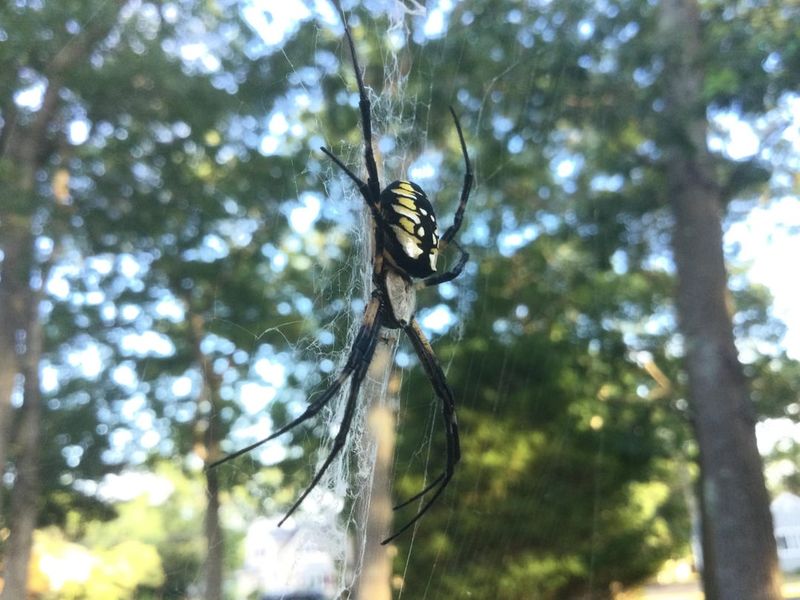
Reputation does not match reality with yellow garden spiders. People see the size, notice the bold colors, and assume danger.
In practice, these spiders are not interested in people at all.
Biting is extremely rare and almost always happens when a spider is pinched or pressed against skin. Even then, the bite is described as minor, similar to a bee sting, and not medically significant for most healthy people.
Reactions can vary, so anyone with sensitivities should take care.
Yellow garden spiders spend their energy on webs, prey, and reproduction. A passing human is not on that list.
When disturbed, the typical response is to drop from the web or retreat to the edge of it, not to advance toward the threat.
Gardeners who work regularly near these spiders often stop noticing them after a while. Awareness of where webs are located helps avoid accidental contact.
A quick scan before reaching into a dense plant is a reasonable habit to build during late summer.
Children and pets are naturally curious, and close-up encounters can happen. Teaching kids that the spider is a helpful part of the yard tends to work better than creating fear around it.
Calm, factual explanations go a long way.