Native Georgia Plants That Work Better Than Ornamental Grasses Along Driveways
Driveway borders are one of those spots in a Georgia yard that get a lot of foot traffic past them and very little actual attention, and most of the time they show it.
Ornamental grass is the default answer for a lot of homeowners, and while it has its place, it doesn’t exactly make anyone stop and look twice.
Georgia driveway edges can be genuinely tough growing conditions: reflected heat from pavement, soil that either drains too fast or holds water too long, and narrow strips that limit what you can realistically fit.
But native Georgia plants have a way of thriving in exactly these kinds of challenging spots, and several of them bring real flower color, pollinator activity, and seasonal interest that ornamental grass simply can’t compete with.
Matching the right plant to your specific conditions is the key to making it work beautifully.
1. Butterfly Weed Handles Sunny Driveway Heat
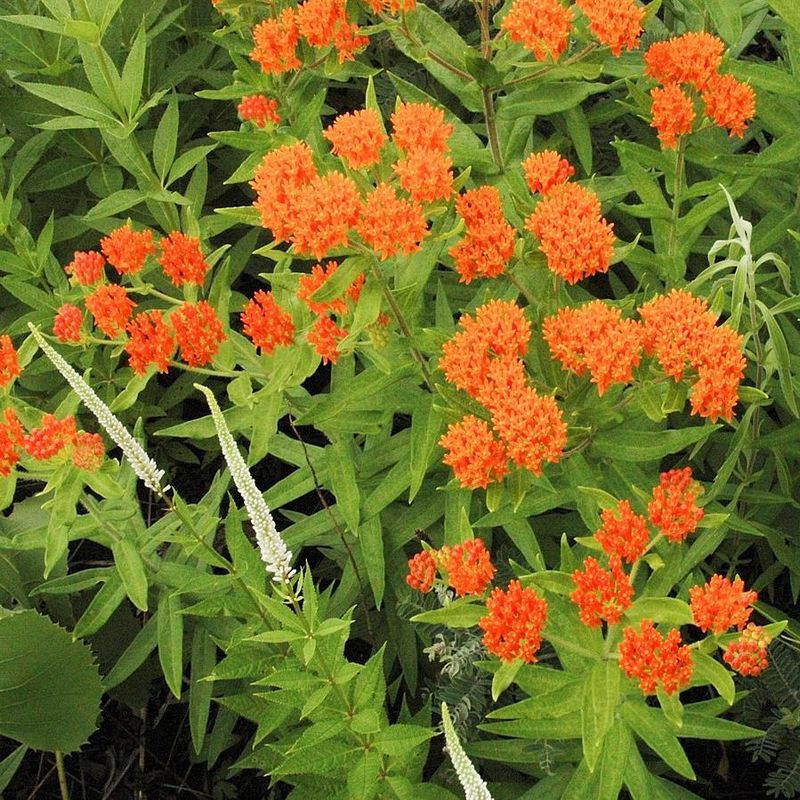
Hot pavement radiates serious heat in a Georgia summer, and most plants wilt under those conditions. Butterfly weed, known botanically as Asclepias tuberosa, thrives right where that heat hits hardest.
It is a strong fit for open, sunny driveway borders where reflected heat and dry soil make fussier plants struggle.
Its deep taproot reaches into dry soil and keeps the plant going through dry spells that would stress most ornamental grasses.
The flowers are vivid orange, sometimes yellow, and they appear from late spring into midsummer. Monarchs, swallowtails, and native bees visit the blooms regularly, turning a plain driveway edge into an active pollinator corridor.
Few ornamental grasses can offer that kind of wildlife value in such a compact package.
Butterfly weed grows roughly one to two feet tall, which keeps it from blocking sightlines along a driveway. It works well in full sun and well-drained soil, and it actually struggles in soggy spots, so raised or slightly sloped driveway borders suit it well.
Once established, it needs very little care. Georgia gardeners should avoid disturbing the taproot after planting, since transplanting mature plants rarely goes smoothly.
Give it space, full sun, and sharp drainage, and it will reward the yard with bold color season after season.
2. Moss Phlox Softens Dry Edges
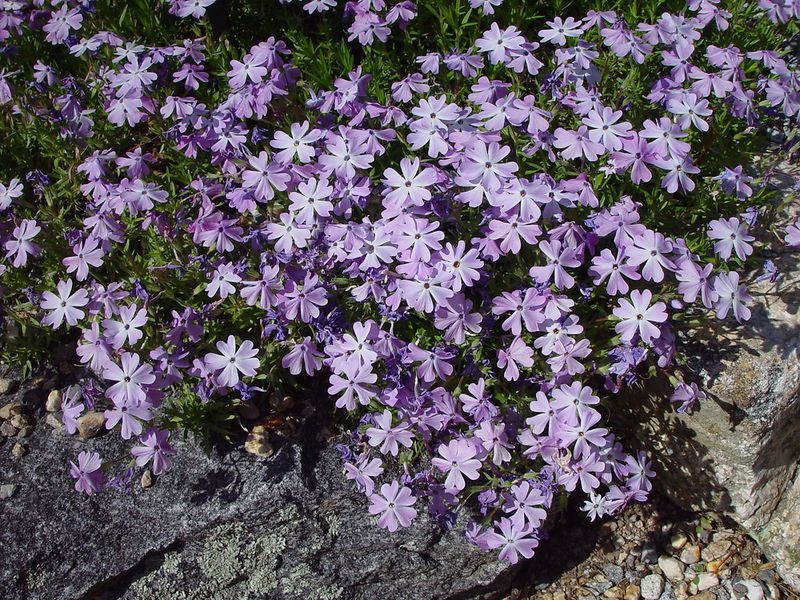
Few low-growing plants can match the soft, carpet-like effect that moss phlox creates along a driveway edge.
Phlox subulata stays under six inches tall, spreads gradually across dry soil, and produces a flush of pink, lavender, or white blooms in early spring that can stop traffic in a Georgia neighborhood.
Unlike ornamental grasses that build upward into clumps, moss phlox spreads outward and stays flat. That low profile makes it a natural fit for narrow strips between pavement and lawn, where taller plants can feel crowded or out of place.
It also keeps the driveway edge visible and neat, which matters in front-yard spaces where plants need to look intentional without blocking the view.
It softens hard edges without taking over the space.
Dry, gritty, or sandy soil suits this plant well, and it handles the reflected heat from Georgia driveways better than many gardeners expect. It prefers full sun and excellent drainage, and it can struggle in heavy clay unless the planting area is amended or raised slightly.
Your Georgia Garden Changes Every Week. Your Plan Should Too.
Gardening in Georgia changes quickly throughout the season. Every Friday you’ll receive a simple weekly plan showing exactly what to plant, prune, fertilize, harvest, and protect so you never miss the right timing.
After the spring bloom fades, the evergreen foliage stays tidy through the warmer months and holds the soil in place along sloped or gravelly edges.
For Georgia homeowners wanting a low-maintenance, low-growing alternative to grass along a driveway, moss phlox is a genuinely reliable option worth considering.
3. Large-Flowered Coreopsis Blooms Through Tough Spots
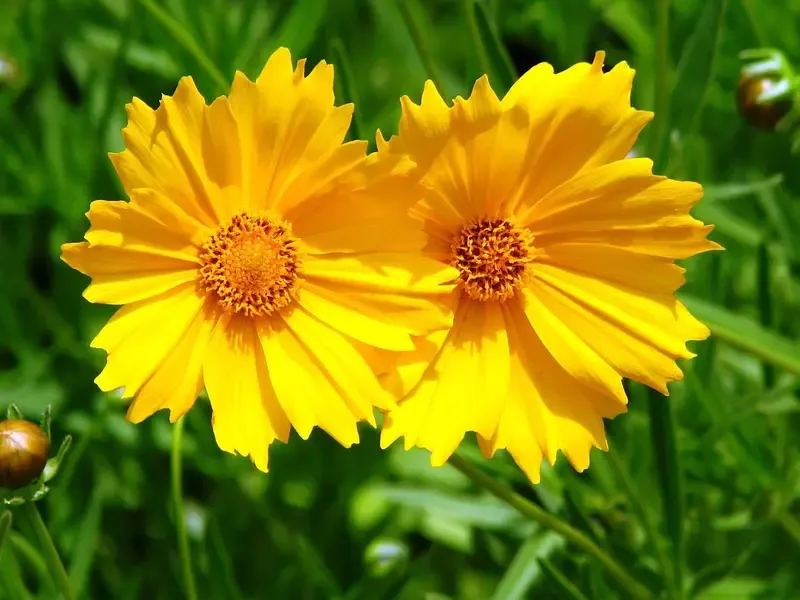
Compacted, sun-baked soil along a driveway edge is exactly the kind of spot where most flowering plants give up. Large-flowered coreopsis, Coreopsis grandiflora, seems almost unbothered by those conditions.
It pushes out cheerful yellow blooms from late spring through summer, even when the soil is dry and the pavement nearby is radiating heat.
The plant grows roughly one to two feet tall, which keeps it visible without overwhelming narrow borders. Yellow flowers on long stems catch the eye from the street and give the driveway edge a warm, welcoming look that no ornamental grass can replicate.
Bees and butterflies visit the blooms frequently, adding movement and life to the front yard. That steady summer activity helps the planting feel less like a plain border and more like a small pollinator strip beside the driveway.
Georgia homeowners should know that large-flowered coreopsis can be short-lived in some settings, occasionally behaving more like a biennial than a long-term perennial.
Allowing a few plants to go to seed near the original planting area helps maintain a healthy colony over time.
It needs full sun and well-drained soil, and it does not perform well in soggy spots.
For sunny, slightly dry driveway borders where color and pollinator activity matter, this native coreopsis brings more visual energy than most clumping grasses could manage.
4. Lobed Coreopsis Brightens Well-Drained Borders
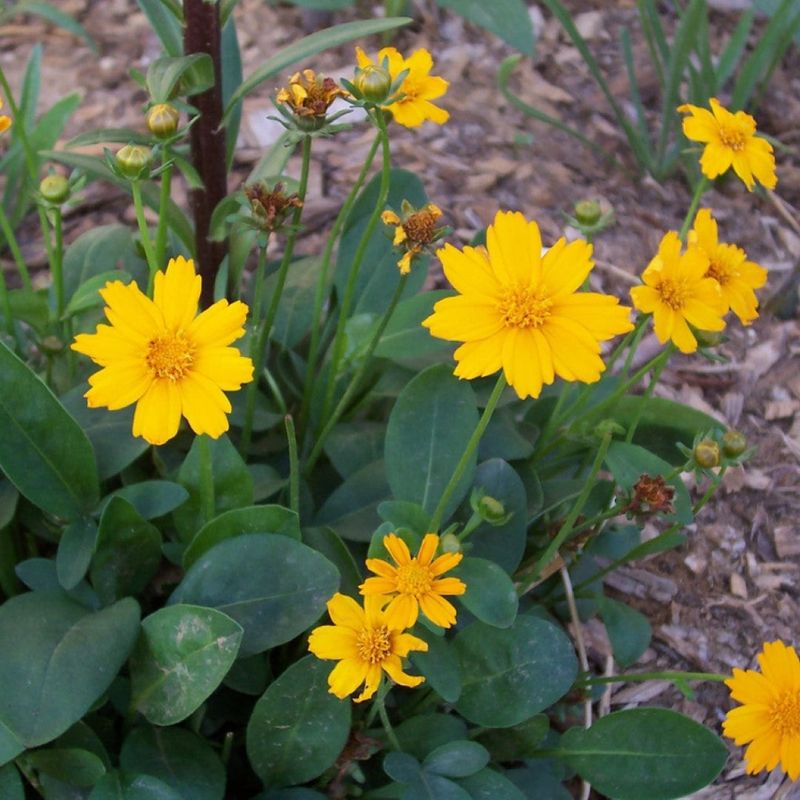
Not every coreopsis behaves the same way, and lobed coreopsis, Coreopsis auriculata, brings some qualities that set it apart from its relatives along a driveway border.
It spreads slowly by stolons, forming a low mat of foliage that can fill a narrow edge more gently than a clumping ornamental grass.
The bright golden-yellow blooms appear in spring and sometimes rebloom lightly into early summer.
In Georgia, this plant tends to stay under one foot tall in full sun, which makes it a natural low border option. The spreading habit means it can cover dry, well-drained soil along a driveway edge without requiring replanting every season.
Native bees find the flowers attractive, and the foliage stays semi-evergreen in milder Georgia winters.
Lobed coreopsis works best in full to partial sun with good drainage. It can handle some light shade near a tree line at the end of a driveway, which gives it a slight edge over species that demand full sun only.
Heavy clay soil or poor drainage can limit its performance, so raised beds or amended borders help in those situations.
For Georgia homeowners who want a spreading, low-care native flower rather than a grass clump, lobed coreopsis is a practical and attractive choice.
5. Black-Eyed Susan Adds Color Along Wider Edges
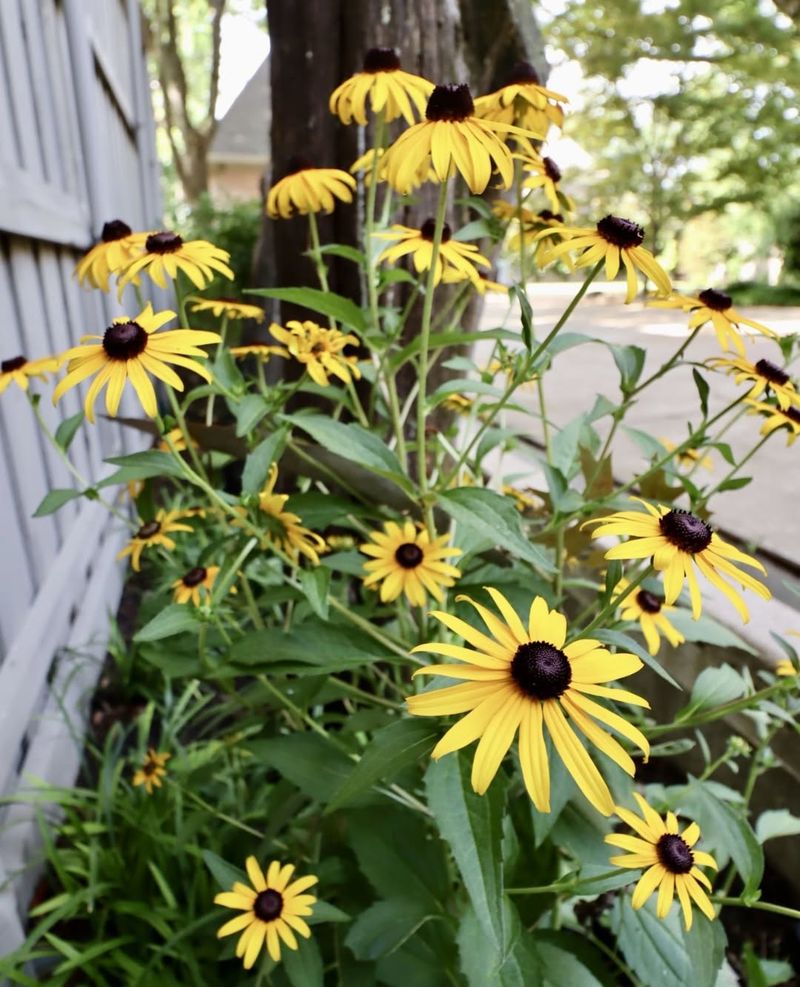
Wider driveway borders give Georgia gardeners more room to work with, and black-eyed Susan, Rudbeckia hirta, fills that extra space beautifully.
The golden-yellow flowers with dark centers bloom from early summer into fall, providing months of color along a sunny edge where ornamental grasses might otherwise dominate without offering much in return.
Black-eyed Susan grows one to three feet tall depending on the variety, so it works best in borders wide enough to keep it from crowding out sightlines.
It handles Georgia heat and drought well once established, and it self-seeds moderately, which means a healthy colony can maintain itself over several seasons without replanting.
Goldfinches visit the seed heads in fall, adding late-season wildlife interest.
Full sun is essential, and well-drained soil helps the plants stay vigorous. Black-eyed Susan can tolerate average or even slightly poor soil, which makes it useful along driveway edges where soil quality tends to be inconsistent.
It pairs well with other native wildflowers in a naturalistic planting, and it looks less formal than a trimmed grass border.
For Georgia yards with a wider planting strip along the driveway, black-eyed Susan brings reliable seasonal color from summer through early autumn without demanding much attention from the gardener.
6. Purple Coneflower Works Behind Lower Plantings
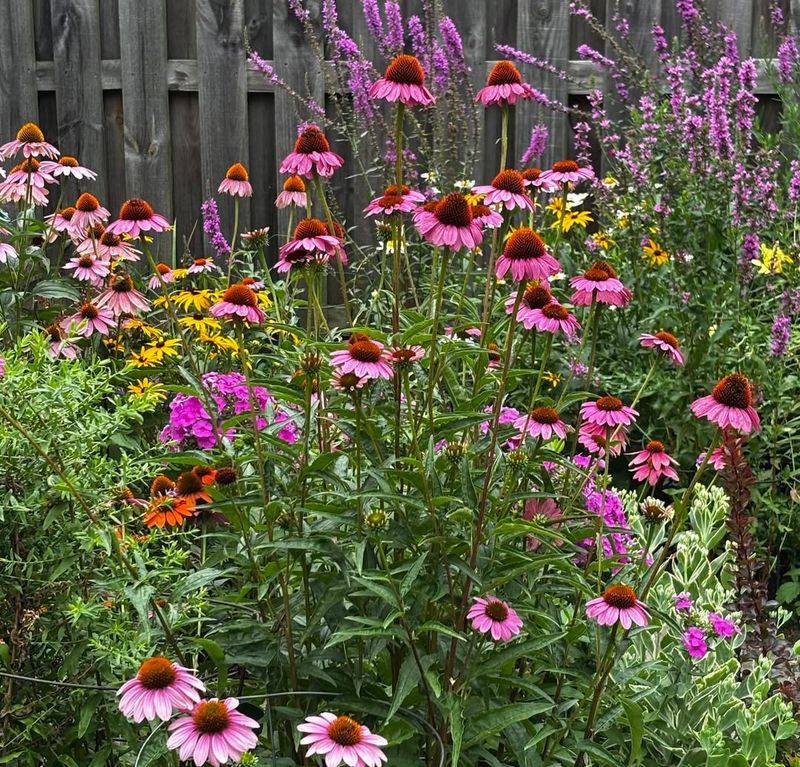
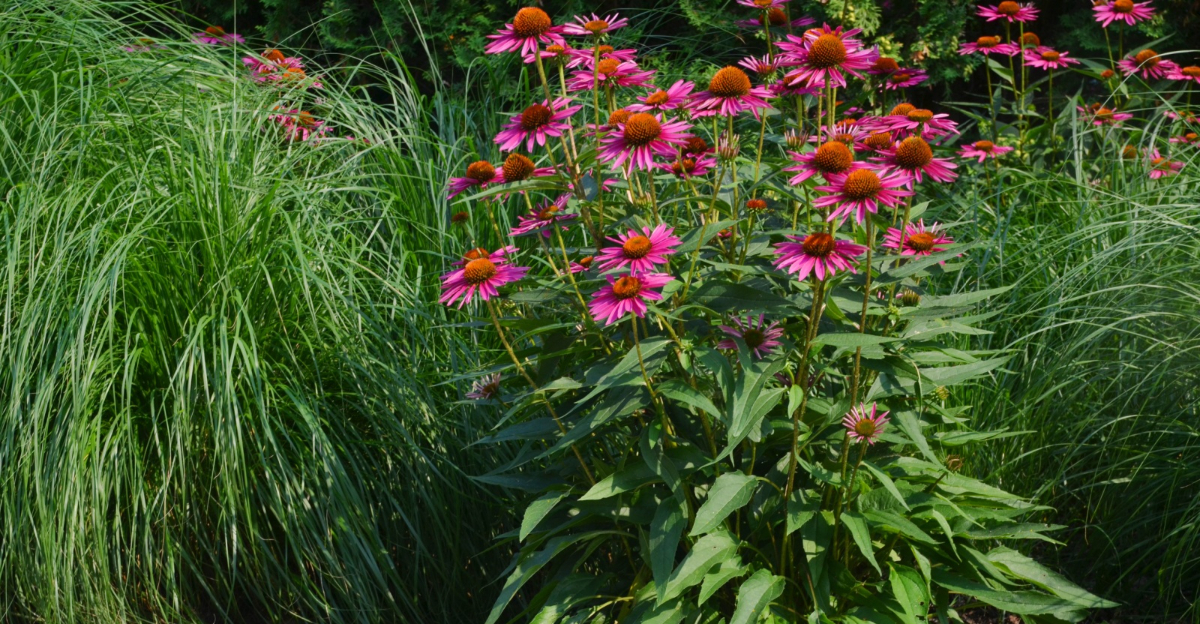
Standing two to four feet tall, purple coneflower, Echinacea purpurea, earns its place toward the back of a layered driveway planting.
Placing it behind lower-growing natives like moss phlox or lobed coreopsis creates a natural tiered look that feels far more dynamic than a single row of ornamental grass.
Its height also helps draw the eye upward without creating a stiff wall along the pavement. In wider driveway beds, that layered placement can make the border feel full and intentional instead of flat.
The rosy-purple flowers with raised orange-brown centers bloom from early summer into midsummer, and they attract an impressive range of pollinators.
Bumblebees, native bees, and butterflies visit regularly, and the seed heads that follow provide food for finches and other seed-eating birds well into fall and winter.
Purple coneflower handles Georgia summers with ease. It tolerates heat, some drought once established, and average garden soil.
It does prefer well-drained conditions and may struggle in spots where water pools near the driveway edge after heavy rain. Dividing clumps every few years keeps plants vigorous and prevents the center from thinning out.
For Georgia homeowners designing a more naturalistic driveway border, purple coneflower fills the mid-to-back layer in a way that ornamental grasses rarely do.
It brings flowers, pollinators, and bird activity across multiple seasons rather than just texture and movement.
7. Georgia Basil Fits Harsh Dry Strips
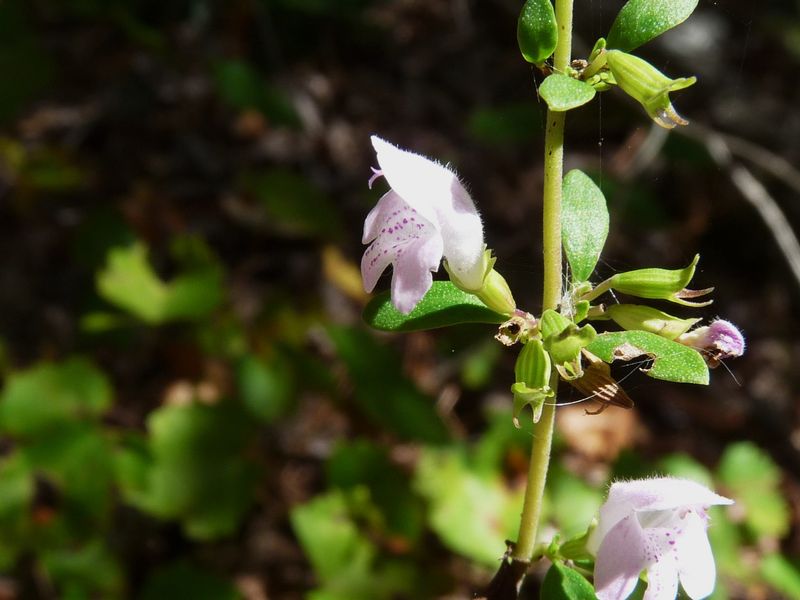
Few plants are as well-matched to a harsh, dry driveway strip as Georgia basil, Clinopodium georgianum, a native aromatic herb that most gardeners outside the Southeast have never heard of.
It grows in thin, sandy, or gravelly soil where even drought-tolerant ornamental grasses may struggle, and it produces small but attractive pink to lavender flowers from summer into fall.
The plant stays compact, typically under two feet, with a slightly sprawling habit that softens hard edges without creating a messy look. The aromatic foliage is pleasant to brush against and may help deter some browsing insects.
Native bees, especially smaller native species, visit the flowers regularly. That makes it especially useful in sunny driveway strips where the planting needs to look tough, stay compact, and still support small pollinators.
Georgia basil is genuinely adapted to the challenging conditions found along sun-baked Georgia driveway edges. It needs excellent drainage and full sun, and it does not tolerate wet feet.
Amended or irrigated beds are not its preferred home. Thin, dry, rocky, or sandy strips suit it far better.
For homeowners with a narrow, dry driveway border that has defeated other planting attempts, Georgia basil offers a low-maintenance native option with real flower color and pollinator value.
It may not be widely available at big-box garden centers, but specialty native plant nurseries in Georgia carry it with some regularity.
8. Bird’s Foot Violet Belongs In Gravelly Edges
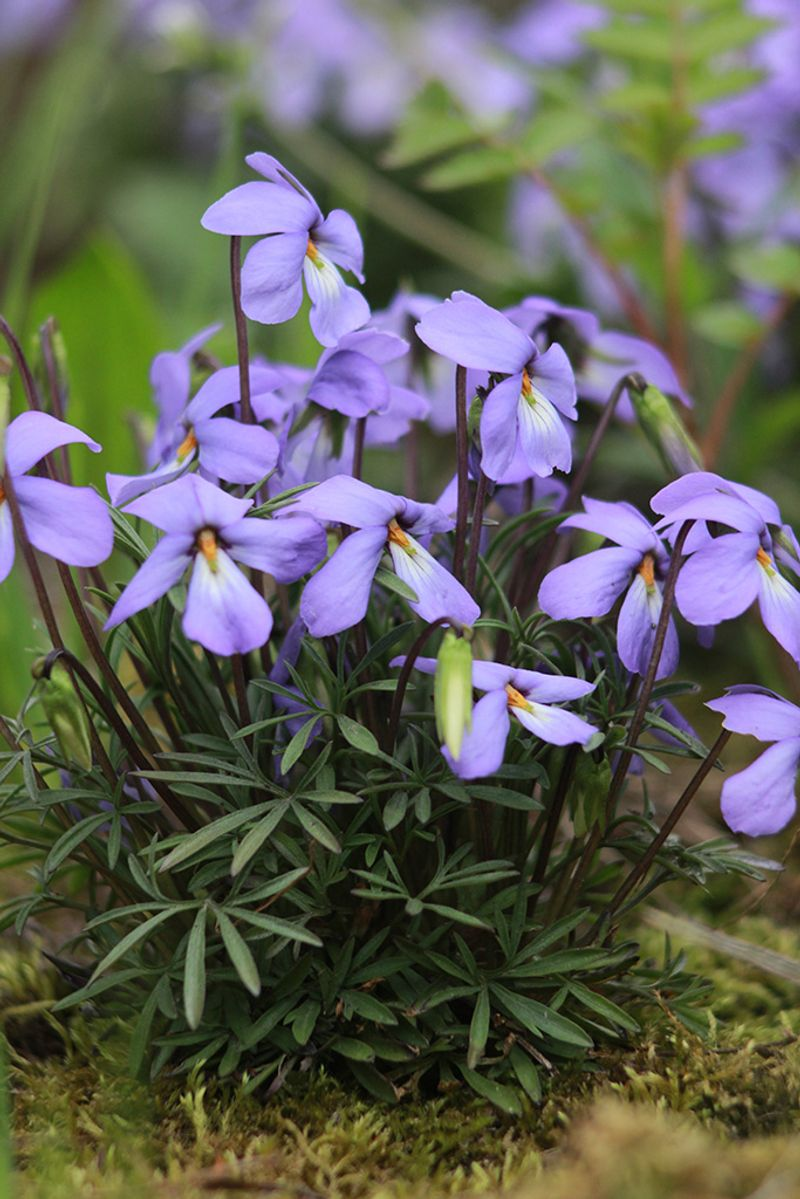
Gravelly, sandy driveway edges that seem impossible to plant often turn out to be the right home for bird’s foot violet, Viola pedata.
Unlike most violets that prefer moist woodland conditions, this species thrives in lean, well-drained, even nutrient-poor soil with full to partial sun.
It is genuinely one of the most site-specific native plants a Georgia gardener can choose.
The flowers are a soft blue-violet, sometimes bicolored, and they appear in early to mid-spring before many other plants have woken up.
The deeply cut, bird’s-foot-shaped leaves are attractive even when the plant is not in bloom, giving the planting edge a fine-textured, delicate look that contrasts nicely with gravel or pavement.
Bird’s foot violet stays low, typically under six inches, making it one of the best true ground-level options for a gravelly Georgia driveway edge. It does not compete well in rich or amended soil, which can actually work in its favor since driveway edges are rarely fertile.
Overwatering or poor drainage will limit its success, so natural rainfall is usually sufficient once plants are established.
For Georgia homeowners with a challenging gravelly strip that has resisted most planting efforts, bird’s foot violet is a native wildflower that can genuinely thrive where others have not.