What Tiny Holes In Michigan Bean Leaves Mean Before The Plants Stop Producing
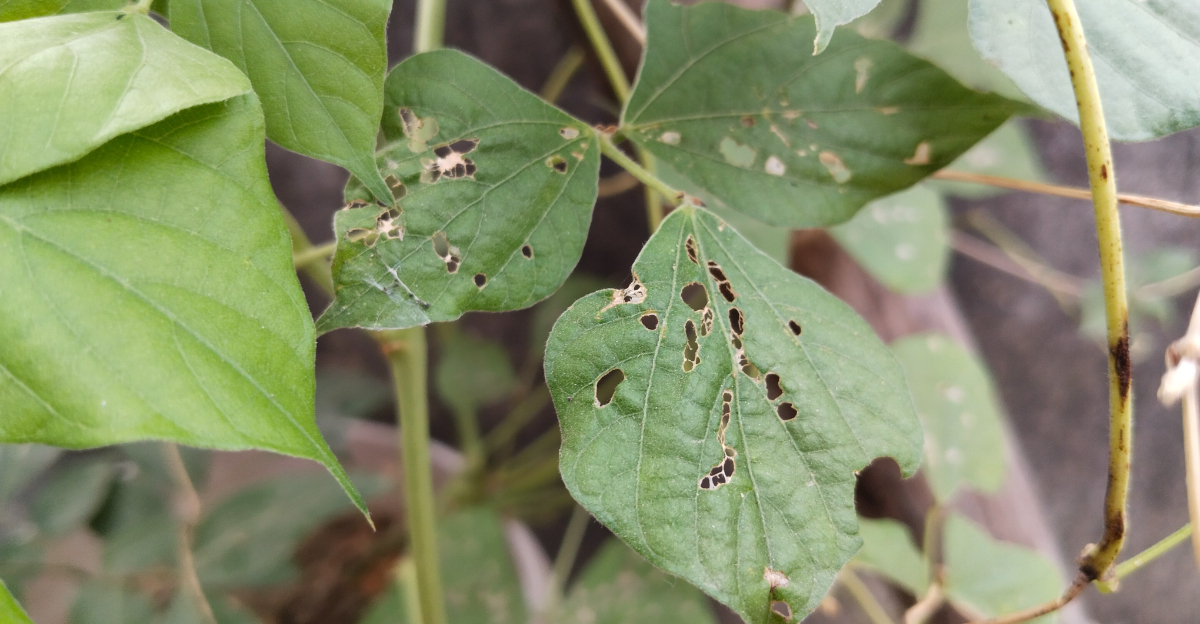
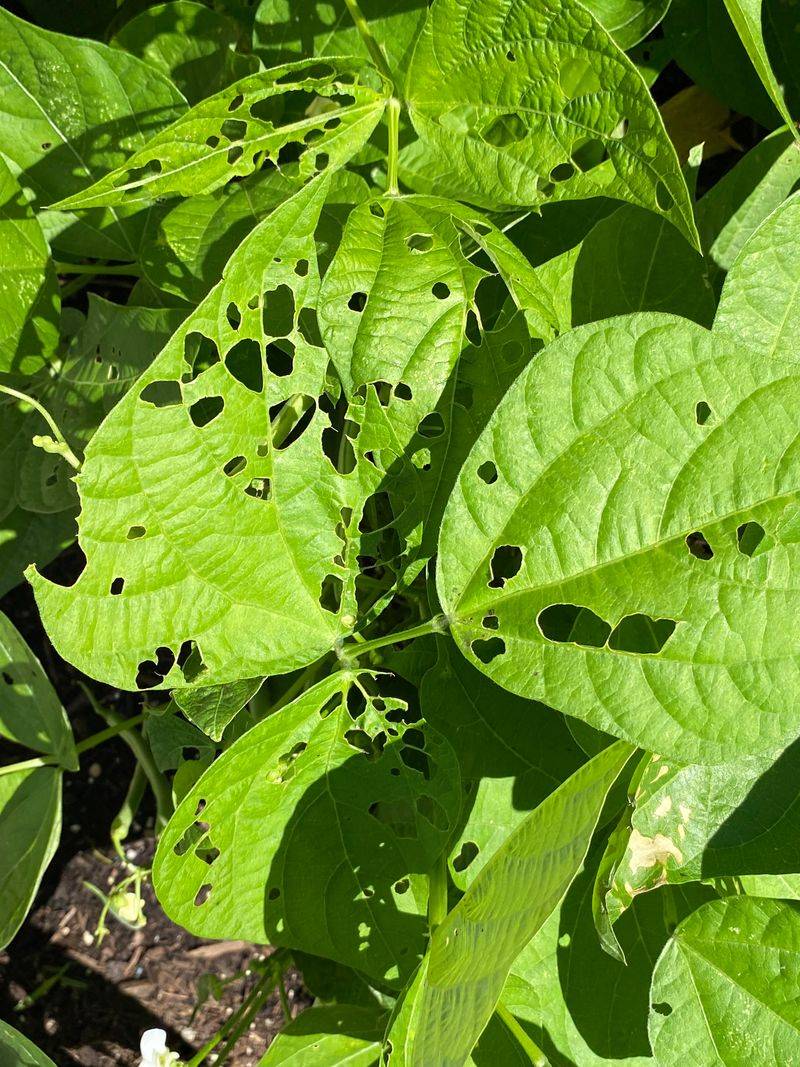
Tiny holes scattered across bean leaves usually point to bean leaf beetles, a common but manageable pest in Michigan gardens. These small beetles chew distinctive round holes that multiply quickly if left unaddressed during peak summer feeding.
Left unchecked, heavy feeding can reduce a plant’s ability to photosynthesize properly, eventually slowing pod production significantly.
Checking the undersides of leaves often reveals the beetles themselves, along with small clusters of orange eggs.
Handpicking beetles in the early morning, when they’re less active, offers an effective and simple control method. Row covers can also protect young plants during the most vulnerable early growth stages.
Rotating bean crops to different areas each year helps reduce the chance of beetles overwintering nearby. Addressing this damage early protects the plant’s ability to keep producing through the rest of the season.
1. Small Round Holes Often Point To Bean Leaf Beetles
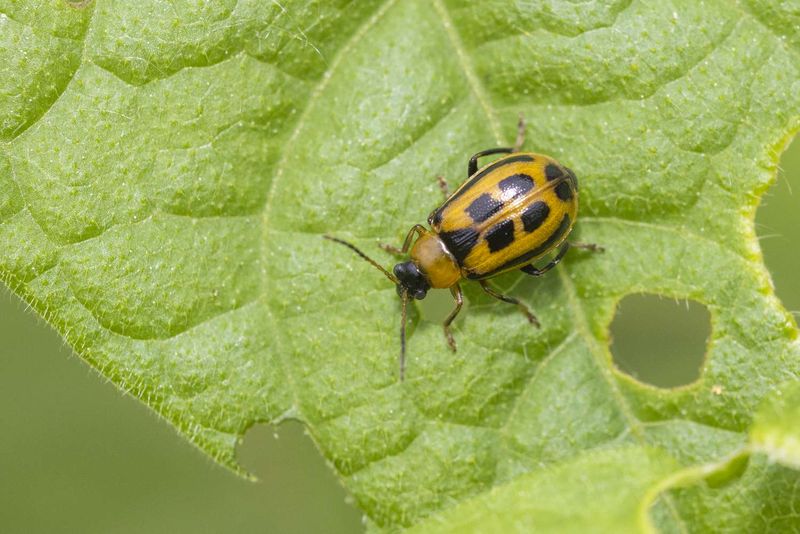
Spotting small, perfectly round holes scattered across your bean leaves is one of the most recognizable signs of bean leaf beetle activity. These little beetles are only about a quarter inch long, but they can chew through leaf tissue with surprising speed.
Adults are usually reddish-orange or tan with black spots, and they tend to drop off the plant or scurry away fast when you disturb them. Morning is the best time to catch them in the act.
Walk through your garden when it is still cool and inspect both the top and bottom surfaces of the leaves, along the stems, near the flowers, and even around the soil at the base of the plant.
Bean leaf beetles can also feed on pods, which is when things get more serious for your harvest.
A healthy, mature plant with a few scattered holes can usually keep growing without much trouble.
The situation deserves closer attention when young seedlings are getting hammered or when you see repeated feeding on pods and flowers.
Before you do anything, confirm you are actually dealing with bean leaf beetles. Seeing the insect itself, rather than just the holes, gives you much better information to work with.
Some gardeners use yellow sticky traps nearby to monitor beetle numbers over time. Knowing what you are up against is always the smartest first move in any Michigan vegetable garden.
2. Shotgun Damage Can Have More Than One Cause
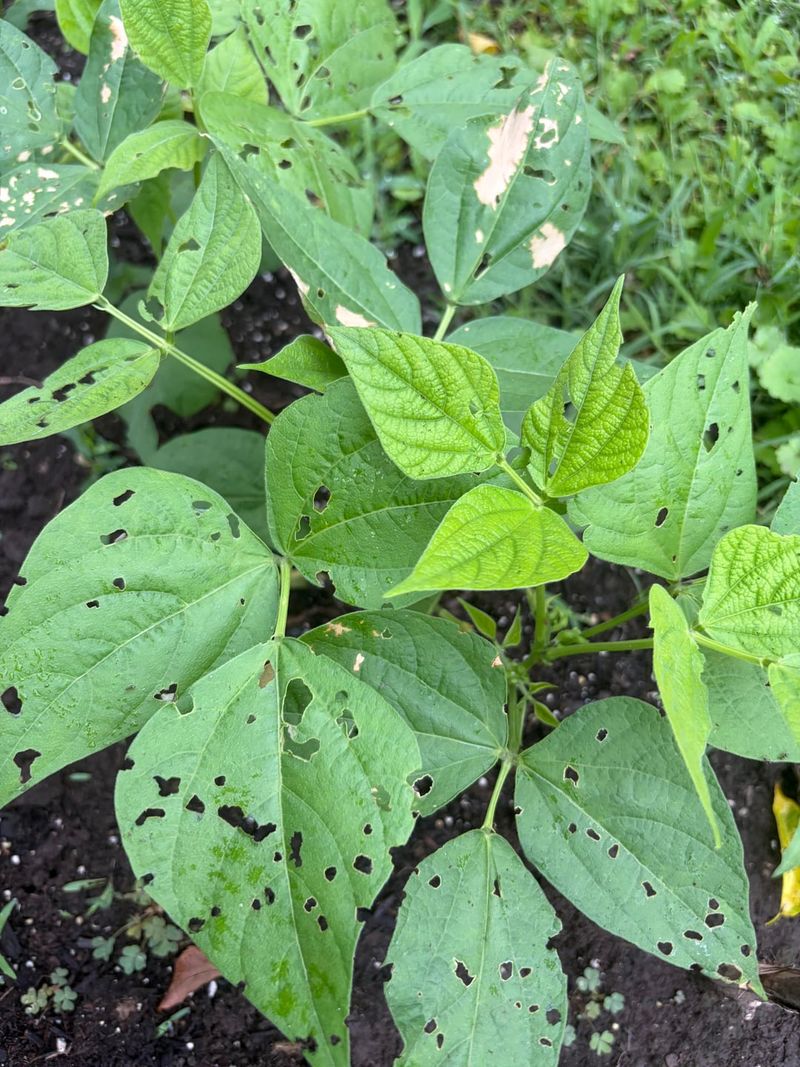
Tiny holes that look like a miniature shotgun blast went through your bean leaves can fool even experienced gardeners. The pattern alone is not enough to tell you what caused it.
Flea beetles are a very common culprit, chewing dozens of small holes that create that peppered look across the leaf surface. However, young caterpillars just starting to feed and other small chewing insects can produce a nearly identical pattern.
Flea beetles are incredibly fast and jump like fleas the moment you brush the foliage, which is how they got their name. Try gently shaking a branch over a white sheet of paper and watch what falls off.
If you see tiny dark beetles bouncing around, flea beetles are almost certainly part of your problem. During the day, the insects may be harder to spot because they move so quickly and hide under leaves.
Your Michigan Garden Changes Every Week. Your Plan Should Too.
Gardening in Michigan changes quickly throughout the season. Every Friday you’ll receive a simple weekly plan showing exactly what to plant, prune, fertilize, harvest, and protect so you never miss the right timing.
Michigan gardeners should also try checking their plants after dark with a flashlight. Some chewing insects, including certain caterpillars, are much more active at night and easier to find when the sun goes down.
The size of the holes, their location on the plant, how fast the damage is spreading, and whether you actually see an insect all matter when you are trying to figure out the real cause.
Appearance alone sends you in the wrong direction. Combining what you observe with an actual insect sighting gives you the clearest picture of what is really going on in your bean rows.
3. Lace-Like Leaves Suggest A More Serious Beetle Problem
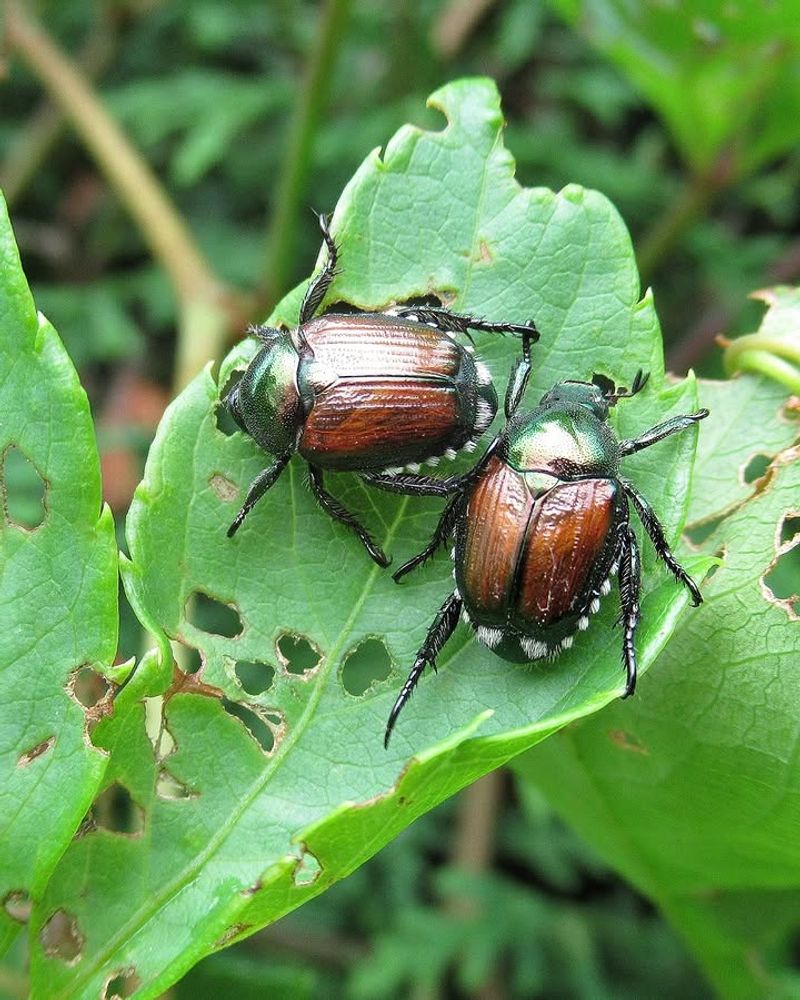
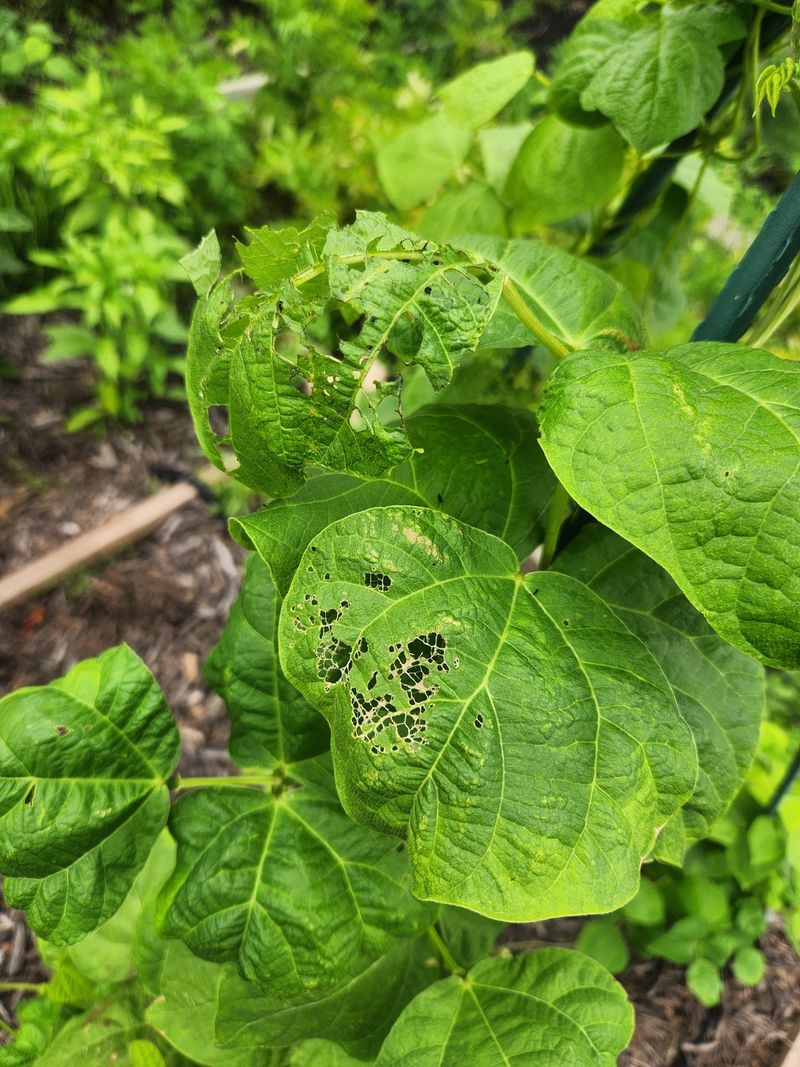
When your bean leaves start looking like delicate lace, with most of the soft green tissue eaten away and only the veins left behind, you are looking at something more advanced than a handful of tiny holes.
This kind of feeding is called skeletonizing, and it signals that a larger or more aggressive beetle has moved in.
Japanese beetles are a well-known offender in Michigan and tend to feed from the top surface of the leaf, working in groups that can strip a plant surprisingly fast.
Mexican bean beetles are another serious threat that Michigan gardeners should know well. Adults are yellowish-orange with black spots and look a bit like a ladybug, which sometimes causes confusion.
Unlike Japanese beetles, Mexican bean beetles and their larvae feed mainly from the underside of the leaf. They eat away the soft tissue and leave a thin, papery, almost translucent layer that quickly turns brown and ragged.
Checking the undersides of leaves regularly is key to catching this pest early. Look for clusters of bright yellow, oval eggs and groups of yellow larvae covered in dark branched spines.
Both the eggs and the larvae are much easier to spot than the adults. Removing egg clusters and young larvae by hand before they spread across the plant can significantly reduce the damage.
Acting while the population is still small keeps the lace-like pattern from spreading to every leaf on the plant and threatening your overall bean production this season.
4. Ragged Holes With Shiny Trails Point To Slugs
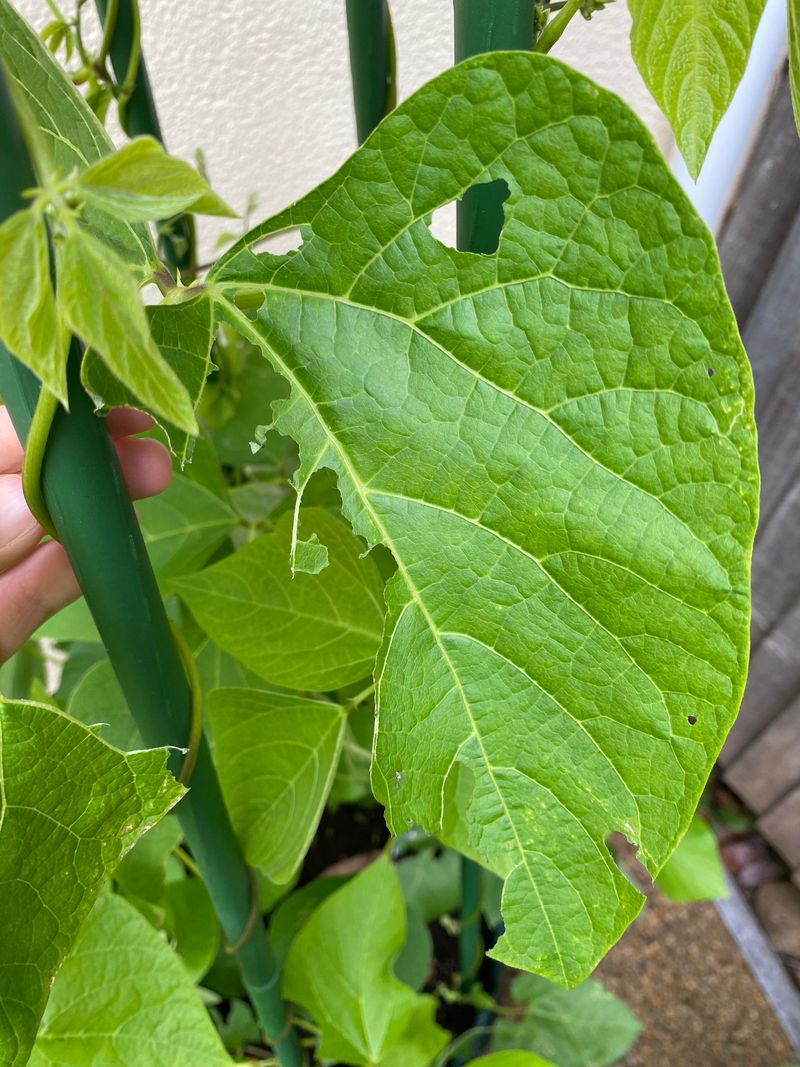
Not every hole in a bean leaf comes from a beetle. Slugs leave a very different kind of mark, and once you know what to look for, the difference becomes obvious.
Instead of neat, round circles, slug feeding creates irregular, ragged openings with torn edges. You might also notice missing chunks along the outer edge of the leaf rather than holes punched through the middle.
The most telling sign is the shiny, silvery trail that slugs leave behind as they move across leaves and soil. That glistening residue is dried mucus, and it is a true giveaway.
Damage from slugs tends to concentrate on the lower leaves of the plant, especially those close to moist soil, thick mulch, boards, or dense weeds where slugs like to hide during the day.
Michigan summers with frequent rain or heavy dew create ideal conditions for slug populations to grow quickly.
Since slugs are nocturnal, heading out to your garden with a flashlight after sunset or very early in the morning gives you the best chance of catching them. Shaded gardens with poor airflow tend to have worse slug problems than sunny, open plots.
Practical steps for a small garden include removing hiding spots like old boards, watering at soil level in the morning, and hand-collecting slugs. Maintaining these routines consistently over time is what delivers real results.
5. Webbed Or Folded Leaves Hide Caterpillars
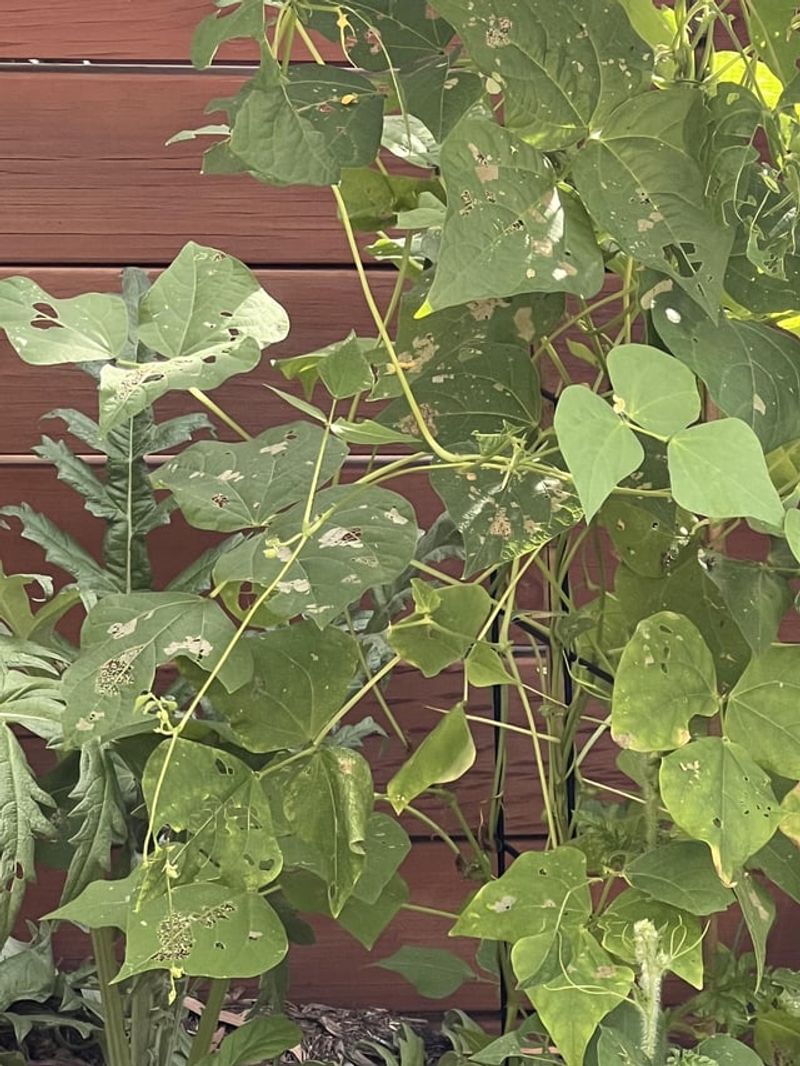
Finding silk threads, folded leaf edges, or leaves rolled into a tight tube on your bean plants is a clue that something is hiding inside.
Certain caterpillar species shelter themselves by pulling a leaf together with silk and then chewing on the tissue around them while staying protected from predators and the elements.
The holes left behind by caterpillars are often irregular and less uniform than the crisp, round holes you see from bean leaf beetles.
Dark, pellet-like droppings near folded or damaged leaves are another strong sign of caterpillar activity. Before you remove the damaged leaf, take a moment to open it carefully and get a good look at what is inside.
Identifying the caterpillar species helps you understand how much of a threat it poses and what the best response might be. Some caterpillars found on beans are minor feeders, while others can cause significant damage if left unchecked.
Hand removal works well in smaller gardens and is worth the effort when populations are low. Drop any caterpillars you collect into a bucket of soapy water rather than leaving them on the ground nearby.
Protecting beneficial insects is also worth keeping in mind, since parasitic wasps and other natural predators often help keep young caterpillar numbers in check without any effort on your part.
Avoiding broad-spectrum treatments that harm those helpers preserves a natural balance in your garden that pays off throughout the entire growing season.
6. Yellow Leaf Edges Mean The Problem Is Not Just Holes
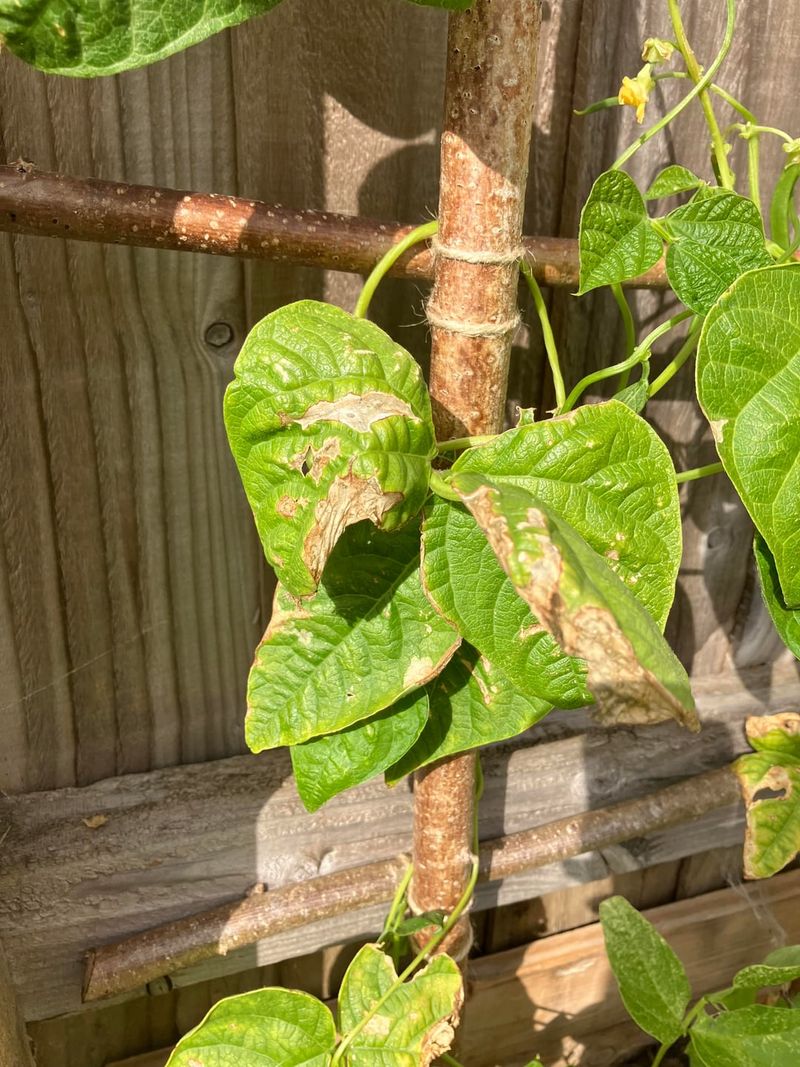
Yellowing that creeps in from the tips and edges of bean leaves adds a whole new layer to the problem. This pattern, sometimes called hopperburn, is a classic sign of potato leafhopper feeding and has nothing to do with chewing holes at all.
Leafhoppers do not bite through leaf tissue the way beetles do. Instead, they pierce the leaf and feed on the plant’s fluids, disrupting the flow of nutrients and causing the margins to yellow, curl, and eventually turn brown.
Hot, dry Michigan summers tend to make leafhopper injury look worse and spread faster. The insects are tiny, wedge-shaped, and greenish, and they have a habit of moving sideways across the leaf surface before flying away when disturbed.
Brushing your hand across the foliage and watching for small insects jumping or flying off is a quick way to check for their presence. A single sweep can tell you a lot about what is happening on your plants.
Here is something worth knowing: a plant can have bean leaf beetle holes and leafhopper injury at the exact same time. Seeing yellowing edges alongside holes does not mean one caused the other.
Both problems need to be addressed separately. Checking for leafhoppers early in the season, before their numbers build up, gives you a real advantage.
Row covers placed right after planting can physically block leafhoppers from reaching young plants during the most vulnerable stage of growth in Michigan gardens.
7. Production Is At Risk When Damage Reaches Flowers And Pods
Holes in leaves are one thing, but the stakes go up considerably when insects start targeting flowers and developing pods. A blossom that gets chewed before it fully opens may never form a bean at all.
Bean leaf beetles are actually known to feed on flowers and pods in addition to leaves, and that feeding can directly reduce how many beans your plant produces by the end of the season.
Pod feeding creates a different kind of problem. Openings or scarred areas on the pod surface can allow moisture and bacteria to enter, leading to soft spots and decay that make pods unusable.
Visually checking your plants several times each week during flowering and pod development is one of the most effective things a Michigan gardener can do.
Catching insect pressure early during this critical window gives you a real chance to respond before production drops.
Beans also have shallow root systems and need steady, consistent moisture while pods are forming.
When insects are feeding on flowers and pods at the same time that the soil is drying out, the combined stress hits the plant much harder than either problem would alone.
Keeping the root zone evenly moist with a soaker hose or careful hand watering, while also staying on top of pest monitoring, creates the best possible conditions for a strong harvest.
Do not wait until you see major damage before you start inspecting. Regular attention during pod set makes a measurable difference in your final yield.
8. Regular Picking And Early Scouting Keep Beans Productive
Keeping your Michigan bean plants productive all season long comes down to two simple habits: checking often and picking on time. Walk through your garden several times each week and actually look at the leaves, stems, flowers, and pods.
When you spot an insect, take a moment to identify it before deciding what to do. Hand picking manageable pests like bean leaf beetles, caterpillars, and Mexican bean beetle larvae is a practical first step that costs nothing and works well in smaller gardens.
Removing badly damaged or fallen leaves from around the base of the plant matters more than many gardeners realize.
Plant debris on the soil surface can shelter pests and create conditions where problems build up over time. That said, a healthy bean plant can handle some leaf loss without slowing down.
Resist the urge to strip every imperfect leaf from the plant, because the remaining healthy leaves are still doing important work converting sunlight into energy for pod development.
Harvesting snap beans while the pods are still tender and before the seeds inside begin to swell is one of the best things you can do to encourage continuous production.
Mature pods left on the plant signal that the plant has completed its reproductive mission, which causes it to slow down or stop forming new pods.
Consistent root zone moisture, a layer of suitable mulch to retain that moisture, and good airflow between plants all support strong performance.
If treatment ever becomes truly necessary, use only products labeled safe for edible beans and follow all label directions carefully.