What Ohio Knockout Roses Actually Need In Summer To Keep Blooming Through October
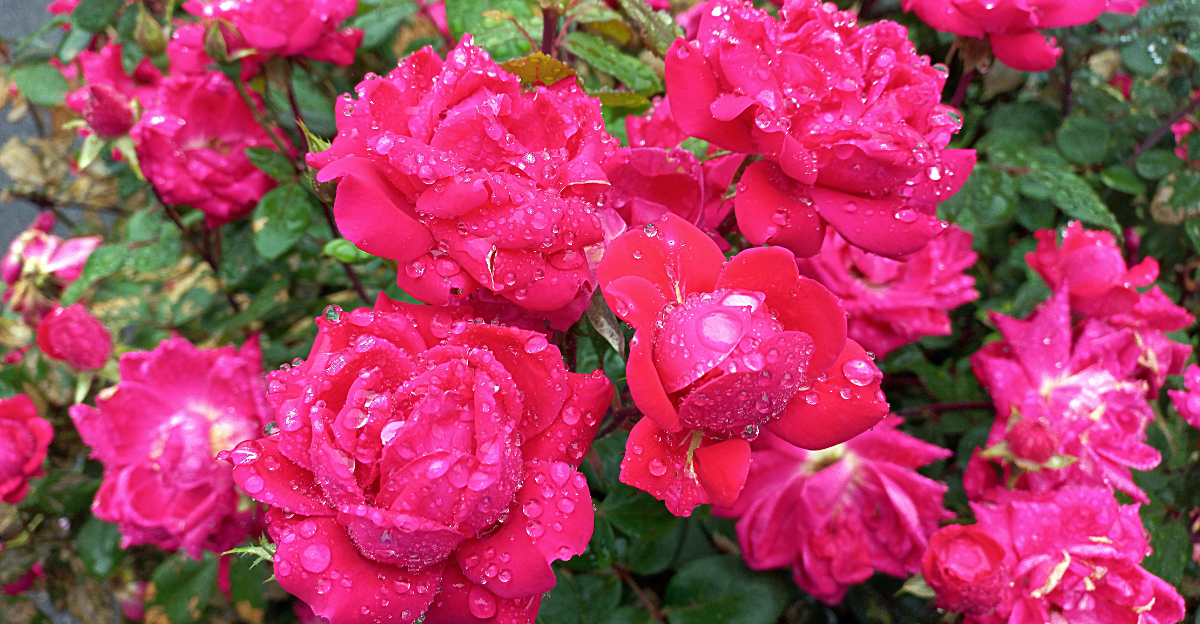
Knockout roses built their reputation on not needing much. Plant them, step back, collect the blooms.
That reputation is mostly earned and slightly misleading. Summer is where the gap between what knockout roses get and what they actually need shows up most clearly in Ohio yards.
A knockout rose running on neglect through July and August is capable of reaching October. It just arrives there looking like it barely made it rather than finishing strong.
Summer care for knockout roses in Ohio is not complicated or time-consuming. A handful of specific things done at the right moment keep the bloom cycle running at the pace the plant is actually capable of sustaining through fall.
October knockout roses that stop traffic are not a different variety. They are the same shrub managed differently through the months that most Ohio yards treat as a reason to ignore them entirely.
1. Water Deeply Before Summer Stress Shuts Blooms Down
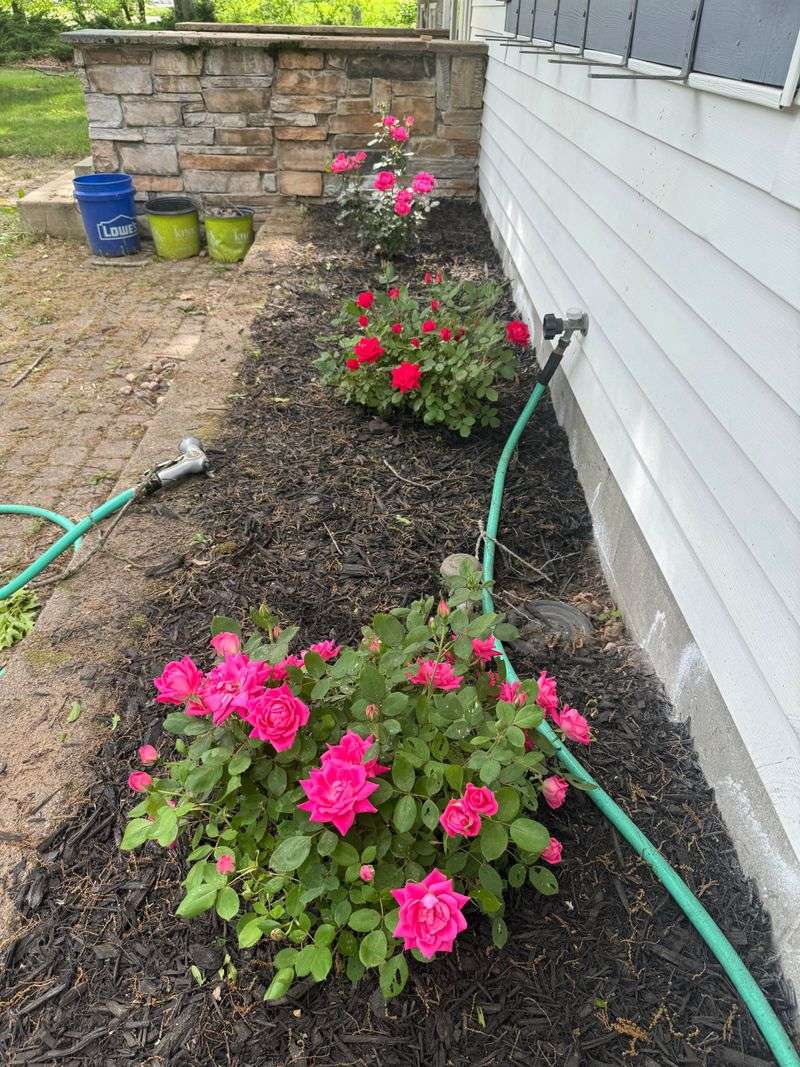
A dry root zone is one of the fastest ways to shut down a blooming Knock Out rose in summer in Ohio. When soil dries out several inches below the surface, the plant shifts its energy away from flower production and into survival mode.
Heat and low moisture together create real stress, and stressed shrubs bloom less or stop altogether.
Deep watering means soaking the root zone slowly so water moves down into the soil rather than running off the surface. A quick sprinkle from a hose does not get the job done.
OSU Extension rose-care guidance notes that roses generally need about one inch of water per week. During hot, dry stretches, that water may need to come from you.
Check soil moisture by pressing a finger two to three inches into the ground near the base of the shrub. If it feels dry at that depth, the plant needs water.
Watering slowly at the base, using a hose set to a low flow or a soaker hose, helps water reach the roots without soaking the leaves.
Do not water soggy soil. If the ground already feels wet several inches down, hold off and check again in a day or two.
The goal is consistent moisture in the root zone, not standing water. Steady deep watering through dry summer stretches gives Knock Out roses the foundation they need to keep cycling through bloom.
2. Trim Spent Clusters Without Hacking The Shrub
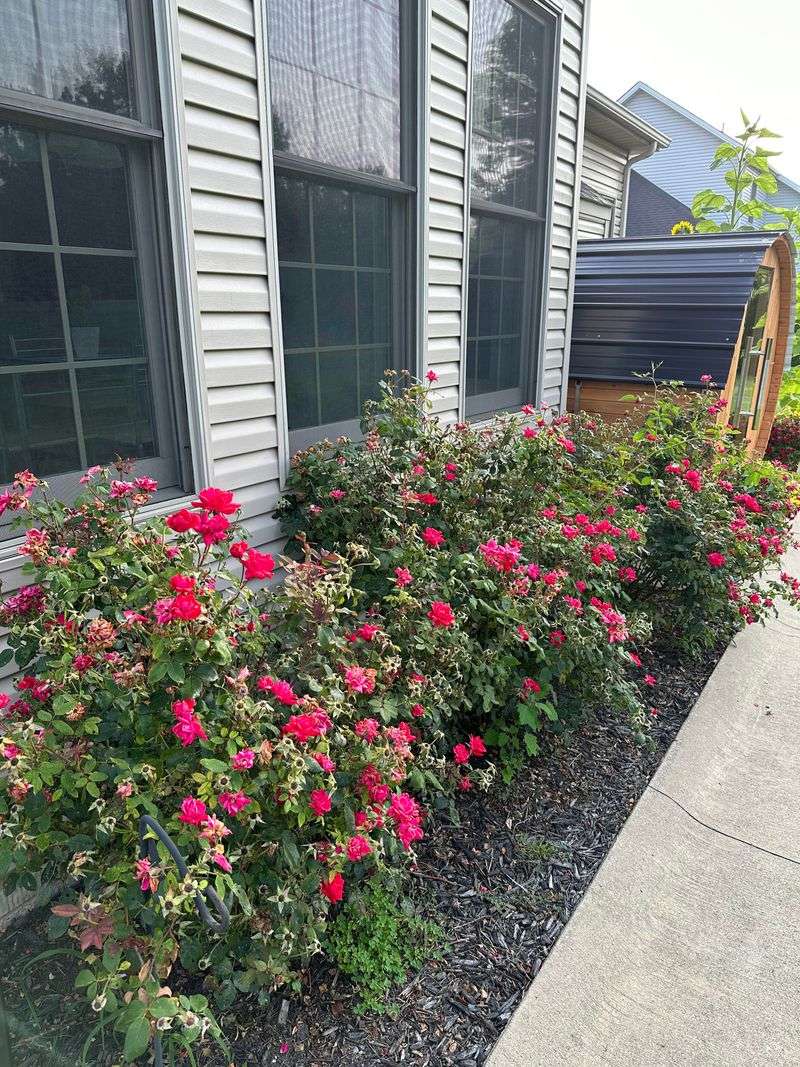
Faded flower clusters clinging to a Knock Out rose can make the whole shrub look tired, but the fix does not have to be dramatic. One practical summer task is removing spent clusters with a light snip.
That is better than leaving them in place or cutting the shrub back hard.
Knock Out Roses official care guidance notes that these shrubs do not require trimming to rebloom the way traditional hybrid tea roses do. The plants are bred to cycle through bloom on their own.
That said, removing spent flower clusters can keep the shrub looking neater and may help encourage a cleaner flush of new growth when conditions are right.
Your Ohio Garden Changes Every Week. Your Plan Should Too.
Gardening in Ohio changes quickly throughout the season. Every Friday you’ll receive a simple weekly plan showing exactly what to plant, prune, fertilize, harvest, and protect so you never miss the right timing.
When trimming, cut just below the spent cluster back to a healthy leaf set or outward-facing bud. Use clean, sharp pruning shears to avoid tearing the cane.
Avoid cutting into thick, mature wood during summer heat unless a cane is clearly trim or damaged.
Major shaping and hard pruning are generally better handled in early spring before new growth begins, according to university extension rose-care guidance in Ohio.
Hacking a Knock Out rose back severely during hot weather can stress the plant and reduce its ability to push new buds.
Light, thoughtful trimming during summer keeps the shrub tidy without setting it back when it should be working toward its next bloom cycle.
3. Feed Lightly After A Bloom Cycle Ends
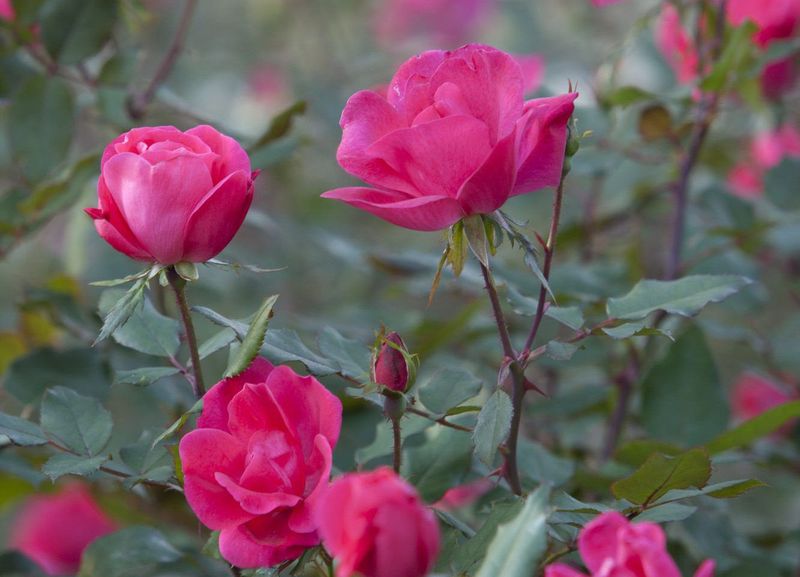
Fertilizer is not a magic switch for more flowers. A light feeding after a bloom cycle can give a healthy Knock Out rose a small boost when the soil needs it.
The key word is light. Overfeeding, especially during heat stress or drought, can do more harm than good.
Horticulture experts in Ohio advise watering the shrub thoroughly before applying any fertilizer. Feeding dry or stressed roots can burn the plant and make the problem worse.
If the soil has been dry for days and the plant looks heat-stressed, hold off on fertilizer until conditions improve and the root zone is moist again.
A balanced rose fertilizer or a slow-release granular product applied according to label directions is a reasonable choice for established Knock Out roses.
Soil-test guidance from your local extension office can help you understand whether your beds actually need additional nutrients before you apply anything.
Knock Out roses are not heavy feeders compared to some other rose types. University extension rose-care guidance suggests that healthy established shrubs in decent soil may not need frequent feeding to keep blooming.
If the plant looks strong, the foliage is deep green, and it cycled through its last bloom well, feeding may not be necessary at all. Let the plant’s appearance and your soil knowledge guide the decision rather than a rigid schedule.
4. Stop Fertilizing Before Late Summer Growth Turns Soft
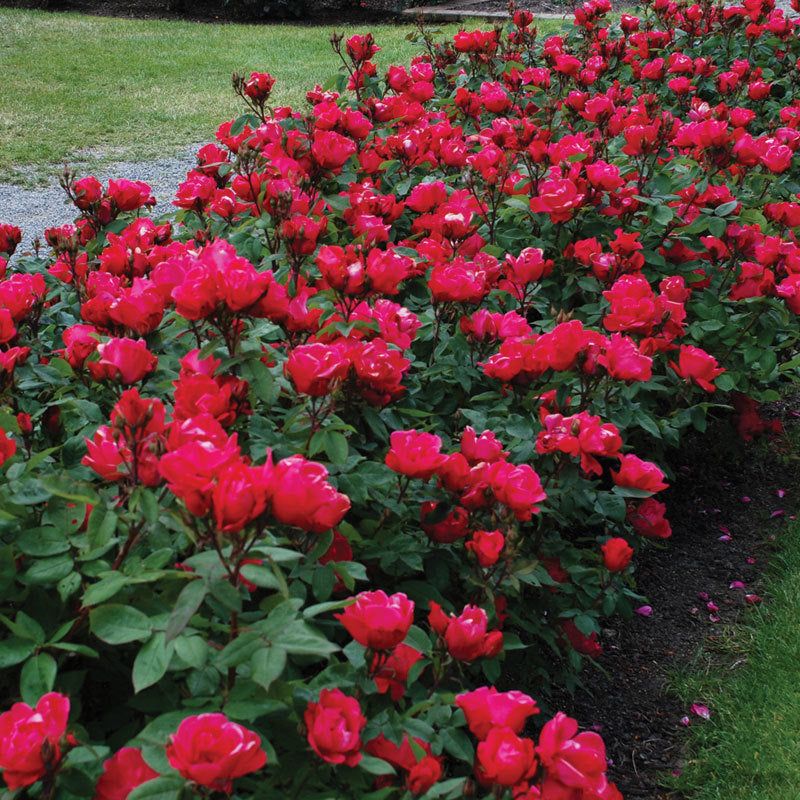
Late summer has a sneaky way of feeling like mid-season, but the calendar and the cooling nights tell a different story.
Applying heavy fertilizer in late summer can push a flush of soft, tender new growth right when the plant should be slowing down and preparing for cooler weather ahead.
That tender growth is vulnerable. Plant pathology resources and horticulture experts note that new growth pushed late in the season may not have time to harden off properly before cold arrives.
In many parts of this state, frost can arrive earlier than expected, and young soft canes are not ready for that kind of temperature drop.
University extension rose-care guidance generally recommends tapering off fertilizer in late summer. The exact timing can vary by region and product type.
Northern regions of Ohio tend to see earlier frosts than southern regions, so local frost date awareness matters when deciding when to stop feeding.
The goal in late summer is to let the plant finish its natural bloom cycles without pushing a surge of growth it cannot harden before cold sets in.
Knock Out roses are capable of producing buds into fall on their own when they are healthy and the weather cooperates.
Pushing them with late fertilizer does not reliably extend bloom and may leave the shrub more exposed when temperatures finally drop. Letting the plant wind down on its own schedule is the smarter move.
5. Mulch Roots Without Piling Against The Canes
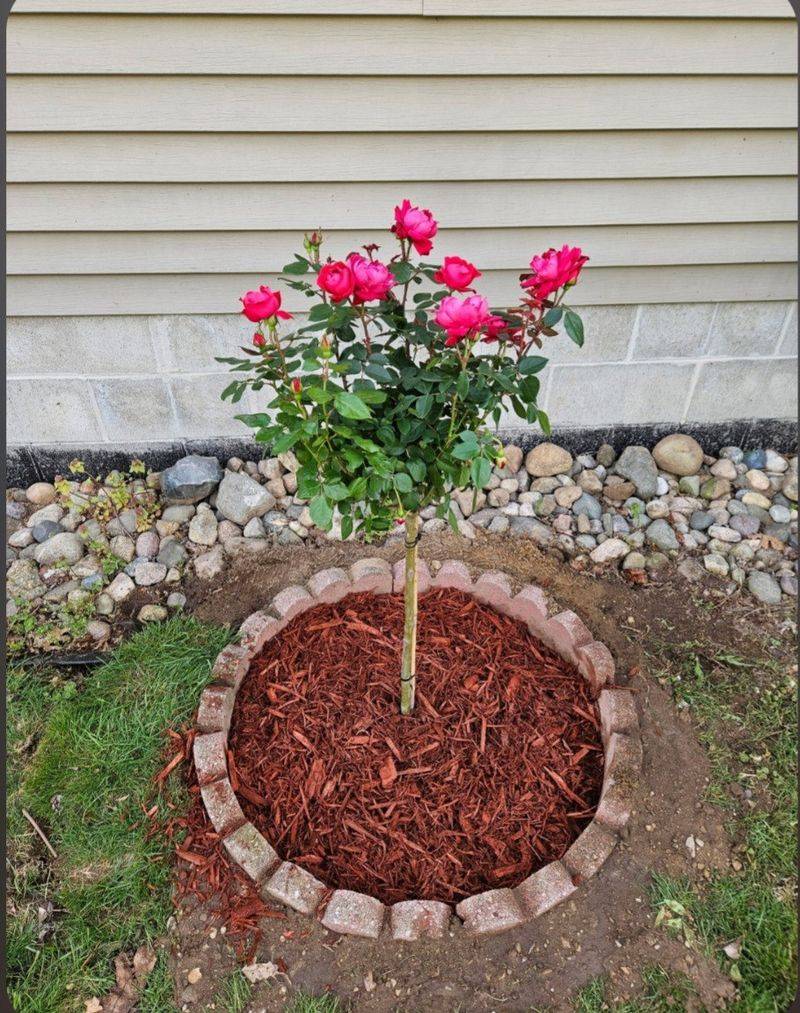
A good mulch ring around a Knock Out rose does quiet but important work through the summer. It slows moisture loss, buffers soil temperature swings during hot days, and cuts down on weeds.
Those weeds would otherwise steal water and nutrients from the root zone.
OSU Extension guidance on mulching ornamental shrubs recommends keeping a moderate layer around the root zone, generally two to three inches deep.
The material should be spread out to cover the root area, but it should not be piled thick and wet against the base of the canes or crown of the plant.
That kind of contact can trap moisture and create conditions that may promote rot or disease at the stem.
Pull mulch back a few inches from the canes so there is visible space between the mulch and the base of the shrub. A clean gap there makes a real difference for plant health over a long, humid summer.
Mulch supports your watering routine by holding moisture in the soil longer, but it does not replace watering during dry stretches. During a dry spell, the soil beneath the mulch can still dry out, especially in sandy or fast-draining beds.
Check soil moisture under the mulch layer regularly and water deeply when the root zone feels dry. Mulch is a helpful tool, but it works best as part of a complete summer care routine rather than a single fix.
6. Water At The Base To Keep Leaves Drier
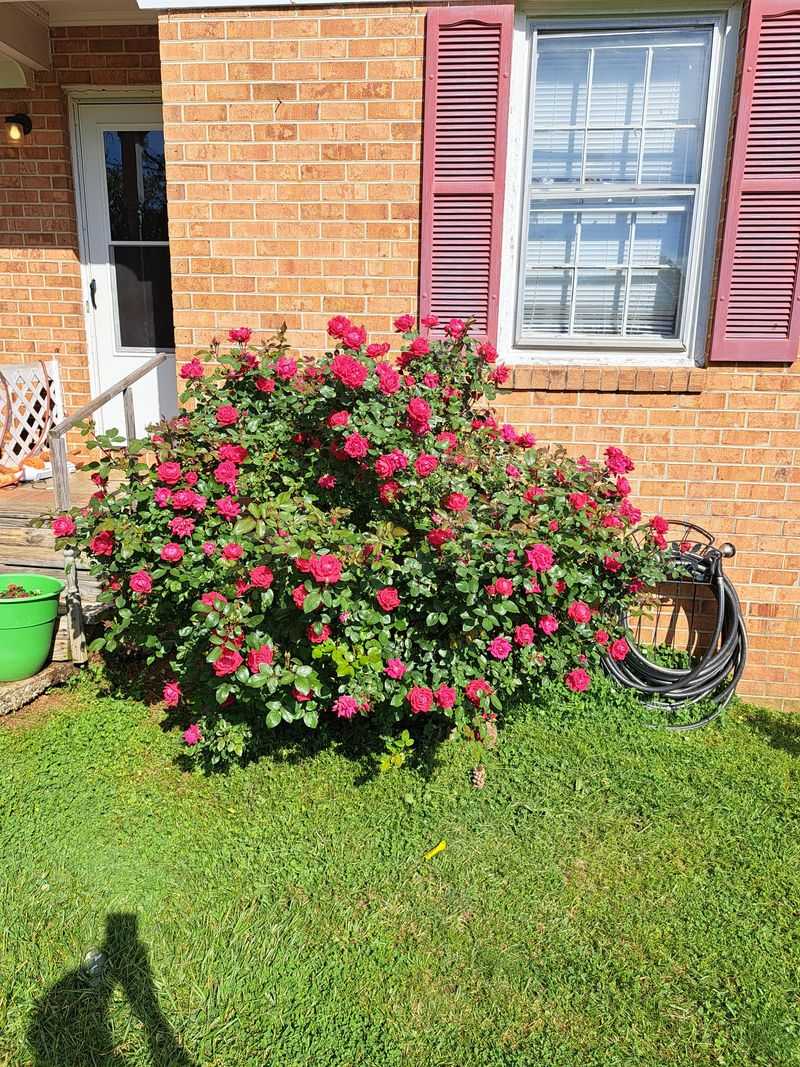
Pointing a hose at the top of a rose bush feels natural. But overhead watering wets the foliage and can favor certain leaf diseases when the right pathogens are present.
Directing water at the base of the plant instead is a simple habit that makes a difference over a full summer season.
A watering wand, soaker hose, or drip line aimed at the root zone keeps most of the foliage dry while still getting water to where the plant actually uses it.
This method also reduces water waste because less moisture evaporates off leaves in the summer heat before it can reach the soil.
University extension rose-care guidance notes that morning is the better time to water if foliage does get wet. Leaves that dry out through the warmth of the day are less likely to stay damp for extended periods compared to foliage wetted in the evening.
Evening watering that leaves wet leaves overnight is generally considered a less favorable habit for rose health.
Base watering does not prevent every disease or guarantee perfectly healthy foliage. Other factors like humidity, airflow, and overall plant stress also play a role.
But keeping leaves as dry as possible through consistent base watering is a low-effort practice that supports leaf health without requiring any special products.
Over a long summer, that small habit can add up to noticeably better-looking foliage and a shrub that stays in better condition for longer bloom.
7. Watch Black Spot Before Leaves Start Dropping

Yellowing leaves with dark circular spots appearing after a stretch of humid weather are a familiar sight on roses across local gardens. Black spot is a fungal disease that can affect roses.
Plant pathology resources describe it as a common foliar problem when warm, wet conditions persist.
Knock Out roses carry better disease resistance than many older rose types, but they are not completely immune to black spot. Extension disease guidance notes that severe or repeated infections can cause major leaf drop.
That weakens the plant and may reduce new bloom cycles through the rest of summer.
Checking leaves regularly during humid stretches helps you catch problems early. Look at both the upper and lower surfaces of leaves, especially on the lower portions of the shrub where airflow tends to be lower.
Remove fallen leaves from the bed promptly rather than letting them sit in the mulch, where spores can persist and reinfect the plant.
Improving airflow around the shrub by avoiding overcrowding with nearby plants can also help reduce disease pressure over time.
If disease problems are severe or recurring, reach out to your local extension office for culturally appropriate guidance and product recommendations.
For any treatment product, follow label directions carefully. Base watering, good sanitation, and airflow are the foundation of keeping black spot from becoming a bloom-stopping problem through the rest of summer.
8. Let Frost End The Show Instead Of Forcing It
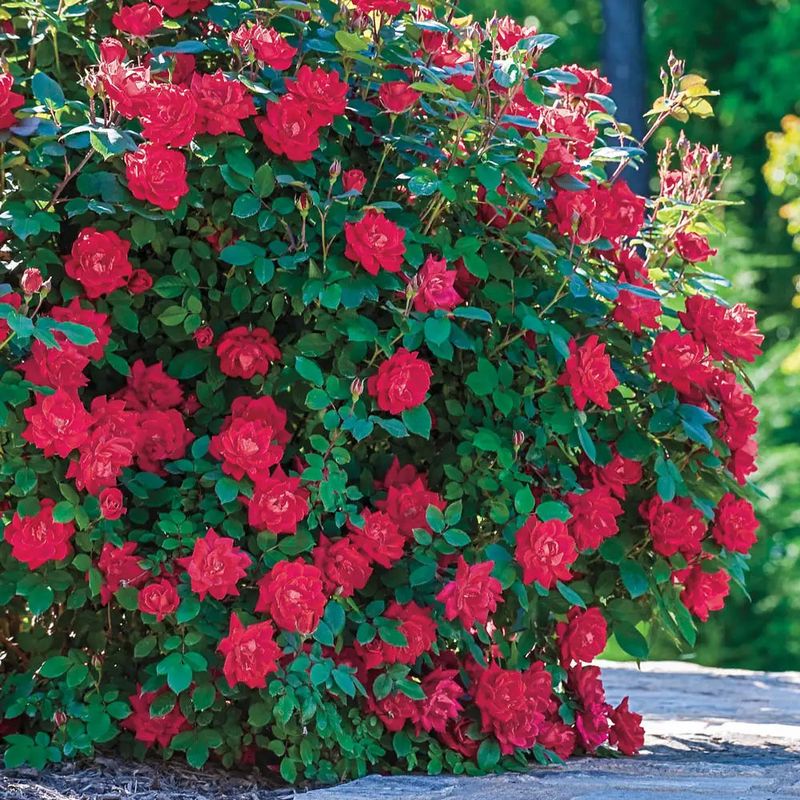
A late bud opening on a Knock Out rose in early October is one of the more satisfying sights in a fall garden. Getting there takes a summer of steady, practical care rather than aggressive pushing.
The whole point of everything covered in this article is to keep the plant healthy so it can keep working on its own schedule.
Deep watering during dry stretches, light trimming of spent clusters, careful feeding, correct mulch placement, and base watering all reduce summer stress. Early attention to black spot helps too.
A low-stress plant is a plant that keeps blooming.
October bloom in this state is not a guarantee every year. It depends on the cultivar, the individual plant’s health, how well the summer care routine held up, and most importantly the local weather and frost timing.
Knock Out Roses official care guidance makes clear that these are repeat-blooming shrubs, not machines set to a fixed calendar. Some years the season cooperates and buds keep opening into fall.
Other years an early frost ends things sooner.
The goal is not to force flowers past the season’s natural end. Horticulture experts advise letting the plant slow down as nights cool and daylight shortens.
When frost finally arrives, it signals the natural close of the bloom season. Healthy summer care gave the roses every reasonable chance to bloom as long as the season allowed, and that is exactly what they needed.