What It Really Means When An Owl Shows Up Near Your Wisconsin Home
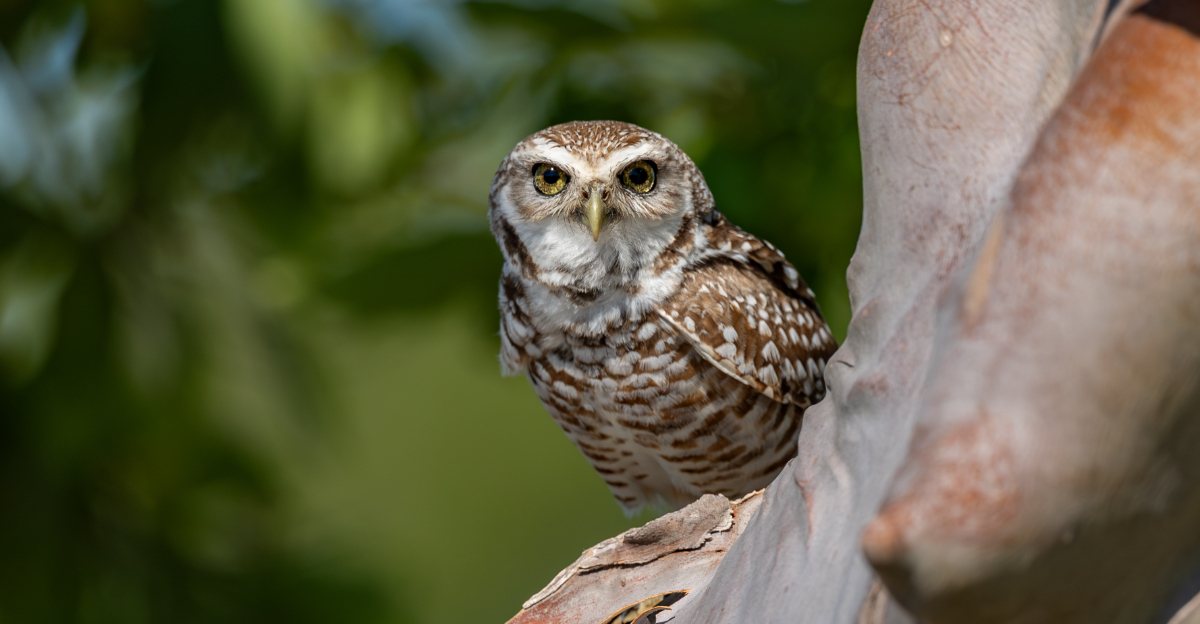
A low, rolling hoot cuts through the dark, and your porch light suddenly feels like the only safe spot in the yard. Somewhere in the branches above, an owl has claimed a perch, and it isn’t just passing through.
That single sound carries real information about your property, whether you realize it or not. An owl doesn’t choose a yard at random, it settles where the conditions already work in its favor.
Hearing one nearby means your little patch of land is doing something right, ecologically speaking. Owls sit near the top of the food chain, so their presence points to a backyard quietly supporting a whole web of life underneath it.
Before you grab a flashlight and go looking, it helps to know which species might be calling, what that call actually means, and what exactly drew this silent hunter to your corner of Wisconsin.
Owls Are More Common Near Homes Than People Realize
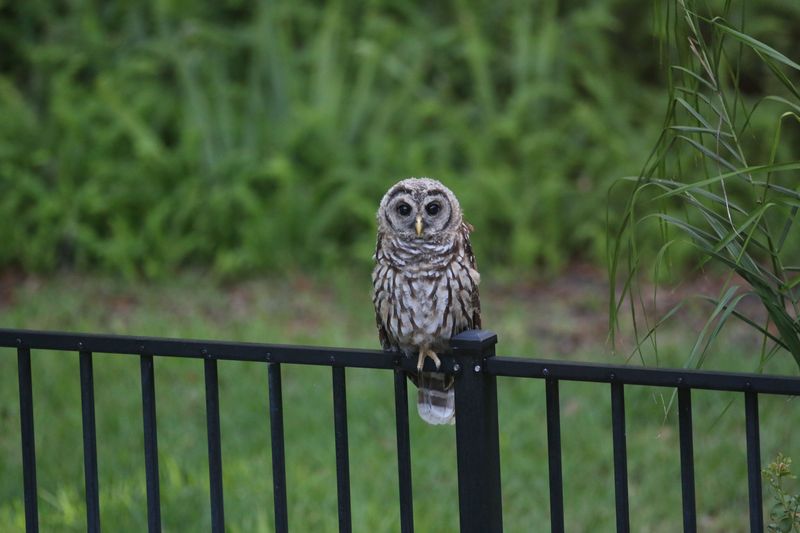
Most people assume owls live deep in forests, far from neighborhoods. That assumption is wrong.
Owls have quietly adapted to suburban life across the Midwest. Backyards with mature trees, open lawns, and nearby fields are actually ideal owl territory.
What it really means when an owl shows up near your Wisconsin home is that your yard offers something useful. That could be food, shelter, or a good hunting perch.
Owls are drawn to edges, places where open land meets wooded areas. Your property line, garden border, or fence row can serve as a perfect hunting corridor.
Many homeowners spot owls regularly without realizing it. A silent silhouette on a power line or a shadow passing over a floodlight is often a barn owl or great horned owl on the hunt.
Urban sprawl has pushed several owl species closer to people over the past few decades. Some populations have adapted so well that suburban yards now rival wilder habitats as hunting ground.
Seeing one near your house is not unusual or alarming. It means your neighborhood still has enough natural habitat to support a top predator.
That is something worth paying attention to. A healthy owl presence is one of the best signs of a balanced local food web.
Common Owl Species Found In Wisconsin Neighborhoods
Not every owl hoot sounds the same, and not every owl you see belongs to the same species. Wisconsin hosts several owl types that regularly appear near homes.
The great horned owl is the most recognizable. Its large size, ear tufts, and deep hooting call make it easy to identify at night.
Barred owls are slightly smaller and prefer wooded suburban areas near water. Their call sounds like the phrase “who cooks for you,” which is oddly easy to remember.
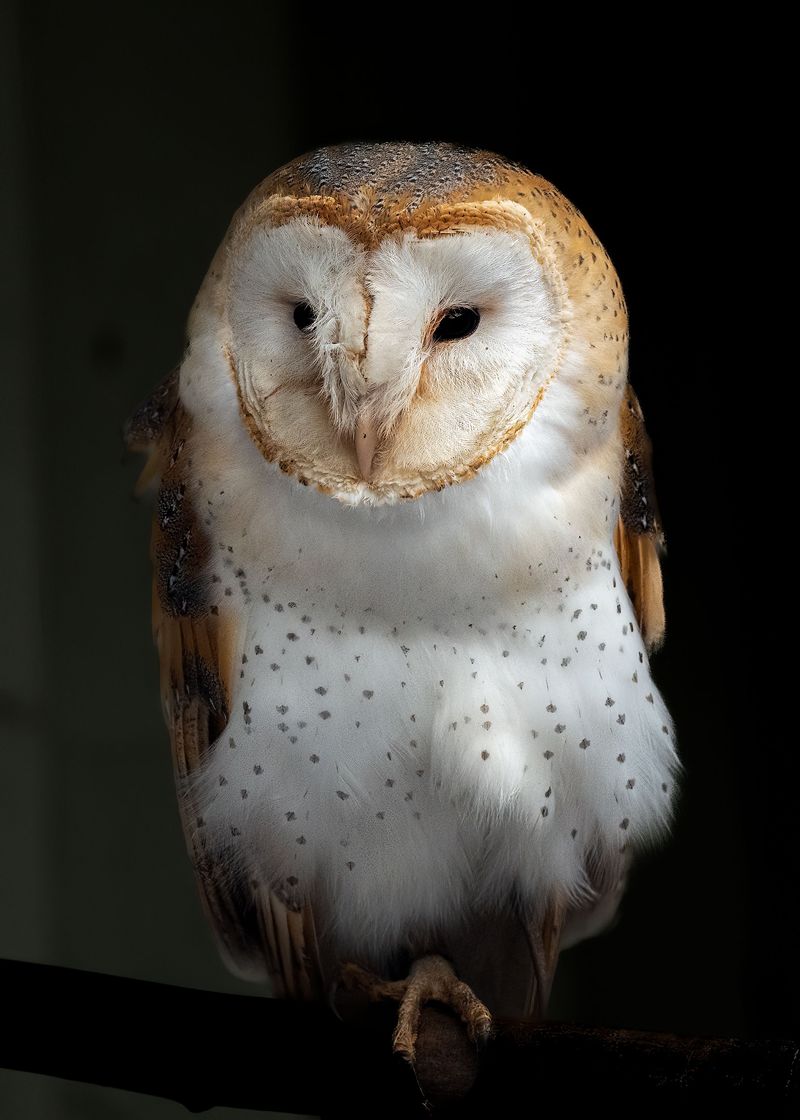
Barn owls favor open farmland and older structures like barns, silos, and church steeples. Spotting one near a rural Wisconsin property is a genuine treat.
Eastern screech-owls are tiny but surprisingly common in city parks and older neighborhoods. They nest inside tree cavities and are experts at going unnoticed.
Your Wisconsin Garden Changes Every Week. Your Plan Should Too.
Gardening in Wisconsin changes quickly throughout the season. Every Friday you’ll receive a simple weekly plan showing exactly what to plant, prune, fertilize, harvest, and protect so you never miss the right timing.
Short-eared owls show up during winter months, hunting low over open fields during daylight hours. Seeing one cruise across a snowy meadow is unforgettable.
Long-eared owls pass through during migration and may roost in dense evergreens near homes. They are secretive and rarely spotted unless you know what to look for.
Each species has its own habits and preferred habitat. Learning which one visits your yard gives you a clearer picture of what your local environment actually supports.
Rodent Activity Is A Magnet For Hungry Owls
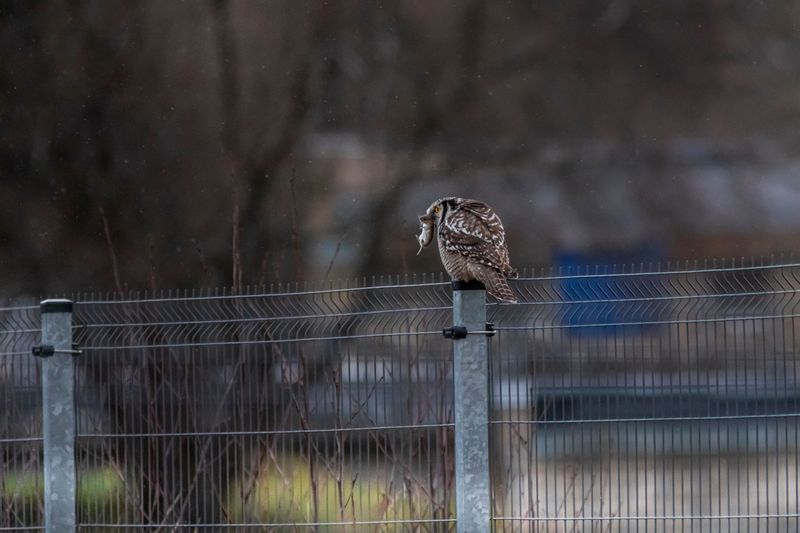
Owls are hunters first, and everything else second. If one keeps showing up near your house, there is a good chance your yard has a steady rodent population.
Mice, voles, shrews, and young rabbits are the primary targets. A single great horned owl can consume hundreds of rodents in one season.
Bird feeders are a major attractant, but not because owls eat seeds. Fallen seed draws mice, and mice draw owls in a straightforward chain.
Compost bins, wood piles, and dense ground cover all create shelter for small mammals. Owls learn these patterns quickly and return to productive hunting spots night after night.
What it really means when an owl shows up near your Wisconsin home could simply be that your yard is a reliable food source. Owls are efficient and loyal to productive territories.
Gardens with heavy mulch or thick leaf litter tend to harbor more voles than open lawns. An owl hovering over your garden bed is doing you a quiet favor.
Some homeowners intentionally manage their yards to attract owls as natural pest control. It works, and it costs nothing beyond leaving a few rough patches of ground undisturbed.
Watching an owl hunt is one of the most precise things you will ever witness. Silent wings, a sudden drop, and then stillness — nature at its most efficient.
Old Trees And Nesting Sites Draw Owls In
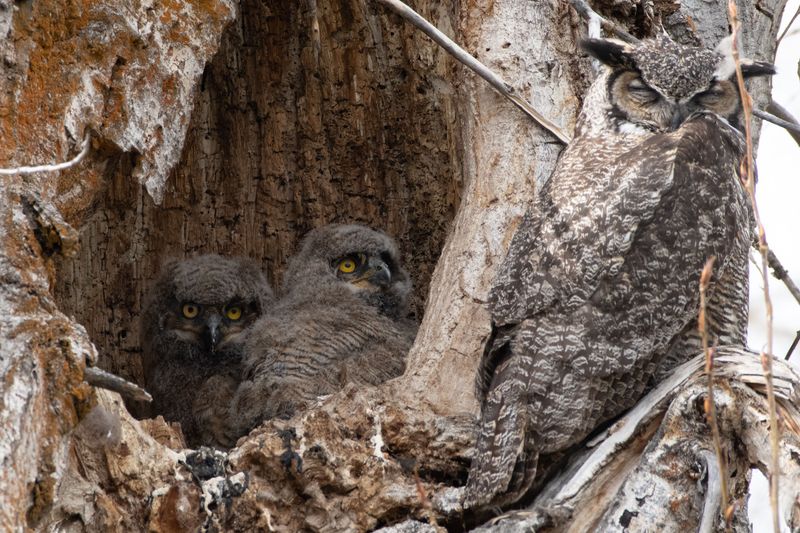
Old trees are owl real estate. If your yard has large, mature trees with cavities or broken limbs, you have already put out a welcome sign for nesting owls.
Great horned owls do not build their own nests. They take over abandoned hawk or crow nests, so a big stick nest high in your oak could become occupied fast.
Eastern screech-owls depend on natural tree cavities or nest boxes for shelter. A weathered, hollowed-out snag left standing in your yard is more valuable to them than a perfectly manicured tree.
Barred owls prefer large hardwoods near wet areas. If your property backs up to a creek or retention pond, you are in prime barred owl nesting territory.
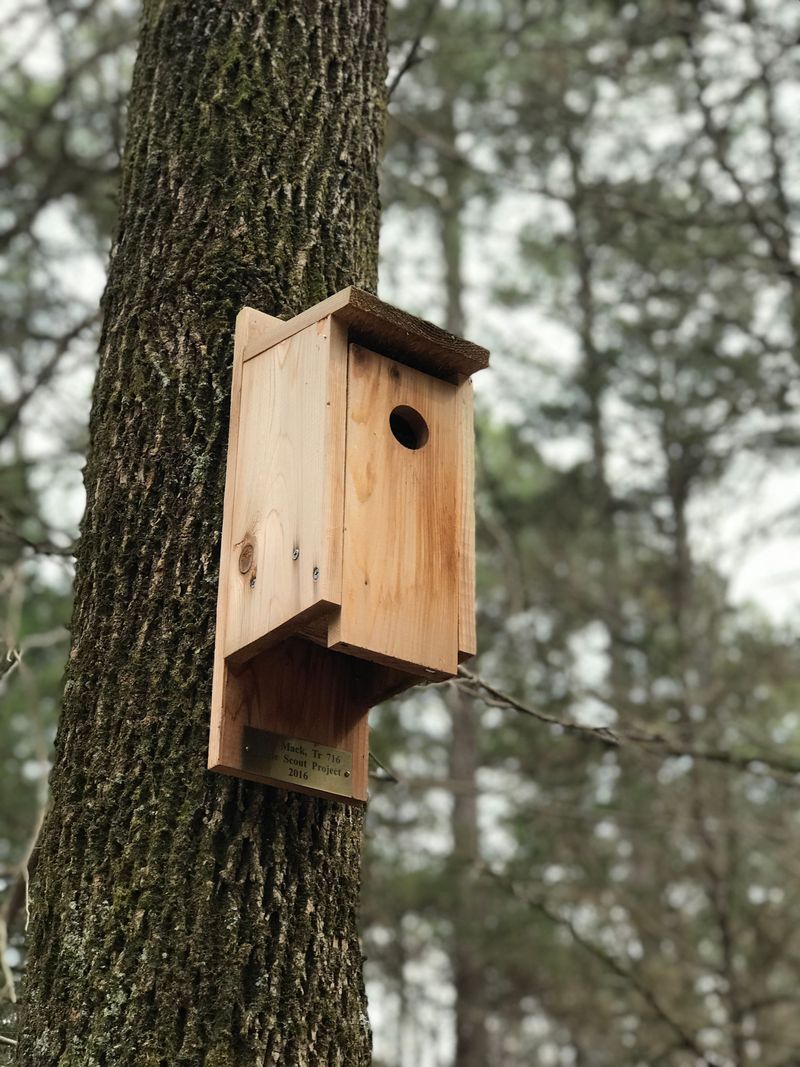
Nest boxes designed for owls can be mounted on poles or trees to encourage residency. Barn owl boxes placed on outbuildings in rural areas have helped stabilize local populations.
Evergreen trees serve a different purpose, acting as winter roost sites. Long-eared and short-eared owls sometimes cluster in dense spruce or cedar groves during cold months.
Tree canopy height matters too. Owls prefer hunting beneath a high canopy where they can swoop without obstruction. A yard with tall trees and open understory is a natural hunting lane.
Protecting old trees on your property does more than add shade. It keeps the door open for one of nature’s most fascinating nighttime visitors.
Decoding Owl Calls After Dark
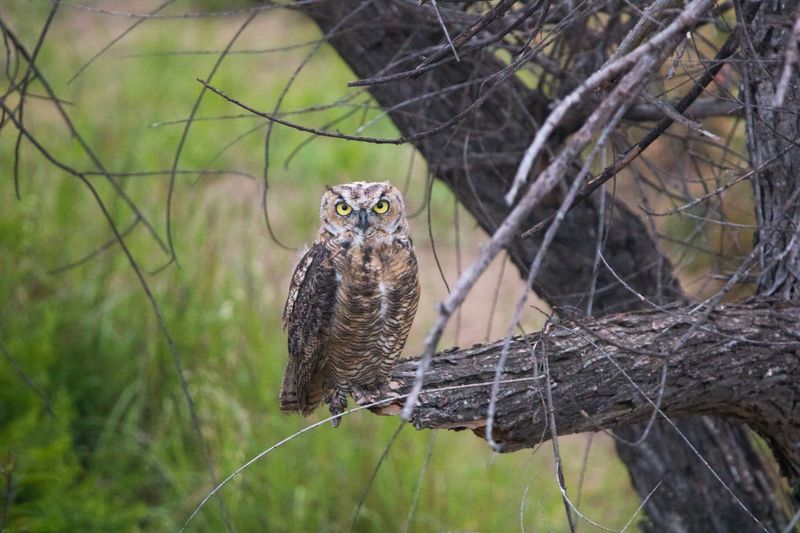
That haunting sound drifting across your yard after midnight is not random. Owl calls carry specific messages, and once you learn them, nighttime sounds take on a whole new meaning.
Hooting between two owls is usually a mated pair communicating. The male typically has a lower pitch, and the female responds with a slightly higher tone.
Persistent hooting in late winter signals the start of breeding season. Great horned owls begin courting as early as January, which surprises most people given the cold.
A sharp, repeated bark-like call often means an owl is defending territory. Another owl, a hawk, or even a curious human can trigger this defensive response.
Screech-owls produce a trembling whinny that sounds almost ghostly. Many people hear it for years without ever identifying the source as a small, robin-sized bird.
Barn owls make a raspy, hissing screech that can stop you cold. First-time listeners often mistake it for something far more alarming than a bird.
Young owls call loudly through summer nights, begging parents for food. That persistent, raspy screaming from the treetops is usually a hungry owlet, not a distressed animal.
Knowing these calls turns your nighttime backyard into a living broadcast. What it really means when an owl shows up near your Wisconsin home — and starts calling — is that your yard has become part of its world.
Simple Ways To Support Owls On Your Property
Supporting owls does not require major changes to your yard. A few smart choices can make your property a dependable stop on their nightly rounds.
Start by leaving weathered or hollowed trees standing when it is safe to do so. A standing snag provides nesting cavities, hunting perches, and insect habitat all at once.
Install an owl nest box if you lack natural cavities. Screech-owl and barn owl boxes are widely available and easy to mount with basic tools.
Reduce outdoor lighting near wooded edges of your property. Bright lights disrupt owl hunting patterns and can drive them away from otherwise suitable habitat.
Avoid rodenticides whenever possible. Owls that consume poisoned prey can suffer serious harm, and losing a local owl means losing a powerful natural pest manager.
Let a section of your lawn grow a bit wild with native grasses and low shrubs. This creates ground cover for small mammals, which keeps the food supply active for hunting owls.
Keep cats indoors at night. Free-roaming cats compete with owls for the same prey and can injure young owls that land low to the ground.
Spread the word among neighbors about what it really means when an owl shows up near your Wisconsin home. A block-wide effort to support owl habitat creates a corridor far more effective than one yard alone.
Small actions add up, and owls notice. Once they find your space reliable, they tend to stay.