The Meaning Behind Seeing Monarch Butterflies In Your Texas Yard In August
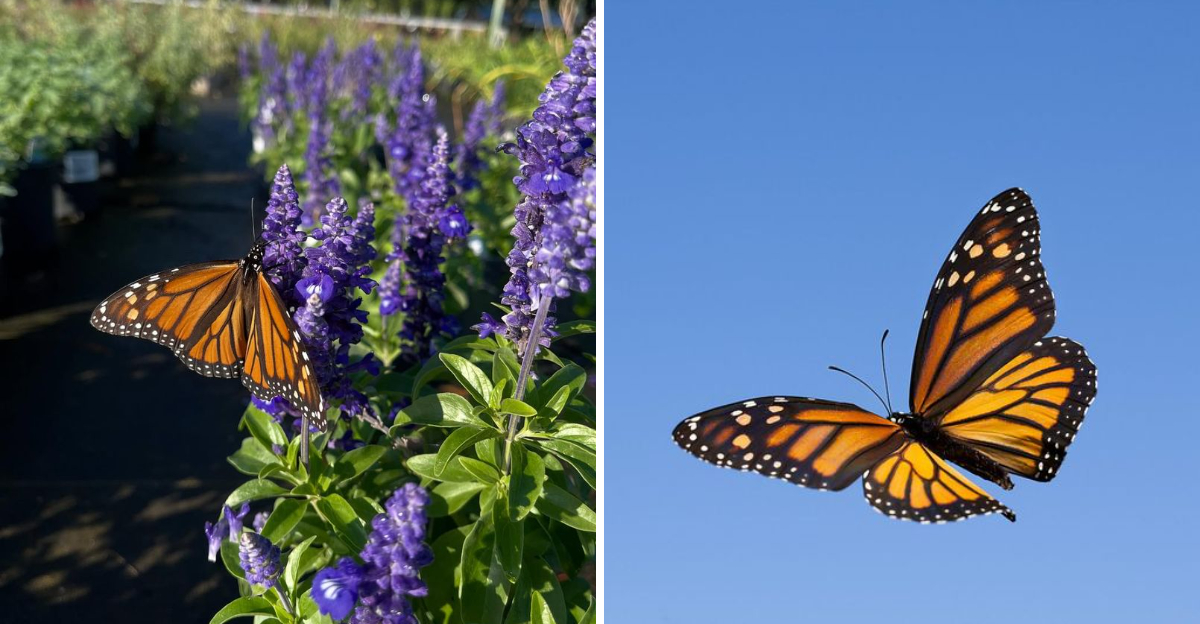
Seeing a monarch butterfly in your Texas yard in August carries a particular kind of weight. These are not the casual backyard butterfly encounters that happen routinely through the growing season.
August monarchs in Texas are part of something much larger, something that has been unfolding across the continent for millions of years, and a single butterfly passing through your yard connects you to one of the most remarkable natural phenomena on Earth.
Migration is beginning. The monarchs appearing in Texas yards in August are among the earliest southbound travelers of the annual migration, heading toward their overwintering grounds in the mountains of central Mexico.
Your yard, your garden, the flowers you’ve planted or left to grow, all of it becomes part of the corridor these butterflies depend on during one of the longest insect migrations in the world.
Beyond the scientific significance, monarchs have carried deep symbolic meaning across cultures and generations.
In many traditions, they are seen as messengers, symbols of transformation, and connections to loved ones who have passed. Here’s what seeing a monarch in your Texas yard in August really means.
1. Your Garden May Be Supporting A Late-Summer Monarch Generation
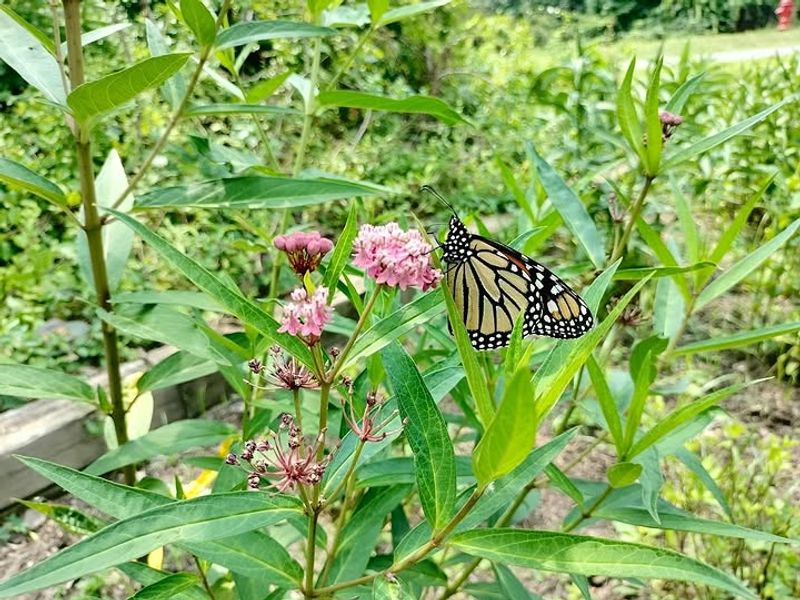
Not every monarch you see in August is passing through on a long journey south. Some of them were actually born nearby, possibly even in your own neighborhood.
Monarchs can reproduce in Texas during late summer and early fall when suitable milkweed is still available. That means an August visitor could be a freshly emerged adult or a female actively searching for a place to lay her eggs.
Female monarchs are very picky about where they deposit their eggs. They will only lay on milkweed plants because that is the only food monarch caterpillars can eat.
If you watch a butterfly closely and notice her landing repeatedly, curling toward leaves, or touching the underside of stems with the tip of her abdomen, she may be checking your milkweed for quality and freshness.
Locally produced monarchs are an exciting sign that your garden is doing real conservation work. You are not just offering a snack stop.
You are supporting an entire life cycle. Planting native Texas milkweed species like Antelope Horns or Green-flowered Milkweed gives butterflies the best chance to reproduce successfully.
Avoid tropical milkweed if possible, since it can confuse migration signals in warm climates. Keep your milkweed healthy, water it regularly during dry spells, and resist the urge to cut it back too early in the season.
A thriving patch of milkweed in your yard can produce multiple generations of monarchs before the big fall migration gets fully underway. That is a pretty powerful contribution from a single backyard garden.
2. It May Be An Early Traveler, But Peak Texas Migration Is Still Ahead
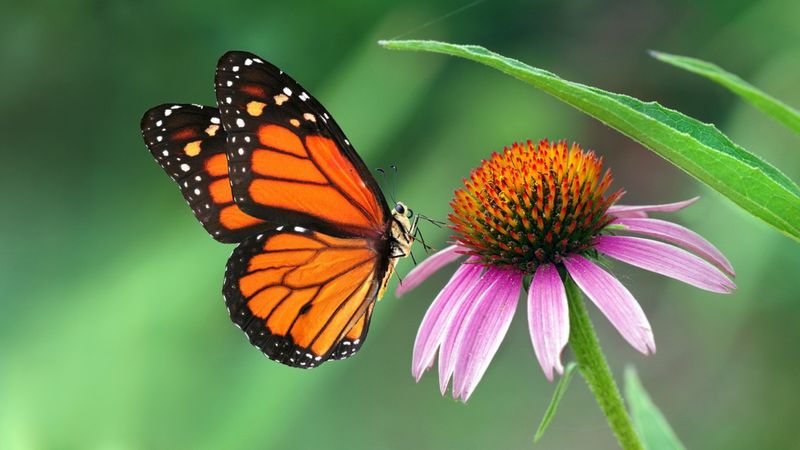
August monarchs can feel like a surprise, but they are actually right on schedule. The migratory generation of monarchs begins developing in late summer, and some individuals start moving south earlier than others.
Seeing one in your yard in August simply means you are catching one of the early movers before the main wave arrives.
Your Texas Garden Changes Every Week. Your Plan Should Too.
Gardening in Texas changes quickly throughout the season. Every Friday you’ll receive a simple weekly plan showing exactly what to plant, prune, fertilize, harvest, and protect so you never miss the right timing.
Texas usually experiences its largest fall concentrations of monarchs later in the season. Central Texas tends to see peak numbers from late September through October.
Along the Gulf Coast, the biggest groups often pass through even later, sometimes into November. So if you are excited about your August sighting, just wait. The best is still coming.
Fun fact: the monarchs that make the full migration to Mexico are known as the “super generation.” They live much longer than summer monarchs, sometimes up to eight or nine months, compared to just a few weeks for earlier generations.
These super-generation butterflies are triggered by shorter days and cooler temperatures to stop reproducing and focus entirely on flying south.
They are biologically built for the journey in a way that earlier summer monarchs simply are not. Watching one land in your yard in August means you might be looking at a butterfly that will eventually travel over 2,000 miles to reach a mountain forest in Mexico.
That is an almost unbelievable feat for an insect that weighs less than a paper clip. Keeping your garden stocked with nectar-rich flowers now gives these early travelers the fuel they need to keep moving in the right direction.
3. Your Flowers Are Providing Valuable Fuel
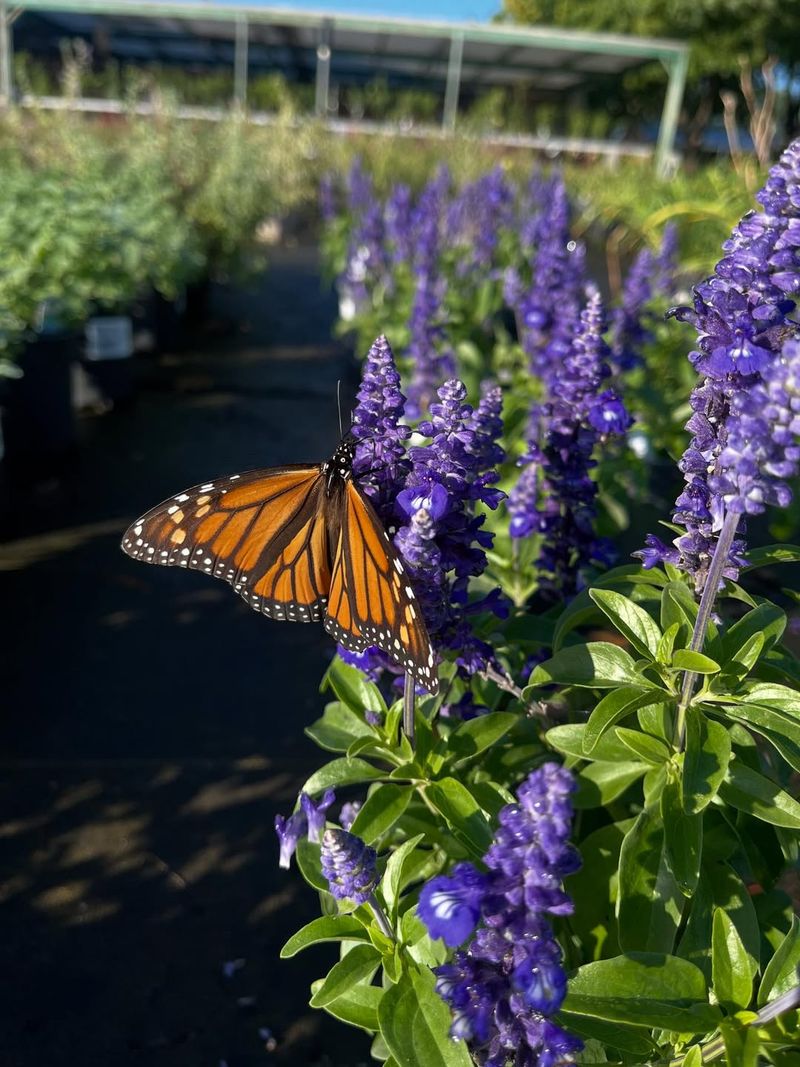
Every flap of a monarch’s wings burns energy. Adult monarchs drink nectar to power both their daily activity and the long-distance flying ahead of them.
When a monarch keeps coming back to your yard, it is not being sentimental. It is being smart.
Your flowers are producing enough nectar to make your garden worth visiting again and again.
Late-blooming flowers are especially important in August because many spring and early summer plants have already finished producing nectar.
Plants like Gregg’s Mistflower, Mealy Blue Sage, Goldenrod, and Zexmenia are excellent Texas native choices that bloom well into the fall.
These plants are not just pretty. They are like high-energy snack stations for butterflies fueling up for one of nature’s longest journeys.
Repeated visits from the same monarch or multiple monarchs signal that your yard has earned a reputation as a reliable food source. Butterflies have simple but effective ways of remembering productive spots.
They will return to places where they found good nectar before. Planting flowers in clusters rather than single plants makes your garden even more efficient, since butterflies burn less energy moving between blooms when they are grouped together.
Avoid pesticides near flowering plants, since even low-level chemical exposure can harm butterflies and reduce their ability to navigate. Choosing organic fertilizers and skipping the bug sprays near your nectar garden makes a real difference.
A yard full of healthy, blooming native plants in August is genuinely one of the best gifts you can offer a monarch on its way to Mexico.
4. Milkweed May Encourage The Butterfly To Inspect Your Plants
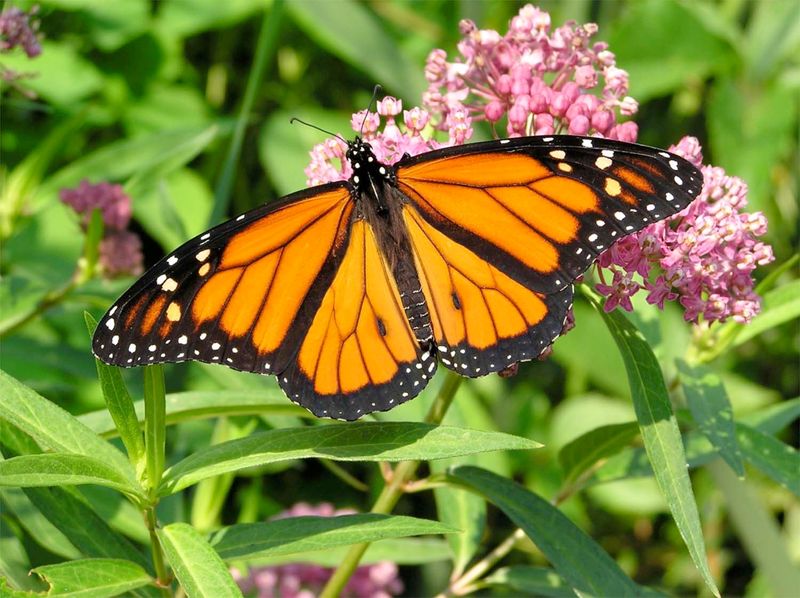
Milkweed is the one plant that monarchs absolutely cannot live without. Monarch caterpillars can only eat milkweeds and a few closely related milkweed vines. Without milkweed, there are no caterpillars. Without caterpillars, there are no butterflies.
So when a monarch lands on your milkweed and starts poking around, something important may be happening.
A female checking your milkweed for egg laying can look a lot like a butterfly that is simply resting or feeding. The key behaviors to watch for are repeated landings on the same plant, hovering close to leaves, and curling the tip of her abdomen down to touch the leaf surface.
That last action is her using special sensors in her feet and abdomen to taste the plant and decide if it is healthy enough for her eggs.
Not all milkweed is equal in a monarch’s eyes. She prefers plants that are healthy, well-watered, and free from pest damage or mold.
Older, dried-out milkweed is less likely to attract egg laying. If you want to encourage monarchs to reproduce in your yard, keep your milkweed plants vigorous and green.
Water them during dry stretches and remove any aphid infestations gently by hand or with a light spray of water. Avoid using chemical pesticides anywhere near the plants.
Even well-meaning sprays can coat leaves with residue that harms tiny eggs or newly hatched caterpillars.
Growing several milkweed plants rather than just one also increases the chances that a passing female will stop, inspect, and ultimately choose your yard as a nursery for the next generation of monarchs.
5. An Irrigated Yard Can Become A Refuge During August Drought
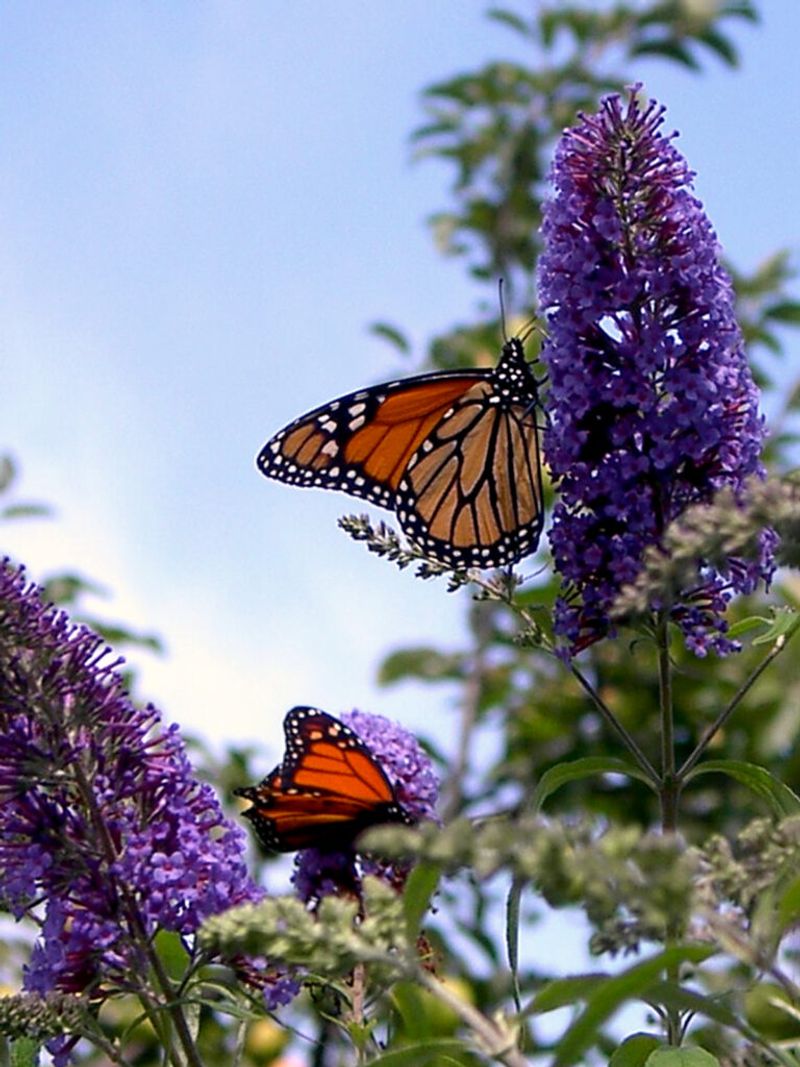
August in Texas is no joke. Temperatures regularly climb above 100 degrees Fahrenheit, and drought conditions can dry out fields, roadsides, and natural areas very quickly.
When the surrounding landscape turns brown and crispy, wild nectar sources disappear almost entirely. That is when a well-watered backyard garden becomes something much more important than just a hobby.
A yard with blooming plants and a reliable water source stands out like a green island in a sea of dry grass. Monarchs and other pollinators actively seek out these pockets of moisture and food.
Your irrigated garden might be the only reliable nectar stop for miles in any direction during a bad Texas drought. That makes even a small yard genuinely significant for butterfly survival during the harshest weeks of summer.
You do not need a huge property to make a difference. Even a few large containers of native flowering plants on a patio or balcony can attract and feed butterflies during extreme heat.
Adding a shallow dish of fresh water with a few pebbles for landing spots gives butterflies a place to drink without the risk of falling in. Changing the water every day or two prevents mosquitoes from breeding.
Planting drought-tolerant native flowers like Black-eyed Susan, Turk’s Cap, and Flame Acanthus means your garden can keep blooming even when water is limited. These plants are adapted to Texas summers and keep producing nectar even under stress.
Your thoughtful choices in the garden directly support monarch survival during the most challenging weeks of the year, turning your yard into a genuine wildlife refuge when it matters most.
6. Your Property May Be Functioning As Part Of The Texas Migration Corridor
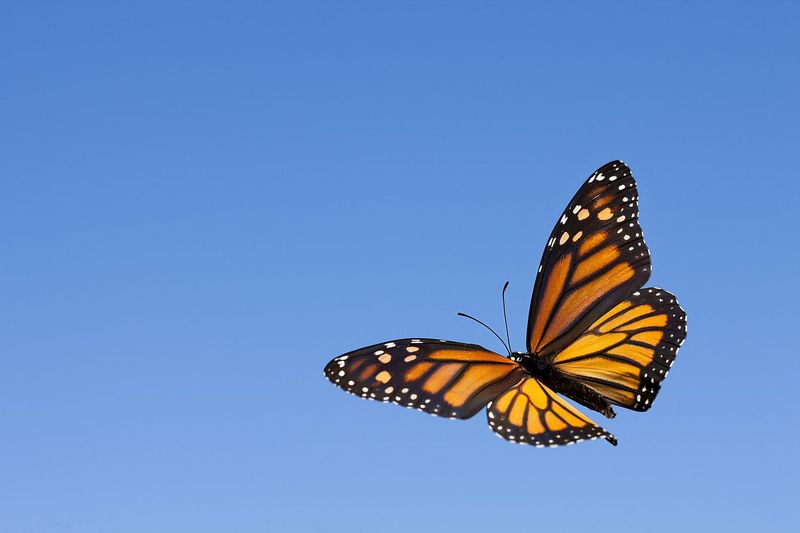
Texas holds a special place in the monarch migration story. The state connects the vast northern breeding range of monarchs, which stretches across the United States and Canada, with their wintering grounds in the oyamel fir forests of central Mexico.
Every monarch that successfully reaches Mexico has to travel through Texas. That means your yard is not just a local garden. It is a potential waystation on one of the most famous wildlife journeys on Earth.
The Central Flyway runs right through the heart of Texas, and millions of monarchs funnel through this corridor each fall. Cities like Dallas, Austin, San Antonio, and Corpus Christi sit directly along this path.
Gardens in these areas that offer pesticide-free nectar plants, native milkweeds, and sheltered resting spots can meaningfully support both breeding adults and southbound migrants making their way toward the border.
Creating a certified monarch waystation through organizations like Monarch Watch is one way to formalize your garden’s role in the migration. The process involves planting the right native milkweeds and nectar plants and committing to pesticide-free practices.
Registration helps researchers track where healthy habitat exists along the migration route and identify gaps where more gardens are needed. Sharing your sightings through citizen science platforms like Journey North or iNaturalist also adds real scientific value.
Your observations help researchers understand how migration timing shifts from year to year.
The simple act of planting a few native flowers and skipping the pesticide spray connects your Texas yard to a conservation effort that spans two countries and involves hundreds of millions of butterflies each year. That is a remarkable thing to be part of.