The Arizona Watering Mistake That Causes Pomegranates To Split
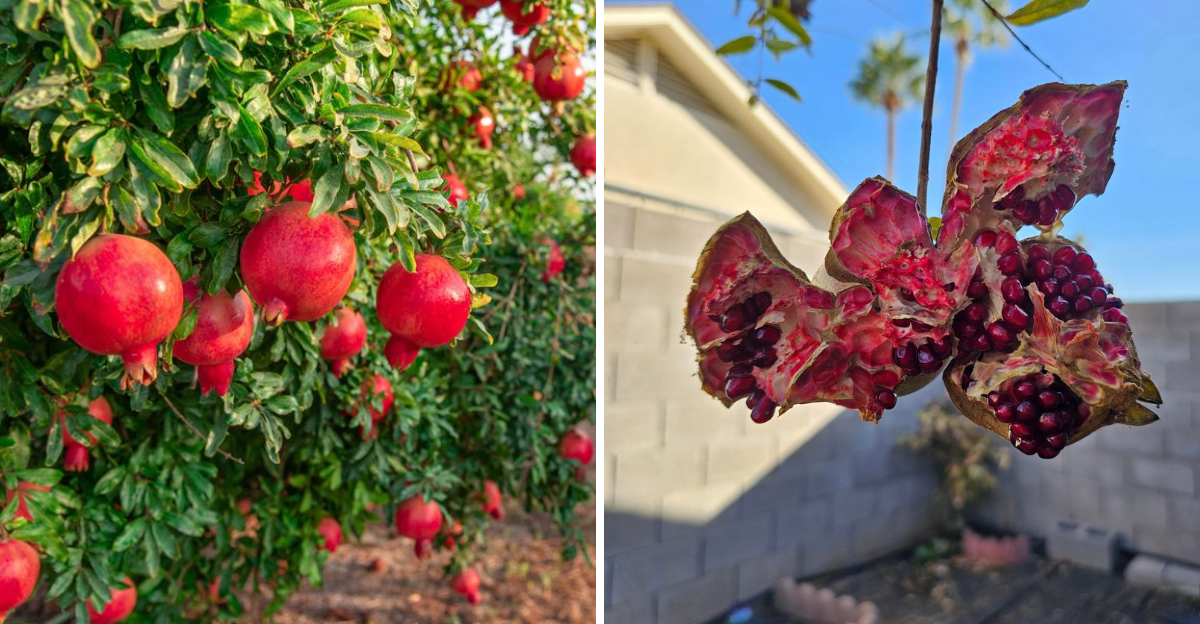
A nearly ripe pomegranate can look perfect one day and split open the next.
That is what makes this problem so frustrating for Arizona gardeners. You wait through heat, wind, dry soil, careful pruning, and months of fruit development, only to find a deep opening across the rind right when harvest feels close.
The tree may still be healthy.
Pomegranates are famously tough in dry climates, but the fruit is much more sensitive than the tree itself. A sudden rush of water after a long dry stretch can make the juicy interior swell faster than the outer rind can stretch.
That pressure has to go somewhere.
In Arizona, the pattern often shows up during late summer and monsoon season, when irrigation, rain, heat, and ripening fruit all collide at the worst possible time.
So what watering mistake makes pomegranates split?
The biggest risk is letting the soil get too dry, then giving the tree a heavy soak all at once. Steadier moisture, better timer adjustments, mulch, drainage checks, and careful harvest timing can help keep more fruit intact.
Sudden Heavy Water Is The Mistake
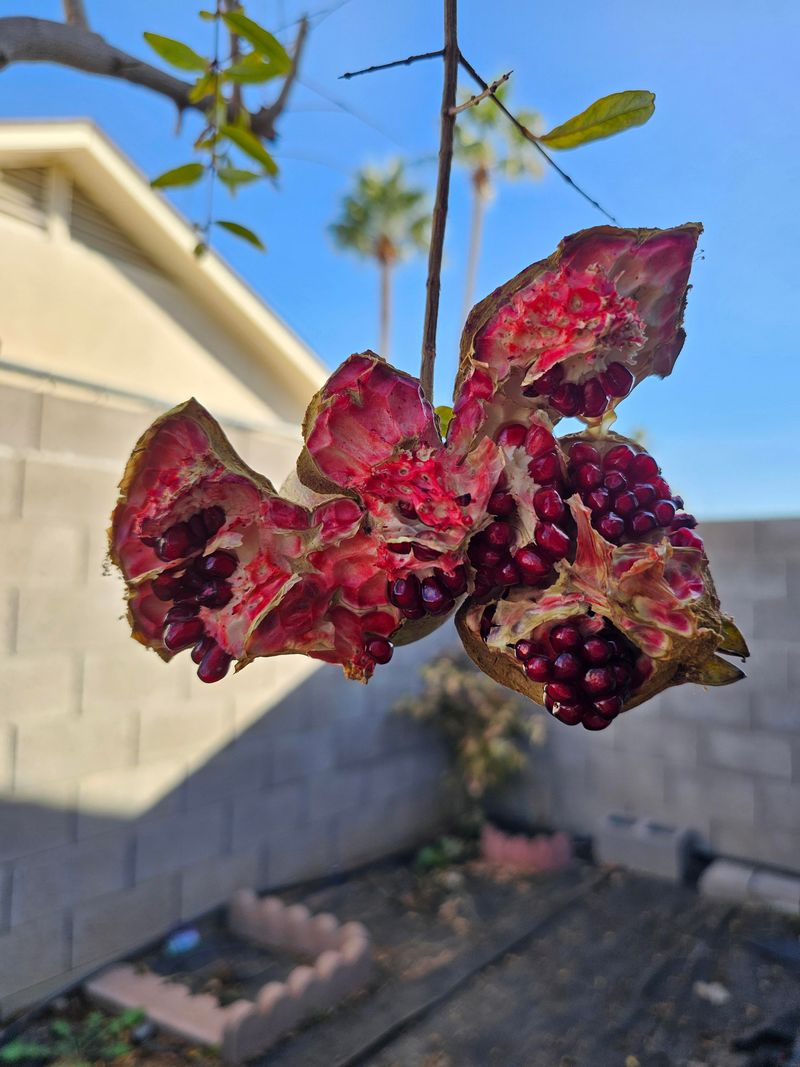
A big soak after a dry stretch can push fruit past its limit.
It feels helpful at first. The tree looks thirsty, the weather has been hot, and running the drip system longer seems like the responsible thing to do.
The fruit may disagree. When dry soil suddenly becomes very wet, the pomegranate can take up water quickly, and the juicy arils inside the fruit begin expanding.
The rind may not stretch fast enough. As pomegranates mature, the outer skin becomes firmer and less flexible.
That mismatch creates pressure. The inside swells, the outside resists, and the fruit may split along a weak point.
Water is not the only factor. Variety, ripeness, temperature swings, humidity, monsoon storms, and fruit maturity can all influence splitting.
Still, abrupt irrigation changes are a major risk. The more dramatic the swing from dry to soaked, the more stress the fruit has to handle.
Avoid panic watering. A tree that has been dry for too long should be brought back toward steady moisture with care, not shocked with one extra-long irrigation session.
Check the soil before adding water. The surface may look dry while deeper soil still holds moisture.
Keep notes on run times. A simple record of irrigation days, weather, and splitting problems can reveal patterns by the end of the season.
The goal is not to flood a thirsty tree.
It is to keep the root zone from bouncing between drought stress and sudden overload.
Dry Soil Sets The Trap
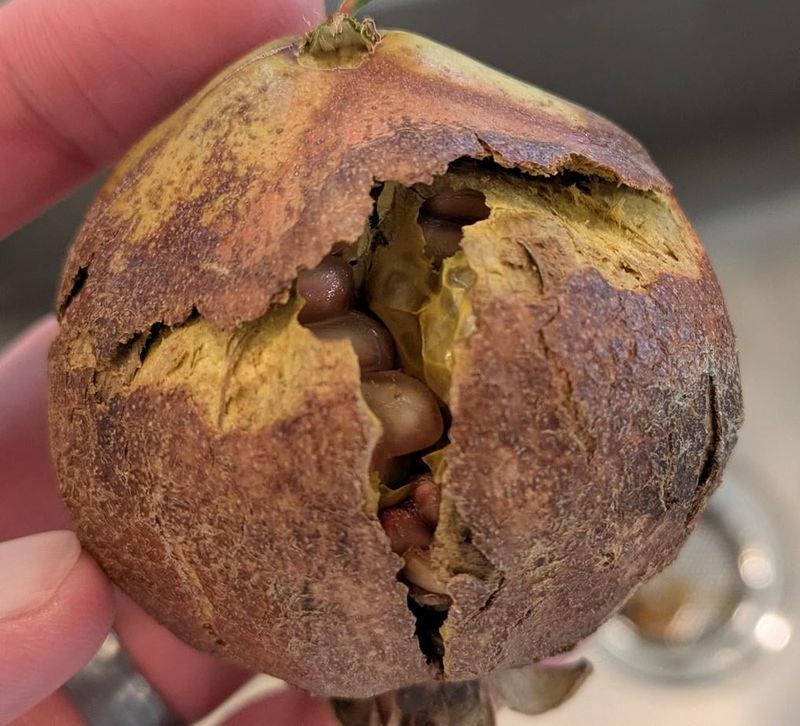
The split often begins before the water arrives.
A pomegranate sitting in dry soil for too long may slow fruit growth while the rind continues firming. That fruit can look fine from the outside, but it is already set up for trouble when moisture returns too quickly.
Arizona surface soil can fool you. The top inch may be dusty and hot while deeper layers tell a different story.
Your Arizona Garden Changes Every Week. Your Plan Should Too.
Gardening in Arizona changes quickly throughout the season. Every Friday you’ll receive a simple weekly plan showing exactly what to plant, prune, fertilize, harvest, and protect so you never miss the right timing.
Roots do not live only at the surface. A quick glance at dry mulch or crusted soil is not enough to judge what the tree needs.
Check deeper before watering. Push a soil probe, long screwdriver, or moisture meter several inches into the root zone to see what is actually happening below.
Long dry spells stiffen the situation. When moisture stays low, the fruit’s outer rind may become less able to flex with sudden internal growth.
A fast refill creates pressure. Water from a long drip cycle or monsoon storm can move into the plant quickly after a dry period.
Soil type changes the risk. Sandy soil drains fast and may dry sooner, while clay or caliche-influenced soil can create uneven wet and dry pockets.
Uneven roots mean uneven uptake. Part of the root zone may be dry while another part stays damp, confusing the watering picture.
Mulch can hide the truth. Pull it back occasionally and feel the soil below instead of assuming the cool top layer means the root zone is fine.
Dry soil is not always obvious.
That is why steady checking matters more than watering by habit or by how the surface looks.
Monsoon Rain Adds Pressure
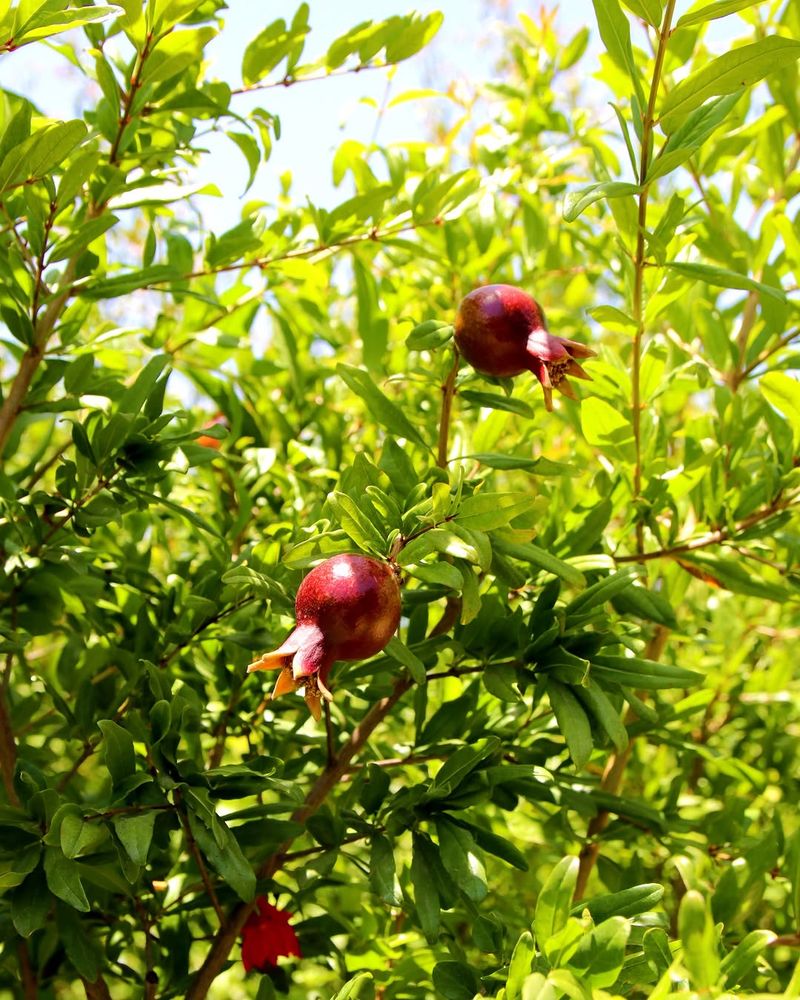
Arizona monsoon storms can turn good watering into too much water fast.
A drip system may run in the morning, then a storm can roll through by afternoon and soak the same root zone again. That sudden double dose is exactly the kind of moisture swing that raises splitting risk.
Monsoon timing matters. The season overlaps with the period when many pomegranates are sizing up and moving toward maturity.
That makes rain both helpful and risky. A dry tree appreciates moisture, but developing fruit may not handle a rapid change well.
Use a rain gauge near the tree. Guessing rainfall from the patio or driveway rarely tells you how much water actually reached the planting area.
Skip irrigation after real rain. When the root zone has been soaked by a storm, the next scheduled drip cycle may need to be canceled or shortened.
Check the soil the next day. Some storms drop heavy water quickly, but wind, slope, mulch, and soil texture affect how much actually stays near the roots.
Drainage becomes important. Water that pools around the tree after storms can keep the soil too wet and extend the stress.
Watch low spots. Pomegranates planted where runoff collects may face stronger moisture swings than trees on slightly raised ground.
Adjust quickly. A rigid timer cannot respond to monsoon weather unless you make the change.
Storms are part of Arizona gardening.
The mistake is pretending the irrigation schedule should stay the same after the sky has already watered for you.
Drip Timers Need Adjusting
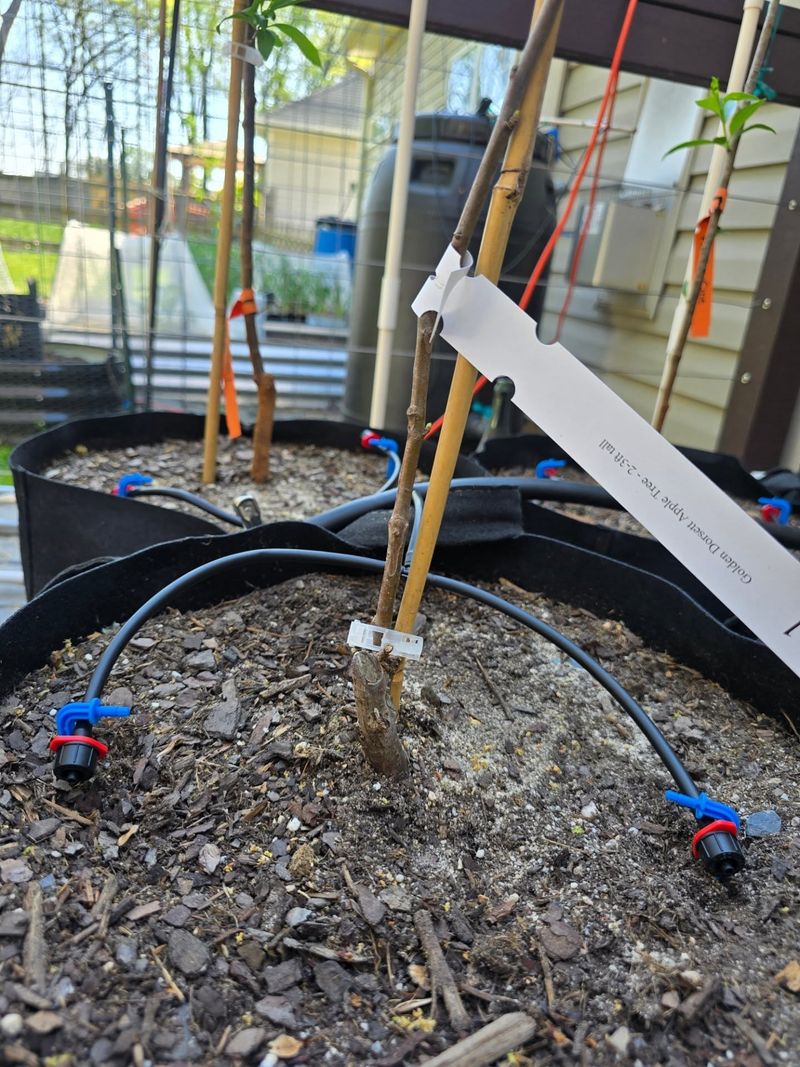
A drip timer set once in spring can become a problem by late summer.
Pomegranate water needs change through the season. Spring bloom, early fruit set, peak summer heat, monsoon weather, and late-season ripening do not all call for the same irrigation pattern.
Timers do not know the weather. They keep running unless you adjust them.
That is where splitting risk can build. A schedule that was slightly too dry during a heat wave may be followed by a long run time that suddenly pushes too much moisture into the root zone.
Check the system monthly. Walk the drip line, look for clogged emitters, and confirm that water is reaching the area where roots are active.
Clogs create hidden dry zones. One blocked emitter can leave part of the root system dry while another part gets regular moisture.
Emitter placement changes with tree age. A young pomegranate may need water close to the trunk, but an older tree has roots farther out.
Move water outward as the tree grows. Emitters clustered too close to the trunk may miss much of the active root zone.
Watch buried lines. Mulch, soil movement, and yard work can shift emitters or hide problems.
Use seasonal adjustment features when available. Many controllers allow percentage changes, which makes it easier to respond to heat, rain, and cooler weather.
Do not let the timer become the gardener.
It is only a tool, and pomegranates split less often when that tool gets checked, adjusted, and corrected through the season.
Fruit Swells Faster Than Rind
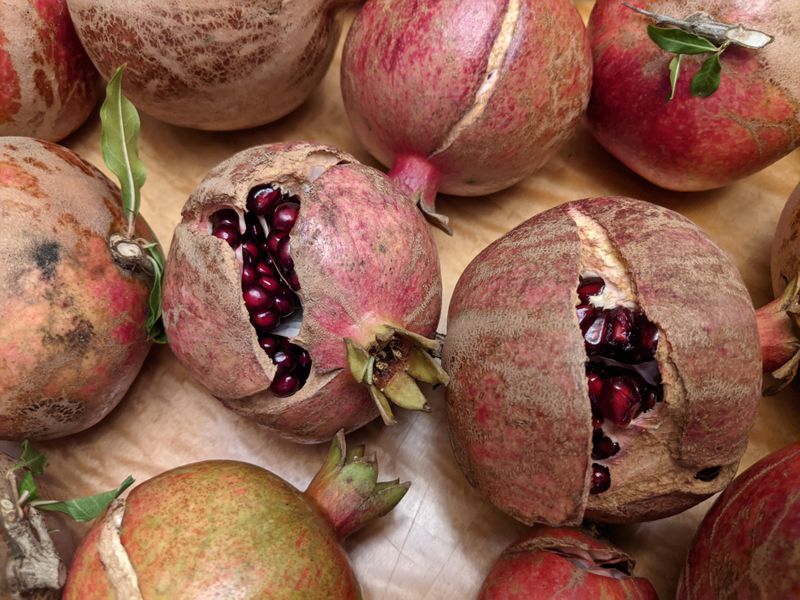
A pomegranate split is a pressure problem.
Inside the fruit, the arils are packed tightly with juice. As harvest approaches, that interior continues filling while the rind becomes firmer and less forgiving.
Young fruit has more flexibility. Earlier in development, the rind can often stretch more easily as the fruit grows.
Mature fruit is more vulnerable. Near ripeness, the skin has less room to adjust to sudden changes in internal pressure.
Water speeds the swelling. After dry soil receives a heavy soak, the interior tissue can take up moisture quickly.
The rind has to keep up. When it cannot, the fruit opens at a weak point.
Variety matters. Some pomegranates have thicker or tougher rinds that resist splitting better, while softer-rind types may be more sensitive.
Ripeness matters too. Fruit left hanging past its best harvest window can split more easily, even when watering has been fairly steady.
Heat can add stress. High temperatures may make moisture movement and fruit expansion more difficult to manage.
Large fruit may split first. Bigger fruit has more internal volume and may show pressure problems sooner than smaller fruit on the same tree.
Do not judge by color alone. Red skin can be one clue, but size, sound, rind texture, calendar timing, and variety all matter.
The fruit is not being dramatic.
It is simply reaching the point where a sudden internal swell can overpower the rind.
Deep Consistency Prevents Splitting
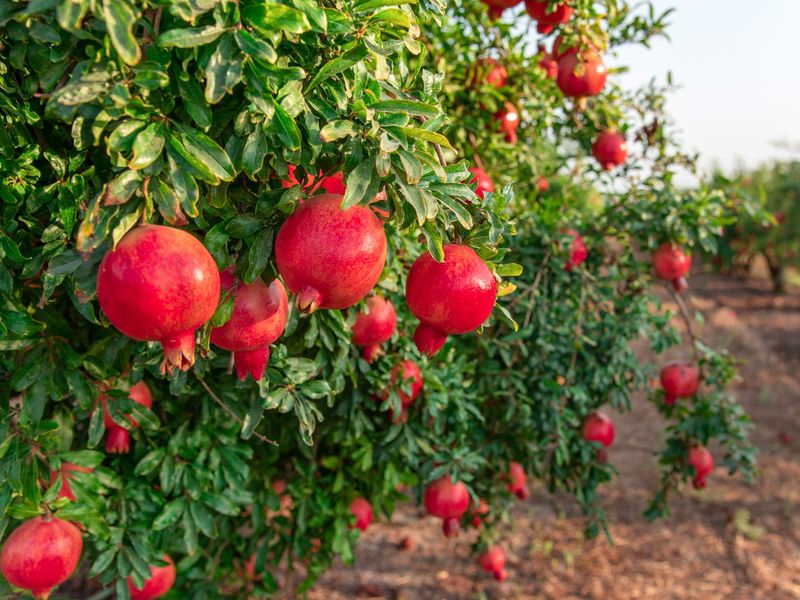
Steady moisture is safer than dramatic correction.
Pomegranates do not need soggy soil, and they do not need shallow daily sprinkles. They need a root zone that stays reasonably consistent through heat, fruit development, and storm season.
Deep watering builds better roots. Moisture that reaches below the surface encourages roots to grow downward into a more stable zone.
Shallow watering creates shallow roots. Those roots dry quickly and react more strongly to every hot afternoon and sudden rain.
Match watering to soil type. Sandy soil may need shorter, more frequent cycles, while clay soil needs slower watering that has time to soak in.
Avoid runoff. Water that races across the surface does not help the root zone and can leave the tree dry despite a long irrigation run.
Use cycle watering when needed. Splitting one long run into shorter cycles can help heavy soil absorb water without pooling.
Check depth after irrigation. Dig a small test hole or use a probe to see whether water reached the active root area.
Do not chase wilt with overwatering. Afternoon leaf softness during extreme heat is not always a sign that the whole root zone is dry.
Consistency does not mean perfection. Splitting can still happen during monsoon storms or with sensitive varieties.
The goal is risk reduction.
A tree with steady deep moisture is less likely to face the sudden shock that turns nearly ripe fruit into split fruit.