Mistakes California Gardeners Make With Crape Myrtles Every Single Summer
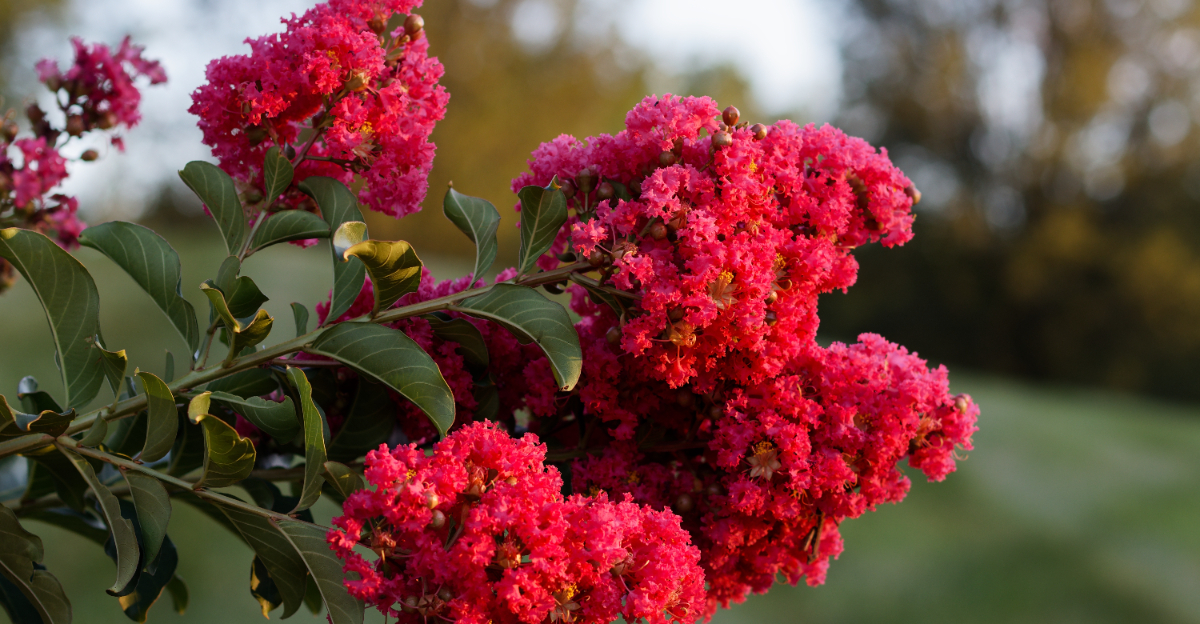
Crape myrtles can handle a California summer with surprising confidence, yet a few common habits can leave them sparse or stressed by August. The tree may survive the season, but that does not mean it looks its best.
Most trouble starts with care that seems helpful. An enthusiastic trim can weaken the natural shape.
Poor watering can cause another setback below the soil. Even a small timing error may affect the next flush of flowers.
The frustrating part is how slowly some damage appears. A mistake made early in summer may not become obvious until the blooms fade or the leaves lose their healthy look.
Sneaky little consequences.
Crape myrtles are not especially difficult, but they do respond badly to rough treatment. Once the usual summer mistakes disappear, these trees can return to the colorful display that made them so popular in the first place.
1. Pruning Them Like Shrubs Every Summer
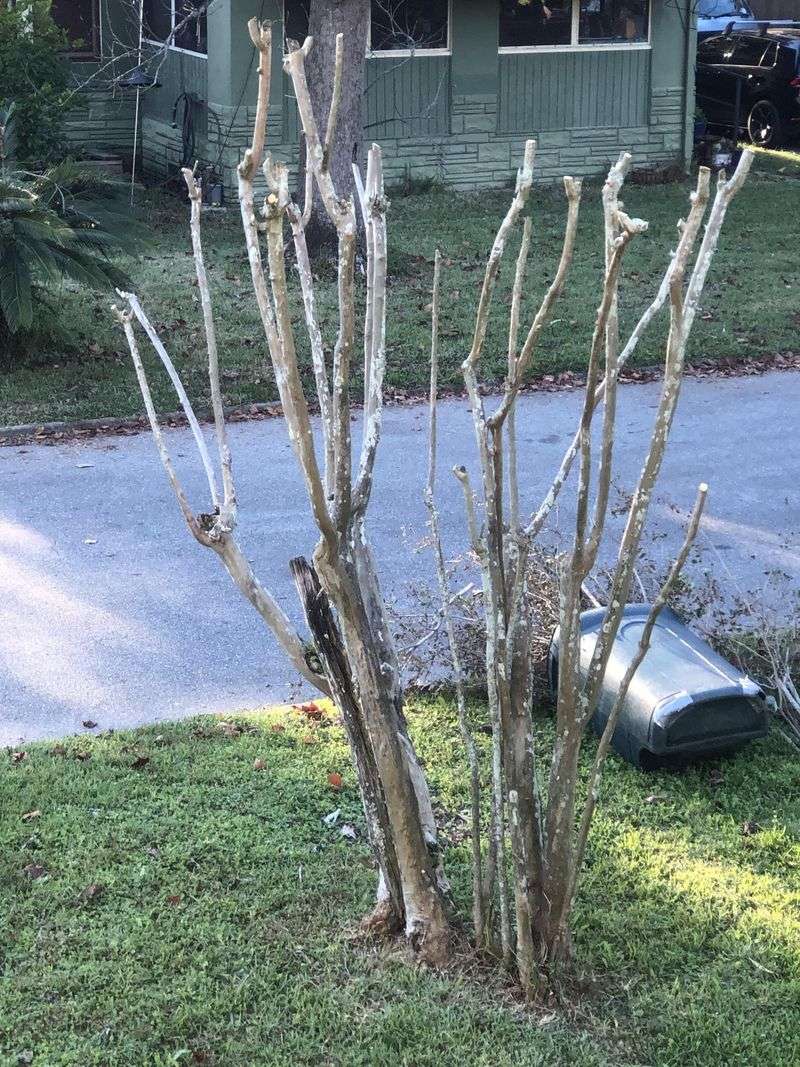
Few mistakes are more damaging to crape myrtles than what landscapers have nicknamed “crape topping.”
This brutal practice involves chopping the entire canopy down to ugly, thick stubs every single summer.
It has become so common in California that many gardeners assume it is the correct way to prune these trees.
Topping crape myrtles does not help them bloom better. It actually does the opposite.
The tree responds by sending up a burst of weak, whippy shoots from each cut stub. Those new shoots are thin and floppy, and they often cannot support the weight of the flower clusters that follow.
Over time, the stubs grow into swollen, knobby joints that look unnatural and are more vulnerable to pests and disease. The tree wastes energy regrowing all that removed wood instead of putting energy into roots and blooms.
Proper pruning means removing only crossing branches, withered wood, and small twiggy growth from the interior. A light trim at the tips is acceptable if needed.
The natural shape of a crape myrtle is graceful and vase-like. Preserving that shape keeps the tree healthier and more beautiful for decades.
If you have been topping yours, try stepping back this summer and letting the tree grow on its own terms. You may be amazed at the difference.
2. Cutting Off New Flowering Growth
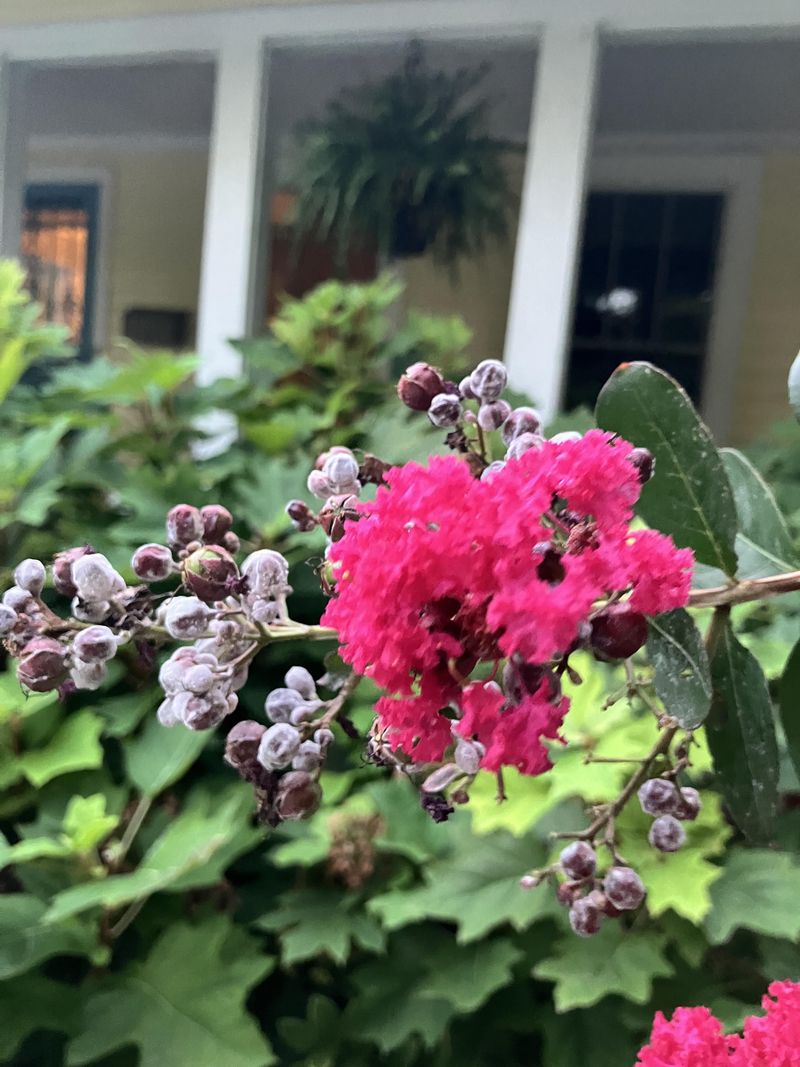
Timing really matters when it comes to pruning crape myrtles, and cutting at the wrong moment can cost you an entire season of blooms. New flowering growth begins forming on the tips of branches in late spring.
Many gardeners do not realize that when they prune in early summer, they are snipping off the very buds that would have opened into those beautiful flower clusters.
Some folks prune in June thinking they are tidying up the tree before the big bloom. But by then, the flower buds are already developing.
Removing those tips means the tree has to start over, and the blooms either come very late or skip that branch entirely for the season.
The best window for any cleanup pruning is late winter or very early spring, before new growth appears.
Your California Garden Changes Every Week. Your Plan Should Too.
Gardening in California changes quickly throughout the season. Every Friday you’ll receive a simple weekly plan showing exactly what to plant, prune, fertilize, harvest, and protect so you never miss the right timing.
At that point, you can safely remove withered wood, crossing branches, and last year’s seed pods without touching any future flowers.
If you want to encourage a second round of blooms later in summer, deadheading spent flowers right after they fade is a smart move. Snip just below the old flower cluster, and the tree will often push out another flush of color within a few weeks.
Knowing when to cut and when to leave things alone makes a huge difference in how well your trees perform each season.
3. Overwatering Once Trees Are Established
One of the biggest myths about summer gardening in our state is that all trees need frequent watering when temperatures climb.
Crape myrtles are native to parts of Asia where dry summers are normal, so they are built to handle heat and drought once their root systems are well established.
Overwatering is actually one of the fastest ways to stress these trees.
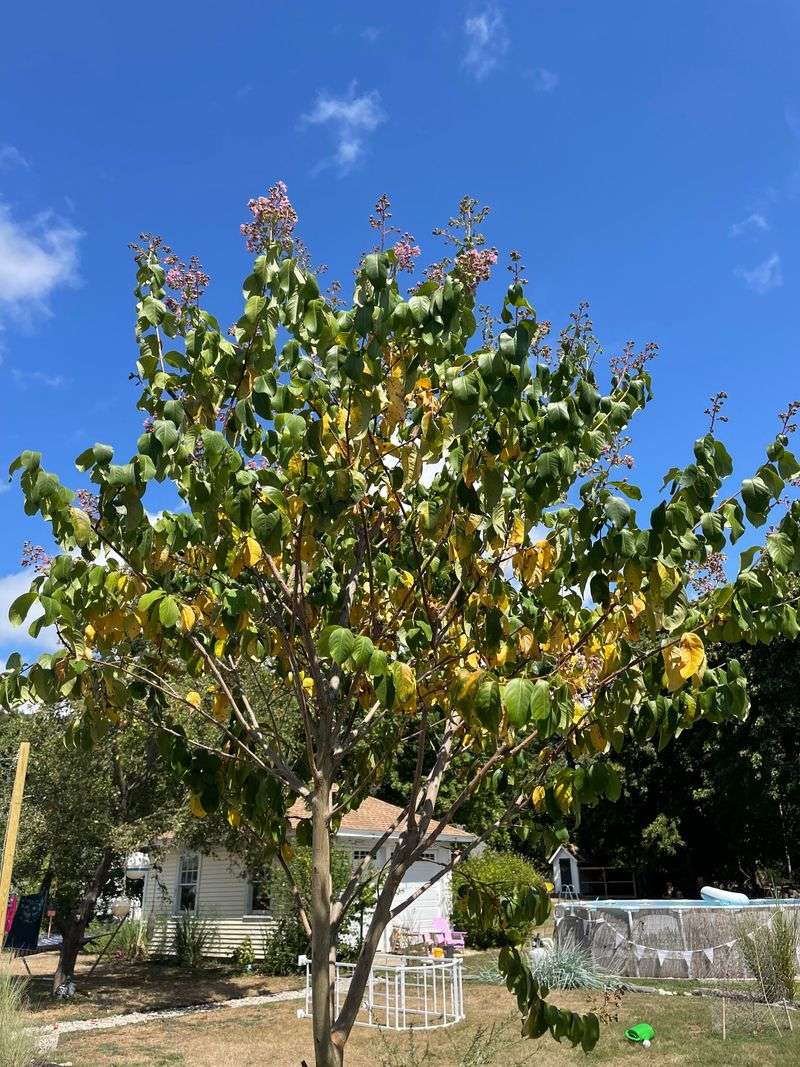
When roots sit in constantly wet soil, they struggle to get the oxygen they need. This leads to root rot, yellowing leaves, and a tree that looks sick even when the weather is perfect for blooming.
Many gardeners mistake these symptoms for drought stress and water even more, making the problem worse.
A mature crape myrtle, typically one that has been in the ground for two or more years, usually needs watering only once every one to two weeks during hot spells. Sandy soils may need slightly more frequent watering, while heavier clay soils hold moisture longer.
The best test is to push a finger or a wooden dowel about four inches into the soil near the tree. If it comes out damp, hold off on watering.
Deep, infrequent watering encourages roots to grow deeper into the soil, which makes the tree more self-sufficient and resilient during our long, dry summers. Less really is more with established crape myrtles.
4. Letting Lawn Sprinklers Hit The Trunk
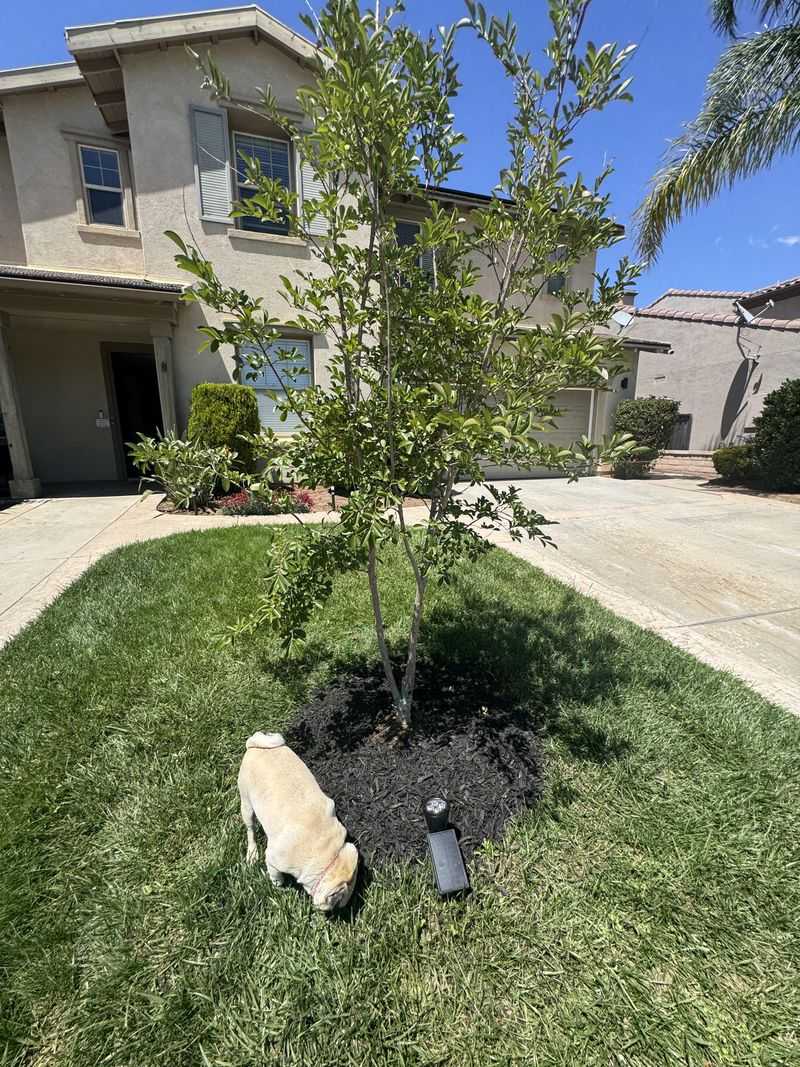
Sprinkler systems are set up to keep lawns green, but crape myrtles planted in or near turf areas often end up getting soaked in ways that hurt them.
When sprinkler heads spray water directly onto the trunk and root collar area, it creates a persistently damp environment that invites fungal problems and bark decay.
The bark of a crape myrtle is actually one of its most beautiful features. It peels naturally to reveal smooth, colorful layers underneath.
But constant moisture from sprinklers softens that bark and creates entry points for pathogens.
Over time, you may notice dark staining, cracking, or a soft, spongy feel near the base of the trunk, all signs that excess moisture is causing harm.
Beyond bark issues, lawn irrigation schedules are often far too frequent for crape myrtles. Turf grass may need water several times a week, but your crape myrtle definitely does not.
Being stuck in a lawn zone forces the tree to receive water on the lawn’s schedule, not its own.
The fix is to adjust sprinkler heads so they throw water away from the trunk, or to create a small mulched buffer zone around the base of the tree.
Keeping the root collar dry and protected helps the tree stay strong and structurally sound through every season.
5. Fertilizing For Leaves Instead Of Blooms
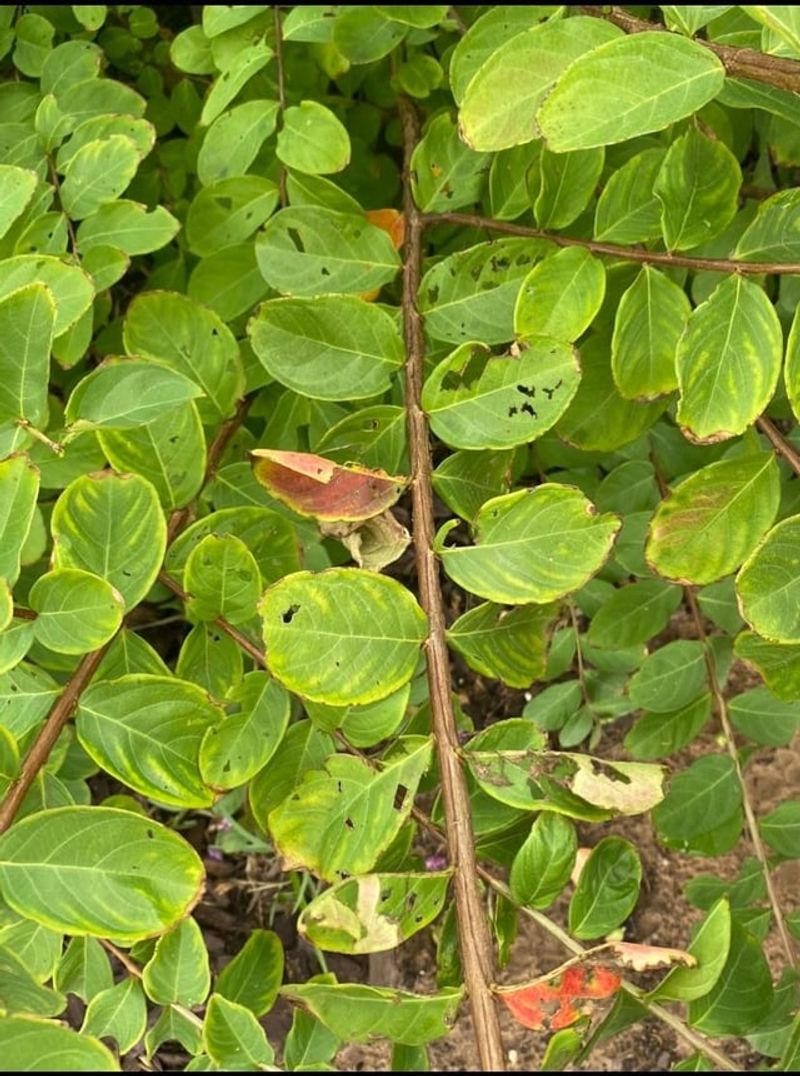
Walk into any garden center during spring and you will find rows of fertilizers promising lush, green growth.
The problem is that many of those products are loaded with nitrogen, which is great for lawns and leafy plants but not ideal for crape myrtles.
Feeding your trees a high-nitrogen fertilizer encourages them to push out lots of green leaves and very few flowers.
Crape myrtles bloom best when they are not overfed. Too much nitrogen signals the tree to keep growing vegetatively, which means energy goes into stems and foliage rather than flower production.
You end up with a big, leafy tree that barely blooms, which defeats the whole purpose of growing one of the most spectacular flowering trees in California.
If you want to fertilize, choose a product that is lower in nitrogen and higher in phosphorus, which supports root development and flower production.
A balanced slow-release fertilizer applied once in early spring is usually enough for most trees growing in decent soil.
Avoid fertilizing after midsummer, as late feeding can push out tender new growth that will not harden off before cooler fall temperatures arrive. In many yards across our state, crape myrtles growing in average soil do not need fertilizer at all.
Healthy soil, good drainage, and proper sunlight will support strong blooms on their own without any extra feeding.
6. Planting Them Where Airflow Is Poor
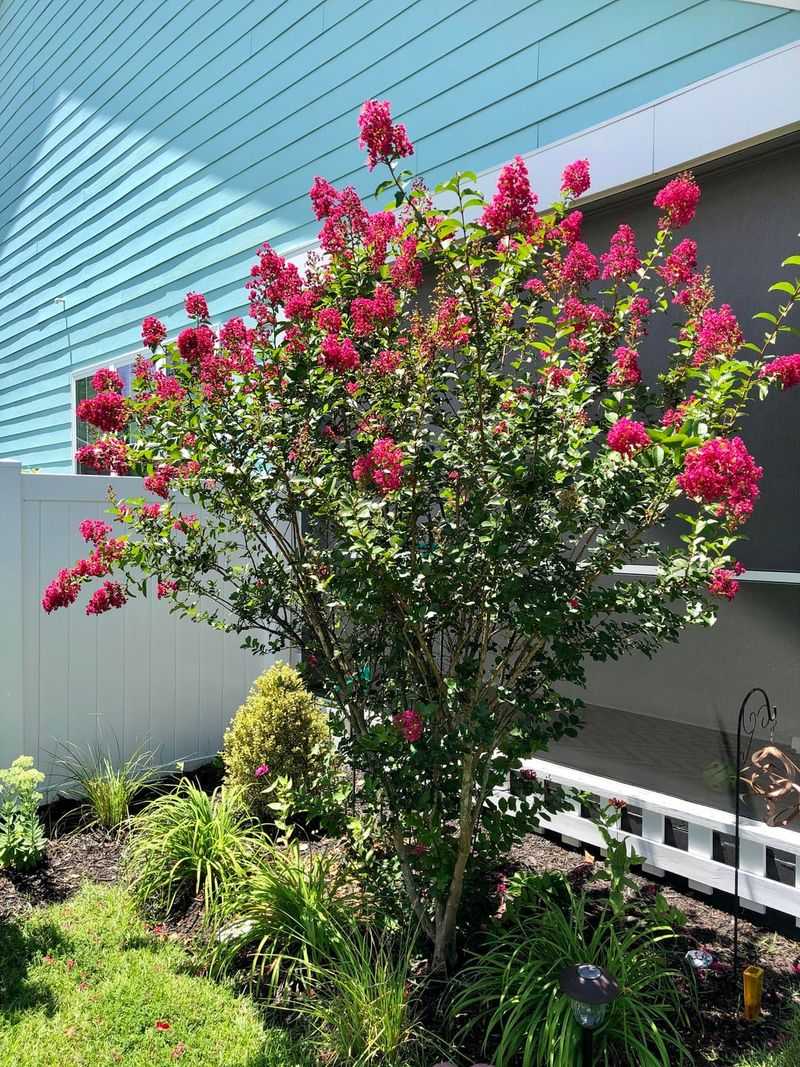
Crape myrtles love open spaces. They are at their best when air can move freely through and around their canopy.
Tucking one into a tight corner between walls, fences, or dense hedges might seem like a smart way to fill a gap in the landscape, but it often leads to a long list of problems that get worse every summer.
Poor airflow creates the perfect environment for fungal issues, especially powdery mildew, which coats leaves in a white dusty film.
When branches are crowded and humid air gets trapped around the foliage, the tree cannot dry out properly after morning dew or light rain.
Fungal spores spread quickly in those conditions, and once an outbreak starts, it can be tough to get under control.
Beyond disease, cramped planting locations also limit how well the tree can grow into its natural form.
Crape myrtles can reach heights of fifteen to thirty feet depending on the variety, and their root systems spread wide.
Planting too close to structures or other large plants forces the tree into an awkward shape and may eventually cause root conflicts.
Before planting, check the mature size listed on the plant tag and give your tree at least that much space on all sides.
Proper spacing is one of the simplest ways to set a crape myrtle up for long-term success in your yard.
7. Ignoring Powdery Mildew In Humid Spots
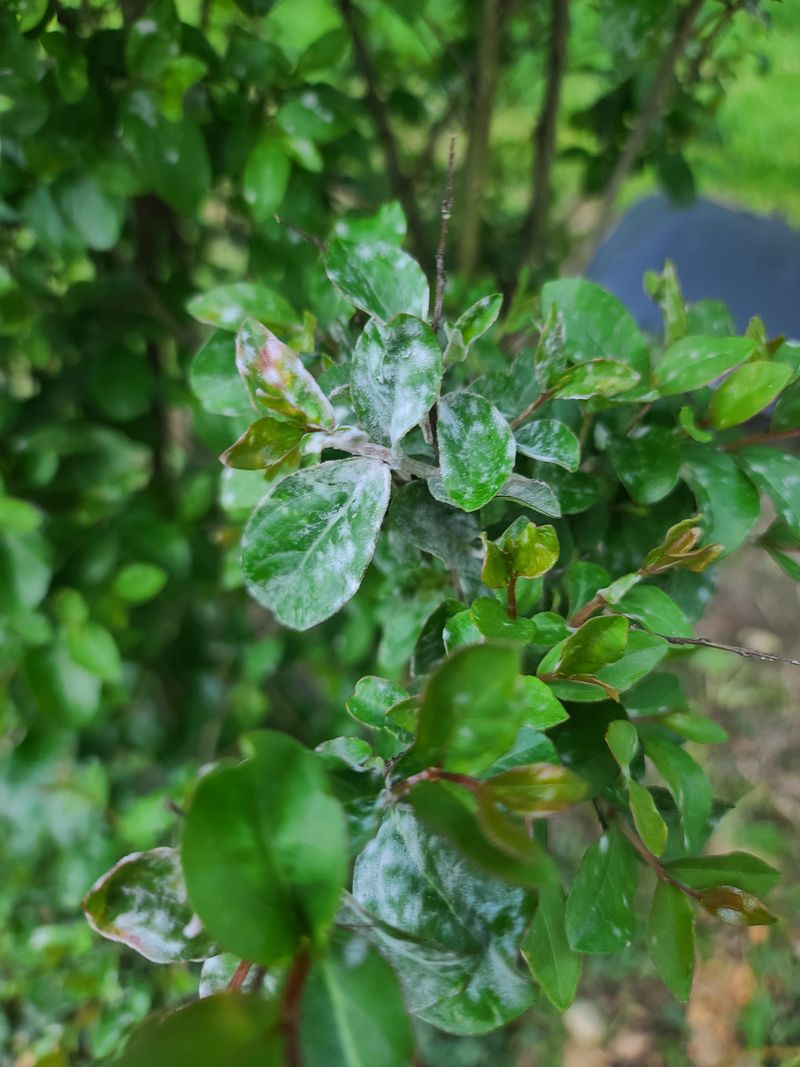
Powdery mildew is one of the most recognizable plant diseases out there, and crape myrtles are unfortunately susceptible to it, especially in coastal areas, shaded yards, or spots with poor air circulation.
The disease shows up as a white or grayish powdery coating on leaves, buds, and new shoots. Many gardeners spot it and brush it off as dust or pollen, which is a mistake.
Left untreated, powdery mildew spreads fast. It weakens the affected leaves and can prevent flower buds from opening properly.
In severe cases, new shoots become distorted and curled, and the tree looks stressed all summer long. The fungus thrives in warm days combined with cool, humid nights, a weather pattern that is very common along the coast and in northern regions of our state.
The good news is that powdery mildew is manageable when caught early. Neem oil, potassium bicarbonate sprays, or even a diluted baking soda solution can knock it back effectively.
Spray in the early morning so leaves dry before nightfall. Removing heavily infected leaves and improving airflow around the tree also helps prevent the fungus from spreading.
When shopping for new crape myrtles, look for varieties labeled as mildew-resistant. Newer cultivars bred in recent decades offer much stronger resistance and are a smart choice for yards in humid microclimates around California.
8. Leaving Suckers Around The Base
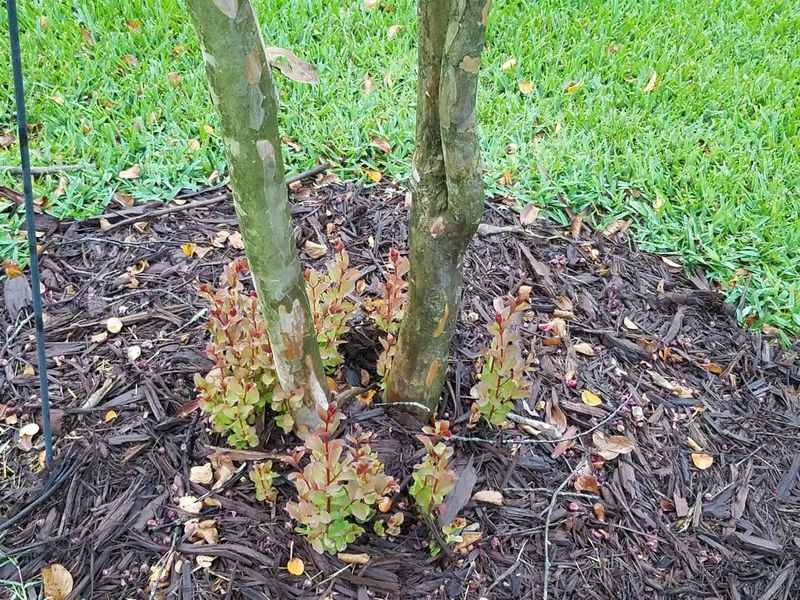
Every season, crape myrtles push out small shoots called suckers from around the base of the trunk and sometimes from surface roots.
They are easy to ignore at first because they look harmless, almost like little bonus plants sprouting up.
But leaving them alone is a mistake that quietly drains your tree’s energy all summer long.
Suckers compete with the main trunk for water, nutrients, and energy. The more suckers you allow to grow, the more resources get diverted away from the canopy where the real action happens.
Trees that are loaded with suckers often produce fewer blooms and show slower overall growth. The base of the tree can start to look messy and overgrown, which takes away from the tree’s natural elegance.
Removing suckers is easy and should be done regularly throughout the growing season. Pull them off by hand when they are young and tender, getting as close to the point of origin as possible.
Cutting them with shears tends to encourage more regrowth, so pulling or rubbing them off early works better.
Applying a layer of mulch two to three inches deep around the base of the tree can also help reduce sucker production by moderating soil temperature and moisture.
Keep the mulch a few inches away from the trunk itself to prevent moisture buildup. Staying on top of this simple task keeps your tree looking polished and performing at its best.