Why Eucalyptus Debris Near A California Home Is A Bigger Risk Than The Tree Itself
The tree gets blamed first. The mess underneath it often deserves more attention.
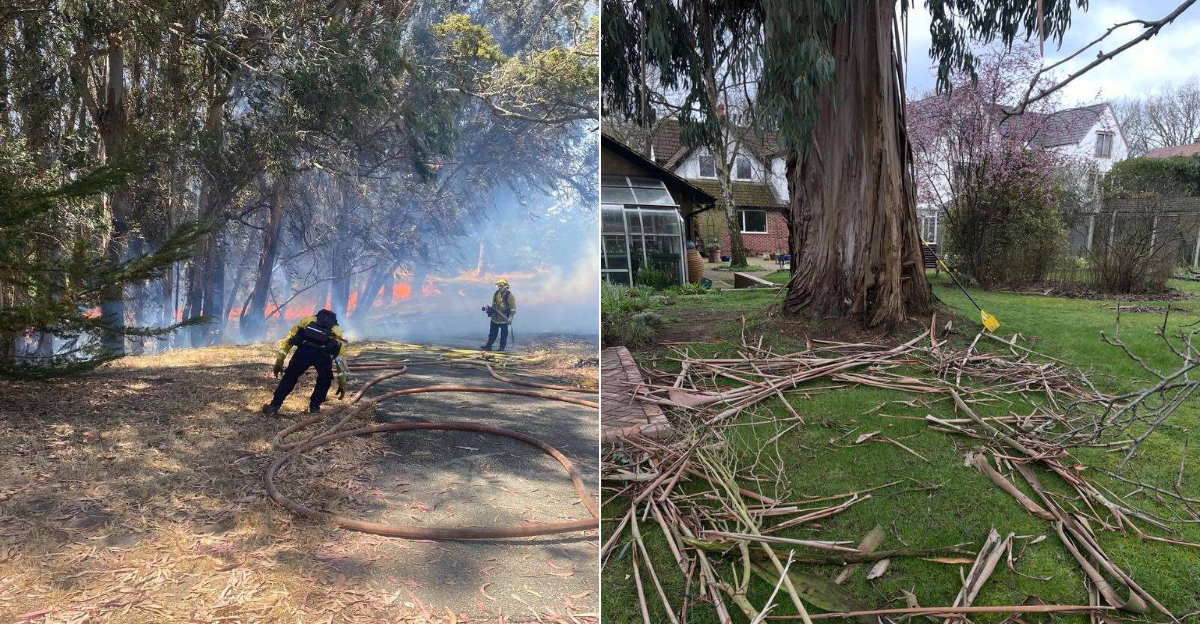
Eucalyptus sheds bark strips, brittle leaves, and small branches that can collect beside fences or under decks. That material may look like ordinary yard litter, especially after a windy week.
In dry California weather, though, it can become a serious concern much closer to the house.
The risk grows as debris piles up and loses moisture. A tree may stand several yards away, while its fallen material sits right against a wall or beneath an eave. That changes the picture completely.
Regular cleanup can feel tedious, but this is not just about keeping the yard neat. Those crunchy piles can matter during fire season, and ignoring them may leave the most vulnerable part of the property hidden in plain sight.
1. Oily Bark Strips Create A Natural Fire Ladder
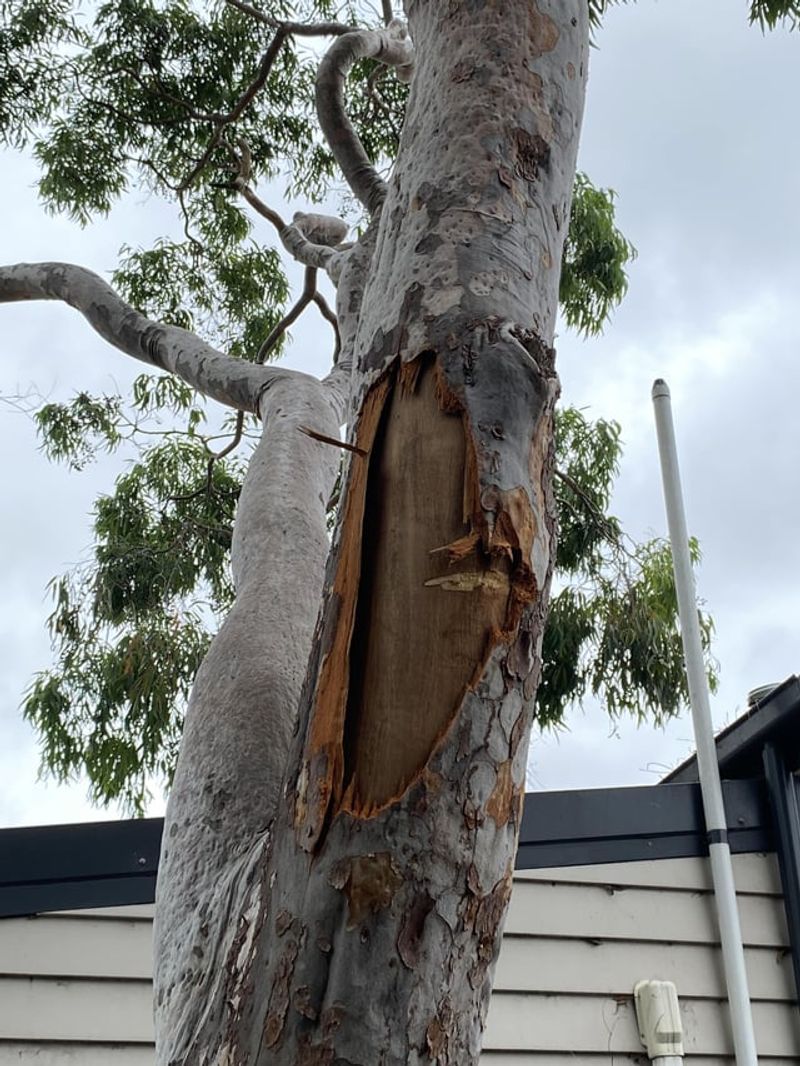
Few things in a yard are as deceptively dangerous as a pile of eucalyptus bark. Those long, papery strips peel away from the trunk all year long, curling up as they dry and landing in loose piles around the base of the tree.
They look harmless, almost decorative, but they are loaded with flammable oils.
Eucalyptus bark contains natural chemicals that make it burn fast and hot. When the strips dry out in summer heat, they become some of the most ignitable material found in any yard.
A small ember landing on a pile like this can start a fire within seconds.
Even worse, loose bark strips can catch fire and then get lifted by wind. Burning bark pieces have been known to travel hundreds of feet before landing, spreading fire to areas far from the original source.
That is one reason why wildfires in eucalyptus-heavy areas move so quickly and unpredictably.
Clearing bark debris regularly is one of the most effective steps you can take. Rake it away from the base of the tree, from fences, and especially from any structure.
Do not let it pile up against walls, under decks, or near air vents. Bagging and removing it from the property is the safest option.
Leaving it in place, even in a compost pile close to your home, still carries real risk during dry months.
2. Fallen Leaves Build Up Faster Than You Think
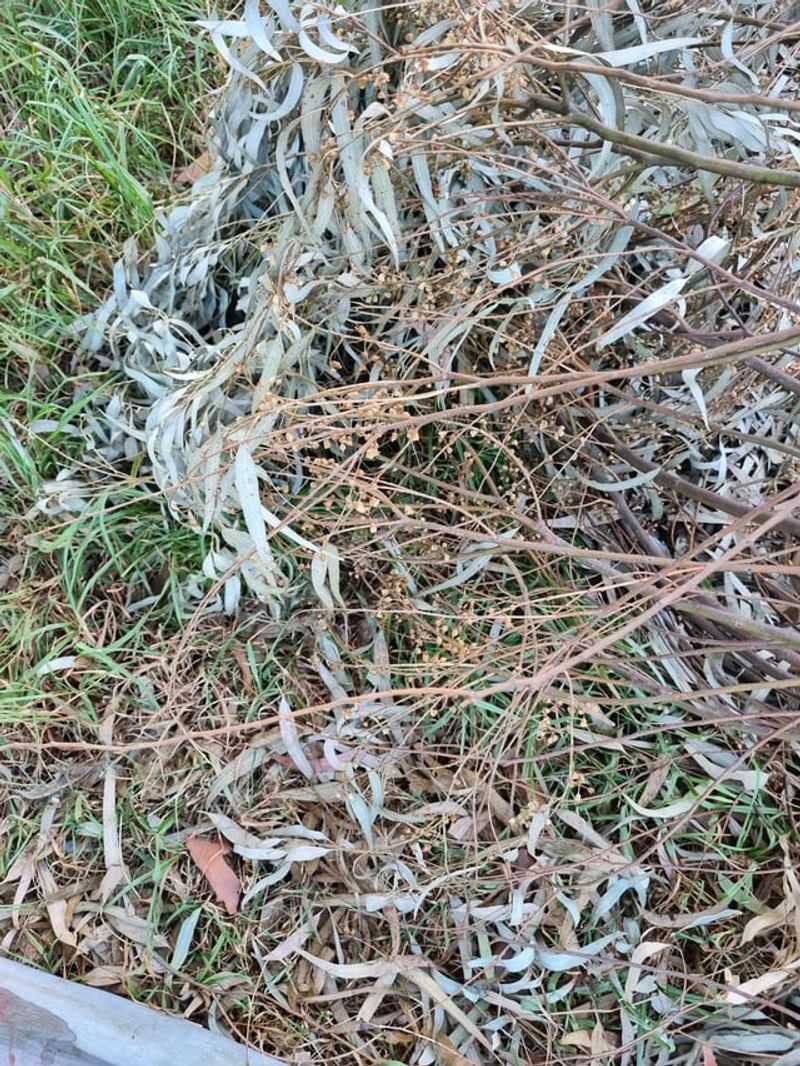
Eucalyptus trees do not follow the same seasonal shedding schedule as most trees in California. They drop leaves constantly, all year long, without any real break.
That means debris builds up faster than most homeowners expect, especially during windy stretches when leaves scatter across the yard and collect in corners.
The leaves themselves are packed with eucalyptus oil, the same compound used in strong-smelling cleaning products and vapor rubs. That oil does not disappear when the leaf falls and dries out.
It stays in the tissue and makes the leaf burn intensely when ignited. A thick mat of dry eucalyptus leaves on the ground acts almost like a layer of kindling.
What makes this especially tricky is how far the leaves travel. Wind carries them under decks, into gutters, behind air conditioning units, and up against the side of your house.
Your California Garden Changes Every Week. Your Plan Should Too.
Gardening in California changes quickly throughout the season. Every Friday you’ll receive a simple weekly plan showing exactly what to plant, prune, fertilize, harvest, and protect so you never miss the right timing.
You might clean up the base of the tree and still have leaf piles tucked into spots you did not think to check.
Getting into a routine of clearing leaves every week or two during fire season is worth the effort. Pay attention to hidden spots where leaves collect, not just the open ground.
Gutters deserve special attention since a gutter full of eucalyptus leaves is a direct fire path to your roof. Staying ahead of the buildup is easier than dealing with a dangerous accumulation all at once.
3. Seed Pods And Capsules Are Slow-Burning Fuel
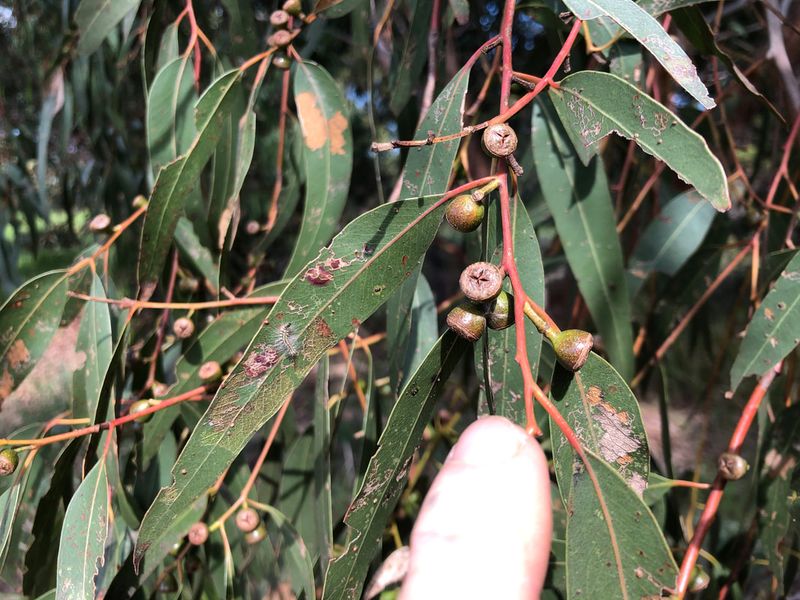
Eucalyptus trees produce hard, woody capsules that hold their seeds until conditions are right for release. These capsules fall to the ground in large numbers and pile up just like the leaves and bark do.
They might look too solid to be a fire concern, but they burn steadily and for a long time once ignited.
Unlike leaves that flare up and burn out quickly, seed pods smolder. That slow burn is actually more dangerous in some situations because it can travel along the ground without producing obvious flames.
A smoldering pod can work its way under a wooden deck or into a crawl space before anyone notices.
The sheer volume of capsules a single eucalyptus tree can drop is surprising. During heavy shedding periods, they can cover the ground several inches deep around the base of the tree.
Mixed in with dry leaves and bark strips, they create a layered fuel source that burns at different rates and intensities.
Removing seed pods from the yard is important but often overlooked because they do not look as obviously flammable as dry leaves.
Use a rake or leaf blower to gather them up, and bag them for disposal rather than leaving them in a pile on the property.
If you have several eucalyptus trees, scheduling regular cleanups through fire season will keep the accumulation from getting out of hand. Staying consistent makes the job much more manageable over time.
4. Debris Against Fences Creates A Fire Highway
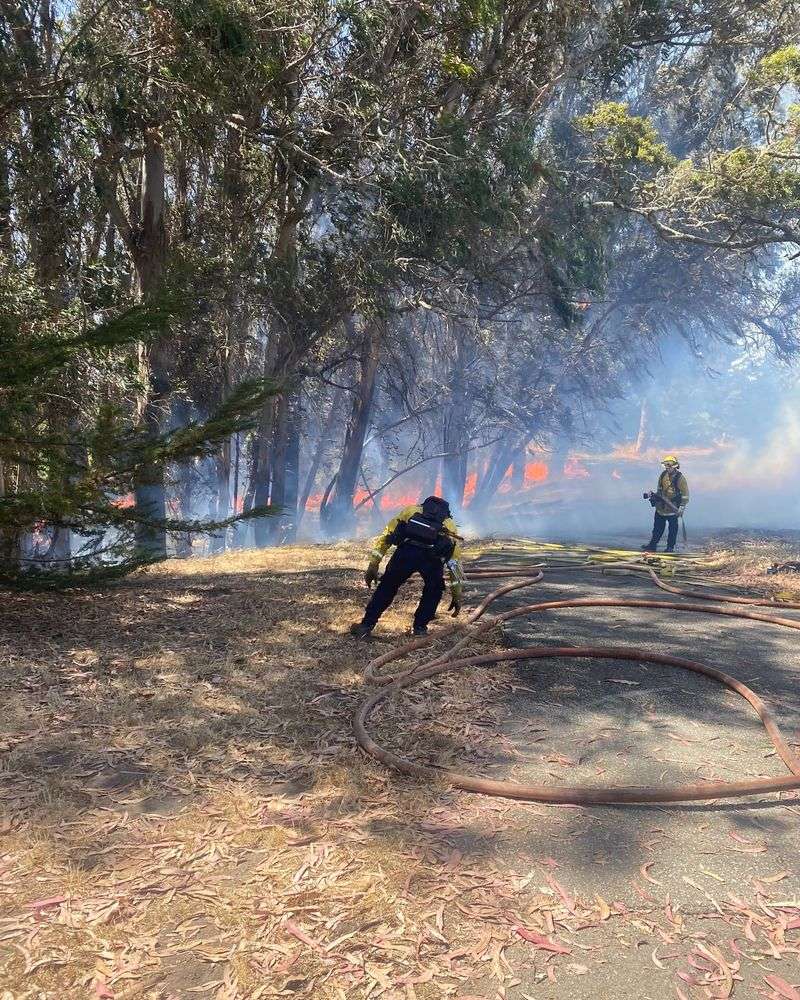
Wooden fences are one of the most overlooked fire risks in a yard, and eucalyptus debris makes them significantly more dangerous.
When bark strips, leaves, and pods pile up along the base of a fence, they create a continuous line of fuel.
Fire can follow that line straight toward your home faster than most people realize.
Researchers and fire safety experts have studied how fences act as fire conduits during wildfires. A fence connected to a house essentially gives fire a direct path from the yard to the structure.
When that fence also has a layer of eucalyptus debris leaning against it, the risk multiplies quickly.
Even a vinyl or metal fence is not entirely safe if eucalyptus debris piles up around it. The debris itself can burn along the fence line even without the fence catching, and heat and embers can still reach the house.
The fence material matters less than the fuel sitting next to it.
Keeping a clear zone along both sides of your fence is a smart habit. Rake debris away from fence lines regularly, especially during the dry months from late spring through early fall.
If your fence runs close to the house or connects directly to it, treat that area as a high-priority zone.
A few minutes of cleanup each week can prevent the fence from becoming the path that brings fire to your front door. Simple maintenance goes a long way.
5. Gutters Full Of Eucalyptus Material Are A Roof Risk
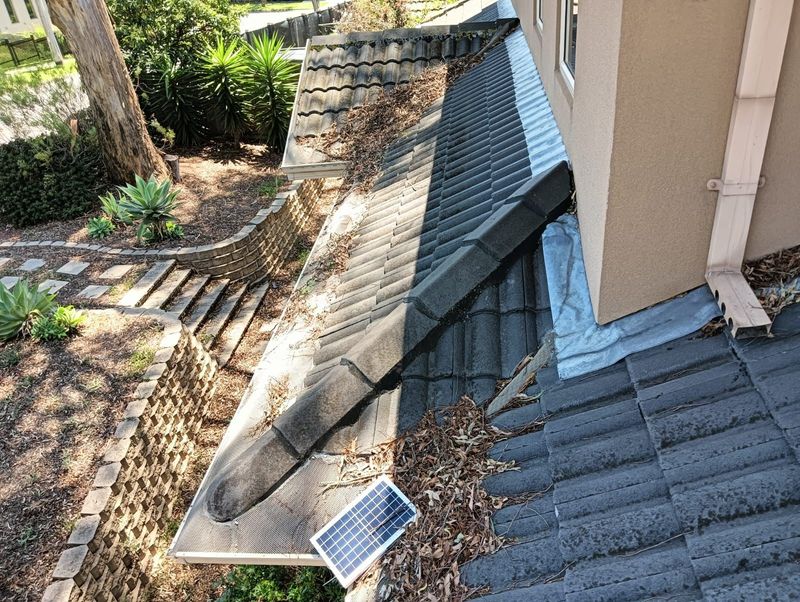
Gutters are designed to move water away from your home, but during fire season they can become one of the most dangerous spots on the entire property.
Eucalyptus leaves, bark, and pods blow into gutters easily, and once they dry out, they create a concentrated fire hazard right at roof level.
An ember landing in a clogged gutter can start a fire that spreads directly into your roof structure.
Eucalyptus debris is especially problematic in gutters because of its oil content. Dry leaves packed tightly together with strips of oily bark create a dense, fast-burning material.
Once that material ignites, the fire is already in contact with your roof edge, which gives it immediate access to the home.
Many homes lost in past wildfires across California burned from the top down, not the bottom up. Embers landed in debris-filled gutters, ignited, and the fire spread into the attic before anyone could respond.
This pattern has been documented repeatedly in fire investigation reports across fire-prone counties.
Cleaning gutters at least twice during fire season is a minimum standard for homes near eucalyptus trees. Some homeowners clean them monthly.
Installing gutter guards with fine mesh can help reduce buildup, but they are not a substitute for regular inspection. After windy days, check gutters quickly since eucalyptus debris travels far and collects fast.
Keeping your gutters clear is one of the highest-impact actions you can take to protect your roof and the rest of your home.
6. Ground Debris Helps Fire Reach The Tree Canopy
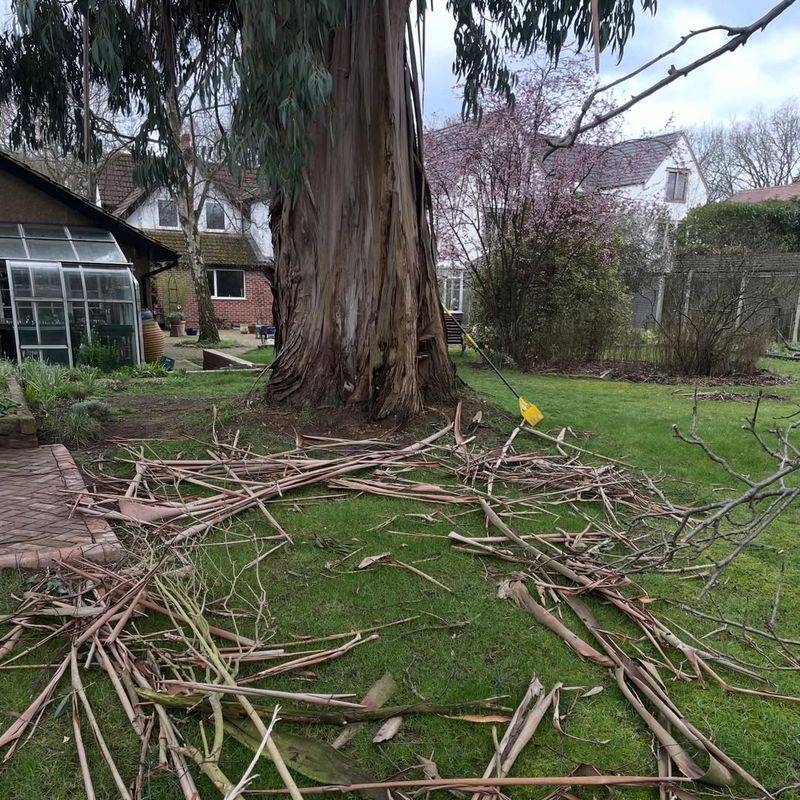
One of the most dangerous fire behaviors around eucalyptus trees is something called a fire ladder.
It describes how fire on the ground climbs upward through layers of vegetation until it reaches the tree canopy.
Once fire hits the canopy of a eucalyptus, the oily leaves ignite explosively and the fire can spread to nearby structures very quickly.
Ground debris plays a key role in starting that ladder effect. A pile of dry leaves and bark at the base of the tree gives fire the fuel it needs to climb up low-hanging branches, then into the mid-canopy, and finally to the top.
The whole process can happen in under a minute under the right wind conditions.
Eucalyptus canopy fires are extremely intense. The oils in the leaves vaporize in the heat and essentially become airborne fuel.
This creates large fireballs and throws burning material long distances, which is why eucalyptus fires spread so fast across neighborhoods in California’s fire-prone regions.
Keeping the ground beneath a eucalyptus tree clear of debris is one of the most effective ways to interrupt this process. Remove withered leaves, bark, and pods regularly.
Trim lower branches so that ground-level fire cannot easily reach the canopy. Creating at least ten feet of vertical clearance between the ground and the lowest live branches reduces the chance of a ground fire turning into a full canopy event.
This one step can significantly slow fire spread around your property.
7. Debris Piles Near Vents Let Fire Enter The Home
Foundation vents, attic vents, and soffit openings are necessary for proper airflow in a home, but they are also entry points for fire.
When eucalyptus debris piles up near these openings, any ember that lands in that debris can start a fire that works its way directly into the structure.
This is one of the lesser-known but very serious risks of debris accumulation near a home.
Standard vent screens have openings large enough to let embers pass through. Even fine mesh screens can fail when debris is packed tightly against them.
A burning piece of bark pressed against a vent screen can heat the mesh and eventually allow flames or hot gases to enter the wall or attic space.
Northern and inland regions of our state see this risk more acutely during hot, dry wind events. Strong winds carry burning debris and press it against the sides of homes, including against vents.
Homes that had debris piled near vents have shown significantly higher rates of structural ignition compared to homes with clear zones.
Walk around your home and look at every vent opening, especially at the foundation level and along the roofline. Clear away any eucalyptus material within at least three feet of each opening.
Consider upgrading to ember-resistant vent covers, which are designed to block smaller ember sizes.
Pairing proper vent protection with regular debris removal gives your home a much stronger defense during fire events.
Both steps together work far better than either one alone.
8. Regular Cleanup Is The Most Effective Defense You Have

No single product or quick fix replaces the steady habit of cleaning up eucalyptus debris around your home. The tree will keep shedding no matter what you do, which means the work is ongoing.
Building a consistent cleanup routine is the most practical and proven way to reduce fire risk on your property.
Fire safety guidelines from agencies across California recommend maintaining a defensible space around any structure.
For eucalyptus trees specifically, that means removing debris from the ground, from gutters, from fences, and from any surface where material can collect and dry out.
The goal is to eliminate the fuel sources that allow fire to travel from the yard to the home.
Many homeowners find that setting a weekly or biweekly schedule during fire season keeps the job manageable.
Waiting until debris builds up into large piles makes the work harder and leaves your home exposed for longer stretches.
Short, regular sessions are more effective than occasional major cleanups.
If the tree is large or the debris volume is high, consider hiring a professional yard service to help during peak shedding periods. Some tree care companies also offer debris management as part of ongoing maintenance plans.
Combining professional help with your own regular efforts gives you the best coverage. Document your cleanup efforts too, since some insurance providers ask about defensible space maintenance.
Staying proactive keeps your home safer and gives you real peace of mind throughout the fire season.