Why Oregon Squirrels Strip Bark From Small Trees And What To Do About It
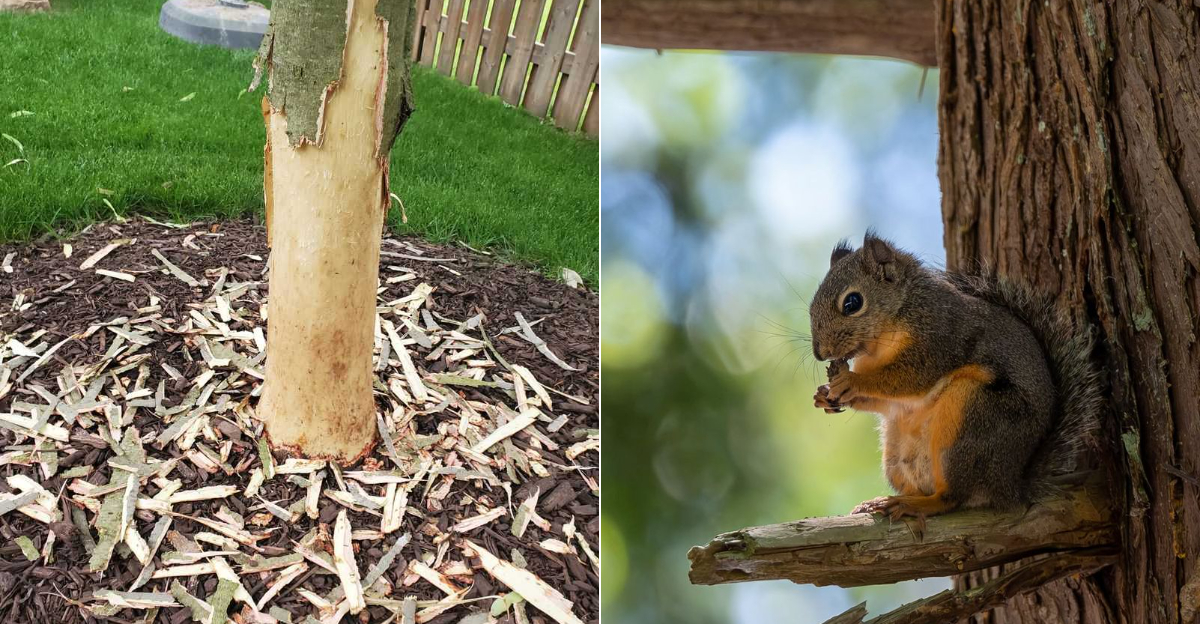
Squirrels sometimes target small trunks even when no obvious food appears nearby. The damage can look random at first, but their behavior usually has a purpose. Unfortunately, the tree pays the price.
Thin bark offers little protection once teeth break through the surface. A few missing patches may slow growth, while deeper damage can threaten the entire trunk.
That makes early action especially important. Oregon yards can give squirrels plenty of easy access to young trees. Nearby fences may help them reach vulnerable branches.
Low cover can also make the area feel safe. The right response can protect the tree without turning the yard into a battle zone.
Once you understand what draws squirrels to the bark, the solution becomes much easier to plan.
1. Squirrels Are Gnawing, Not Pruning
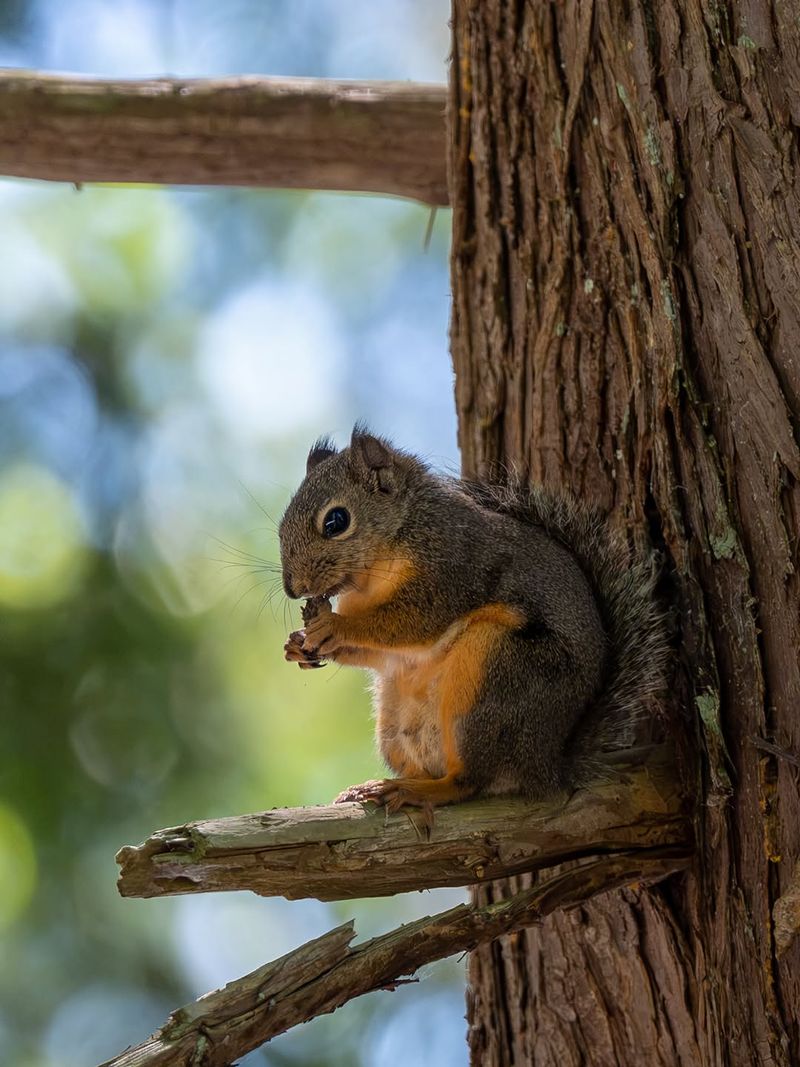
Most people see chewed-up bark and assume something is wrong with the tree itself. The truth is, squirrels are behind most of this damage, and they are doing it on purpose.
When a squirrel strips bark from a young tree, it is not just playing around. It is actively gnawing with its sharp front teeth, and it usually has a reason.
Squirrels gnaw on bark for a few key reasons. Sometimes they are after the sweet, sugary sap just underneath.
Other times they are chewing to wear down their teeth, which never stop growing. A squirrel with overgrown teeth is uncomfortable, so gnawing on hard surfaces like bark helps keep things in check.
Bark is also used as nesting material. Squirrels will peel long strips and carry them to build or line their nests, especially in colder months.
This kind of damage can look like someone took a peeler to your tree trunk.
The gnawing usually happens on smooth sections of the trunk or on younger branches. You will often see rough, jagged edges around the stripped area where the squirrel has torn rather than cut cleanly.
Fresh damage will show moist, pale wood underneath. Older damage will look dry and darker.
Catching this early gives your tree the best chance of bouncing back with minimal lasting harm.
2. Young Bark Is Easy To Strip
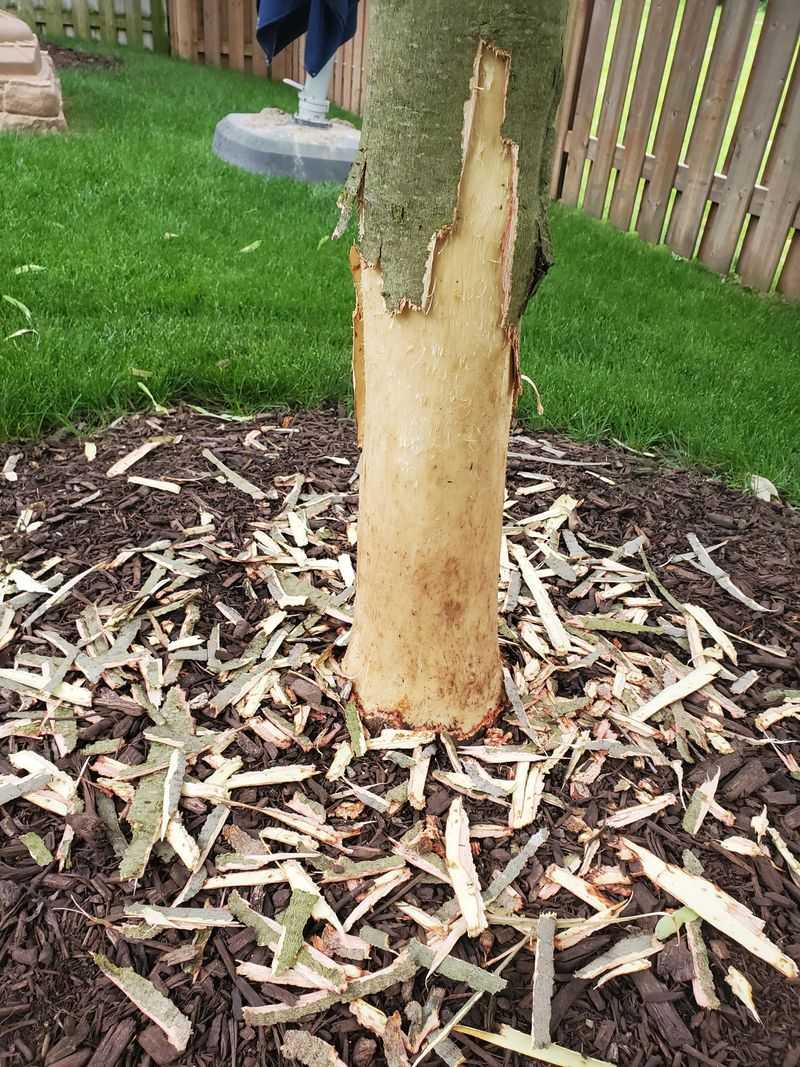
There is a reason squirrels go after young trees more often than old, thick-barked ones. Young bark is soft, thin, and much easier to peel.
A squirrel can strip it away in seconds with almost no effort. Older trees have rough, corky bark that is harder to gnaw through, so squirrels tend to skip them.
Saplings and trees under five years old are at the highest risk. Their bark is still developing, and it has not yet built up the tough outer layers that protect mature trees.
Think of it like the difference between biting into a fresh apple versus a dried one. The fresh one gives way easily, and that is exactly what young bark does for a squirrel.
Young bark also contains more active sap, especially in spring and early summer. Squirrels can smell and taste this sweetness, which draws them in.
Once one squirrel finds a good spot, others may follow. You can end up with several animals working the same tree over a short period of time.
Your Oregon Garden Changes Every Week. Your Plan Should Too.
Gardening in Oregon changes quickly throughout the season. Every Friday you’ll receive a simple weekly plan showing exactly what to plant, prune, fertilize, harvest, and protect so you never miss the right timing.
Newly planted trees in yards, gardens, and along driveways are especially vulnerable. If you have planted anything in the last few years, keep a close eye on the lower trunk and main branches.
Early detection makes a huge difference. A little attention now can prevent a lot of costly damage later on.
3. Thin-Barked Trees Take The Worst Damage
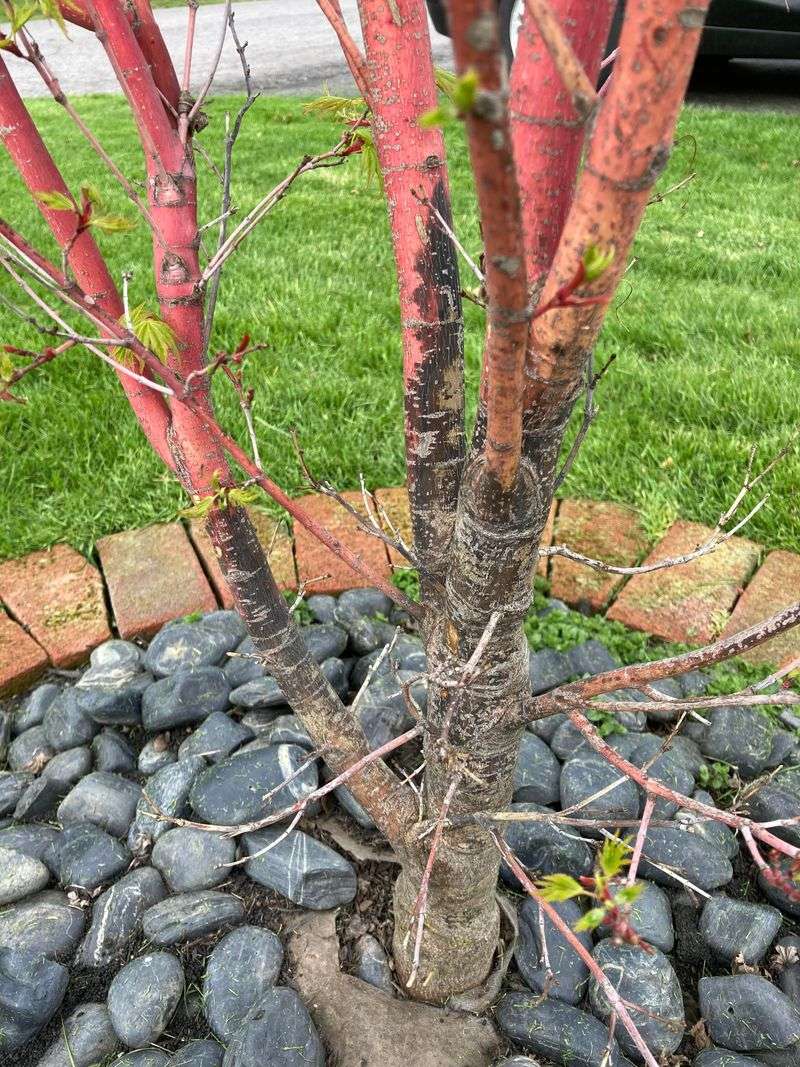
Not all trees are equally vulnerable. Some species have naturally thin, smooth bark that squirrels find especially easy to access.
These trees tend to suffer the most damage and take the longest to recover. Knowing which trees are most at risk can help you plan ahead and protect them before squirrels strike.
In Oregon, thin-barked species like young maples, cherries, aspens, and ornamental plums are frequent targets. Apple and pear trees in home orchards also take a beating.
These trees have bark that peels away in satisfying strips, which seems to attract squirrels repeatedly to the same spots.
Birch trees are another common victim. Their papery white bark is almost irresistible to squirrels, and the damage can be dramatic.
Once the outer layer is removed, the tree is exposed to insects, fungi, and weather. That exposure can lead to long-term health problems if left untreated.
If you are planning to plant new trees, consider choosing species with thicker, rougher bark. Oak, Douglas fir, and similar species are far less appealing to squirrels.
If you already have thin-barked trees, focus your protection efforts on those first. Wrapping the trunks, using repellents, or adding physical barriers can all help reduce damage.
Every tree you save now is one less replacement you will need to buy later.
4. Teeth Wear Is Part Of The Problem
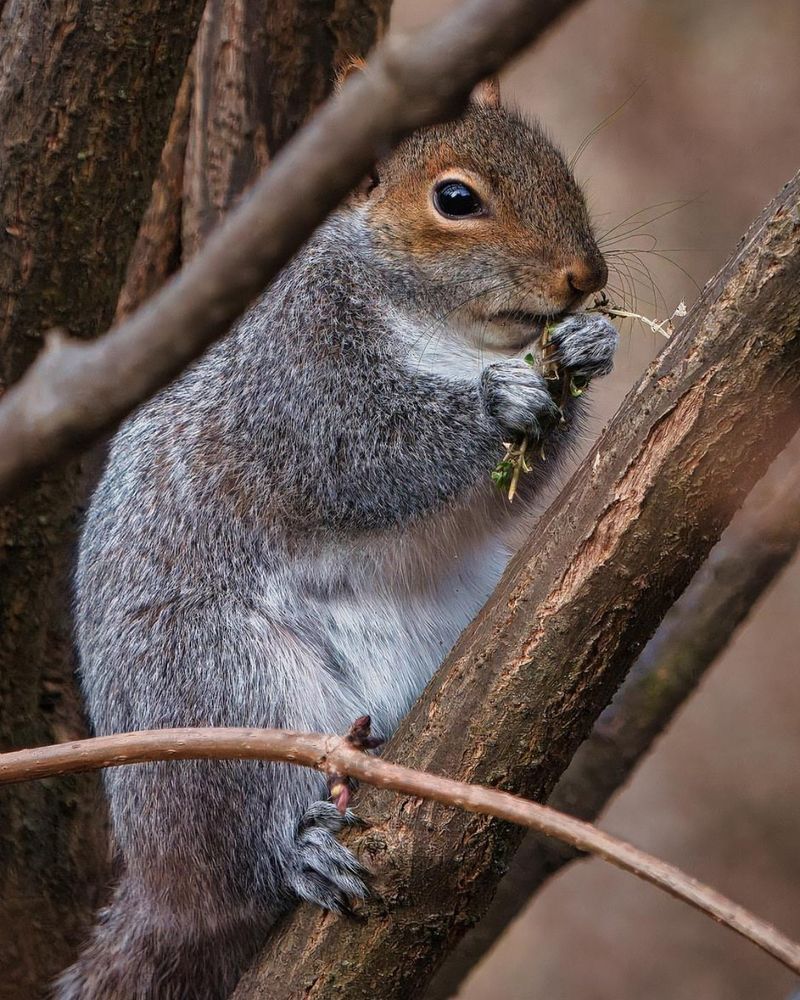
Squirrels belong to a group of animals called rodents, and all rodents share one key trait. Their front teeth never stop growing.
That might sound strange, but it is completely true. If a squirrel did not constantly gnaw on hard surfaces, its teeth would grow so long they would become a serious problem.
Gnawing on bark is one of the ways squirrels keep their teeth at a manageable length. It is not a choice they make the way we decide to trim our nails.
It is more like a built-in need that drives their behavior. Trees just happen to be a convenient and available tool for this purpose.
This is why you might notice squirrels chewing on the same tree over and over, even when there is no obvious food reward. They are not being stubborn or destructive for fun.
They are responding to a biological need. Young trees with softer bark offer just the right amount of resistance to make the gnawing effective without being too hard on the squirrel’s jaw.
Understanding this behavior can change how you approach the problem. Placing hard chew toys or untreated wooden blocks in your yard may help redirect some of the gnawing away from your trees.
It will not eliminate the behavior entirely, but it can reduce the pressure on your most valuable trees. A small investment in decoys can go a long way toward keeping your yard looking great.
5. Winter And Late Summer Damage Can Surprise You
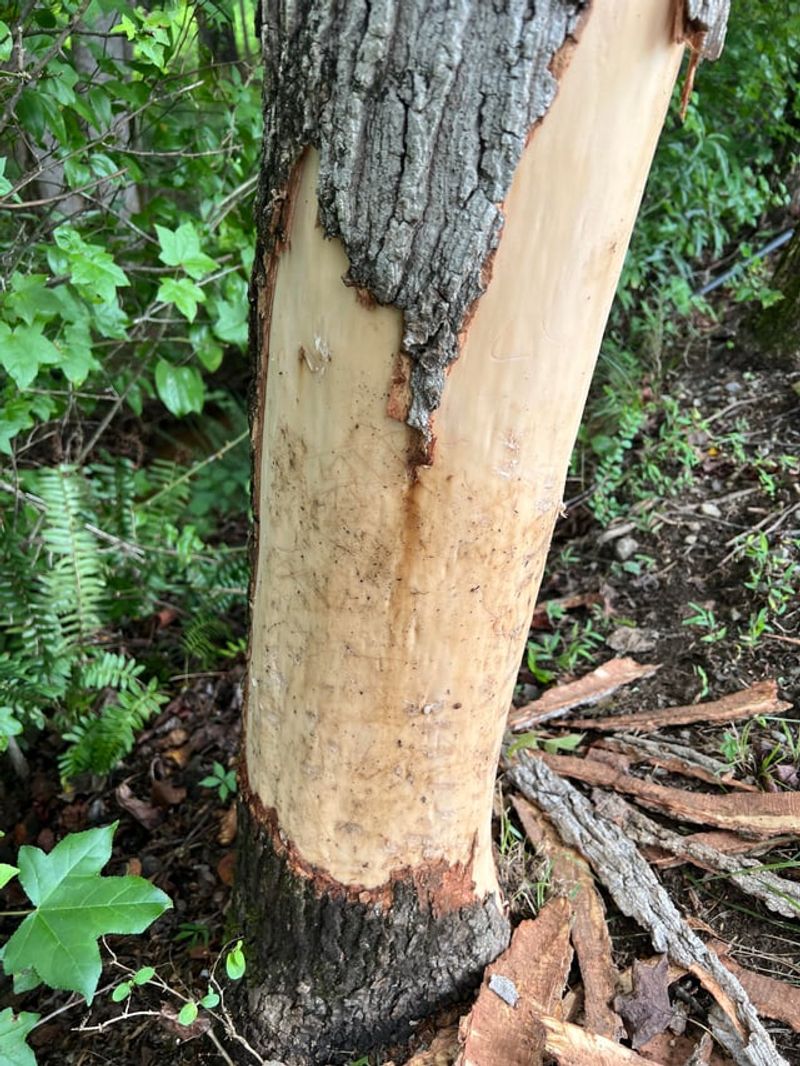
Oregon homeowners assume squirrels are only a problem in spring, but that is not the case. Two seasons tend to bring the worst bark damage: late summer and winter.
Both of these times have specific reasons tied to squirrel behavior and food availability.
In late summer, squirrels are busy preparing for cooler weather. They are eating more, storing food, and staying very active.
When natural food sources start to thin out, they turn to trees for extra nutrition. The inner bark, called phloem, is rich in sugars and nutrients at this time of year, making it a prime snack.
Winter is when things can get really surprising. When the ground is frozen and food is scarce, squirrels revisit their stored caches and also look for alternative food sources.
Bark becomes a surprisingly important part of their winter diet. You might walk outside after a cold snap and discover fresh damage that was not there the week before.
Keeping an eye on your trees during these two windows is smart practice. Check your trees every week or two during late summer and again in mid-winter.
Look for fresh, pale wood showing through the bark. Fresh damage has a moist look and sometimes a slight smell of sap.
Catching it early lets you act fast, wrap the trunk, and apply repellent before the squirrel returns for another round.
6. Girdling Is The Real Tree Destroyer
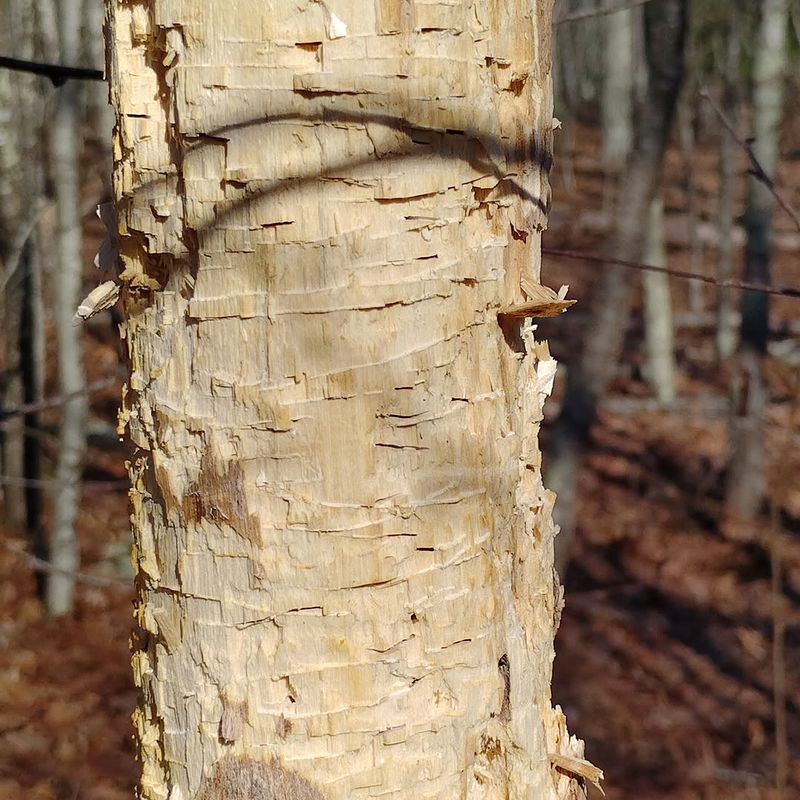
Partial bark damage is bad, but girdling is a whole different level of serious. Girdling happens when bark is removed all the way around a tree trunk in a complete ring.
When that ring is complete, the tree loses its ability to move water and nutrients between its roots and leaves. Without that flow, the tree cannot survive for long.
Think of the bark like a highway system for the tree. Nutrients travel up and down through the inner bark layers.
When squirrels strip bark in a full circle, they cut off that highway completely. The top of the tree gets cut off from the roots, and the whole system shuts down.
Even a young, healthy tree can struggle badly after girdling occurs.
Girdling does not always happen all at once. Sometimes squirrels return to the same spot over several days or weeks, slowly working their way around the trunk.
By the time you notice the full ring, significant damage has already been done. This is why regular tree checks are so important during active squirrel seasons.
If you catch partial girdling early, you still have options. A technique called bridge grafting can sometimes reconnect the inner bark and restore nutrient flow, but it requires skill and timing.
Your best move is to prevent girdling from happening in the first place by using trunk wraps and repellents. Prevention is always easier than trying to fix the damage after the fact.
7. Protect Trunks With Loose Tree Guards
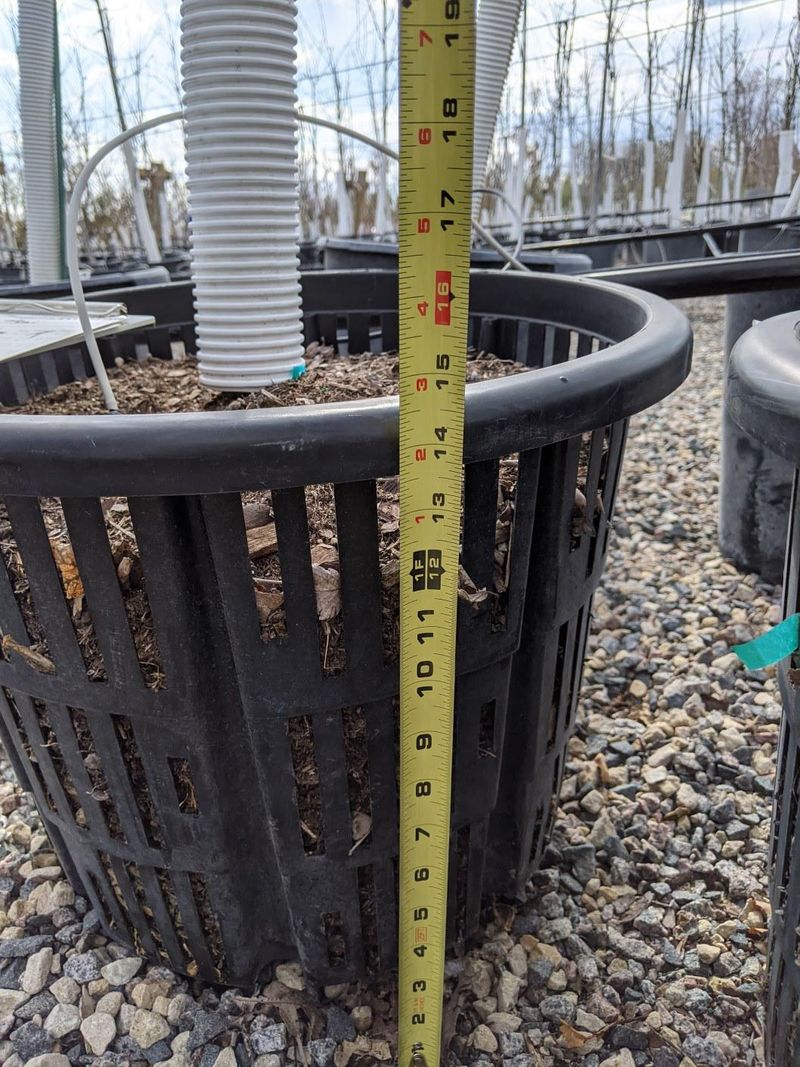
One of the most effective ways to protect young trees from squirrel damage is also one of the simplest.
Loose tree guards placed around the trunk create a physical barrier that squirrels cannot easily get through.
They are affordable, easy to install, and widely available at garden centers and hardware stores.
The key word here is loose. A tight wrap pressed directly against the bark can trap moisture and create new problems like mold or rot.
You want the guard to sit slightly away from the trunk, allowing air to circulate while still blocking squirrel access. Wire mesh cylinders work very well for this purpose.
Hardware cloth with a quarter-inch or half-inch grid is a popular choice. Cut it into a cylinder shape and secure it around the trunk, leaving a couple of inches of space between the mesh and the bark.
Make sure the guard extends at least two feet above ground level, since squirrels can reach from the ground or from low branches nearby.
Check your tree guards a few times a year to make sure they are not constricting the trunk as the tree grows. A guard that was loose last spring might be too tight by fall.
Plastic spiral wraps are another option, but they need to be monitored closely in warmer months. Combine a tree guard with a squirrel repellent spray for the best protection during peak damage seasons in Oregon.