The One North Carolina Native That Fills That Hot South-Facing Foundation Strip Where Everything Else Fries
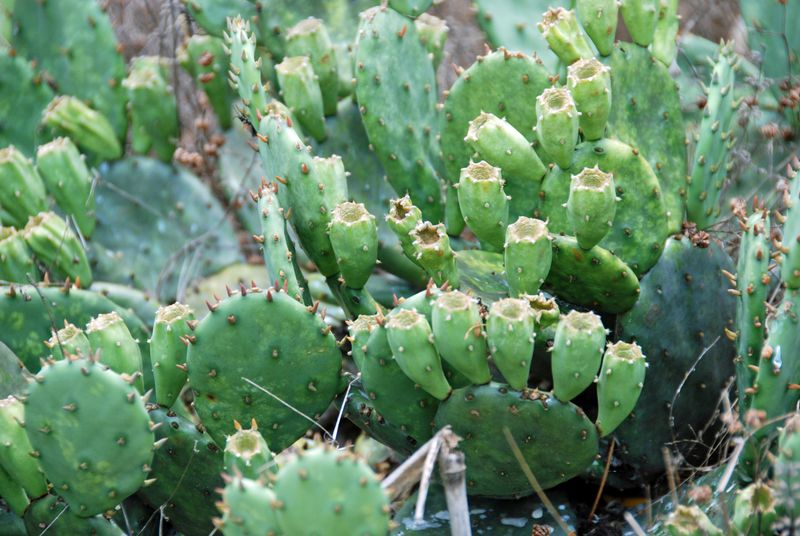
That narrow strip of dirt running along your south-facing foundation is one of the hardest spots in any North Carolina yard. The sun hammers it all day, the brick or concrete radiates heat back up from below, and anything that needs regular moisture just gives up by July. Southeastern prickly pear, Opuntia mesacantha, is a low-growing native cactus that can genuinely handle those conditions, but only when the site is sunny, well-drained, and well away from foot traffic. It will not magically fill a long border overnight, and it will not survive a spot that stays soggy after every summer storm.
A Strong Native Match, Not a Miracle Groundcover
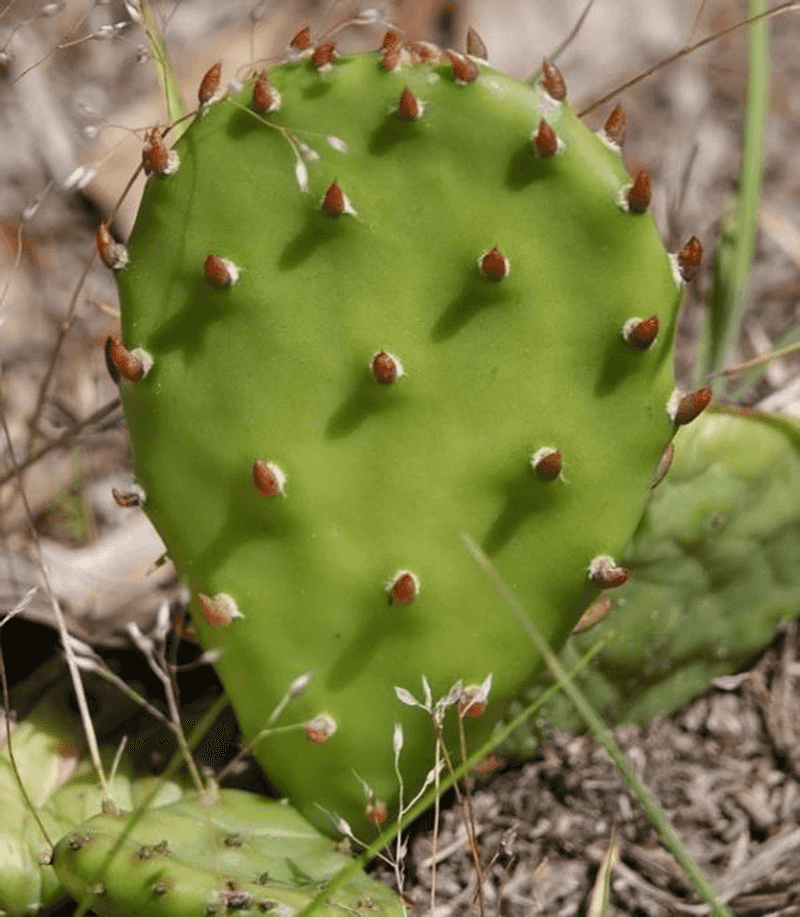
Southeastern prickly pear, Opuntia mesacantha, is the plant worth considering for that punishing strip along a south-facing foundation, but the recommendation comes with real limits. It is a strong option for a hot, dry, sharply drained site where moisture-loving plants struggle. It is not a fast-filling groundcover that works everywhere, and the headline on this article is a bit more confident than the plant actually is.
According to the NC State Extension Gardener Plant Toolbox, southeastern prickly pear is native across much of North Carolina’s Coastal Plain and Piedmont, with limited low-elevation mountain occurrences. It grows naturally in coastal dunes, sandy riverbeds, Sandhills habitats, pine forests, and Piedmont granite outcrops. That range of native habitats tells you a lot: this plant is built for lean, sun-baked, dry conditions, not for shade, clay that holds water, or soil that stays damp after a rain.
You may see prickly pear sold under the name Opuntia humifusa, eastern prickly pear, and the two are easy to confuse. The Vascular Plants of North Carolina flora account identifies O. mesacantha as the southerly taxon that includes our state, while O. humifusa is generally found farther north. Nursery labels may still use the older name because the prickly pear group has been reclassified more than once. That is worth knowing, not a reason to reject the plant.
The form itself suits a foundation strip well. O. mesacantha is prostrate and spreading, growing about 1 foot tall with flat, fleshy pads that store water. It spreads into a low colony over time rather than standing upright like a desert cactus. If the site provides full sun and drains reliably, it is a genuinely useful native choice for that otherwise difficult strip.
Why A South-Facing Strip Can Suit It
Many Piedmont and Coastal Plain gardeners have watched hostas melt, gardenias struggle, and even tough ornamental grasses look ragged along a south-facing foundation by midsummer. The problem is not just heat from the sky. Brick, concrete, and paving absorb sunlight all day and radiate it back at ground level, creating a microclimate that is several degrees hotter than the surrounding landscape. NC State Extension identifies this reflected and reradiated heat from hard surfaces as a key reason why plants that perform fine elsewhere fail in these spots.
Southeastern prickly pear is adapted to exactly that kind of punishment. The NC State Extension profile for O. mesacantha lists the plant as heat tolerant, drought tolerant, and salt tolerant, which also makes it a reasonable choice near driveways or roads where winter de-icing products wash into the soil. It stores water in its thick, flat pads rather than pulling moisture continuously from the ground, so a stretch of dry July weather that would stress a conventional perennial barely registers as a problem for this plant.
Your North Carolina Garden Changes Every Week. Your Plan Should Too.
Gardening in North Carolina changes quickly throughout the season. Every Friday you’ll receive a simple weekly plan showing exactly what to plant, prune, fertilize, harvest, and protect so you never miss the right timing.
Full sun is non-negotiable. NC State defines full sun as at least 6 hours of direct sunlight daily, and a south-facing strip typically delivers more than that. Partial shade from a porch overhang, a large tree, or a corner of the roofline can limit the plant’s performance, so pick the section of the strip that gets the most unobstructed light. These traits, heat tolerance, drought tolerance, and a preference for intense sun, are why NC State’s native plant design guidance supports matching plants to the actual site conditions rather than fighting them.
Southeastern prickly pear does not fix a bad site, but it is genuinely built for a good one.
Test Drainage Before You Blame the Plant
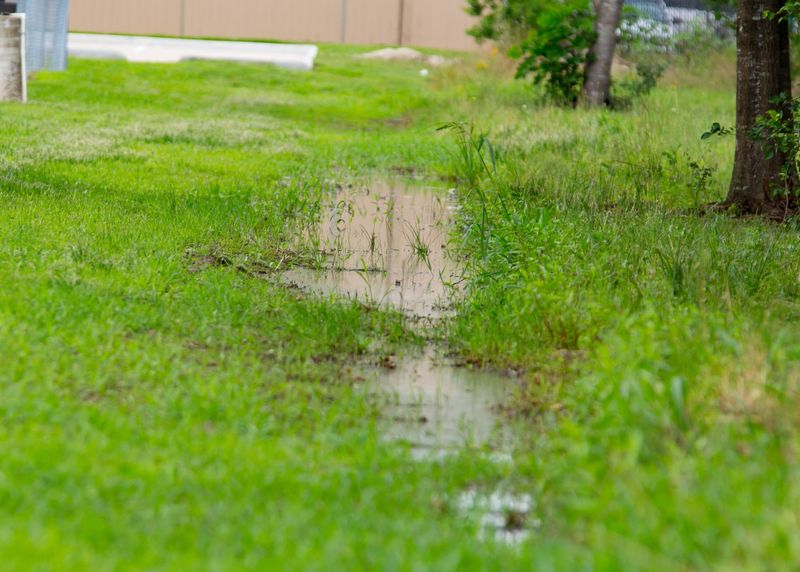
Here is where it gets tricky. A south-facing strip that bakes in summer can still hold water for days after a storm if the soil underneath is compacted or graded to collect runoff. Southeastern prickly pear handles drought well, but it cannot handle wet feet. Compacted or waterlogged soil can cause root and stem rot, and that commonly leads to failure.
The plant dies not from heat but from moisture it cannot escape.
Before you buy a single pad, walk the strip during or right after a hard rain. Watch where water pools, where it runs off the roof and hits the ground, and whether the soil near the foundation stays muddy for more than a day. Check if a downspout discharges anywhere near the planting area. NC State Extension’s soil guidance explains that construction fill and compacted soil around homes commonly restrict water movement and suffocate roots, a problem that affects both Piedmont clay and disturbed sandy Coastal Plain soil.
Piedmont clay is not automatically a dealbreaker. The real issue is whether water moves through the soil or sits in it. You can test this by digging a hole about 12 inches deep, filling it with water, and checking whether it drains within a few hours. If water is still standing the next morning, drainage is a problem that needs to be corrected before planting, not worked around with a raised mound alone.
Redirect downspouts away from the strip, correct any grading that funnels water toward the foundation, and address persistent puddling before you do anything else. The NC State profile for O. mesacantha is clear that this plant performs best in dry, well-drained soil. Fixing the water problem first is not optional, it is the whole ballgame.
Build A Suitable Planting Pocket
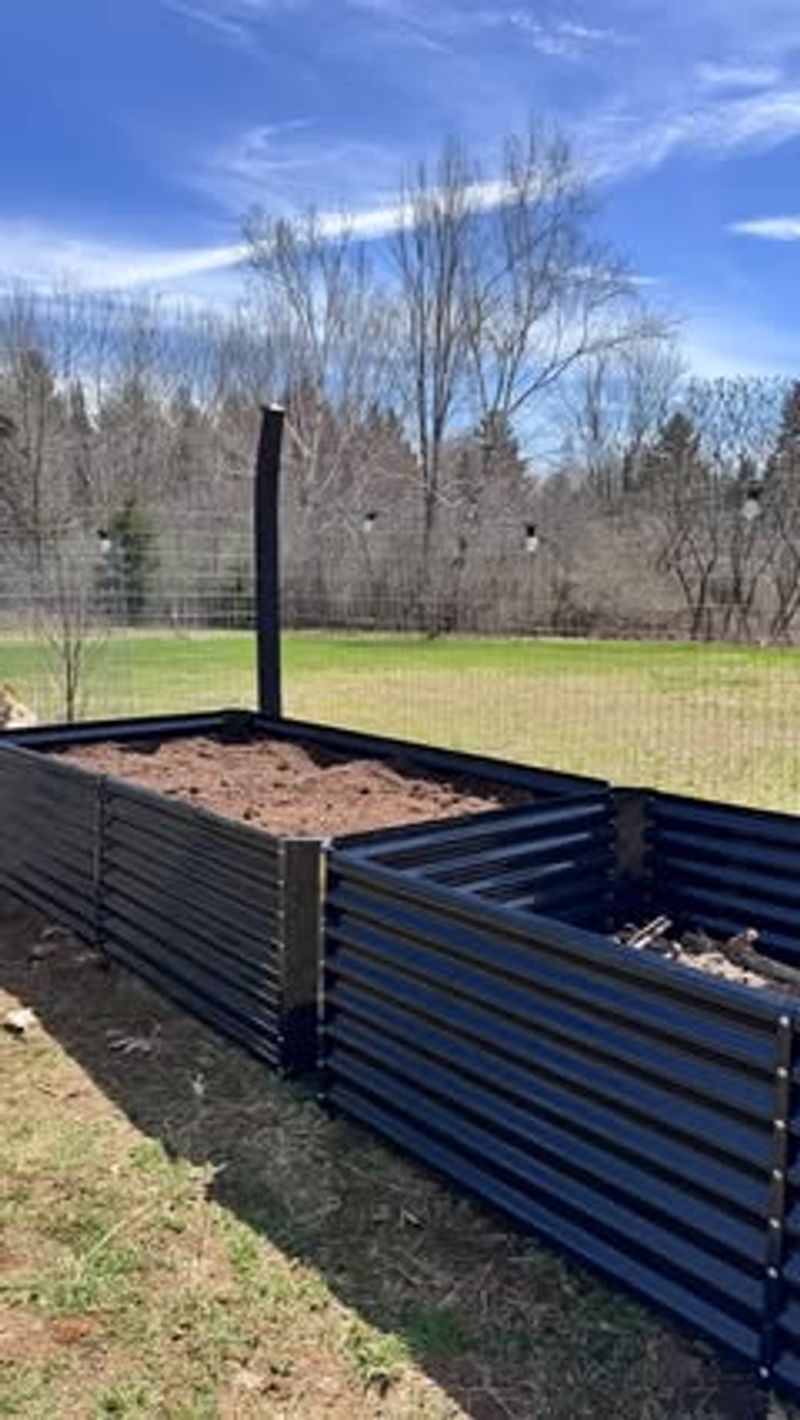
Once runoff is redirected and drainage is working, you can think about the planting pocket itself. Start by choosing the sunniest, lowest-traffic section of the strip. A spot 3 to 4 feet from a walkway edge gives the plant room to spread without putting spines where people walk, and it keeps the plant in the brightest light available.
Loosen compacted soil to a depth of at least 10 to 12 inches before planting. NC State Extension warns that adding a small amount of sand to clay can make the soil behave like concrete, so do not just dump sand on top of red clay and call it done. Instead, blend any amendments into the existing soil rather than creating distinct layers, which can trap water at the interface and actually worsen drainage. If the soil is very heavy, incorporating composted organic material worked thoroughly into the native soil can help improve structure over time.
A gently raised, mounded, or slightly rocky planting pocket makes sense as a secondary step after you have already corrected the site’s drainage problems. Raising the planting area 3 to 6 inches above grade helps shed excess moisture away from the root zone. Use native gravel or coarse sand mixed into the surface layer if available. NC State’s native plant design guidance recommends matching the soil preparation to the plant’s actual needs rather than applying a generic amendment recipe.
After planting, water the cactus in well and plan to give it supplemental water during its first growing season. University of Georgia Extension guidance on drought-tolerant natives is direct on this point: even plants adapted to dry conditions need regular watering while they establish, and they may need occasional water during prolonged drought after that. Plant it, water it through its first summer, and then step back and let the site do the work.
Keep Spiny Pads Out Of The Traffic Zone
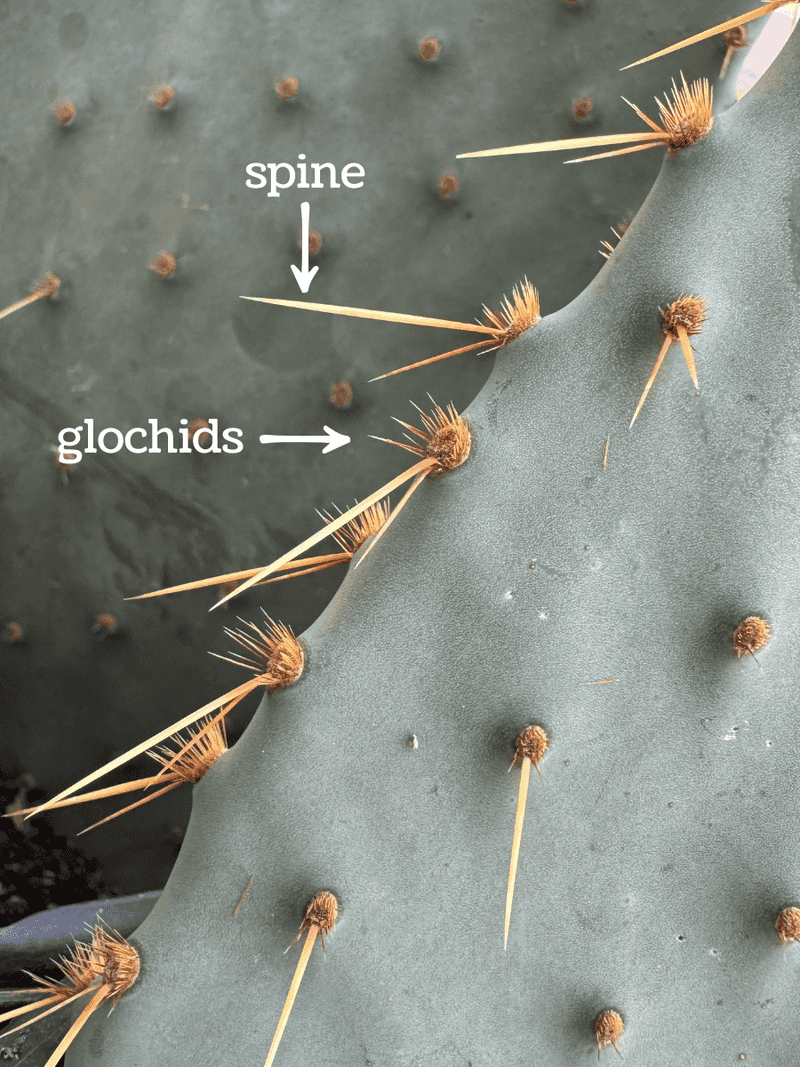
Flat, fleshy, and low to the ground, southeastern prickly pear looks almost harmless from a distance. Up close, it is a different story. Each pad carries long, stiff spines plus clusters of tiny barbed bristles called glochids. The NC State Extension profile for O. mesacantha warns that both can cause severe skin irritation and that glochids are difficult to remove once embedded in skin.
They are nearly invisible, they break off on contact, and tweezers alone often do not get them all out.
That means placement matters as much as soil prep. Keep the plant at least 3 to 4 feet from any walkway, entry door, or path that people use regularly. It does not belong beside a mailbox that the mail carrier approaches daily, near a play area where kids run barefoot, or in a narrow passage between the house and a fence where bare legs might brush the pads. A dog that investigates the plant with its nose will have a very bad afternoon.
NC State’s database notes that O. mesacantha is non-toxic to dogs, cats, and horses, but non-toxic is not the same as safe to touch or chew. The spines and glochids cause physical injury regardless of chemical toxicity. Think of the plant the way you would think about a thorny rose or a hawthorn: beautiful and useful in the right place, genuinely problematic in the wrong one.
If you need to handle the pads for planting or maintenance, use thick leather gloves and long tongs or folded newspaper to grip the pads. Never brush glochids off with bare hands. The right placement from the start is far easier than explaining glochids to a neighbor whose child just sat down in your foundation planting.
Expect Slow, Low, Seasonal Growth
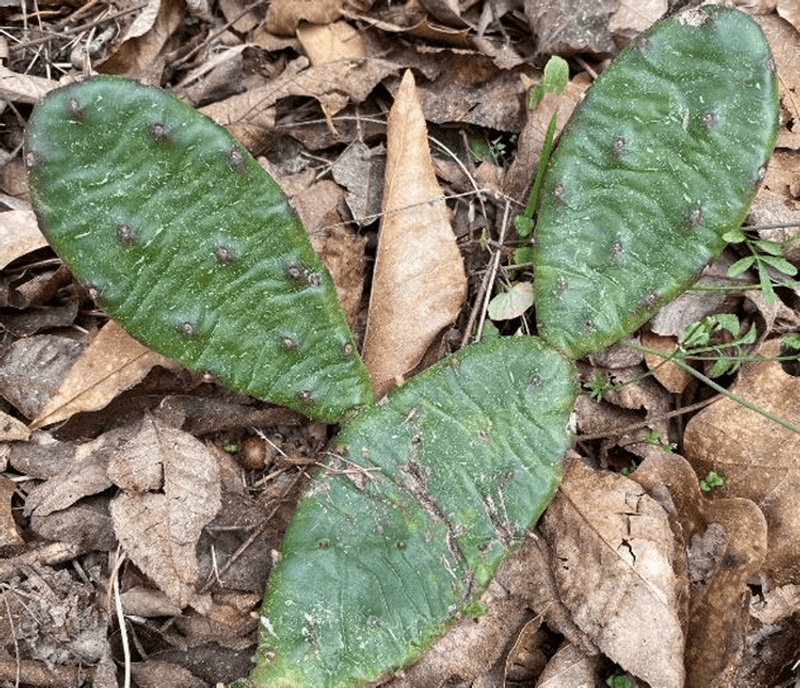
Southeastern prickly pear grows on its own schedule, and that schedule is unhurried. The plant spreads into a low, prostrate colony over several years rather than filling a long foundation border in a single season. The Vascular Plants of North Carolina flora account describes O. mesacantha as prostrate and spreading, with individual pads reaching roughly 4 inches long. If you plant one pad and expect a dense groundcover by fall, you will be disappointed.
If you plant it in a spot where its slow, low spread is an asset, you will appreciate it more every year.
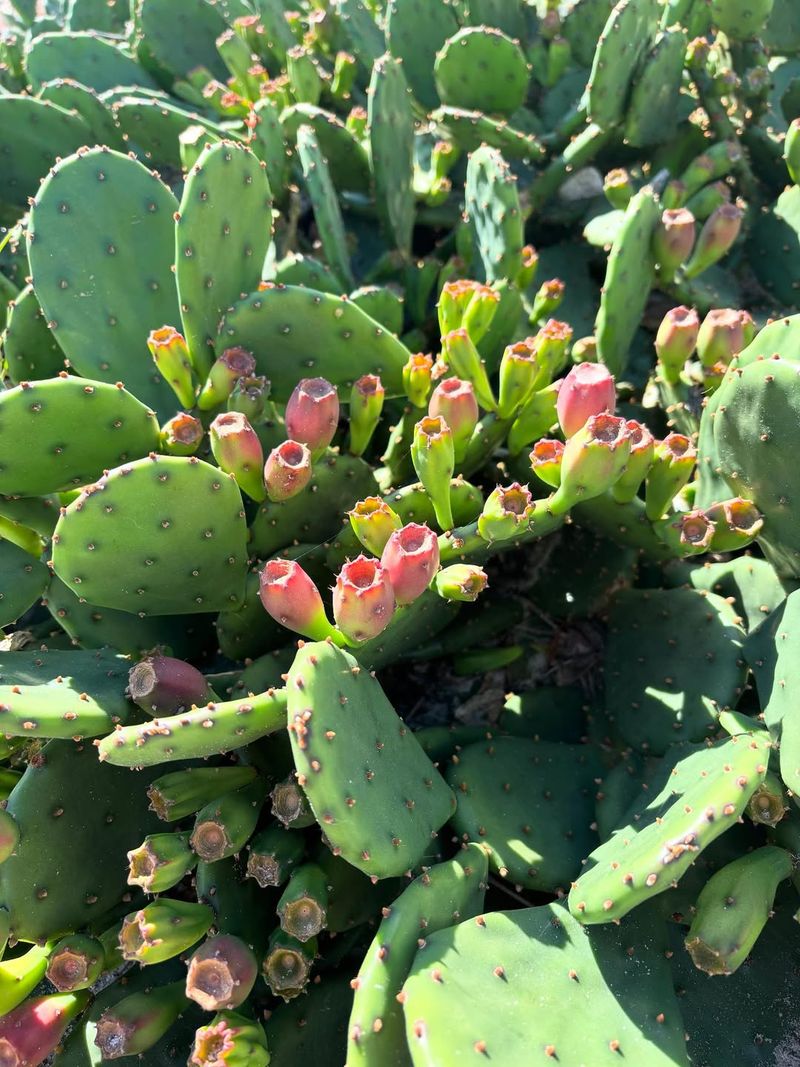
The payoff comes in late spring. From May into June, the plant produces waxy yellow flowers about 2 to 3 inches across that are genuinely striking against the hot, spare backdrop of a foundation strip. Bees visit the flowers, and the NC State profile for O. mesacantha notes that birds and box turtles can eat the reddish-purple fruits that develop from late summer into October. That is real wildlife value, modest and specific, not a promise that one cactus will transform your yard’s biodiversity.
In winter, the pads may shrivel or flatten noticeably. That is not necessarily death. For the related eastern prickly pear, O. humifusa, the Missouri Botanical Garden profile documents a seasonal water withdrawal that causes shriveling in cold months, with the plant recovering as temperatures rise. The NC State O. humifusa profile echoes this, and prickly pears generally show similar behavior, though the specific mechanism has been documented for O. humifusa rather than confirmed in the same detail for O. mesacantha.
Wait until late spring before deciding the plant did not make it through winter.
Regional fit is uneven across the state. The plant is common in the Coastal Plain, Sandhills, and much of the Piedmont, but it is scarce in the lower mountains and largely absent from the higher elevations. If you garden near Asheville or Boone, the plant may not perform as reliably as it would in Raleigh, Fayetteville, or Wilmington.
Use It Where The Conditions And Design Agree
The decision rule is straightforward. If your south-facing strip gets full sun all day, drains quickly after rain, stays dry between storms, and sits well away from walkways and doors, southeastern prickly pear is a genuinely strong native option for that spot. Fix the runoff, the grading, and any persistent drainage problems first. The plant addresses a plant-selection problem, not a site-engineering problem.
Reserve it for a dry, sunny, low-traffic pocket rather than treating it as a solution for the entire foundation. A 4- to 6-foot section of the strip near a fence corner or a blank wall section where no one walks is a better fit than a long run beside the front entry. For the rest of the foundation, a broader mix of regionally appropriate natives will provide more habitat value and more visual interest across seasons. NC State’s native plant design guidance encourages combining plants with complementary site needs rather than relying on a single species to carry a whole border.
If the strip stays wet after storms, receives downspout discharge, or sits in compacted fill that was never addressed after construction, correct those conditions first and then reassess whether the site actually suits a cactus or whether a different native strategy makes more sense. Many Piedmont and Coastal Plain homeowners find that fixing the drainage opens up more planting options than they expected.
Southeastern prickly pear will not fill your foundation strip quickly, and it will not forgive a poorly drained site. What it will do, in the right spot, is outlast almost anything else you could plant there. That is a quieter promise than the headline made, and it is one the plant can actually keep.