The Meaning Behind A Carolina Wren Nesting Near Your Florida Door
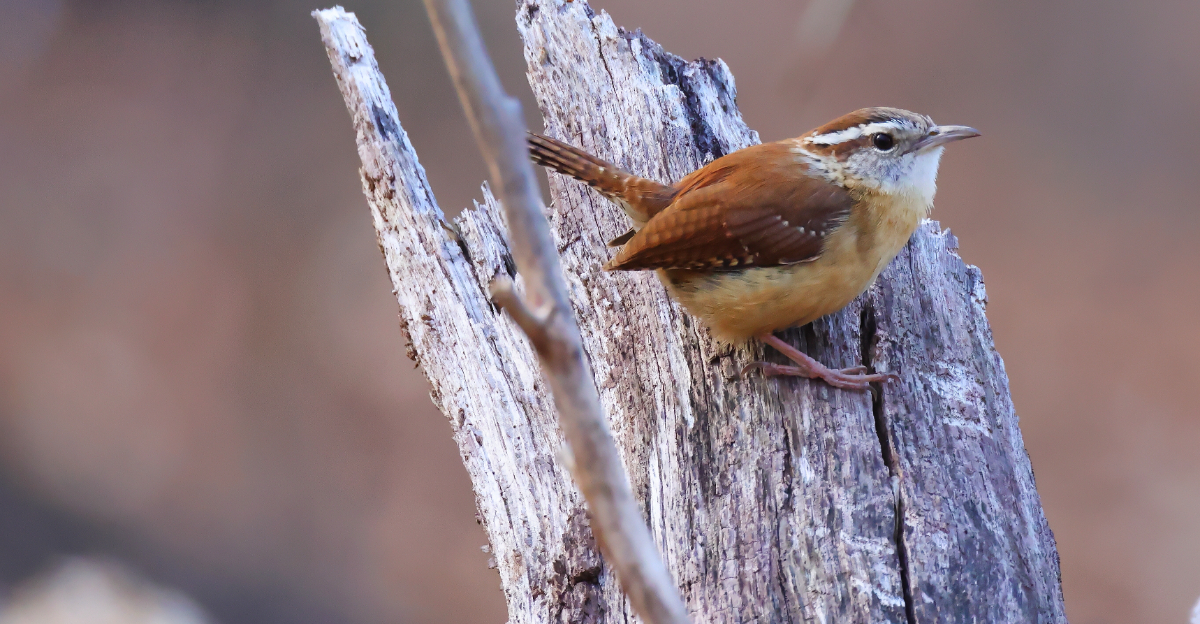
A Carolina wren chose your door. Not the neighbor’s.
Not the tree line fifty feet away. Your door, specifically, after surveying every other option available and deciding that spot was worth trusting with something irreplaceable.
That is not a small thing. Carolina wrens are bold but not careless.
A nest near a Florida door means the bird read the environment and calculated the risk. It concluded that daily human traffic was less threatening than anything else available.
That level of trust from a wild animal is earned, not given. The meaning behind a Carolina wren nesting at the threshold of a home runs deep in Southern and Florida tradition.
This particular bird, this particular placement, has carried significance across generations in ways that go well beyond standard bird folklore.
What the bird saw in that spot, and what different traditions have believed it signals, is a more layered story than it first appears.
1. Your Doorway Offers Shelter They Trust
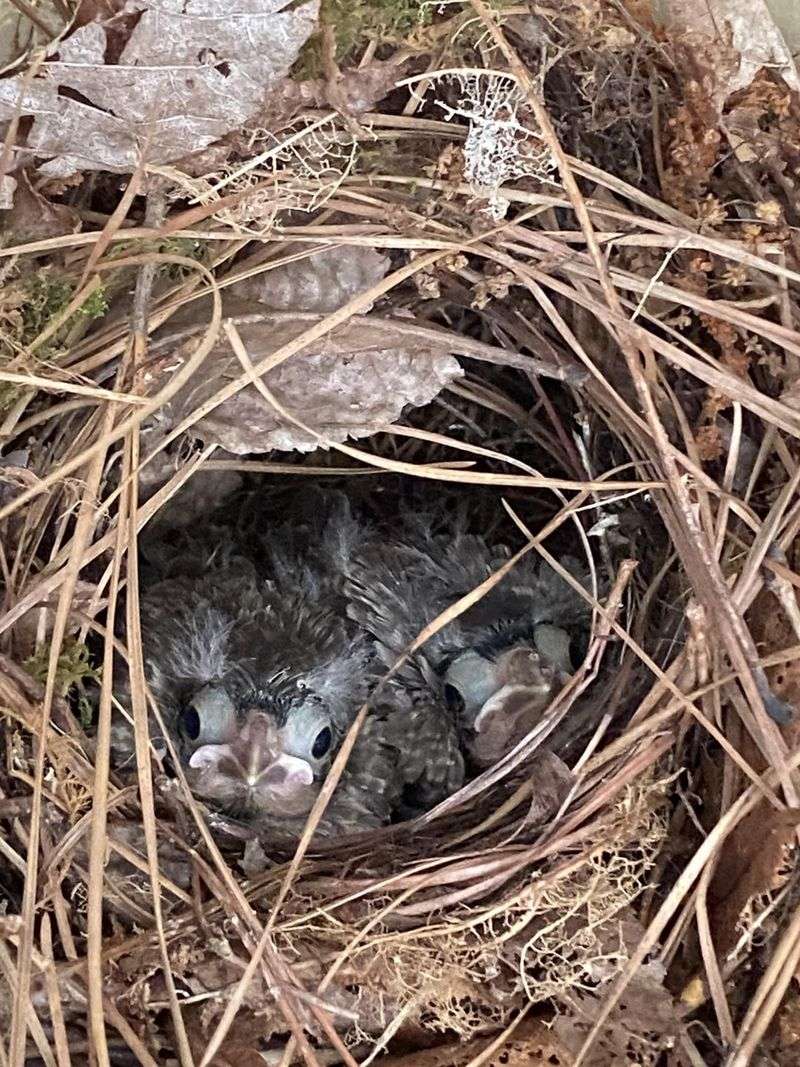
A tucked entryway corner, a deep porch overhang, or a hanging basket close to the wall can look very different to a small bird than it does to you.
What you see as a decorative space, a Carolina wren sees as a protected pocket with a roof overhead, walls on multiple sides, and cover from wind and rain.
That combination is exactly what a nesting bird searches for during breeding season.
Wrens are cavity-leaning nesters, meaning they naturally seek out spots that feel enclosed and shielded. A doorway that offers an overhang, a recessed ledge, or a dense hanging plant can check all those boxes.
The bird is not responding to you personally. It is responding to the physical structure of the space.
The safest thing you can do right away is give the nest room to breathe. If the nest is beside a door you use often, try using another entrance when practical.
Move calmly and quietly when passing nearby. Avoid letting pets linger in that area.
Reducing foot traffic around an active nest is one of the most effective ways to protect the birds without doing anything complicated.
2. Small Cavities Make Wrens Feel Secure
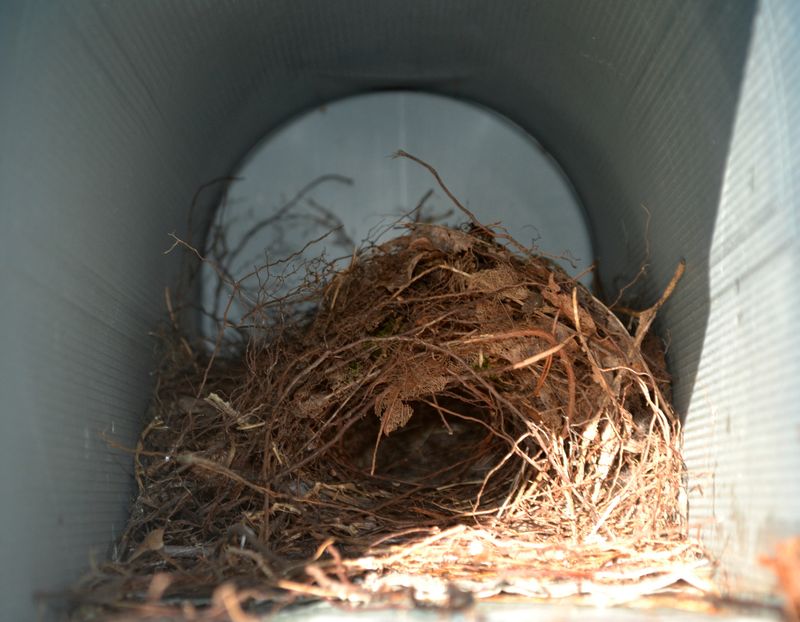
Wrens have a strong preference for enclosed, cavity-like spaces when choosing where to build a nest. According to the Cornell Lab of Ornithology, Carolina wrens readily nest in a wide range of human-made structures.
These include mailboxes, flowerpots, hanging baskets, shelves, garages, open sheds, and even old boots left on a porch. What connects all of those very different objects is the same basic feature: a sheltered opening that feels protected on most sides.
A small, dark interior space signals safety to a nesting wren. It limits the angles from which a predator could approach.
It also holds warmth, which matters for incubating eggs. From the bird’s perspective, a wicker basket or a tucked shelf bracket is not so different from a hollow in a tree trunk or a gap in a wooden fence post.
Resist the urge to peek inside or lift the nest to check on it. Repeated disturbance can cause adult birds to abandon the nest during early stages.
Your Florida Garden Changes Every Week. Your Plan Should Too.
Gardening in Florida changes quickly throughout the season. Every Friday you’ll receive a simple weekly plan showing exactly what to plant, prune, fertilize, harvest, and protect so you never miss the right timing.
If you suspect eggs or chicks are present, observe quietly from a comfortable distance. A pair of binoculars gives you a much safer view than stepping close to investigate.
3. A Nest Nearby Means Territory Is Active
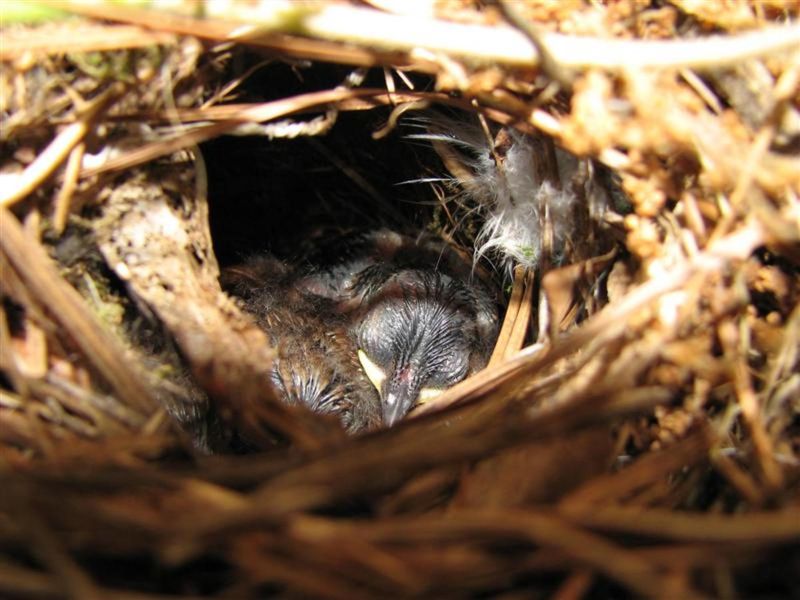
Finding a nest beside your Florida door usually means a pair of wrens has claimed the surrounding area as active breeding territory.
Carolina wrens are year-round residents across much of the Sunshine State, and they tend to hold defined territories that include reliable food sources, perch points, and cover.
A nest near your entry suggests all of those elements exist somewhere close by.
Insects are a core part of what makes a territory worth defending. Wrens feed heavily on beetles, caterpillars, spiders, grasshoppers, and other small invertebrates found in leaf litter, low shrubs, and garden beds.
If your yard has mulched areas, dense plantings, or a mix of sunny and shaded spots, it likely supports the food supply that attracted the pair in the first place.
Watching from a distance can be genuinely rewarding. You may notice the adults making repeated trips along the same flight paths, visiting the same perch points, and singing from the same spots each morning.
That predictable movement is a sign of an established territory, not random wandering. Avoid trimming shrubs or clearing leaf litter directly around the nest area until the nesting period has ended.
Keeping the habitat intact nearby supports the pair’s ability to feed their young.
4. Busy Parents Need Space Not Help
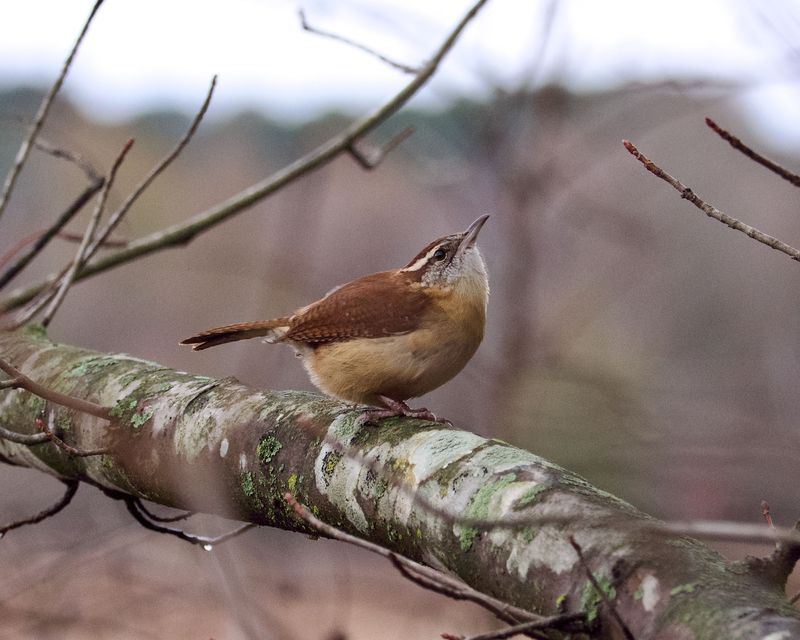
Adult Carolina wrens are capable, experienced parents. Both the male and female take part in raising the young, with the male often delivering food while the female broods the eggs or nestlings.
The system works well when the nest area stays calm and undisturbed. Human involvement, even well-meaning involvement, can disrupt that rhythm.
Keep pets away from the area around the nest. Dogs and cats that linger near an active nest can stress the parents enough to slow feeding visits.
Even a curious pet sitting quietly nearby can feel threatening to a bird that weighs less than an ounce. Use a leash, a barrier, or a temporary redirect to keep animals at a safe distance during the nesting period.
Avoid handling the nest, the eggs, or any young birds under any circumstances. If you notice a nestling on the ground and the parents appear to be nearby, leave it alone and give the adults space to respond.
If you have a genuine safety concern, such as a nest blocking a gas meter, an electrical panel, or a critical structural area, contact a licensed wildlife rehabilitator. You can also reach out to the Florida Fish and Wildlife Conservation Commission for guidance.
Do not attempt to move or relocate an active nest on your own.
5. Frequent Singing Can Signal A Pair Bond
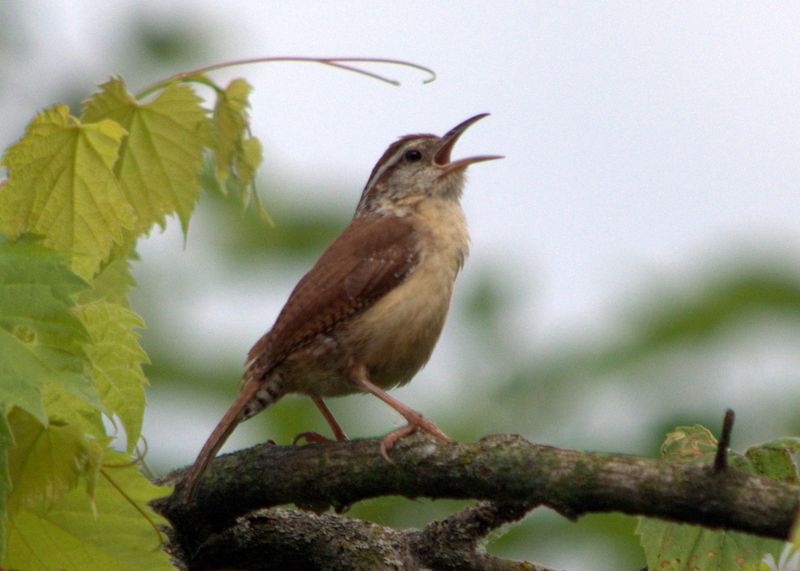
Few backyard birds in Florida can match the Carolina wren for sheer vocal power. Their song is loud, clear, and surprisingly far-reaching for such a compact bird.
If you have been hearing a sharp, repeating call near your porch or entryway, especially in the early morning hours, there is a good chance a territorial male is broadcasting from a nearby perch.
According to the Cornell Lab of Ornithology, male Carolina wrens sing year-round and can deliver more than 30 different song types. Singing near a structure where a nest is located is common behavior.
The male uses song to reinforce territory boundaries and maintain contact with his mate. Hearing that song frequently near your door during nesting season is a behavioral clue that the area is being actively used.
The female also produces calls, though her vocalizations differ from the male’s full song. Pairs use contact calls to stay coordinated while moving through their territory.
If you hear two distinct voices responding to each other near your porch, you are likely listening to a bonded pair communicating across the nesting site. Enjoy the sound from inside or from a relaxed distance.
The singing is part of what makes an active wren territory so lively and worth observing.
6. Porch Clutter Can Look Like Nesting Habitat
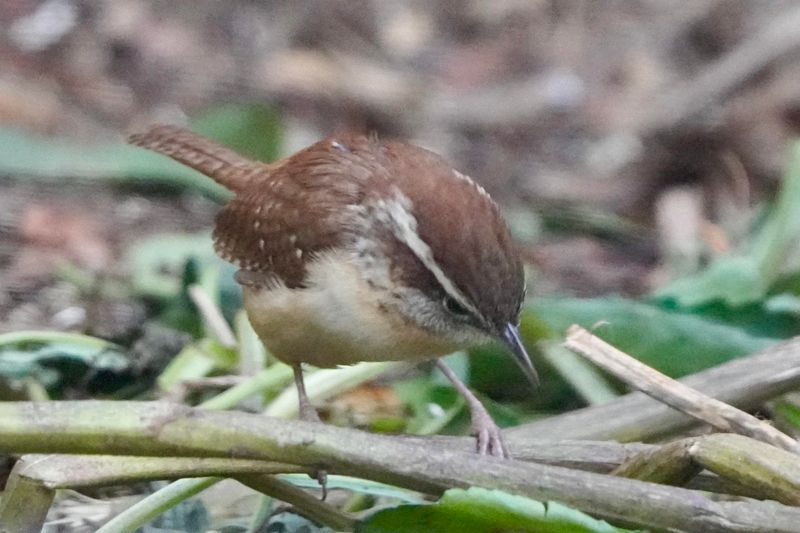
Old boots, unused flowerpots, rolled-up garden hoses, deep wreaths, stacked storage bins, and forgotten baskets all share one thing in common from a wren’s point of view. They offer a tucked, enclosed space that resembles a natural nesting cavity.
Porches and entryways that collect seasonal items or unused gear can be surprisingly attractive to a pair of wrens looking for a safe spot.
Once an active nest is in place, the most important step is to leave it alone until the nesting cycle is complete.
Carolina wren nesting cycles typically involve incubation lasting around two weeks, followed by a nestling period of roughly two more weeks before the young fledge.
After the birds have left on their own, you can safely reorganize or store the items that attracted them.
Going forward, a few practical habits can reduce the chance of a nest forming in an inconvenient location. Store seasonal decorations in sealed containers between uses.
Check hanging baskets and deep wreaths before hanging them at the start of each season. Keep shelves near entryways clear of items with deep pockets or enclosed corners.
None of these steps are difficult, and they make future porch management much simpler without harming any birds in the process.
7. Native Shrubs Give Future Nests Better Cover
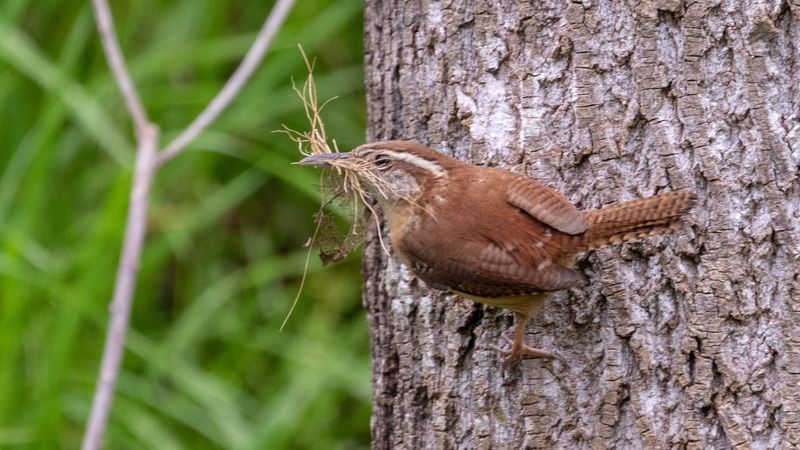
One of the most useful things a homeowner can do after a nesting season ends is think about the habitat surrounding the house.
Carolina wrens thrive in yards that offer layered vegetation, meaning a mix of low ground cover, mid-height shrubs, and taller trees or canopy plants.
That layering creates the kind of dense, insect-rich environment where wrens can feed, shelter, and nest more naturally.
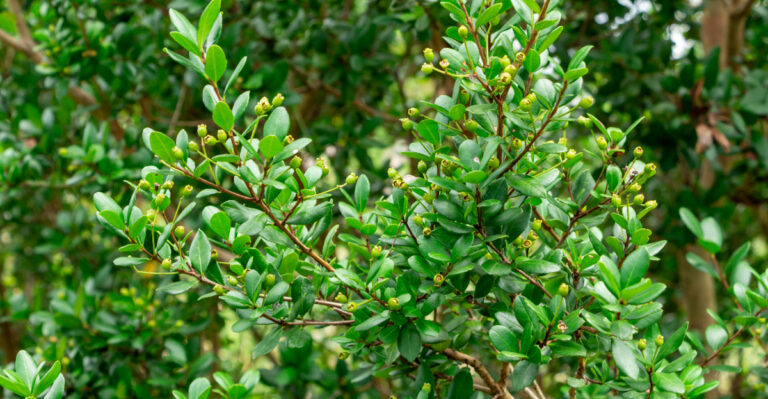
Several native plants work well for supporting wren habitat in local yards. Wax myrtle is a fast-growing native shrub that provides dense cover and berries that attract insects.
Beautyberry offers similar cover and produces fruit that benefits many bird species. Firebush attracts insects and pollinators, which in turn supports the invertebrate food supply that wrens depend on.
Simpson’s stopper and yaupon holly can also add structure and year-round cover to a planting design.
Reducing unnecessary pesticide use in the yard matters too. Wrens feed heavily on insects, so a yard treated heavily with broad-spectrum pesticides may offer less food than one managed with a lighter touch.
UF/IFAS and Florida-Friendly Landscaping resources offer practical guidance on reducing chemical inputs while maintaining a healthy yard.
Native plantings near the perimeter of the yard, rather than directly beside the door, can also give future nesting pairs a safer and more natural alternative to the front porch.
8. The Real Meaning Is A Yard That Feels Safe
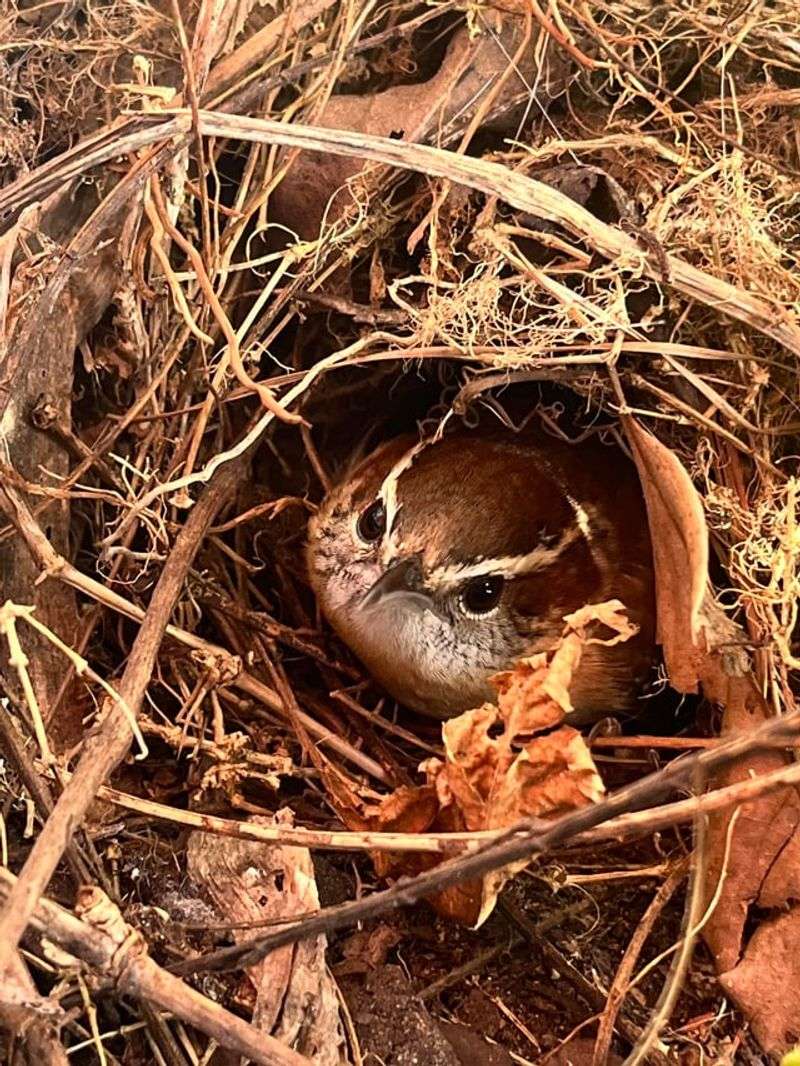
Stepping back from the details, the real meaning behind a Carolina wren nest near your door is straightforward. The bird found a spot that offered shelter from the elements, protection from most angles, proximity to food, and enough quiet to feel usable.
That combination does not happen by accident, but it also does not mean every corner of your yard is perfectly managed. It means one specific spot, at one specific moment, offered what the bird needed.
Wrens are adaptable and opportunistic. They do not require a pristine wildlife sanctuary.
They do respond well to yards that have some native cover, reduced chemical pressure, accessible insects, and a few sheltered pockets near structures.
If your yard provided enough of those elements to attract a nesting pair, that is a positive signal worth noticing, even if the location turned out to be inconvenient.
The best response remains the simplest one. Observe from a distance.
Keep pets away. Use another entrance if possible.
Avoid disturbing the nest, the eggs, or the adults. Wait out the nesting period, which typically spans four to six weeks from egg-laying to fledging.
When the young have left on their own, take a quiet moment to appreciate what happened. A pair of wrens chose your yard because it worked.
That is worth something, even when it means sharing your porch for a few weeks.