These Are The Ohio Trees Moving From Legal To Illegal
Ohio’s restricted plant list has been expanding quietly, and trees are no longer exempt from it.
Species that provided shade, structure, and curb appeal in Ohio yards for decades are showing up on prohibited lists as their impact on natural areas becomes harder to ignore.
The shift is not happening all at once. It moves county by county.
State-level regulation pushes it further. Sometimes nursery industry decisions pull a tree from availability before any official restriction requires it.
A tree that was available and unremarkable last season may be on a restricted list this one. Several already are.
For anyone with these trees in the ground, or planning to add them, knowing where the legal lines currently sit matters more than most Ohio homeowners realize. The list is more surprising than expected.
Some of the trees on it have been in Ohio front yards for generations without anyone questioning whether they belonged.
1. Callery Pear Is No Longer A Safe Nursery Pick
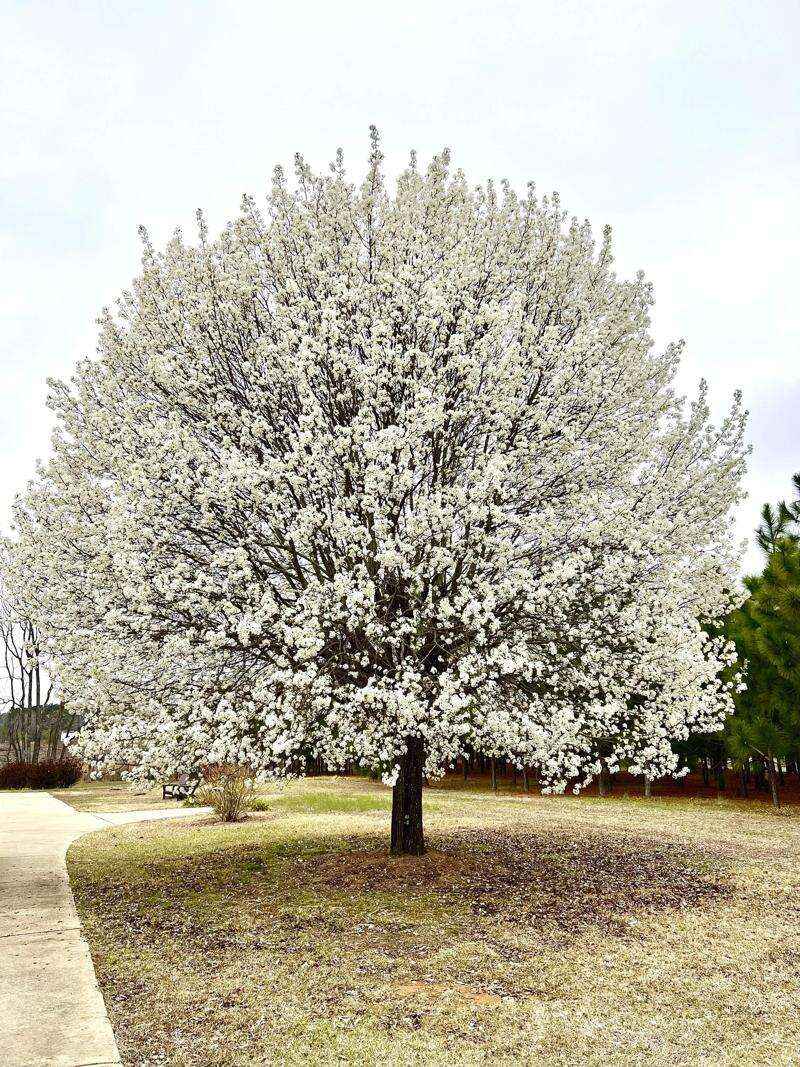
A row of white-blooming trees along a subdivision road in early spring looks almost postcard-perfect. But those trees may be Callery pear, Pyrus calleryana, and the rules around them have shifted significantly.
Ohio Administrative Code Rule 901:5-30-01 lists Callery pear as an invasive plant. A sale exemption that had been in place ended on January 7, 2023, according to Ohio Department of Agriculture guidance.
It can no longer be legally sold, offered for sale, propagated, distributed, imported, or intentionally spread in the state under current rules.
Callery pear was once one of the most popular ornamental trees in American landscaping. It offered fast growth, showy spring flowers, and decent fall color.
Nurseries stocked it in large quantities, and it appeared in parking lots, front yards, and roadside plantings across the state for decades.
The problem is that Callery pear cultivars, including the well-known Bradford pear, cross-pollinate with each other and with wild pear relatives.
The resulting seedlings are thorny, aggressive, and capable of spreading into natural areas, forest edges, and old fields.
OSU Extension invasive plant resources note that Callery pear spreads readily when birds eat the small fruits and deposit seeds away from the original planting.
If you have an older Callery pear already growing in your yard, the current rule does not require immediate removal.
Planning a thoughtful replacement over time is a reasonable approach. Good native alternatives can include serviceberry, Amelanchier species, or native flowering dogwood, Cornus florida, purchased from a reputable nursery.
Do not share seedlings, move seedlings to new spots, or buy new trees labeled as Callery pear or Bradford pear.
2. Tree Of Heaven Spreads Faster Than Homeowners Realize
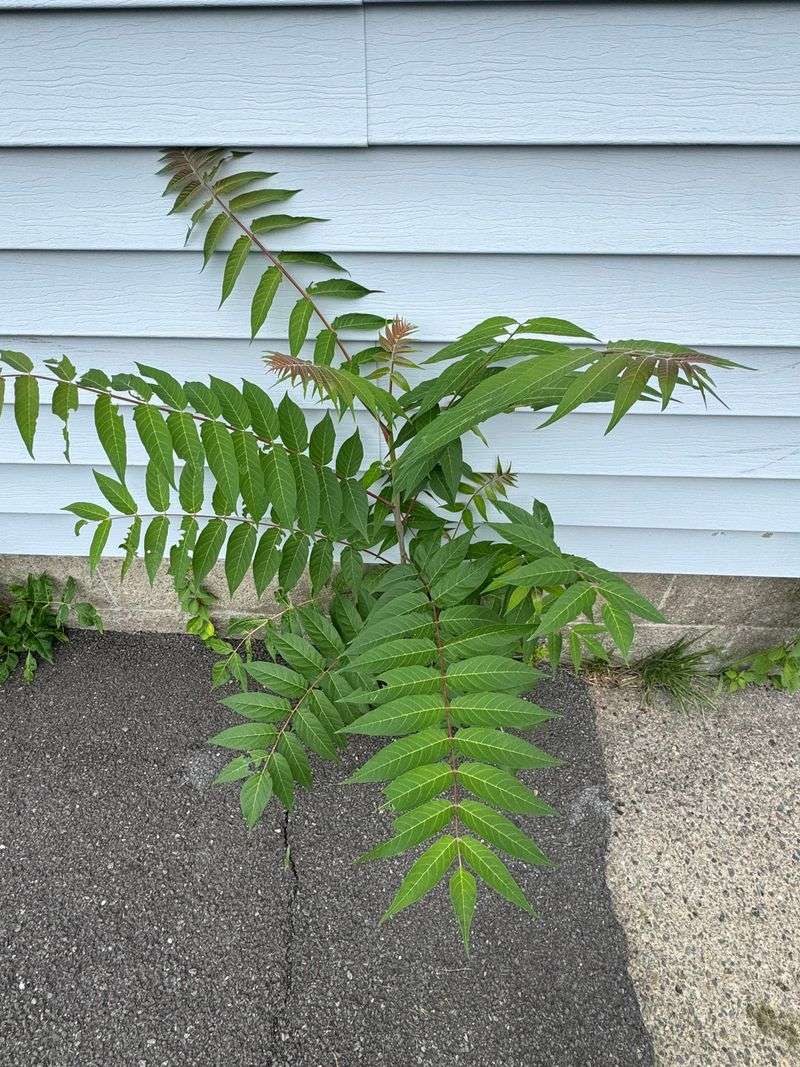
A volunteer sprout pushing up beside a garage wall or cracking through an alley pavement might not look dangerous. If those leaves are long, compound, and slightly foul-smelling when crushed, the tree could be Ailanthus altissima, commonly called tree of heaven.
Ohio Administrative Code Rule 901:5-30-01 lists it as an invasive plant. This prohibits its sale, propagation, distribution, import, and intentional spread under current state rules.
Your Ohio Garden Changes Every Week. Your Plan Should Too.
Gardening in Ohio changes quickly throughout the season. Every Friday you’ll receive a simple weekly plan showing exactly what to plant, prune, fertilize, harvest, and protect so you never miss the right timing.
Tree of heaven earned its reputation as one of the most aggressive invaders in eastern North America.
A single mature female tree can produce large numbers of winged seeds that travel by wind into vacant lots, roadsides, forest edges, and disturbed urban sites.
Beyond seeds, it also spreads through root sprouts, meaning cutting one stem can sometimes trigger a flush of new growth from the roots.
Ohio Invasive Plants Council guidance notes that control requires a careful, planned approach rather than a simple cut-and-go effort.
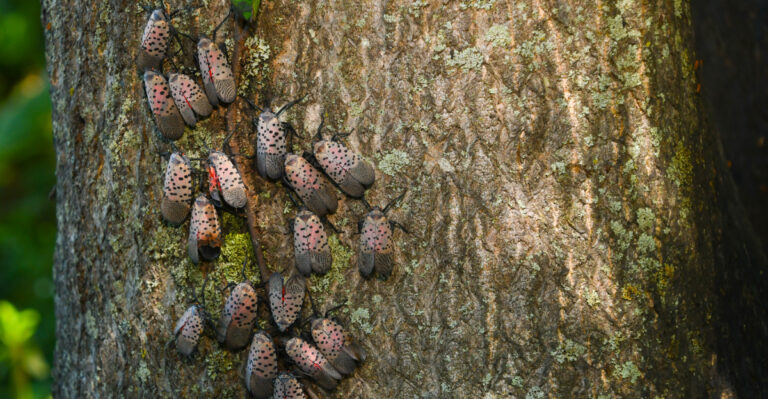
Tree of heaven is also a confirmed preferred host for spotted lanternfly, an invasive pest that threatens fruit crops and hardwood trees. That’s according to Ohio Department of Agriculture and Penn State Extension sources.
That connection makes managing this tree even more pressing in regions where spotted lanternfly populations are expanding. If you suspect tree of heaven on your property, confirm the identification using OSU Extension resources before taking action.
Do not move seedlings, share root sprouts, or transplant any part of the tree. For control guidance, consult OSU Extension invasive plant resources and always follow label directions if any treatment product is involved.
Avoid moving plant material off-site without checking local guidance first.
3. White Mulberry Creates More Trouble Than Shade
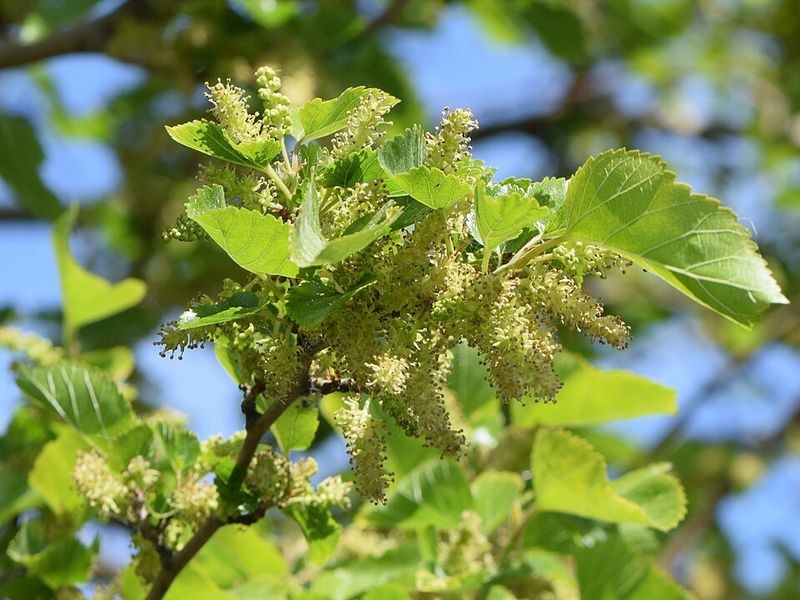
Under a bird feeder or along an old fence line, a mulberry seedling can sprout so quietly that most people never notice it until the tree is already well established.
White mulberry, Morus alba, is listed as an invasive plant under Ohio Administrative Code Rule 901:5-30-01.
This makes it subject to the same restrictions on sale, propagation, distribution, and intentional spread that apply to other plants on the state list.
White mulberry was introduced from Asia centuries ago, originally to support silk production in North America. It adapted quickly and spread far beyond any intended planting.
Birds eat the fruits enthusiastically and scatter seeds across yards, fields, and woodland edges. OSU Extension invasive plant resources note that white mulberry can hybridize with native red mulberry, Morus rubra.
This is a serious concern because native red mulberry is already a species of conservation interest in parts of the state. Hybridization can dilute the genetic integrity of native populations over time.
Before removing any mulberry tree, confirm which species you have. Native red mulberry and white mulberry can look similar to an untrained eye, and the differences matter for both conservation and legal reasons.
Leaf texture, fruit color, and twig characteristics can help with identification. But consulting a local OSU Extension office or a certified arborist is a smart move when you are unsure.
Do not share white mulberry seedlings, transplant volunteer sprouts, or purchase white mulberry from any source. For shade and wildlife value, native alternatives such as serviceberry or native black cherry, Prunus serotina, offer real ecological benefits.
That’s true when purchased from reputable nurseries and without the spread risk.
4. Princess Tree Turns One Pretty Bloom Into Thousands Of Seeds

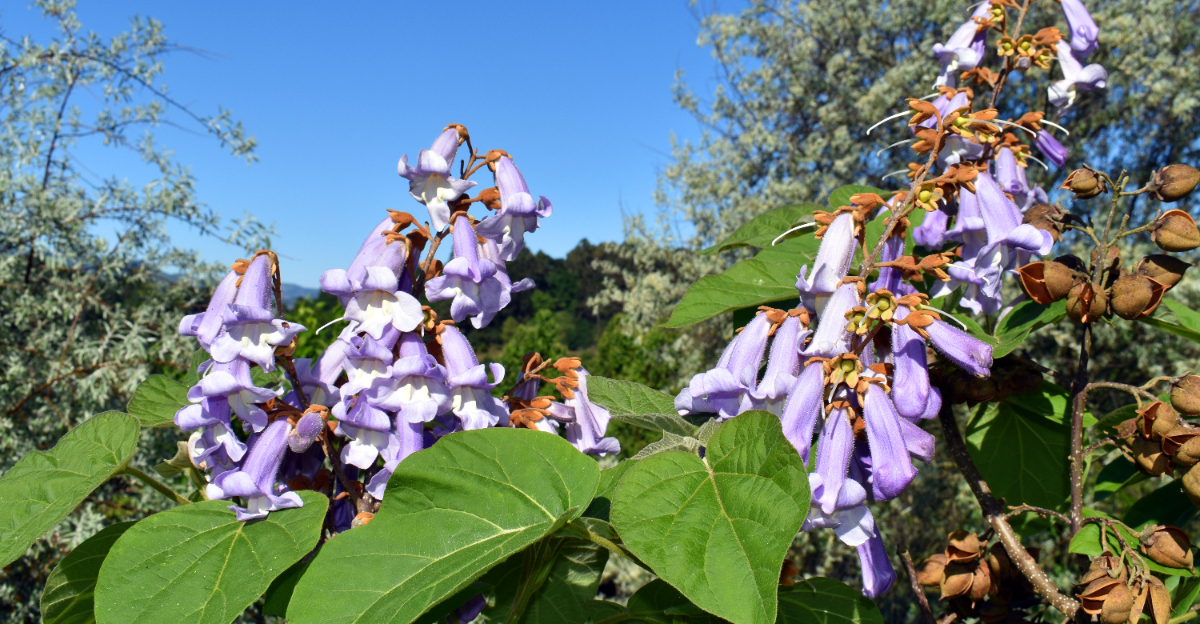
Purple flowers cascading over a vacant lot or a crumbling wall in early spring can stop a person in their tracks. That striking display often belongs to princess tree, Paulownia tomentosa, a fast-growing nonnative tree.
It is listed as an invasive plant under Ohio Administrative Code Rule 901:5-30-01. Its sale, propagation, distribution, import, and intentional spread are prohibited under current state rules.
Princess tree has a reputation for jaw-dropping speed. It can grow several feet in a single season under good conditions, which made it appealing to homeowners wanting quick shade or a dramatic focal point.
The problem is that speed comes with a serious catch. According to Ohio Invasive Plants Council guidance, a single mature princess tree can produce an enormous number of lightweight seeds per year.
Those seeds travel easily by wind into disturbed sites, stream banks, roadsides, and rocky slopes. It colonizes areas that have been cleared, burned, or flooded with particular ease.
Once established, princess tree is difficult to remove completely because stumps resprout vigorously. Seedlings should be pulled or treated early before they develop strong root systems.
If you spot seedlings on your property, consult OSU Extension invasive plant resources for safe, source-backed guidance on early removal.
Do not move seedlings to other locations, offer them to neighbors, or plant princess tree as a fast shade solution, no matter how appealing the growth rate sounds.
For fast-growing legal shade, native options like tulip tree, Liriodendron tulipifera, can deliver impressive height. That’s true when sourced from a reputable nursery, without the invasive downside.
5. Siberian Elm Should Not Be Shared Or Moved
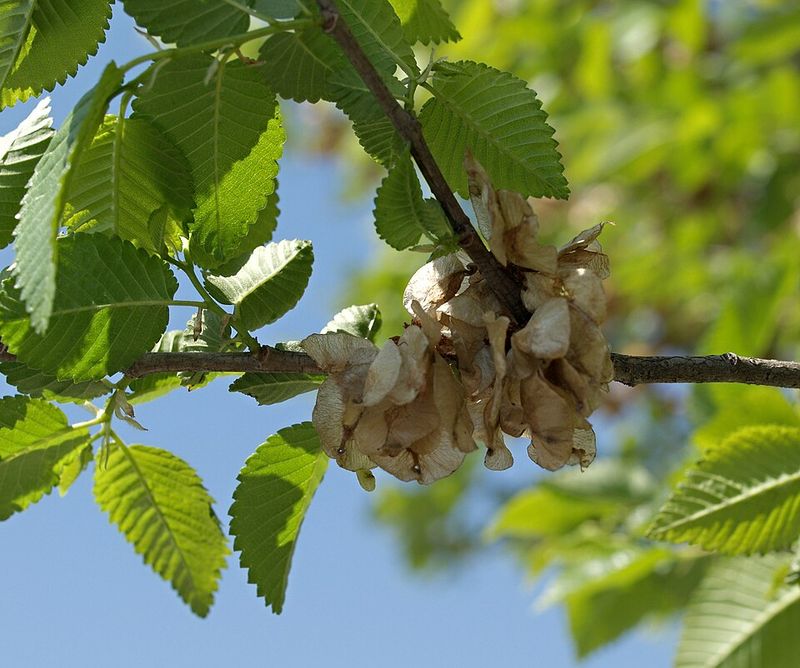
Along alleys, old fence rows, and disturbed lots across the state, a scrappy-looking elm with small, slightly lopsided leaves has been spreading quietly. It has been seeding itself into places where nobody planted it.
That tree is likely Siberian elm, Ulmus pumila, listed as an invasive plant under Ohio Administrative Code Rule 901:5-30-01. Under current state rules, it is prohibited from sale, propagation, distribution, import, and intentional spread.
Siberian elm was introduced to North America decades ago, partly for its toughness in harsh conditions like drought, compacted soil, and cold winters. It earned a temporary reputation as a useful windbreak or quick-fill tree.
Over time, its habit of producing large quantities of wind-carried seeds and colonizing disturbed ground earned it a spot on invasive plant lists. Ohio Invasive Plants Council resources note that it can outcompete native vegetation in open or degraded sites, reducing plant diversity over time.
One practical challenge with Siberian elm is identification. Several elm species grow in the state, including native American elm, Ulmus americana, and slippery elm, Ulmus rubra.
Both play valuable roles in local ecosystems. Siberian elm tends to have smaller, less deeply toothed leaves and a rougher, more irregular growth habit.
But getting a confident identification before removing any tree is worth the extra step. A local OSU Extension office or a certified arborist can help confirm which elm you have.
Do not transplant volunteer Siberian elm seedlings from alleys or fence lines to other spots in the yard. If you need an elm for your landscape, look for nursery-propagated native elms or disease-resistant cultivars from reputable sources.
6. Crack Willow Belongs On The Problem Tree List
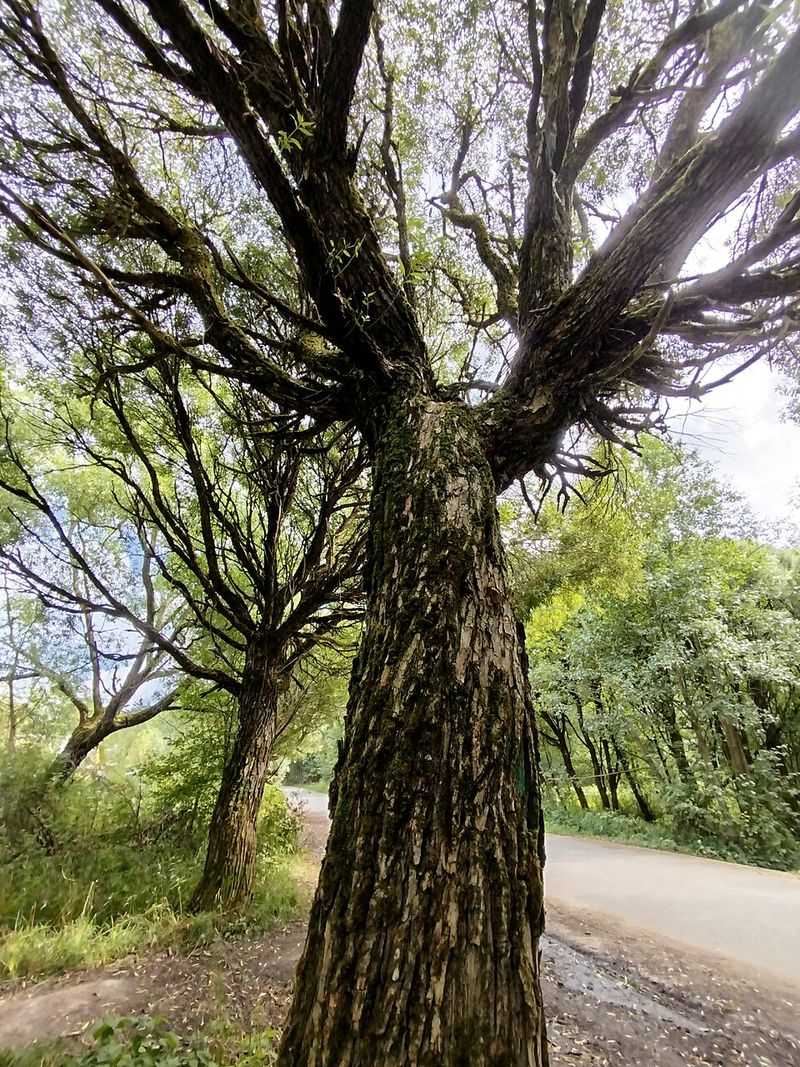
Near a creek bank or a wet roadside ditch, a willow tree dropping branches into the water might look like a natural part of the landscape. If that tree is crack willow, Salix fragilis, appearances are misleading.
Crack willow is listed as an invasive plant under Ohio Administrative Code Rule 901:5-30-01. Its sale, propagation, distribution, import, and intentional spread are prohibited under current state rules.
The common name comes from a real behavior. Crack willow branches break off easily, and those broken pieces can root wherever they land along a streambank, ditch, or flooded area.
Ohio Invasive Plants Council guidance notes that this ability to spread from fragments makes waterways a natural highway for the tree. A single branch floating downstream can establish a new colony far from the original tree.
This trait, combined with fast growth, allows crack willow to crowd out native streamside plants like native willows, buttonbush, and other riparian vegetation.
Not all willows are restricted, so confirming the exact species before removing or avoiding any willow is important. Native willows such as black willow, Salix nigra, are valuable for streambank stabilization and wildlife habitat.
Crack willow tends to have longer, narrower leaves and notably brittle branches compared to some native species. But a local extension office or arborist can help confirm identification.
Do not move crack willow cuttings, share branches for rooting, or plant it near streams, ponds, or wet ditches. The broader lesson from all six trees on this list is the same.
The smarter move is to stop passing problem trees into the next yard, woodlot, or creek bank, one seedling at a time.