The One August Task That Determines How Well California Wisteria Blooms Next Spring
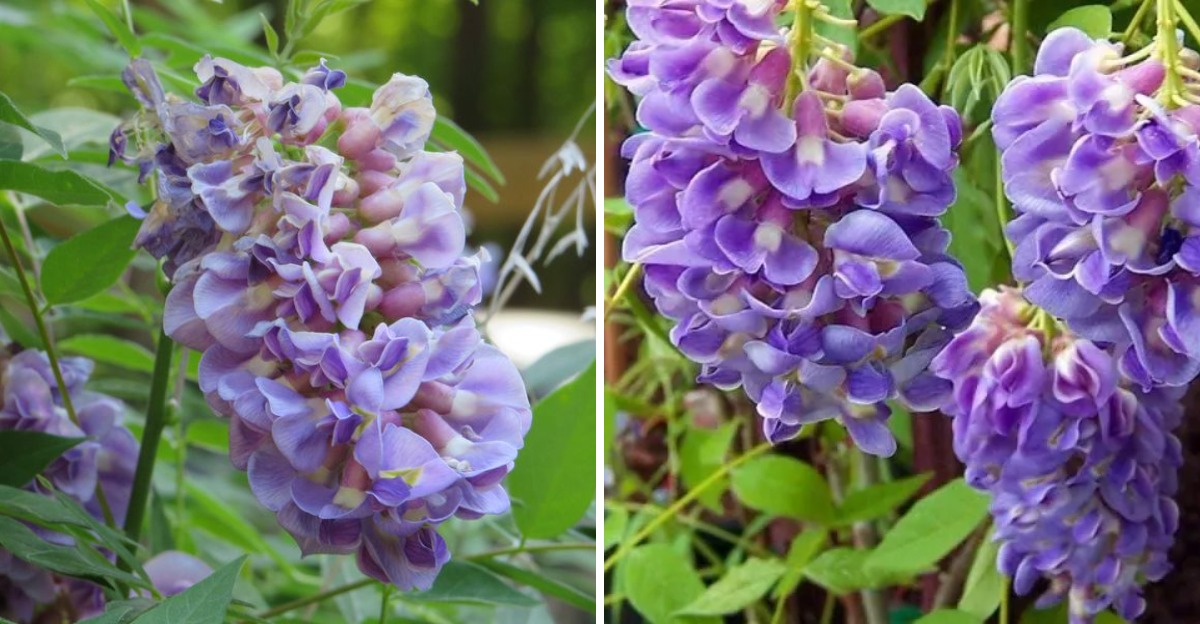
August growth can make this vine look wildly successful.
Long stems race across pergolas, curl around gutters, stretch over fences, and reach for anything close enough to grab.
From a distance, all that green growth looks promising. A gardener could easily assume a vigorous vine is storing up energy for a spectacular spring display.
That is not always how it works.
Too much unchecked summer growth can turn the plant into a leafy machine that spends its strength on long shoots instead of the short flowering spurs that create next spring’s show.
The vine may look huge by September, then give only a disappointing sprinkle of flowers when spring arrives.
The fix is not fertilizer, extra watering, or a hard winter chop.
The most important job happens now, while the structure is still visible and the season’s growth is easy to identify.
A careful August pruning helps redirect energy, control size, and set up the short side growth where flower buds are most likely to form.
So what is the one August task that determines how well California wisteria blooms next spring?
It starts with pruning the wild summer growth before it takes over the whole vine.
Make Summer Pruning The Priority
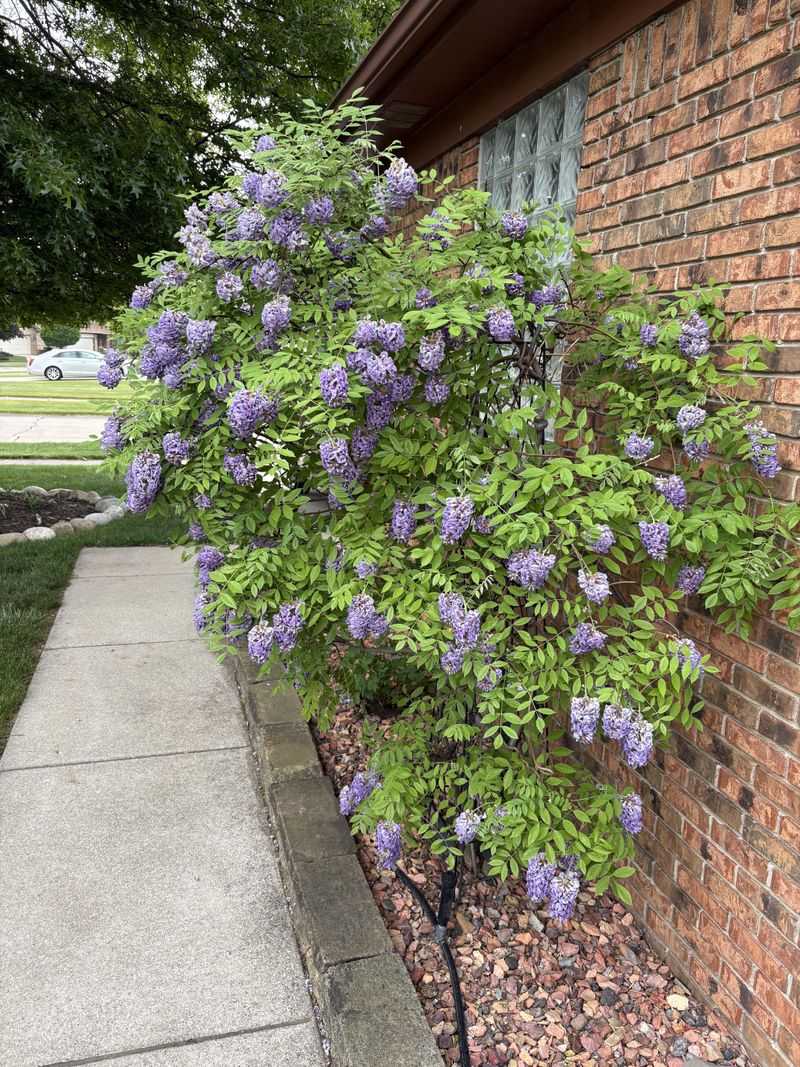
Summer pruning is the August task that changes everything.
Wisteria grows with tremendous force in California gardens, especially once roots are established and the vine has access to full sun.
Long, whippy shoots may look impressive, but they are not the same as bloom-ready growth. Left alone, they keep stretching, twining, and stealing energy from the compact spurs that matter most.
August pruning brings the vine back under control. It tells the plant to stop pouring so much effort into leafy length.
This does not replace winter pruning. The two jobs work together.
Summer pruning shortens the season’s vigorous growth. Winter pruning refines those shortened shoots into tighter flowering spurs.
Skip the August step, and winter becomes harder. Instead of shaping a clear framework, you face a tangled mass of stems.
Chinese and Japanese wisteria are the common ornamental types in many California gardens. Both need firm management because they can grow aggressively once established.
Control is not just about looks. A neglected vine can damage supports, lift lightweight structures, and sneak into places it does not belong.
Pruning alone does not guarantee flowers. Age, sun, nitrogen, pruning history, root disturbance, and variety all play a role.
But summer pruning gives a mature, healthy vine its best chance.
It turns wild August growth into the starting point for next spring’s bloom display.
Find The Long Whippy Side Shoots
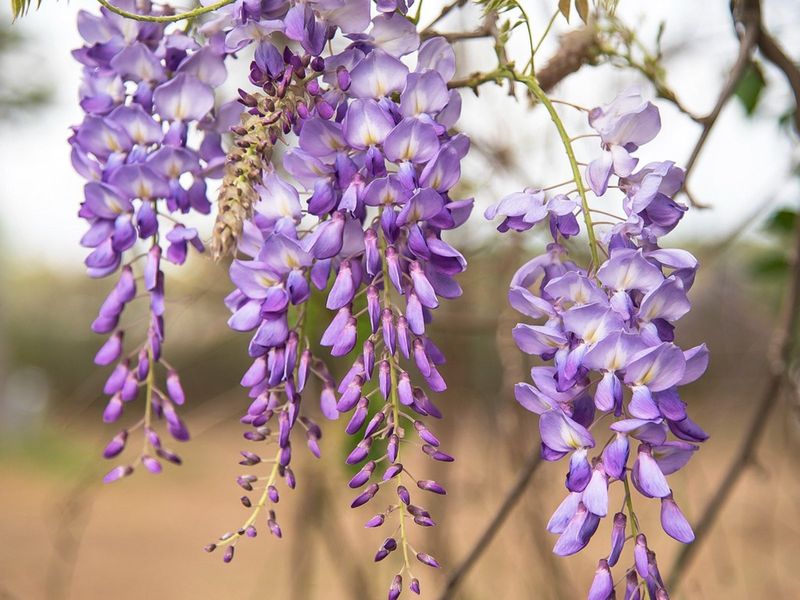
The right stems are easy to spot once you know the pattern.
Look for the long, flexible shoots that grew during the current season. They often stretch several feet beyond the main framework, waving outward from the vine like green ropes. Those are the stems that need attention in August.
Do not start by cutting randomly. First, step back and study the whole vine.
Your California Garden Changes Every Week. Your Plan Should Too.
Gardening in California changes quickly throughout the season. Every Friday you’ll receive a simple weekly plan showing exactly what to plant, prune, fertilize, harvest, and protect so you never miss the right timing.
Find the main framework. These are the permanent trunks, arms, or trained branches that give the plant its shape.
Then look for side shoots coming off that framework. The long, fresh, leafy ones are the summer growth you want to shorten.
They may wrap around nearby plants. They may also snake under rooflines, behind trellis slats, or through railings.
Untangle gently where possible. Pulling too hard can tear bark or break stems you meant to keep.
Work in sections. One pergola post, one fence panel, or one trellis arm at a time keeps the job manageable.
Avoid cutting the permanent structure by mistake. Older framework stems are usually thicker, woodier, and more important.
Fresh shoots are greener and more flexible. They are also the easiest to shorten cleanly.
Mark uncertain stems with plant ties. A quick visual marker can prevent accidental cuts.
The goal is simple.
Keep the framework, shorten the wild side growth, and let the vine focus on bloom-building wood instead of endless reach.
Cut Side Shoots Back To A Few Leaves
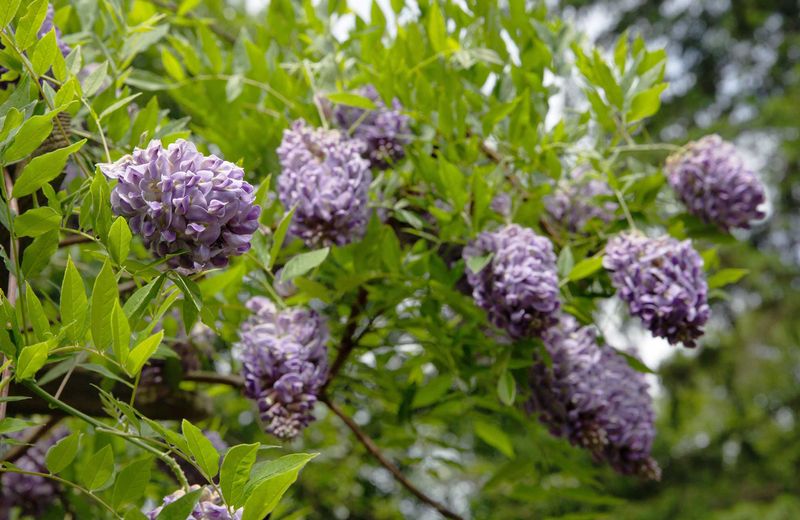
The cut should be firm but not brutal.
In August, shorten the long side shoots back to a manageable length, often leaving several leaves on each shoot.
Many gardeners aim for about six leaves from the main stem, creating a short spur that can be refined again in winter.
Do not cut flush to the main branch. The short side section is valuable. That remaining stub can mature into the spur system that holds future flower buds.
Use sharp pruners. Clean cuts heal better and make the job easier on woody vines. Cut just beyond a leaf node. That gives the plant a clear point from which to respond.
Avoid ragged tearing. Wisteria stems can be tough, and dull pruners crush rather than cut. Work slowly around the plant. It is easy to remove too much when the vine is tangled.
Leave short side shoots that already look compact. Not every stem needs the same cut. Remove excessively long, thin, tangled growth first. That usually clears the view and makes the rest easier.
Do not shear the vine like a hedge. Wisteria needs selective cuts that respect the framework. The plant may push some new growth after pruning. That is normal during warm weather.
August pruning is about converting chaos into short, useful growth. A few leaves left behind can be far more valuable than several feet of wandering vine.
Preserve The Flowering Spurs
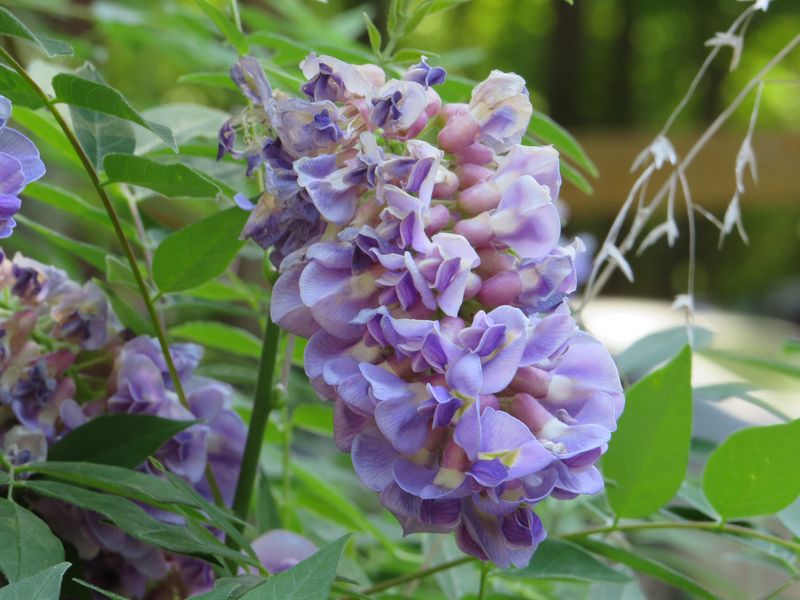
Short, stubby growth is not clutter.
Those compact spurs along older stems are often where flowers form. A common mistake is cutting them off because they look messy, knobby, or unimportant. In reality, they may be the most valuable growth on the entire vine.
Learn to recognize them. Flowering spurs are short, woody side growths that sit close to the main framework.
They do not race across the trellis. They stay compact.
That compact habit is exactly what you want. Long stems make leaves, while mature spurs are more likely to support flowers.
Avoid stripping the main arms clean. A bare framework may look tidy, but it can remove bloom potential.
Cut long side shoots, not every side shoot. The difference matters.
Look before each cut. A spur may sit near the base of a longer shoot, and cutting too close can remove it.
Older vines may have many spurs. Keep the strongest and best-placed ones.
Remove dead or weak material. Brown, brittle, clearly lifeless pieces are different from healthy spurs.
Do not panic over knobby texture. Productive wisteria wood often looks less smooth than new growth.
Winter pruning will refine spurs further. August does not need to perfect every detail.
A gardener who protects spurs protects spring flowers.
Those little stubby pieces may be the reason the vine finally turns from leafy to spectacular.
Keep The Main Framework Clear
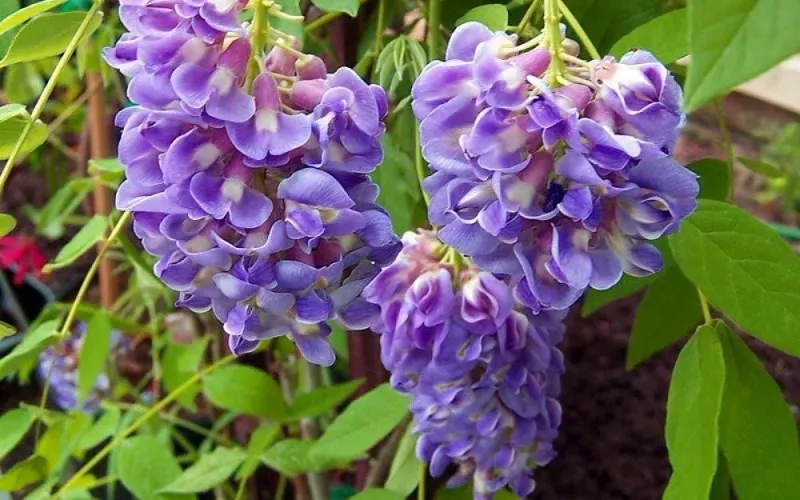
A strong framework makes pruning easier every year.
Wisteria needs a permanent structure: a trunk, trained arms, or main branches tied to a pergola, arbor, fence, or wall support.
August is a good time to clear leafy clutter away from that framework so the plant does not become impossible to manage.
Start with the oldest, strongest lines. These are the bones of the vine.
Keep them tied securely. Loose growth can whip in wind or pull away from the support.
Use soft ties. Wire or tight plastic can cut into thickening stems over time.
Remove stems growing in the wrong direction. Shoots heading into gutters, shingles, siding, windows, or neighboring shrubs should not be encouraged.
Watch rooflines carefully. Wisteria can get heavy and intrusive when allowed to climb where it should not.
Keep growth off weak structures. Lightweight lattice, thin wire, and flimsy pergolas may not support mature vines safely.
Train wanted stems before cutting everything else. A well-placed young shoot may become useful framework.
Tie first, prune second. That keeps the vine from losing a stem you actually needed.
Leave space for airflow. A packed mass of leaves dries slowly and becomes harder to inspect.
The clearer the framework, the easier winter pruning becomes.
August is the month to turn a leafy tangle back into a plant with visible bones.
Remove Shoots That Invade The Wrong Places
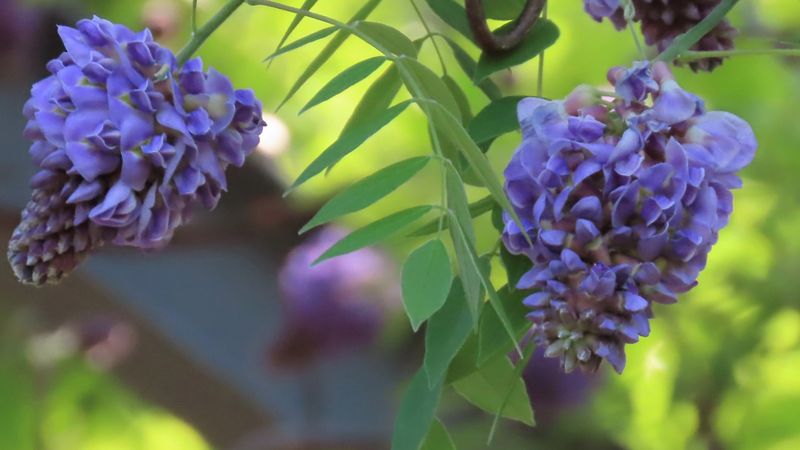
Wisteria does not respect boundaries on its own. A shoot that looks harmless in August can become a problem by fall.
It can twist into gutters, wrap around downspouts, creep under roof tiles, or wind through nearby trees and shrubs. Removing those stems now prevents bigger headaches later.
Look beyond the trellis. The most troublesome growth is often outside the area you usually inspect.
Check under eaves. Young shoots can slip into tight spaces quickly.
Check nearby trees. Wisteria climbing into a tree becomes harder to remove with each season.
Check fences and gates. Twining stems can interfere with hinges, latches, and boards.
Cut unwanted shoots back to their point of origin. Do not leave long stubs that immediately re-tangle.
Pull loose stems down gently. Cutting first, then tugging, can leave pieces stuck in high places.
Do not let stems wrap around young tree trunks. They can girdle or distort smaller plants.
Keep the vine away from utility lines. That job should never become a pruning challenge.
Watch for suckers near the base. Remove unwanted shoots rising from the root area or below graft points.
Repeat the check later. Wisteria can send out more growth after August pruning.
This is practical pruning, not just bloom pruning.
A controlled vine flowers better, looks better, and causes far less damage around a California home.
Do Not Feed It Into More Leaves
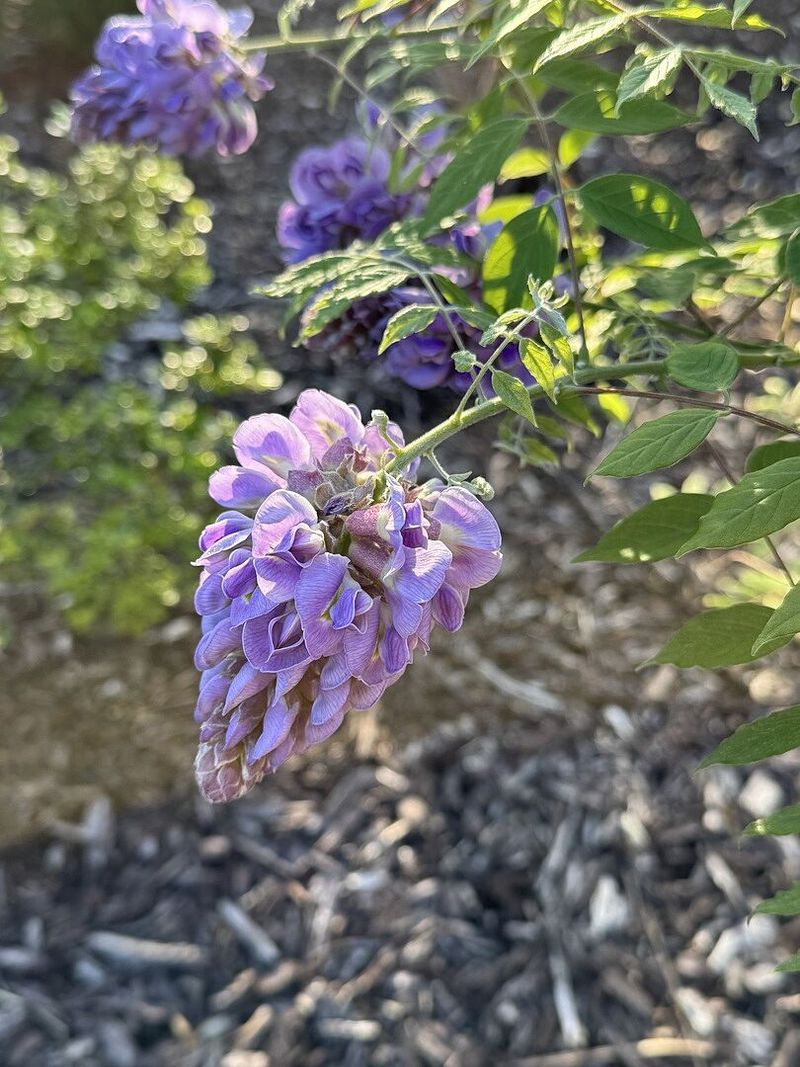
Fertilizer can be the reason flowers never show.
Wisteria is vigorous by nature, and extra nitrogen can push even more leafy growth. A vine that already races across a structure in August does not need encouragement to grow longer. It needs direction.
Avoid high-nitrogen fertilizer. That kind of feeding often produces leaves and stems rather than flowers.
A lush green vine is not always a healthy bloomer. It may be putting energy in the wrong place.
Check the lawn nearby. Turf fertilizer can reach wisteria roots and feed the vine without you meaning to.
Watch runoff from planted beds. Nitrogen applied around neighboring shrubs can move into the vine’s root zone.
Do not fertilize out of frustration. Lack of flowers is not automatically a hunger problem.
Too much feeding can delay maturity. The vine keeps behaving like a teenager, all growth and no flowers.
Soil testing helps before adding nutrients. Guessing can make the problem worse.
Phosphorus-heavy bloom products are not a guaranteed fix. Soil chemistry and plant age still matter.
Established wisteria often needs little feeding. Good sun and proper pruning matter more.
Mulch lightly where needed, but do not bury the crown. Organic matter should support soil, not smother the base.
August is not the moment to push.
Let pruning, sunlight, and restraint guide the vine toward flowers instead of another wave of leaves.