The Native Tree Arizona Homeowners Are Choosing Instead Of African Sumac
Not every shade tree proves to be the right long-term choice. More yards are making room for a native option that fits the desert much better.
A tree that works with the climate usually asks for less once it becomes established. That is one reason more homeowners are making the switch.
Good landscaping is about more than appearance alone. The right tree can offer lasting benefits without demanding constant attention.
Before planting another familiar favorite, it is worth looking at what performs naturally in desert conditions. The difference can be surprising.
Choosing native trees often leads to fewer maintenance headaches over time. That makes every planting decision count a little more.
One native tree is steadily replacing African sumac, and there are practical reasons why it keeps earning a place in more Arizona yards.
1. Foothill Palo Verde Needs Less Water Than African Sumac
Water bills in the desert add up fast, and Foothill Palo Verde keeps them lower than most people expect. Once established, this tree pulls moisture from deep soil layers and rarely needs supplemental watering.
African sumac, by contrast, often needs regular irrigation to stay healthy through the hottest months.
Foothill Palo Verde is built for dry conditions. Its green bark actually photosynthesizes, meaning the tree can produce energy even when it drops its tiny leaves during drought.
That adaptation is real and practical, not just a fun fact.
Getting established usually takes one to two years with occasional deep watering. After that, most homeowners in low-desert areas cut irrigation back significantly.
Rainfall alone often keeps the tree going through cooler seasons.
Roots spread wide rather than deep, so placing it away from foundations and pipes matters. Proper placement from the start reduces long-term problems.
A tree that fits its spot naturally needs far less intervention over time.
Choosing a drought-tolerant native is not just about saving water. It is about planting something that belongs in the environment.
Foothill Palo Verde evolved here, and that shows in how little it asks from the people growing it.
2. Smaller Size Fits More Yards
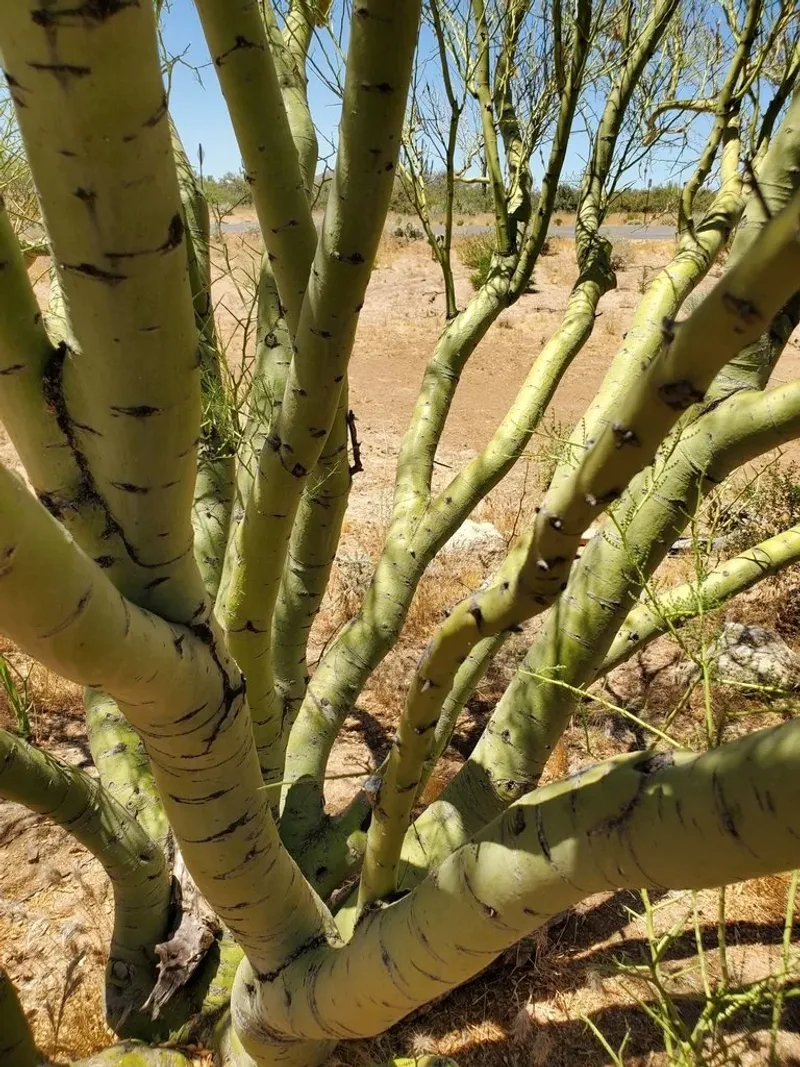
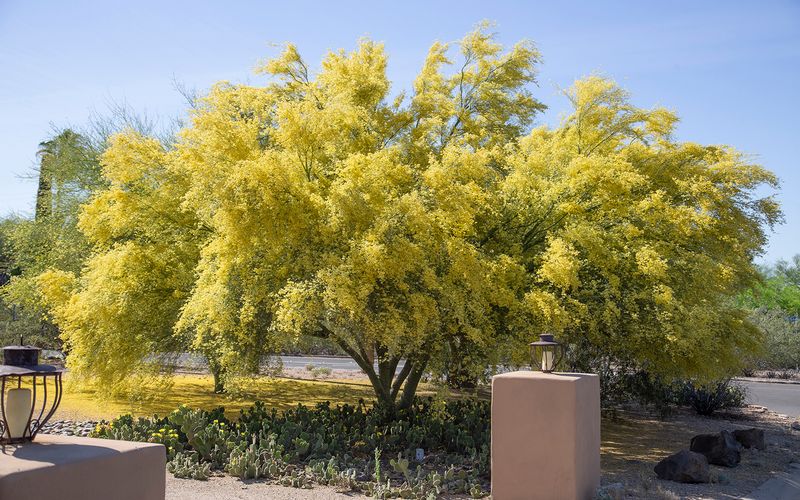
African sumac can push 25 to 35 feet wide over time, which overwhelms most suburban lots. Foothill Palo Verde grows more modestly, typically reaching 15 to 20 feet in height and spread under average conditions.
That size difference matters a lot in tighter yards.
Smaller canopies mean less root competition with nearby plants. Neighbors appreciate it too, since branches are less likely to creep over fences or block sightlines.
Fitting a tree to its space from the beginning saves years of heavy pruning later.
Palo Verde canopies are also open and airy rather than dense. Filtered shade lets some sunlight reach the ground below, which keeps grass or groundcover plants alive underneath.
African sumac casts much denser shade that can stress plants growing beneath it.
For front yards with HOA size restrictions, Foothill Palo Verde often fits within guidelines that African sumac would eventually violate.
Checking local rules before planting is always smart, but this tree tends to cooperate with common setback requirements.
Your Arizona Garden Changes Every Week. Your Plan Should Too.
Gardening in Arizona changes quickly throughout the season. Every Friday you’ll receive a simple weekly plan showing exactly what to plant, prune, fertilize, harvest, and protect so you never miss the right timing.
Compact trees are simply easier to manage. Trimming stays within reach for longer, and storm damage is less severe when a canopy is proportionate to its trunk.
Choosing the right size tree for the right space is one of the simplest wins in desert landscaping.
3. Spring Flowers Add Bright Seasonal Color
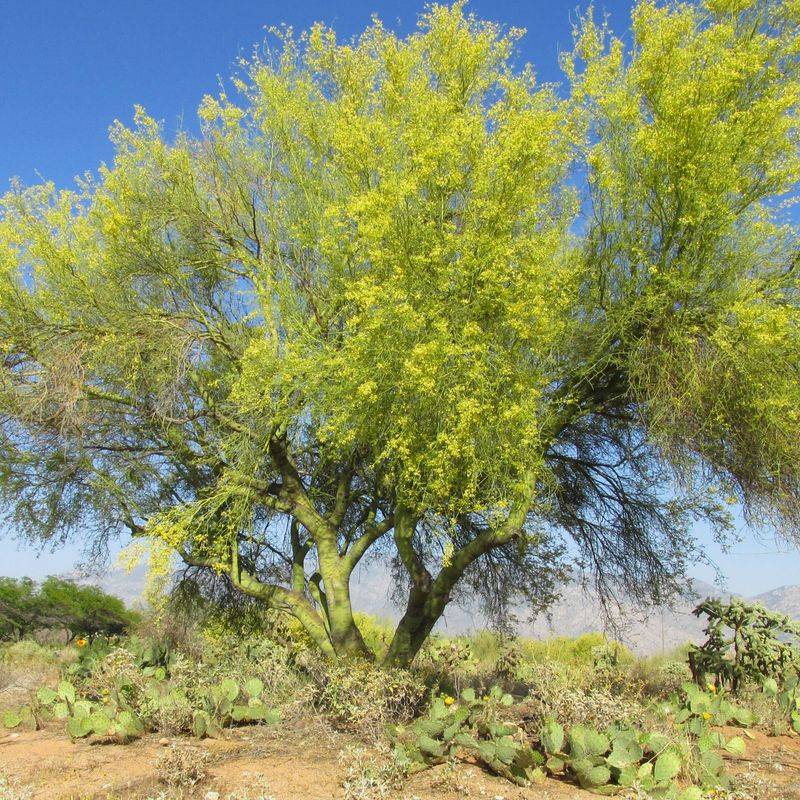
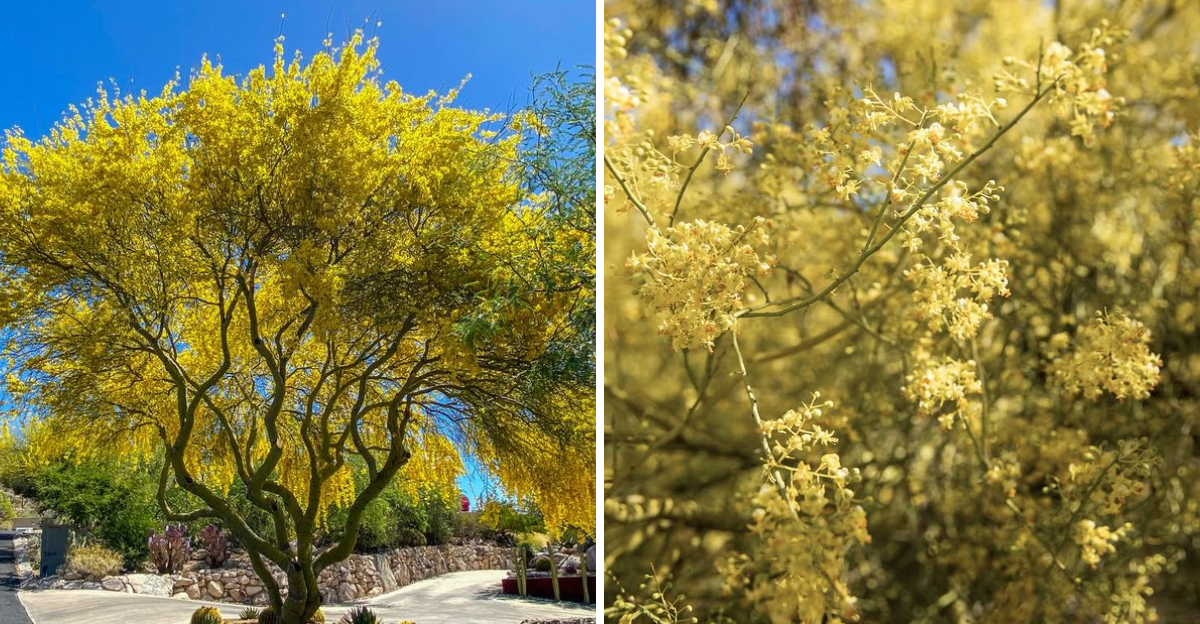
Few sights in the Sonoran Desert match a Foothill Palo Verde in full bloom. Clouds of bright yellow flowers cover the tree each spring, usually peaking between March and May depending on elevation and local temperatures.
African sumac produces no comparable floral display.
Bloom timing can vary by a few weeks from year to year. A warm winter sometimes pushes flowering earlier.
A cooler stretch in late February can delay it slightly. Either way, the color payoff when it arrives is worth the wait.
Flowers are small individually but appear in clusters so dense the green bark nearly disappears. Standing back from a blooming Palo Verde gives the impression of a yellow cloud hovering above the ground.
It is one of those moments that makes desert gardening genuinely rewarding.
After blooming, small seed pods form and eventually drop. The cleanup is manageable compared to the persistent leaf and seed mess that African sumac creates across a much longer season.
Seasonal pod drop is brief and predictable.
Planting a tree that offers a clear seasonal highlight gives a yard personality. Color bursts in spring signal change and renewal in a landscape that can feel static during winter months.
Foothill Palo Verde delivers that shift reliably, year after year, without requiring any special care to trigger blooming.
4. It Grows Well In Desert Soil
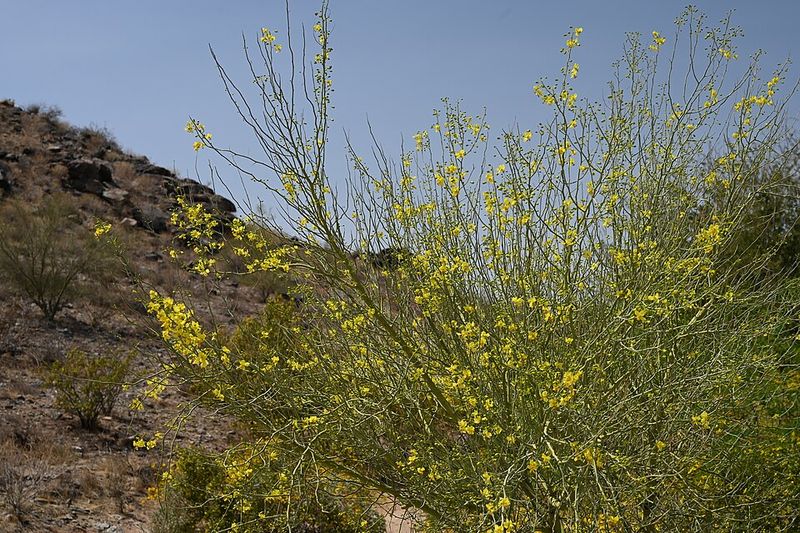
Desert soil is not what most trees prefer, but Foothill Palo Verde was shaped by it. Caliche layers, poor drainage, low organic matter – none of those stop this tree from establishing and growing steadily.
African sumac tolerates desert soil, but it was not formed by it.
Rocky ground that frustrates other plantings is where Palo Verde naturally thrives. Roots adapt to find moisture and anchor the tree without needing amended planting beds or rich compost.
Amending soil heavily before planting a native species can sometimes slow its adjustment to local conditions.
Planting technique still matters. Digging a wide, shallow hole rather than a deep narrow one encourages lateral root spread.
Backfilling with native soil rather than potting mix gives roots familiar material to grow into. These small choices support long-term stability.
Established trees handle compacted soil better than newly planted ones. Giving the root zone time to develop before reducing irrigation is important.
Rushing the establishment phase by cutting water too early can stress a young tree, especially in its first summer.
Soil in the low desert can shift between extremes quickly. Heavy monsoon rains saturate the ground, then weeks of dry heat follow.
Foothill Palo Verde handles those swings without special intervention, which is exactly what desert homeowners need in a yard tree.
5. Less Cleanup Makes Yard Care Easier
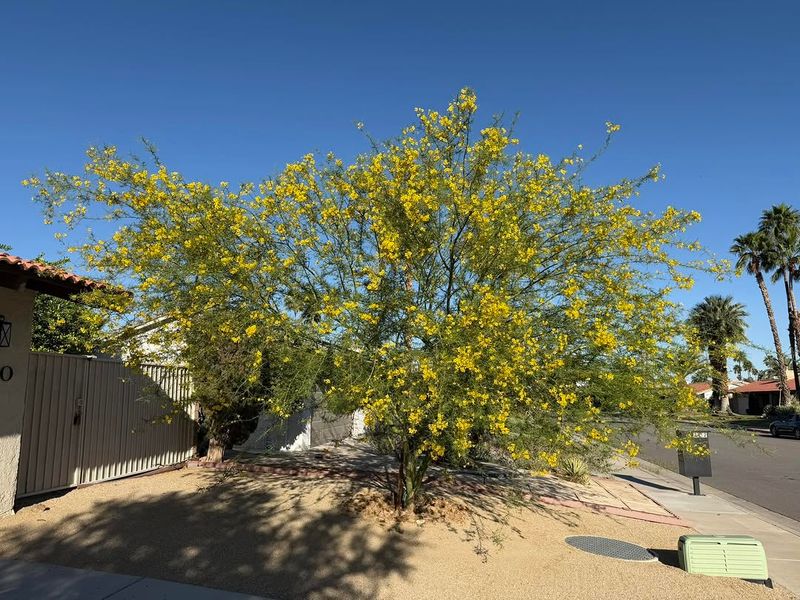
African sumac is notorious for its ongoing mess. Berries, leaves, and stems drop across a long season and stick to gravel, clog drains, and stain hardscape surfaces.
Foothill Palo Verde is not a perfectly clean tree, but its cleanup demands are far more manageable.
Leaf drop from Palo Verde is minimal most of the year. The tiny leaflets that fall are light and break down quickly in gravel without matting or clumping.
Seed pods drop for a few weeks after bloom and are easy to rake or blow clear.
No sticky residue, no heavy berry crop, no persistent litter that smells or stains. Those are real advantages in a yard where you want low maintenance, not constant sweeping.
Homeowners who have switched from African sumac often mention cleanup reduction as the first thing they notice.
Palo Verde branches are thorny, which is worth knowing before planting near walkways or play areas. Positioning the tree thoughtfully from the start avoids most contact issues.
Pruning lower branches as the tree matures keeps the area beneath it comfortable to move through.
Yard care should feel manageable, not like a constant battle. Choosing a tree that fits the landscape and does not generate unnecessary work makes a real difference over time.
Fewer cleanup days mean more time to actually enjoy the yard you maintain.
6. Proper Spacing Helps Your Tree Thrive
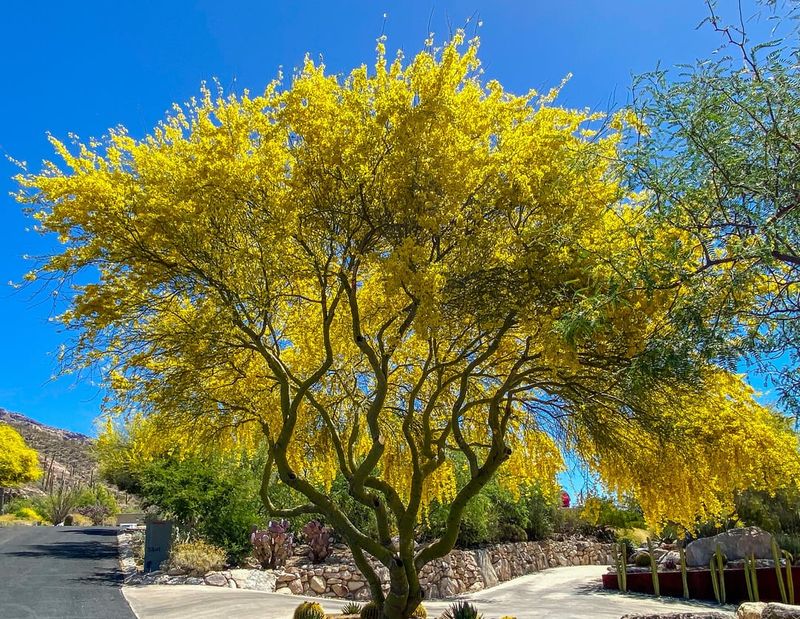
Spacing a Foothill Palo Verde correctly from the start prevents most of the problems people run into later. Plan for a mature spread of 15 to 20 feet, and keep the trunk at least ten feet from structures, walls, and utility lines.
Getting this right on planting day saves significant effort down the road.
Roots spread outward roughly as wide as the canopy, sometimes a bit further. Planting too close to irrigation lines, septic systems, or foundations creates avoidable complications.
Marking the mature footprint before digging helps visualize the space the tree will eventually occupy.
Spacing from other plants matters too. Palo Verde competes with nearby shrubs for moisture, especially during the establishment phase.
Leaving a few feet of open ground around the base gives roots room to develop without heavy competition. Native shrubs planted outside that zone complement the tree without crowding it.
Canopy clearance above pathways and patios is another factor worth planning early. Lower branches can be pruned up gradually as the tree grows, creating comfortable head clearance over time.
Starting with a young tree makes that shaping process easier than correcting an older one.
A well-placed Foothill Palo Verde becomes a centerpiece rather than a problem. Thoughtful placement in the Sonoran Desert landscape lets the tree express its natural form.
That is when it looks its best and asks the least from the people caring for it.
7. Native Blooms Attract More Pollinators
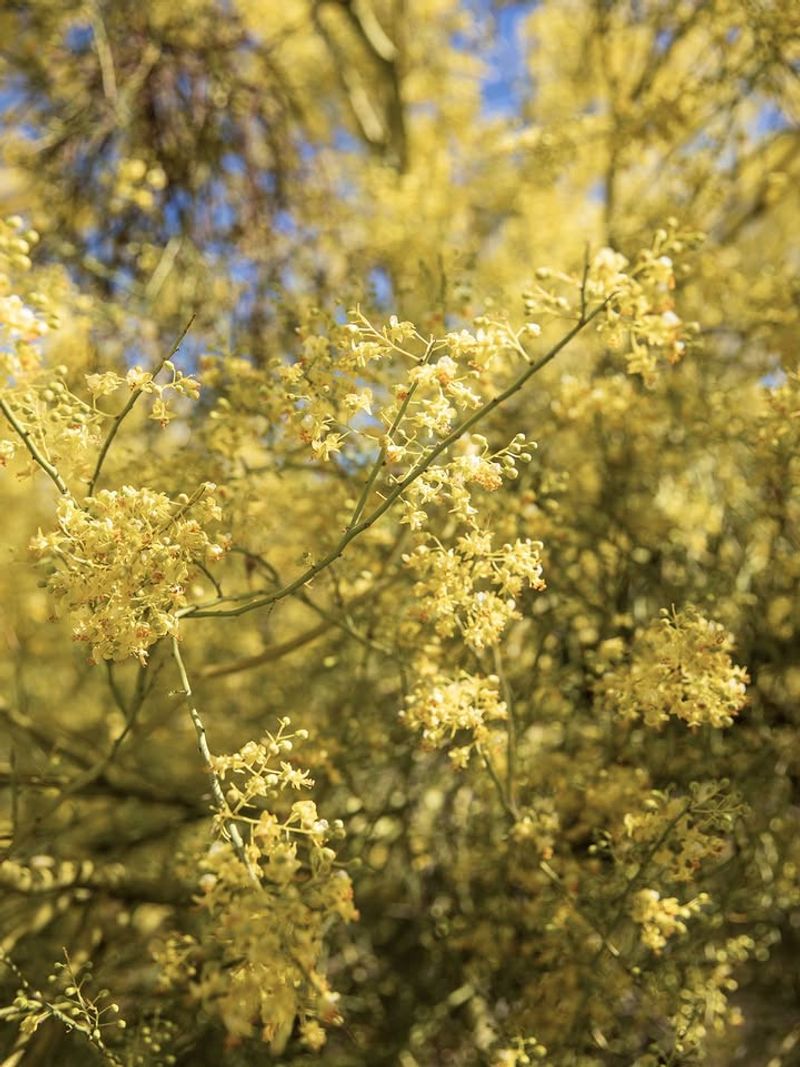
Bees find Foothill Palo Verde before most gardeners even notice it is blooming. Native bees, honeybees, and even some butterfly species are drawn to the flowers during peak bloom.
African sumac offers nothing close to that level of pollinator activity.
Native plants and native insects evolved together over thousands of years. That relationship means local bee species recognize Palo Verde flowers as a reliable food source.
Non-native trees like African sumac simply do not trigger the same response from local wildlife.
Beyond bees, birds use the tree too. Curved-bill thrashers, cactus wrens, and other desert birds nest in the branching structure.
Seed pods later in the season attract doves and quail searching for food. A single tree supports a surprising range of wildlife.
Supporting pollinators is not just about helping bees. Healthy pollinator populations benefit vegetable gardens, fruit trees, and flowering plants nearby.
Planting a native tree is one of the most efficient ways to support that ecosystem without extra effort.
Yards with strong pollinator activity tend to feel more alive and dynamic. Watching bees work through a flowering Palo Verde on a warm spring morning is genuinely enjoyable.
It is the kind of backyard moment that a non-native ornamental tree rarely provides. Choosing native means choosing connection to the local environment.