What To Do If Leaffooted Bugs Are Piercing Your Georgia Tomatoes Right Now
Tomatoes can look healthy one day and suddenly show strange marks on the fruit the next. Those changes often leave homeowners wondering what happened overnight.
The damage does not always come from a disease or growing problem. Sometimes one persistent pest is responsible for nearly everything you are seeing.
Waiting too long usually gives the problem more time to spread. Catching it early can make a noticeable difference before more tomatoes are affected.
Leaffooted bugs become especially active in Georgia during the warmest part of the growing season. Looking closely now can help you spot trouble before your harvest suffers.
Fresh tomatoes are worth protecting while they are still developing.
Knowing what to watch for now can help you stay one step ahead before even more fruit is damaged.
1. Identify Leaffooted Bugs Before Taking Action
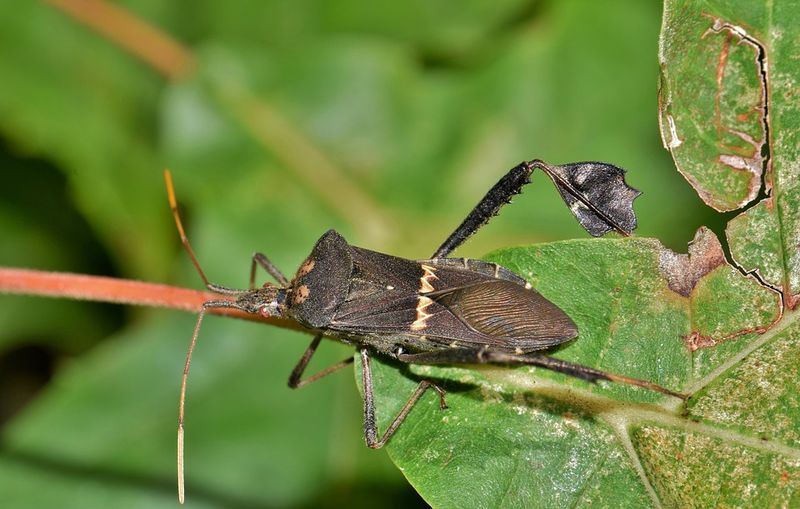
Flat brown bugs with strange leaf-shaped back legs are not something you see every day. Leaffooted bugs are easy to confuse with stink bugs, but getting the ID right matters before you do anything else.
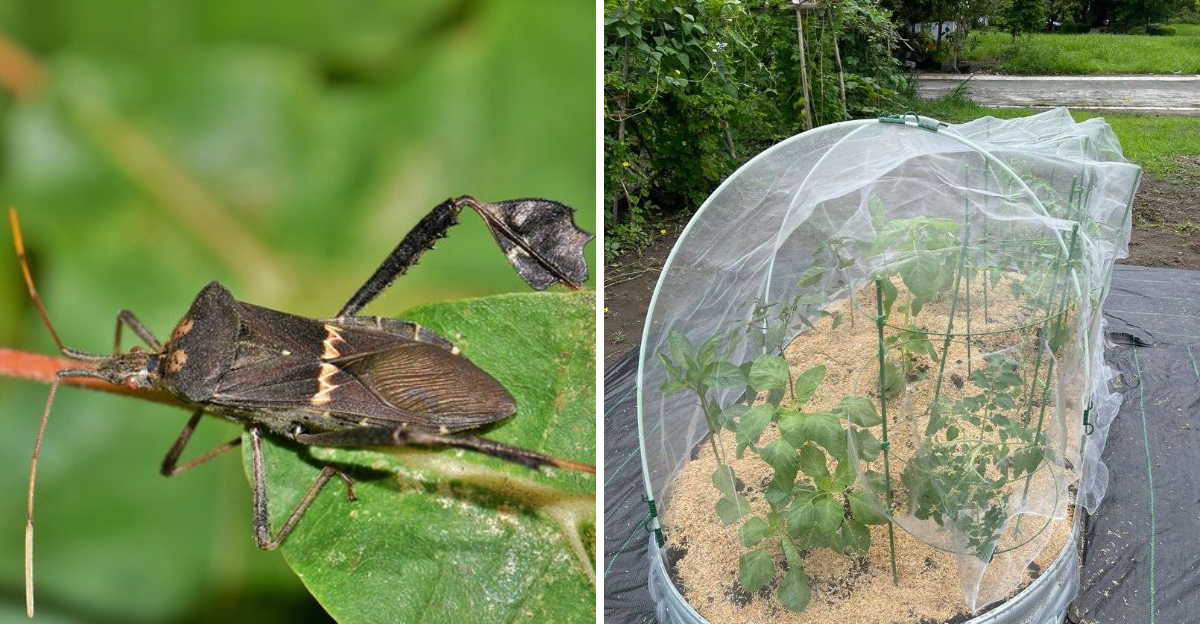
Look at the back legs closely. Leaffooted bugs have a flat, wide flap on each hind leg that looks like a tiny leaf.
Stink bugs do not have that feature. Both are shield-shaped and brownish, but the leg shape is the clearest difference.
Adult leaffooted bugs are about three-quarters of an inch long. Young ones, called nymphs, are smaller and often bright orange or red.
Nymphs travel in tight groups, which makes them easier to spot on stems and leaves.
Checking the underside of leaves is worth the effort. Bugs tend to rest there during the heat of the day.
Look along stems, near the base of fruit clusters, and on any thick, woody parts of the plant.
Misidentifying the pest leads to wasted effort. Some gardeners spray for one bug while a completely different one is causing the damage.
Spend a few minutes confirming what you are dealing with before moving forward. A quick photo search on your phone can help you compare what you are seeing to known images of leaffooted bugs.
2. Remove Egg Clusters Before They Hatch
Stopping the next generation before it starts is one of the smartest moves you can make against leaffooted bugs. Eggs are small, but they are not hard to find once you know what to look for.
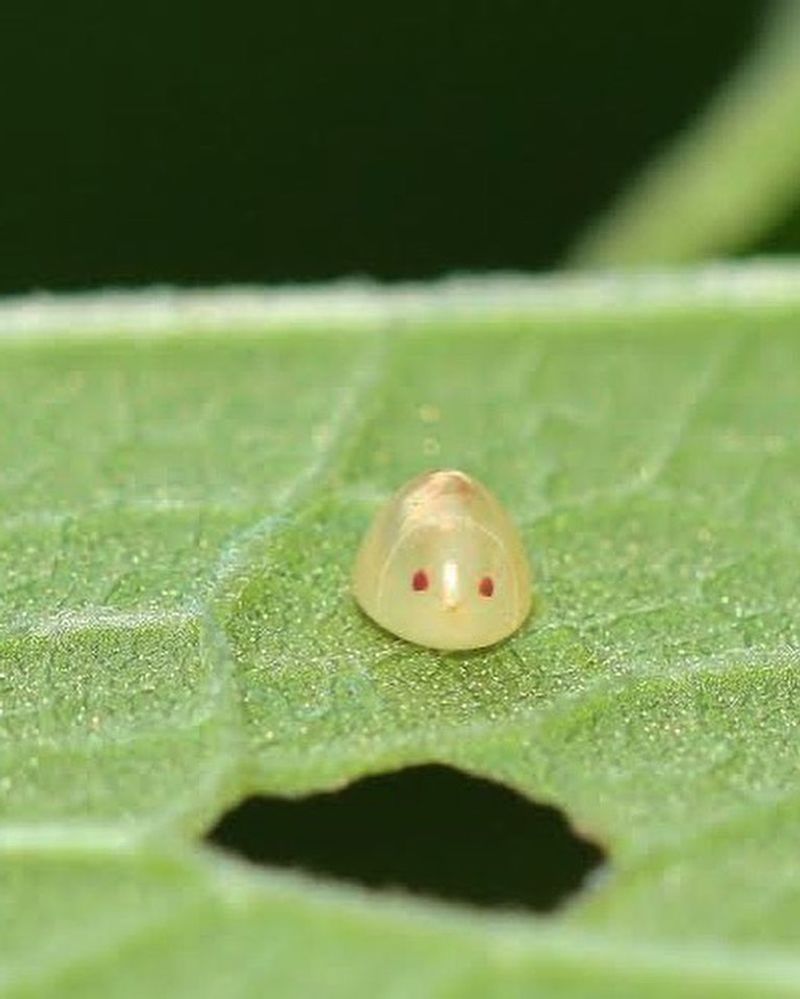
Leaffooted bug eggs are shiny, barrel-shaped, and lined up in a neat single row along plant stems or the underside of leaves. Each cluster can hold around a dozen or more eggs.
Spotting them early means fewer nymphs chewing through your plants later.
Use your fingers or a butter knife to scrape the egg clusters off the plant surface. Drop them into your soapy water bucket just like you would with adult bugs.
Crushing them in place is another option, though it is messier.
Check new growth especially carefully. Female bugs tend to lay eggs on tender stems and younger leaves.
Spend extra time scanning those areas during your regular garden walks.
Your Georgia Garden Changes Every Week. Your Plan Should Too.
Gardening in Georgia changes quickly throughout the season. Every Friday you’ll receive a simple weekly plan showing exactly what to plant, prune, fertilize, harvest, and protect so you never miss the right timing.
Egg removal pairs well with hand-picking adults. Doing both at the same time cuts down the overall population faster.
One pass through the garden that catches both eggs and adults saves more tomatoes than focusing on just one life stage.
Consistency matters here. Eggs can hatch within a couple of weeks depending on temperatures.
Missing a batch means a fresh wave of nymphs shortly after.
3. Keep Weeds And Garden Debris Under Control
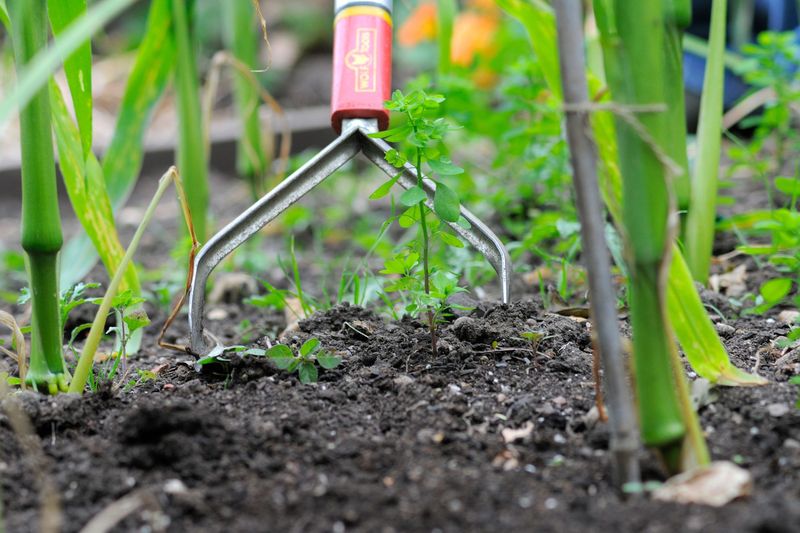
Weeds are not just an eyesore. Leaffooted bugs use them as shelter, feeding spots, and a place to wait before moving onto your tomatoes.
Certain weeds are especially attractive to leaffooted bugs. Thistle, fennel, and wild mustard are known favorites.
Keeping these cleared from around your garden reduces the number of bugs that end up drifting toward your tomato plants.
Piles of old plant material create hiding spots. Spent stems, fallen fruit, and dried leaves left on the ground give bugs a comfortable place to rest between feeding sessions.
Clearing that debris regularly removes those sheltered spots.
Mowing around the garden perimeter helps too. Tall grass and overgrown edges right outside your beds work the same way as weeds, giving bugs a staging area close to your crops.
Keeping those edges trimmed makes the whole garden less inviting.
Weed control also benefits your tomatoes in other ways. Less competition for water and nutrients means healthier plants.
Stronger plants tend to handle minor pest pressure better than stressed ones, though no plant is fully immune.
A clean garden does not guarantee zero bugs, but it does reduce the conditions that help populations build up quickly. Pairing weed control with hand-picking and egg removal gives you a much stronger defense than any single step alone.
Consistent upkeep through the growing season in Georgia pays off steadily.
4. Check Nearby Plants For New Bugs
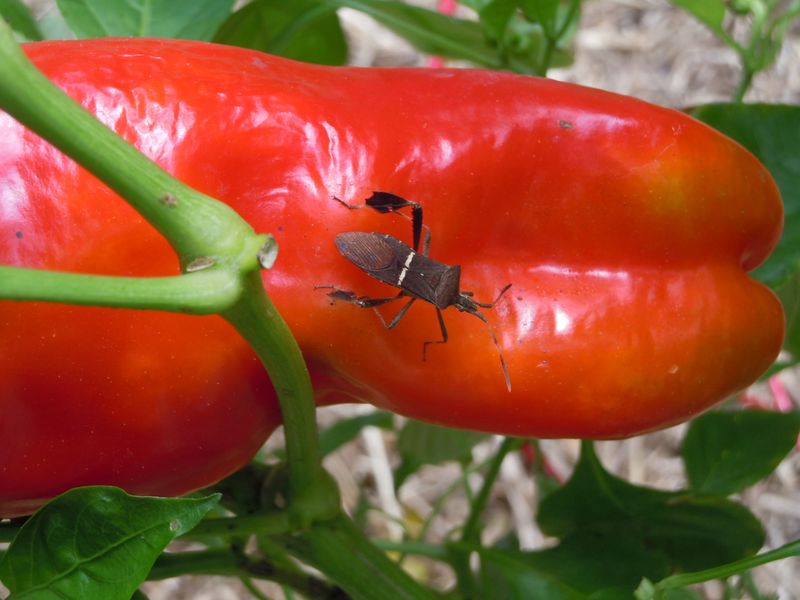
Leaffooted bugs do not limit themselves to tomatoes. Checking the plants growing near your tomato beds is a step that many gardeners skip, and it often costs them later.
Squash, peppers, beans, and pomegranate trees are all known hosts for leaffooted bugs. If you grow any of these near your tomatoes, they can act as a bridge.
Bugs feed on one plant, then shift over to another when populations get crowded or food runs low.
Ornamental plants can harbor them too. Certain flowering shrubs and fruit trees attract leaffooted bugs.
Scanning beyond your vegetable beds gives you a fuller picture of what is happening across your yard.
Wild plants along fence lines and property edges are worth checking as well. Elderberry, blackberry, and various native plants can carry populations that eventually move toward cultivated crops.
A quick walk along the perimeter of your yard takes only a few minutes.
When you find bugs on nearby plants, remove them the same way you would from your tomatoes. Soapy water and hand-picking work just as well on other plants.
Reducing the total bug count in your yard lowers the pressure on your tomatoes overall.
Treating your tomatoes while ignoring a heavy population on a nearby squash vine is a losing approach.
5. Hand Pick Bugs Early In The Morning
Early morning is when leaffooted bugs are at their slowest. Cool temperatures make them sluggish, and that small window gives you a real advantage if you act fast.
Put on a pair of gloves before you start. Leaffooted bugs release a strong, unpleasant odor when they feel threatened.
Gloves protect your hands and make the whole process a lot less uncomfortable.
Bring a bucket with a few inches of soapy water. Knock or shake bugs directly into the bucket.
They cannot escape once they hit the water. Do not try to grab them bare-handed because they move quickly and the smell is hard to wash off.
Go through every plant carefully. Check stems, under leaves, and around the base of fruit clusters.
Nymphs cluster together, so one good sweep in the right spot can remove a large group at once.
Hand-picking works best when you do it regularly. Going out once and calling it done will not solve the problem.
Bugs from nearby plants or weedy areas will move in within days. Make early-morning checks a short daily habit during peak season.
This method has no chemical risk to your fruit, your soil, or helpful insects.
6. Protect Tomato Plants With Insect Netting
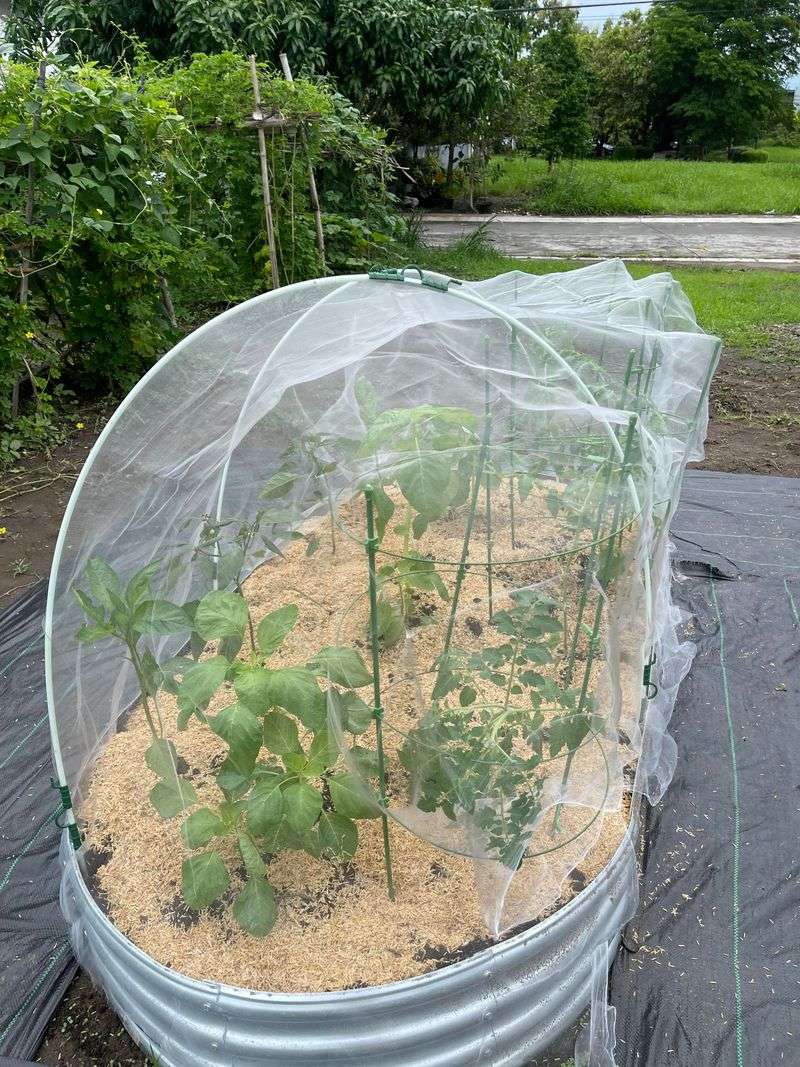
Putting a physical barrier between your tomatoes and the bugs is one of the most reliable options available. Insect netting blocks leaffooted bugs without any chemicals involved.
Row cover fabric or fine mesh netting works well for this purpose. Look for mesh with openings small enough to stop insects but large enough to let air and light through.
Most garden centers carry options labeled for vegetable gardens.
Support the netting with hoops or stakes so it does not rest directly on the plants. Fabric sitting on leaves can trap heat and create moisture problems.
A few inches of clearance between the plants and the netting helps air circulate properly.
Seal the edges down at the base. Bugs will find gaps if you leave them.
Use soil, rocks, or garden staples to hold the edges flat against the ground around the entire bed.
One trade-off with netting is pollination. Tomatoes need airflow and insect activity to set fruit well.
Some gardeners remove the netting briefly during peak bloom times and replace it after. Others hand-pollinate using a small brush or by gently shaking the plants.
Netting is most useful early in the season before large populations build up. Once bugs are already established on a plant, covering it traps them inside.
7. Inspect Tomatoes Every Few Days For Fresh Damage
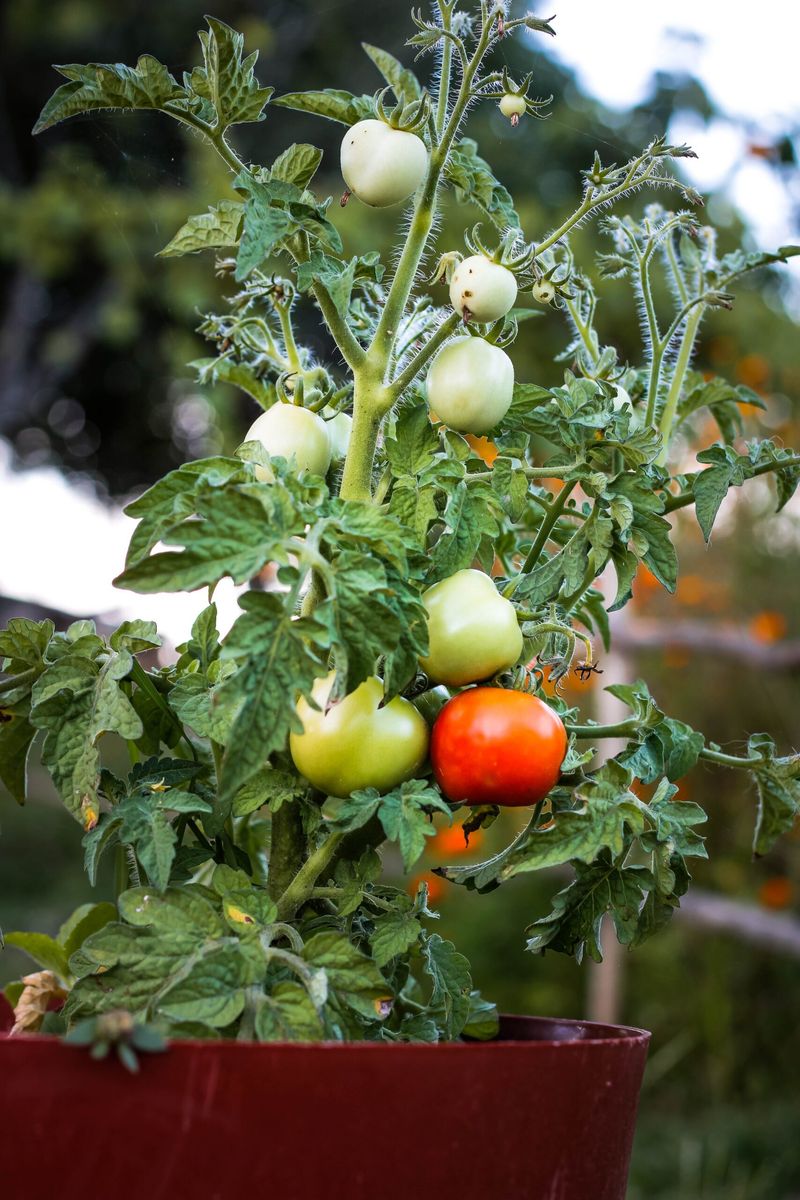
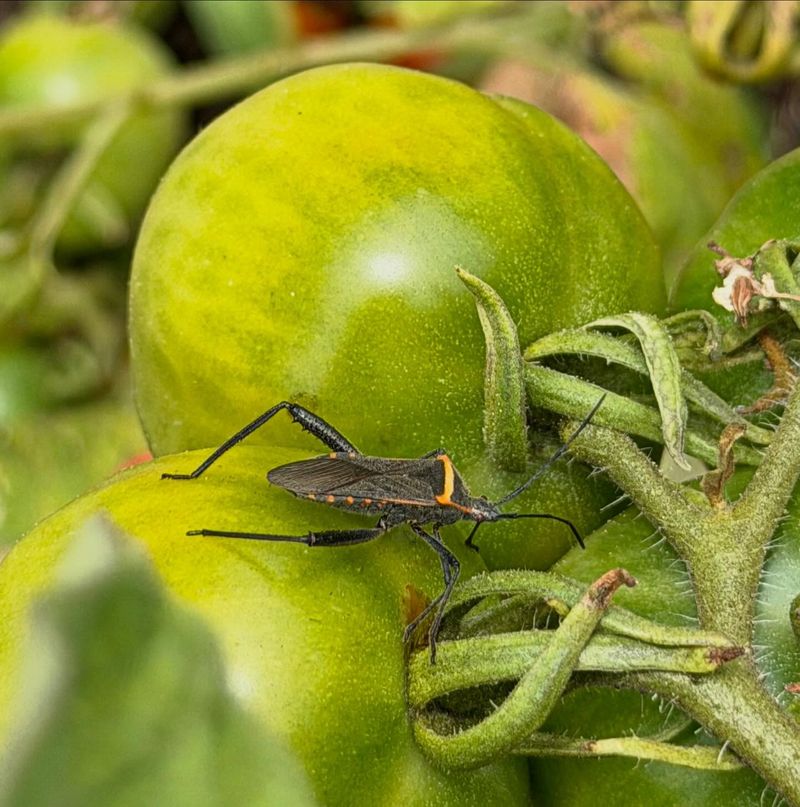
Fresh damage from leaffooted bugs shows up as small, sunken spots on the tomato skin. Catching those signs early tells you the bugs are still active and your response needs to continue.
Puncture marks can look like tiny pale dots or slightly discolored patches. Inside the fruit, the flesh near the wound sometimes turns white, corky, or pithy.
Not every damaged tomato is a total loss, but repeated feeding on the same fruit causes more serious problems.
Pick up each tomato gently and rotate it. Bugs tend to feed on the side facing away from the sun or tucked against a stem.
Checking all sides of the fruit, not just the top, gives you a more accurate read on what is happening.
Keep a simple record if it helps. Noting which plants show new damage every few days tells you where the bugs are concentrating.
Focusing your hand-picking efforts on those specific plants saves time.
Damaged tomatoes that are close to ripe can often still be used. Cut away the affected area and check that the rest of the flesh looks and smells normal before deciding whether to use it.
Regular inspections also help you catch new egg clusters before they hatch.
Combining damage checks with a quick scan for eggs on the same visit makes each garden walk more efficient.