The Best Backyard Privacy Plants That Thrive In Georgia Heat And Humidity
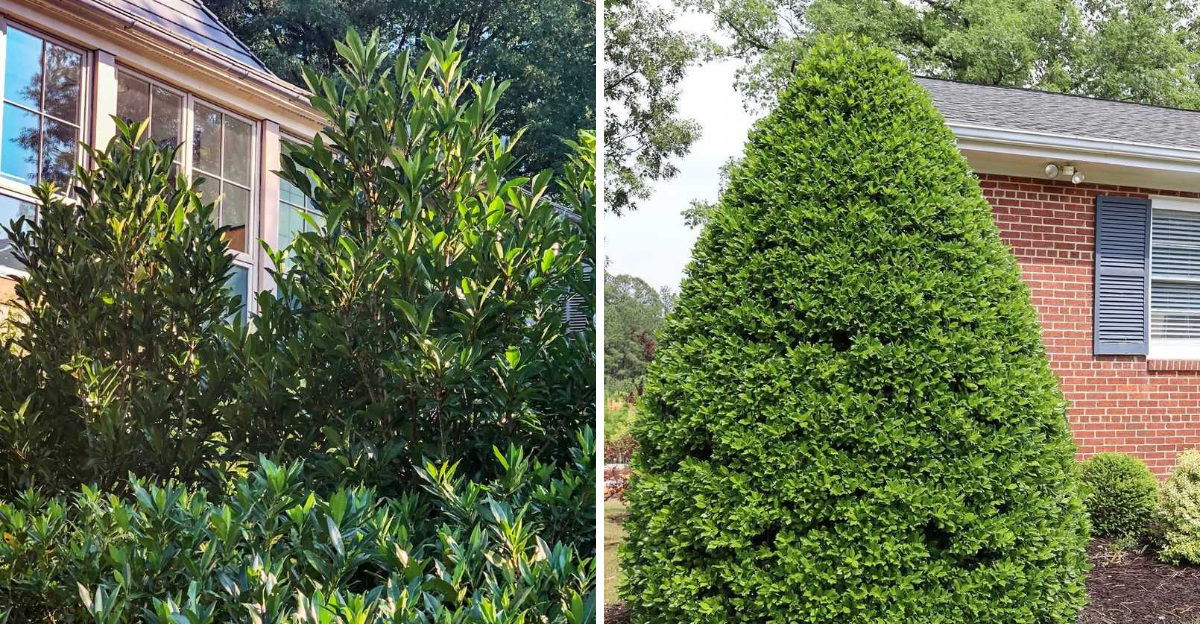
Nothing ruins a relaxing backyard faster than feeling like every neighbor can see exactly what is happening. In Georgia, that feeling becomes even more frustrating during summer when patios, gardens, and outdoor living spaces get used the most.
A space that should feel private can end up feeling exposed, leaving many homeowners searching for a solution that looks good and works year after year.
Finding plants is usually not the difficult part. The bigger challenge is choosing ones that stay full and attractive when long periods of heat and humidity arrive.
Some start strong in spring but struggle to maintain the dense growth needed for reliable screening once summer settles in.
That is why plant selection matters so much. Certain options are naturally better suited to these conditions and continue creating the separation people want, even during the warmest part of the growing season.
1. Little Gem Magnolia Packs Privacy Into Smaller Spaces
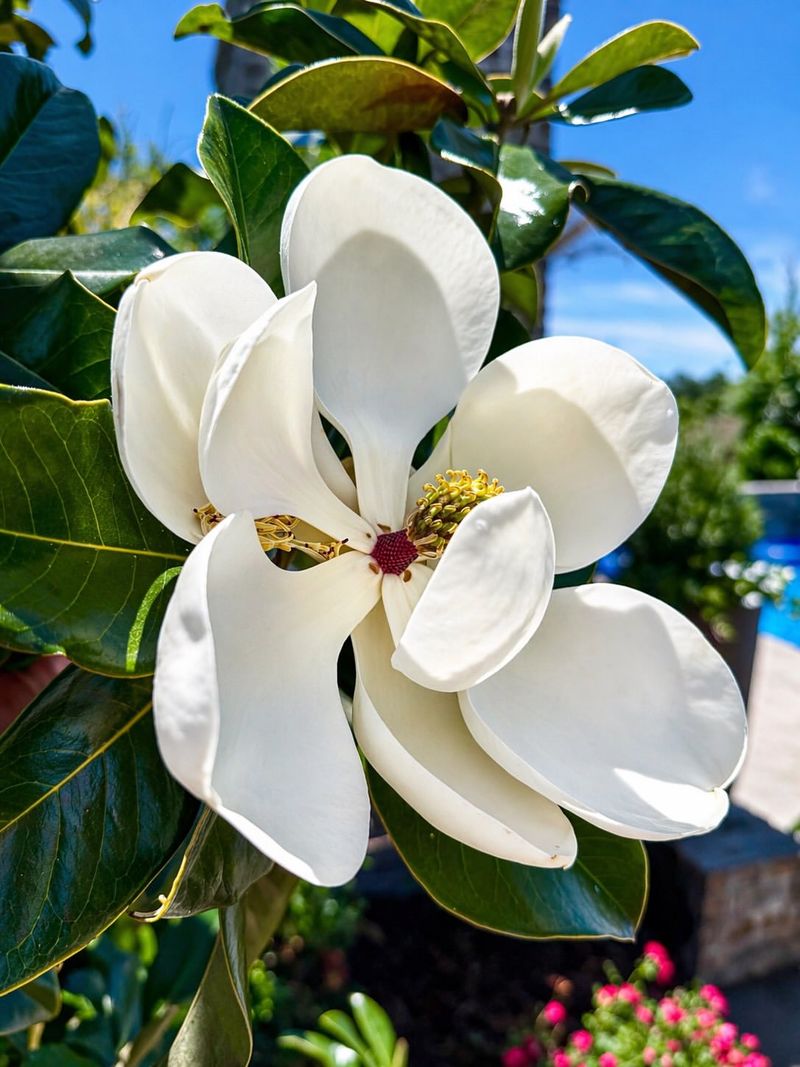
Standard Southern Magnolias grow enormous, but Little Gem stays manageable while still delivering serious coverage. It tops out around 20 feet and stays narrow, making it a smart fit for tighter yards where space is limited.
Blooms appear in late spring and keep coming through summer. Large, creamy white flowers stand out against deep green leaves with rusty-brown undersides.
Even without flowers, the foliage alone creates a rich, layered look that blocks sightlines effectively.
Heat and humidity are no problem for this variety. It thrives in the same conditions that challenge other ornamental trees.
Roots establish quickly, and once settled, the tree handles both wet spells and dry stretches without showing much stress.
Plant in full sun for the densest canopy. Partial shade slows growth and reduces bloom production, so a sunny spot is always the better choice.
Mulching around the base keeps moisture in and reduces the need for frequent watering during peak summer heat.
Spacing plants about eight to ten feet apart creates a staggered screen that fills in naturally over time. Little Gem works well along fence lines, property edges, or as a standalone focal point that also blocks views.
It earns its place in any yard where beauty and function both matter, delivering consistent results across warm Southern climates without demanding much in return.
2. Tea Olive Combines Fragrance With Lasting Coverage
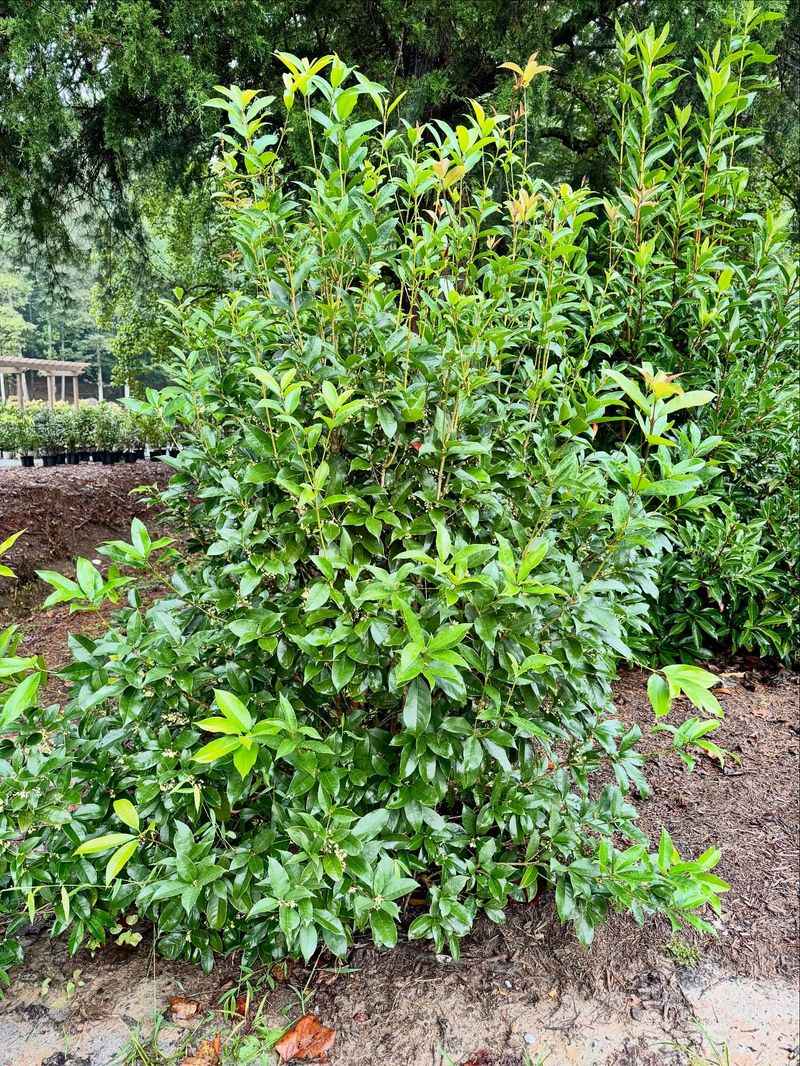
Walk past a blooming Tea Olive and the scent hits you before you even see the plant. Small, cream-colored flowers release a strong, sweet fragrance that carries across the yard on warm evenings.
That fragrance alone makes it worth planting near patios or outdoor seating areas.
Beyond the smell, Tea Olive builds solid coverage over time. Dense, dark green leaves hold year-round, and the plant grows into a full, upright shrub or small tree depending on how it is trained.
Left alone, it can reach 15 to 20 feet with a tidy, oval shape.
Blooming happens in fall and sometimes again in spring. During those windows, the fragrance becomes one of the most noticeable things about any yard that includes it.
Neighbors often ask what is blooming before they ever spot the plant itself.
Your Georgia Garden Changes Every Week. Your Plan Should Too.
Gardening in Georgia changes quickly throughout the season. Every Friday you’ll receive a simple weekly plan showing exactly what to plant, prune, fertilize, harvest, and protect so you never miss the right timing.
Established Tea Olive handles heat and humidity well. It prefers slightly acidic soil and good drainage, but it adapts to most average yard conditions found across warm Southern regions.
Full sun to partial shade both work, though more sun encourages better flowering.
Pruning is rarely urgent since the plant grows at a moderate pace. Light shaping after bloom periods keeps it looking neat without removing too much new wood.
For a privacy screen that also delivers a sensory experience, Tea Olive brings something most purely functional plants simply cannot match.
3. Sweetbay Magnolia Handles Heat And Humidity With Ease
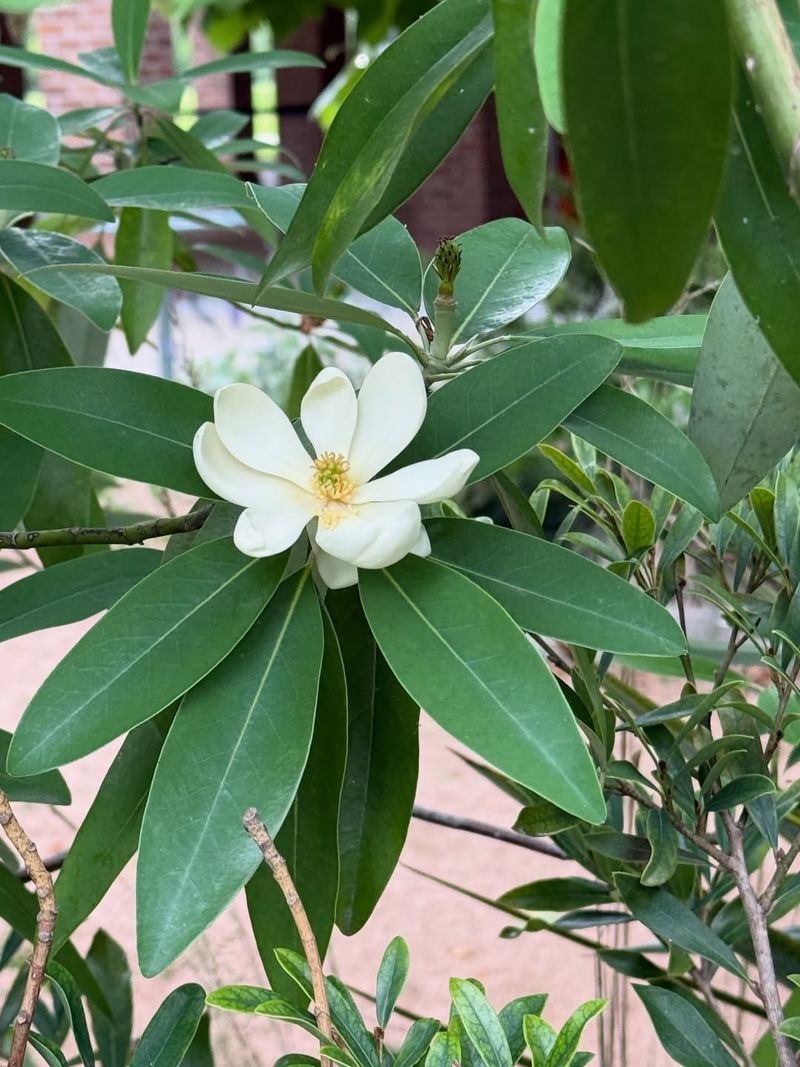
Sweetbay Magnolia thrives where other ornamental trees struggle. Wet soil, heavy humidity, and relentless summer heat are exactly the conditions it was built for.
Low spots in the yard that stay soggy after rain are often where this tree does its best work.
Creamy white flowers bloom from late spring through summer, releasing a light lemony scent that drifts through the yard on warm days.
Leaves are dark green on top and silvery underneath, creating a two-toned shimmer when wind moves through the canopy.
Unlike its larger relatives, Sweetbay stays between 10 and 20 feet tall in most settings. A multi-stemmed form is common, which naturally creates wider, fuller coverage at eye level.
That low branching habit makes it genuinely useful as a privacy screen without any special training or pruning.
Semi-evergreen behavior means some leaf drop occurs in colder winters, but in warmer Southern climates, it often holds foliage well into late winter.
Most years, coverage stays reasonably full even during the coldest months, though results vary by location and winter severity.
Full sun to partial shade both suit it well. Consistent moisture during the first season helps roots get established, especially in sandy or fast-draining soils.
Once it settles in, Sweetbay becomes one of the most reliable trees for creating natural privacy in yards that deal with standing water or poor drainage after heavy rain.
4. Florida Anise Thickens Up Shady Corners
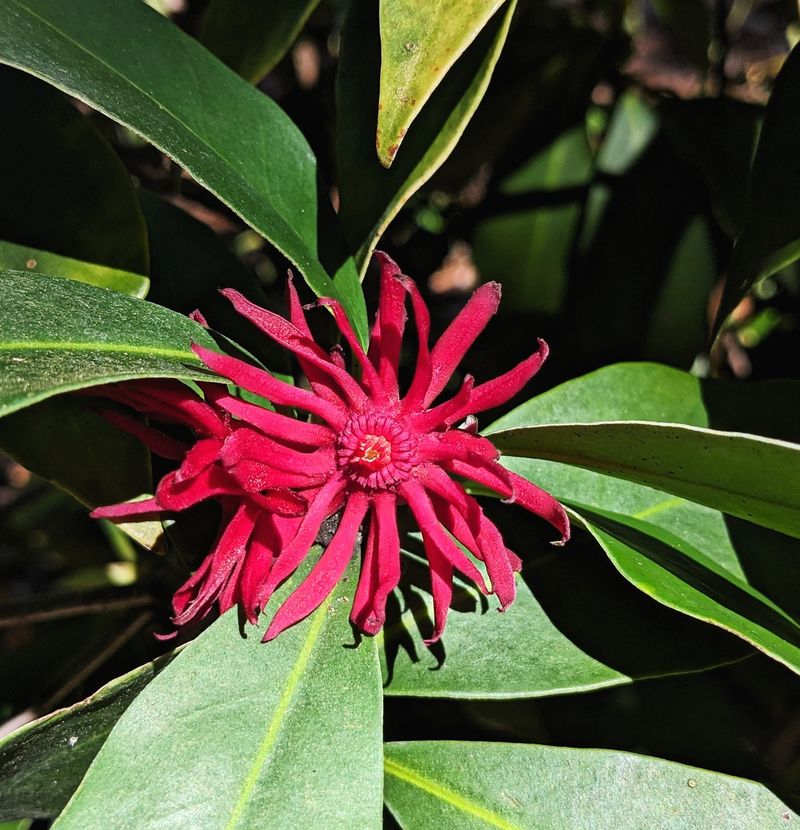
Shady corners are notoriously hard to fill with anything useful. Florida Anise solves that problem without complaint.
It pushes thick, upright growth even under tree canopy where most privacy shrubs barely survive.
Crush a leaf and you get a strong anise scent, which is where the name comes from. Dark red, spidery flowers appear in early spring and add a bit of visual interest before summer heat sets in.
Foliage is deep green and glossy, staying full year-round in most conditions across warm Southern climates.
Mature plants reach eight to ten feet tall with a dense, multi-stemmed form. Because branching starts at the base, coverage extends from ground level upward, leaving no gaps that would undercut its usefulness as a screen.
Few shrubs in this size range perform as consistently in full to deep shade.
Average soil moisture works fine, but Florida Anise actually tolerates wet conditions better than most. Areas near downspouts or natural drainage paths are not a problem.
Dry spells are trickier, so a layer of mulch helps retain moisture during hot summer stretches.
Spacing plants four to five feet apart fills in a shaded fence line relatively quickly. Minimal pruning is needed since the natural shape stays tidy on its own.
For homeowners dealing with large shade trees that block sun from the yard edges, Florida Anise is one of the most practical solutions available.
5. American Holly Stays Full Through Every Season
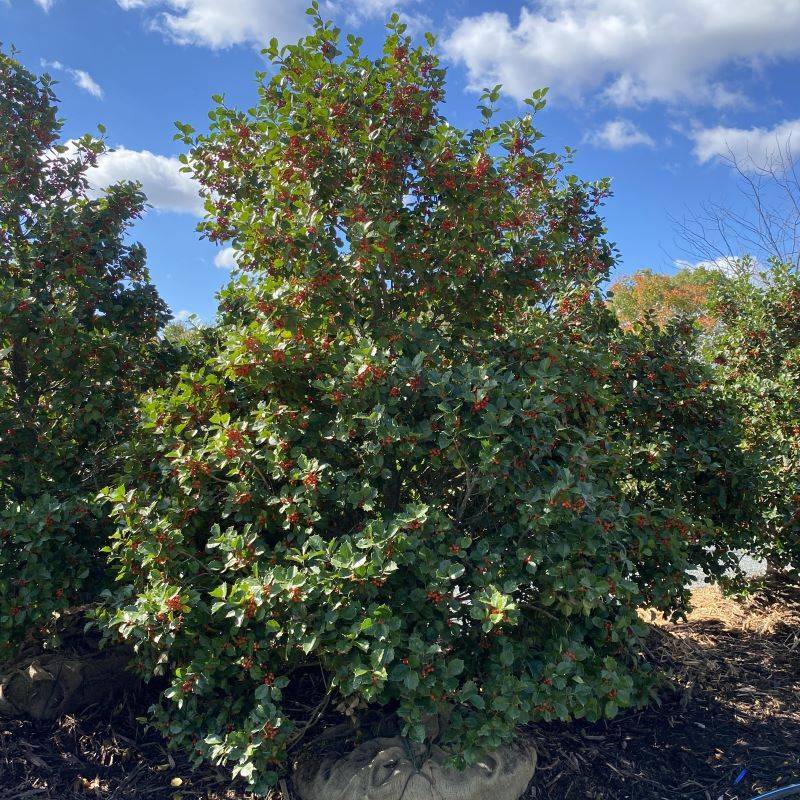
American Holly is one of those plants that looks better in winter than most others do in summer. Bright red berries cluster along branches while everything around it goes bare, making it a standout even during the coldest months of the year.
Dense, spiny foliage holds year-round without thinning out seasonally. That consistency is exactly what makes it valuable as a privacy screen.
No gaps appear in fall, no bare patches show up in winter, and coverage stays solid from ground level up through the canopy.
Growth is steady rather than fast, so patience is part of the deal. Plants can eventually reach 40 feet or more, but most residential plantings stay well under that with light annual pruning.
A single tree provides strong coverage, and a row of them creates an almost impenetrable barrier over time.
Both male and female plants are needed to produce berries, so planting at least one male among several females is important for those who want the full seasonal display. Nursery staff can usually help identify which is which at purchase.
Full sun produces the densest growth and heaviest berry set. Slightly acidic, well-drained soil gives the best results, which matches the natural conditions found across much of Georgia.
Established plants handle drought reasonably well but benefit from watering during extended dry stretches. American Holly rewards patience with one of the most dependable, four-season privacy screens available for Southern landscapes.
6. Wax Myrtle Softens Property Lines Naturally
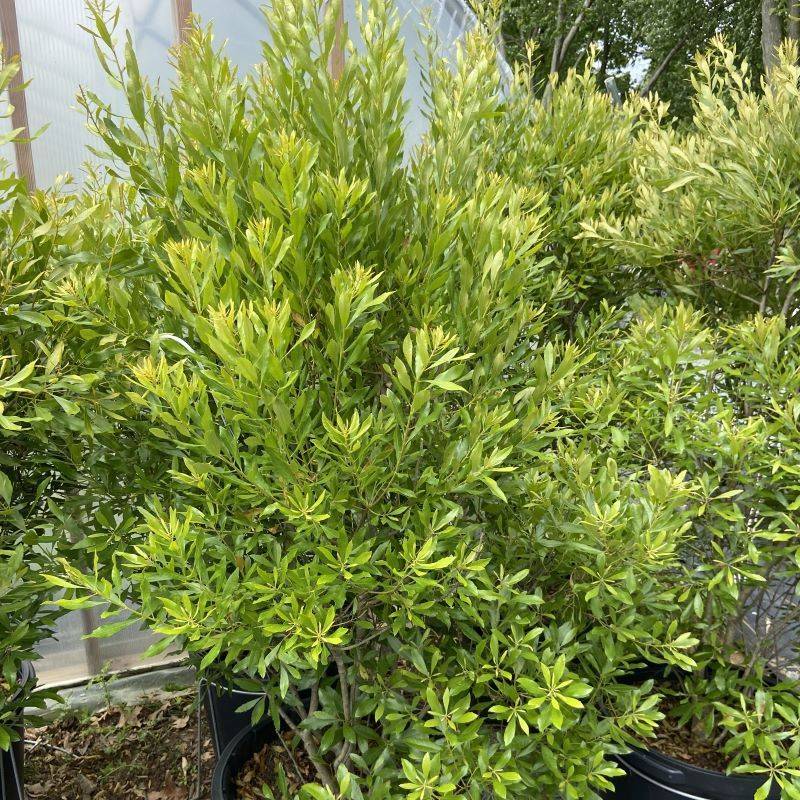
Wax Myrtle has a relaxed, natural look that formal hedges just cannot replicate. Soft, aromatic foliage moves easily in the breeze, and the silvery-green color adds a light, airy feel to yard edges without looking stiff or manicured.
Growth is fast. Under average conditions, plants push several feet of new growth each season.
A young planting can become a full screen within two to three years, which is faster than most comparable evergreen options. That speed makes it especially appealing for new homeowners who want quick results.
Small gray-blue berries appear in late summer and attract a wide range of birds through fall and winter. Wildlife value is genuinely high, and the plant earns its place in yards where supporting local bird populations is a priority alongside privacy.
Wax Myrtle tolerates a wide range of soil conditions, including wet, sandy, and clay-heavy ground. It handles coastal conditions, urban pollution, and heat without showing much stress.
Full sun produces the densest growth, but partial shade is workable for less demanding screening situations.
Left unpruned, it takes on a loose, multi-stemmed form that reaches 10 to 15 feet. Regular trimming turns it into a tighter, more formal hedge if that suits the yard better.
Either approach works well. For property lines, fence rows, or informal borders across warm Southern landscapes, Wax Myrtle delivers reliable coverage with very little fuss and a natural charm that planted walls rarely achieve.
7. Chindo Viburnum Builds A Fast Privacy Screen
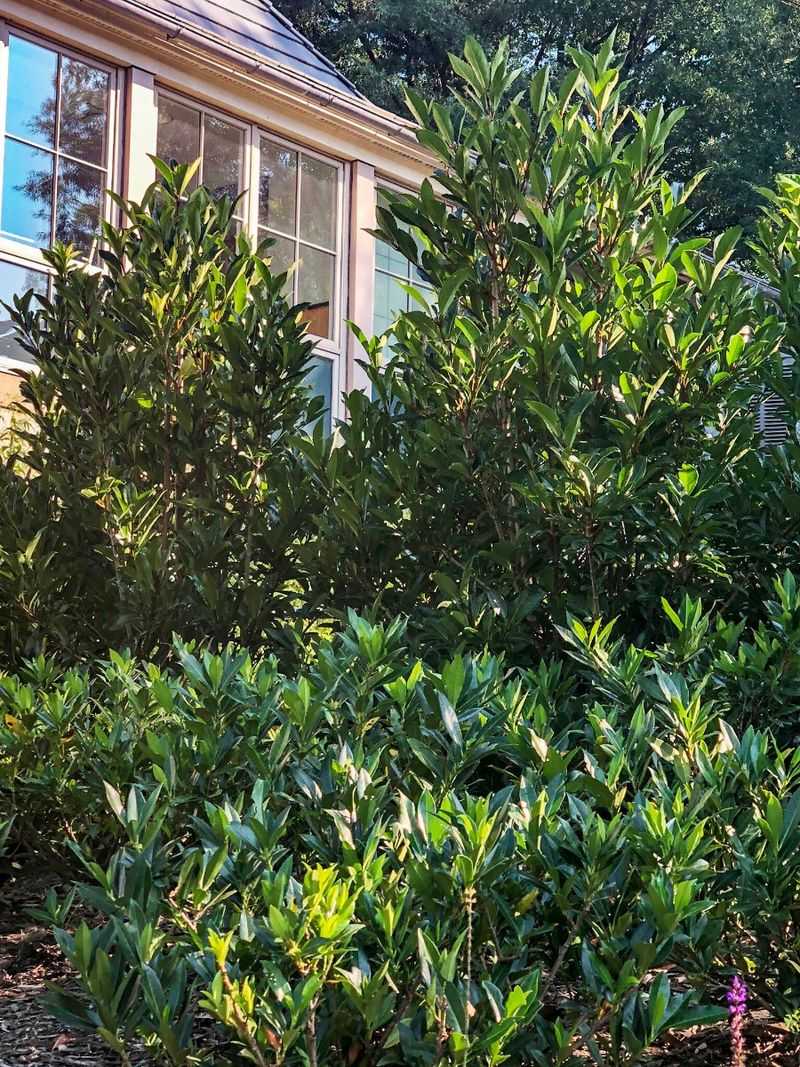
Speed matters when you want privacy now, not in five years. Chindo Viburnum delivers faster growth than most evergreen shrubs in its size class, often adding two feet or more per year under good conditions.
A young hedge can become a real screen in just a few growing seasons.
Glossy, dark green leaves stay on year-round, and clusters of small white flowers appear in spring. After blooming, red berries form and slowly ripen to black, attracting birds through fall and winter.
The display is not dramatic, but it adds seasonal interest beyond just the foliage.
Heat and humidity do not knock it back. Chindo Viburnum holds up through long Southern summers without dropping leaves or showing stress.
It handles both full sun and partial shade, though sun produces denser, more compact growth that works better for screening purposes.
Planting six to eight feet apart allows individual plants room to fill out naturally. Tighter spacing creates a quicker visual barrier but may require more pruning over time as plants compete for space.
Either approach works depending on how fast coverage is needed.
Soil drainage matters more than soil type. Standing water around the roots causes problems, but average to slightly dry conditions suit it well.
A single pruning each year after flowering keeps the hedge tidy and encourages fresh growth. For a fast, reliable, low-maintenance privacy screen, Chindo Viburnum consistently ranks among the top choices for warm-climate yards.
8. Nellie R. Stevens Holly Quickly Creates A Dense Screen
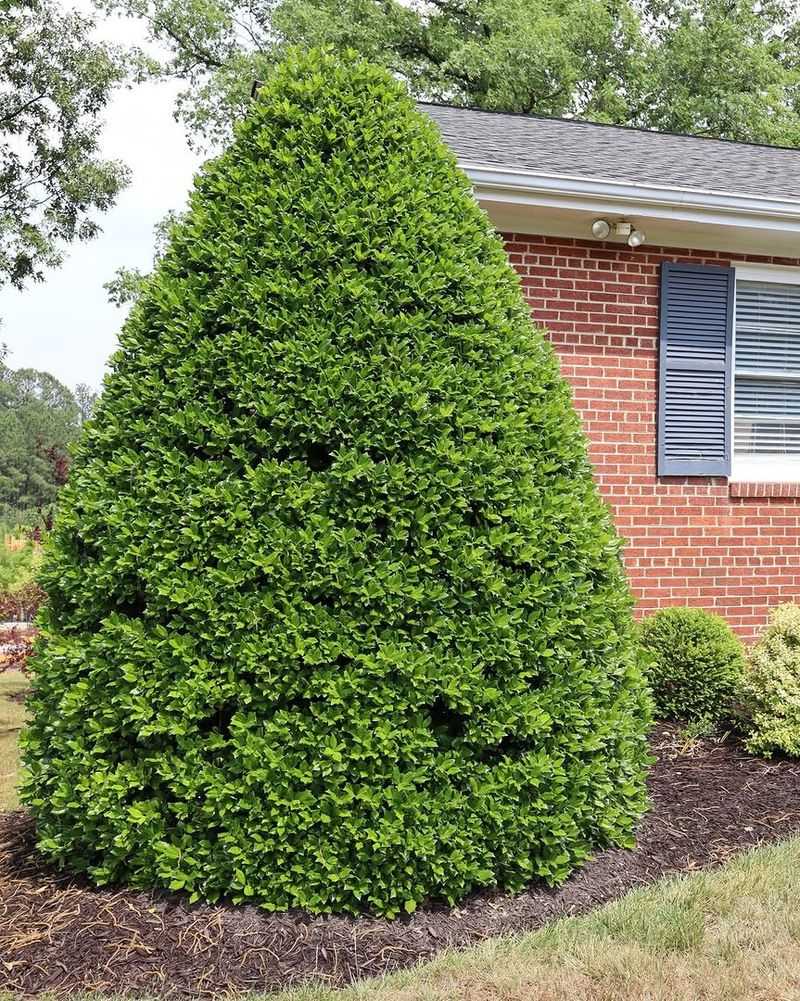
Few plants build a privacy wall faster than Nellie R. Stevens Holly.
Under good conditions, it can push two to three feet of new growth each year. That kind of speed matters when you want results before next summer.
Dark, glossy leaves stay on the plant year-round. Red berries appear in fall and often last through winter, giving birds a reason to stick around your yard.
The dense branching starts low to the ground, which means no gaps at eye level.
Hot afternoons and heavy humidity do not slow it down. Once roots settle in, it handles drought stretches better than most broad-leaved evergreens.
Younger plants benefit from regular watering during the first season, but established ones are pretty low-maintenance after that.
Planting five to six feet apart creates a solid hedge within a few years. Full sun produces the thickest growth, but partial shade works fine too.
Slightly acidic, well-drained soil gives the best results, though it adapts to a range of conditions found across the region.
Pruning once a year keeps the shape tidy without sacrificing coverage. Skip heavy trimming in late summer since new growth needs time to harden before cooler months arrive.
Nellie R. Stevens Holly is a reliable, low-drama option for homeowners who want serious screening without constant upkeep.