The Best Seminole Pumpkin Varieties That Handle Florida Heat
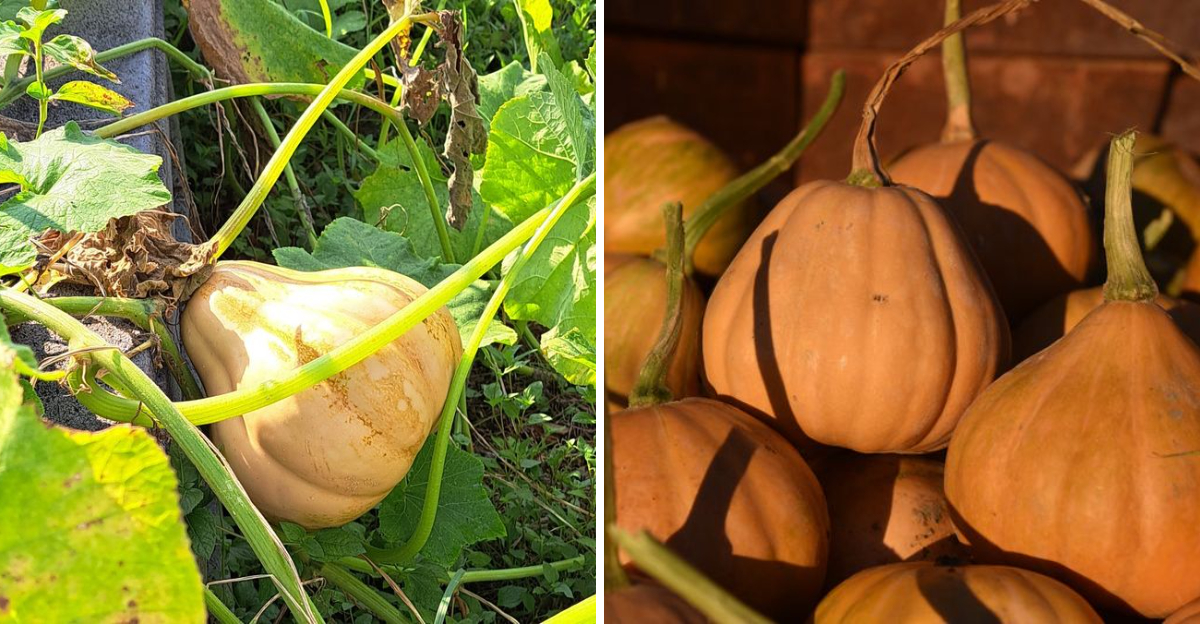
Florida summer is not gentle on pumpkins.
The rain comes hard, the humidity hangs around, and the heat keeps building long after many garden crops start looking tired.
Standard pumpkins often struggle in those conditions, especially the classic fall types bred for cooler, drier growing regions.
Their leaves mildew, vines weaken, fruit rots in wet soil, and the whole patch can feel like a losing battle before September even arrives.
Seminole pumpkin is different.
This tough Cucurbita moschata has been grown in the Southeast for centuries and selected through the exact kind of heat, rain, insects, and sandy soil that make Florida gardening so unpredictable.
It is not a single perfectly uniform variety in the modern commercial sense. It behaves more like an heirloom landrace, which means seed lines can vary in fruit size, shape, rind color, vine vigor, and storage ability.
That variation is part of the fun, but it also makes smart selection important.
The best Seminole pumpkin for one Florida garden may be a traditional tan storage type.
Another gardener may need smaller fruit for a trellis, pear-shaped fruit for easier hanging, or seed saved from vines that handled one brutal summer better than the rest.
Here is how to choose the best Seminole pumpkin lines for Florida heat.
1. Traditional Seminole Pumpkin
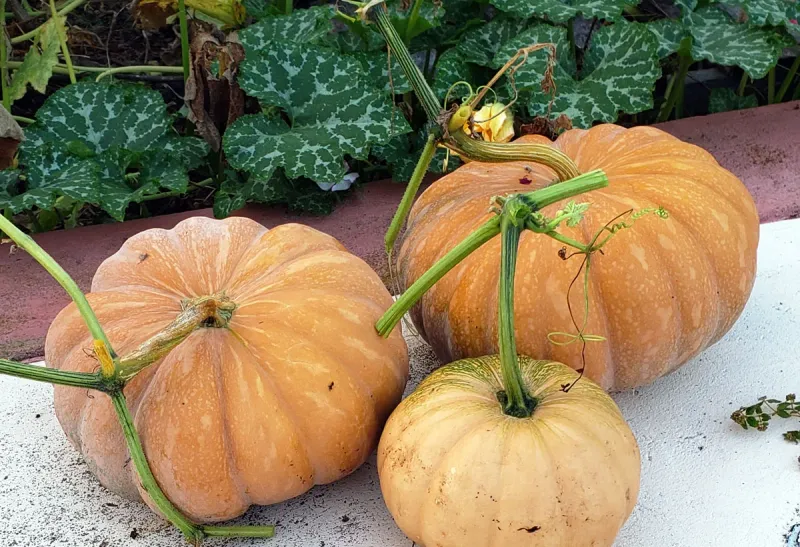
Traditional Seminole pumpkin is the best place to start if you want the classic Florida performer.
This is the seed line most gardeners mean when they talk about Seminole pumpkin: vigorous vines, strong heat tolerance, good storage life, and fruit that can handle the long, humid growing season better than many standard pumpkins.
It has been shaped by generations of cultivation in the Southeast, including Florida conditions that punish weaker squash.
The fruit is usually round to slightly oval, with a tan or buff rind once fully mature. The skin hardens as the pumpkin cures, which helps it store for months under the right conditions.
That storage ability is one of the biggest reasons this crop still matters. Instead of producing only a quick summer harvest, a well-cured Seminole pumpkin can keep feeding a household long after the vine has finished.
The vines are powerful. Do not tuck one into a tiny bed and expect polite behavior. A traditional Seminole pumpkin can run 15 feet or more in multiple directions, especially once rain and heat push growth into high gear.
Give it open ground, a fence, a strong trellis, or a place where it can climb without swallowing more delicate crops.
Full sun is important, but root comfort matters too. Florida’s sandy soils drain fast, while heavier soils may hold too much water after storms. Planting on a mound or raised row helps prevent soggy roots during the rainy season.
Traditional Seminole pumpkin is not always perfectly uniform. One seed packet may produce slightly different fruit sizes or shapes. That is normal for a landrace.
For gardeners new to this crop, that classic variability is not a flaw. It is the reason the plant has stayed so useful in Florida heat.
Your Florida Garden Changes Every Week. Your Plan Should Too.
Gardening in Florida changes quickly throughout the season. Every Friday you’ll receive a simple weekly plan showing exactly what to plant, prune, fertilize, harvest, and protect so you never miss the right timing.
2. Florida-Grown Seminole Pumpkin
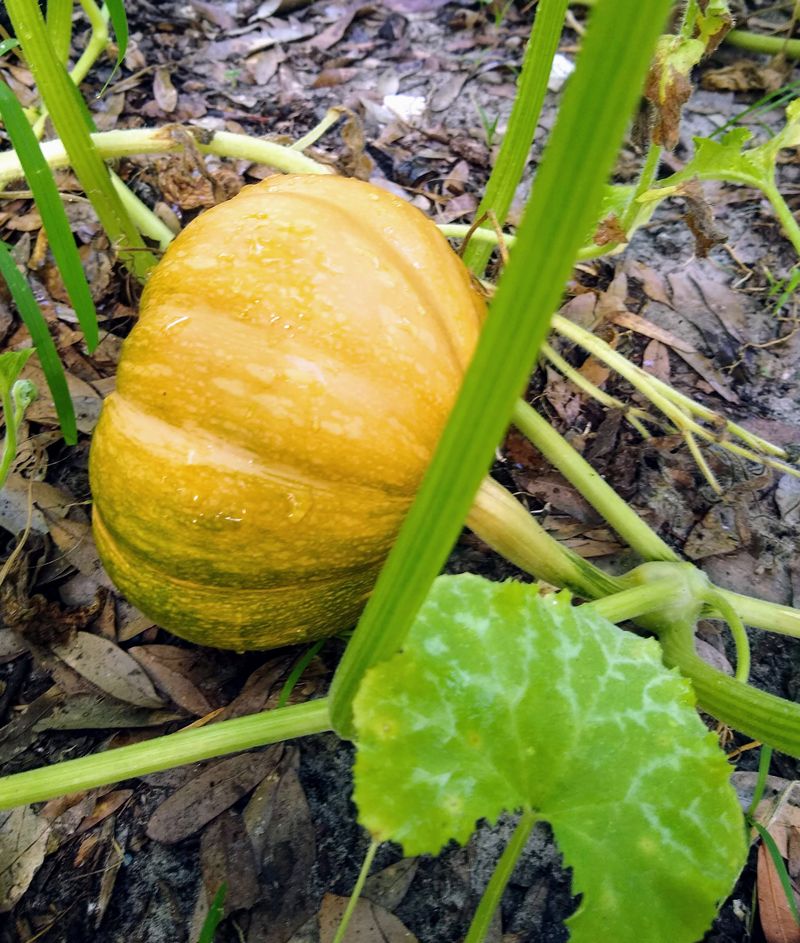
Florida-grown Seminole pumpkin seed gives gardeners a practical advantage from the beginning.
Seed produced in the state has already gone through the same kind of season your plants will face: heat, humidity, heavy rain, disease pressure, sandy soil, insects, and long warm nights.
If the parent vine stayed healthy and produced mature fruit in those conditions, that matters.
It does not mean every seedling will be perfect.
But it does mean the line may already be better adapted to local stress than seed grown in a cooler or drier place. For a Florida gardener, that local history can shorten the learning curve.
Ask questions before buying seed. A good seller should be able to say where the seed was grown, how long they have maintained the line, and what kind of fruit the parent plants produced.
If the seller saved seed from vigorous, disease-free vines that handled summer well, that is valuable information.
Isolation matters too. Seminole pumpkin belongs to Cucurbita moschata, the same species as butternut squash and some other tropical squash types.
If other C. moschata plants bloomed nearby, cross-pollination may have occurred. That is not always bad, but it can make fruit traits less predictable in the next generation.
Local seed libraries, experienced Florida gardeners, county gardening groups, and regional seed sellers can all be helpful sources.
The best seed often comes with a story: how the vine grew, what the fruit looked like, how it stored, and how it handled the worst part of summer.
Avoid choosing seed by name alone. “Seminole pumpkin” on a packet tells you the general crop, but the growing history tells you the likely performance.
For Florida heat, the best start is seed from a line that has already proved itself under Florida pressure.
3. Everglades Seminole Pumpkin
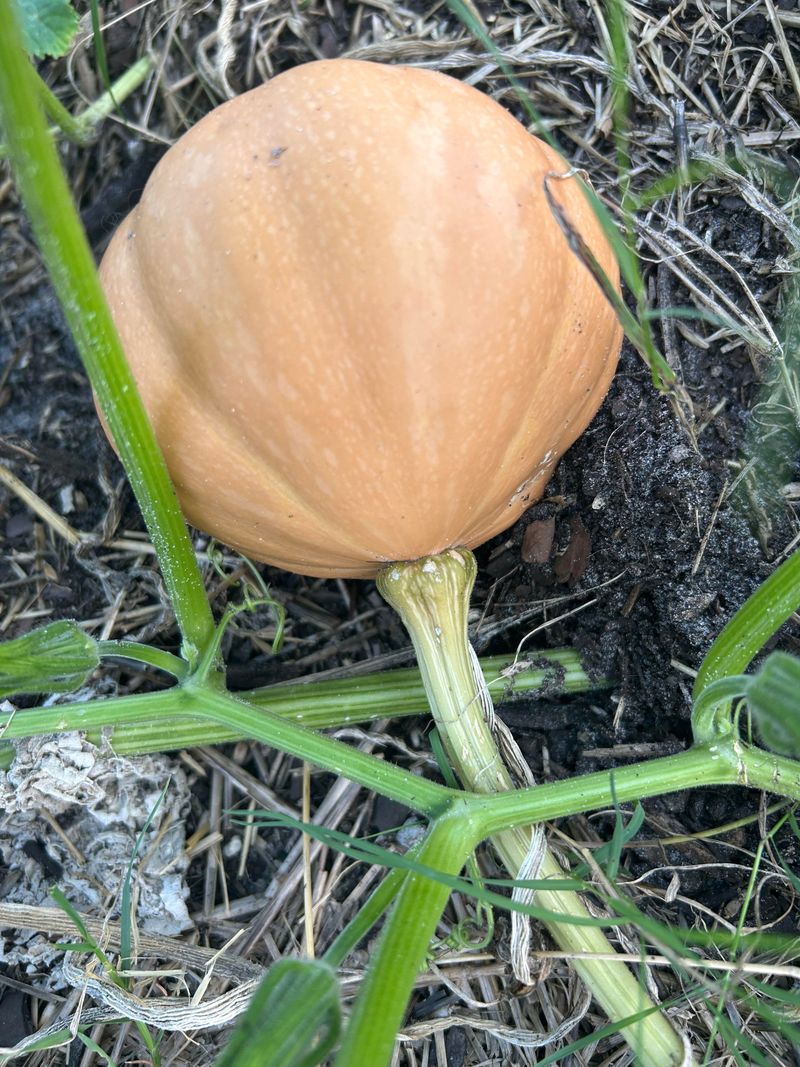
Seed labeled “Everglades pumpkin” or “swamp pumpkin” should be treated as a regional Seminole pumpkin strain rather than a guaranteed modern variety.
Those names often point to South Florida growing history, where vines had to handle intense humidity, rainy-season wetness, and hot conditions that can overwhelm less adapted pumpkins. That background can be useful, especially for gardeners in the southern half of the state.
But the label is not enough by itself.
An Everglades-type seed line may carry excellent heat tolerance and strong vining habits, but traits can still vary depending on how the seed was selected.
One grower may save from smaller fruit. Another may save from larger, rounder pumpkins. A third may simply harvest whatever matured first.
That is why seed history matters more than branding.
Ask how many generations the line has been grown in South Florida, what fruit shapes appear most often, and how the plants are isolated from other Cucurbita moschata crops. Specific answers are a good sign. Vague marketing language is less useful.
The growing style matters too. In wet regions, Seminole pumpkin often performs best when allowed to climb.
Vines can scramble over fences, trellises, shrubs, or sturdy supports, keeping fruit above soggy ground. That airflow helps reduce rot risk during rainy stretches.
Ground-grown vines can still work, but drainage must be handled carefully. Raised rows, mounds, or elevated planting areas help keep roots from sitting in water after summer storms.
Mulch can protect soil, but avoid creating damp pockets directly under developing fruit.
Everglades-type lines are especially interesting for gardeners who want a crop with deep regional character and strong South Florida logic.
The name tells you where the story points. The seed’s actual performance tells you if it belongs in your garden.
4. Small-Fruited Seminole Pumpkin
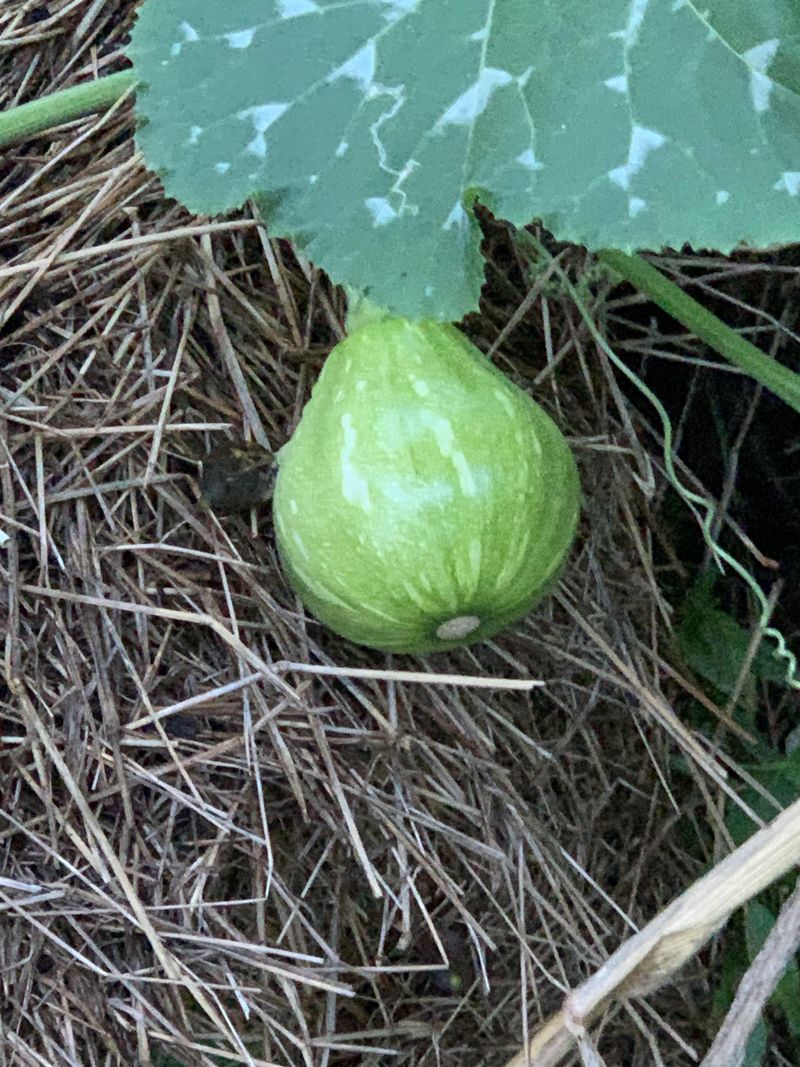
Small-fruited Seminole pumpkin lines can be a smart choice for tight Florida gardens.
The vine will not necessarily be small. That is the first thing to understand. Even a line that produces grapefruit-sized or small melon-sized fruit may still send long, ambitious vines across the garden.
Seminole pumpkin is vigorous by nature, and fruit size does not automatically shrink the plant’s reach.
Still, smaller fruit solves real problems.
A modest pumpkin is easier to harvest, easier to cook, easier to store, and less stressful on a trellis. For gardeners working with a fence panel, cattle panel arch, porch rail, or wire support, smaller fruit can make vertical growing much more practical.
It also reduces kitchen waste. A large storage pumpkin is useful for big meals, baking projects, or freezing. A smaller one is perfect when you want to roast one fruit, make soup, or cook a manageable portion without committing to a huge harvest all at once.
Choose seed carefully. One small fruit on a large-fruited vine does not prove the line is small-fruited. Look for seed saved from plants that produced several consistently smaller, well-formed pumpkins.
Better yet, choose seed from gardeners who have observed that trait over more than one season.
Harvest cues stay the same. A mature fruit should have a hard rind that resists fingernail pressure, a color shift toward tan or buff, and a dry, corky stem.
Small fruit may mature faster in hot weather, so check regularly once the vines start setting.
Support developing fruit early if grown vertically. A small pumpkin can still become heavy enough to stress the stem, especially after rain.
Small-fruited lines are not less authentic. They are part of the natural range that makes Seminole pumpkin so adaptable.
For Florida gardeners with limited space, they may be the most useful form of all.
5. Pear-Shaped Seminole Pumpkin
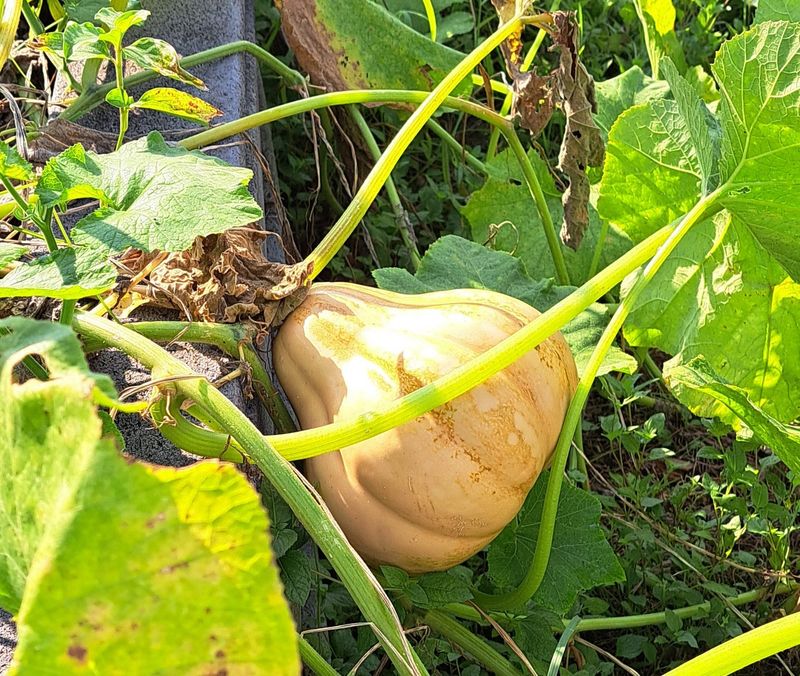
Pear-shaped Seminole pumpkins are especially useful in Florida because they are easier to support above the ground.
The shape creates a natural neck, which makes it simpler to cradle or sling the fruit as it grows on a trellis. That matters in a climate where wet soil, afternoon storms, and humid nights can create problems for fruit resting directly on the ground.
Keeping pumpkins elevated can make a huge difference.
Fruit that sits on damp soil is more likely to develop soft spots, insect hiding areas, or rot near the blossom end. When fruit hangs in better airflow, the rind dries faster after rain and problems become easier to spot early.
Use fabric slings, mesh bags, old pantyhose, or soft cloth strips to support fruit before it gets heavy. Tie the sling to the trellis, not to the vine itself. The vine should guide the fruit, while the support carries the weight.
Do not wait too long. Trying to lift and sling a large fruit after it has already stretched the stem can cause damage. Add support when the fruit is still small and easy to handle.
Pear-shaped fruit can appear naturally within Seminole pumpkin seed lines. It may be common in some lines and occasional in others. If you like the shape, save seed only from healthy vines that produce good pear-shaped fruit repeatedly.
Remember that vine position can affect form. A fruit hanging freely may develop more evenly than one pressed against soil or a board. Shape is influenced by genetics, but also by how the fruit grows.
For Florida gardeners who want cleaner fruit, better airflow, and easier trellis support, pear-shaped lines are worth seeking out.
They turn the vine’s climbing habit into a real advantage.
6. Bell-Shaped Seminole Pumpkin
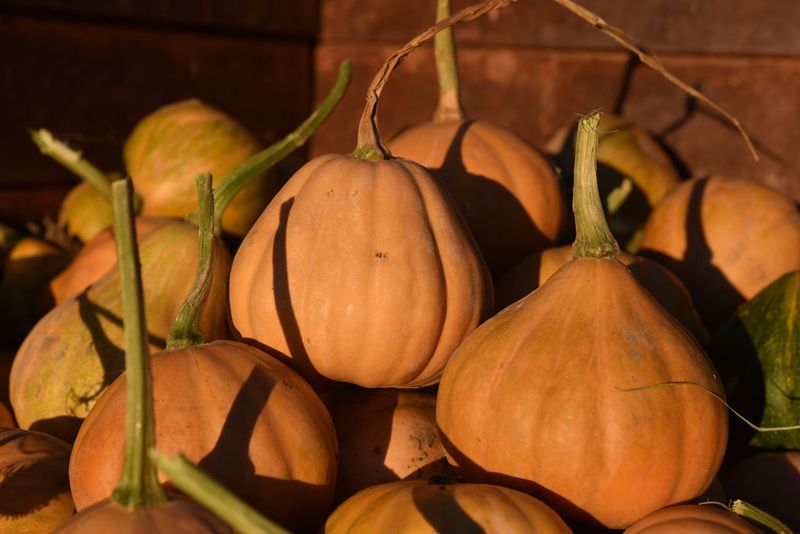
Bell-shaped Seminole pumpkin fruit can be beautiful, productive, and heavy.
That last part is the detail to plan around. Bell-shaped fruit often puts more weight on a trellis than smaller or narrower forms.
If the support is weak, the vine may sag, fruit may pull stems down, or the entire structure may lean after a summer thunderstorm.
Build stronger than you think you need.
Heavy-gauge wire fencing, cattle panels, metal conduit frames, or sturdy wooden posts can all work. Thin decorative trellises usually cannot handle a mature Seminole pumpkin vine loaded with fruit.
Vertical supports should be close enough together to reduce sagging, especially when vines get wet after rain.
Bell-shaped fruit should be supported early. Use a wide sling that cradles the lower part of the fruit without cutting into the rind. Check it often, because fruit growth can tighten fabric quickly.
This shape may appeal to gardeners who want larger storage pumpkins. A heavier fruit can provide more flesh for roasting, baking, soups, and preserving. The thick rind helps with storage once properly cured.
Pollination matters for large-fruited forms. Seminole pumpkin flowers open early, and bees do much of the work.
If pollination is poor, fruit may start to form, then yellow, shrivel, or drop. That is not the same as a mature fruit failing from heat.
Encourage pollinators with nearby flowers, avoid spraying insecticides during bloom, and check morning bee activity if fruit set seems weak.
Give the roots space too. A heavy-fruited vine needs strong leaf growth and a healthy root system to support ripening pumpkins. Crowding the plant with other heavy feeders can reduce performance.
Bell-shaped Seminole pumpkins handle Florida heat best when the gardener gives the vine room, the fruit support, and the flowers a good chance to pollinate.
The plant is tough, but the trellis still has to do its part.